
Reviewed · COMMUNISM TOURS
Bucharest: Relics of Communism 3-Hour Walking Tour
Bucharest’s communist past is not tucked away in a museum. It fills the city center, from the balcony where Nicolae Ceausescu gave his last speech to the vast Palace of the Parliament. This three-hour walk connects those places with the human story behind them: food queues, ration cards, propaganda, fear of the secret police, and the sudden break that came in December 1989.
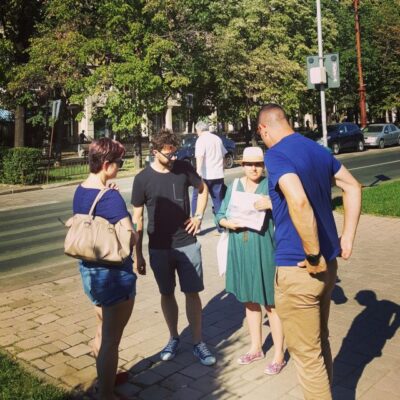
I like two things right away. First, the route mixes famous sights with lesser-seen churches that survived the communist rebuilding plans. Second, the small group size makes it easier to ask questions, and guides such as Elena, Stefan, and Tudor have been praised for using photographs, schoolbooks, personal stories, and clear explanations rather than simply reciting dates.
The main drawback is the subject itself. This is a serious history walk, not a light city stroll, and some sections can feel emotionally heavy. You also see the Palace of the Parliament from the outside on this route, so you should arrange a separate interior visit if you want to see its grand rooms.
In This Review
- Key points to know before you book
- Why communist Bucharest is best understood on foot
- Revolution Square and the speech that ended badly
- The small church that survived Ceausescu’s rebuilding
- Piața Unirii and the daily business of getting by
- The Palace of the Parliament and Ceausescu’s Civic Centre
- How the three hours feel
- What guides add to the experience
- Is $44 a fair price?
- Who should book this Bucharest walk?
- Should you book the Relics of Communism tour?
- FAQ
- How long is the Bucharest communist history tour?
- Where does the tour begin?
- Where does the tour finish?
- What language is the tour conducted in?
- How large is the group?
- Is the Palace of the Parliament interior included?
- Is hotel pickup included?
- What is included in the price?
- Can I cancel the booking?
Key points to know before you book
- Starts at the Memorial of Rebirth: Meet in Revolution Square, at the striking memorial that marks the 1989 uprising.
- Follows the Revolution’s central locations: The first part explains where Ceausescu’s final speech failed and how Romania moved toward democracy.
- Includes a surviving church: Michael the Voivode Church offers a sharp contrast to the broad communist avenues and apartment blocks.
- Explains daily life, not just buildings: Expect discussion of ration cards, shortages, black-market trade, propaganda, and surveillance.
- Ends beside the Palace of the Parliament: The walk covers the Civic Centre project and finishes in Constitution Square.
- Limited to 10 people: At $44 per person, the price buys a focused history lesson with an English-speaking guide and a Romanian snack souvenir.
Why communist Bucharest is best understood on foot
Bucharest can seem like a jumble of grand nineteenth-century buildings, worn apartment blocks, Orthodox churches, and enormous government structures. A car ride can show you the scale, but it does not explain the forced changes that created it.
This walk gives you that connection. You move through the city at human speed, with time to stop, look up, and compare what survived with what was swept away. The route is not only about architecture. It asks what happens when a government tries to redesign a capital around one leader and one political system.
The guide’s job is especially important here. Many of the communist-era buildings are not pretty, and without context they can look like oversized concrete blocks. With explanation, they become evidence of control, scarcity, ambition, and fear. The stories about daily life also keep the tour from becoming a parade of monumental buildings.
Guides who have led this experience, including Elena, Stefan, and Tudor, have used old photographs and physical objects such as communist schoolbooks and a pupil’s mandatory scarf. Those details help you understand how the system reached into classrooms and childhood, not only government offices.
More communism-era tours in Bucharest:
- The Real tour of Communism
★ 5.0 · 666 reviews - Life under Communism
★ 5.0 · 358 reviews - 3-Hour Guided Tour of Communist Bucharest
★ 4.9 · 303 reviews
Revolution Square and the speech that ended badly
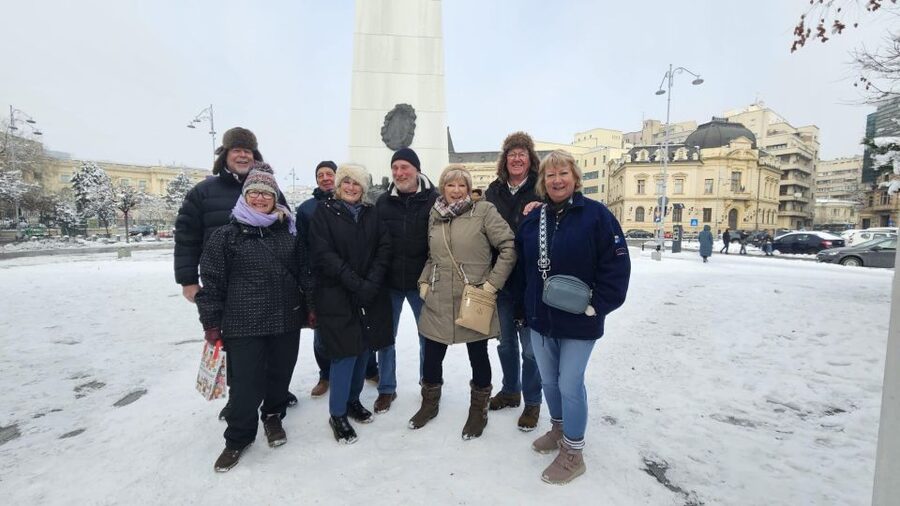
The meeting point is the Memorial of Rebirth in Revolution Square. It is an apt place to begin because the square links public ceremony, political power, and revolt.
You learn how Ceausescu’s final public speech unfolded here in December 1989. He expected the familiar display of obedience, but the crowd began to turn against him. The moment became one of the most famous breaks in Romania’s modern history, and the balcony nearby is the place where he made his final attempt to address the public.
The guide then places the 1989 Revolution in a wider frame. You hear about the fall of the communist regime and Romania’s move toward democracy, with attention to what changed and what did not change overnight. This part works well early in your Bucharest visit because it gives you a political map for the rest of the city.
At Piața 21 Decembrie 1989, the story continues for about 15 minutes. The square’s name itself points to the date when the uprising reached a decisive stage. Rather than treating the Revolution as a clean, simple turning point, the walk presents it as a tense event tied to ordinary people, public fear, and uncertainty.
This is one place where the guide’s personal approach matters. Past tours have included emotional recollections from people who remember the final years of communism or were children during the Revolution. You should expect a discussion that connects public events with memories of streets, families, and sudden political change.
The small church that survived Ceausescu’s rebuilding
The stop at Michael the Voivode Church provides one of the route’s most useful contrasts. The church is a reminder that old Bucharest was not completely erased, even when communist planners tried to reshape the city.
You visit the church and hear why places like this mattered during the rebuilding of the capital. Ceausescu’s Civic Centre project required huge areas of the old city to be cleared. Churches and historic buildings stood in the way of that plan, and some were demolished, moved, or left out of public attention.
This stop also breaks up the harder political material. You are not simply looking at a church as a religious monument. You are seeing a survivor in the middle of a city altered by ideology and construction.
The tour information does not promise a long interior visit, so think of this as a focused stop rather than a full church tour. If religious art or architecture is your main interest, you may want more time elsewhere. For understanding how communist planning affected Bucharest, though, the church is a valuable pause.
Piața Unirii and the daily business of getting by
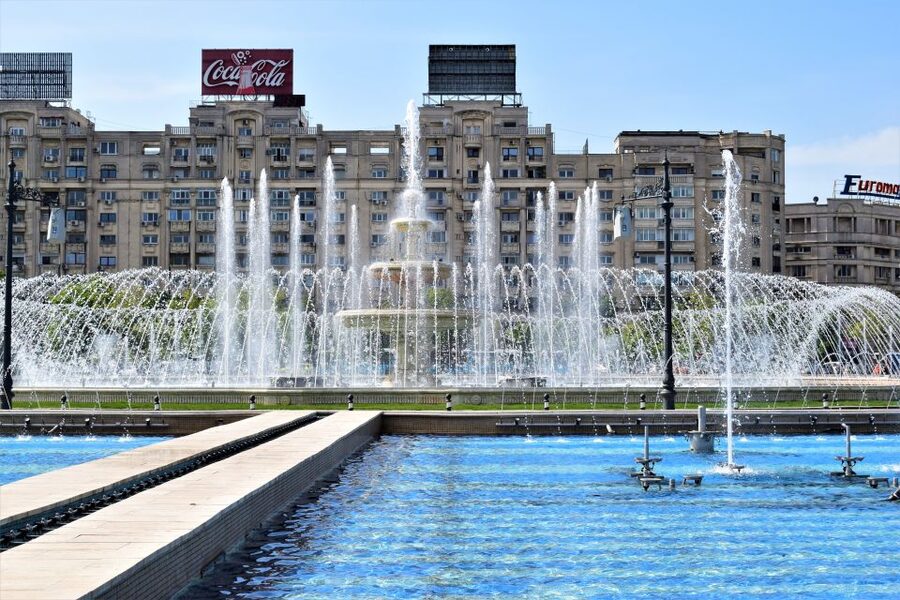
At Piața Unirii, the discussion shifts toward the city’s wider communist fabric. This is where the walk can help you read the contrast between elegant older architecture and the later apartment blocks built for a rapidly controlled urban society.
The most useful part of this section is the focus on ordinary routines. Under Ceausescu, daily life involved ration cards, shortages, long queues, and black-market exchange. Propaganda was part of the public world, while the secret police created a private climate of caution.
These subjects can sound abstract in a textbook. On foot, they become easier to grasp because you are standing in the city where people went shopping, worked, lived, and waited. The guide explains how politics affected food, housing, education, and personal behavior.
Do not expect a staged recreation of communist life. The value is in the explanation and the questions you can ask. Previous guides have been willing to discuss different perspectives rather than offering a single dramatic version of the past. That balance matters, especially if you know little about Romania or mainly associate communism with the Palace of the Parliament.
The route also gives you a chance to see the physical difference between the old city and the planned districts. Bucharest’s architecture is part of the argument. Older buildings suggest a layered European capital, while the communist blocks and broad spaces reflect a system that favored order, visibility, and scale.
More walking tours in Bucharest:
- Bucharest: City Highlights Guided Walking Tour
★ 4.9 · 1,482 reviews - Bucharest Highlights Walking Tour
★ 5.0 · 469 reviews - Free walking tour of Brasov in English
★ 4.9 · 302 reviews - Bucharest: Ghost Stories & Romanian Mythology Walking Tour
★ 4.9 · 287 reviews
The Palace of the Parliament and Ceausescu’s Civic Centre
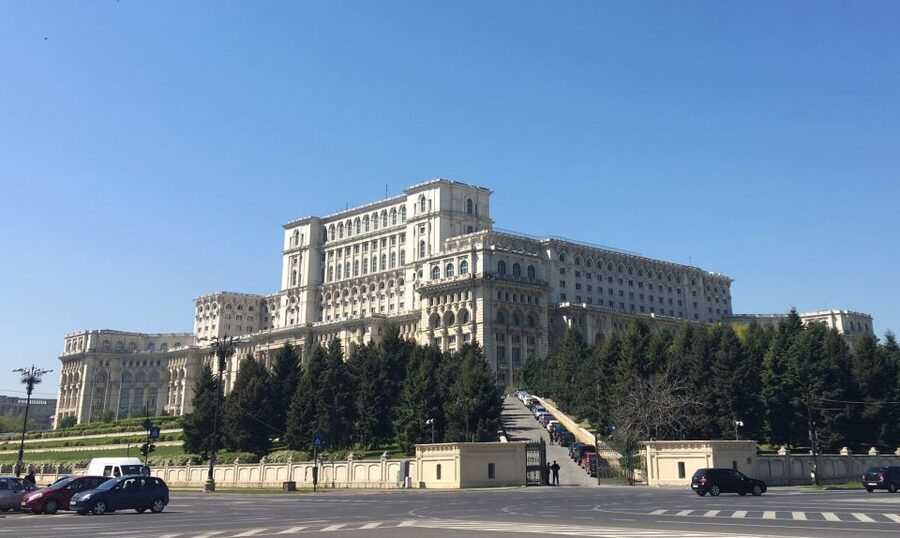
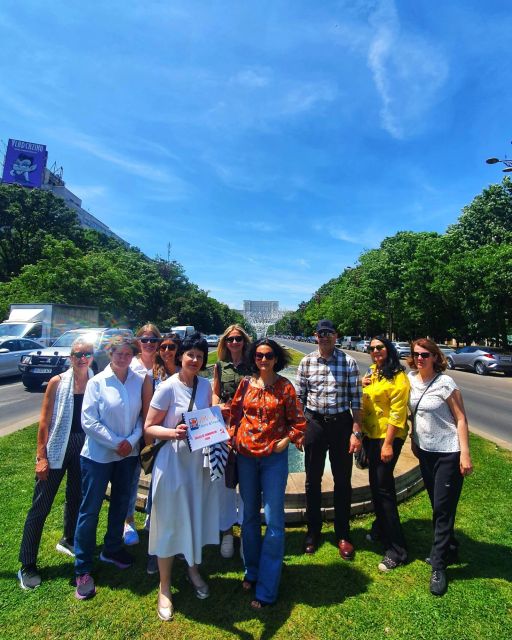
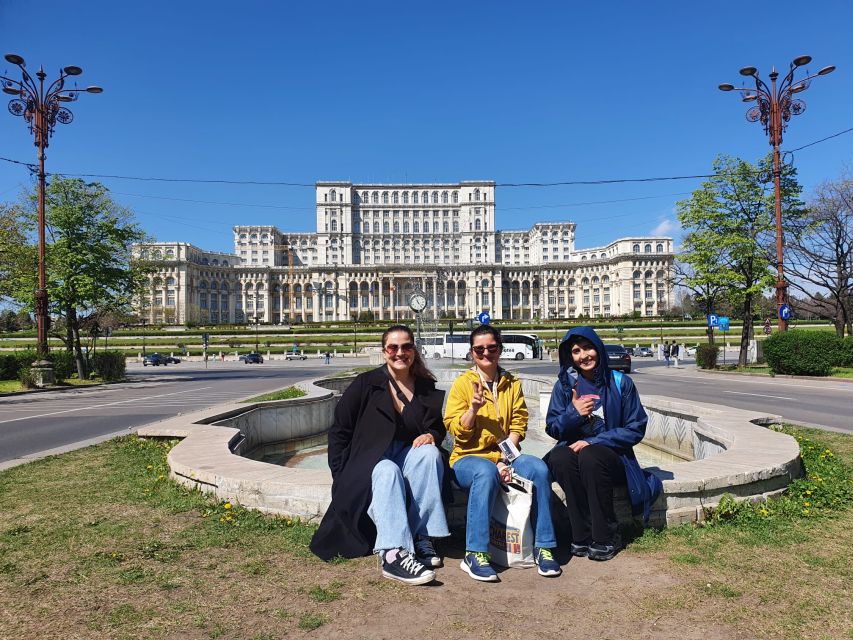
The route’s largest visual statement comes at the Palace of the Parliament. It was designed as the absolute center of power, and its size makes the political message hard to miss.
The tour explains the building as part of the wider Civic Centre project, not as an isolated sight. Entire sections of Bucharest were cleared to create the new administrative center, along with grand avenues and monumental buildings. The result is a huge urban composition that shows how much authority the regime wanted to project.
You should allow time to look beyond the building’s famous bulk. The important question is not only how large it is, but what its construction meant for the people and neighborhoods displaced by the project. The surrounding Civic Centre helps you understand that the palace was part of a much larger attempt to remake the capital.
The guided stop lasts about 20 minutes. That is enough for a strong explanation and outside views, but not enough for a detailed architectural study. The route does not include admission to the parliament building. If you want to tour the interior, you will need to arrange that separately, and one past participant found this walk helpful before an interior visit because the background made the grand rooms and ceremonial spaces easier to interpret.
The final stop is Piața Constituției, where the scale of the project becomes clear. You finish with the palace and its broad public space in view, a fitting end to a walk about power, display, and the reshaping of a capital.
How the three hours feel
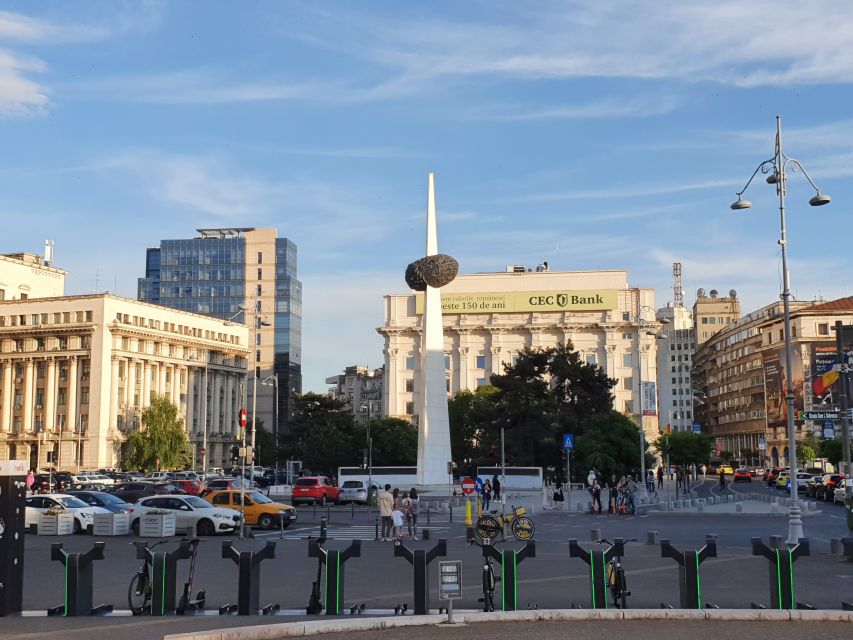
The published route includes stops of roughly 20 minutes at Revolution Square, 15 minutes at Piața 21 Decembrie 1989, 15 minutes at Michael the Voivode Church, 15 minutes at Piața Unirii, and 20 minutes at the Palace of the Parliament. The remaining time is spent walking and talking between them.
That pacing should feel purposeful rather than rushed. Several past tours ran close to or beyond three hours when questions and extra explanations took over. That can be a benefit if you enjoy conversation, but it also means you should not schedule a tightly timed activity immediately afterward.
The group limit is 10 people. This is a useful size for a history tour because you can hear the guide clearly and ask about subjects that interest you. Solo visitors may especially appreciate the personal format. One booking was conducted with only one participant, and the tour still went ahead.
You receive an English-speaking live guide and a Romanian snack souvenir. The snack is a pleasant small extra, but it is not the reason to book. The real value is the guided interpretation of places that you could otherwise pass without understanding.
Wear shoes suited to three hours of city walking. The supplied information does not give a detailed accessibility assessment, so anyone with mobility concerns should confirm the route conditions before booking.
What guides add to the experience
The strongest feature of this tour is the human delivery. The subject can easily become a dry account of dates, leaders, and buildings. Here, the guide is expected to connect political history with home life.
Elena has led tours that included extra discussion for visitors interested in World War II, as well as book suggestions and links for further reading. She has also guided in Spanish on request in at least one past experience, but English is the stated language for this activity, so confirm language needs before reserving.
Stefan has been praised for keeping the information light and witty without losing the serious meaning of the subject. Tudor has used photographs and extended the tour when questions called for more time. These details suggest a flexible style, but guide assignment can vary, so you should not book on the assumption that one particular person will lead your date.
A good question to bring is how communist policy changed everyday choices. Ask about food, school, work, housing, or what people could safely say in public. The experience is built for that kind of exchange.
Is $44 a fair price?
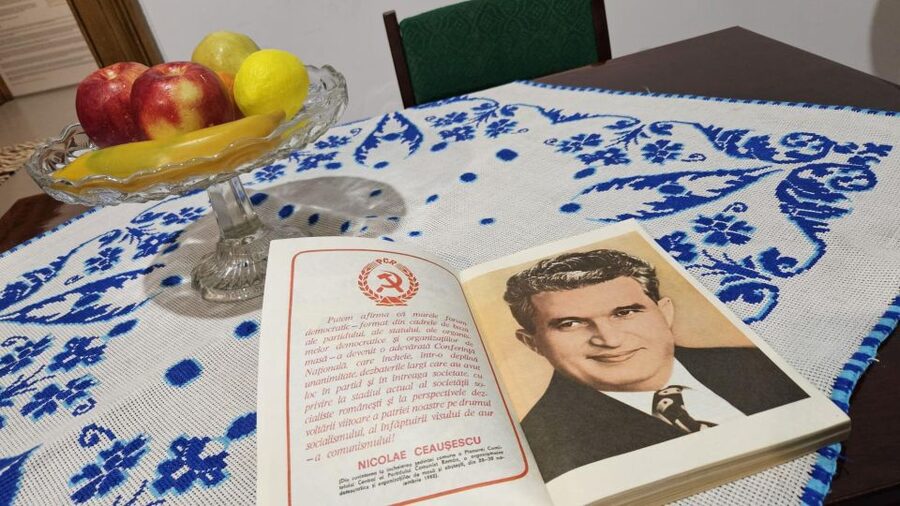
At $44 per person, this is not the cheapest way to walk around Bucharest. You can see Revolution Square, Piața Unirii, and the Palace of the Parliament area without paying for a guide.
The calculation changes if you want the places tied together. You are paying for three hours of explanation, a small group of no more than 10, a specialist subject, and a route that includes a church and lesser-known details. The guide’s photographs, objects, and personal stories add value that a self-guided walk would not easily reproduce.
I would call it good value for visitors who care about twentieth-century European history or want to understand Bucharest beyond its attractive older streets. It is less compelling if you only want postcard views or a broad first look at every part of the city.
Free cancellation up to 24 hours before the start and the reserve-now, pay-later option also reduce the risk when your plans are still moving. Hotel pickup and drop-off are not included, so you need to reach the Memorial of Rebirth yourself.
Who should book this Bucharest walk?
You should consider it if you want:
- A clear introduction to Romania under Ceausescu
- A closer look at the 1989 Revolution
- An explanation of how politics shaped Bucharest’s buildings
- A small group where questions are welcome
- A walking route that combines major sights with lesser-seen places
- Historical context before visiting the Palace of the Parliament interior
It suits solo visitors, couples, and history-minded groups particularly well. It can also work for Bucharest residents or repeat visitors who want a new way to read familiar streets. A local participant once found the tour worthwhile despite being born and raised in the city, which says something about the amount of detail packed into the route.
Children and casual sightseers may find the subject demanding, especially during the sections on surveillance, shortages, and the Revolution. The tour is also not a substitute for an interior parliament visit or a full architectural tour of Bucharest.
Should you book the Relics of Communism tour?
Book it if you want to understand why Bucharest looks the way it does and how ordinary Romanians lived under communism. The route gives you the right mix: Revolution Square for the political break, a surviving church for the cost of urban rebuilding, Piața Unirii for daily-life discussion, and the Palace of the Parliament for the regime’s grandest symbol.
I would make this one of your first Bucharest activities if recent history interests you. It will sharpen your view of the city for the rest of your stay. Skip it only if you prefer a relaxed sightseeing walk with little political discussion, or if you specifically need a guided tour inside the Palace of the Parliament.
FAQ
How long is the Bucharest communist history tour?
The walking tour lasts three hours.
Where does the tour begin?
Meet your English-speaking guide at the Memorial of Rebirth in Revolution Square.
Where does the tour finish?
The tour ends at Piața Constituției, near the Palace of the Parliament and the Civic Centre area.
What language is the tour conducted in?
The stated tour language is English.
How large is the group?
The experience is offered as a small-group tour limited to 10 participants.
Is the Palace of the Parliament interior included?
No. The route includes a guided stop at the Palace of the Parliament, but admission for an interior visit is not included.
Is hotel pickup included?
No. Hotel pickup and drop-off are not included. You must make your own way to the Memorial of Rebirth.
What is included in the price?
The price includes the walking tour with an English guide and a Romanian snack souvenir.
Can I cancel the booking?
Yes. You can cancel up to 24 hours in advance for a full refund. You can also reserve now and pay later.
More 3-Hour Experiences in Bucharest
- Bucharest: 3-Hour Dark History Tour with a Local
★ 4.9 · 301 reviews - Bucharest: Alternative Sightseeing 2.5-3h-Hour Guided Tour
★ 4.9 · 80 reviews - Bucharest: 3-Hour Walking Tour
★ 4.9 · 77 reviews - Alternative Bucharest: 2.5-3 Hours Walking tour (Small groups)
★ 5.0 · 32 reviews
Recently added around Bucharest
- 6h Communism Tour in Bucharest with Ceausescu Mansion★ 4.5 · 6 reviews
- From Bucharest : Day Trip to Peles, Dracula’s Castle, Brasov★ 4.7 · 6 reviews
- Bears Sanctuary, Dracula Castle and Brasov City – Full Day Trip from Bucharest★ 5.0 · 6 reviews
- Dracula Private Tour★ 5.0 · 6 reviews
- Transfagarasan Road Private Day Trip from Bucharest / The Best Road in the World★ 5.0 · 6 reviews
- Bucharest : Wednesday, Dracula & Peles 3 Castles Tour 1 Day★ 4.7 · 6 reviews
- Hiking thought the best mountain villages in Romania-Private tour from Brasov★ 5.0 · 6 reviews
- Bucovina Painted Monasteries & Transylvania Tour: 4-Day Private★ 5.0 · 6 reviews
Communism Tours, compared.
Bucharest Essential Tour: Old Town, Calea Victoriei & Communism
Read our review →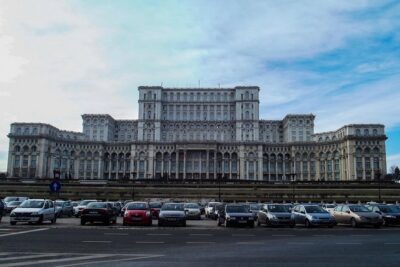
Communism in Bucharest – Landmarks, Museum & Communist Appetizers
Read our review →
Museum of Communism Ticket with Communist Coffee
Read our review →Browse the lists this tour appears in