
Reviewed · COMMUNISM TOURS
The Real tour of Communism
Bucharest’s communist past is written into its streets, churches, grand government buildings, and oddly altered neighborhoods. This three-hour walk connects those pieces, from the former Great National Assembly headquarters to Revolution Square, where Nicolae Ceaușescu’s rule came to a bloody end. I like the way the tour links architecture with ordinary life, including food, rationing, and the reshaping of homes. I also like the small group limit of 15, which gives you room to ask questions.
The main drawback is simple: this is a walking tour in open weather, with only about 15 minutes at each listed stop. The Palace of Parliament admission is not included, and the tour does not appear to be a full interior visit. Bring good shoes, dress for the forecast, and expect a history lesson that keeps moving.
In This Review
- Key points to know before you book
- Why Bucharest is the right place for this walk
- Starting at the Patriarchal Cathedral
- The Palace of Parliament and the price of power
- Mihai Voda Monastery and the churches that survived
- Old Town, Communist power, and the restaurant table
- Revolution Square and the end of Ceaușescu’s rule
- The guides make or break the experience
- Walking conditions, weather, and group size
- Is $32.65 a fair price?
- Who should book this Bucharest walk?
- My verdict on the Real Tour of Communism
- FAQ
- Where does the tour start?
- Where does the tour end?
- How long does the walking tour last?
- What language is the tour offered in?
- What is the maximum group size?
- Is admission to the Palace of Parliament included?
- Is food included?
- Does the tour include hotel pickup and drop-off?
- Can I take the tour in bad weather?
- What is the cancellation policy?
Key points to know before you book
- Start at the Patriarchal Cathedral: The meeting point is inside the Patriarchal complex on Aleea Dealul Mitropoliei 25, not on an ordinary street corner.
- Finish at Revolution Square: The route gives the tour a clear historical ending at the site of the 1989 uprising.
- Personal stories matter: Guides including Octavian, Daniela, Andreea, Mihai, and John Sever have been praised for explaining how communism affected daily life, not just politics.
- Small group, English language: The maximum group size is 15, and the tour is offered in English.
- Budget-friendly format: At $32.65 per person, the price covers about three hours of guiding and a communist-era snack, but not Palace of Parliament tickets, meals, or drinks.
- Plan for a weather-dependent walk: The experience is listed as operating in all weather, yet poor weather can lead to a cancellation, alternate date, or refund.
Why Bucharest is the right place for this walk
Communism in Romania was not only a matter of party speeches and stern portraits. It changed where people lived, what they ate, how they moved around the city, and which old buildings survived.
This tour works because Bucharest still shows those changes in plain sight. A church may have been shifted rather than destroyed. An enormous government building may have erased whole streets. A fashionable restaurant may once have served the Communist leadership. At Revolution Square, modern Bucharest still carries the memory of the regime’s final days.
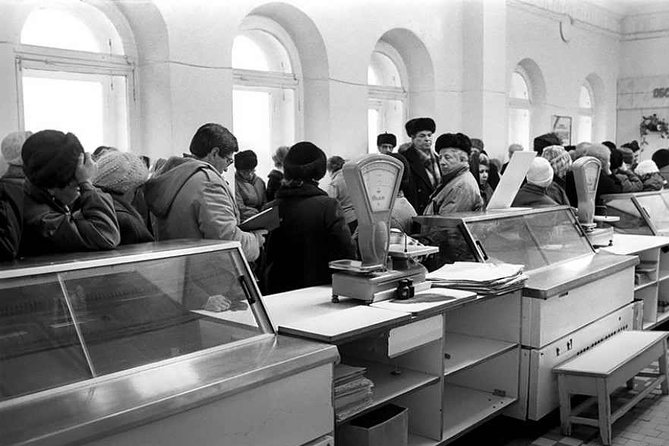
You will also hear about the difference between broad political history and personal experience. The guides have been praised for explaining rationing, food shortages, family memories, and the practical strain of daily life. That human scale is valuable. Dates and political names matter, but you understand an era better when you can picture what people could buy, where they lived, and how they responded to power.
The tour also places Romania’s experience beside that of other former communist countries. Romania’s 1989 revolution was the only bloody overthrow among the former Iron Curtain states, and the walk explains why the end of Ceaușescu’s rule unfolded so violently.
More communism-era tours in Bucharest:
- Life under Communism
★ 5.0 · 358 reviews - 3-Hour Guided Tour of Communist Bucharest
★ 4.9 · 303 reviews - Bucharest Essential Tour: Old Town, Calea Victoriei & Communism
★ 5.0 · 142 reviews
Starting at the Patriarchal Cathedral
The walk begins at the Patriarchal Cathedral, formally listed as Catedrala Patriarhala, on Dealul Mitropoliei. Give yourself extra time to find the meeting point. The cathedral is inside a larger estate, and the entrance involves walking up a slope.
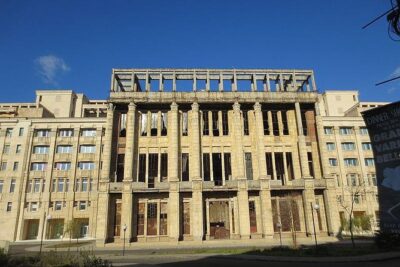
This is a useful opening stop because the Patriarchal Palace once served as the headquarters of the Great National Assembly during the communist period. The setting brings together two forces that shaped Romanian public life: the Orthodox Church and the Communist state.
You can expect about 15 minutes here. That is enough for the guide to explain the building’s political role and set up the larger story, but not enough for an extended architectural tour. If you are especially interested in religious history, treat this as a starting point rather than a complete visit to the cathedral complex.
The location also helps you see how the tour is organized. You are not being driven from one isolated attraction to another. The story unfolds as you walk through central Bucharest, with each stop adding another piece to the period.
The Palace of Parliament and the price of power
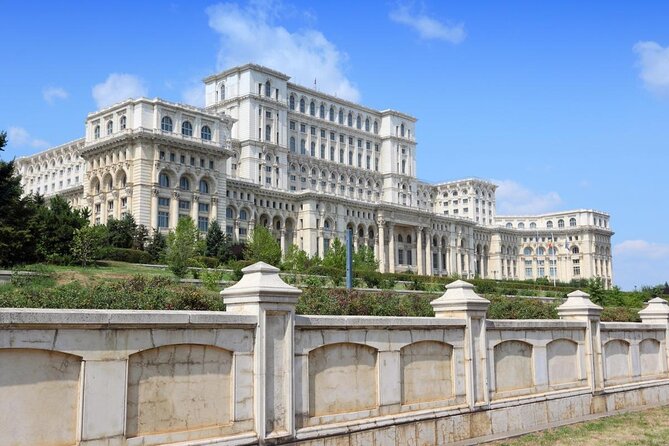
The next major stop is the Palace of Parliament, one of Bucharest’s most striking symbols of Ceaușescu’s rule. The guide explains the story behind what is described as the second largest building in the world.
Even from outside, the scale makes the political message clear. This was not a modest administrative project. Its size, setting, and effect on the surrounding city reflect the power concentrated in the hands of the Communist leadership.
The tour allows about 15 minutes at the Palace. Admission is not included, so you should not assume that a ticket to the interior is part of the $32.65 price. The listed experience is a walking tour, and the main value here is the guide’s explanation of the building and its place in the wider transformation of Bucharest.
I like this approach for a first visit. The palace can be overwhelming when seen only as a huge photo stop. The guide helps you connect it with the destruction and rebuilding carried out under Ceaușescu, as well as the way political ambition affected ordinary neighborhoods.
The limit is time. If you want to tour the building’s interior in detail, you will need to investigate that separately. This walk gives you context, not a full palace visit.
Mihai Voda Monastery and the churches that survived
At Mihai Voda Monastery, the focus shifts from construction to survival. You will hear how some churches from the 16th and 17th centuries were literally moved instead of demolished.
That detail says a great deal about the period. Communist urban planning could be ruthless, but preservation sometimes took an inventive form. Moving a church was a major undertaking, and the fact that these buildings were translated to new positions offers a vivid example of the compromises made during Bucharest’s rebuilding.
The stop is again planned for about 15 minutes. The monastery gives the tour a welcome change of pace after the monumental scale of the Parliament Palace. It also keeps the story from becoming a simple account of Communist buildings. You see how older Romanian architecture was treated when it stood in the way of grand plans.
For you, the value is in the contrast. One stop shows a regime making its mark through sheer size. The next shows older religious buildings being saved, but only after being displaced. That contrast is much easier to understand while standing among the buildings than from a textbook description.
A few more Bucharest tours worth a look
- Bucharest: Dracula’s Castle, Peles Castle, & Brasov Old Town
★ 4.5 · 17,858 reviews - Bucharest: Dracula Castle, Peles Castle & Brasov Old Town
★ 4.6 · 10,891 reviews - Bucharest: Dracula’s Castle, Peleș Castle & Brașov Day Trip
★ 4.5 · 5,919 reviews - Bucharest: Palace of Parliament Tickets and Guide
★ 4.3 · 3,182 reviews
Old Town, Communist power, and the restaurant table
Bucharest’s Old Town brings the discussion down to a more social level. The guide points out restaurants that were favorites of the Communist leadership and explains the stories behind them.
This stop is not just about where powerful people ate. It helps you think about the gap between official equality and the privileges available to the ruling class. Food and restaurants also provide a natural way to discuss the everyday side of communism, including shortages, rationing, and the special access enjoyed by people close to power.
A snack connected with the communist period is included in the tour. It is a small touch, but it gives the subject a physical and familiar quality. Some guides have also brought samples of sweet goods from the era, helping you connect political history with the food people actually remember.
The Old Town stop lasts about 15 minutes, so do not expect a long meal or a restaurant tasting. Food and drinks are not included beyond the specified snack. Some groups have also taken a coffee and restroom break partway through the walk, which can be especially helpful in cold, rainy, or hot weather. Treat that break as a practical pause rather than a formal part of the sightseeing list.
Revolution Square and the end of Ceaușescu’s rule
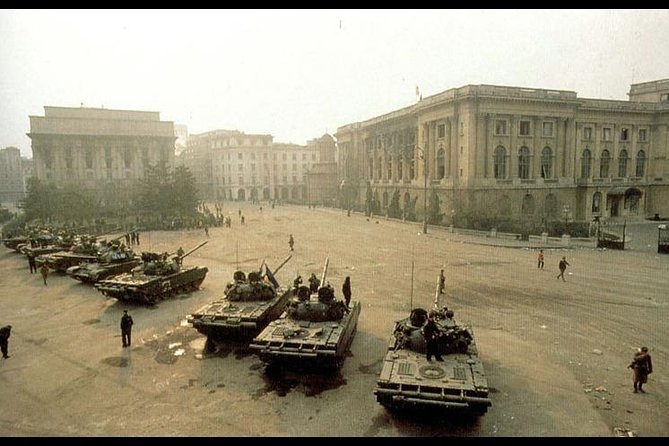
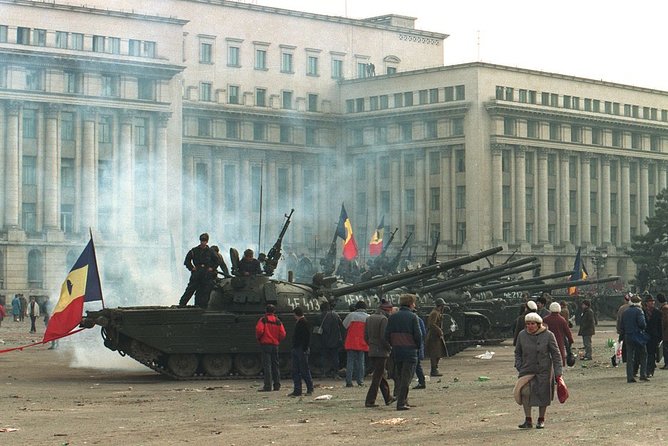
The tour ends at Revolution Square, or Piața Revoluției. This is the emotional center of the route.
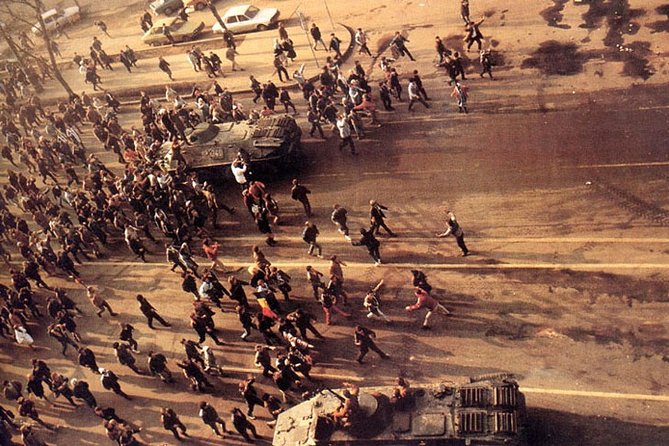
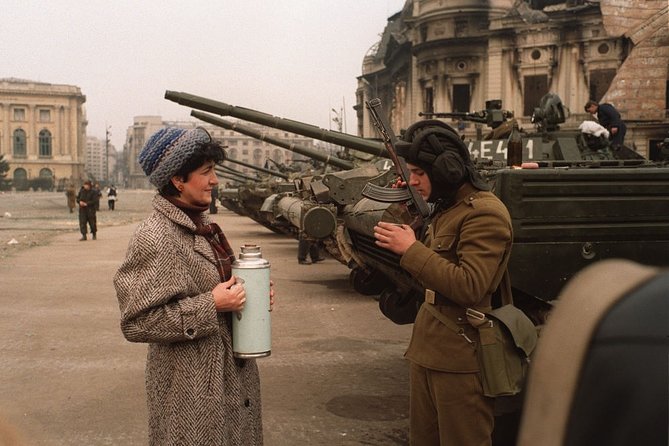
Here, the guide explains the last days of Nicolae Ceaușescu in power and the first days after more than 40 years of communist rule. Romania’s revolution was the only violent overthrow of a communist government in the former Iron Curtain, so the events of 1989 carry a weight that is easy to miss if you simply pass through the square.
The strength of this final stop comes from the guides’ ability to connect public events with private memory. Octavian, also referred to as Oktavian or Octavio in guide feedback, has been praised for sharing personal memories of the harder years, including rationing. Daniela has been praised for explaining the period with both a broad view and attention to the lives of ordinary Romanians. Andreea, John Sever, Mihai, and other guides have also been noted for answering questions and relating the past to present-day Romania.
You should expect this part of the tour to cover both the uprising and its aftermath. It is not only a story about the fall of one leader. It also asks what freedom meant after the change, how the city was affected, and why parts of Bucharest still show the consequences of the communist period.
Ending here is a smart choice. The route moves from institutions and buildings to social life, then finishes at the political break. You leave with a clear sequence rather than a loose collection of facts.
The guides make or break the experience
The strongest feature of this walk is the guide. The subject is complicated, and a poor explanation could turn it into a list of names and dates. The best guides on this tour have been described as warm, clear, engaged, and willing to answer questions.
Octavian is repeatedly singled out for personal stories and careful research. Daniela is praised for presenting the period in context and linking it with current events when useful. Andreea is described as friendly and well prepared, while John Sever has been praised for extending the discussion to life before and after communism. Mihai is also noted for his command of Romanian history.
Guide assignments can vary, so you should not book on the assumption that one particular person will lead your departure. Still, the pattern is encouraging: the experience depends on storytelling, and the guides appear prepared to do more than repeat a standard script.
I especially value the balance described by the guides. The tour does not treat communism as an abstract political system only. It discusses power structures, architecture, food, personal freedoms, and the long effects on society. It also avoids reducing the period to a simple good-versus-bad story, instead explaining how Romanian communism differed from the systems in nearby countries.
Walking conditions, weather, and group size
The tour lasts about three hours and requires a moderate level of physical fitness. You will walk between the stops, stand outside, and keep to a schedule. Each listed stop lasts about 15 minutes, but the total time includes movement through the city and the opportunity for questions.
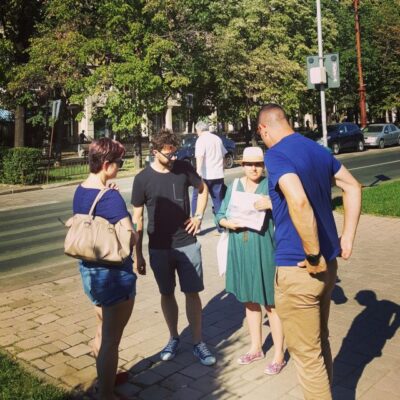
The group limit is 15 people. That is small enough for a guide to notice if you are lost or have a question, while still keeping the price below that of a private tour. If you prefer a totally personal pace, this is not a private experience. If you like hearing other questions and sharing a walk, the group format should work well.
Dress for the forecast. The tour is described as operating in all weather, but the provider also says poor weather can lead to cancellation and a choice of another date or a full refund. In practical terms, wear shoes suited to several hours on city streets and bring protection from rain or strong sun.
A coffee and restroom pause may be welcome during the walk, especially in January or on a hot day. It is wise not to plan a tight appointment immediately afterward, since the experience is scheduled for approximately three hours and the pace can vary with questions and conditions.
Is $32.65 a fair price?
At $32.65 per person, this is a reasonable price for a three-hour English-language walk led by a guide who can explain both public events and personal experience.
You are paying mainly for interpretation. The free stops do not require admission charges, and the Palace of Parliament ticket is not included. That means the value depends on how much you want context around the places you see.
I would consider the tour good value if you are new to Bucharest, interested in 20th-century Europe, or planning to visit other former communist countries. It gives you a framework for understanding the city before you explore more on your own. The small group limit and included snack add modest practical value.
It is less useful if you want a full interior tour of the Palace of Parliament, a long visit inside each church, or a food-focused experience. You will see several important places, but the walk is designed around explanation and connections rather than extended sightseeing at one site.
The free cancellation policy also gives you some flexibility: you can cancel for a full refund up to 24 hours before the start time. Changes made less than 24 hours in advance are not accepted, and cancellations caused by poor weather are handled with a new date or full refund.
Who should book this Bucharest walk?
I would choose this tour early in a Bucharest stay. The route gives you useful context for the city’s architecture and helps explain why some streets and buildings look so different from one another.
It suits:
- First-time visitors who want a clear introduction to Romania’s communist period
- History-minded visitors who prefer personal accounts alongside political facts
- Visitors interested in architecture and urban change
- People comparing Romania with other former communist countries
- Anyone who enjoys walking tours and asking questions in a small group
You may want another option if you have limited mobility, dislike standing outdoors, or want a private itinerary. The moderate fitness requirement is worth taking seriously, and the walk runs in changing weather.
My verdict on the Real Tour of Communism
Book it if you want to understand Bucharest rather than simply photograph it. The route is well chosen, the subject reaches far beyond politics, and the best guides bring the period to life through memories of rationing, food, homes, architecture, and fear.
The main caution is to keep your expectations exact. This is a three-hour outdoor history walk, not a full museum tour or an interior visit to every landmark. At $32.65, it offers solid value for an English-speaking introduction, especially if you want the city’s communist past explained by someone who can connect major events with everyday life.
FAQ
Where does the tour start?
It starts at the Patriarchal Cathedral, at Aleea Dealul Mitropoliei 25 in Bucharest. The cathedral is inside an estate, so you need to walk up a slope to reach the meeting point.
Where does the tour end?
The tour ends at Revolution Square, Piața Revoluției, in Bucharest.
How long does the walking tour last?
The tour lasts approximately three hours.
What language is the tour offered in?
The tour is offered in English.
What is the maximum group size?
The experience has a maximum of 15 people.
Is admission to the Palace of Parliament included?
No. Admission to the Palace of Parliament is not included in the tour price.
Is food included?
A snack that survived from the communist period is included. Other food and drinks are not included unless specifically stated.
Does the tour include hotel pickup and drop-off?
No. Hotel pickup and drop-off are not included.
Can I take the tour in bad weather?
The tour is listed as operating in all weather, so you should dress appropriately. If the provider cancels because of poor weather, you will be offered another date or a full refund.
What is the cancellation policy?
You can cancel up to 24 hours before the experience starts for a full refund. Cancellations or changes made less than 24 hours before the start time are not accepted for a refund.
Recently added around Bucharest
- 6h Communism Tour in Bucharest with Ceausescu Mansion★ 4.5 · 6 reviews
- From Bucharest : Day Trip to Peles, Dracula’s Castle, Brasov★ 4.7 · 6 reviews
- Bears Sanctuary, Dracula Castle and Brasov City – Full Day Trip from Bucharest★ 5.0 · 6 reviews
- Transfagarasan Road Private Day Trip from Bucharest / The Best Road in the World★ 5.0 · 6 reviews
- Dracula Private Tour★ 5.0 · 6 reviews
- Bucharest : Wednesday, Dracula & Peles 3 Castles Tour 1 Day★ 4.7 · 6 reviews
- Hiking thought the best mountain villages in Romania-Private tour from Brasov★ 5.0 · 6 reviews
- Bucovina Painted Monasteries & Transylvania Tour: 4-Day Private★ 5.0 · 6 reviews
Communism Tours, compared.
Bucharest Essential Tour: Old Town, Calea Victoriei & Communism
Read our review →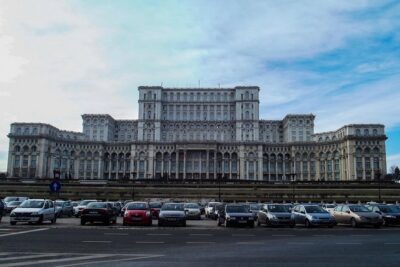
Communism in Bucharest – Landmarks, Museum & Communist Appetizers
Read our review →
Museum of Communism Ticket with Communist Coffee
Read our review →
Dinner+Tour at Museum of Communism after closing
Read our review →Browse the lists this tour appears in