
Reviewed · COMMUNISM TOURS
Life under Communism
Bucharest’s communist past is easiest to understand on foot, where grand avenues, scarred buildings, monasteries, and ordinary shops tell different parts of the story. This three-hour walk follows the rise and fall of Nicolae Ceausescu, then links major sites to the daily realities of people who lived under his rule. The personal family stories make the politics easier to grasp, while places such as the old food shop and former Securitate office add detail you could easily miss alone.
I like the balanced approach. The tour does not simply praise or condemn communism, but explains its gains, costs, fears, and contradictions. I also like the small-group format, with a maximum of 20 people and guides such as Cristina, Stefan, and Victor who welcome questions. The main consideration is simple: this is a walking tour, so comfortable shoes and weather-ready clothing matter. One missed meeting point can also be costly, since cancellations inside 24 hours are not refunded.
In This Review
- Key points to know before you book
- Bucharest’s communist story begins on Dealul Mitropoliei
- The Palace of Parliament and Ceausescu’s oversized ambition
- Antim Monastery reveals the pressure on religious life
- Old Town, Caru’ cu bere, and the politics of hospitality
- Small communist details make daily life easier to picture
- Ceausescu’s rise and fall without a simple political slogan
- Revolution Square brings the story to its violent end
- What the $42.33 price buys you
- Walking conditions, meeting point, and cancellation rules
- Who will get the most from this Bucharest walk
- Should you book Life under Communism?
- FAQ
- How long is the Life under Communism tour?
- Where does the tour start?
- Where does the tour finish?
- Is the Palace of Parliament admission included?
- Are food and drinks included?
- How many people can join the tour?
- What is the cancellation policy?
Key points to know before you book
- Personal stories from Cristina and the guiding team: Family memories help connect political events with ordinary Romanian life.
- A walk through key communist-era sites: See the Palace of Parliament, Revolution Square, former food stores, and less obvious buildings linked to the regime.
- A balanced view of Ceausescu’s Romania: The tour looks at ideology, state control, shortages, propaganda, and the end of the dictatorship.
- A strong focus on the 1989 revolution: Bullet marks, political memorials, and Revolution Square show where the regime collapsed.
- Small-group conversation: The group can include up to 20 people, with time built in for questions and discussion.
- A useful price for history-minded visitors: At $42.33, you are paying for a three-hour guided walk, not admission-heavy sightseeing.
Bucharest’s communist story begins on Dealul Mitropoliei
The tour starts at Aleea Dealul Mitropoliei 19, near the Patriarchal Cathedral. This is a fitting place to begin because the opening discussion covers the violent beginning of communism in Romania, rather than jumping straight to Ceausescu’s final years.
You spend about 10 minutes here, and admission is free. The cathedral and its hill also give you an early reminder that Romania’s story did not begin with communism. The country had older religious, royal, and political traditions, all of which were forced to adjust under the new system after the Second World War.
I like this opening because it gives the walk a wider frame. You are not simply shown gray apartment blocks and told that life was difficult. You first hear how power changed hands, how the new political order took shape, and why religion became a sensitive subject.
The stop is brief, so do not expect a long visit inside the cathedral. Its value comes from the explanation around it. You are beginning a political story in a place tied to Romania’s spiritual life, which makes the later discussion of state pressure on religion more meaningful.
More communism-era tours in Bucharest:
- The Real tour of Communism
★ 5.0 · 666 reviews - 3-Hour Guided Tour of Communist Bucharest
★ 4.9 · 303 reviews - Bucharest Essential Tour: Old Town, Calea Victoriei & Communism
★ 5.0 · 142 reviews
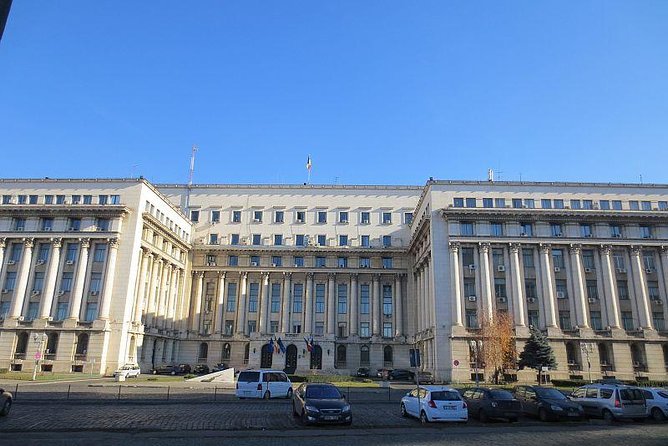
The Palace of Parliament and Ceausescu’s oversized ambition
The Palace of Parliament is the tour’s most dramatic sight. You spend about 15 minutes hearing the story behind the building, often called the world’s second-largest administrative building. Admission is not included, and this experience is primarily an exterior history stop rather than a full paid interior visit.
The building is not just a huge piece of architecture. It represents Ceausescu’s desire to reshape Bucharest around the power of the state. Its scale helps you understand the gap between official ambition and ordinary life. While the leadership pursued monumental construction, many people dealt with shortages, cold homes, rationing, and strict limits on everyday comfort.
That contrast is one of the strongest ideas in the tour. A building this large can seem like a curiosity if you only take a photograph. With context, it becomes evidence of how architecture served political power. The city was changed to display authority, and entire areas were cleared to make room for the new vision.
The visit is short, so the guide has to choose details carefully. That is a benefit if you prefer a focused walk, but it may feel too brief if you want a full architectural study or a tour of the interior. If seeing inside the Palace of Parliament is important to you, check separately for an entry option, since the admission fee is not part of the $42.33 tour price.
Antim Monastery reveals the pressure on religious life
From the monumental palace, the route turns to Mănăstirea Antim, a picturesque medieval monastery. The stop lasts about 10 minutes and has no admission fee.
This change of setting is valuable. Communism is often remembered through government buildings, slogans, and industrial architecture. Antim shows another side of the period: the effort to control public institutions, religious practice, and independent sources of authority.
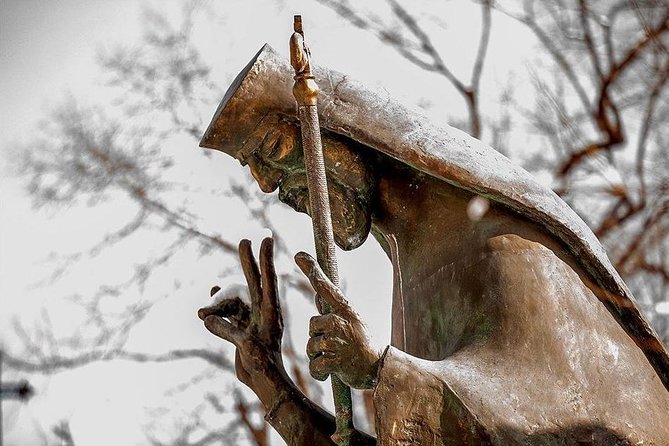
The guide explains how religion was affected by the communist regime. You may find the contrast striking. The monastery’s older architecture has a quieter scale and a more human feel than the Palace of Parliament, yet it also carries a complicated political story.
Do not expect a long religious tour here. The stop is designed to add context to the main subject, not replace it. You will have enough time to look around and hear the key points before continuing through the city.
I especially like this part of the route because it keeps the tour from becoming a parade of political monuments. You see how the regime interacted with institutions that existed long before it, and how the effects of communism reached beyond government offices.
Old Town, Caru’ cu bere, and the politics of hospitality
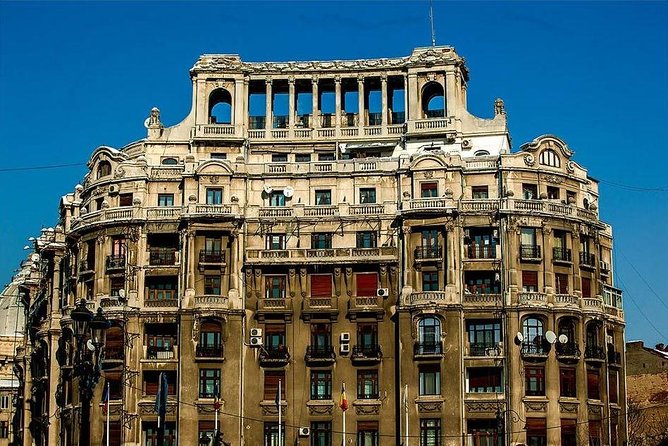
The Old Town stop lasts about 10 minutes and focuses on Caru’ cu bere, one of Bucharest’s best-known restaurants. The restaurant’s role under communism is tied to foreign policy, which gives you a useful look at how public places could serve official purposes.
A restaurant can tell you plenty about a political system. What was shown to foreign visitors, where official dinners took place, and how Romania presented itself abroad all mattered. The guide connects the restaurant to that larger story, adding a social layer to the tour.
This is also where the walk can feel more like a city tour. You are moving through a familiar central district, but the guide points out how places that appear ordinary today carried different meanings in the communist era.
The stop is short, and food and drinks are not included. You can return to Caru’ cu bere later if you want a meal, but this tour does not pause for a restaurant visit. That is worth noting if you are hoping for a tasting experience. The purpose here is historical, not culinary.
A few more Bucharest tours worth a look
- Bucharest: Dracula’s Castle, Peles Castle, & Brasov Old Town
★ 4.5 · 17,858 reviews - Bucharest: Dracula Castle, Peles Castle & Brasov Old Town
★ 4.6 · 10,891 reviews - Bucharest: Dracula’s Castle, Peleș Castle & Brașov Day Trip
★ 4.5 · 5,919 reviews - Bucharest: Palace of Parliament Tickets and Guide
★ 4.3 · 3,182 reviews
Small communist details make daily life easier to picture
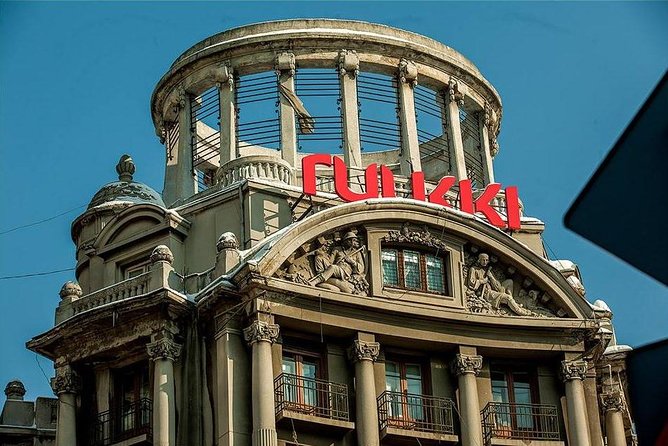
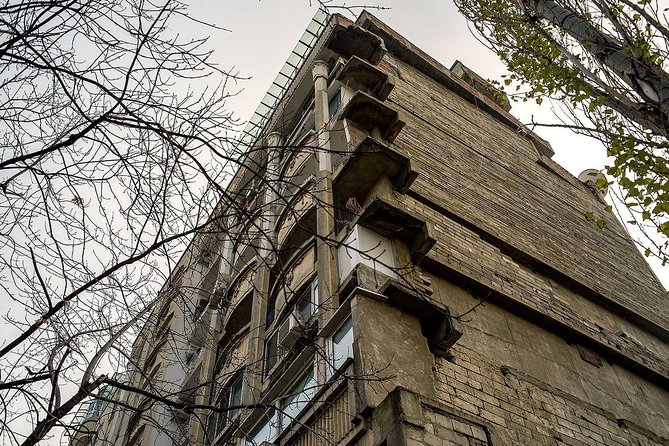
Some of the most useful parts of the walk are not the biggest buildings. The guides point out small communist-era structures and overlooked locations, including an old Alimentara food shop, a former communist food line, and a Securitate office that now looks like an unremarkable building in a run-down area.
These details help you picture daily life. The Palace of Parliament explains state power from above. An old food shop helps explain how people obtained basic goods. A Securitate office points to surveillance and fear, even when the building itself no longer looks imposing.
I find this kind of stop more valuable than another grand monument. You can photograph a huge government building anywhere, but it takes a local guide to point out the ordinary places that carried meaning for people living through the period.
One guide also gives participants a communist-era snack. That small touch is not a meal, and it should not be confused with a food tour, but it adds a physical detail to the discussion. Taste, packaging, queues, and shortages can make history feel less abstract.
The personal angle is a major strength here. Cristina has shared stories connected to her own family, while Stefan and Victor are also praised for explaining the period through personal connections and open conversation. The value is not only in hearing facts. You get a sense of how different generations understood the same events.
Ceausescu’s rise and fall without a simple political slogan
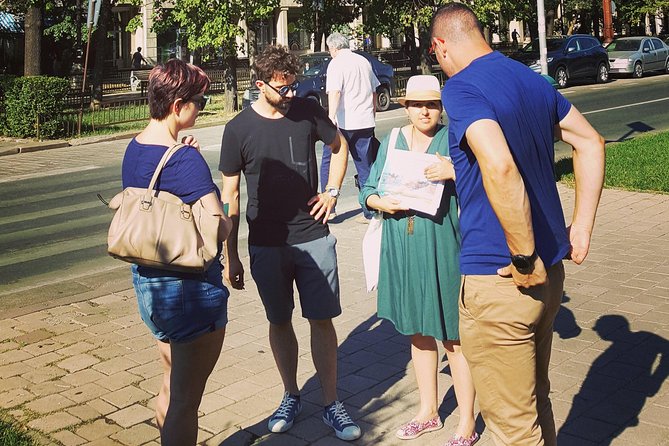
The tour covers Romania from the postwar period through about 1990. That gives enough room to discuss the factors that pushed the country toward socialism, the rise of communist rule, Ceausescu’s 24-year leadership, and the pressure that eventually brought the system down.
A good guide needs to avoid turning this into a single villain story. Ceausescu’s dictatorship was severe, but the broader history includes political shifts, economic decisions, Cold War pressures, and changing public attitudes. The tour’s stated aim is to explain the facts without simply praising or attacking communism.
That balance matters, especially if you are coming from a Western country with fixed ideas about the period. The walk explains both the official claims made by the regime and the costs paid by ordinary people. You hear about politics and mentalities, but also about how families managed daily routines under restrictions.
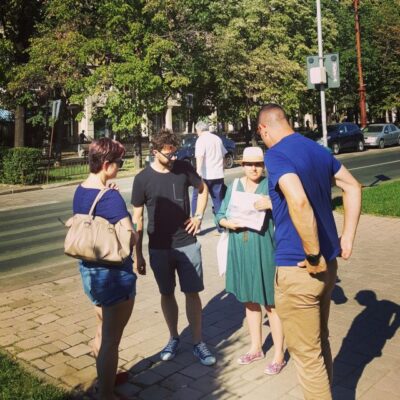
The guides are also willing to answer questions beyond the set route. You can ask about how Ceausescu gained power, how people were treated, or how the period still affects Romanian society. The small-group format makes that easier than it would be on a large bus tour.
Some sessions may be led by Cristina, while others may include Stefan or Victor. Their approach differs in personality, but the recurring strength is clear English, storytelling, and a willingness to explain rather than rush through prepared facts.
Revolution Square brings the story to its violent end
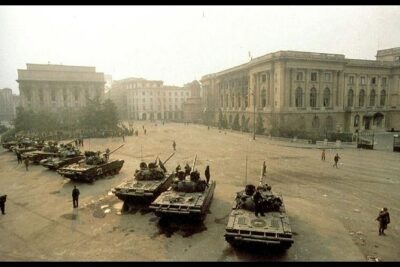
The walk ends at Revolution Square, Piața Revoluției, after roughly 15 minutes devoted to the fall of communism and Ceausescu’s downfall. This is the emotional center of the route.
Here you learn about the violent collapse of the regime in 1989 and the events that brought an end to Ceausescu’s rule. Political memorials and nearby buildings help place those events in the city itself. Bullet holes remain visible on some buildings, a stark reminder that the revolution was not a tidy transfer of power.
Ending here works well. The tour moves from the birth of the system to its everyday effects, then finishes where it broke apart. You leave with a clearer sense of why 1989 remains so important in Romania.
The tour ends at Revolution Square rather than returning to the starting point. That is practical because you are already in a central part of Bucharest, with public transportation nearby. It also lets you continue exploring after the guide finishes.
The timing can vary. The advertised duration is about three hours, but personal conversations and questions may extend the experience. That can be a real benefit if you enjoy discussion, though you should avoid scheduling a tight appointment immediately afterward.
What the $42.33 price buys you
At $42.33 per person, this is not the cheapest way to walk around Bucharest. You can see many public spaces on your own, and some visitors may prefer a free group walk. The difference here is the structure and interpretation.
You are paying for a professional guide, a planned route, historical context, and the ability to ask questions as you go. The Palace of Parliament admission is extra, and food and drinks are not included. Hotel pickup and drop-off are also not part of the experience.
For me, the price makes the most sense if you care about 20th-century history and want more than a list of dates. The personal family stories, overlooked communist buildings, food-line references, and discussion of surveillance give the walk substance.
It is less useful if you mainly want famous photo stops or an indoor sightseeing program. The tour spends only short periods at each listed location, and much of its value comes from listening while walking.
The maximum group size is 20. That is small enough for questions in many cases, though the experience will feel more personal when the group is smaller. Some sessions may have only two participants, while others will be fuller.
Walking conditions, meeting point, and cancellation rules
The starting point is Aleea Dealul Mitropoliei 19, Bucharest. The end point is Revolution Square. You will need to make your own way to the start, and there is no hotel pickup.
Wear comfortable shoes. The route covers several central locations, and the experience is built around walking rather than sitting in a vehicle. Dress for the weather because the tour operates in all weather conditions unless poor weather causes a cancellation.
The activity is near public transportation, and most people can participate. Service animals are allowed. If you have difficulty walking, tell the guide in advance when possible. Cristina has accommodated slower walkers by stopping where people could sit or lean, but the route remains a walking tour.
Pay close attention to the meeting instructions and arrive early. One participant reported missing the guide at the start and did not receive a refund. The guide explained that she had waited, called, and sent messages, but the participant replied after the scheduled start. The practical lesson is clear: identify your guide, keep your phone available, and do not assume a late arrival can be rescued.
You can cancel for a full refund up to 24 hours before the start time. Inside that window, refunds are not available and changes are not accepted. If poor weather causes the operator to cancel, you are offered another date or a full refund.
Who will get the most from this Bucharest walk
I would choose this tour if you want to understand Romania through the 20th century rather than only admire its older churches and historic streets. It suits history fans, first-time visitors who want a strong introduction, and anyone curious about how political systems affect ordinary routines.
It is also a good match if you learn best through stories. Cristina’s family accounts, along with the personal perspectives shared by Stefan and Victor, help make a difficult subject easier to follow. The guides answer questions about Romanian culture and can offer ideas for other activities in Bucharest.
You should think twice if you dislike walking, want a formal museum visit, or need guaranteed access inside the Palace of Parliament. The tour is also not ideal for anyone seeking food tastings or hotel transportation.
Should you book Life under Communism?
Book it if you want a clear, human explanation of Ceausescu’s Romania, with political history tied to real places. The strongest parts are the personal stories, the small communist-era details you could miss alone, and the finish at Revolution Square, where the 1989 revolution became physical and visible.
Skip it if you want a low-cost general city walk or a tour built around interiors. At $42.33, the value lies in the guide’s interpretation and conversation, not in included admissions.
For a history-focused visit to Bucharest, I would make this one of the first activities on my schedule. It gives you a useful key to the city, and it may change how you see ordinary buildings long after the walk ends.
FAQ
How long is the Life under Communism tour?
The experience lasts approximately three hours.
Where does the tour start?
The meeting point is Aleea Dealul Mitropoliei 19, București 030167, Romania.
Where does the tour finish?
The tour ends at Revolution Square, also called Piața Revoluției, in Bucharest.
Is the Palace of Parliament admission included?
No. Admission to the Palace of Parliament is not included in the tour price.
Are food and drinks included?
No. Food and drinks are not included unless specifically stated.
How many people can join the tour?
The tour has a maximum group size of 20 people.
What is the cancellation policy?
You can cancel at least 24 hours before the start time for a full refund. Cancellations or changes made within 24 hours are not accepted and are not refunded. If poor weather causes the tour to be canceled, you will be offered another date or a full refund.
Recently added around Bucharest
- 6h Communism Tour in Bucharest with Ceausescu Mansion★ 4.5 · 6 reviews
- From Bucharest : Day Trip to Peles, Dracula’s Castle, Brasov★ 4.7 · 6 reviews
- Bears Sanctuary, Dracula Castle and Brasov City – Full Day Trip from Bucharest★ 5.0 · 6 reviews
- Dracula Private Tour★ 5.0 · 6 reviews
- Transfagarasan Road Private Day Trip from Bucharest / The Best Road in the World★ 5.0 · 6 reviews
- Bucharest : Wednesday, Dracula & Peles 3 Castles Tour 1 Day★ 4.7 · 6 reviews
- Hiking thought the best mountain villages in Romania-Private tour from Brasov★ 5.0 · 6 reviews
- Bucovina Painted Monasteries & Transylvania Tour: 4-Day Private★ 5.0 · 6 reviews
Communism Tours, compared.
Bucharest Essential Tour: Old Town, Calea Victoriei & Communism
Read our review →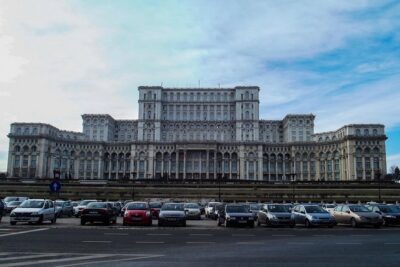
Communism in Bucharest – Landmarks, Museum & Communist Appetizers
Read our review →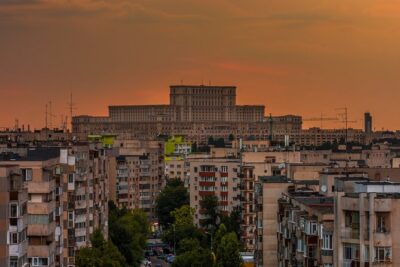
Museum of Communism Ticket with Communist Coffee
Read our review →
Dinner+Tour at Museum of Communism after closing
Read our review →Browse the lists this tour appears in