
Reviewed · 3-HOUR EXPERIENCES
Bucharest: Alternative Sightseeing 2.5-3h-Hour Guided Tour
Bucharest’s street art is easy to miss if you stick to the grand boulevards and famous buildings. This 2.5-hour walking tour turns your attention to small stickers, large murals, side streets, cafés, and independent cultural spaces, then explains how public art connects with freedom of expression, politics, and daily life.
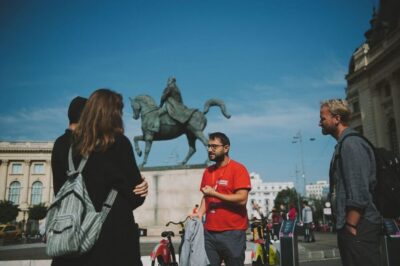
I like two things here. First, the guide does not simply point at a wall and name the artist. You are encouraged to look, form your own reading, and then hear the story behind the work. Second, the group is capped at 10 people, so the conversation can stay personal. The main consideration is simple: you will walk a lot, and this is more about modern Bucharest than the city’s classic monuments.
In This Review
- Key points to know before booking
- Why this tour changes the way you see Bucharest
- Starting at Izvor and the Faculty of Sociology
- Epoque Hotel and the contrast between old and new
- Coffee, conversation, and Beans & Dots
- Kraft Market and the role of independent spaces
- Calea Victoriei, seen through public art
- Bram Stoker, Dracula, and the Masonic mural
- Finishing at Food Hood
- The guides make the difference
- What the $47 price gets you
- Who should take this walk
- Practical advice for your morning or afternoon
- Should you book the Bucharest Alternative Sightseeing Tour?
- FAQ
- Where does the tour start?
- Where does the tour finish?
- How long does the experience last?
- What language is the tour offered in?
- How many people can join the group?
- What is included in the price?
- Does the tour visit Bucharest’s famous tourist attractions?
- Is coffee included at Beans & Dots Specialty Coffee?
- What should I bring?
- Can I cancel the booking for a refund?
Key points to know before booking
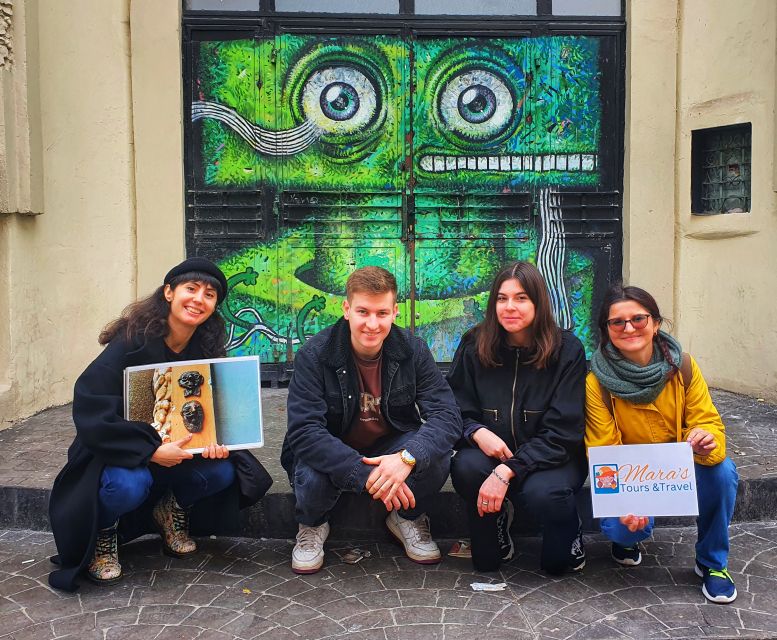
- Street art with social context: Learn how murals and graffiti relate to activism, public space, and changing ideas in Romania.
- A different route through central Bucharest: The walk links Izvor, Calea Victoriei, cafés, cultural venues, and less obvious corners.
- Guides who make the art conversational: Elena, Anca, Mara, Livia, and others have led the experience, with a style that combines stories, questions, and local tips.
- Small group, English language: With no more than 10 participants, you can ask questions without shouting across a crowd.
- A useful first-day activity: The guides have shared suggestions for restaurants, cafés, and places to visit later in the trip.
- Bring comfortable shoes: The tour lasts about 2.5 to 3 hours and is built around walking rather than sitting.
Why this tour changes the way you see Bucharest
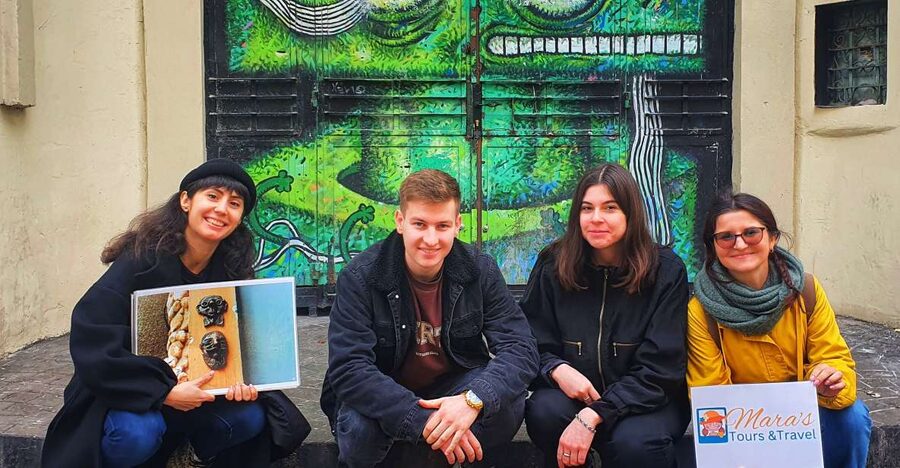
The best reason to take this tour is not the promise of a particular mural. It is the shift in attention.
At first, graffiti may look like decoration, advertising, protest, or simple wall writing. With a good guide, you begin to notice who is allowed to speak in public, which subjects appear on city walls, and how artists respond to social and political issues. That gives you a more useful picture of Bucharest than a list of dates and buildings alone.
The route begins outside Izvor Metro Station, a practical meeting point with an easy connection to public transport. From there, the guide introduces the first signs of freedom of expression before leading you toward places where street art has found room to grow.
This is not presented as a standard sightseeing circuit. You will not spend the entire time hearing about the Palace of Parliament or ticking off famous façades. Instead, the tour puts ordinary streets and contemporary culture at the center. That makes it a good choice if you have already seen the main sights, or if you want a thoughtful introduction to the city before exploring on your own.
A few more Bucharest tours worth a look
- 3-Hour Guided Tour of Communist Bucharest
★ 4.9 · 303 reviews - Bucharest: 3-Hour Dark History Tour with a Local
★ 4.9 · 301 reviews - Bucharest: 3-Hour Walking Tour
★ 4.9 · 77 reviews
Starting at Izvor and the Faculty of Sociology
The opening section sets up the main idea: public space tells you something about a city.
At the Faculty of Sociology and Social Work, the guide spends about 15 minutes connecting the urban setting with social realities. This stop is useful because it moves the tour beyond art as something pretty to photograph. You start considering how young artists, students, residents, and activists use the city around them.
The exact material on view may depend on what is present when you visit. Street art changes, gets painted over, or appears in new places. That is part of the subject, not a flaw. The guide’s value comes from helping you read what is there and understand the larger setting.
If you enjoy asking questions, this is a strong part of the tour. Past guides such as Anca and Elena have been praised for discussing how Bucharest has changed and what younger citizens want from the city. Expect an open conversation rather than a fixed lecture.
Epoque Hotel and the contrast between old and new
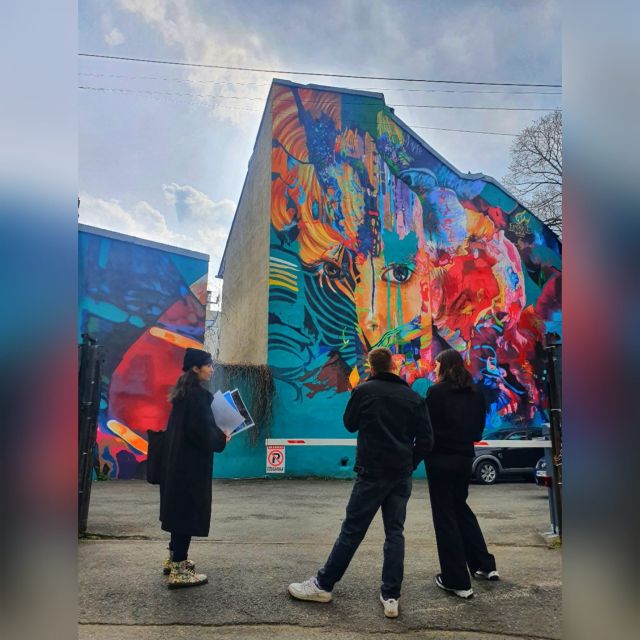
The next stop is Epoque Hotel, with about 20 minutes of guided attention.
The itinerary does not describe this as a conventional hotel visit, so you should not book the tour expecting a full interior tour or a long architectural presentation. Its place on the route helps show how different kinds of spaces sit beside one another in Bucharest: established buildings, hospitality venues, public walls, and newer artistic work.
That contrast matters. Alternative culture does not exist in a separate quarter with clear borders. It appears beside formal institutions, businesses, traffic, and everyday city life. The guide uses these changes in setting to explain how art is received and where it can find an audience.
This is also where the walk begins to feel less like a hunt for large murals. The experience includes smaller pieces and details, so keep your eyes open. A compact sticker or painted corner may carry as much meaning as a wall-sized image.
Coffee, conversation, and Beans & Dots
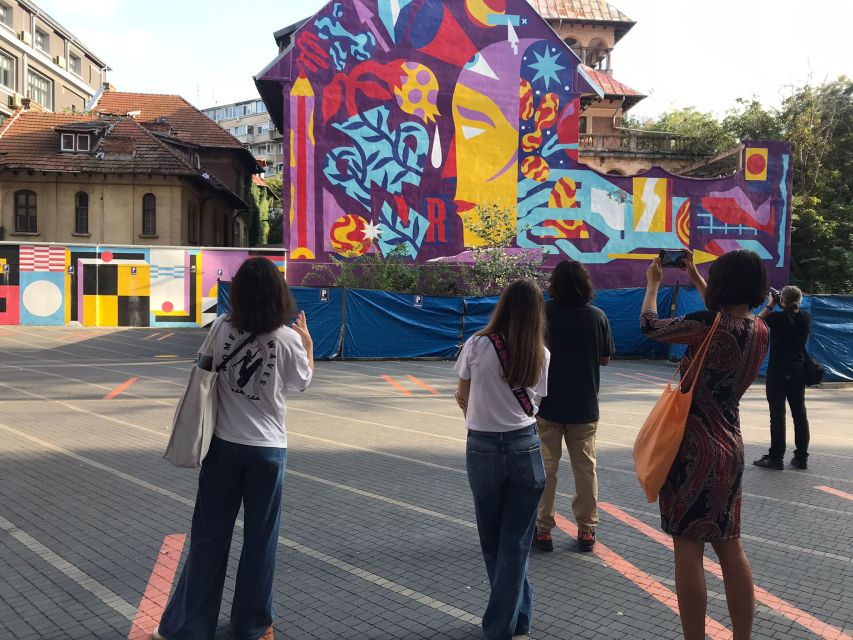
Beans & Dots Specialty Coffee is scheduled for about 20 minutes, combining coffee time with guided discussion.
The stop gives your feet a short break without turning the tour into a food outing. The coffee shop is part of the story because cafés can support creative communities, conversations, and local projects. The guide can also help you place the city’s independent culture in an everyday setting rather than treating it as something only found in galleries.
One useful feature of this tour is its relaxed tone. Kimberly’s experience with Elena included a stop at a family-run bakery and suggestions for local treats, while other participants received recommendations for restaurants and places to visit later. The stated route specifically includes Beans & Dots, so any extra food stop should be treated as guide-dependent, not guaranteed.
You may want to budget separately for anything you order here. The listed price covers the guide, not drinks or food.
A different side of the city, same short trip:
- Bucharest: Dracula’s Castle, Peles Castle, & Brasov Old Town
★ 4.5 · 17,858 reviews - Bucharest: Dracula Castle, Peles Castle & Brasov Old Town
★ 4.6 · 10,891 reviews - Bucharest: Dracula’s Castle, Peleș Castle & Brașov Day Trip
★ 4.5 · 5,919 reviews - Bucharest: Palace of Parliament Tickets and Guide
★ 4.3 · 3,182 reviews
Kraft Market and the role of independent spaces
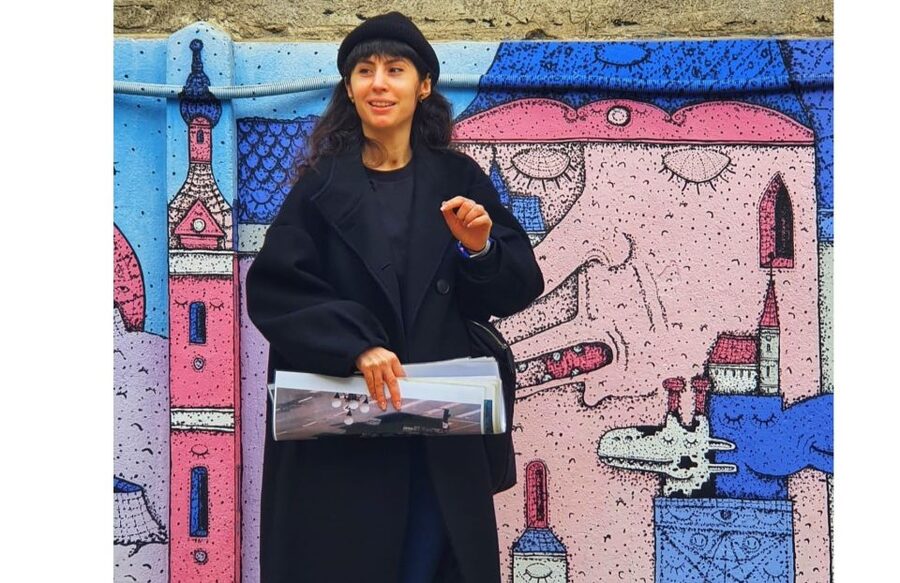
Kraft Market receives about 10 minutes of guided attention. That is a short stop, but it helps broaden the definition of alternative Bucharest.
The tour is not only about painting on walls. It also looks at the kinds of places that welcome young artists and give them room to show work. Libraries, bars, open-air movie areas, and independent theatres are part of this wider network, and the route includes cultural venues where public art and local projects overlap.
Kraft Market may be most useful to you if you want ideas for what to do after the walk. The tour can point you toward a side of Bucharest that is easy to miss in a standard city-center visit. Still, the itinerary does not promise a market shopping session or a long stay, so think of this as a context stop rather than a major attraction.
Calea Victoriei, seen through public art
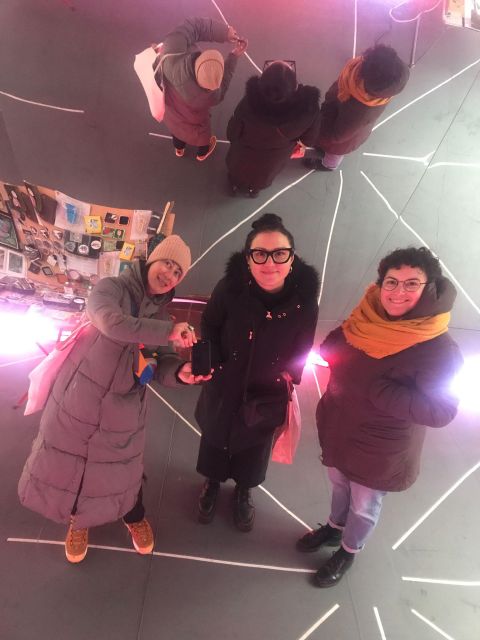
The longest section is along Calea Victoriei, with around 30 minutes of guided time.
This famous central avenue gives the tour a useful change of scale. Rather than separating historic Bucharest from its current creative life, the guide shows how contemporary art appears within a major city route. You may find murals, smaller marks, and public installations in places you would otherwise pass without a second look.
The guide’s explanations are the key here. Several past participants praised guides for linking street art with Bucharest’s history, Romanian society, and political questions. That balance keeps the walk from becoming a simple photo stop.
I would keep your camera ready, but do not rush from image to image. The point is to notice placement, subject, and tone. Ask why a work might be on that wall, who its intended audience could be, and what the artist may be responding to. The guide encourages this kind of personal interpretation, then adds background and local context.
Calea Victoriei can also be the busiest part of the route. You are still walking in a city center, not through a quiet gallery. Comfortable shoes matter, and you should expect the experience to be outdoors for much of its duration.
Bram Stoker, Dracula, and the Masonic mural
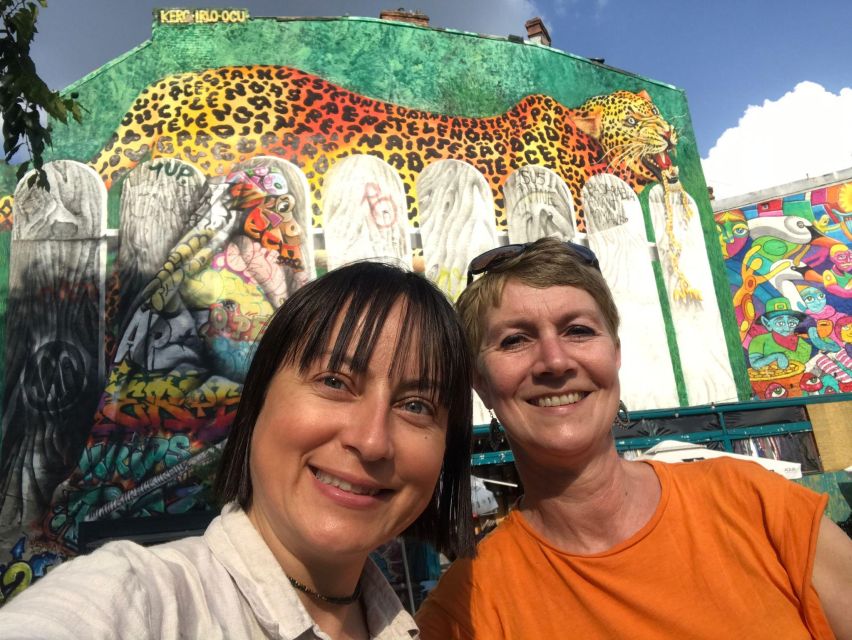
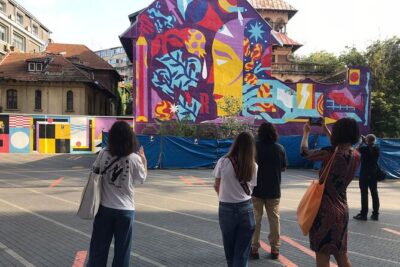
A mural connected with Freemasonry, Bram Stoker, and Dracula is one of the most distinctive named stops.
This is the sort of detail that makes the tour memorable. It brings together Romanian cultural associations, literary myth, symbols, and modern mural art. The guide spends about 15 minutes here, giving you time to look closely and ask questions.
Do not expect this stop to replace a full history tour of Romania or a dedicated Dracula excursion. Its value is narrower and more urban: you see how familiar cultural ideas can be reshaped in public art. The image also makes a strong photograph, though the guide’s explanation is more important than the picture alone.
This stop is a good example of the tour’s overall method. It uses a contemporary artwork as an opening into wider questions about identity, symbolism, and the way Bucharest presents itself.
Finishing at Food Hood
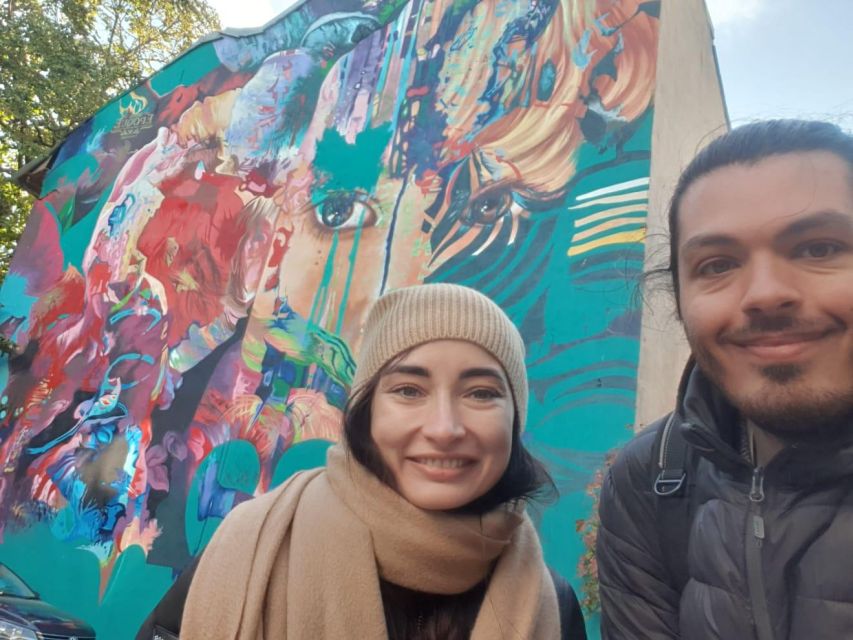
The tour ends at Food Hood, giving you a practical place to continue your day.
The experience does not include a meal, and the information provided does not promise a final food tasting. Treat the finish as a convenient end point and a possible starting point for your own plans. You can ask the guide for suggestions, though recommendations may vary by guide and by what you want to eat or see next.
Ending here also works well because the walk has moved through several types of urban space. You finish with a sense of Bucharest as a city where food, art, conversation, and public life overlap.
The guides make the difference
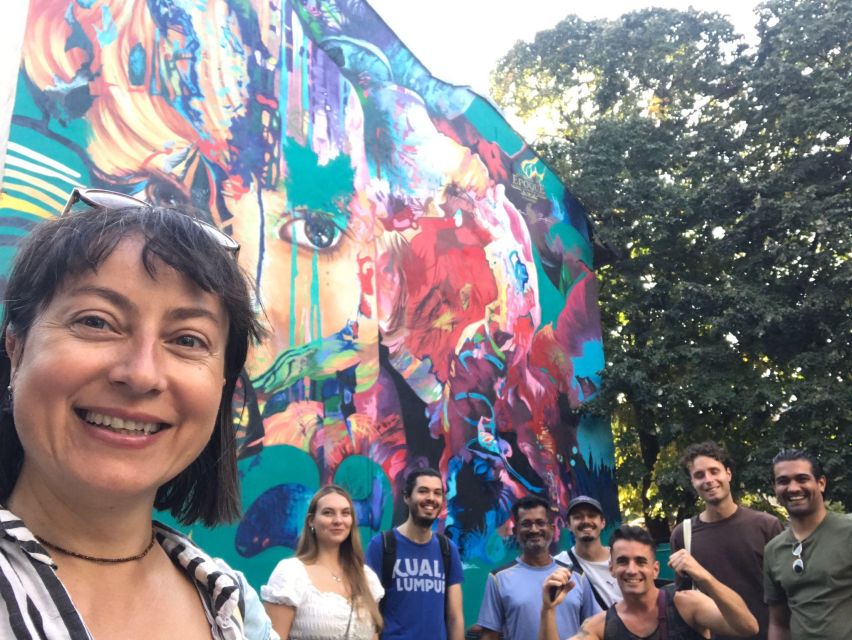
The strongest element of this tour is the guide’s approach.
The experience has been led by Elena, Anca, Mara, Livia, Carmen, Stefan, and others over the years. Elena is described as especially passionate about the artists and the meaning behind their work. Anca has been praised for storytelling, local knowledge, and tailoring the walk to individual interests. Mara has combined street art with Romanian history in an energetic way, while Livia has been noted for answering questions clearly and bringing social and political facts into the discussion.
Your guide will determine the exact tone. You may get a reflective conversation, a lively history lesson, or a more personal look at the city’s art scene. The common thread is an English-language walk led by someone who can explain not only what you are seeing, but why it matters.
The interactive style is a real advantage. You are not expected to accept one official interpretation of every image. You can share what you see, hear another view, and then learn more about the artist or local context. That makes the experience work for both dedicated street-art fans and people who are unsure what to make of graffiti.
What the $47 price gets you
At $47 per person, the tour is not the cheapest way to spend a morning in Bucharest. You are paying for a small group, an English-speaking guide, and access to a route that would be hard to reproduce from a normal sightseeing map.
The value depends on what you want. If you only want large murals and quick photo stops, you may find the price harder to justify. If you want social background, artist stories, local recommendations, and a better way to read the city, the cost is more reasonable.
A private guide would normally offer more flexibility, but this experience keeps the group to 10 people. That is a useful middle ground: more personal than a large walking tour, without the price of a fully private outing.
The guide is the only listed inclusion. Plan to pay separately for coffee, bakery items, or anything else you choose along the route. The tour allows cancellation up to 24 hours before departure for a full refund, and you can reserve while paying later, which helps if your Bucharest schedule is still taking shape.
Who should take this walk
I would choose this tour for you if you:
- Want to see Bucharest beyond the main monuments
- Like street art, photography, design, or current social issues
- Enjoy asking questions and discussing different interpretations
- Prefer small groups over large bus or walking tours
- Want local suggestions for cafés, restaurants, and cultural places
- Are visiting Bucharest early in your stay and want a different way to get oriented
It is also a smart choice if you think graffiti is not your thing. The guide explains the work in a way that connects it to public life, politics, and the city’s changing identity.
I would be more cautious if your main goal is historic architecture, royal interiors, or a complete introduction to Bucharest’s famous sights. The route may pass through central areas, but the focus is contemporary art and social culture. You should also be comfortable walking for most of three hours.
Practical advice for your morning or afternoon
Meet your guide outside Izvor Metro Station. Check the starting time when booking, since the schedule can vary.
Wear comfortable shoes. The walk is long enough that poor footwear will distract from the art, and the experience includes several outdoor sections. Keep your schedule flexible after the tour if you want to follow up on a café, theatre, library, or restaurant suggestion.
If photography matters to you, bring a phone or camera with enough battery. The route includes both large murals and small-scale pieces, so a wide lens is not essential, but you may appreciate having time to frame details.
Most important, look up and around. The tour is designed to show you work you might otherwise walk past. Once you understand the visual clues and local references, you may continue noticing signs of Bucharest’s creative life for the rest of your visit.
Should you book the Bucharest Alternative Sightseeing Tour?
Book it if you want a personal, thoughtful look at Bucharest’s street art and independent culture, especially early in your stay. The small group, lively English-language guiding, and mix of murals, activism, cafés, and public spaces give you more than a photo walk.
Skip it if you want a classic overview of the city’s major landmarks or a seated art presentation. For everyone else, $47 is a fair price for three hours with a guide who can help you see the city’s walls, side streets, and cultural spaces with fresh eyes.
FAQ
Where does the tour start?
The meeting point is outside Izvor Metro Station in Bucharest.
Where does the tour finish?
The tour finishes at Food Hood.
How long does the experience last?
The tour lasts about 2.5 hours, with the activity information also describing it as 2.5 to 3 hours.
What language is the tour offered in?
The live tour guide leads the experience in English.
How many people can join the group?
The group is limited to a maximum of 10 participants.
What is included in the price?
The guide is included. Food and drinks are not listed as included.
Does the tour visit Bucharest’s famous tourist attractions?
The focus is not on typical tourist attractions. It centers on street art, graffiti, social and cultural realities, independent spaces, and less obvious parts of central Bucharest.
Is coffee included at Beans & Dots Specialty Coffee?
The itinerary includes a coffee stop at Beans & Dots, but the included services list only the guide. You should expect to pay separately for anything you order.
What should I bring?
Bring comfortable shoes, since the experience is a walking tour lasting several hours.
Can I cancel the booking for a refund?
Yes. You can cancel up to 24 hours in advance for a full refund. You can also reserve now and pay later.
Recently added around Bucharest
- 6h Communism Tour in Bucharest with Ceausescu Mansion★ 4.5 · 6 reviews
- From Bucharest : Day Trip to Peles, Dracula’s Castle, Brasov★ 4.7 · 6 reviews
- Bears Sanctuary, Dracula Castle and Brasov City – Full Day Trip from Bucharest★ 5.0 · 6 reviews
- Dracula Private Tour★ 5.0 · 6 reviews
- Transfagarasan Road Private Day Trip from Bucharest / The Best Road in the World★ 5.0 · 6 reviews
- Bucharest : Wednesday, Dracula & Peles 3 Castles Tour 1 Day★ 4.7 · 6 reviews
- Hiking thought the best mountain villages in Romania-Private tour from Brasov★ 5.0 · 6 reviews
- Bucovina Painted Monasteries & Transylvania Tour: 4-Day Private★ 5.0 · 6 reviews
3-Hour Experiences, compared.
Alternative Bucharest: 2.5-3 Hours Walking tour (Small groups)
Read our review →
3h Bucharest Private Walking Tour – only your group
Read our review →
Private Transfer and 3H Tickets to Therme Bucharest
Read our review →
Bucharest Evening Tour and Traditional Dinner – 3 hours
Read our review →Browse the lists this tour appears in