
Reviewed · 3-HOUR EXPERIENCES
Bucharest: 3-Hour Dark History Tour with a Local
Bucharest’s darkest stories are not tucked away in a museum. They appear in a cemetery crowded with ornate tombs, on streets marked by the 1989 Revolution, and in the remains of an old interwar brothel. This tour connects those places with the human stories behind them, including the Vampire of Bucharest, a serial killer who terrorized the city in the early 1970s.
I like Bellu Cemetery, where funerary art, folklore, family tragedy, and local history come together. I also like the way the tour treats Romania’s communist past as lived experience, not just a list of dates. Guides such as Alex, Elena, Andra, Vlad, and Irina bring warmth and personal perspective to difficult subjects. The main drawback is the amount of walking, with much of the time spent outdoors. In cold weather, you need proper layers.
In This Review
- Key points to know before you book
- Starting beside the National Theatre
- A street lined with six cemeteries
- Bellu Cemetery, Bucharest’s open-air gallery
- University Square and the blood of 1989
- Little Paris, brothels, and a city of contrasts
- Revolution Square and Ceaușescu’s dictatorship
- How the guide shapes the experience
- What the $55 price includes
- Who should book this Bucharest dark history tour?
- FAQ
- How long does the Bucharest Dark History Tour last?
- Where does the tour meet?
- What language is the tour conducted in?
- Is Bellu Cemetery included?
- Are metro tickets included?
- Can children join the tour?
- Should you book it?
Key points to know before you book
- Bellu Cemetery is the emotional center: Expect ornate graves, unusual monuments, sad love stories, sinister mysteries, and plenty of time to look closely.
- The tour links several dark chapters: You move from cemetery history and interwar sex work to the 1989 Revolution, student protests, prisons, and communist repression.
- It is more than a ghost walk: The focus is Romania’s political and social past, with spooky folklore and crime stories woven into the wider picture.
- Small groups keep the walk personal: The maximum group size is 12, and guides often tailor the conversation to your questions and interests.
- Metro travel is part of the route: Metro tickets are included, along with a traditional Romanian street snack.
- Plan for three hours outside: Comfortable shoes matter, and winter visitors should dress especially warmly.
Starting beside the National Theatre
The meeting point is the main entrance of the Ion Luca Caragiale National Theatre at Bulevardul Nicolae Bălcescu 2, near University Square. This is a useful central location, but give yourself a few minutes to find the correct entrance, especially if you are arriving by metro or on foot.
The group is limited to 12 people. That is small enough for a guide to hear your questions and notice when the group needs a pause. Several guides, including Elena, Alex, Andra, and Vlad, are described as friendly and flexible, with some asking about your interests at the start and shaping parts of the discussion around them.
This is not a bus tour. You walk between several stops and use the metro for parts of the route. The pace is designed to fit into three hours, but it is still a substantial city walk. Wear shoes you can trust on cemetery paths and city pavements.
The tour is conducted in English. It is for people aged 16 and older, which makes sense given the subjects: murder, prostitution, torture, political prisons, labor camps, and the violence of the 1989 Revolution.
A few more Bucharest tours worth a look
- Bucharest: Small Group History, Art & Secrets Tour
★ 4.7 · 152 reviews - Guided Walking Tour of Historical Bucharest
★ 5.0 · 84 reviews - Bucharest Jewish Heritage | Holocaust Memorial | Private Car Tour
★ 5.0 · 38 reviews
A street lined with six cemeteries
The first major part of the route takes you along a street near central Bucharest that accommodates six cemeteries. That concentration gives you a quick lesson in how the city remembers different communities and different periods of conflict.
The cemetery area includes the Cemetery of the Victims of the Revolution in 1989, the Jewish Cemetery, the Cemetery of the Russian Soldiers, and the old Bellu Cemetery, which you visit. These are not interchangeable memorial spaces. Each points to a different part of Bucharest’s past, from religious identity to war and political upheaval.
The value here is the contrast. You are not simply looking at an old burial ground. You are seeing how wars, revolution, ethnic communities, and national memory occupy the same small part of the city. A guide helps you read the area as a historical map rather than a collection of unrelated walls and gates.
The walk also prepares you for the tour’s central idea: Bucharest’s dark past is not one single story. It includes state violence, private crime, social hardship, belief, grief, and the way ordinary people adapted to difficult times.
Bellu Cemetery, Bucharest’s open-air gallery
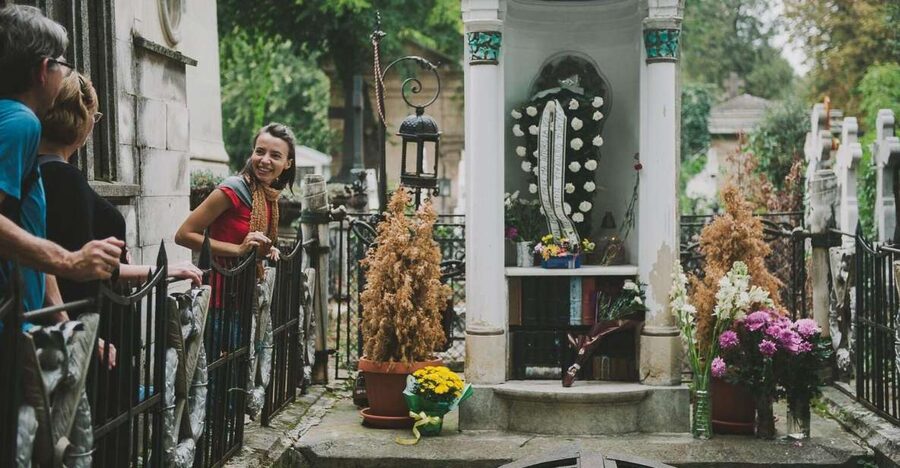
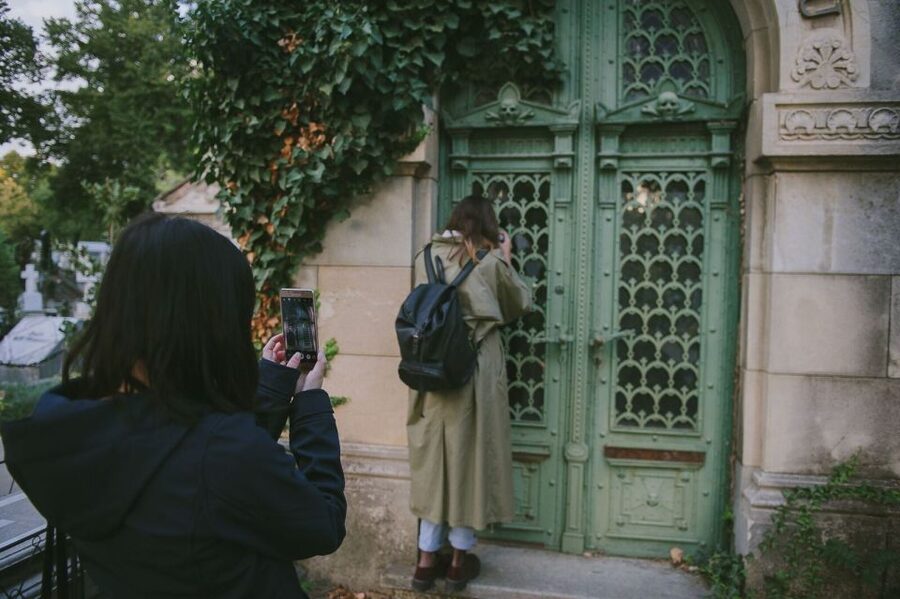
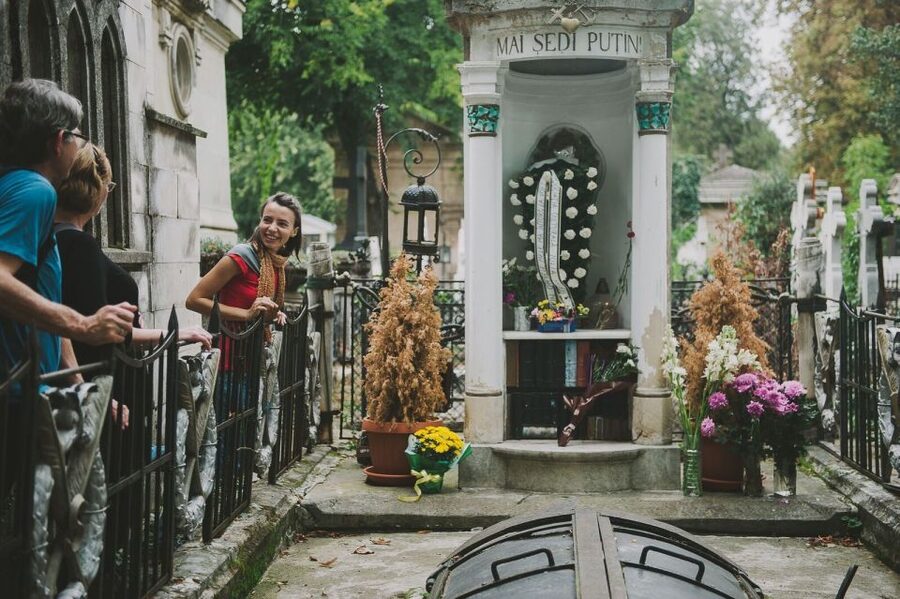
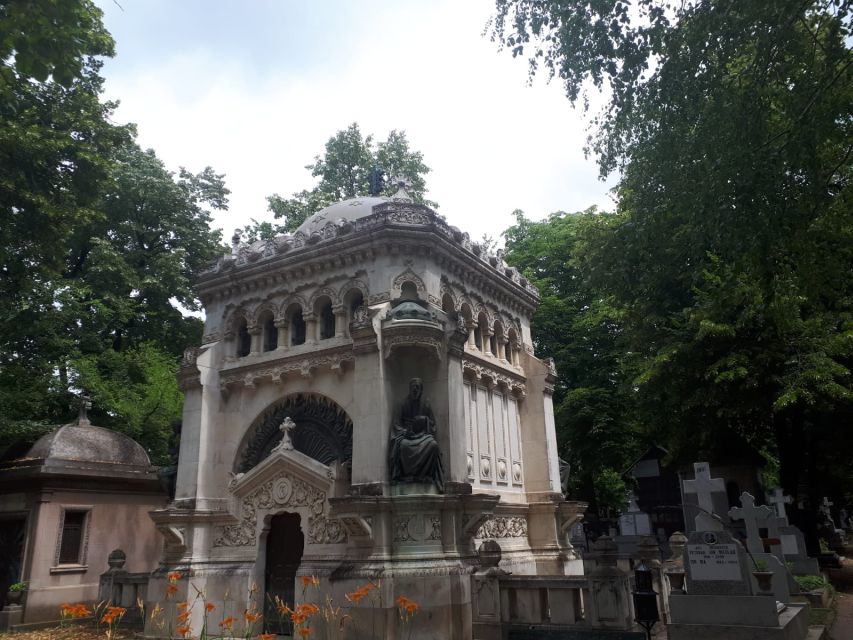
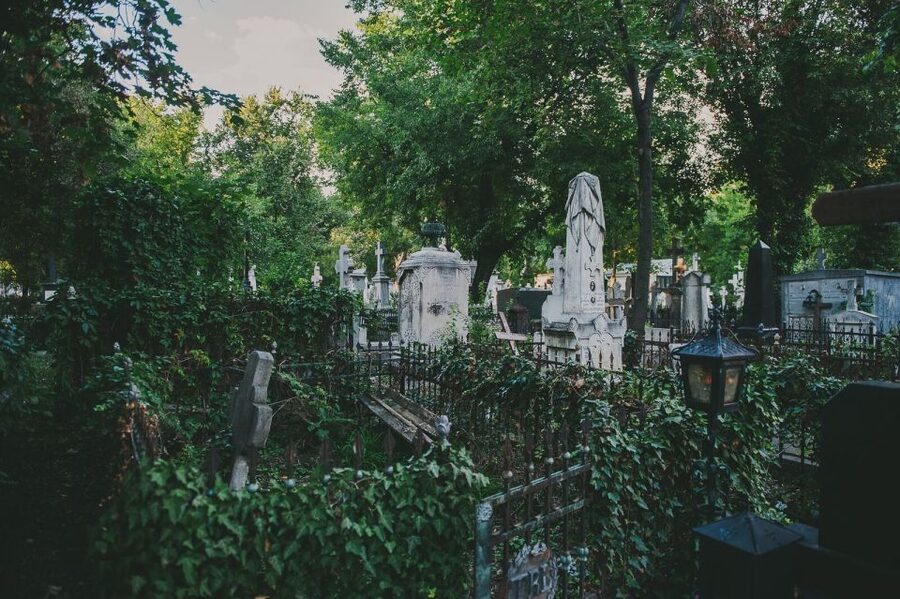
Bellu Cemetery is the strongest stop on the tour. It is a national historical monument, and the experience is as much about art and architecture as it is about death.
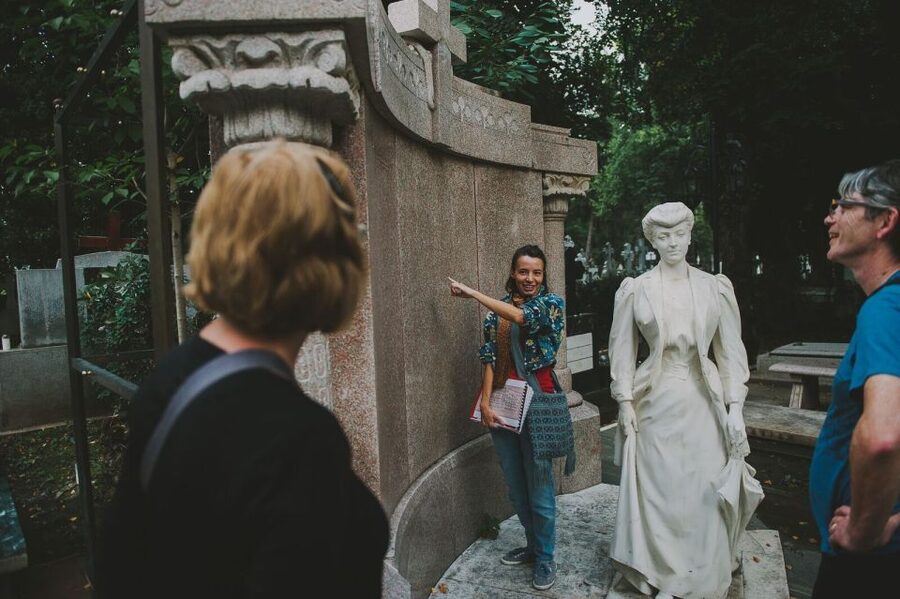
The cemetery contains elaborate funerary structures and monuments. You might find carved figures, decorative details, family tombs, and memorials that reward slow looking. A guide can point out details you could easily miss on your own, then connect them to stories of the people buried there.
The tone here is not simply spooky. Bellu has sad love stories, family dramas, folklore, and sinister mysteries. That variety keeps the visit from becoming a parade of grim anecdotes. You get a more rounded sense of Romanian attitudes toward death, remembrance, and the afterlife.
One especially human feature is the cemetery’s resident cats and dogs. Guides such as Elena and Irina are known for caring about these animals, and some tours include time spent feeding or petting them. It is a small detail, but it can soften an otherwise heavy section of the day.
Allow yourself to look beyond the headline stories. One of the tour’s strengths is attention to small things, such as architectural details, local plants, stray animals, and the way old monuments sit within the cemetery. Alex, in particular, is praised for using photographs and drawing attention to details that add meaning to the main explanation.
The drawback is practical: cemeteries are outdoor places, and you may spend a fair amount of time standing still while listening. In winter, cold can creep in before you notice it. Wrap up more warmly than you think necessary.
University Square and the blood of 1989
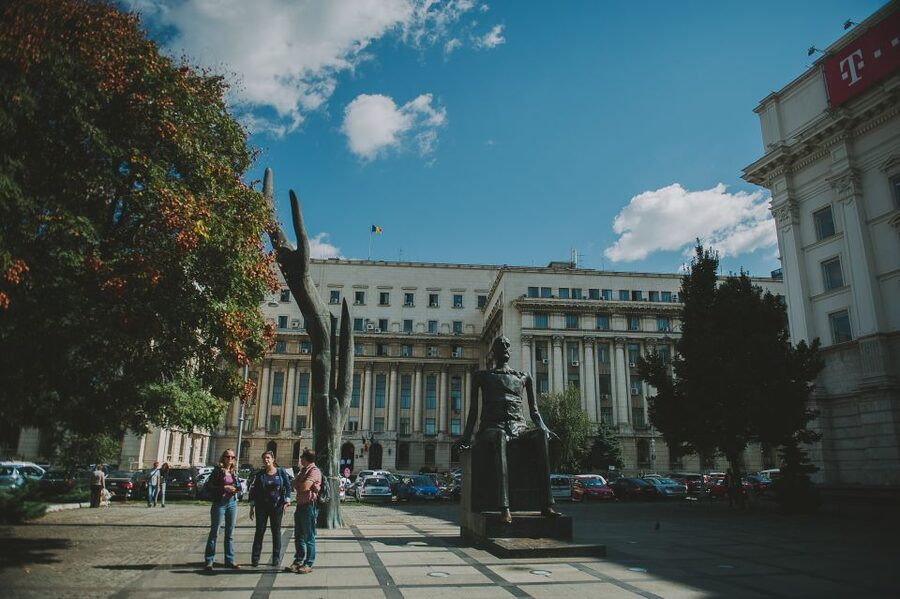
From the cemetery, the tour turns toward University Square, one of Bucharest’s most important public spaces. This is where the city’s modern political story becomes more direct.
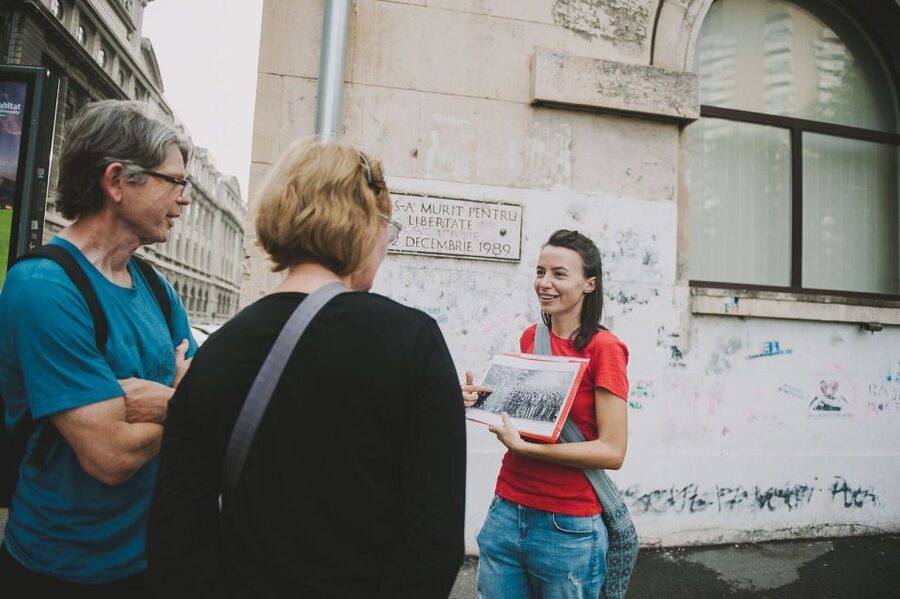
University Square played a key role in the 1989 Revolution that brought down Nicolae Ceaușescu’s communist regime. It was also central to anticommunist student protests in the 1990s. Both episodes involved bloodshed, and the guide explains how the same public space became a stage for people demanding political change.
This section gives useful context for the cemetery stories. At Bellu, you encounter individual lives and memorials. At University Square, you see how large events changed the lives of thousands of people at once.
Do not expect a detached lecture. The most effective part of this stop is the link between public events and everyday fear. The tour explains how people lived under Ceaușescu, how the Securitate operated as Romania’s secret police, and how criticism could bring serious consequences.
Personal experiences can make this section especially powerful. Vlad, for example, has shared reflections on life under communism during tours, while other guides bring their own family or cultural perspective to the subject. The exact guide varies, so you should not assume you will receive one person’s specific story. You can expect the communist period to be discussed through both historical facts and human experience.
A different side of the city, same short trip:
- Bucharest: Dracula’s Castle, Peles Castle, & Brasov Old Town
★ 4.5 · 17,858 reviews - Bucharest: Dracula Castle, Peles Castle & Brasov Old Town
★ 4.6 · 10,891 reviews - Bucharest: Dracula’s Castle, Peleș Castle & Brașov Day Trip
★ 4.5 · 5,919 reviews - Bucharest: Palace of Parliament Tickets and Guide
★ 4.3 · 3,182 reviews
Little Paris, brothels, and a city of contrasts
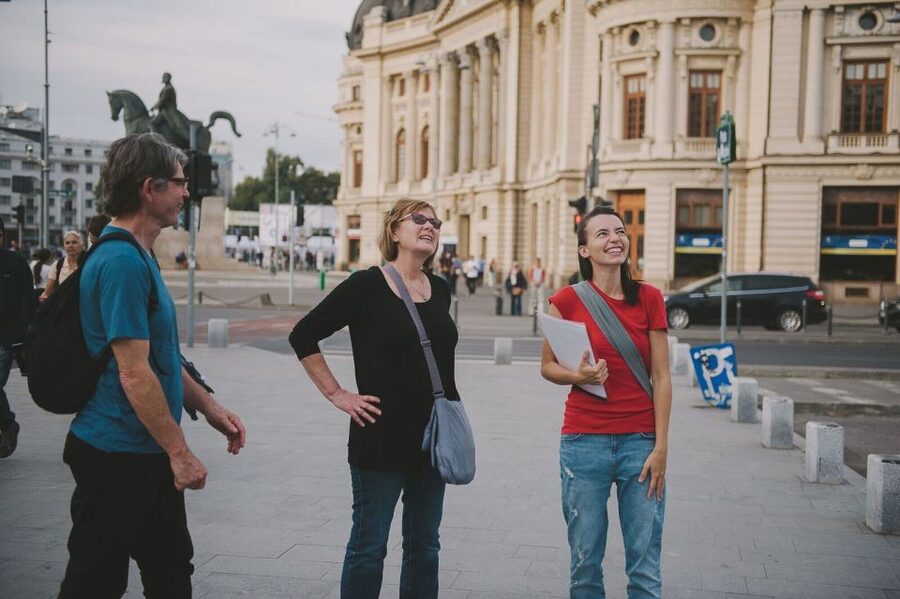
Bucharest was once known as Little Paris, a nickname linked to its sophisticated interwar atmosphere, architecture, cafés, and social life. The tour uses that era to show a less polished side of the city.
You learn about the sex trade in interwar Bucharest and see what remains of a former brothel. This is not presented as a glamorous tale of old nightlife. The point is to show the gap between the city’s cultivated public image and the private economies that existed behind it.
That contrast is one of the tour’s most interesting ideas. A city can present itself as elegant and European while also containing poverty, exploitation, crime, and social rules that were very different from those of today.
The stop also introduces the story of the serial killer nicknamed the Vampire of Bucharest, who terrorized the city at the beginning of the 1970s. The story adds a true-crime element, but it does not replace the broader history. It sits beside the material on prostitution, architecture, and daily life.
If you are booking mainly for ghost stories, keep your expectations in check. The tour includes eerie tales and crime, but its purpose is to explain Bucharest through difficult chapters of history. You get more politics and social history than a theatrical haunted walk.
Revolution Square and Ceaușescu’s dictatorship
The final major section takes you to Revolution Square, the place where the 1989 Revolution began in Bucharest. It is a fitting end because many earlier subjects return here: fear, public protest, state power, and the cost of speaking against the regime.
The discussion covers communist prisons, labor camps, and torture methods used to silence critics. You also learn about Ceaușescu’s dictatorship and the terror created by the Securitate.
This material can be disturbing. The tour does not turn repression into entertainment, and that is important. The darker stories work best when they help you understand how a political system shaped daily choices: what people could say, whom they could trust, and how they survived shortages and pressure.
For me, the value of this stop is its scale. The cemetery shows how people are remembered after death. Revolution Square shows how citizens challenged a government while knowing that the consequences could be severe. The tour leaves you with a clearer sense of why 1989 remains so important in Romania.
The route can feel information-packed. Guides often cover kings, architecture, folklore, language, everyday customs, communism, and the Revolution within the same afternoon. That variety is rewarding, but you will need to stay engaged. If you prefer a slow tour with only a few facts, this may feel busy.
How the guide shapes the experience
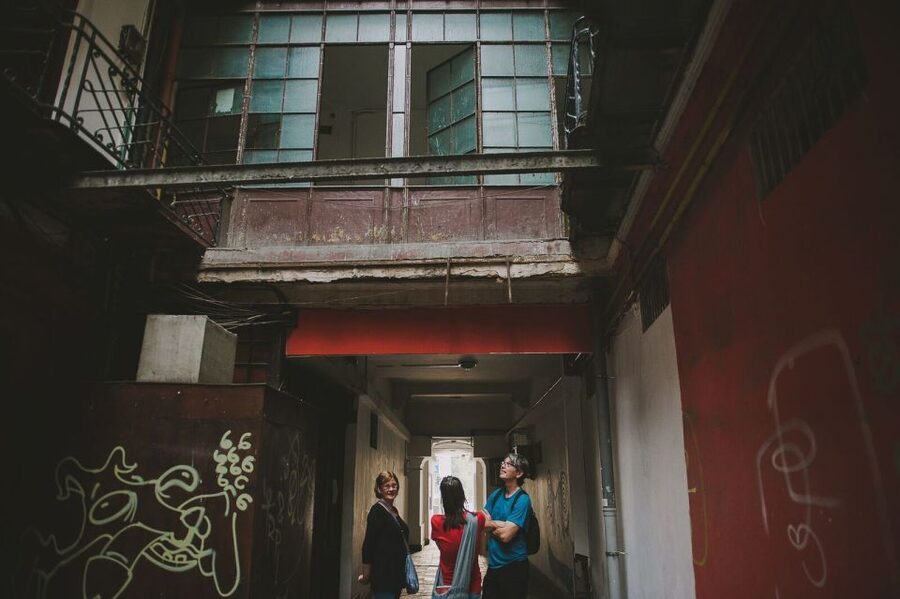
The guide is the main reason this tour works. The subject matter is strong, but a poor guide could reduce it to a string of grim facts. The guides associated with this experience are praised for clear storytelling, humor, patience, and personal insight.
Alex is especially suited to people who like detail. He has been praised for answering questions about architecture and for pointing out bullet holes, street art, local plants, and other small signs of the city’s past. He also uses photographs to make the stories easier to picture.
Elena brings a warm, conversational style. She has been described as engaging and welcoming, with a particular fondness for the cats and dogs around the cemetery. Andra is a good fit if you like thoughtful explanations delivered with humor. Vlad is known for adjusting the tour to the group, pausing when needed, and sharing extra material afterward.
Irina is another strong choice for people interested in Romanian history and folklore. She is described as an animated storyteller who makes complex events easier to follow.
You cannot normally select a specific guide from the information provided, so treat these names as examples of the guiding style you might encounter rather than a promise. The common thread is a local English-speaking guide who knows Bucharest well and can answer questions beyond the printed route.
What the $55 price includes
At $55 per person, this is not the cheapest way to walk around Bucharest. The price includes a three-hour guided experience, metro tickets, and a traditional street snack. Additional food, drinks, souvenirs, and personal purchases are not covered.
The value depends on how much context you want. Bellu Cemetery is free or inexpensive to approach on your own, and you can visit public squares without a guide. But you would be left to connect the cemetery district, the Revolution, interwar Bucharest, the brothel site, the serial killer story, and communist repression yourself.
A strong guide makes that connection. You are paying for interpretation, route planning, transport during the walk, and the chance to ask questions. Several guides also offer restaurant, café, and food suggestions after the tour, and some have sent extra material through WhatsApp.
The small group limit improves the value. With no more than 12 people, the tour should feel more like a guided conversation than a crowd following a flag. If you happen to be in a very small group, the guide may have more time to tailor the experience, though that cannot be guaranteed.
Free cancellation up to 24 hours before the start and the option to reserve without paying immediately make the booking less risky. Those policies are useful if your Bucharest plans are still changing.
Who should book this Bucharest dark history tour?
I would choose this tour if you have already seen the main central sights and want a different way to understand the city. It is also a strong first tour if you prefer stories about ordinary life, political conflict, architecture, and unusual places instead of a standard list of monuments.
It suits adults and older teenagers who can handle serious topics. History fans, architecture enthusiasts, true-crime readers, and anyone curious about Romania’s communist period should find plenty to hold their attention.
You should think twice if you dislike cemeteries, discussions of murder and torture, or long walks with outdoor stops. Children under 16 cannot join, and cold weather can make the listening portions uncomfortable. Bring comfortable shoes, water if you want it, and warm clothing in winter.
FAQ
How long does the Bucharest Dark History Tour last?
The tour lasts three hours.
Where does the tour meet?
It meets at the main entrance of the Ion Luca Caragiale National Theatre, Bulevardul Nicolae Bălcescu 2, București 010051, Romania.
What language is the tour conducted in?
The tour is conducted in English by a live local guide.
Is Bellu Cemetery included?
Yes. Bellu Cemetery is one of the main stops, and the tour covers its monuments, architecture, stories, and mysteries.
Are metro tickets included?
Yes. Metro tickets used during the tour are included in the price.
Can children join the tour?
No. Travelers under 16 years of age are not permitted to join.
Should you book it?
Book this tour if you want Bucharest’s difficult stories explained by someone who can connect places, politics, folklore, and daily life. The cemetery is the visual highlight, while University Square and Revolution Square give the tour its moral weight.
At $55, it makes sense for readers who value a skilled local guide more than a low-cost walk. Choose it for the personal stories, the unusual route, and the clear look at Romania under communism. Skip it if you want a light sightseeing stroll or a purely supernatural experience. Dress for the weather, bring good shoes, and arrive ready to listen.
Recently added around Bucharest
- 6h Communism Tour in Bucharest with Ceausescu Mansion★ 4.5 · 6 reviews
- From Bucharest : Day Trip to Peles, Dracula’s Castle, Brasov★ 4.7 · 6 reviews
- Bears Sanctuary, Dracula Castle and Brasov City – Full Day Trip from Bucharest★ 5.0 · 6 reviews
- Dracula Private Tour★ 5.0 · 6 reviews
- Transfagarasan Road Private Day Trip from Bucharest / The Best Road in the World★ 5.0 · 6 reviews
- Bucharest : Wednesday, Dracula & Peles 3 Castles Tour 1 Day★ 4.7 · 6 reviews
- Hiking thought the best mountain villages in Romania-Private tour from Brasov★ 5.0 · 6 reviews
- Bucovina Painted Monasteries & Transylvania Tour: 4-Day Private★ 5.0 · 6 reviews
3-Hour Experiences, compared.

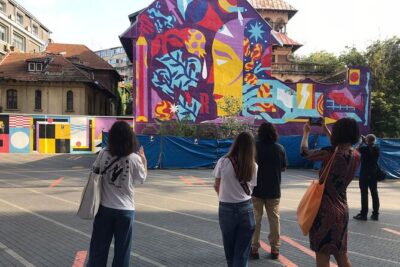
Alternative Bucharest: 2.5-3 Hours Walking tour (Small groups)
Read our review →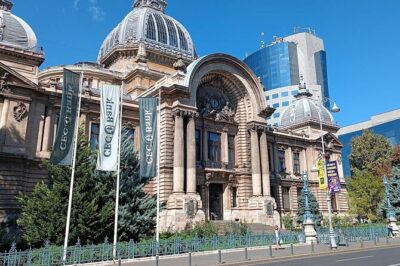
3h Bucharest Private Walking Tour – only your group
Read our review →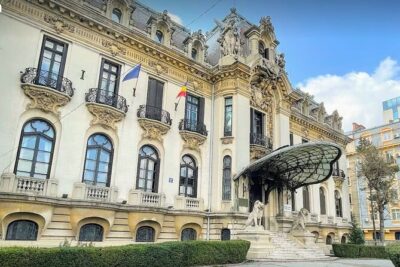

Private Transfer and 3H Tickets to Therme Bucharest
Read our review →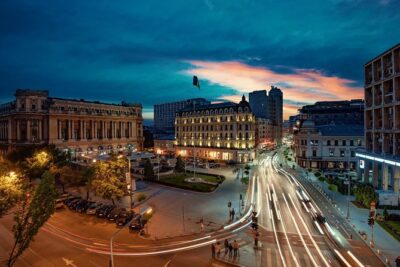
Bucharest Evening Tour and Traditional Dinner – 3 hours
Read our review →Browse the lists this tour appears in