
Reviewed · COMMUNISM TOURS
Bucharest Under Communism: Life, Terror & Hope
Bucharest’s communist past is easiest to grasp when you see it in the streets. This 3.5-hour walk connects Ceaușescu’s grand boulevards and Palace of the Parliament with the churches, offices, and protest sites caught in his drive to remake the capital. Guides such as Laura and Tamar explain not just what happened, but how ordinary people lived through it.
I like the route’s strong mix of landmarks and personal stories, especially the contrast between the huge government buildings and Mihai Voda Monastery, a medieval church that survived demolition. I also like the use of historic photos, which helps you picture streets and speeches that can otherwise feel distant.
The main consideration is the amount of walking and the tour’s intense subject matter. The advertised duration is about 3 hours 30 minutes, although some descriptions of the experience refer to roughly two hours, so confirm the timing when you book and wear comfortable shoes.
In This Review
- Key points to know before you book
- Why communist Bucharest makes sense on foot
- Starting at Unirii Square and the Victory of Socialism Boulevard
- The Palace of the Parliament from the outside
- Mihai Voda Monastery and the churches that disappeared
- Revolution Square and Ceaușescu’s final speech
- University Square and the cost of protest
- Guides, group size, and the feel of the walk
- What the price includes, and what it does not
- Who will get the most from this experience
- Should you book Bucharest Under Communism?
- FAQ
- Where does the tour begin?
- What time does the tour start?
- Where does the tour end?
- How long does the tour last?
- Is admission to the Palace of the Parliament included?
- What is the maximum group size?
- What happens if the weather is poor?
Key points to know before you book
- See Ceaușescu’s grand plan at Unirii Square: The fountains and broad boulevard reveal the scale of his vision for Bucharest.
- View the Palace of the Parliament from several angles: The tour explains its cost, forced shortages, and place in modern Romanian memory.
- Find a medieval church behind communist-era buildings: Mihai Voda Monastery offers a sharp contrast to the planned city around it.
- Follow the final days of the regime: Revolution Square connects Ceaușescu’s last speech with the protests of 1989.
- Hear about University Square’s deadly demonstrations: This stop focuses on the human cost of the fight for a free society.
- Expect a small private group: The tour allows a maximum of 15 people, with the guide able to answer questions along the way.
Why communist Bucharest makes sense on foot
This is not a tour of isolated monuments. It is a walk through a city altered by political power.
Romania spent about 45 years under communist rule. The period began after the monarchy was pushed aside and ended in the violent upheaval of December 1989. In Bucharest, that story is written into the width of the streets, the scale of public buildings, the churches moved out of sight, and the squares where people gathered despite the danger.
A guide gives you the missing links. You learn how the ruling party shaped daily life, why the capital suffered severe shortages during the 1980s, and how Nicolae Ceaușescu used architecture to project authority. The tour also places communism beside Romania’s earlier monarchy, a useful frame for understanding the country’s political changes.
I would choose this experience early in a Bucharest visit if you want context before exploring the city on your own. It gives you names, dates, places, and stories that make later sightseeing easier to read.
More communism-era tours in Bucharest:
- The Real tour of Communism
★ 5.0 · 666 reviews - Life under Communism
★ 5.0 · 358 reviews - 3-Hour Guided Tour of Communist Bucharest
★ 4.9 · 303 reviews
Starting at Unirii Square and the Victory of Socialism Boulevard
The tour begins at Piața Sfântul Anton 64 at 4 pm, near the center of Bucharest. From there, you head to Unirii Square, or Piața Unirii, one of the clearest places to see the final phase of communist city planning.
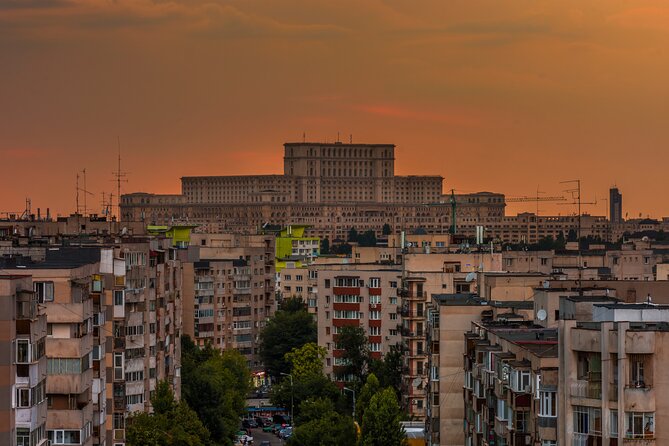
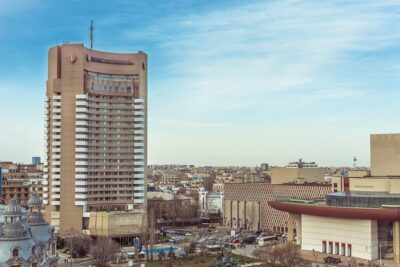
The square is known today for its fountains, but the broader point is the avenue crossing it. The former Victory of Socialism Boulevard was designed on a grand scale, leading toward the Palace of the Parliament. Its width was not simply a traffic decision. It was part of a plan to create a ceremonial route suited to rallies, official parades, and the dictator’s image of a transformed capital.
This is where the tour’s architecture lesson becomes useful. Instead of treating the boulevard as a large road, you see it as political theater in concrete and stone. The scale tells you something about the state that ordered it and the public it expected to watch.
Plan on about 30 minutes here. That is enough time to look at the fountains, walk a section of the boulevard, and hear how Bucharest was reshaped during Ceaușescu’s final building campaign.
The Palace of the Parliament from the outside
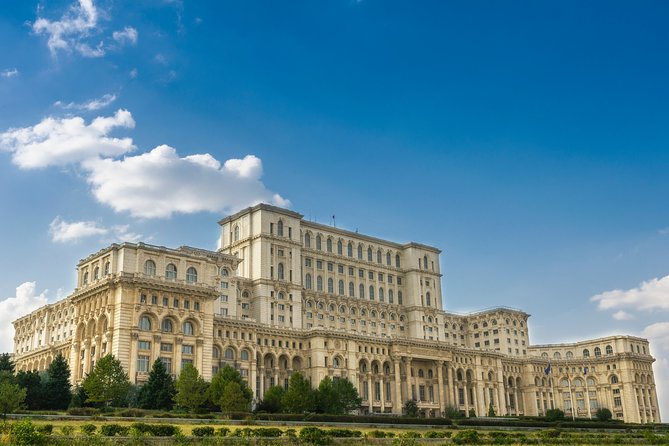
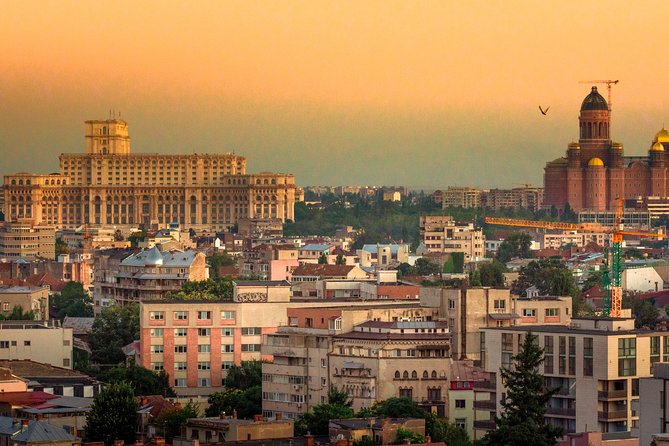
The Palace of the Parliament receives about an hour of the walk, and rightly so. It is the tour’s biggest physical subject and perhaps Romania’s most difficult building to judge.
The palace is described as the second-largest building in the world after the Pentagon and the most expensive administrative building. Those figures explain its scale, but they do not explain its human cost. During the 1980s, Romania endured shortages of many basic goods while vast amounts of money, materials, and labor went into the palace and surrounding redevelopment.
From different viewpoints, your guide explains how the building was created and how people in Bucharest regard it today. That last part matters. The palace is not only an architectural curiosity. It is a reminder of a government that demanded sacrifice from the public while spending heavily on symbols of power.
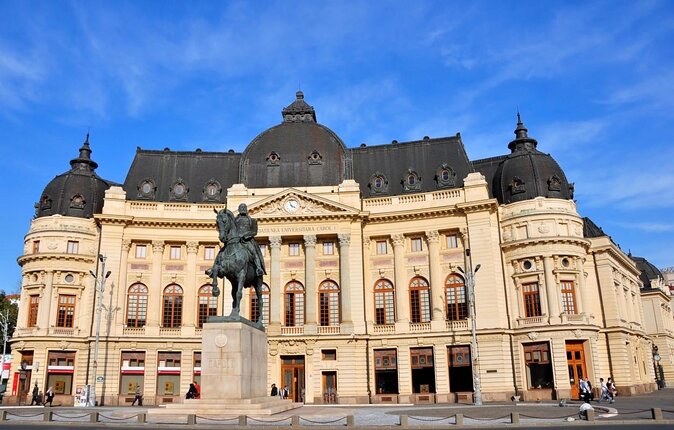
The route also points out the Academia Română building across from the palace. It was intended for Elena Ceaușescu, Nicolae’s wife, and reflects the same preference for scale and official grandeur. The guide’s explanation helps you see the buildings as part of one political project rather than unrelated sights.
Admission to the Palace of the Parliament is not included, and this walking experience focuses on viewing it from outside. That is an important distinction if an interior visit is high on your list. You will get context and several exterior perspectives, but you should not book this tour expecting a palace entry.
Mihai Voda Monastery and the churches that disappeared
The stop at Mihai Voda Monastery changes the mood. After the wide avenues and oversized public buildings, you encounter a religious site from the Middle Ages, hidden behind utilitarian communist-era construction.
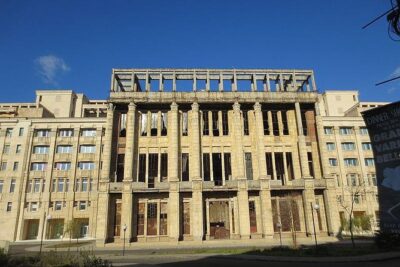
The church survived a period when parts of Bucharest were demolished or radically altered. Other churches were destroyed, while some were moved, screened, or left tucked behind newer blocks. The result can look strange today: a historic place of worship appears almost concealed by the city built around it.
That contrast gives you a more complete picture of communist policy. The government did not deal with religion in only one way or with one simple rule. Some buildings were lost, while others survived through difficult compromises or fortunate circumstances. Mihai Voda Monastery lets you consider what Bucharest looked like before the major rebuilding campaigns.
The stop lasts about 30 minutes and admission is free. I find it especially useful for readers who want more than a political story. It shows how ideology reached into the city’s older neighborhoods, religious life, and physical memory.
A few more Bucharest tours worth a look
- Bucharest: Dracula’s Castle, Peles Castle, & Brasov Old Town
★ 4.5 · 17,858 reviews - Bucharest: Dracula Castle, Peles Castle & Brasov Old Town
★ 4.6 · 10,891 reviews - Bucharest: Dracula’s Castle, Peleș Castle & Brașov Day Trip
★ 4.5 · 5,919 reviews - Bucharest: Palace of Parliament Tickets and Guide
★ 4.3 · 3,182 reviews
Revolution Square and Ceaușescu’s final speech
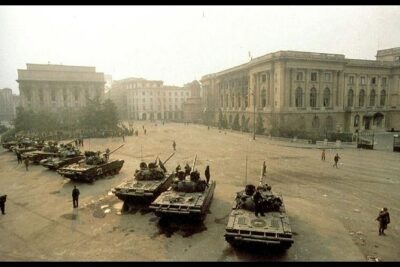
At Revolution Square, the tour moves from long-term policy to the dramatic end of the regime. This was where the communist system began to crack in public and where the events of 1989 brought it down.
You see the building that housed Ceaușescu’s office and the balcony where he delivered his final speech. The square also marks the location of the first mass demonstration in Bucharest. Your guide explains what happened to people who protested against totalitarian rule, then follows the story through the aftermath of the Revolution.
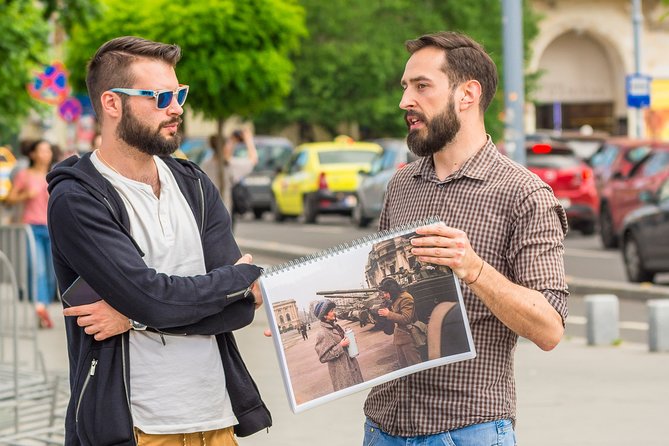
This is a place where photographs and clear storytelling help. A balcony is just a balcony until you understand the moment when a crowd stopped responding as expected. The guide’s historic images, used alongside the buildings themselves, can help you connect the present-day square with those tense scenes.
Allow about an hour here. That may sound long for one square, but the subject includes the demonstrations, the violence, the monument dedicated to those who died, and the uncertain period after Ceaușescu’s fall. You should expect serious discussion rather than a quick photo stop.
University Square and the cost of protest
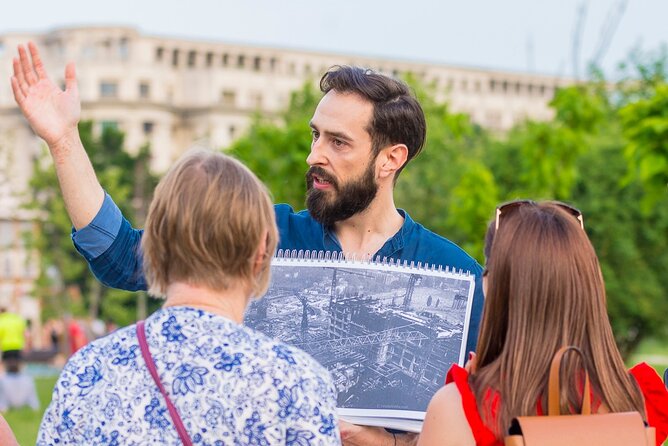
University Square is the final major stop. It was a central site of anti-communist protest in 1989, and the tour addresses the hundreds of people who were killed while supporting a free society.
This part of the walk adds weight to the political story. It is easy to treat the end of communism as a neat transition, with one speech, one crowd, and one new beginning. University Square shows why that version is too tidy. The change was dangerous, confused, and paid for by real people.
The stop is scheduled for about 30 minutes. Since the tour ends at Revolution Square rather than returning to the starting point, you finish close to Bucharest’s Old Town, about five minutes away. That makes it practical to continue with dinner or an evening walk, though you may want a quiet pause first.
Guides, group size, and the feel of the walk
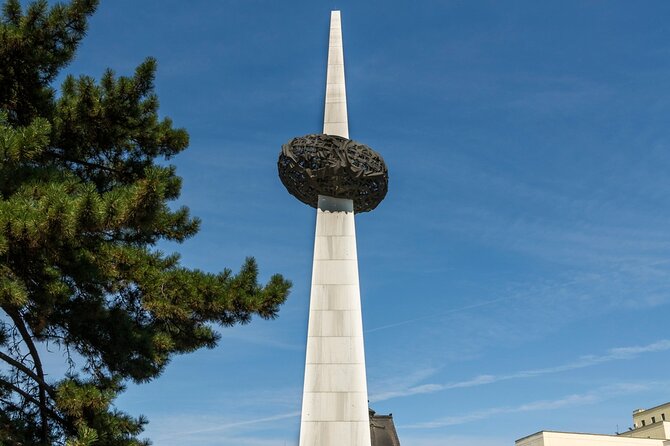
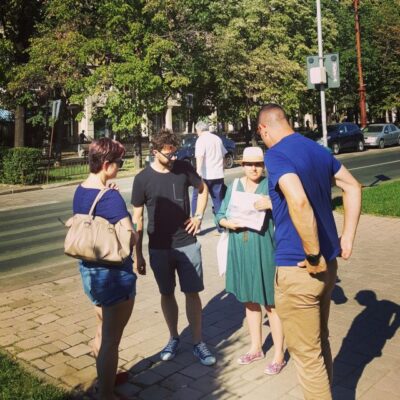
The guide can make or break a history walk, and the strongest feedback here centers on Laura and Tamar. Laura is described as having a history degree and using personal stories, photographs, and clear explanations to connect the monarchy, communist period, and democratic transition. Tamar is praised for mixing facts with anecdotes and for answering extra questions without losing the thread of the walk.
You should not assume that one specific guide will lead your departure unless the booking confirmation says so. Still, the repeated pattern is useful: the experience depends heavily on a guide who can explain difficult material in plain English and adjust the pace to the group.
The maximum group size is 15 people, and some departures may be much smaller. A small group is valuable here because the subject invites questions. You can ask about daily shortages, the monarchy, religious buildings, the Revolution, or how Bucharest residents view the Palace of the Parliament now.
The tour is described as private, but the stated maximum of 15 means you should check exactly what private means for your booking. In practical terms, the format is designed for a personal, guide-led experience rather than a large bus tour.
What the price includes, and what it does not
At $23.22 per person, this is a modest price for a 3.5-hour guided walk. The value comes from the interpretation. You can see Unirii Square and the Palace of the Parliament without paying for a guide, but it is harder to understand why the boulevard is so broad, why shortages matter to the palace story, or how a hidden church fits into the city’s past.
The tour includes free admission at the outdoor and religious stops listed in the route. Palace of the Parliament admission is not included, and the itinerary presents the building as an exterior viewing stop. You should budget separately only if you plan to visit inside on another occasion.
The mobile ticket is convenient, and the meeting point is in central Bucharest near public transportation. The 4 pm start suits a day of sightseeing, but remember that the tour relies on walking and daylight conditions can change by season.
Free cancellation is available if you cancel at least 24 hours before the local start time. Changes or cancellations inside that window are not accepted for a refund. The experience requires good weather, so a weather cancellation results in a different date or a full refund.
Who will get the most from this experience
I would recommend this tour to a first-time Bucharest visitor who wants a clear introduction to the city’s modern political past. It also suits anyone interested in architecture, dictatorships, urban planning, religion under communism, or the fall of state socialism in Eastern Europe.
It can work well for history-minded families and older children, but the Revolution sections include deaths and repression. Decide based on the age and temperament of your group.
Romanian visitors can also find value here. The route covers familiar places but adds political background, historic photographs, and details that are easy to miss when you know a city mainly through daily life.
You may want a different activity if your priority is entering the Palace of the Parliament, covering Bucharest’s full architectural history, or taking a relaxed sightseeing walk with little political discussion. This experience stays focused on communism, the monarchy to communist transition, Ceaușescu, and the 1989 Revolution.
Should you book Bucharest Under Communism?
Book it if you want Bucharest to make sense beyond its cafés, Old Town, and grand buildings. The strongest feature is the way the route links scale with suffering: the grand avenue with shortages, the palace with forced labor, the hidden monastery with religious pressure, and the squares with the risks of protest.
The tour is best when you arrive ready to walk, listen, and ask questions. Confirm the expected duration, remember that Parliament entry is not included, and wear comfortable shoes. If Laura or Tamar is listed for your departure, you can expect a guide with a strong record for clear explanations, visual aids, warmth, and patience.
FAQ
Where does the tour begin?
The meeting point is Piața Sfântul Anton 64, București 030167, Romania.
What time does the tour start?
The stated start time is 4 pm.
Where does the tour end?
The final stop is Revolution Square, or Piața Revoluției, about five minutes from Bucharest’s Old Town.
How long does the tour last?
The advertised duration is approximately 3 hours 30 minutes. Some descriptions of the experience refer to about two hours, so confirm the expected timing when booking.
Is admission to the Palace of the Parliament included?
No. Admission to the Palace of the Parliament is not included. The route explains and views the building from different exterior angles.
What is the maximum group size?
The tour can have a maximum of 15 participants.
What happens if the weather is poor?
The experience requires good weather. If it is canceled because of poor weather, you will be offered another date or a full refund. You can also cancel for a full refund up to 24 hours before the start time.
Recently added around Bucharest
- 6h Communism Tour in Bucharest with Ceausescu Mansion★ 4.5 · 6 reviews
- From Bucharest : Day Trip to Peles, Dracula’s Castle, Brasov★ 4.7 · 6 reviews
- Bears Sanctuary, Dracula Castle and Brasov City – Full Day Trip from Bucharest★ 5.0 · 6 reviews
- Dracula Private Tour★ 5.0 · 6 reviews
- Transfagarasan Road Private Day Trip from Bucharest / The Best Road in the World★ 5.0 · 6 reviews
- Bucharest : Wednesday, Dracula & Peles 3 Castles Tour 1 Day★ 4.7 · 6 reviews
- Hiking thought the best mountain villages in Romania-Private tour from Brasov★ 5.0 · 6 reviews
- Bucovina Painted Monasteries & Transylvania Tour: 4-Day Private★ 5.0 · 6 reviews
Communism Tours, compared.
Bucharest Essential Tour: Old Town, Calea Victoriei & Communism
Read our review →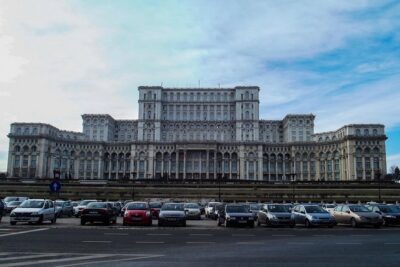
Communism in Bucharest – Landmarks, Museum & Communist Appetizers
Read our review →
Museum of Communism Ticket with Communist Coffee
Read our review →
Dinner+Tour at Museum of Communism after closing
Read our review →Browse the lists this tour appears in