
Reviewed · CITY TOURS
Bucharest: City Highlights Guided Walking Tour
Bucharest’s story changes block by block on this walk. You begin at the city’s 0 km, pass medieval court ruins and an elegant church, then trace the scars of the 1989 Revolution before reaching the huge Palace of Parliament. Claudiu can also shape the walk around your interests, especially architecture, political history, or daily life in Romania.
I like the clear route from old Bucharest to the communist Civic Center, and I like that the tour covers famous sights without pretending two hours can explain everything. The chance to arrange an interior visit to the Palace of Parliament is useful, too. The drawback is the price: at $45 per person, it costs more than some longer walks, so you are paying for a focused guide rather than a full-day outing.
In This Review
- Key points at a glance
- Bucharest in two hours, from medieval court to communist power
- Meeting the guide at Bucharest’s 0 km
- The Old Princely Court and Church
- Calea Victoriei and the age of Little Paris
- Revolution Square and the memory of 1989
- A quiet pause at Stavropoleos Church
- Crossing the Dâmbovița into the Civic Center
- Constitution Square and the Palace of Parliament
- What the $45 price really buys you
- Who should book this walk
- Should you book the Bucharest City Highlights Walking Tour?
- FAQ
- How long is the Bucharest City Highlights Guided Walking Tour?
- Where does the tour begin?
- Where does the tour end?
- Is the Palace of Parliament interior included?
- What language is the tour conducted in?
- How far do you walk?
- What should I bring, and can I bring luggage?
Key points at a glance
- Start at the She-wolf statue: Meet beside Bucharest’s 0 km marker in Roma Square, on Lipscani Street.
- See three eras in one walk: The route links the Old Princely Court, Calea Victoriei, and the communist Civic Center.
- Understand the 1989 Revolution: Revolution Square puts Romania’s recent past in a real urban setting.
- Pause at Stavropoleos Church: This small historic church offers a welcome change from the grand boulevards.
- Finish before the Palace of Parliament: The walk ends in Constitution Square, with the enormous building in front of you.
- Plan for 3.5 kilometers: Expect about 4,600 steps, with no large luggage and some uneven city walking.
Bucharest in two hours, from medieval court to communist power
This is a compact history walk with a strong visual idea: follow Bucharest from its oldest surviving center toward its most imposing modern political monument. You are not simply checking off churches and palaces. You are watching the city change from narrow Old Town lanes to grand nineteenth-century avenues, then to the oversized boulevards built under Nicolae Ceaușescu.
The two-hour length gives the tour a useful shape. You get enough time for explanations at the main stops, but not enough for long interior visits or a detailed look at every building. I would treat it as an orientation walk for your first day in Bucharest, or as a focused history lesson if you already know the basic city layout.
You walk about 3.5 kilometers, or roughly 4,600 steps. That is manageable for most people with a reasonable level of fitness, but this is not a seated sightseeing trip. The route is not suited to wheelchair users or people with mobility impairments, and you should leave large bags behind.
More walking tours in Bucharest:
- Bucharest: City Highlights Guided Walking Tour
★ 4.9 · 1,482 reviews - Bucharest Highlights Walking Tour
★ 5.0 · 469 reviews - Free walking tour of Brasov in English
★ 4.9 · 302 reviews
Meeting the guide at Bucharest’s 0 km
The meeting point is beside the Statue of the She-wolf in Roma Square, on Lipscani Street. This statue refers to the Roman story of Romulus and Remus and gives the walk a fitting starting point, since the tour quickly moves between Romanian identity, royal power, and communist rule.
The spot is also described as Bucharest’s 0 km, so you begin at a symbolic center of the city. Bring your passport or ID card, as requested for the activity, and arrive ready to walk. The guide speaks English.
Claudiu is the guide named in the feedback for this experience. His strongest quality is flexibility. If you care more about buildings than politics, he can give the walk a different emphasis. If you want to understand Romania through its recent past, you can ask questions about communism, the 1989 Revolution, and life in the country today.
That personal adjustment matters on a short tour. A fixed script can spend too much time on a subject you do not care about. Here, you should tell Claudiu early what you want from the walk.
The Old Princely Court and Church
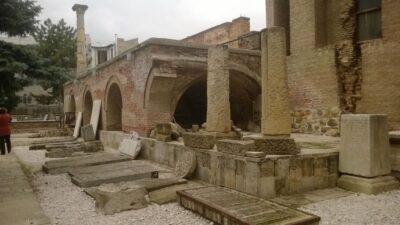
The first major stop takes you into Bucharest’s Old Town, where the Old Princely Court and Church connect the modern capital to its medieval rulers. The court is associated with the princes of Wallachia, including Vlad Țepeș, the historical figure later linked with the Dracula legend.
The important point is not simply that the site is old. It shows that Bucharest grew from a seat of regional power rather than appearing fully formed as a modern capital. The remains and the church help you picture a smaller courtly settlement before the broad avenues, royal buildings, and government districts arrived.
I like this early stop because it gives the rest of the walk a useful measure. After seeing the modest beginnings of the city, the later Palace of Parliament feels even more extreme. The contrast is one of the tour’s best ideas.
You should expect an exterior-focused visit unless the guide indicates otherwise. Two hours cannot allow long explorations at every site, and entry fees are not included. Wear shoes that can handle city pavement, and do not bring luggage or a large bag.
Calea Victoriei and the age of Little Paris
From the Old Town, the walk reaches Calea Victoriei, Bucharest’s most historic boulevard. It was once promoted as the Little Paris of the East, a nickname tied to the city’s French influence, grand architecture, and ambitions as a European capital.
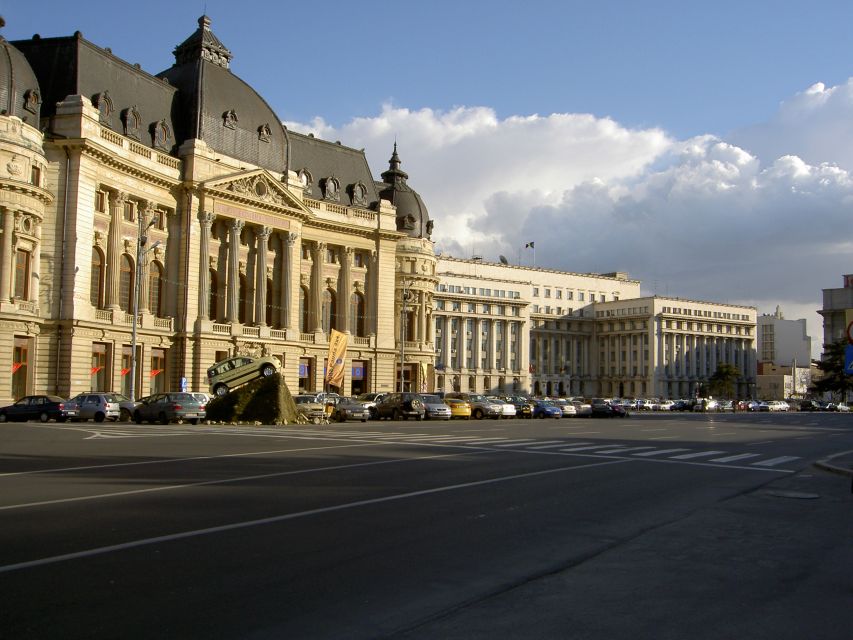
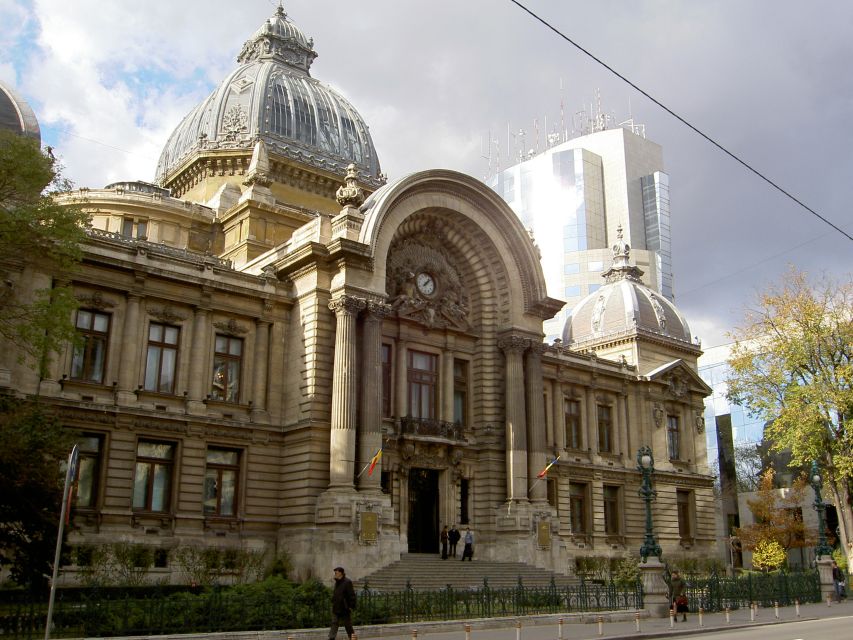
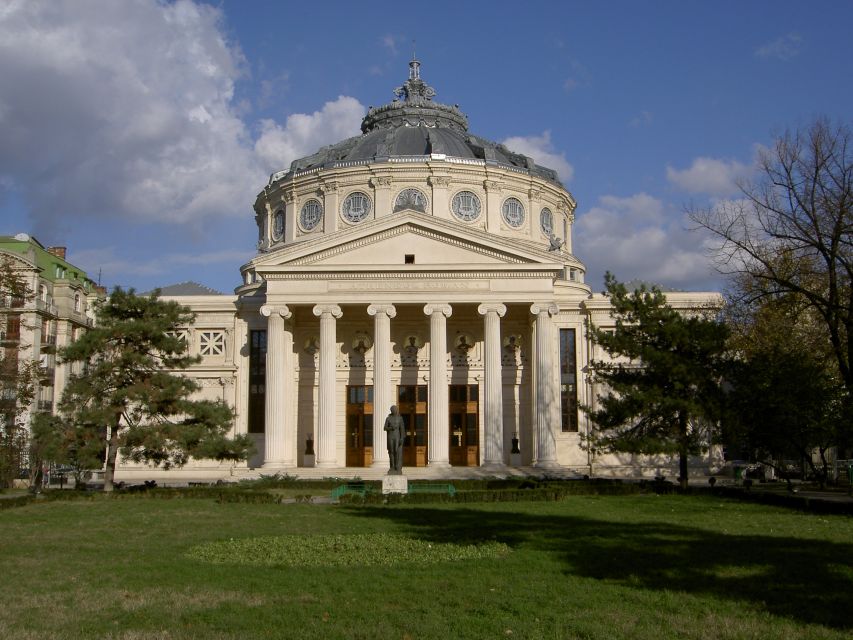
This is where you see the city’s nineteenth and early twentieth-century confidence. The route passes the former Royal Palace and the Romanian Athenaeum, buildings that help explain why Bucharest earned its Paris comparison. The boulevard is more than a pretty street. It tells you how Romania wanted to present itself through culture, monarchy, and public architecture.
The former Royal Palace and the Athenaeum also make a useful pair. One represents royal authority, while the other points to music and national culture. You can read the city’s ambitions in stone: Bucharest was trying to look outward, modern, and European.
Do not expect the walk to cover every façade in detail. The guide has to keep moving toward Revolution Square and the Civic Center. If architecture is your main interest, tell Claudiu, since one of the strongest features of the tour is the chance to spend more time on the buildings that catch your eye.
A few more Bucharest tours worth a look
- Bucharest: Dracula’s Castle, Peles Castle, & Brasov Old Town
★ 4.5 · 17,858 reviews - Bucharest: Dracula Castle, Peles Castle & Brasov Old Town
★ 4.6 · 10,891 reviews - Bucharest: Dracula’s Castle, Peleș Castle & Brașov Day Trip
★ 4.5 · 5,919 reviews - Bucharest: Palace of Parliament Tickets and Guide
★ 4.3 · 3,182 reviews
Revolution Square and the memory of 1989
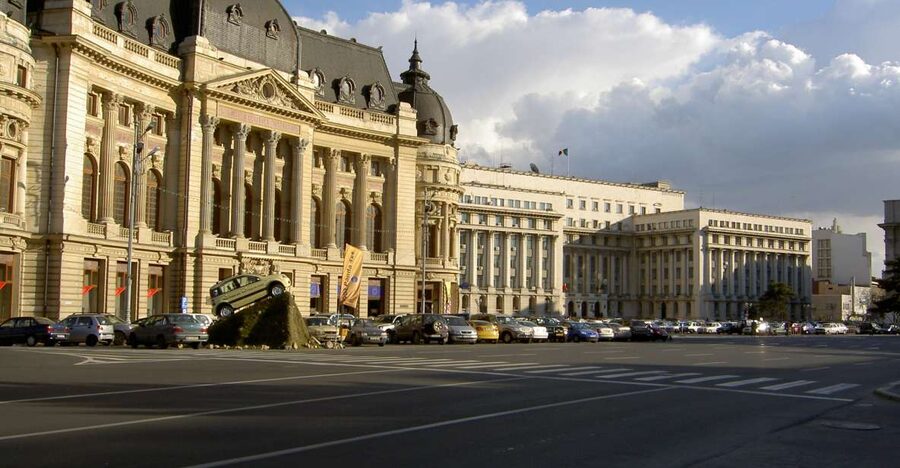
The route continues to present-day Revolution Square, beside the former headquarters of the Communist Party. This is one of the most important stops because it shifts the tour from architectural appreciation to lived political history.
The square was a central setting during the 1989 Revolution that ended Ceaușescu’s rule. Standing here helps you understand how public space can turn into a stage for protest, fear, and sudden political change. The former party headquarters is not just another government building. It is tied directly to the collapse of Romania’s communist leadership.
This part of the tour is especially valuable if you know little about the 1989 events. A guide can connect the building, the square, and the wider story in a way that a quick photograph cannot. You can ask questions about what happened and how the city remembers it.
The stop also keeps the tour balanced. Calea Victoriei presents Bucharest’s polished royal and cultural side. Revolution Square shows the cost of political power when it becomes concentrated in one party and one leadership group.
A quiet pause at Stavropoleos Church
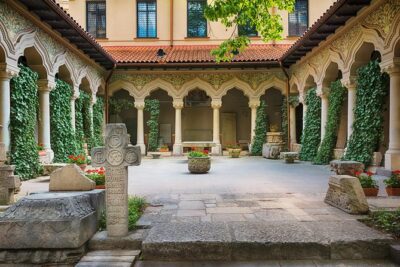
Near the History Museum, you stop at Stavropoleos Church. It is a much smaller and more intimate sight than the grand buildings along Calea Victoriei or the Palace of Parliament at the end of the route.
That change in scale is welcome. Bucharest can feel visually loud, with ornate façades, broad roads, and giant government buildings. Stavropoleos gives you a moment to focus on religious design and older local traditions. The stop also keeps the Old Town from being reduced to restaurants and nightlife.
The church is visited as part of the walking route, and entry fees are not included in the tour price. Ask the guide about the visit if you want to know how much time is available inside. The exact access can depend on current conditions, so it is best not to assume a long interior tour.
Crossing the Dâmbovița into the Civic Center
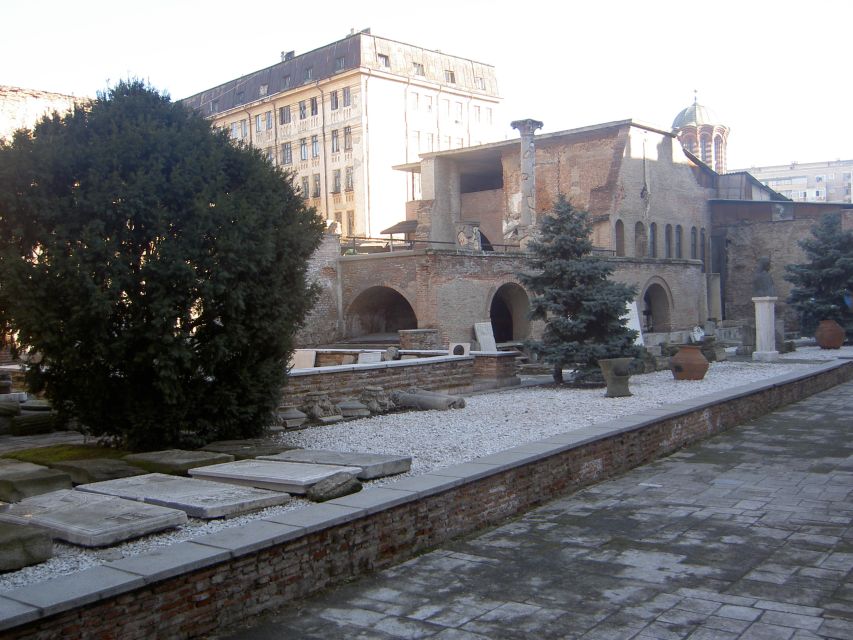
After Stavropoleos and the History Museum, you cross the Dâmbovița River and enter the Civic Center, the new city center built during the communist era. This is the sharpest visual turn on the route.
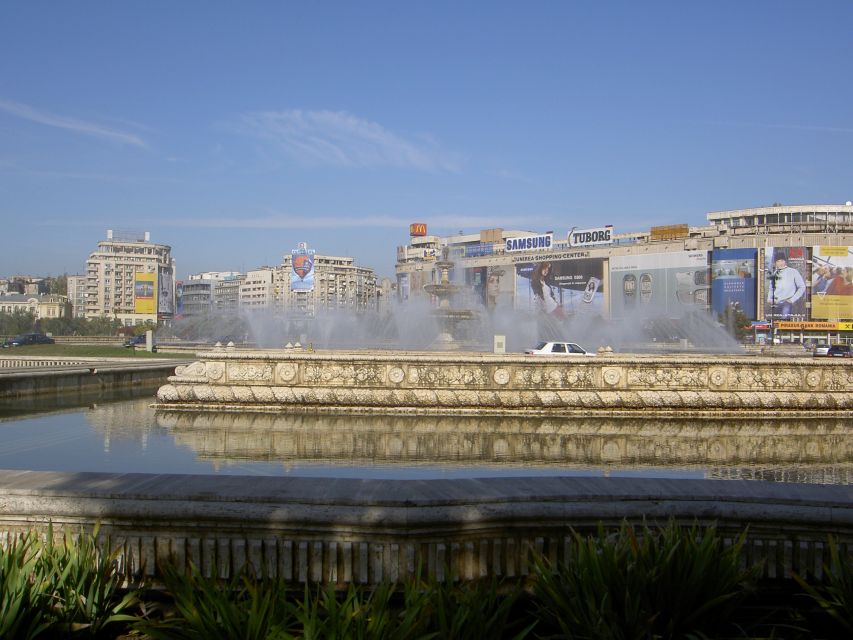
The Civic Center was created through a major rebuilding program under Ceaușescu. Its scale and layout reflect centralized power. Older neighborhoods were swept aside to make room for broad avenues and monumental structures, leading toward the Palace of Parliament.
You will notice how different this area feels from the Old Town. The earlier streets are tighter and more varied. The Civic Center is broad, formal, and designed to make the state appear immense. That contrast explains more than a list of dates can. It shows how urban planning can shape your sense of power and place.
I consider this section essential, even if modern government architecture is not your favorite subject. Without it, the Palace of Parliament can seem like an isolated oddity. With it, you see the building as the final statement of a much wider project.
Constitution Square and the Palace of Parliament
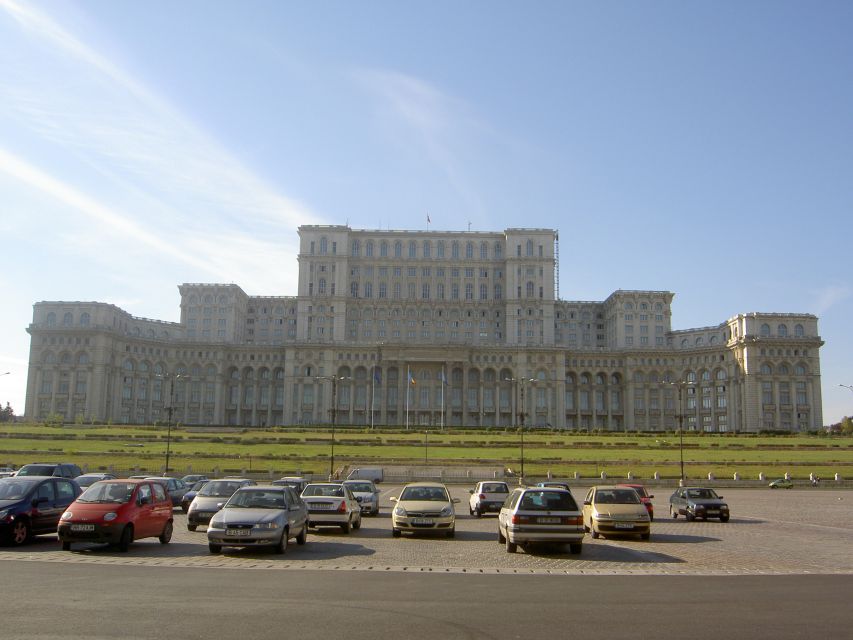
The tour ends at Constitution Square, in front of the Palace of Parliament. This is a strong finish because the building is one of Bucharest’s defining sights, and you reach it after walking through the political story that produced it.
The Palace is vast, formal, and hard to grasp from a single photograph. From Constitution Square, you can take in its scale and its position within the Civic Center. The final stop gives you time to look back at the route: medieval court, royal boulevard, communist headquarters, revolutionary square, and planned government district.
The tour does not include entry to the Palace of Parliament. An inside visit may be arranged before or after the walk, but you must request it by message when booking, and it remains subject to availability. Confirm this in advance if entering the building is a priority. Do not assume you can simply add it on the day.
This optional visit can change the value calculation. At $45, the walk alone is fairly expensive for two hours, especially when compared with longer city walks. But if you want a guided explanation of the building’s political setting and can arrange an interior visit as well, the experience may feel more complete.
What the $45 price really buys you
The listed price is $45 per person, with English guide service included. No entry fees are included, and the Palace of Parliament interior is an optional extra if available.
I would not choose this tour because it covers the most sights per dollar. It does not. You are paying for a short, concentrated route and a live guide who can answer questions and adjust the emphasis. Claudiu has been particularly effective at asking about personal interests and adding context beyond the basic stops.
That makes the tour a better fit for someone who values interpretation over speed. If you only want to see Bucharest’s top buildings and take photographs, you could cover several of them independently. If you want the connection between medieval rule, royal ambition, communist planning, and the 1989 Revolution, the guide adds real value.
The feedback for this experience is uniformly positive, with three verified ratings of five out of five. The praise centers on the guide’s detail, patience, and willingness to answer questions. One person still felt the price was high compared with longer outings, and I think that is a fair warning rather than a fault with the guiding.
Who should book this walk
I would recommend it for a first visit to Bucharest, especially if you have only a short stay. The route gives you a fast mental map of central Bucharest and helps you decide which buildings or museums deserve a return visit.
It also suits anyone interested in architecture and modern political history. The Old Princely Court, Royal Palace, Athenaeum, Communist Party headquarters, Stavropoleos Church, and Palace of Parliament represent very different periods. You get a useful sequence rather than a random collection of stops.
You may want something else if you prefer a slow cultural tour with long interior visits. The two-hour schedule is tight, and the walk covers several substantial areas. It also is not suitable for low fitness levels, wheelchair users, or people with mobility impairments.
For the best experience, wear comfortable shoes, bring identification, and carry only a small day bag. Ask about the Palace interior at booking time, and tell Claudiu what interests you most at the start.
Should you book the Bucharest City Highlights Walking Tour?
Book it if you want a clear, guided introduction to Bucharest’s changing identity in two hours. I especially like the route’s strong arc from the Old Princely Court to the Palace of Parliament, with Calea Victoriei and Revolution Square filling in the middle.
Skip it if $45 feels too high for a short walk, or if you mainly want independent sightseeing and interior access. For everyone else, the tour offers a well-focused introduction, a flexible English-speaking guide, and enough historical context to make Bucharest’s contrasting streets easier to understand.
FAQ
How long is the Bucharest City Highlights Guided Walking Tour?
The tour lasts two hours.
Where does the tour begin?
It begins next to the Statue of the She-wolf in Roma Square, on Lipscani Street. This is also described as Bucharest’s 0 km.
Where does the tour end?
The walk ends at Piața Constituției 5, in Constitution Square, in front of the Palace of Parliament.
Is the Palace of Parliament interior included?
No. Entry fees are not included. An interior visit may be arranged before or after the walk, but you must request it by message when booking, and it depends on availability.
What language is the tour conducted in?
The live tour guide speaks English.
How far do you walk?
The route covers about 3.5 kilometers, or approximately 4,600 steps.
What should I bring, and can I bring luggage?
Bring a passport or ID card. Large bags and luggage are not allowed.
Recently added around Bucharest
- From Bucharest: Discovery at Europe’s Largest Salt Mine★ 5.0 · 3 reviews
- RiverCruise Exclusive – Private Transfer from or to Giurgiu Port/Bucharest Hotel★ 3.5 · 3 reviews
- Cluj Napoca: Climbing or Hiking Experience in Turda Canion★ 5.0 · 3 reviews
- Private-Red Patrol Bucharest Flea Market Tour with a Romanian car★ 5.0 · 3 reviews
- Probably the Best Restaurant and Wine Cellar near Bucharest★ 4.5 · 3 reviews
- Private 8 Day Romania UNESCO Tour★ 5.0 · 3 reviews
- Bucharest in a nutshell – half day private walking tour★ 5.0 · 3 reviews
- Bucharest Private Airport Transfer★ 4.5 · 3 reviews
City Tours, compared.

Bucharest Panoramic Sightseeing – Private City Tour
Read our review →
SB01 – City Tour Sibiu: Exploring the Heart of Transylvania
Read our review →
City Tour Sighisoara Legends & Landmarks A Walk Through Time
Read our review →Browse the lists this tour appears in