
Reviewed · COMMUNISM TOURS
3-Hour Guided Tour of Communist Bucharest
Bucharest’s communist past is easiest to understand when you see what was destroyed beside what survived. This three-hour walk links the Palace of Parliament, revolution sites, surviving inter-war neighborhoods, and the remains of Uranus into one clear story about Ceausescu’s Romania. I especially like the personal family memories and the use of old photographs, which give daily life a human scale. I also like that the tour looks beyond grand buildings to forced demolitions and ordinary housing.
The walk is priced at $29 per person, a fair deal for a local guide and three hours of focused history. My main caution is practical: you spend much of the tour on foot and may stand outside while the guide talks, so bring comfortable shoes and water. On hot days, the pace can feel more demanding.
In This Review
- Key points at a glance
- Why Communist Bucharest is best understood on foot
- Meeting beside the Patriarchy bell tower
- From inter-war Bucharest to the communist city
- The Palace of Parliament and Ceausescu’s grand plan
- Uranus and the cost of urban remodelling
- Daily life behind the official slogans
- Sites connected with the 1989 revolution
- The guide makes the difficult subject approachable
- Walking pace, weather, and the café pause
- What the $29 price delivers
- Who should book this Bucharest walk?
- Should you book it?
- FAQ
- How long does the Communist Bucharest tour last?
- What language is the tour conducted in?
- Where does the tour begin?
- Is entry to the Palace of Parliament included?
- Are museum fees included?
- Are drinks included at the café stop?
- Are any snacks included?
- What should I bring?
- Can I cancel for a full refund?
- Can I reserve the tour without paying immediately?
Key points at a glance
- See the Palace of Parliament from the outside: Learn how Ceausescu’s grand project reshaped central Bucharest, without an interior visit included.
- Connect the 1989 revolution to real places: Visit political memorials and locations tied to the fall of the regime.
- Compare two Bucharests: Surviving inter-war streets help you picture the city before communist urban planning.
- Understand Uranus beyond a single building: See what remains of a neighborhood changed by forced demolition.
- Hear about ordinary life: Guides explain shortages, state control, nationalization, housing, and family experiences.
- Take a café break midway: Snacks are included, but drinks and anything ordered at the café are extra.
Why Communist Bucharest is best understood on foot
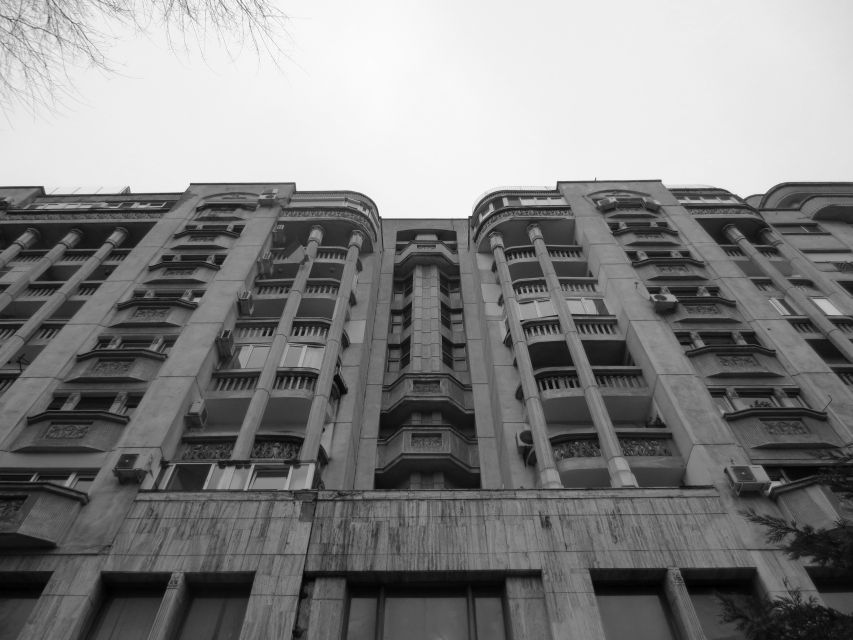
Bucharest can look confusing at first. Elegant nineteenth and early twentieth-century buildings sit near severe apartment blocks, broad avenues, monumental government buildings, and empty spaces where older homes once stood.
That mixture is the starting point for this tour. You are not simply looking at communist architecture. You are comparing the city that existed before the regime with the city Ceausescu tried to create.
The experience focuses on the rise and fall of Romanian communism, especially the rule of Nicolae Ceausescu and his family. It also places that period in the wider story of Romania, including the violent beginnings of communist rule, nationalization, the destruction of private homes, and the anti-communist uprising of 1989.
I find this approach more useful than a tour that only points at large buildings. The architecture matters, but the reasons behind it matter more. A wide boulevard tells you something about power. A surviving villa tells you something about what escaped it.
More communism-era tours in Bucharest:
- The Real tour of Communism
★ 5.0 · 666 reviews - Life under Communism
★ 5.0 · 358 reviews - Bucharest Essential Tour: Old Town, Calea Victoriei & Communism
★ 5.0 · 142 reviews
Meeting beside the Patriarchy bell tower
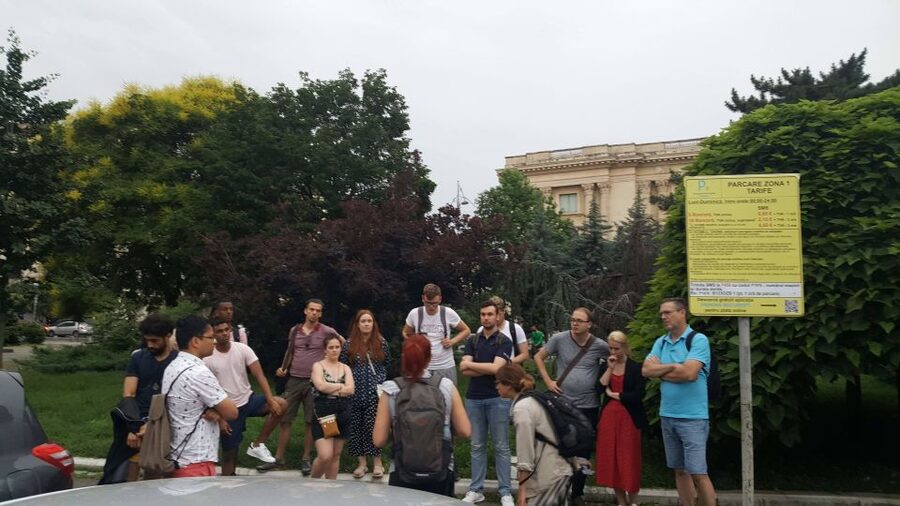
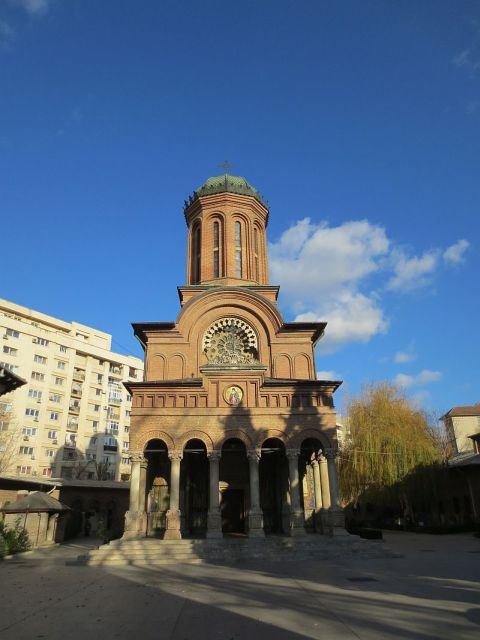
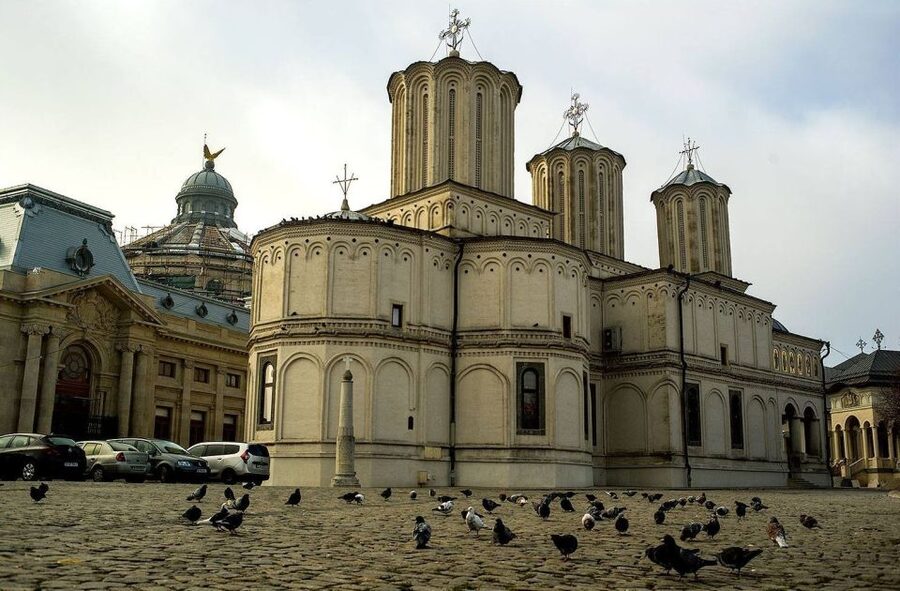
The tour begins near the red-brick bell tower of the Patriarchy at Aleea Dealul Mitropoliei 19, within walking distance of Piata Unirii. This is a practical meeting point, but give yourself enough time to identify the correct tower and gather there before the start.
The location also prepares you for the contrast ahead. The Patriarchy area has a more traditional and historic feel, while the tour soon moves toward the large-scale urban changes associated with communist Bucharest.
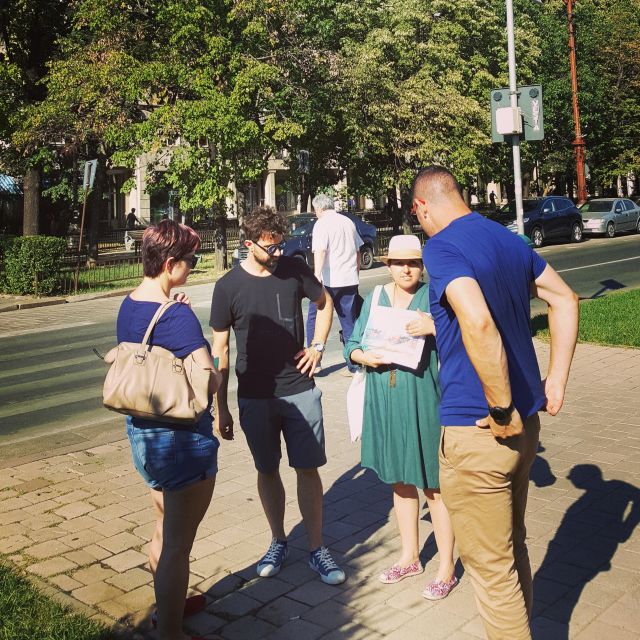
Your guide speaks English. Cristina is the name most often associated with the experience, and the supplied guide history also includes Andreea, Elena, Florycica, Ene, Anna, and others. Guide assignments can vary, but the repeated pattern is clear: expect a local guide who presents the subject with photographs, stories, and plenty of room for questions.
Bring water from the start. A café stop comes during the walk, but you may not want to wait for it, especially in warm weather.
From inter-war Bucharest to the communist city
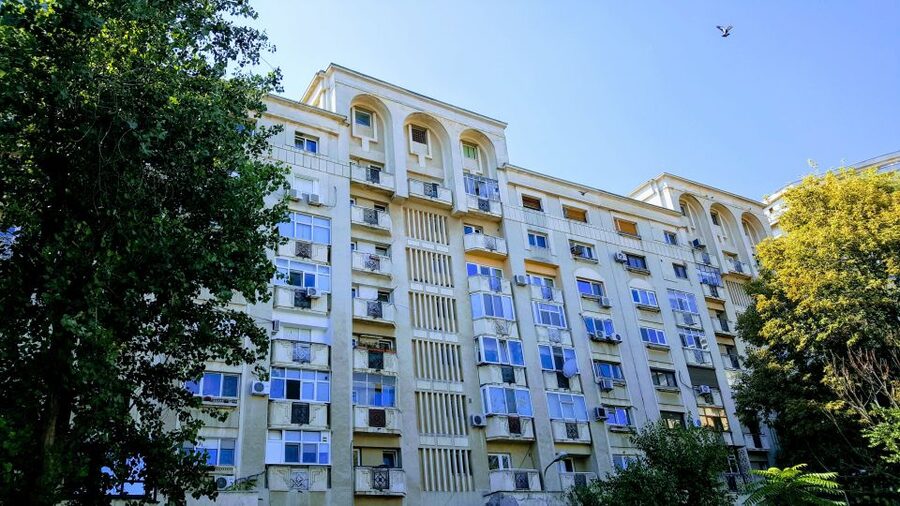
One of the strongest parts of the walk is the comparison between Bucharest’s inter-war period and the communist remodelling that followed. Your guide takes you through lesser-known neighborhoods that retained their charm instead of being completely swept away by redevelopment.
These streets help you picture the city before the regime imposed its grand urban plans. They also make the later destruction easier to grasp. Without seeing the scale and character of the older neighborhoods, it is hard to understand what was lost when homes were nationalized or demolished.
The inter-war sections are not a decorative pause from the political story. They are evidence. You can look at the surviving buildings and then consider the forced changes elsewhere in the city.
This part suits you if you want more than a parade of famous sights. It also helps explain why Bucharest can feel architecturally uneven. The unevenness is not accidental. It records several different political eras in one city.
The Palace of Parliament and Ceausescu’s grand plan
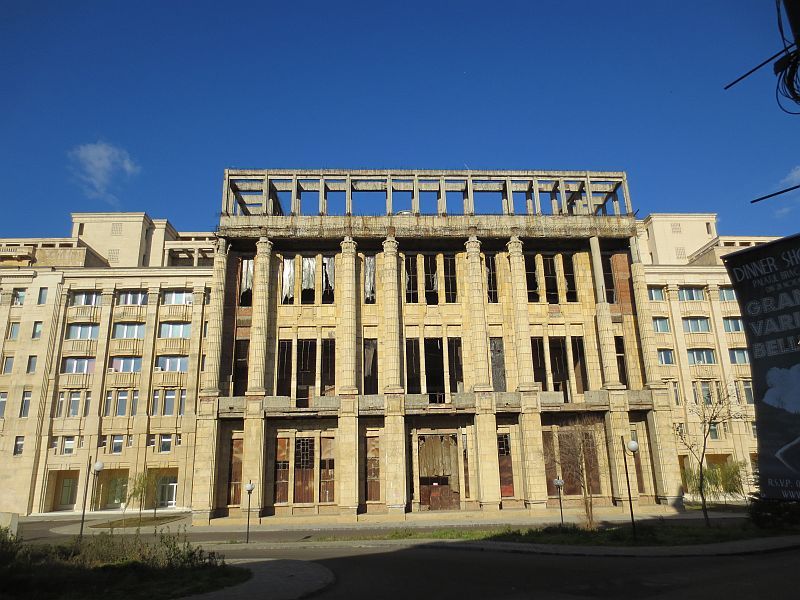
The Palace of Parliament is the tour’s most imposing sight. You see the building from the outside and hear how the Ceausescu family and the communist state used architecture to project authority.
The scale is the point. This was not a modest government office tucked into an existing district. Its construction formed part of a huge reshaping of central Bucharest, one that required the demolition of homes and older urban areas.
Your guide explains the connection between the building and the broader policy of forced urban change. The result is a stronger understanding of the Palace as a political object, not just a large piece of architecture.
The tour does not include entry to the Palace of Parliament. Museum or interior admission fees are also not included, so you should treat this experience as an exterior-focused walking tour. That is a drawback if your main goal is to see the inside, but it keeps the $29 price focused on guiding and city exploration.
I like seeing the Palace as part of a wider route. A stand-alone photo stop can make the building seem like an isolated curiosity. Here, its size is linked to the streets, houses, and people affected by the project.
A few more Bucharest tours worth a look
- Bucharest: 3-Hour Dark History Tour with a Local
★ 4.9 · 301 reviews - Bucharest: Alternative Sightseeing 2.5-3h-Hour Guided Tour
★ 4.9 · 80 reviews - Bucharest: 3-Hour Walking Tour
★ 4.9 · 77 reviews - Bucharest: Relics of Communism 3-Hour Walking Tour
★ 4.9 · 77 reviews
Uranus and the cost of urban remodelling
The remains of the Uranus neighborhood give the tour one of its most important stops. Uranus was an area changed by communist redevelopment, and what survives helps you think about the human cost of Ceausescu’s plans.
The story here is not only about architecture. Nationalization and forced demolition affected private homes and displaced communities. Your guide explains these changes in the context of the regime’s larger effort to control property and redesign Bucharest.
This is where personal anecdotes can make a real difference. Cristina has used family stories to explain what communist life felt like, rather than presenting it as a list of dates and policies. Several guides have also used a binder of old images to show how places looked before and during the communist period.
You should expect a thoughtful, sometimes sobering section. The subject involves state pressure, lost homes, and a city altered by force. The tour balances that weight with an accessible speaking style, but it does not turn the past into a spectacle.
Daily life behind the official slogans
The most useful history here is often the ordinary kind. Your guide explains what it was like to live under communist rule, including the gap between official promises and daily experience.
The tour deals with the rise of the regime and its violent beginnings, but it also asks what happened after the political system settled into everyday life. Family anecdotes help place national events inside kitchens, homes, schools, and neighborhoods.
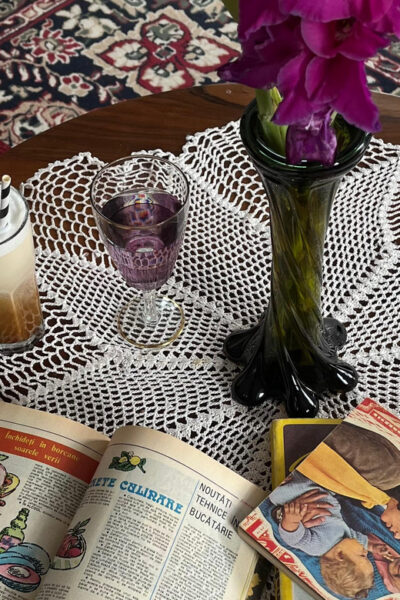
The guides use photographs and, on some departures, small examples connected with old Romanian snacks. Small snacks are included in the activity, while drinks and food ordered during the café break are paid for separately.
This personal angle is one of the experience’s best features. A guide who can explain both communist reality and post-communist life in Bucharest gives you a more balanced view than a simple good-versus-bad lecture. You hear how the system worked, how it affected people, and why memories of it can be complicated.
The tour also leaves room for questions. That matters with a subject that can quickly become confusing, especially if you know little about Romanian history before arriving.
Sites connected with the 1989 revolution
The final part brings the story to the anti-communist revolution and the fall of the Iron Curtain. You visit political memorials and places that played a role in the events of 1989.
Your guide explains the bloody end of Ceausescu’s rule and helps connect the locations to the wider collapse of communist governments in Eastern Europe. The value is in seeing the revolution as something that happened in real streets and public spaces, not as a distant television event.
Expect a serious tone here. The revolution was not a neat, peaceful change, and the tour does not hide that fact. The account is especially useful because it follows years of control and hardship through to the sudden breakdown of the regime.
I would save this tour for early in your Bucharest stay if you can. The route gives you a working map of the city and a political background that can make later visits to central Bucharest more meaningful.
The guide makes the difficult subject approachable
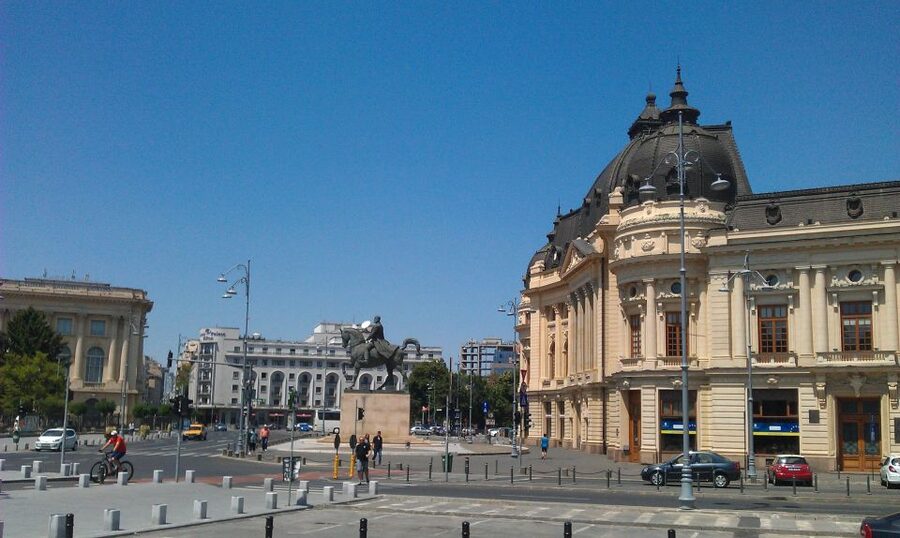
The strongest praise for this experience centers on the guides’ storytelling. Cristina is repeatedly described as funny, warm, well prepared, and able to keep a complicated subject moving without rushing it.
That balance is important. A three-hour tour can become a lecture, particularly when it covers several decades, urban planning, political repression, daily life, and revolution. Here, the guides break the subject into stopping points and use visual material to keep the story tied to what you are seeing.
The tone is usually conversational rather than ceremonial. You can ask questions, request clarification, and move at the group’s pace within the planned route. One guide even adapted the tour for a solo participant during bad weather, which suggests some flexibility, though you should not assume every departure will be private.
Guide quality may vary because several people lead the experience. Still, the overall rating is 4.9 from 303 reviews, and the praise is notably consistent about clear English, strong preparation, personal stories, and engaging delivery.
Walking pace, weather, and the café pause
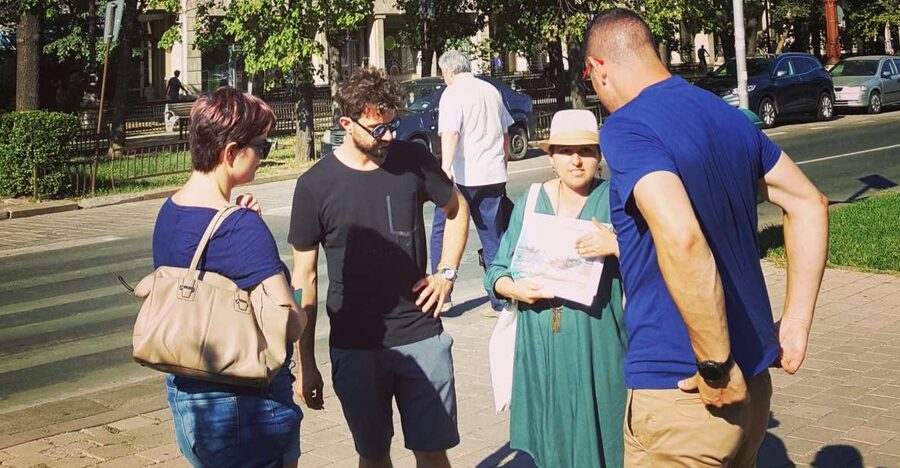
Three hours is long enough to cover a serious amount of ground, but short enough to fit into a day of sightseeing. You should plan for an outdoor walking experience, not a seated museum visit.
Comfortable shoes are essential. You may stand while your guide explains a site, and there is at least one café pause during the route. On hot days, standing in the sun can be tiring, so carry water, wear suitable clothing, and take advantage of shade when available.
The café stop gives you a chance to rest and buy a drink or snack. It is not an all-inclusive refreshment break. Drinks and café snacks cost extra, while the activity includes guided touring and small snacks.
The pace has generally been designed to allow time for explanations and questions. Still, your experience will depend on the weather, the size of the group, and how many questions come up. If you prefer constant movement with minimal commentary, this may feel slow. If you want context, the pauses are worthwhile.
What the $29 price delivers
At $29 per person, this is good value for a three-hour guided walk through a subject that is difficult to piece together alone.
You are paying for interpretation, not admission tickets. The Palace of Parliament is viewed from outside, and any museum fees are separate. That keeps the price reasonable, but you should know what you are buying: a history-led city walk with a local English-speaking guide.
The value improves if you are new to Bucharest or unfamiliar with Romanian communism. You could visit the major buildings independently, but you would miss much of the connection between the old neighborhoods, demolished homes, Ceausescu’s building program, and the 1989 revolution.
I would also consider the cost in relation to your schedule. Three hours gives you a focused introduction without taking an entire day. The route combines major sights with less familiar areas, so you get both the headline monument and the context around it.
Free cancellation up to 24 hours before the start and the option to reserve now and pay later add useful flexibility. Check the available start times when booking, since the exact departure time is not fixed in the information provided.
Who should book this Bucharest walk?
I recommend it most to first-time visitors who want to understand why Bucharest looks the way it does. It is also a good fit if you enjoy political history, twentieth-century Europe, architecture, or local stories about ordinary life.
Families can enjoy it, provided children are comfortable walking and listening for three hours. The friendly storytelling and snack element may help, but the subject includes repression, demolition, and a violent revolution, so it is not a light sightseeing outing.
This is also useful for people who have already taken a general Bucharest city tour. The focus here is narrower and more serious, with time devoted to communist planning and the events of 1989.
You may want a different activity if you mainly want to enter the Palace of Parliament, avoid outdoor walking, or spend most of your time inside museums. You should also think twice on the hottest part of the day unless you are prepared with water and sun protection.
Should you book it?
Book this tour if you want Bucharest to make sense, not just look unusual. The combination of the Palace of Parliament, surviving inter-war streets, Uranus, political memorials, and revolution sites gives you a clear route through Romania’s recent past.
The best reason to go is the human storytelling. Guides such as Cristina bring photographs, family memories, and an easy conversational style to a difficult subject. The main compromises are the outdoor walking, occasional standing, extra café costs, and lack of Palace interior access.
For $29, I consider it a strong introduction to communist Bucharest. Bring good shoes, water, and an open mind, then let the city’s contrasts do much of the teaching.
FAQ
How long does the Communist Bucharest tour last?
The tour lasts three hours.
What language is the tour conducted in?
The listed tour language is English.
Where does the tour begin?
Meet near the red-brick bell tower of the Patriarchy at Aleea Dealul Mitropoliei 19, Bucharest 030167, within walking distance of Piata Unirii.
Is entry to the Palace of Parliament included?
No. The tour visits the Palace of Parliament from the outside. Entry inside is not included.
Are museum fees included?
No. Any museum admission fees you choose to pay are separate.
Are drinks included at the café stop?
No. Drinks and snacks ordered at the café are at your own expense.
Are any snacks included?
Yes. Small snacks are included in the activity.
What should I bring?
Bring comfortable shoes. Water is also useful, especially on sunny or hot days.
Can I cancel for a full refund?
Yes. You can cancel up to 24 hours in advance for a full refund.
Can I reserve the tour without paying immediately?
Yes. The reserve-now, pay-later option lets you book while keeping your plans flexible.
Recently added around Bucharest
- From Bucharest : Day Trip to Peles, Dracula’s Castle, Brasov★ 4.7 · 6 reviews
- Bears Sanctuary, Dracula Castle and Brasov City – Full Day Trip from Bucharest★ 5.0 · 6 reviews
- 6h Communism Tour in Bucharest with Ceausescu Mansion★ 4.5 · 6 reviews
- Dracula Private Tour★ 5.0 · 6 reviews
- Transfagarasan Road Private Day Trip from Bucharest / The Best Road in the World★ 5.0 · 6 reviews
- Bucharest : Wednesday, Dracula & Peles 3 Castles Tour 1 Day★ 4.7 · 6 reviews
- Hiking thought the best mountain villages in Romania-Private tour from Brasov★ 5.0 · 6 reviews
- Bucovina Painted Monasteries & Transylvania Tour: 4-Day Private★ 5.0 · 6 reviews
Communism Tours, compared.
Bucharest Essential Tour: Old Town, Calea Victoriei & Communism
Read our review →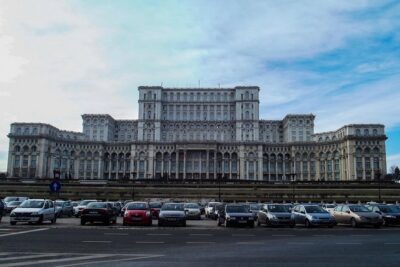
Communism in Bucharest – Landmarks, Museum & Communist Appetizers
Read our review →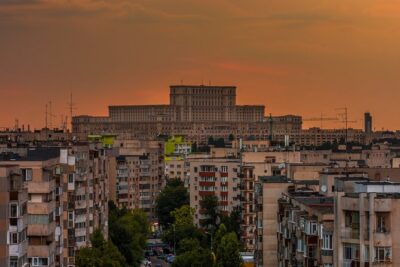
Museum of Communism Ticket with Communist Coffee
Read our review →
Dinner+Tour at Museum of Communism after closing
Read our review →Browse the lists this tour appears in