
Reviewed · COMMUNISM TOURS
Relics of Communism: 3-Hours Walking Tour (Small groups)
Bucharest’s communist past is easiest to grasp when you walk through the places where power was displayed, challenged, and rebuilt. This three-hour tour links the 1989 Revolution, Ceausescu’s grand urban plans, religion under communism, and the Palace of Parliament in one compact route.
I like the small group of no more than 10 people, which gives you a better chance to ask questions. I also like the route’s variety: you move from Revolution Square to a monastery, then across huge boulevards and monumental buildings. The main consideration is physical effort. You will be on foot for about three hours, and museum admission is not included.
In This Review
- Key points at a glance
- Why this Bucharest walking tour works
- Revolution Square and the last speech
- Piața 21 Decembrie 1989 and the human cost
- Unirii Square and the boulevard of power
- Mihai Voda Monastery and religion under communism
- The Palace of Parliament and Socialist realism
- The snack and the small-group rhythm
- Is $48.06 a fair price?
- Practical points before you reserve
- Who should book this experience?
- Should you book the Relics of Communism walk?
- FAQ
- How long is the Relics of Communism tour?
- Where does the tour begin?
- Where does the tour finish?
- How many people can join the group?
- Is admission to museums included?
- Is cancellation free?
Key points at a glance
- Start where Ceausescu gave his final speech: Revolution Square gives the tour an immediate connection to the events of December 1989.
- Follow the story beyond the revolution: The route covers the post-communist, or neo-communist, period as well as the fall of the old regime.
- See communism in the city plan: Unirii Square and Unirii Boulevard show how the government reshaped Bucharest around power and spectacle.
- Connect faith with politics: Mihai Voda Monastery adds a religious and human side to the story.
- Finish beneath a symbol of state power: Constitution Square and the Palace of Parliament provide a powerful final scene.
- Expect a personal guide-led walk: Mara and Elena are named guides, and the tour is designed for questions and conversation.
Why this Bucharest walking tour works
Many city walks show you attractive buildings and leave you to guess why they matter. This one gives you a political key for reading Bucharest. A broad boulevard becomes evidence of central control. A relocated or less visible church becomes part of the story of religion under communism. A balcony becomes the place where Nicolae Ceausescu gave his last public speech before the regime collapsed.
That context is the main reason to book. You could visit these areas on your own, but the meaning would not always be clear. One couple described guide Mara as personable and able to answer detailed questions about daily life during communism. Another praised Elena for giving a thorough overview of the era. Those comments point to the tour’s strongest feature: the guide’s ability to connect buildings and dates with ordinary life.
The small-group format matters here. With a maximum of 10 people, you are not standing at the back of a large crowd trying to hear a speech. You can ask about the revolution, Ceausescu’s personality cult, or what changed after 1989. The format also makes the walk feel more like a conversation than a lecture.
The tour begins at 11 a.m. and lasts about three hours. It costs $48.06 per person. That is not the cheapest way to see Bucharest, but the price is reasonable if you want interpretation rather than a simple route between landmarks. Every stop is free except for any optional museum visit, and the tour includes one famous Romanian snack from the communist period.
More communism-era tours in Bucharest:
- The Real tour of Communism
★ 5.0 · 666 reviews - Life under Communism
★ 5.0 · 358 reviews - 3-Hour Guided Tour of Communist Bucharest
★ 4.9 · 303 reviews
Revolution Square and the last speech
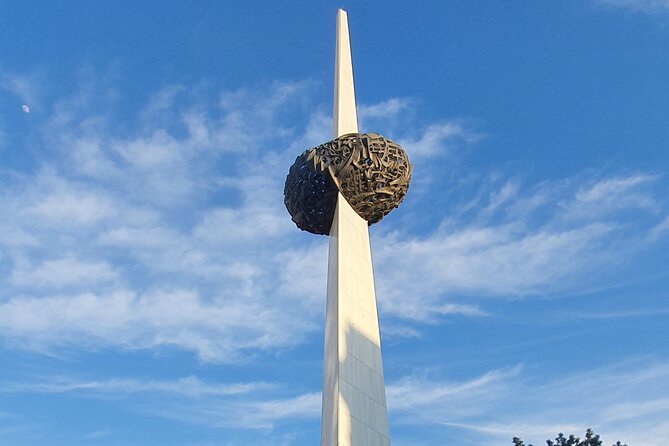
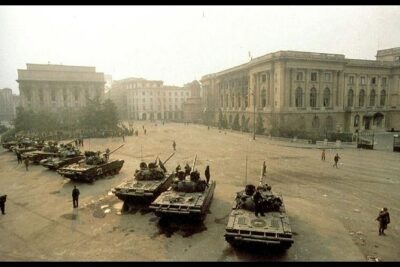
The walk begins at Revolution Square, in front of the balcony where Ceausescu held his final speech. This is an effective starting point because the location carries the tension of December 1989. The tour explains what happened during the revolution in the same place where the old order began to break apart.
You will spend about 20 minutes here. That is enough time for the guide to establish the basic story without turning the opening into a long history lesson. Pay attention to the physical setting. The square is not simply a starting point on a map. It is the place where a public speech became a moment of uncertainty and then open revolt.
This first stop also helps you understand why guide quality matters. The basic fact is easy to find, but the questions are harder. What did the crowd hear? How did the mood shift? What did the final speech mean for people who had lived under the regime? The supplied guide information does not promise a personal witness account, so you should expect historical explanation rather than a staged reenactment.
For a first visit to Bucharest, this opening gives the rest of the tour a clear purpose. You are not merely looking at old Communist-era buildings. You are tracing the system that created them and the event that ended it.
Piața 21 Decembrie 1989 and the human cost
The next stop is Piața 21 Decembrie 1989, also known as 21 December Square. The focus moves to the incidents of December 21, the people who became heroes of the revolution, and the neo-communist era that followed.
Again, the planned visit lasts about 20 minutes. The short time works well if the guide keeps the story focused. The revolution was not a single clean break, and the mention of the neo-communist period is important. It reminds you that the fall of Ceausescu did not instantly settle every question about power, responsibility, or public memory.
This is likely the most emotionally serious part of the walk. The square links political change to people who were present in the streets. Ask questions if you want more detail, since the small group makes that practical. The experience is designed to explain the setting and the events, not to provide museum exhibits or a formal memorial visit.
I appreciate that the route gives the revolution two separate stops. Revolution Square introduces the last speech and the beginning of the collapse. Piața 21 Decembrie 1989 shifts attention toward the events of the following day and the people caught in them. That separation gives the story room to breathe.
Unirii Square and the boulevard of power
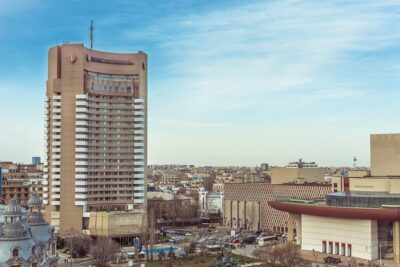
At Unirii Square, the tour changes pace. Here you see the new city center built during the communist period, along with the massive Unirii Boulevard that cuts through it.
This is where architecture becomes political evidence. The square and boulevard were not just urban improvements. They were part of a plan to reshape Bucharest around the authority of the state. The guide explains the rise of Romania’s Communist Party, the growth of Ceausescu’s power, and the cult of personality built around him.
You will spend roughly 20 minutes at this stop. That may sound brief for such a large area, but it keeps the walk moving. The value comes from learning what to look for: scale, straight lines, ceremonial space, and the way a huge avenue directs attention toward the seat of power.
If you walk through Unirii Square alone, you might see traffic, shopping areas, and large apartment blocks. With the historical framing, the same setting becomes a record of a government trying to reorder the capital. I like this part because it explains the city as a tool of politics rather than treating architecture as decoration.
There is also a useful contrast here. Revolution Square is associated with a regime losing control. Unirii Square shows the regime at its most confident and imposing. Put together, the two stops help you see both the beginning and the end of Ceausescu’s public power.
More walking tours in Bucharest:
- Bucharest: City Highlights Guided Walking Tour
★ 4.9 · 1,482 reviews - Bucharest Highlights Walking Tour
★ 5.0 · 469 reviews - Free walking tour of Brasov in English
★ 4.9 · 302 reviews - Bucharest: Ghost Stories & Romanian Mythology Walking Tour
★ 4.9 · 287 reviews
Mihai Voda Monastery and religion under communism
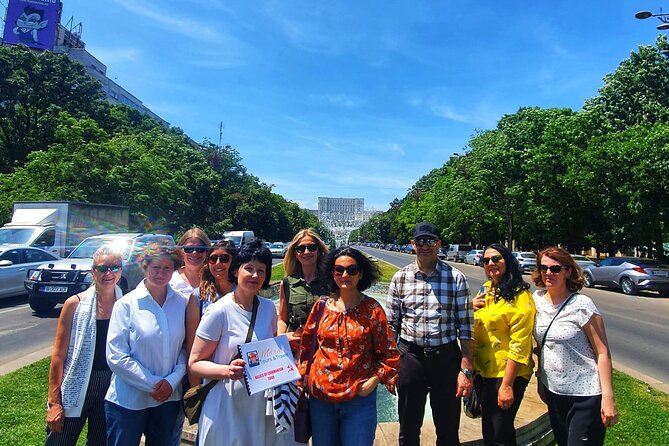
Mihai Voda Monastery adds a quieter and less monumental stop to the route. The tour uses it to discuss Bucharest’s churches and the relationship between the Communist government and religion.
You will spend about 20 minutes here. That break from broad avenues and state buildings is welcome. It gives you a chance to consider how the regime dealt with institutions it could not simply erase or fully control.
The description promises a look at Bucharest’s less visible churches, so this section should appeal if you want more than political buildings. It shows that communist urban policy affected religious places as well as homes, roads, and government offices. The supplied details do not say that you enter the monastery or attend a service, so expect an exterior-focused stop unless the guide tells you otherwise.
This may be the tour’s most distinctive subject. Many communist-history walks focus only on party leaders, propaganda, and monumental construction. Including a monastery broadens the story. It brings in belief, tradition, and the survival of older parts of the city.
Keep your expectations practical. The stop is part of a walking tour, not a separate religious tour or museum visit. Admission to museums is not included, and the tour details do not list an admission fee or interior visit here.
The Palace of Parliament and Socialist realism
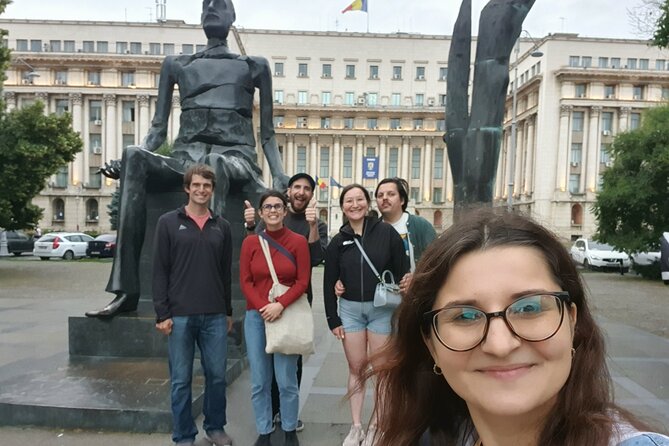
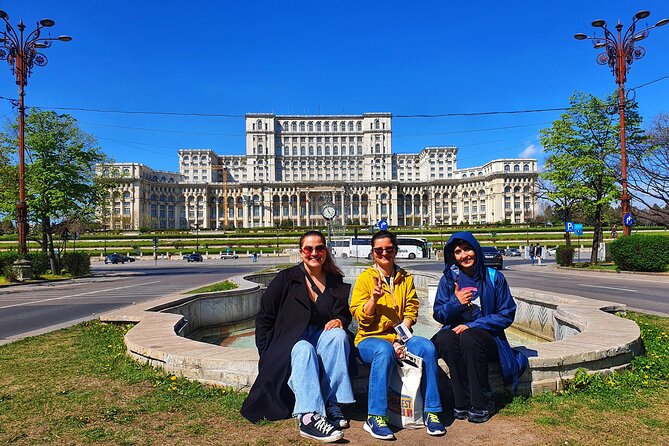
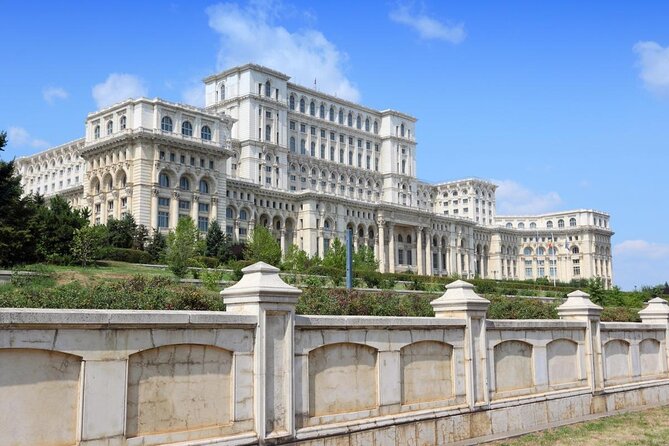
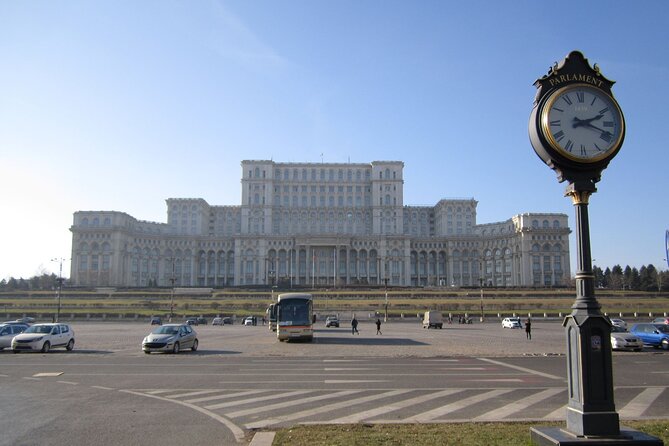
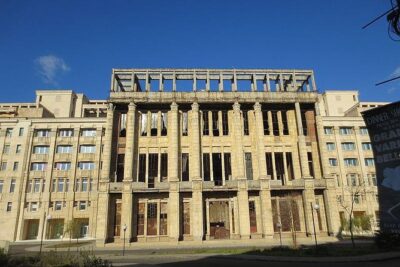
The final major stop is the Palace of Parliament, reached through the new districts associated with socialist realism and the broad Unirii Boulevard. The walk ends in Constitution Square, in front of the building.
This is the route’s most dramatic visual finish. The Palace of Parliament was designed as the absolute center of power, and the tour explains the secrets behind what is described as the world’s second-largest administrative building. The emphasis is not only on size. It is on why Ceausescu wanted such a building and how the surrounding districts supported that vision.
You will spend about 20 minutes at the stop. The tour does not include entry to the Palace or any museum. That limitation is important. You are paying for the outdoor explanation and the route, not an interior visit or a full building tour.
Still, the exterior stop has clear value. The Palace makes more sense after you have seen Revolution Square, Unirii Square, and the boulevard leading toward it. Without that sequence, it can look like an oversized government building. After the earlier stops, it becomes the final expression of a system that placed the leader and the state above the existing city.
Constitution Square is also a practical ending point. The tour finishes in front of the Palace rather than circling back to the starting location. If you need to return to your hotel, plan for your own onward transport after the walk. The meeting information says the area is near public transportation, but no specific route or ticket is included.
The snack and the small-group rhythm
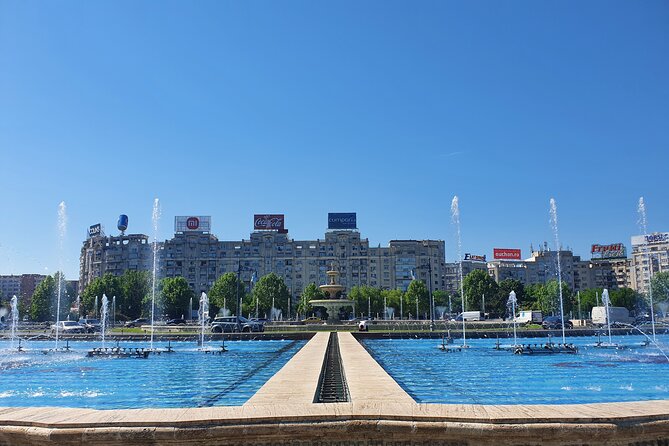
One famous Romanian snack from the communist period is included. The exact snack is not specified, so do not book this expecting a particular dish. Think of it as a small cultural extra, not a meal replacement.
The snack is useful because food can make a political history tour feel less abstract. A common item from the period may help you picture daily life beyond speeches, squares, and government buildings. Since the tour lasts three hours, it is also a welcome pause, though you should still eat beforehand if you need a full lunch.
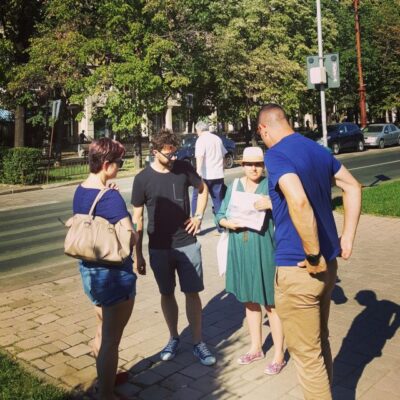
The group size is capped at 10 people. That is small enough for direct questions but large enough that the walk still has a social feel. The tour is offered in English, and the named guides include Mara and Elena. The strong praise attached to both guides focuses on clear explanations, detailed answers, and a personable approach.
That does not mean every question will receive the same level of detail. The tour is only three hours, and the route covers a great deal. If you have a special interest in architecture, the revolution, religion, or daily life, tell the guide early so you can make the most of the available time.
Is $48.06 a fair price?
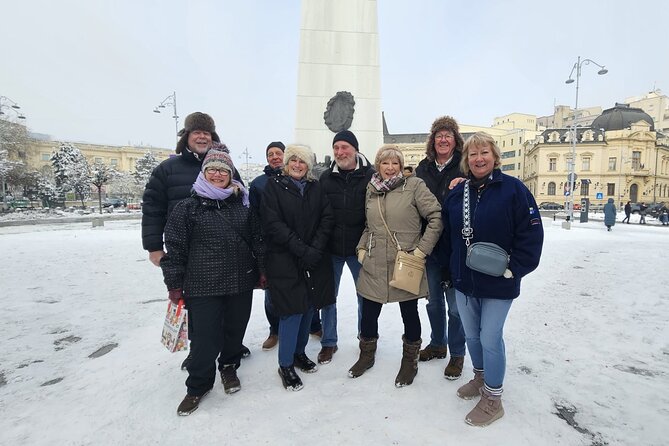
At $48.06 per person, this is best judged as a guided history walk, not as a sightseeing transfer. You are paying for three hours of explanation, a small group, the guide’s time, and a snack. The major outdoor sites do not require admission, and no museum entry is included.
The value is strongest for a first visit to Bucharest. If you already know the city well or have studied Romanian communism, you may find the pace and overview less useful. If the subject is new to you, the route gives you a framework for understanding several major areas in one morning.
The tour also saves you from having to build your own route between central Bucharest and the Palace of Parliament. You get a connected story instead of isolated stops. That connection is the main thing you are buying.
Group discounts are available, which may improve the price for a larger booking. The experience is commonly reserved well ahead of time, with an average booking lead time of 43 days, so you should not assume that a preferred date will remain open at the last minute.
Practical points before you reserve
Wear comfortable shoes. The tour requires a moderate level of physical fitness and involves walking between five stops. The listed stop times add up to about 100 minutes, with the rest of the three-hour session used for walking and moving through the city.
The start time is 11 a.m. at Revolution Square. The end point is Constitution Square, in front of the Palace of Parliament. Since the route does not return to the starting point, consider your next plan before you set out.
The tour operates in English. Confirmation is provided when you book, and service animals are allowed. The activity is dependent on good weather and a minimum number of people. If poor weather cancels the walk, you can choose another date or receive a full refund. The same applies if the minimum group size is not reached.
Free cancellation is available up to 24 hours before the local start time. If you cancel or request changes inside that 24-hour window, you will not receive a refund.
Who should book this experience?
I would choose this tour if you want Bucharest’s communist period explained through real places rather than a long indoor presentation. It suits first-time visitors, history-minded walkers, and anyone curious about why the center of Bucharest feels so large and formal in places.
It also fits people who prefer a small group. You are likely to get more chances to speak with the guide than on a large city excursion, and the route has enough subject matter to reward questions.
I would think twice if you dislike walking, want extensive time inside the Palace of Parliament, or prefer a tour focused on medieval and royal Bucharest. This experience is centered on communism, the 1989 Revolution, urban power, religion, and the built environment.
Should you book the Relics of Communism walk?
Book it if you want the story behind Bucharest’s squares, boulevards, churches, and enormous government buildings. The strongest reasons are the focused route, the group limit of 10, and the guide-led explanations associated with Mara and Elena.
The 5.0 rating and 100% recommendation are encouraging, but the practical details matter more: bring good walking shoes, expect no museum admission, and allow time after the finish at Constitution Square. For $48.06, the tour offers good value when you want clear historical context and a direct way to read the city.
FAQ
How long is the Relics of Communism tour?
The walking tour lasts approximately three hours.
Where does the tour begin?
It begins at 11 a.m. in front of the balcony at Revolution Square in Bucharest.
Where does the tour finish?
The tour ends in Constitution Square, in front of the Palace of Parliament.
How many people can join the group?
The activity allows a maximum of 10 people.
Is admission to museums included?
No. Admission to museums is not included in the tour price.
Is cancellation free?
Yes. You can cancel up to 24 hours before the local start time for a full refund. Cancellations or changes made less than 24 hours before the start are not refunded.
Recently added around Bucharest
- 6h Communism Tour in Bucharest with Ceausescu Mansion★ 4.5 · 6 reviews
- From Bucharest : Day Trip to Peles, Dracula’s Castle, Brasov★ 4.7 · 6 reviews
- Bears Sanctuary, Dracula Castle and Brasov City – Full Day Trip from Bucharest★ 5.0 · 6 reviews
- Transfagarasan Road Private Day Trip from Bucharest / The Best Road in the World★ 5.0 · 6 reviews
- Dracula Private Tour★ 5.0 · 6 reviews
- Bucharest : Wednesday, Dracula & Peles 3 Castles Tour 1 Day★ 4.7 · 6 reviews
- Hiking thought the best mountain villages in Romania-Private tour from Brasov★ 5.0 · 6 reviews
- Bucovina Painted Monasteries & Transylvania Tour: 4-Day Private★ 5.0 · 6 reviews
Communism Tours, compared.
Bucharest Essential Tour: Old Town, Calea Victoriei & Communism
Read our review →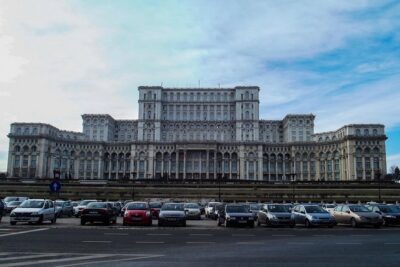
Communism in Bucharest – Landmarks, Museum & Communist Appetizers
Read our review →

Museum of Communism Ticket with Communist Coffee
Read our review →Browse the lists this tour appears in