
Reviewed · WALKING TOURS
Bucharest in a nutshell – half day private walking tour
Bucharest’s story is best understood as a sequence of sharp turns, from a medieval trading settlement to a royal capital, then through a harsh Communist experiment and the 1989 Revolution. This four-hour private walk follows that path in order, so you are not just collecting buildings. You are learning why the city looks and feels so varied.
I like the chronological route, which gives the old center a clear frame, and I like the private format, with room to ask questions or adjust the pace. Guide Răzvan Trancu is also praised for humor, punctuality, flexible timing, and the ability to explain a large amount of information in an engaging way. The main consideration is pace: four hours covers a lot, and some stops are viewed from outside rather than entered.
In This Review
- Key points at a glance
- A four-hour introduction with a clear story
- Starting at Hanul lui Manuc and Saint Anthony Church
- Cărturești Carusel and the old town’s changing face
- Stavropoleos Monastery, Caru’ cu bere, and CEC Palace
- Calea Victoriei and Bucharest’s royal ambition
- University Square and the political story
- National Military Circle and Revolution Square
- Ending at the Romanian Athenaeum
- Răzvan Trancu’s guiding style
- Who gets the best value from this walk
- Booking details that affect your choice
- Should you book Bucharest in a nutshell?
- FAQ
- How long does the Bucharest walking tour last?
- What is the price for the private tour?
- Where does the tour start?
- Where does the tour finish?
- Which languages are available?
- Is the tour private?
- Is the tour wheelchair accessible?
- What does the price include?
- Can I cancel or pay later?
Key points at a glance
- Start at Hanul lui Manuc: Meet at the Starbucks by the main door, then begin near the place where Bucharest’s old center took shape.
- See the old center in layers: Churches, the National Bank, Cărturești Carusel, Stavropoleos Monastery, Caru’ cu bere, and CEC Palace reveal different chapters of the city.
- Follow royal Bucharest: Calea Victoriei connects the old town with the grand architecture of the monarchy and the city’s late nineteenth-century glory days.
- Face the Communist past: University Square and Revolution Square provide the setting for a direct account of dictatorship and the 1989 uprising.
- Finish at the Romanian Athenaeum: The tour ends with one of Bucharest’s best-known cultural buildings, after giving you a useful guide to modern Romania.
A four-hour introduction with a clear story
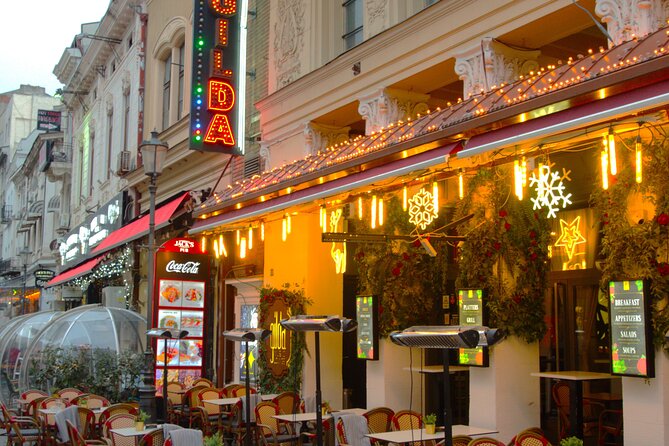
This is a walking tour for someone who wants more than a quick look at Bucharest’s old center. You begin with the city’s medieval roots, pass through traces of Ottoman influence and royal ambition, then reach the Communist period and the recent political past.
That order matters. Bucharest can feel visually scattered at first. An ornate church may sit near a grand bank, a nineteenth-century palace, or a severe Communist-era building. Răzvan’s job is to connect those pieces so you can understand the changes instead of seeing them as unrelated sights.
The tour is private for your group, with space for up to 12 people. That makes it a better fit than a large group walk if you want to ask about Romanian culture, the economy, social life, food, or what to do next. Răzvan also offers suggestions for restaurants, events, local activities, and one- or two-day trips beyond Bucharest.
The advertised price is $188 per group, not per person. For two people, that is a fairly serious cost for a half-day walk. For a family or group of six to 12, the price becomes much better value because you are sharing a licensed guide and getting a private experience. The value depends on how much you want explanation and personal advice, rather than simply seeing the sights on your own.
More walking tours in Bucharest:
- Bucharest: City Highlights Guided Walking Tour
★ 4.9 · 1,482 reviews - Bucharest Highlights Walking Tour
★ 5.0 · 469 reviews - Free walking tour of Brasov in English
★ 4.9 · 302 reviews
Starting at Hanul lui Manuc and Saint Anthony Church
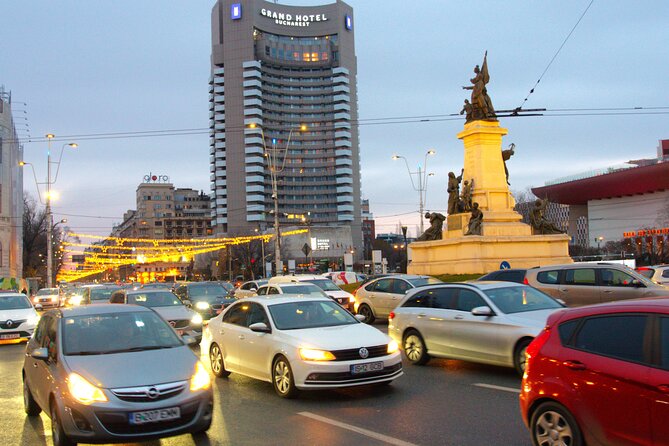
The meeting point is the Starbucks coffee shop at Hanul lui Manuc, at the main door. This is a practical place to begin because you are already near the oldest part of central Bucharest, rather than wasting the first part of the tour on a long transfer.
The first scheduled stop is Biserica Sfântul Anton, or Saint Anthony Church. You spend about 20 minutes here with a guided visit. It is an effective opening because the tour starts at the birthplace of Bucharest, then works forward through time.
Expect the guide to establish the basic setting of medieval Bucharest before moving on. This part is especially useful if you know little about the city. You get a starting point for understanding how a settlement grew into a capital, and how outside influence shaped its early development.
The church visit also sets the tone for the rest of the walk. This is not only an architecture tour. Religious buildings, commercial streets, royal institutions, and political squares all help explain how the city changed.
Cărturești Carusel and the old town’s changing face
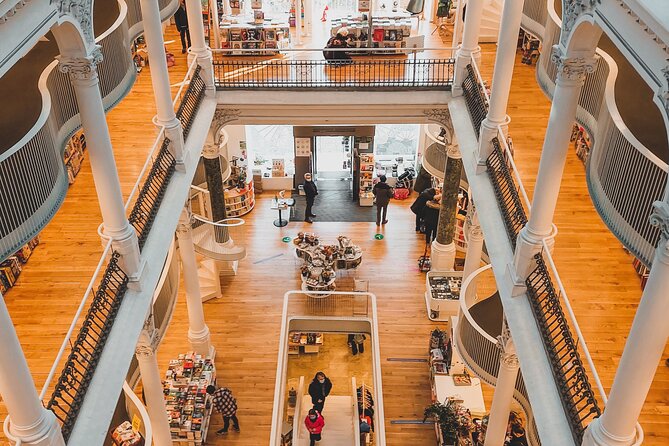
You then walk to Cărturești Carusel, with about 10 minutes here. The building is now known for its elegant bookstore interior, but on this tour it also helps show the old center’s changing role.
The stop is brief, so do not expect time for a long browse or shopping visit. Think of it as a visual pause in the larger story. The old center is not frozen in one period, and this stop helps connect its historic setting with Bucharest today.
Next comes the National Bank of Romania, seen from the outside for around 10 minutes. Passing by rather than entering keeps the tour moving, but the building gives Răzvan a chance to discuss finance, state power, and the city’s development.
That economic angle is valuable. Many city walks focus only on rulers and monuments. This one aims to include Romania’s economy and social traits, giving you a broader sense of how Bucharest functions.
Stavropoleos Monastery, Caru’ cu bere, and CEC Palace
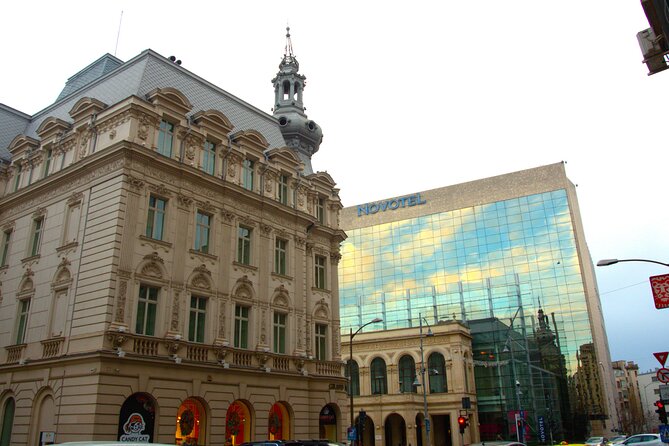
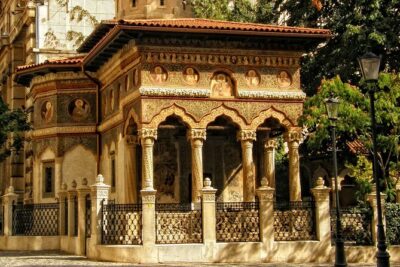
Stavropoleos Monastery receives about 20 minutes and is one of the most important visits in the old center. Here, you have time for a guided look rather than a quick pass on the pavement.
The monastery represents an older Bucharest, before the royal avenues and modern state institutions reshaped the center. Its inclusion balances the larger political stops later in the tour. You see how faith and local tradition fit into the city’s story.
The route then includes Caru’ cu bere, visited for about 10 minutes. The name is closely tied to Bucharest’s dining culture, and the stop gives the walk a more everyday, social side. It also offers a useful reminder that the city’s identity is not made only of churches, ministries, and monuments.
You pass the CEC Palace for another 10 minutes. Its grand exterior fits the period when Bucharest was building a more European royal image. The stop is short, but it works well in sequence with the National Bank and Calea Victoriei.
A possible drawback is that several major buildings are pass-by stops. If you want long interior visits, museum time, or extended photography at each site, this tour may feel too broad. Its strength is the connecting story, not a deep examination of every building.
A few more Bucharest tours worth a look
- Bucharest: Dracula’s Castle, Peles Castle, & Brasov Old Town
★ 4.5 · 17,858 reviews - Bucharest: Dracula Castle, Peles Castle & Brasov Old Town
★ 4.6 · 10,891 reviews - Bucharest: Dracula’s Castle, Peleș Castle & Brașov Day Trip
★ 4.5 · 5,919 reviews - Bucharest: Palace of Parliament Tickets and Guide
★ 4.3 · 3,182 reviews
Calea Victoriei and Bucharest’s royal ambition
The walk continues along Calea Victoriei, one of Bucharest’s key avenues, for about 20 minutes. This is where the city’s monarchy period and late nineteenth-century glory days come into sharper focus.
The route shows how Bucharest presented itself as a modern capital. You move away from the tighter medieval core and into a setting associated with state power, public display, and grand architecture.
I would pay close attention to how quickly the city’s mood changes along this route. The old center tells one story, while Calea Victoriei presents a more polished and ambitious version of Bucharest. Răzvan’s historical context is most useful here because the buildings alone cannot explain why the avenue mattered.
This is also one of the points where the private format helps. You can ask how monarchy changed daily life, how the capital’s image was built, or what remains from that period today. With a large group, those side questions can be harder to fit in.
University Square and the political story
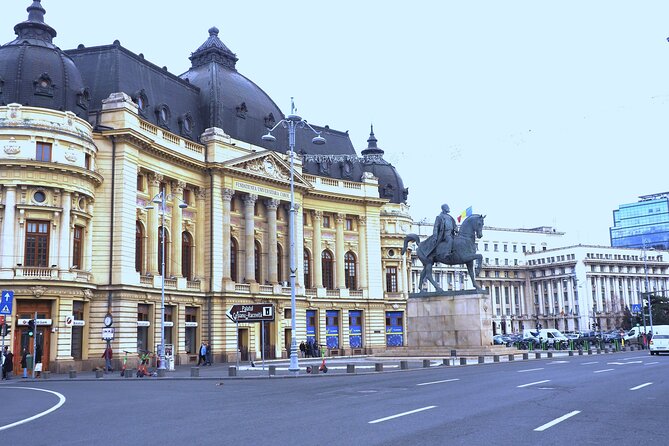
At University Square, the guided tour lasts about 30 minutes. This is a substantial stop, and rightly so. The square helps explain Bucharest’s political and social life, including the impact of Communism and the events that followed.
The tour’s treatment of Communism is described as a gruesome social experiment. That wording signals a direct approach rather than a softened version of the past. You should expect a serious explanation of what the period meant for Romania, not just a list of dates and rulers.
University Square also gives you a general view of the recent context of the country. If you are trying to understand Romania beyond postcard images, this is one of the most useful portions of the walk. The guide connects public space with political memory, which gives the location more weight.
The stop lasts long enough for questions, but it is still part of a larger route. You are not receiving a full specialist lecture on Communist Romania. Instead, you are building a working foundation that can help you make sense of what you see elsewhere in Bucharest.
National Military Circle and Revolution Square
You pass the National Military Circle for about 10 minutes. This keeps the route moving toward Revolution Square and adds another institutional building to the story of the capital.
Then comes Revolution Square, with a 30-minute guided visit. This is the emotional and political center of the tour. The square is tied to the end of Communist rule and the 1989 Revolution, so the earlier discussion of dictatorship gains a clear place and moment.
I like the way the tour saves this section for later. You have already seen the medieval and royal city, then followed its modernization. By the time you reach Revolution Square, you can better understand what was lost, altered, or challenged during the Communist period.
The guide’s flexibility matters here. History connected to political violence and social upheaval can raise personal questions. A private group gives you room to ask about the events, Romania’s recent direction, or how the past still affects daily life.
This stop may be intense for some people. The tour does not treat Communism as a colorful side note, and that is a strength if you want an honest introduction. If you prefer a light sightseeing walk with little political discussion, you may find this section heavier than expected.
Ending at the Romanian Athenaeum
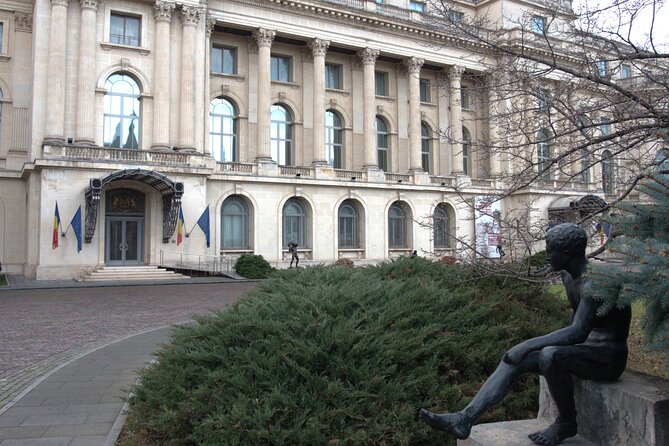
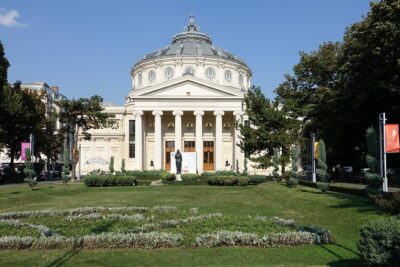
The tour ends at the Romanian Athenaeum, after about four hours of walking and guided visits. The Athenaeum is a fitting final point because it brings the route back to culture, public life, and the capital’s desire to present itself as a major European city.
Ending here also gives you a useful orientation point for the rest of your stay. By now, you have crossed from the medieval center through royal Bucharest and into the places linked with modern Romania. You can use that overview to decide which areas deserve a second visit.
The schedule allows about 30 minutes at University Square and 30 minutes at Revolution Square, but not every location receives the same amount of attention. Saint Anthony Church and Stavropoleos Monastery are proper visits, while the National Bank, CEC Palace, Calea Victoriei, and National Military Circle are mainly viewed along the way.
That mix is sensible for a half-day walk. It gives you range without requiring a full day. Still, bring comfortable shoes and expect a steady urban walk. The activity is listed as wheelchair accessible, but the supplied details do not explain the exact route surface or any access arrangements at individual sites, so ask for specifics before booking if that affects your plans.
Răzvan Trancu’s guiding style
The guide is Răzvan Trancu, an authorized local guide who leads in English, Italian, or Spanish. His approach is described as attentive, interactive, flexible, and willing to adjust to your interests.
The most useful praise concerns practical guiding skills: communication, punctuality, time management, humor, and flexibility. Those traits matter on a four-hour private walk because the guide must keep the route moving without making it feel rushed.
Răzvan is also available to suggest dining, events, other activities, and one- or two-day trips outside Bucharest. I would use that part of the service well. Ask for advice early in the walk, then return to the question near the end once he knows what kind of experience you want.
The tour is offered in three languages, but you should select the language that lets you ask detailed questions comfortably. The experience depends heavily on conversation, not just on pointing out buildings.
Who gets the best value from this walk
This tour suits you if you are visiting Bucharest for the first time and want a fast but serious orientation. It is also a good choice for couples, families, or friends who prefer to set their own questions and pace.
It works especially well for:
- People interested in political and social history, not just architecture
- Visitors with only half a day in the city
- Groups that want personal restaurant and activity advice
- Families or larger parties sharing the $188 group price
- Anyone who wants English, Italian, or Spanish guiding
You may want something else if your main goal is to enter many buildings, spend a long time in museums, or focus on one narrow subject. The route covers a lot of ground, and some attractions are seen from outside.
The private setup also means the quality of the experience rests strongly on the guide and your group’s interests. Răzvan’s reported strengths make that a positive feature, but you should still tell him at the start what you most want from the walk.
Booking details that affect your choice
The price is $188 for a private group of up to 12 people. That is expensive for one person, reasonable for a small group, and attractive for a full group. It includes the licensed local guide and suggestions for other local activities, dining, events, and trips outside Bucharest.
Snacks, souvenirs, and personal expenses are not included. You do not need to budget for transport during the walk based on the supplied details, but you should plan for your own food and purchases.
The duration is four hours, with starting times subject to availability. You can cancel up to 24 hours before the activity for a full refund, and you can reserve now while paying later. Those policies are useful if your Bucharest schedule is still shifting.
The tour has a rating of 5 from three verified bookings, including praise for Răzvan’s fun explanations, punctuality, humor, communication, and willingness to adapt. That is a small sample, so I would treat it as encouraging rather than final proof. The specific strengths are still the ones that matter most for a private walking tour.
Should you book Bucharest in a nutshell?
Book this tour if you want Bucharest explained as a connected story, from Saint Anthony Church and Stavropoleos Monastery to Calea Victoriei and Revolution Square. The chronological design, private group format, and Răzvan’s personal advice make it a strong first-day choice.
Think twice if you want a cheap introductory walk, many interior admissions, or a relaxed route with little discussion of Communism. At $188, the value improves sharply when shared by several people.
For a first visit, I would choose this walk when I wanted context quickly and planned to use the guide’s suggestions for the rest of my stay. It gives you enough of old Bucharest, royal Bucharest, and modern Romania to make later exploring more rewarding.
FAQ
How long does the Bucharest walking tour last?
The tour lasts four hours.
What is the price for the private tour?
The price is $188 per private group of up to 12 people.
Where does the tour start?
The meeting point is the Starbucks coffee shop at Hanul lui Manuc, by the main door.
Where does the tour finish?
The tour finishes at the Romanian Athenaeum.
Which languages are available?
The live guide is available in English, Italian, and Spanish.
Is the tour private?
Yes. It is a private group experience, with up to 12 people in the group.
Is the tour wheelchair accessible?
Yes, the activity is listed as wheelchair accessible. You should inquire for further details about access arrangements.
What does the price include?
The price includes a private tour with a local licensed guide, along with suggestions for local activities, dining, events, and one- or two-day trips outside Bucharest.
Can I cancel or pay later?
You can cancel up to 24 hours in advance for a full refund. You can also reserve now and pay later.
Recently added around Bucharest
- From Bucharest: Discovery at Europe’s Largest Salt Mine★ 5.0 · 3 reviews
- RiverCruise Exclusive – Private Transfer from or to Giurgiu Port/Bucharest Hotel★ 3.5 · 3 reviews
- Private-Red Patrol Bucharest Flea Market Tour with a Romanian car★ 5.0 · 3 reviews
- Cluj Napoca: Climbing or Hiking Experience in Turda Canion★ 5.0 · 3 reviews
- Bucharest: City Highlights Guided Walking Tour★ 5.0 · 3 reviews
- Probably the Best Restaurant and Wine Cellar near Bucharest★ 4.5 · 3 reviews
- Private 8 Day Romania UNESCO Tour★ 5.0 · 3 reviews
- Bucharest Private Airport Transfer★ 4.5 · 3 reviews
Walking Tours, compared.
Ghost Stories & Romanian Mythology Walking Tour
Read our review →

4h Bucharest Private Tour (2h by Car and 2h Walking in Old Town)
Read our review →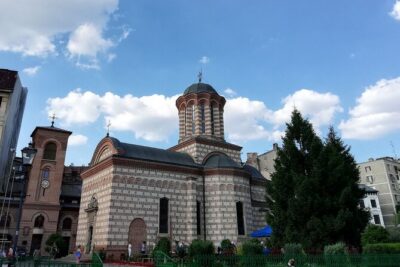
Browse the lists this tour appears in