
Reviewed · COMMUNISM TOURS
Private Bucharest Communist Tour with the People’s House and Ceausescu Residence
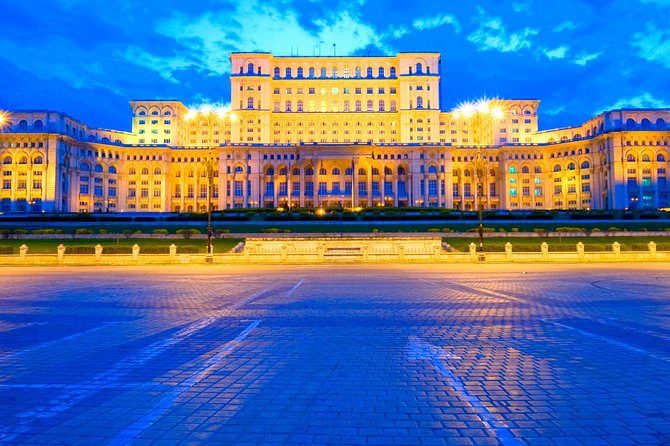
Bucharest’s communist story is easiest to grasp when you see both ends of it: the monumental Palace of Parliament, built to project Nicolae Ceausescu’s power, and the surprisingly comfortable Spring Palace, where he and Elena lived. This private tour connects those places with the streets, memorials, and neighborhoods shaped by the regime.
I like the hotel pickup and private vehicle because Bucharest’s major communist sights are spread across the city. I also like the human side of the guiding. Guides such as Mihai, Marcel, Nicole, and Bogdan use old photographs and family memories to explain what daily life was like, rather than leaving you with dates and grand buildings alone.
The main consideration is the price, $261.65 per person, which is a serious outlay for a day in Bucharest. You are paying for private transport, admission, and a full day with a guide, but lunch, photography at Parliament, and personal expenses cost extra.
In This Review
- Key points to know before booking
- Why this tour helps explain Bucharest
- Entering the Palace of Parliament
- Seeing Ceausescu’s private world at Spring Palace
- Communist Bucharest beyond the headline buildings
- Lunch in an old-style Bucharest restaurant
- What the guides add to the day
- The practical value of private transport
- Is $261.65 per person a fair price?
- Who should book this Bucharest communist tour?
- Should you book it?
- FAQ
- How long does the tour last?
- What time does the tour start?
- Where does pickup take place?
- Is transportation included?
- Is the tour private?
- Is the tour offered in English?
- Which admission fees are included?
- Is lunch included in the price?
- Do I have to pay extra to take photographs at Parliament?
- What is the cancellation policy?
- Is there a minimum age?
Key points to know before booking
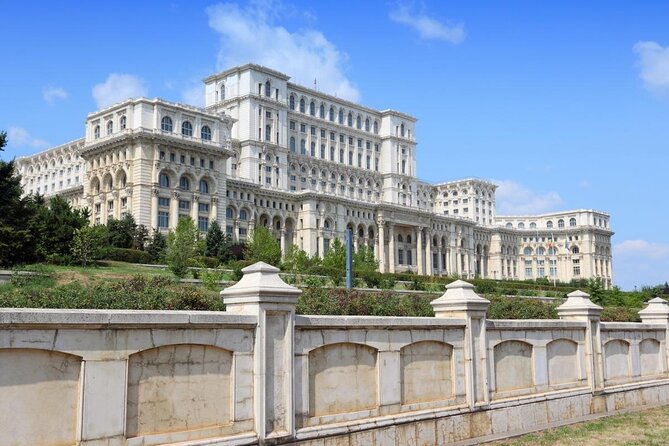
- The Palace of Parliament takes you inside Ceausescu’s grandest project, with vast halls, marble, and a difficult human story behind the construction.
- Spring Palace shows the dictator’s private world, including the luxury reserved for his family while much of Romania faced shortages.
- Your guide shapes the experience, with past guides including Mihai, Marcel, Claudia, Ciprian, Bogdan, Nicole, and Alexandra.
- The route goes beyond two museums, adding Spark House, communist-era neighborhoods, a memorial to victims, lunch, and possibly a walk through the old center.
- Private transport removes much of the day’s hassle, with pickup and return at your Bucharest hotel.
- Plan for a long history day, usually 6 to 8 hours, with a 10:00 a.m. departure and a minimum age of 12.
Why this tour helps explain Bucharest
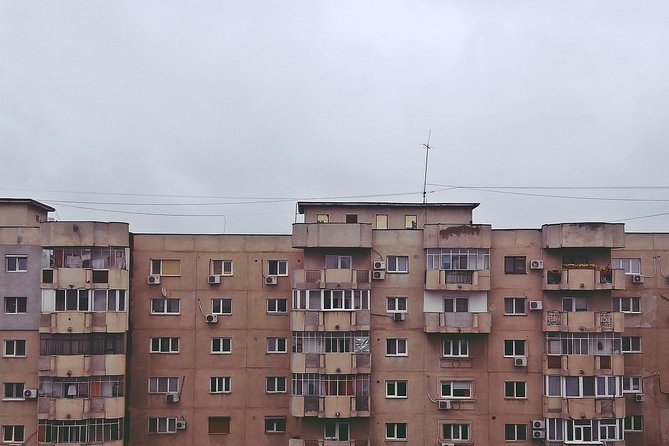
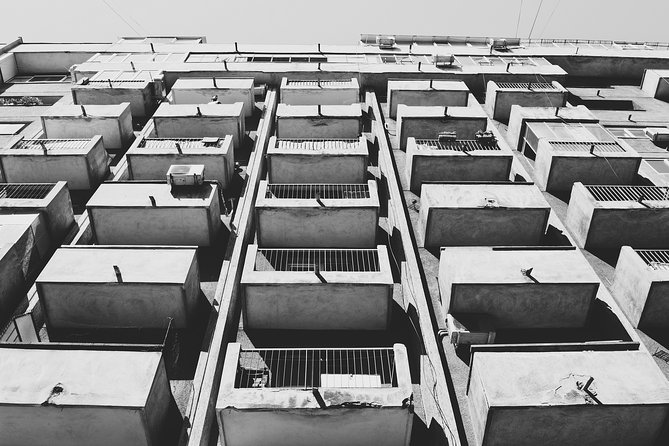
Romania’s communist period is not just a story about gray apartment blocks and political slogans. Under Ceausescu, the government reshaped Bucharest on a huge scale. Neighborhoods were demolished, broad avenues were cut through the city, and public buildings were designed to make the state look permanent and all-powerful.
This tour gives you a useful contrast. At the Palace of Parliament, you see power expressed through size. At Spring Palace, you see how that power translated into private comfort. Between the two, you can look at the press, the residential districts, political imprisonment, and the public spaces where the old system left its mark.
I think that contrast is the strongest reason to book this experience. A standard city tour may show you the grand building, but it may not explain what it meant. Here, the guide’s commentary links architecture to politics and ordinary life.
The private format also matters. Only your own group participates, so the day can feel more like a guided conversation than a fixed lecture. Past guides have been praised for using old photos, answering questions, and sharing family experiences from the communist period. That personal approach is especially useful with a subject that can otherwise feel abstract.
More communism-era tours in Bucharest:
- The Real tour of Communism
★ 5.0 · 666 reviews - Life under Communism
★ 5.0 · 358 reviews - 3-Hour Guided Tour of Communist Bucharest
★ 4.9 · 303 reviews
Entering the Palace of Parliament
The Palace of Parliament is the obvious centerpiece. It began as the House of the Republic, one of Ceausescu’s most ambitious building projects, and was constructed from 1984 to 1997. The scale is hard to absorb from a photograph: the building measures about 240 meters long, 270 meters wide, and 84 meters high.
Inside, expect grand rooms, broad corridors, heavy decoration, and a strong sense of political theater. This was not designed to feel modest or welcoming. It was meant to show the authority of the state, and its size was part of the message.
The building is often described as the second-largest administrative building in the world, and it is also associated with a Guinness World Record for the largest administrative building. The wording varies, but the practical point is simple: this is one of the largest government buildings you are likely to see anywhere.
You receive about an hour inside, with admission included. That saves you from arranging a separate visit, which is useful because entry procedures and available visiting times can make independent planning less convenient.
The building also raises difficult questions. Its construction involved major demolition in central Bucharest and represented the priorities of a regime that demanded enormous resources for its own image. I would not treat the Palace as merely an architectural curiosity. The best part of the visit is learning what had to be cleared, who paid the cost, and why Ceausescu wanted such a building.
Photography costs extra, so budget for that if taking pictures matters to you. The separate photography fee is easy to overlook when comparing the tour price.
Seeing Ceausescu’s private world at Spring Palace
Spring Palace, also called the Ceausescu Residential Palace, offers a sharp change of scale. Built between 1964 and 1965, it was home to Nicolae and Elena Ceausescu from 1965 until their deaths in 1989.
This was not a plain government flat. It was a private estate designed for the ruling couple and their family, with the kind of comfort and decoration that contrasted sharply with the shortages experienced by much of the country. The house makes the political story personal. You can see how privilege operated behind the official language of equality.
After the communist regime fell, the property served as a VIP residence for official delegations and foreign presidents. It became a museum in 2016. Your admission is included, and the visit lasts about an hour.
I find this stop valuable because it gives you a physical sense of self-indulgence. The Palace of Parliament shows the regime’s public face. Spring Palace shows its private habits. Put together, the two visits help explain why the system became so resented.
The mansion may appeal to architecture fans as much as to history buffs. Its rooms and furnishings provide another way to understand the period, though you should come ready for an interpretive visit rather than a typical royal-house tour. The main interest is not simply the decor. It is the contrast between the life inside this residence and the restrictions outside it.
Communist Bucharest beyond the headline buildings
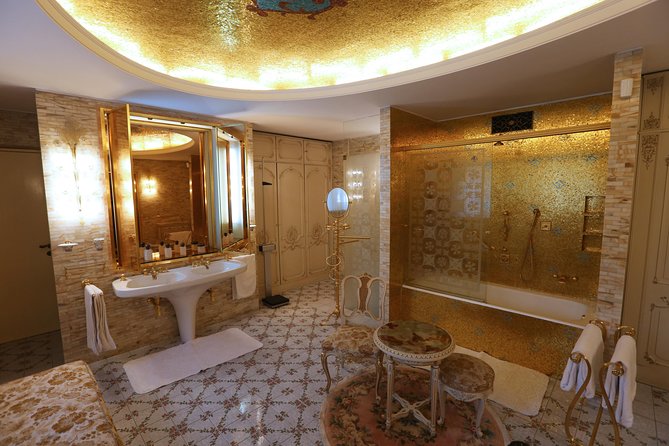
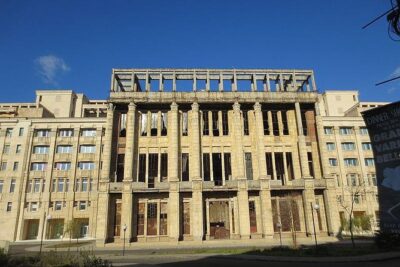
The day is not limited to the two admission sites. The route also brings you past Spark House, once the headquarters of the Central Communist Press. Its imposing design reflects the role of newspapers and official information under the regime.
You also travel through the formerly restricted neighborhood where Ceausescu and his family lived. This adds useful context to Spring Palace. Instead of seeing the residence as an isolated museum, you get a sense of the protected zone around the ruling family.
The tour includes a stop connected with political prisoners and other victims of the regime at a memorial museum. The supplied details do not name the museum, so you should confirm the exact site and visiting schedule when booking. Still, its place in the route matters. A tour about communism needs to address repression, not just architecture, and this stop points toward the people who suffered under the system.
Depending on the day’s plan, the guide may also add a walk through Bucharest’s historic center. One past itinerary included visits to several monasteries, giving the day a broader view of the city beyond the communist period. Another included a short subway experience with the guide, which helped the group use the system comfortably. These additions should be treated as possible parts of the day rather than guaranteed stops, since the stated core itinerary centers on Parliament and Spring Palace.
That flexibility is one advantage of a private tour. You can ask questions and spend more time on the subjects that interest you. The tradeoff is that the exact route may depend on opening times, traffic, and the guide’s plan.
A few more Bucharest tours worth a look
- Bucharest: Dracula’s Castle, Peles Castle, & Brasov Old Town
★ 4.5 · 17,858 reviews - Bucharest: Dracula Castle, Peles Castle & Brasov Old Town
★ 4.6 · 10,891 reviews - Bucharest: Dracula’s Castle, Peleș Castle & Brașov Day Trip
★ 4.5 · 5,919 reviews - Bucharest: Palace of Parliament Tickets and Guide
★ 4.3 · 3,182 reviews
Lunch in an old-style Bucharest restaurant
Lunch is not included, and the expected cost is about €13 per person. The guide takes you to a local restaurant that retains the atmosphere of Soviet-era Bucharest, giving you a break from the museums and a chance to discuss what you have seen.
I like this kind of meal stop because it keeps the day connected to ordinary life. The setting is part of the experience, but you should not assume that the meal is a formal tasting or a special culinary event. The focus remains the history and the atmosphere.
One guide was also praised for choosing a restaurant with good food, a pleasant setting, and a pretty view. Another helped with translation at a market and pharmacy when a member of the group felt unwell. Those details suggest that the private format can be helpful in practical ways, though you should not book it expecting personal errands to be part of the standard route.
Bring enough Romanian lei or a payment method accepted by the restaurant, and remember that lunch is separate from the tour price. If you have dietary needs, raise them when arranging the booking rather than waiting until the meal stop.
What the guides add to the day
The guide is the difference between a collection of buildings and a coherent history lesson. The named guides associated with this experience include Mihai, Marcel, Claudia, Ciprian, Bogdan, Nicole, and Alexandra. You may receive one of them or another multilingual guide, so a particular person cannot be guaranteed.
The strongest guiding style here is personal and visual. Nicole, for example, used old photos of the buildings and places on the route, along with family experiences from the communist period. Mihai was praised for explaining the rise and fall of communism while keeping the day relaxed and well organized.
Marcel has been described as giving detailed explanations of the fall of communism in 1989. Bogdan focused on the complicated challenges Romania faced as a country. Ciprian was noted for clear, energetic explanations, while Alexandra combined historical facts with a relaxed tour of Bucharest’s main sights.
You should ask questions freely. The private setup gives you room to ask about shortages, censorship, the 1989 revolution, the Ceausescu family, or the changes to Bucharest’s streets. If you want a quiet sightseeing day with only brief commentary, this may feel too information-heavy. If you want help making sense of Romania’s recent past, that is exactly the point.
The practical value of private transport
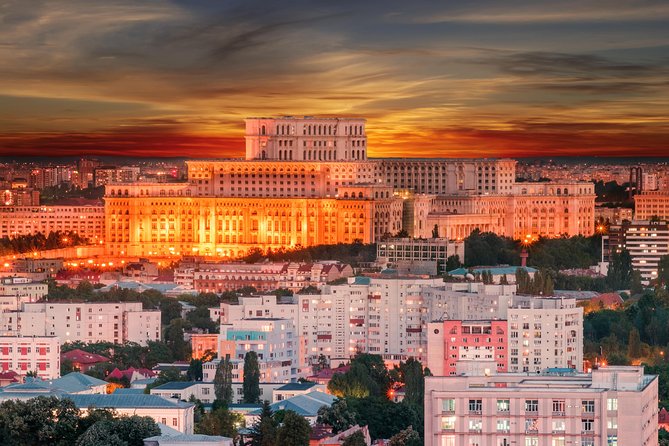
Pickup is available at any Bucharest hotel, in front of the property, at 10:00 a.m. The guide and vehicle then handle the movement between locations, with return to your hotel at the end.
That is valuable in Bucharest because the route covers separate parts of the city. You do not have to work out public transport between Parliament, Spring Palace, former official districts, memorial sites, and lunch. You also avoid the risk of arriving late for timed admission.
The experience lasts roughly 6 to 8 hours. That makes it a full day, not a quick orientation. Wear comfortable shoes, since the schedule can include walking inside the buildings and possibly through the old center. Children must be accompanied by an adult, and the minimum age is 12.
The private vehicle also gives you a place to pause between heavy subjects. Communist history can be emotionally demanding, particularly once the discussion turns to prison, repression, and the victims of the regime. A private day lets you set the pace more easily than a large group excursion.
Is $261.65 per person a fair price?
At $261.65 per person, this is not a budget tour. Its value depends on how much you want convenience and personal attention.
The price includes an English-speaking professional guide, private transportation, hotel pickup and drop-off, and entrance fees for both the Palace of Parliament and Spring Palace. If your group is small, the cost may feel high compared with joining a shared city tour. If several people are sharing the private vehicle and guide, the convenience becomes easier to justify.
I would compare it with the cost of arranging two museum visits, local transport, and a full day of private guiding on your own. You are also paying for the guide’s knowledge of the city and the ability to connect several sites in one route.
You still need to pay for lunch, which costs about €13 per person, photography at Parliament, and personal expenses. Ask about the photography fee before the Palace visit so the extra charge does not surprise you.
The full-day format is useful if you have limited time in Bucharest. You can cover the key communist sights in one organized outing and still get a taste of the historic center or everyday city life if the schedule allows. If your budget is tight or you only want to see Parliament, a shorter public visit may make more sense.
Who should book this Bucharest communist tour?
I would recommend this tour most strongly to history buffs, architecture fans, and anyone who wants more than a quick look at Bucharest’s famous government building. It suits first-time visitors who want hotel pickup and a structured day, especially if navigating across the city is not appealing.
It is also a good fit for people interested in the 1989 fall of communism. The Palace gives you the regime’s grand ambition, Spring Palace shows private privilege, and the memorial visit brings attention to those harmed by the system.
You may want a different experience if you prefer a slow food tour, a general introduction to Bucharest, or a day built around parks and museums unrelated to communism. The subject here is focused and serious, even when the guide adds lighter city stops.
Book at least 48 hours ahead. You can cancel for a full refund up to 24 hours before the start time, but changes or cancellations inside that window are not accepted. Confirmation arrives at booking, and the activity is offered in English, though a multilingual guide may operate the tour.
Should you book it?
Book this private Bucharest communist tour if you want the city’s recent past explained through places you can enter and see for yourself. The combination of Parliament, Spring Palace, communist neighborhoods, Spark House, a victim memorial, and a local lunch gives you a fuller picture than a single museum visit.
I would hesitate only if $261.65 per person stretches your budget or if you dislike long, history-focused days. For the right audience, the private transport, included admissions, and guide-led context make this a practical way to understand one of Bucharest’s most important stories.
FAQ
How long does the tour last?
The tour lasts approximately 6 to 8 hours.
What time does the tour start?
Pickup and departure are scheduled for 10:00 a.m.
Where does pickup take place?
Pickup is available in front of any hotel in Bucharest.
Is transportation included?
Yes. Private transportation, hotel pickup, and hotel drop-off are included.
Is the tour private?
Yes. Only your own group participates in the activity.
Is the tour offered in English?
Yes. The tour is offered in English, though it may be operated by a multilingual guide.
Which admission fees are included?
Admission to the Palace of Parliament and the Ceausescu Residence, also called Spring Palace, is included.
Is lunch included in the price?
No. Lunch is not included and costs approximately €13 per person.
Do I have to pay extra to take photographs at Parliament?
Yes. The photography fee at the Palace of Parliament is not included.
What is the cancellation policy?
You can cancel at least 24 hours before the start time for a full refund. Cancellations or changes made less than 24 hours before the start time are not accepted.
Is there a minimum age?
Yes. The minimum age is 12, and children must be accompanied by an adult.
Recently added around Bucharest
- 6h Communism Tour in Bucharest with Ceausescu Mansion★ 4.5 · 6 reviews
- From Bucharest : Day Trip to Peles, Dracula’s Castle, Brasov★ 4.7 · 6 reviews
- Bears Sanctuary, Dracula Castle and Brasov City – Full Day Trip from Bucharest★ 5.0 · 6 reviews
- Dracula Private Tour★ 5.0 · 6 reviews
- Transfagarasan Road Private Day Trip from Bucharest / The Best Road in the World★ 5.0 · 6 reviews
- Bucharest : Wednesday, Dracula & Peles 3 Castles Tour 1 Day★ 4.7 · 6 reviews
- Hiking thought the best mountain villages in Romania-Private tour from Brasov★ 5.0 · 6 reviews
- Bucovina Painted Monasteries & Transylvania Tour: 4-Day Private★ 5.0 · 6 reviews
Communism Tours, compared.
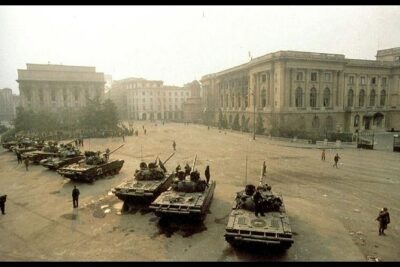
Bucharest Essential Tour: Old Town, Calea Victoriei & Communism
Read our review →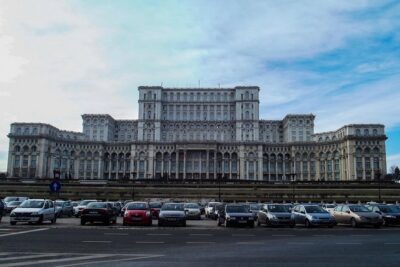
Communism in Bucharest – Landmarks, Museum & Communist Appetizers
Read our review →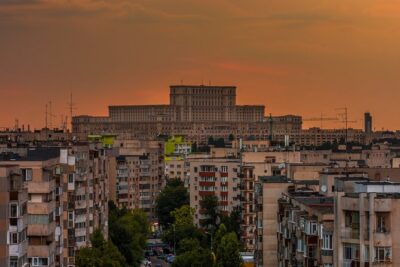
Museum of Communism Ticket with Communist Coffee
Read our review →Browse the lists this tour appears in