
Reviewed · COMMUNISM TOURS
Life in Communism
Bucharest’s communist past is written into its streets: grand avenues, erased neighborhoods, guarded institutions, and the enormous Palace of Parliament. This three-hour walk links about 15 landmarks to the people and policies that reshaped Romania, so you see more than imposing buildings.
I like the small group of up to 15 because a serious subject works better when you can ask questions. I also like the personal side of the guiding. Daniela, Andreea, Augustin, and John are praised for clear explanations, easy-to-follow English, and stories that connect national events with ordinary life.
The main drawback is simple: this is a three-hour walk, not a bus tour, and Bucharest weather can make the experience harder. You will also pay for your own drinks during the break, so carry some cash.
In This Review
- Key points at a glance
- Why this walk matters in Bucharest
- Beginning at the Patriarchal Cathedral
- The Palace of Parliament and the price of power
- Calea Victoriei and the city before and after
- Piata Revolutiei and the end of an era
- The guides make the difference
- Communist-style snacks and the mid-tour break
- Is $31.24 a fair price?
- Who will get the most from this experience?
- A practical way to place it in your Bucharest plans
- Should you book the Life in Communism walk?
- FAQ
- Where does the Life in Communism tour start?
- Where does the tour end?
- How long does the tour last?
- What language is the tour offered in?
- How many people can join the group?
- Which Bucharest landmarks are included?
- Are snacks included?
- Can I cancel for a full refund?
Key points at a glance
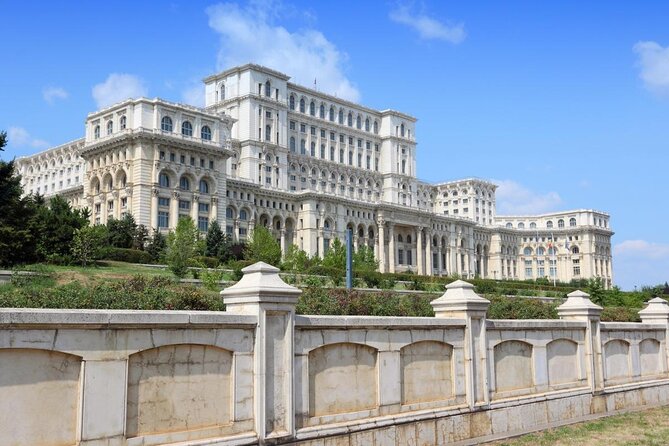
- About 15 communist-era stops: The walk connects buildings, streets, and public spaces with specific changes under the regime.
- Palace of Parliament opening point: You begin with one of Bucharest’s clearest symbols of state power and forced urban change.
- Personal stories from the guides: Daniela, Andreea, Augustin, and John bring different memories and explanations to the subject.
- A useful three-hour orientation: The route helps you understand central Bucharest before exploring alone.
- Communist-style snacks included: A small food sample adds a tangible, everyday detail to the discussion.
- Small English-speaking group: With a maximum of 15 people, conversation should be easier than on a large city tour.
Why this walk matters in Bucharest

Romania’s communist period is not distant history. It shaped the streets you walk today, the scale of central Bucharest, the fate of older buildings, and the memories of people who lived through shortages, surveillance, and political control.
That is why a walking tour can be more useful than a museum visit alone. You see how architecture and public space were used to express power. You also hear how government decisions affected ordinary routines, from what could be bought to how people behaved around the Secret Police.
The tour covers major themes such as nationalization, demolitions, and state surveillance. Those subjects can sound abstract in a history book. On the street, they become easier to grasp because the guide can point to a building or avenue and explain what changed there.
I would book this near the beginning of a Bucharest stay. The route gives you a working map of the central city and a political key for reading what you see afterward. A plain-looking block, a broad avenue, or a monumental government building may mean more once you understand why it was built or altered.
More communism-era tours in Bucharest:
- The Real tour of Communism
★ 5.0 · 666 reviews - Life under Communism
★ 5.0 · 358 reviews - 3-Hour Guided Tour of Communist Bucharest
★ 4.9 · 303 reviews
Beginning at the Patriarchal Cathedral
The meeting point is the Patriarchal Cathedral at Aleea Dealul Mitropoliei 25. This is a practical starting place for a tour about communism because the area helps frame the tension between Romania’s religious traditions and the former regime’s drive to control public life.
From here, the guide sets the historical stage before leading the group through central Bucharest. You are not simply being shown old buildings. You are given a timeline of the communist period and then shown roughly 15 places connected to particular moments or changes.
The opening explanation matters. Without it, the rest of the walk could become a string of large buildings and grim facts. With it, you can follow the story as Bucharest changes from one stop to the next.
The tour ends back at the meeting point, which is helpful if you want to continue sightseeing from a known location. Since the route lasts about three hours, wear comfortable shoes and plan around the physical effort of staying on foot for most of the experience.
The Palace of Parliament and the price of power
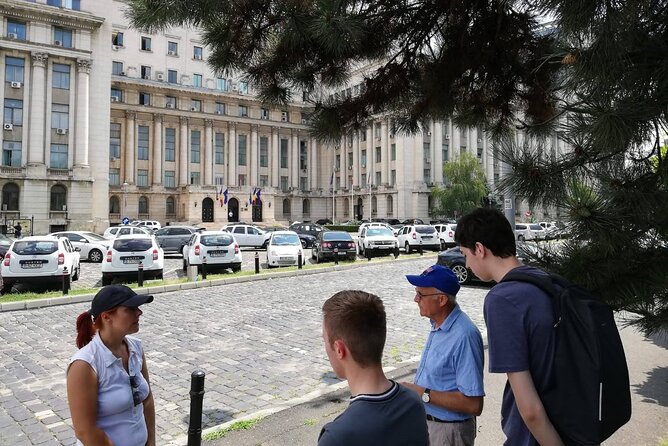
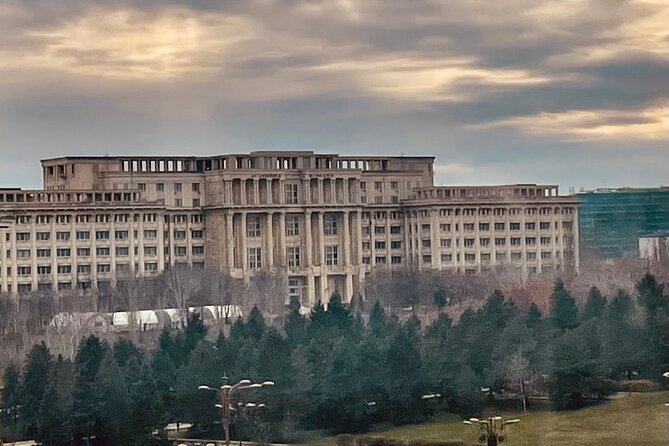
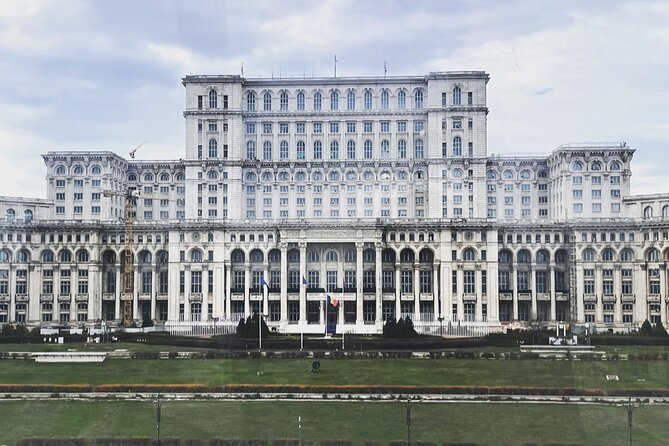
The Palace of Parliament is the route’s most obvious landmark. Its size makes a quick point before the guide says a word: the communist state wanted power to be visible, centralized, and monumental.
The building also opens the discussion of demolition. The communist reshaping of Bucharest involved the removal of older areas and the creation of a new civic center on a vast scale. At this stop, you can connect architecture with the human cost of urban policy rather than treating the palace as just an impressive photograph.
The walk does not list an interior visit to the Palace of Parliament, so do not book this expecting an inside tour. Its value here is the surrounding story and the way the guide places it within the wider timeline.
This is also the point where a good guide can prevent the subject from becoming too simple. Communism in Romania cannot be reduced to concrete, grand plans, and one famous building. The discussion includes the policies and pressures that changed homes, neighborhoods, institutions, and daily choices.
Calea Victoriei and the city before and after
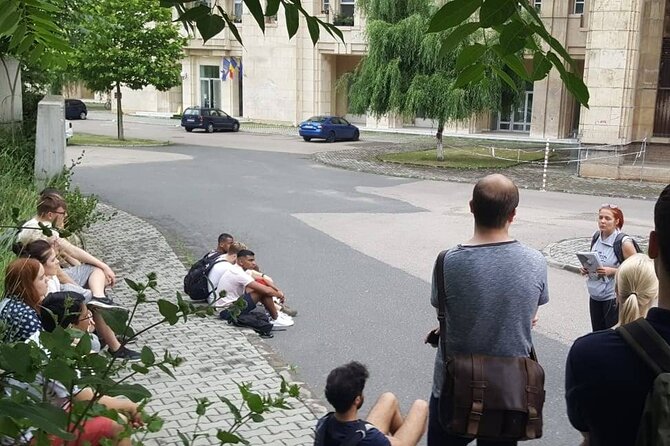
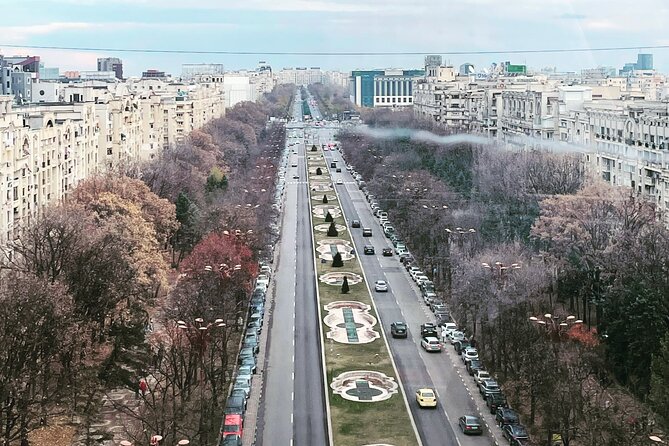
Calea Victoriei gives the walk a different scale. Instead of seeing only a single monumental project, you follow one of Bucharest’s major streets and consider how the regime affected an established urban setting.
The contrast is useful. A historic street can reveal what survived, what was altered, and how older city life was fitted into a political system that wanted a new public image. Your guide uses the route to explain how architecture and people were affected, not just how the city looked.
This is where the tour’s walking format earns its keep. You can observe the relationship between individual buildings, the road, and the broader city plan. The guide can also pause at several nearby points, making the history feel connected rather than divided into isolated facts.
The route includes roughly 15 objectives in all, though only the main stops are specified in the published plan. That is worth noting if you prefer a tightly named itinerary. The benefit is a wider historical route; the tradeoff is that the exact sequence of smaller stops may vary with the guide and conditions.
A few more Bucharest tours worth a look
- Bucharest: Dracula’s Castle, Peles Castle, & Brasov Old Town
★ 4.5 · 17,858 reviews - Bucharest: Dracula Castle, Peles Castle & Brasov Old Town
★ 4.6 · 10,891 reviews - Bucharest: Dracula’s Castle, Peleș Castle & Brașov Day Trip
★ 4.5 · 5,919 reviews - Bucharest: Palace of Parliament Tickets and Guide
★ 4.3 · 3,182 reviews
Piata Revolutiei and the end of an era
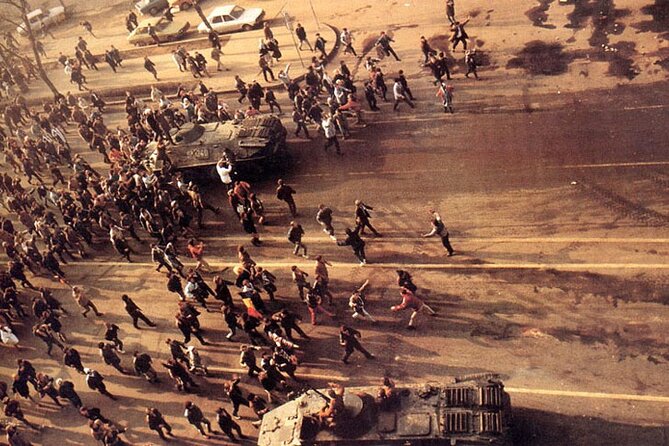
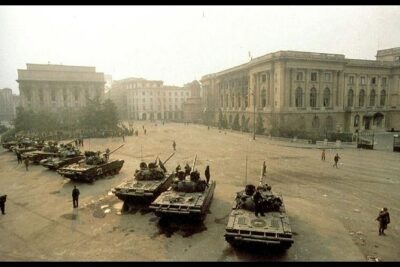
Piata Revolutiei, or Revolution Square, brings the story toward the political crisis that ended communist rule in Romania. It is one of the most important places on the route for understanding how state authority, public protest, and national memory meet in central Bucharest.
The square works well as a teaching stop because it allows the guide to link political events with physical space. You hear what changed during the final stage of the regime and why this location remains important to Romania’s present.
A strong part of this experience is the effort to offer a nuanced account of communism. Augustin, in particular, is praised for carefully researched narration and a complex view of the period. That approach matters because Romania’s communist decades included both large state projects and harsh restrictions, and a useful tour needs to hold those facts together.
The discussion is not presented as a simple before-and-after story. You learn about control, fear, and shortages, but you also get a clearer sense of how people adapted and how the past still shapes Bucharest.
The guides make the difference
This tour depends heavily on the person leading it. The subject is serious, and the walk has enough stops that a flat delivery could turn three hours into a long list of dates.
The strongest guide feedback centers on clear explanations and personal connection. Daniela is described as friendly and able to explain what life under communism was like. Andreea is praised for her passion, excellent English, and an easy-to-follow voice. Augustin brings careful research and a nuanced view, while John adds stories from his own experience.
You cannot select a particular guide with certainty from the information provided, so book the tour for the subject and small format rather than expecting one named person. Still, the range of guide comments gives you a useful picture of the style: expect history explained in plain language, with personal experiences added when appropriate.
That personal element is especially valuable here. Facts about nationalization or the Secret Police tell you what the regime did. A story about daily life helps you understand how those policies felt. The best moments are likely to come when the guide moves from a formal event to its effect on a family, a workplace, or a normal day in the city.
The English-language format is another practical strength. Clear speech matters on a walking tour, especially when you are standing outdoors near traffic or moving between stops. The feedback specifically highlights easy-to-follow English and a voice that is simple to hear.
Communist-style snacks and the mid-tour break

A small serving of communist-style snacks is included. This may sound minor, but food can offer a more direct way into everyday history than another political explanation.
The snack is not presented as a full meal, so arrive having eaten enough for a three-hour outing. There is also a short break in the middle of the walk. Alcoholic drinks are not included, and drinks during the break are self-supported, ideally with cash.
One useful detail comes from the experience of walking in cold weather: the break can give you a chance to warm up. In warmer conditions, it simply provides a pause and a moment to ask questions or absorb what you have heard.
Keep your expectations sensible. This is a history walk with a snack, not a food tour. The food element is best understood as a small link to everyday life under the regime.
Is $31.24 a fair price?
At $31.24 per person, the tour is priced in the middle range for a three-hour guided city walk. The value depends on how much structure and historical explanation you want.
If you wander Bucharest alone, you can see the Palace of Parliament, Calea Victoriei, and Revolution Square without paying a guide. What you will not automatically get is the connection between those places, a clear sequence of events, or an explanation of nationalization, demolitions, surveillance, and daily life.
That is where the fee makes sense. You are paying for a focused subject, an English-speaking guide, about 15 stops, and a small group rather than a generic orientation walk. The price is easier to justify if recent Romanian history is one of your main reasons for visiting.
It is less useful if you want a broad introduction to every part of Bucharest. The tour stays focused on the communist period, so you should not expect a full survey of medieval, royal, or contemporary city history.
Group discounts are available, though the exact discount is not specified. The maximum group size is 15, which keeps the experience more personal than a large coach-style outing. Since the tour is commonly booked about 22 days ahead, reserve early if your schedule is fixed.
Who will get the most from this experience?
I would choose this walk if you enjoy political history, twentieth-century Europe, architecture, or stories about ordinary life under difficult systems. It also suits you if you want a useful city introduction before making your own way around Bucharest.
The tour is a good match for first-time visitors who want context quickly. Three hours gives you a substantial introduction without taking an entire day, and the return to the starting point makes it easy to pair with other central sights.
It may not suit you if walking for three hours is uncomfortable or if you prefer a fast sightseeing route with little discussion. The stated fitness requirement is moderate, and there is no indication that the route is conducted by vehicle.
Families and mixed-age groups may find the subject serious, so consider how much political history your group wants. Service animals are allowed, and the meeting point is near public transportation. Confirmation is provided at booking.
Bring comfortable shoes, weather-appropriate clothing, and cash for drinks. Since the tour operates outdoors for much of its duration, cold or wet weather could affect your comfort even if the history remains worthwhile.
A practical way to place it in your Bucharest plans
Schedule the walk early in your stay if you want the rest of your sightseeing to have more meaning. After the tour, you will be better placed to look at central Bucharest’s grand avenues and large-scale buildings with a sense of why they are there.
The route is also a good choice before independent exploration because it introduces the city on foot. You get a general orientation without the rushed feeling of a short transfer between distant sights.
Allow a little flexibility around the start time. The experience lasts approximately three hours, and outdoor tours can take slightly longer or shorter depending on the pace of the group and the time spent discussing questions. No separate hotel pickup is listed, so make your own way to the Patriarchal Cathedral.
The cancellation policy is friendly but strict close to departure. You can cancel for a full refund up to 24 hours before the start time. Cancellations or changes made less than 24 hours ahead are not refunded or accepted.
Should you book the Life in Communism walk?
Book it if you want Bucharest’s communist past explained through actual streets and buildings rather than presented as a list of dates. The combination of Palace of Parliament, Calea Victoriei, Revolution Square, personal stories, and about 15 connected stops gives the subject a clear shape.
I especially recommend it for you if this is your first visit and you want an informed starting point. The strongest reasons to go are the small group, the practical three-hour length, and guides such as Daniela, Andreea, Augustin, and John, who bring clear explanations and personal perspective.
Skip it if you want an inside visit to the Palace of Parliament, a food-focused outing, or a vehicle tour. For everyone else, $31.24 is a reasonable price for a focused history walk that can change how you read Bucharest for the rest of your stay.
FAQ
Where does the Life in Communism tour start?
The tour starts at the Patriarchal Cathedral, Aleea Dealul Mitropoliei 25, Bucharest, Romania.
Where does the tour end?
The activity ends back at the meeting point at the Patriarchal Cathedral.
How long does the tour last?
The walking tour lasts approximately three hours.
What language is the tour offered in?
The tour is offered in English.
How many people can join the group?
The tour has a maximum of 15 participants.
Which Bucharest landmarks are included?
The named stops are the Palace of Parliament, Calea Victoriei, and Piata Revolutiei. The full walk visits roughly 15 communist-era objectives.
Are snacks included?
Yes. Communist-style snacks are included. Alcoholic beverages are not included, and drinks during the short break are self-supported.
Can I cancel for a full refund?
Yes. You can cancel at least 24 hours before the experience start time for a full refund. Cancellations or changes made less than 24 hours before the start time are not accepted or refunded.
Recently added around Bucharest
- 6h Communism Tour in Bucharest with Ceausescu Mansion★ 4.5 · 6 reviews
- From Bucharest : Day Trip to Peles, Dracula’s Castle, Brasov★ 4.7 · 6 reviews
- Bears Sanctuary, Dracula Castle and Brasov City – Full Day Trip from Bucharest★ 5.0 · 6 reviews
- Dracula Private Tour★ 5.0 · 6 reviews
- Transfagarasan Road Private Day Trip from Bucharest / The Best Road in the World★ 5.0 · 6 reviews
- Bucovina Painted Monasteries & Transylvania Tour: 4-Day Private★ 5.0 · 6 reviews
- Bucharest : Wednesday, Dracula & Peles 3 Castles Tour 1 Day★ 4.7 · 6 reviews
- Hiking thought the best mountain villages in Romania-Private tour from Brasov★ 5.0 · 6 reviews
Communism Tours, compared.

Bucharest Essential Tour: Old Town, Calea Victoriei & Communism
Read our review →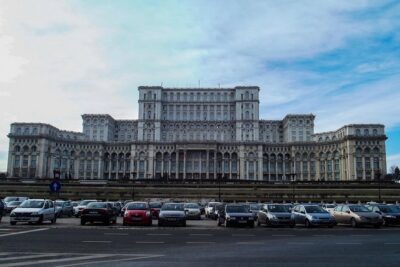
Communism in Bucharest – Landmarks, Museum & Communist Appetizers
Read our review →

Museum of Communism Ticket with Communist Coffee
Read our review →Browse the lists this tour appears in