
Reviewed · COMMUNISM TOURS
Exploring a Former Communist Prison
Bucharest’s communist past feels most real at Fort 13 Jilava, a 19th-century military fort later used as a prison and execution site. This six-hour tour connects that grim place with Revolution Square, communist housing districts, Ferentari, the Palace of Parliament, and Carol Park, giving you the political story and the everyday one.
I like two things here. First, guide Mircea brings personal weight to Revolution Square, having been there when communism fell in December 1989. Second, the tour leaves the postcard center and drives through parts of Bucharest most visitors never see. The small maximum of eight people also gives the day a more personal feel.
The main consideration is its subject matter. Fort 13 Jilava is not a light sightseeing stop, and the visit takes place inside an active prison complex. You also need a real camera if you want photographs inside, since mobile phones are not allowed.
In This Review
- Key points to know before booking
- A six-hour look at Bucharest after communism
- Revolution Square and the personal story of 1989
- The Palace of Parliament and the price of power
- Ferentari and the city beyond the postcard
- Carol Park, a mausoleum, and a communist-era meal
- Inside Fort 13 Jilava for two difficult hours
- Why the small group makes a difference
- Is $173.47 a fair price?
- What the tour does especially well
- Who should book this experience?
- FAQ
- Where does the tour start?
- What time does the experience begin?
- How long does the tour last?
- Where does the tour finish?
- How many people can join the tour?
- Is transportation included?
- Is admission to Fort 13 Jilava included?
- Is admission to the Palace of Parliament included?
- Can I use my mobile phone inside Fort 13 Jilava?
- What food and drinks are included?
- Can I cancel for a full refund?
- What happens if the tour is canceled?
Key points to know before booking
- Fort 13 Jilava is the centerpiece: Enter a former military fort that became a communist detention and execution camp.
- Mircea may guide the day: He has a personal connection to the December 1989 events at Revolution Square.
- The route goes beyond central Bucharest: You pass communist apartment districts and Ferentari, an area rarely included in standard city tours.
- The group is capped at eight: That matters when discussing a difficult subject and asking questions.
- Food and transport are included: You get a covrig, local bites, bottled water, coffee or tea, one beer or equivalent, and an air-conditioned vehicle.
- Bring a camera, not just a phone: Mobile phones are forbidden inside Fort 13 Jilava, while camera photography is allowed.
A six-hour look at Bucharest after communism
This is not a standard Bucharest highlights tour with a quick mention of the 1989 revolution. It uses the city itself as evidence of how Romania changed, moving from the symbolic center to communist residential districts and finally to a prison site outside the city.
You begin at 9:30 a.m. beside the Memorial of Rebirth in Piața Revoluției. From there, the guide sets the scene with a short account of Bucharest’s development over roughly 500 years and explains how the city’s military fortifications came into being.
That older story matters because Fort 13 Jilava did not begin as a communist prison. It was built as part of a 19th-century defensive system, then reused under a very different regime. The tour asks you to look at the city in layers: royal and military Bucharest, communist Bucharest, and the Romania that followed 1989.
The day is conducted by car, which makes the route possible in six hours. You are not spending the whole morning walking from one distant district to another. Instead, the drive lets you see how the city changes from central monuments to large housing estates and less polished neighborhoods.
More communism-era tours in Bucharest:
- The Real tour of Communism
★ 5.0 · 666 reviews - Life under Communism
★ 5.0 · 358 reviews - 3-Hour Guided Tour of Communist Bucharest
★ 4.9 · 303 reviews
Revolution Square and the personal story of 1989
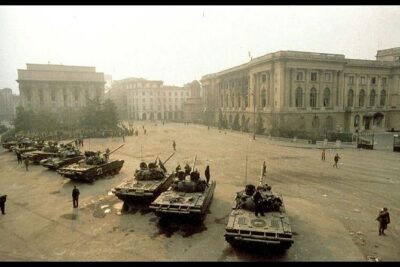
The first major stop is Revolution Square, where you spend about an hour learning the essentials of Romania’s communist period and its aftermath. This is the strongest place on the tour for political context.
The square is closely tied to the events of December 1989, when Nicolae Ceaușescu’s regime collapsed. The experience becomes more than a textbook account when Mircea leads the visit. He was present in the square during those events, so you can ask about what it felt like to be there when the system came apart.
That personal connection was one of the most praised parts of the experience, and I can see why. A guide who witnessed the period can add details and emotional texture that a general city guide may not have. At the same time, the tour is not presented as a full academic study of communist Romania. You get the essential political background, then see how it shaped the built environment and local memory.
Give this stop your attention. It is easy to rush through a public square, take a photograph, and move on. Here, the square is the starting point for understanding why the later prison visit matters.
The Palace of Parliament and the price of power
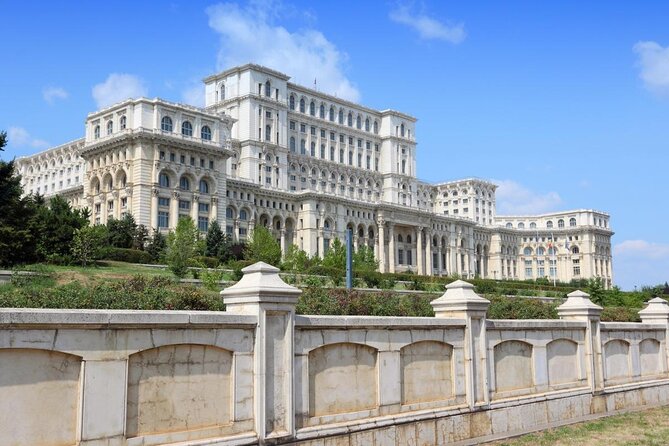
The next stop is the Palace of Parliament, one of the world’s largest administrative buildings. You spend around 20 minutes circling it by car and hearing about its darker stories and its impact on the local community.
This is a photo stop, not an interior tour. Admission is not included, and the schedule does not provide a full visit inside the building. That keeps the day moving, but it also means you should not book this experience expecting a detailed architectural tour.
The palace is useful here as a symbol of the communist state’s scale and priorities. Its size and setting help explain the physical cost of Ceaușescu’s rule. The guide also addresses what the building means to people living in Bucharest today, rather than treating it as only an impressive backdrop for photographs.
You get about 20 minutes, so plan for a quick look and a few pictures. If entering the Palace of Parliament is high on your list, you will need to arrange that separately or choose another tour that includes interior admission.
Ferentari and the city beyond the postcard
The drive through Ferentari is one of the tour’s more unusual choices. It is described as the Bronx of Bucharest, and the point is not to turn the district into a spectacle. Instead, you see communist-era bedroom neighborhoods and get a reality check about the social conditions that still shape the city.
This part helps connect government policy with daily life. Communist Romania was not only grand public buildings and political speeches. It was also apartment blocks, crowded housing, assigned work, and neighborhoods shaped by decades of state planning.
The drive lasts about an hour, and the information provided does not promise a walking tour through the district. That is important. You are observing from the vehicle and listening to the guide, not signing up for an extended neighborhood walk.
I like this choice because it gives the tour a wider frame. You do not leave Bucharest thinking that its communist story is confined to museums and monuments. Still, this can feel confronting. Come prepared to listen respectfully and to treat the area as a living community, not simply as a dramatic photo opportunity.
A few more Bucharest tours worth a look
- Bucharest: Dracula’s Castle, Peles Castle, & Brasov Old Town
★ 4.5 · 17,858 reviews - Bucharest: Dracula Castle, Peles Castle & Brasov Old Town
★ 4.6 · 10,891 reviews - Bucharest: Dracula’s Castle, Peleș Castle & Brașov Day Trip
★ 4.5 · 5,919 reviews - Bucharest: Palace of Parliament Tickets and Guide
★ 4.3 · 3,182 reviews
Carol Park, a mausoleum, and a communist-era meal
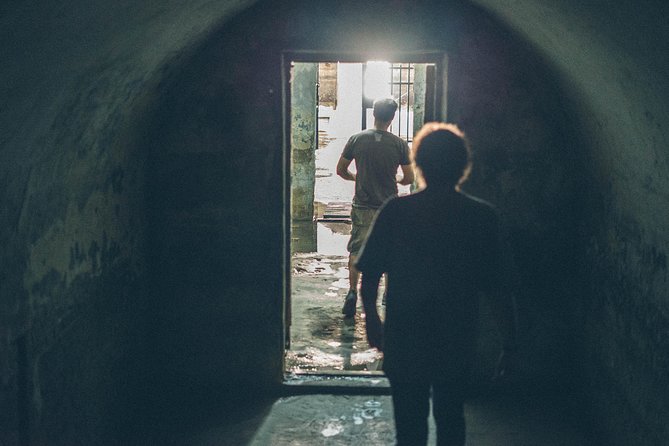
Carol Park provides a change of pace after the drive through the city. You spend about 30 minutes in one of Bucharest’s best-known parks, viewing the mausoleum associated with communist leaders and stopping for a traditional communist meal.
The food component is modest but useful. Included refreshments are a street snack called a covrig, local traditional bites, bottled water, coffee or tea, and one 400-milliliter beer or equivalent. Additional food and drinks cost extra.
This is not a restaurant-focused tour, so you should not expect a long lunch or a menu of choices. Think of it as a practical pause built into a full morning and afternoon. The snack and drink also give the guide a natural chance to talk with you in a less formal setting.
Carol Park adds another layer to the story. The park is not just a green break between serious stops. Its memorials and political associations show how public space can change meaning as governments change. The setting also gives you a chance to process what you have already seen before entering Fort 13 Jilava.
Inside Fort 13 Jilava for two difficult hours
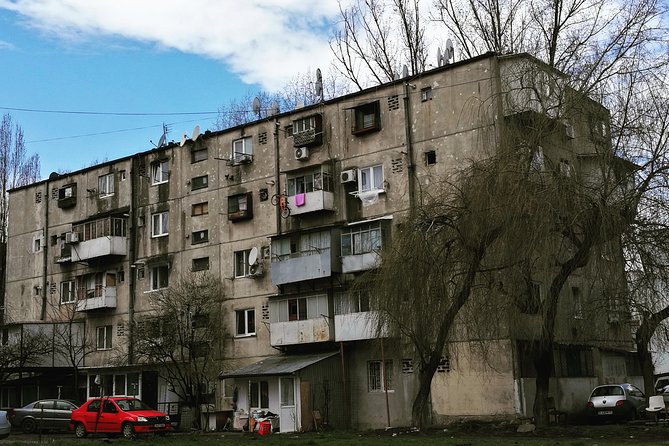
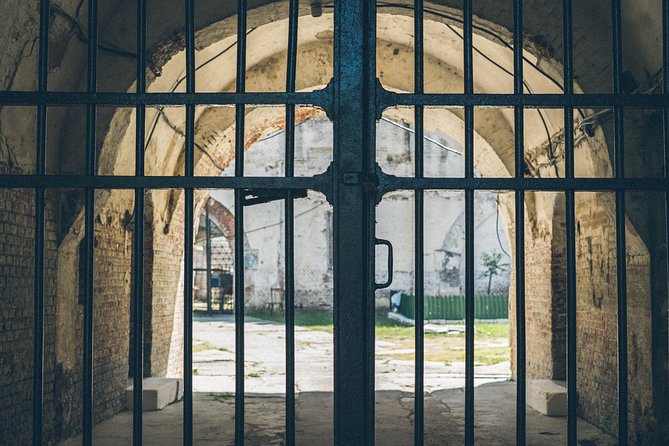
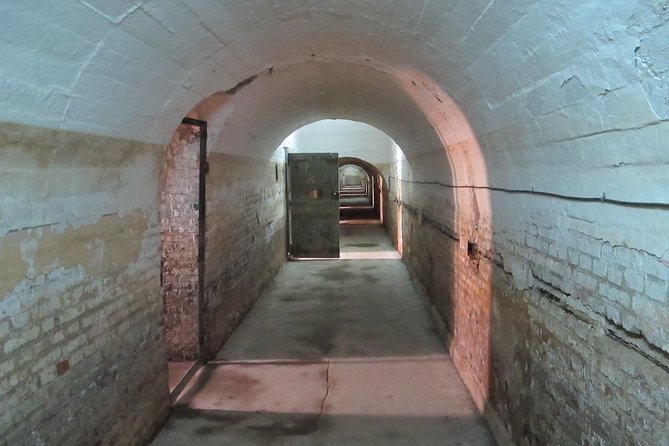
The final main stop is Fort 13 Jilava, where you spend about two hours visiting the former military fort used as a prison under communism. It now functions as a memorial within Bucharest’s largest prison, and the visit requires exclusive access arranged through the experience.
This is the reason to book the tour. The fort is not simply an old defensive building. It was transformed into a place of detention and execution for people who opposed the regime. The physical setting gives the political story a human scale. Instead of hearing only about repression in general terms, you enter a place connected to imprisonment and suffering.
The fort’s original military purpose also adds to the experience. You can follow the shift from national defense to state detention, a change that reflects Romania’s turbulent 20th-century history. The tour description does not list every room or exhibit, so you should expect the guide to shape the visit through explanation rather than a highly scripted museum route.
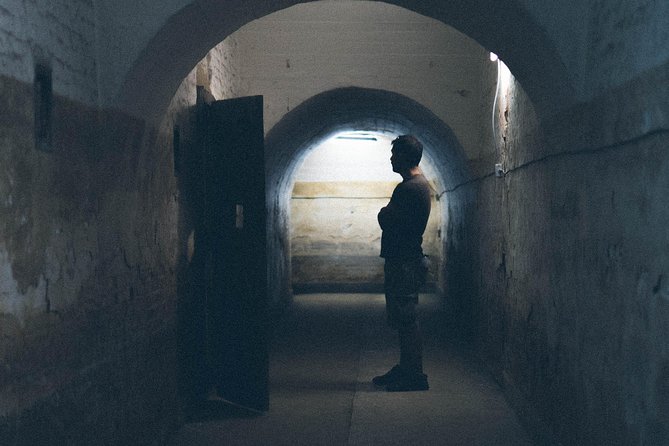
Two hours is a substantial amount of time. That allows the guide to explain the site without reducing it to a quick, gloomy photo stop. It also means you should consider your own comfort with prisons, executions, and political persecution before booking.
There are strict photography rules. Mobile phones are not allowed inside, and photographs can be taken only with a camera. Leave your phone ready for storage or use outside the fort, and bring a separate camera if photographing the interior matters to you.
Why the small group makes a difference
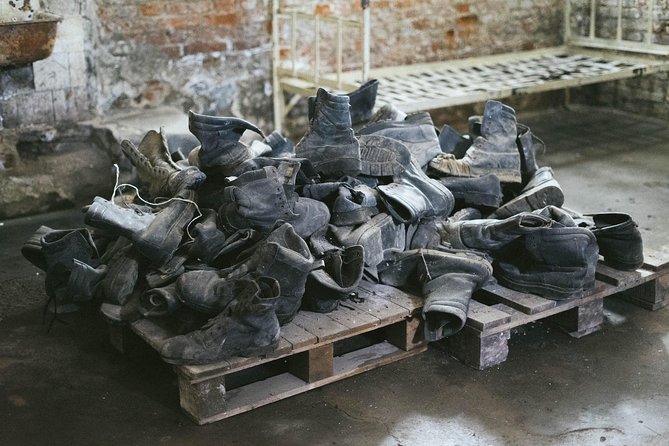
The tour accepts no more than eight people. For a day built around political violence, personal memory, and a restricted prison site, that limit is valuable.
A small group makes it easier to hear the guide in the vehicle and at each stop. It also gives you room to ask questions without turning the tour into a large crowd exercise. Mircea’s personal connection to the 1989 revolution is especially useful in this format, since you can engage with the story rather than simply hear a speech.
The air-conditioned vehicle is another practical advantage. The route covers central Bucharest, communist neighborhoods, Ferentari, Carol Park, and Jilava outside the city. You will spend enough time on the road that a comfortable vehicle matters, particularly in warm weather.
The meeting point is the Memorial of Rebirth in Piața Revoluției, and the tour returns there at the end. The location is near public transportation, so you can reach the start without arranging a separate private transfer.
Is $173.47 a fair price?
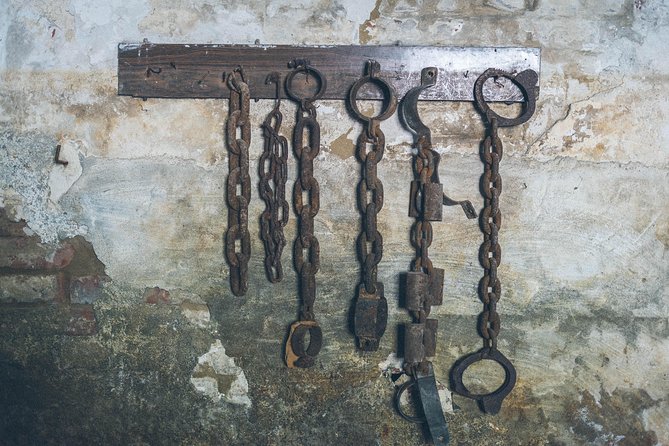
At $173.47 per person, this is not a budget sightseeing drive. The value depends on what you want from Bucharest.
You are paying for roughly six hours, a maximum group of eight, an air-conditioned vehicle, the guide, access to Fort 13 Jilava, and several included refreshments. The prison access is the key cost factor. You are not simply paying for a route through public streets and free viewpoints.
The price also covers a day that would be awkward to arrange independently. Fort 13 Jilava is outside central Bucharest and sits within an active prison complex. Reaching it, arranging access, and putting its story into the wider history of the city would require more planning than visiting ordinary public monuments.
I would consider the price reasonable for a visitor who places a high value on political history, local testimony, and unusual access. It is less appealing if you mainly want famous buildings, polished attractions, or a flexible schedule. The Palace of Parliament stop is brief, and most of the included food is snack-sized rather than a full dining experience.
The small group improves the value. With only eight places, the experience is closer to a guided discussion than a bus excursion. For this subject, that difference is meaningful.
What the tour does especially well
The best feature is the connection between places. Revolution Square shows the collapse of communism. The Palace of Parliament shows the regime’s scale. Ferentari shows the housing and social reality left behind. Carol Park adds political memory in a public setting. Fort 13 Jilava brings the story to a former detention site.
The guide is also central. Mircea’s presence at the December 1989 events gives the first stop unusual weight, and his reply to visitors makes clear that sharing these memories is not always easy. That honesty suits the subject better than a cheerful, packaged account.
I also appreciate the included local touches. A covrig, traditional bites, coffee or tea, and a beer are small things, but they make the day feel connected to Romania rather than like a purely academic lecture in a vehicle.
The experience has earned five-star feedback from the small number of published ratings, with particular praise for Mircea’s passion, the information shared, and the full route. The sample is limited, so I would treat that as encouraging rather than definitive. The more useful takeaway is that the strongest part of the day appears to be the guide-led storytelling, not simply the list of stops.
Who should book this experience?
Book it if you want to understand Bucharest through the memory of communism and are comfortable visiting a former prison. It suits curious adults, history-focused visitors, and anyone who has already seen the main central sights and wants a more difficult, less polished side of the city.
It is also a good fit if you prefer a small group and want to ask questions. The personal account at Revolution Square and the time at Fort 13 Jilava are the main reasons to choose this over a basic communist-era city drive.
Think twice if you want a relaxed sightseeing day. The prison has a serious subject, the Ferentari drive may feel confronting, and the Palace of Parliament visit is only a short exterior stop. Families with younger children should also consider carefully whether the detention and execution history is appropriate for them, since the experience is built around those themes.
Book at least a day ahead if your plans are fixed. Confirmation is sent within 48 hours and depends on availability. Free cancellation is available up to 24 hours before the 9:30 a.m. start, while bad weather or failure to reach the minimum group size can lead to a new date or a full refund.
FAQ
Where does the tour start?
It starts at the Memorial of Rebirth in Piața Revoluției, Bucharest.
What time does the experience begin?
The scheduled start time is 9:30 a.m.
How long does the tour last?
The experience lasts approximately six hours.
Where does the tour finish?
It returns to the starting point at the Memorial of Rebirth.
How many people can join the tour?
The group has a maximum of eight people.
Is transportation included?
Yes. An air-conditioned vehicle is provided for the route.
Is admission to Fort 13 Jilava included?
Yes, admission to Fort 13 Jilava is included.
Is admission to the Palace of Parliament included?
No. The Palace of Parliament is a brief exterior stop, and admission is not included.
Can I use my mobile phone inside Fort 13 Jilava?
No. Mobile phones are not allowed inside the prison. Photography is allowed only with a camera.
What food and drinks are included?
You receive a covrig, local traditional bites, one 500-milliliter bottle of water, coffee or tea, and one 400-milliliter beer or equivalent.
Can I cancel for a full refund?
Yes, if you cancel at least 24 hours before the experience start time. Changes or cancellations made less than 24 hours ahead are not accepted for a refund.
What happens if the tour is canceled?
If poor weather or an insufficient minimum group causes cancellation, you are offered another date or experience, or a full refund.
Recently added around Bucharest
- From Bucharest: Discovery at Europe’s Largest Salt Mine★ 5.0 · 3 reviews
- RiverCruise Exclusive – Private Transfer from or to Giurgiu Port/Bucharest Hotel★ 3.5 · 3 reviews
- Cluj Napoca: Climbing or Hiking Experience in Turda Canion★ 5.0 · 3 reviews
- Private-Red Patrol Bucharest Flea Market Tour with a Romanian car★ 5.0 · 3 reviews
- Bucharest: City Highlights Guided Walking Tour★ 5.0 · 3 reviews
- Probably the Best Restaurant and Wine Cellar near Bucharest★ 4.5 · 3 reviews
- Private 8 Day Romania UNESCO Tour★ 5.0 · 3 reviews
- Bucharest in a nutshell – half day private walking tour★ 5.0 · 3 reviews
Communism Tours, compared.
Bucharest Essential Tour: Old Town, Calea Victoriei & Communism
Read our review →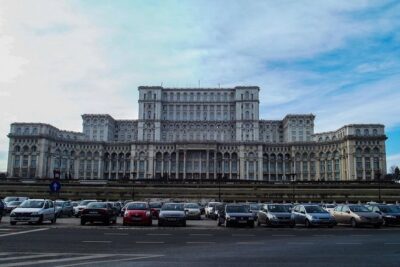
Communism in Bucharest – Landmarks, Museum & Communist Appetizers
Read our review →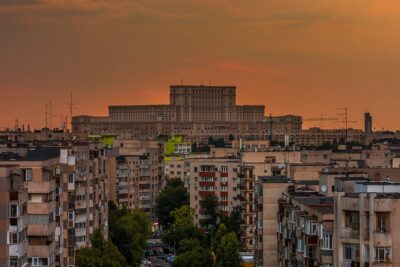

Museum of Communism Ticket with Communist Coffee
Read our review →Browse the lists this tour appears in