
Reviewed · COMMUNISM TOURS
Communist Era Bucharest Tour
The most useful part of this Bucharest tour is not simply seeing giant Communist-era buildings. It is hearing how those buildings affected ordinary people. Guides such as Alina and Claire connect Parliament Palace, Revolution Square, old banks, hotels, and boulevards with memories of shortages, political control, family life, and the uneasy changes after 1989.
I like the private format, since your group can ask direct questions and spend more time on subjects that interest you. I also like the personal stories from life under Nicolae Ceaușescu, which give human scale to a period that can otherwise feel like a parade of concrete façades.
The main consideration is that this is a walking tour with a lot of spoken information. One visitor found the guide difficult to understand, and the three-hour route may feel full if you want long photo stops or detailed interior visits.
In This Review
- Key points at a glance
- Why this tour helps explain Bucharest
- Starting at Manuc’s Inn and Piața Unirii
- Bulevardul Unirii and the scale of Socialist Victory
- Parliament Palace, the building that dominates the route
- Calea Victoriei, banks, and the public face of power
- University Square and the Intercontinental Hotel
- Revolution Square and the final days of 1989
- Iuliu Maniu and the Memorial of Rebirth
- The final historic building and what the walk leaves you with
- Private format, timing, and value at $30.72
- Who should book this Bucharest walk?
- Should you book the Communist Era Bucharest Tour?
- FAQ
- How long does the Communist Era Bucharest Tour last?
- Is the tour private?
- Is hotel pickup available?
- What language is the tour offered in?
- Does the tour include Parliament Palace admission?
- What should I wear or bring?
- Can I cancel for a full refund?
Key points at a glance
- Private three-hour walk: Only your group takes part, with hotel pickup offered in central Bucharest.
- Communist-era focus: Learn how planned rebuilding changed streets, neighborhoods, public buildings, and daily routines.
- Personal accounts: Alina and Claire have been praised for explaining both the useful and painful sides of life under the regime.
- Major political sites: See Parliament Palace, Revolution Square, the former Communist Party headquarters, and the 1989 memorials.
- Morning or afternoon choice: You can fit the tour around your arrival, sightseeing, or evening plans.
- Good price for private guiding: At $30.72 per person, the value improves sharply if several people share the booking.
Why this tour helps explain Bucharest
Bucharest can seem visually confusing at first. Elegant old buildings sit near broad Socialist avenues, ornate churches, modern shops, and huge government blocks. A casual walk shows the mixture, but it does not always explain why the city looks this way.
This tour gives you that missing thread. You follow the physical changes made during the Communist period, especially the massive redevelopment ordered by Ceaușescu. At the same time, you hear what those plans meant at street level. The point is not only architecture. It is power, control, memory, and the cost of remaking a capital city.
The guides also place communism in a longer national story. One especially detailed version of the tour has covered Romania after the Ottoman period, the work of King Carol I, the interwar years, the Communist takeover, and the country after 1989. That wider frame is useful because Romania’s Communist years did not begin in isolation.
You should expect a conversation rather than a fixed lecture. The strongest accounts describe guides adjusting explanations to questions about religion, family life, politics, and the difference between official claims and private experience. That makes the tour a good choice if you want to understand Romania today, not simply memorize dates.
More communism-era tours in Bucharest:
- The Real tour of Communism
★ 5.0 · 666 reviews - Life under Communism
★ 5.0 · 358 reviews - 3-Hour Guided Tour of Communist Bucharest
★ 4.9 · 303 reviews
Starting at Manuc’s Inn and Piața Unirii
The usual meeting point is outside the main entrance of Manuc’s Inn on Strada Franceză 62, in the Old Centre. Pickup at a centrally located hotel is also offered, which is handy if you would rather begin at your accommodation.
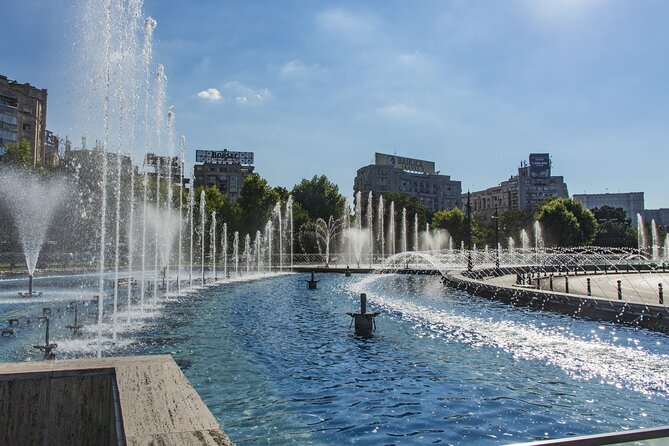
From there, the route reaches Piața Unirii, one of central Bucharest’s key urban spaces. During the Communist period, this area was reshaped as part of the planned modernization of the city. Today it has been renewed as a central gathering point, with the restored Unirii fountains providing one of the easiest photo stops on the route.
The stop is brief, about ten minutes, so treat it as an introduction rather than a full visit. Your guide can explain the contrast between the current public square and the political plans that created it. The setting helps you see how the regime used scale, open space, and controlled avenues to express authority.
The fountains are also a reminder that not every change in the area is purely historical. Bucharest continues to repair and reuse Communist-era spaces. You see an urban center that is still being reinterpreted rather than preserved as a museum.
Bulevardul Unirii and the scale of Socialist Victory
From Piața Unirii, you move along Bulevardul Unirii, formerly known as the Boulevard of Socialist Victory. The grand name tells you plenty about the intended message. This was planned as a ceremonial route, often compared with the Champs-Élysées in Paris.
The boulevard is lined with 17 artesian fountains, decorated around the four seasons. The listed stop is only about five minutes, so your guide will focus on the design, symbolism, and connection to the larger rebuilding plan.
This is one of those places where scale matters more than detail. You may not need a long stop to understand the point: the avenue was made to frame power and connect major Communist projects. The fountains soften the scene, but they do not hide the vastness of the plan.
Bring comfortable shoes. The route covers several central areas, and the tour works best when you can listen while walking without worrying about sore feet.
Parliament Palace, the building that dominates the route
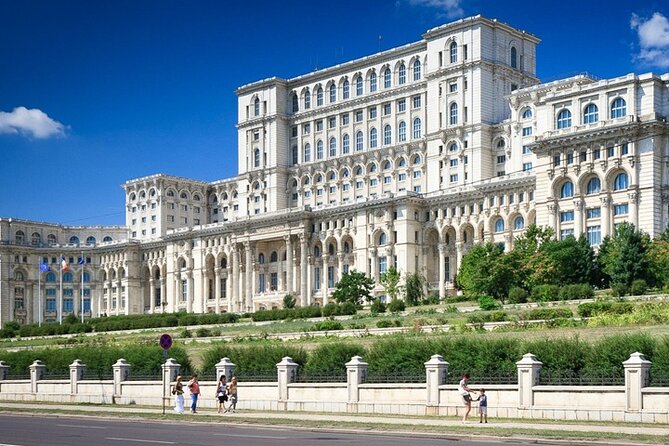
Parliament Palace, formerly Casa Poporului, is the tour’s biggest visual subject. Nicolae Ceaușescu ordered this enormous building as part of his attempt to remake central Bucharest. The name means House of the People, though its scale and cost created a sharp contrast with the shortages experienced by ordinary Romanians.
The guide explains the building’s construction and its claim to being the heaviest building in the world. You should not expect this tour to function as an interior visit. The supplied route describes seeing the massive structure and hearing its story, but it does not include a separate admission or interior tour.
That distinction matters. If you want to visit the inside of Parliament Palace, check for a separate ticket and schedule. Here, the value is the explanation of how the building fits into Ceaușescu’s broader plans and why it remains such a forceful symbol.
I find this stop most useful when the guide moves beyond measurements and construction facts. The building becomes easier to understand when connected to forced urban change, political ceremony, and the human cost of clearing parts of the city for monumental projects.
A few more Bucharest tours worth a look
- Bucharest: Dracula’s Castle, Peles Castle, & Brasov Old Town
★ 4.5 · 17,858 reviews - Bucharest: Dracula Castle, Peles Castle & Brasov Old Town
★ 4.6 · 10,891 reviews - Bucharest: Dracula’s Castle, Peleș Castle & Brașov Day Trip
★ 4.5 · 5,919 reviews - Bucharest: Palace of Parliament Tickets and Guide
★ 4.3 · 3,182 reviews
Calea Victoriei, banks, and the public face of power
The walk continues along part of Calea Victoriei, one of Bucharest’s major historic avenues. Today it has attractive shops and impressive façades. The guide uses the street to explain what public and commercial life felt like during the Communist years.
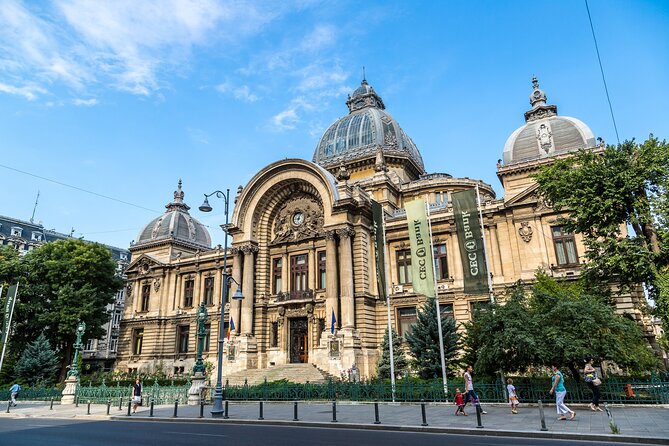
The focus then shifts to institutions. The CEC Bank is presented as the bank of the people during the Communist period. Romania’s National Bank provides another chance to hear how finance and state power worked before and after 1989.
These stops are short, but they add welcome variety. Instead of looking only at monumental government architecture, you see the financial and commercial face of the city. The buildings also help you compare the formal language of state institutions with the more open street life Bucharest has today.
Do not expect every stop to involve entry. Much of the tour is about exterior views, street position, and the guide’s explanation. If you enjoy connecting architecture with politics, this format works well. If you prefer long interior visits, you may find the pace less satisfying.
University Square and the Intercontinental Hotel
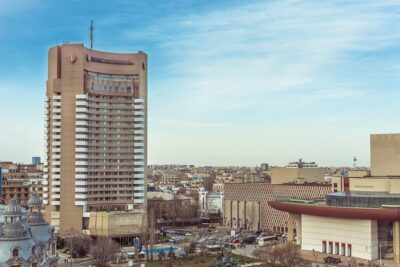
University Square brings the tour into another important public area. Here you see the oldest and largest university in Bucharest, along with the Intercontinental Hotel, completed and opened in 1971.
The hotel is a useful detail because it shows that Communist Bucharest was not made only of government offices and housing blocks. Hotels, theaters, banks, and universities all carried political meaning. The guide explains how the Intercontinental fit into the city and its changing public image.
You also pass the National Theatre of Bucharest. Its design has changed several times during its relatively short history, making it a good example of how buildings can be altered as political tastes and practical needs shift.
This part of the walk is especially helpful if you have already been sightseeing in central Bucharest. You may have noticed the buildings but missed their connections. The guide points out origins and changes that are easy to overlook when you are simply moving between cafés, museums, and old churches.
Revolution Square and the final days of 1989
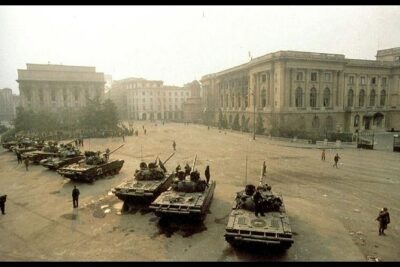
Piața Revoluției is the emotional center of the tour. This is the area linked with the start of the famous 1989 Revolution, and your guide explains the events through the buildings and memorials around the square.
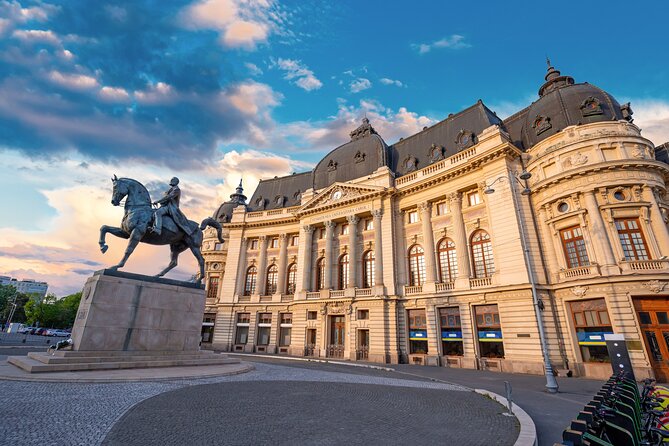
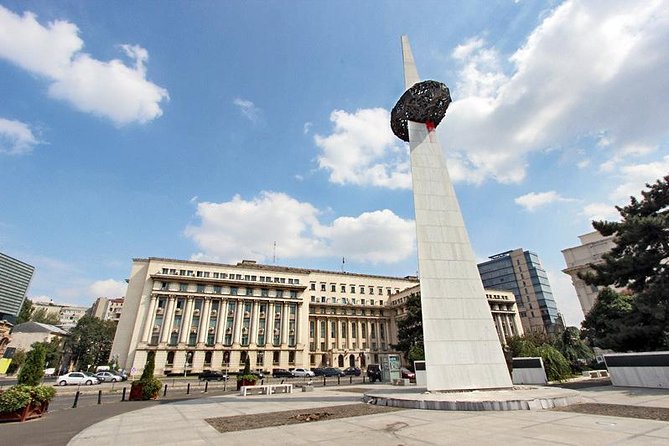
You see the balcony where Ceaușescu delivered his final speech, the former Communist Party headquarters, the Monument of National Rebirth, King Carol I’s equestrian statue, and the university library. The route allows about ten minutes here, with strong photo opportunities.
The square can feel crowded with symbols at first. A good guide makes the relationships clear: the balcony represents the collapse of Ceaușescu’s authority, while the monuments and older royal or academic buildings show competing versions of Romania’s public memory.
This is also where personal testimony can make the greatest difference. Guides who grew up during the period can explain how the Revolution appeared to families and young people, rather than presenting it only as a sequence of political events.
Still, the tone may vary. One account felt the guide offered a less negative view of Communist life than other guides and had difficulty following the explanation. That does not make the tour automatically poor, but it is a useful warning: history here is contested, and you should ask questions when an interpretation feels incomplete.
Iuliu Maniu and the Memorial of Rebirth
The Iuliu Maniu Statue is a brief five-minute stop. Maniu was a three-time prime minister, and the guide explains his importance and his struggle during the early Communist years.
This is a small monument with a large subject. It reminds you that resistance and political repression began before the final years of Ceaușescu. The stop also broadens the tour beyond one dictator, showing how Communist rule affected earlier political figures and institutions.
Nearby, the 25-meter Memorial of Rebirth commemorates the struggles and victims of the December 1989 Revolution. It is one of the most recognizable memorials in the square, and its unusual design can prompt questions about how Romania remembers the end of the regime.
The listed stop lasts about five minutes. That is enough for an explanation and photographs, but not for a long discussion unless your guide chooses to extend the conversation. Several highly praised tours ran beyond the scheduled three hours because the guide and group continued talking while walking. You should see that as a possibility, not a promise.
The final historic building and what the walk leaves you with
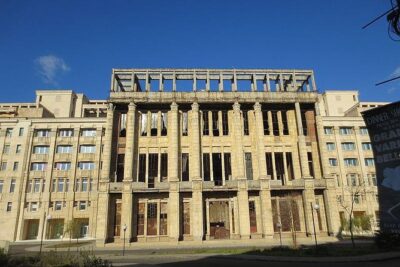
The route also includes a beautiful historic building built for the people of Bucharest more than 100 years ago, set among gardens and offering good photo opportunities. The supplied details do not identify the building by name, so I would treat this as a pleasant final stop rather than plan your day around a specific interior visit.
That final contrast is fitting. The tour moves between older civic architecture, Communist reconstruction, and the city that emerged afterward. You see that Bucharest was not erased and rebuilt from nothing. Older institutions, royal symbols, theaters, banks, and universities continued to shape the city around the new monumental projects.
Private format, timing, and value at $30.72
The tour lasts about three hours and is offered in English, with morning and afternoon departures. Pickup is available from a centrally located hotel, or you can meet outside Manuc’s Inn. It ends back at the meeting point.
The private format is the key value. At $30.72 per person, the price is modest for a private guide if you are traveling with two or more people. Solo visitors pay more effectively per hour, but still receive a tailored walk rather than a standard group commentary.
You should expect moderate physical activity. Comfortable walking shoes are recommended, and the tour is near public transportation. Service animals are allowed. Confirmation is normally sent at booking, although reservations made within one day of departure are confirmed as soon as possible, subject to availability.
The current score is 4.8 out of 5 from 24 ratings, with 92 percent recommending the experience. The strongest praise centers on clear explanations, warmth, personal stories, flexibility, and enthusiasm for Romania. Alina is repeatedly singled out for connecting national events with ordinary life. Claire, also named in the feedback, is praised for discussing both the positive and negative sides of the period without relying only on emotion.
That said, guide style matters. One person found the delivery hard to understand and felt the account leaned too lightly against communism. If you need a tightly scripted, strictly academic approach, this may not be your ideal tour. If you want a conversation and are ready to ask thoughtful questions, the private format gives you room to test different viewpoints.
Who should book this Bucharest walk?
I would choose this tour if you want to understand why Bucharest has such broad avenues, oversized public buildings, and layers of political memory. It is especially useful early in your stay, since the explanations can give later visits to Parliament Palace, Revolution Square, and the Old Centre more meaning.
It suits:
- First-time visitors who want a clear introduction to Communist Bucharest
- People interested in 20th-century European politics
- Anyone who prefers personal stories alongside dates and buildings
- Couples, families, or friends who value a private guide
- Solo visitors who want direct conversation and hotel pickup
I would think twice if your main goal is entering every major building, since the route is primarily an exterior walking tour. I would also avoid booking it immediately before a fixed appointment, because the conversation may continue beyond three hours.
Free cancellation is available up to 24 hours before the start time for a full refund. Changes or cancellations inside that window are not accepted for a refund.
Should you book the Communist Era Bucharest Tour?
Book it if you want more than a quick photograph of Parliament Palace. The tour’s real strength is the link between monumental streets and private life: what people could buy, how families experienced political control, how public buildings carried messages, and how the 1989 Revolution changed the meaning of familiar places.
At $30.72 per person, it is particularly good value for a small private group. Choose it for the guide’s perspective, flexible questions, and central walking route. Skip it only if you want a formal museum visit or a strictly neutral, academic lecture with no personal interpretation.
FAQ
How long does the Communist Era Bucharest Tour last?
The tour lasts approximately three hours, though the timing can vary if discussion continues during the walk.
Is the tour private?
Yes. Only your group participates in the activity.
Is hotel pickup available?
Yes. Pickup is offered from centrally located hotels. You can also meet outside the main entrance of Manuc’s Inn at 62 Strada Franceză.
What language is the tour offered in?
The tour is offered in English.
Does the tour include Parliament Palace admission?
The available information describes seeing Parliament Palace and learning about its history. It does not list an admission ticket or a separate interior visit.
What should I wear or bring?
Comfortable walking shoes are recommended. You should also allow for a moderate level of physical activity.
Can I cancel for a full refund?
Yes. You can cancel at least 24 hours before the local start time for a full refund. Cancellations or changes made less than 24 hours before the start time are not refunded or accepted.
Recently added around Bucharest
- 6h Communism Tour in Bucharest with Ceausescu Mansion★ 4.5 · 6 reviews
- From Bucharest : Day Trip to Peles, Dracula’s Castle, Brasov★ 4.7 · 6 reviews
- Bears Sanctuary, Dracula Castle and Brasov City – Full Day Trip from Bucharest★ 5.0 · 6 reviews
- Dracula Private Tour★ 5.0 · 6 reviews
- Transfagarasan Road Private Day Trip from Bucharest / The Best Road in the World★ 5.0 · 6 reviews
- Bucharest : Wednesday, Dracula & Peles 3 Castles Tour 1 Day★ 4.7 · 6 reviews
- Hiking thought the best mountain villages in Romania-Private tour from Brasov★ 5.0 · 6 reviews
- Bucovina Painted Monasteries & Transylvania Tour: 4-Day Private★ 5.0 · 6 reviews
Communism Tours, compared.
Bucharest Essential Tour: Old Town, Calea Victoriei & Communism
Read our review →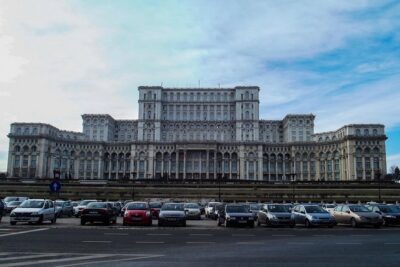
Communism in Bucharest – Landmarks, Museum & Communist Appetizers
Read our review →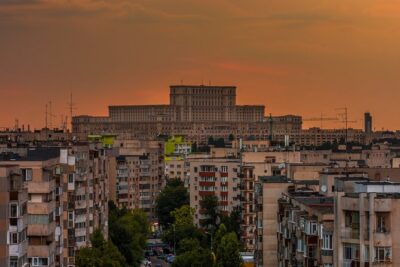
Museum of Communism Ticket with Communist Coffee
Read our review →Browse the lists this tour appears in