
Reviewed · COMMUNISM TOURS
Communism Walking Tour from Lenin to Ceausescu in Bucharest
Bucharest’s communist past is easiest to grasp on foot, where grand boulevards, spared churches, royal buildings, and revolution sites sit close together. This 2.5-hour walk from the Palace of Parliament to Revolution Square connects those pieces into one clear story, from Lenin-era communist influence to Nicolae Ceausescu’s final public speech.
I like the route’s range: you see the huge administrative project that reshaped the city, then quieter places such as Antim Monastery and the old city. I also like the guide-led storytelling, especially with Alex, who has handled groups ranging from three generations of one family to people with a serious interest in history.
The main drawback is that this is an English-only walking tour, and the group may include up to 25 people. Lucia is praised as a good guide, but one participant who did not understand English well found that Google Translate could not fully bridge the gap.
In This Review
- Key points to know before booking
- Why this Bucharest walk works
- Palace of Parliament: Ceausescu’s final building project
- Antim Monastery and the cost of a new boulevard
- Patriarchal Palace and the route to democracy
- Unirii Square and the Socialist Victory Boulevard
- Old Town: an older city left behind
- University’s Square and the bloodiest chapter
- Royal Palace and the changing meaning of power
- Ateneul Roman and one of Romania’s familiar images
- Revolution Square and Ceausescu’s last speech
- Guide style and the value of the storytelling
- Is $24 a fair price?
- Who should book this walk?
- Should you book the Communism Walking Tour?
- FAQ
- How long does the Communism Walking Tour last?
- Where does the tour start?
- Where does the tour end?
- What time does the tour start?
- Is the tour offered in English?
- Are entry fees included?
- How large can the group be?
Key points to know before booking

- Ceausescu’s last speech: The route ends at the former Communist Party Central Committee, where his final address began before the 1989 revolution overturned the regime.
- A city reshaped by demolition: Antim Monastery and the old city show what survived, while Unirii Square and the Socialist Victory Boulevard reveal the scale of Ceausescu’s rebuilding plan.
- Nine major stops in 150 minutes: The walk moves from the Palace of Parliament through Unirii Square, Old Town, University’s Square, and Revolution Square.
- A useful mix of politics and buildings: You get both the decisions behind communist urban planning and the visual contrast of churches, royal architecture, museums, and modern fountains.
- Strong value at $24: Admission is free at the listed stops, so you are paying mainly for a local guide, an organized route, and context that is difficult to pick up from the streets alone.
- Small enough to remain practical: The maximum group size is 25, though you should still expect a shared walking experience rather than a private tour.
Why this Bucharest walk works
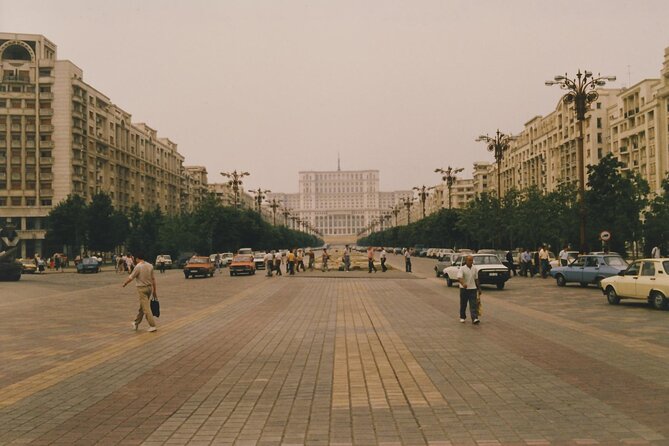
The best part of this experience is its shape. It does not treat communism as a museum subject sealed behind glass. Instead, you walk through the city that the regime changed, and you can compare old Bucharest with the monumental capital Ceausescu tried to create.
You begin on Bulevardul Unirii, in front of the Palace of Parliament. From there, the route moves west and north through religious, royal, civic, and revolutionary landmarks before finishing at Revolution Square. That direction gives the walk a natural story: communist ambition, the destruction and survival of older Bucharest, then the collapse of the regime.
A guide matters here because the buildings do not explain themselves. The Palace of Parliament is enormous, but its size alone does not tell you why it was built or what had to make way for it. Antim Monastery looks like a peaceful religious site, yet its survival is linked to a road project that nearly erased it.
The tour is also useful if you want a first look at Bucharest before deciding which places deserve a longer visit. You will not spend long inside any one building, and the experience does not include food, drinks, or listed admission tickets. Think of it as a city walk with historical interpretation, not an indoor museum tour.
More communism-era tours in Bucharest:
- The Real tour of Communism
★ 5.0 · 666 reviews - Life under Communism
★ 5.0 · 358 reviews - 3-Hour Guided Tour of Communist Bucharest
★ 4.9 · 303 reviews
Palace of Parliament: Ceausescu’s final building project
The first stop is the Palace of Parliament, described as the second-largest administrative building in the world. You spend about 20 minutes here, outside, with admission listed as free.
The building represents the final phase of Ceausescu’s grand communist project. Its scale is the point. You are not simply looking at an office complex. You are looking at an architectural statement about political power, centralized control, and the ability of one regime to remake a large part of a capital.
I like beginning here because the building gives you an immediate visual reference for everything that follows. Later, when you hear about the Socialist Victory Boulevard and the changes to the old city, you can connect those stories to the physical scale of this project.
Do not expect a full interior visit as part of this walk. The stop is about seeing the building and understanding its place in the city. If you want to tour the inside separately, this experience does not include that admission.
Antim Monastery and the cost of a new boulevard
Antim Monastery receives about 15 minutes. It belongs to the older part of Bucharest and was nearly demolished to make room for the new Socialist Victory Boulevard.
This is one of the route’s most useful contrasts. The Palace of Parliament shows what the regime built. Antim shows what stood in the way, and what was almost lost. A church surviving beside a monumental road project makes the planning choices easier to understand than a list of dates would.
The stop also slows the pace after the massive first building. You move from a symbol of state power to a religious site tied to the older city. That shift helps you see that communist urban planning did not simply add new buildings. It changed relationships between streets, neighborhoods, institutions, and historic places.
Because the stop is short, listen closely to the guide’s explanation. You will have time to see the exterior, but this is not a long church visit.
Patriarchal Palace and the route to democracy
At Palatul Patriarhiei, the tour spends around 20 minutes. The building was inspired by Paris’s Garnier Opera and is linked both to the beginning of democracy in Romania and to the beginning of the communist movement.
That pairing gives the stop unusual weight. It is not presented as a simple communist monument. Instead, it helps place Romania’s political changes in a longer setting, showing how one location can be tied to different movements and competing ideas about the country’s future.
I like this part of the walk because it keeps the story from becoming a simple list of communist crimes and grand projects. The political road to 1989 had earlier stages, and this stop gives you a reminder that Bucharest’s public buildings often carried several political meanings over time.
The building’s architectural reference to the Garnier Opera also adds variety. After the severe scale of the Palace of Parliament and the urban planning story at Antim, you get a landmark with a more formal, cultural appearance.
More walking tours in Bucharest:
- Bucharest: City Highlights Guided Walking Tour
★ 4.9 · 1,482 reviews - Bucharest Highlights Walking Tour
★ 5.0 · 469 reviews - Free walking tour of Brasov in English
★ 4.9 · 302 reviews - Bucharest: Ghost Stories & Romanian Mythology Walking Tour
★ 4.9 · 287 reviews
Unirii Square and the Socialist Victory Boulevard
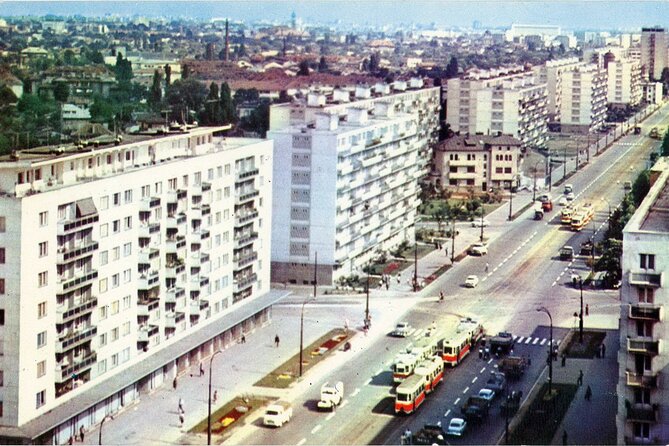
Piata Unirii takes about 20 minutes. It was built during the 1980s as part of the Socialist Victory Boulevard and is now known for its dancing fountains.
This is where the tour’s urban-planning theme becomes clear. The square is not just a place to photograph fountains. It represents the broad restructuring of Bucharest during the final communist decade, when the city was redesigned to support a monumental vision of the state.
The fountains provide a striking present-day contrast. A feature associated with a harsh period can now function as a public attraction, which is a useful reminder that cities often outlive the intentions of the people who reshape them.
You should expect an outdoor explanation rather than a dedicated fountain show or attraction visit. The value is in learning how the square fits into the boulevard and the larger rebuilding plan.
Old Town: an older city left behind
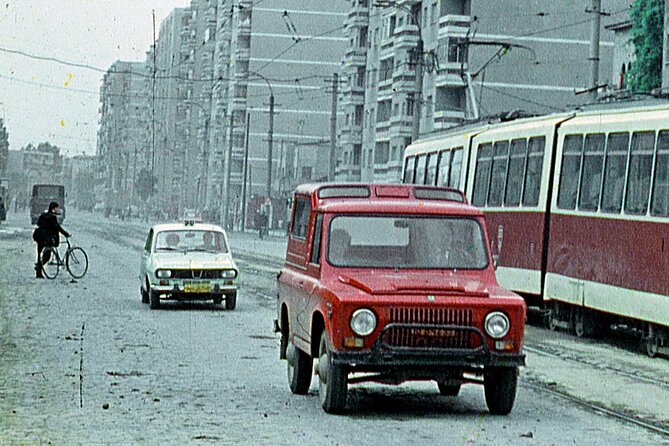
The Old Town stop lasts about 15 minutes. During the communist era, this part of Bucharest was abandoned and came to symbolize the old regime.
That detail complicates the usual postcard image of the Old Town. Today, you may focus on its old streets and buildings, but the tour asks you to consider its period of neglect and its political meaning. The area was not simply preserved as a charming historic quarter. It was associated with an earlier Bucharest that the communist state had little interest in celebrating.
This stop also gives the route a welcome change in scale. The Palace of Parliament and Unirii Square are broad and imposing. Old Town is more intimate, and its streets help you picture the older city that the new boulevard system cut through.
The short visit means you will not explore every lane or building. If you want extended time in Old Town for cafés, shops, or independent sightseeing, plan to return after the walk.
University’s Square and the bloodiest chapter

The tour spends about 15 minutes at University’s Square, a key site in the 1989 revolution. Romania was the only country in the communist bloc where the regime ended in a bloody revolution, and many victims were shot in this square.
This is likely to be one of the most serious moments of the walk. The square is a normal urban space, but its meaning changed during the revolution. A guide can connect the location to the human cost of the regime’s collapse in a way that a passing visit may not.
I recommend giving this stop your full attention. The tour is moving quickly, and the subject is heavy. It is also where the walk shifts from architectural evidence to personal risk, violence, and the consequences of public protest.
The stop does not present the revolution as a distant political event. It places you where people were killed. That direct connection is one reason this route works best with a guide who can explain events clearly and adjust the pace to the group.
Royal Palace and the changing meaning of power
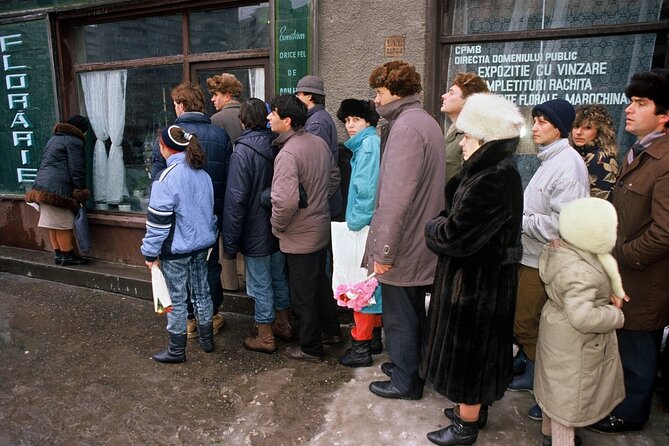
The former Royal Palace, now the National Art Museum, receives about 15 minutes. It was once the winter residence of Romania’s royal family. In the first years of communism, it became the Palace of the Republic and a protocol building.
This is another place where the tour shows political change through architecture. The building did not vanish when the monarchy ended. Its role changed, and the new government used an existing royal setting for its own official purposes.
The stop gives you a useful counterpoint to Ceausescu’s later building program. Communist power did not always need to create a new structure from scratch. At times, it took over the symbols and spaces of the previous order.
The National Art Museum is not included as an interior visit, so you should not treat the 15-minute stop as a museum tour. It is a chance to understand the building’s political history and note it for a separate visit if art is high on your Bucharest list.
Ateneul Roman and one of Romania’s familiar images
Ateneul Roman is the briefest stop, at about five minutes. It is one of Bucharest’s most representative buildings and appears on the five-lei banknote.
This is a quick visual pause rather than a major history lecture. Its inclusion helps show that Bucharest’s identity is not limited to communist monuments or revolution sites. The city also carries cultural and architectural symbols that appear in daily Romanian life.
Have your camera ready, but do not expect much time here. The five-minute visit is enough to identify the building and hear why it matters, not enough for an interior tour or a long architectural discussion.
Revolution Square and Ceausescu’s last speech
The final stop is Revolution Square, where the tour spends about 25 minutes. The main building here was the Central Committee of the Communist Party, and Ceausescu delivered his last speech to the Romanian people from this location.
Ending here is a smart choice. The route has shown you the state’s buildings, its road projects, its use of older institutions, and the human cost of its collapse. At Revolution Square, those threads come together around a single public moment.
Ceausescu’s last speech is remembered as a break in the regime’s control. The square lets you picture the setting for that event and consider how quickly political authority can weaken when the public no longer responds as expected.
This is also the practical end point, at Piata Revolutiei. You finish near public transportation, with the central city around you and several places available for further sightseeing. Since the tour ends here rather than returning to the start, plan your next stop from Revolution Square.
Guide style and the value of the storytelling
The experience is offered in English, and the strongest guide feedback centers on storytelling, historical connections, humor, and the ability to adapt to a group. Alex is specifically noted for connecting the story of Romanian communism across the Palace of Parliament and Ceausescu’s home, while also making the material work for three generations in one group.
That matters because the subject can easily become either a dry political lecture or a one-sided condemnation. The best version of this walk connects decisions to buildings and buildings to people. Alex’s scientific background and humor are also described as useful qualities, particularly for someone who wants more than a basic overview.
Lucia is another named guide associated with the experience. If English is not comfortable for you, keep in mind that the walk depends on spoken explanation. A translation app may help with individual words, but it may not capture a fast-moving historical story or a guide’s humor.
The maximum group size is 25. That is not a private tour, but it is still limited enough to keep the format manageable. You should be prepared to walk and listen in a shared group, with the quality of the experience depending partly on how well the guide handles the crowd.
Is $24 a fair price?
At $24 per person, this is a good value if you want a focused introduction to Bucharest’s communist era. The tour lasts about two and a half hours, covers nine stops, and includes a local guide. The listed sights do not require admission fees during the walk, so most of the price pays for the route design, explanation, and local perspective.
The value is strongest for a first visit. Without a guide, you can see the Palace of Parliament, Unirii Square, Old Town, and Revolution Square, but the political links between them are less obvious. You are paying to connect separate sights into one readable story.
It is less useful if you already know Romanian communist history well or want to spend substantial time inside museums and buildings. Food and drinks are not included, and the experience is entirely centered on walking and outdoor interpretation.
The tour is usually booked well ahead, with an average lead time of 50 days. That does not mean you must book that early, but it does suggest checking availability before you build your Bucharest schedule around it.
Who should book this walk?
I would choose this tour if you want:
- A compact introduction to Romania’s communist period
- A route that combines architecture, politics, and the 1989 revolution
- Context for the Palace of Parliament beyond its size
- A guide who can explain how old Bucharest was altered
- A walking experience suitable for a mixed-age group
- An English-language tour with a maximum of 25 people
I would look elsewhere if you need a Romanian-language tour, a private guide, extensive interior visits, or a slower photography walk. The route covers a lot in 150 minutes, so the experience favors coverage and connections over long stops.
Free cancellation is available if you cancel at least 24 hours before the 10:30 a.m. start time. Changes or cancellations inside that window are not accepted for a refund, and the minimum group requirement means the provider can offer a new date or a full refund if the tour does not run.
Should you book the Communism Walking Tour?
Book it if you want Bucharest’s major sights to make sense as part of one political story. The route from the Palace of Parliament to Revolution Square is well chosen, and the contrast between monumental communist planning, threatened religious buildings, the old city, royal power, and the 1989 revolution gives you a much better reading of central Bucharest.
At $24, it is especially worthwhile early in your visit. You will leave with a clearer idea of what deserves a second look, and you will understand why several ordinary-looking squares carry such painful memories. Just be ready for a brisk English-language walk and a serious subject.
FAQ
How long does the Communism Walking Tour last?
The tour lasts approximately 2 hours and 30 minutes.
Where does the tour start?
It starts at Bulevardul Unirii 5, București 040101, Romania, in front of the Palace of Parliament area.
Where does the tour end?
The tour ends at Revolution Square, also called Piata Revolutiei, in Bucharest.
What time does the tour start?
The listed start time is 10:30 a.m.
Is the tour offered in English?
Yes. English is the listed language for the experience.
Are entry fees included?
The listed stops have no admission ticket charge during the walking tour. Food and drinks are not included.
How large can the group be?
The maximum group size is 25 people.
Recently added around Bucharest
- 6h Communism Tour in Bucharest with Ceausescu Mansion★ 4.5 · 6 reviews
- From Bucharest : Day Trip to Peles, Dracula’s Castle, Brasov★ 4.7 · 6 reviews
- Bears Sanctuary, Dracula Castle and Brasov City – Full Day Trip from Bucharest★ 5.0 · 6 reviews
- Dracula Private Tour★ 5.0 · 6 reviews
- Transfagarasan Road Private Day Trip from Bucharest / The Best Road in the World★ 5.0 · 6 reviews
- Bucharest : Wednesday, Dracula & Peles 3 Castles Tour 1 Day★ 4.7 · 6 reviews
- Hiking thought the best mountain villages in Romania-Private tour from Brasov★ 5.0 · 6 reviews
- Bucovina Painted Monasteries & Transylvania Tour: 4-Day Private★ 5.0 · 6 reviews
Communism Tours, compared.
Bucharest Essential Tour: Old Town, Calea Victoriei & Communism
Read our review →
Communism in Bucharest – Landmarks, Museum & Communist Appetizers
Read our review →

Museum of Communism Ticket with Communist Coffee
Read our review →Browse the lists this tour appears in