
Reviewed · COMMUNISM TOURS
Ceausescu Villa – fast track tickets and guide
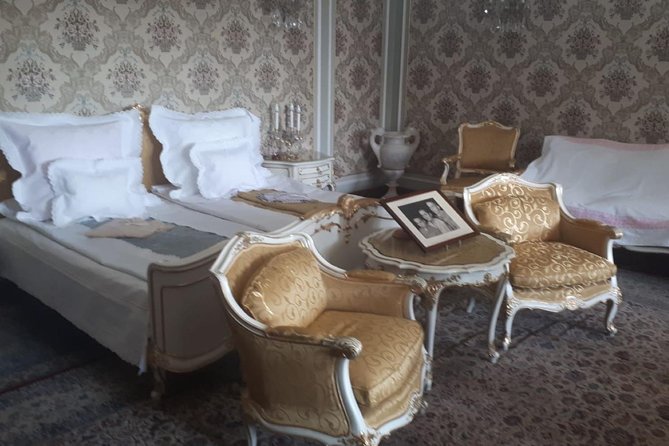
Ceausescu Villa gives you an unusually personal view of Romania’s communist past. Instead of studying a monument or a government building, you walk through the rooms where Nicolae Ceausescu and his family lived, including the first and second floors of this grand home.
I like the original interior and the way the guide connects furniture, decoration, and daily life to the country’s troubled past. I also like the compact format: in about 45 minutes, you get a focused history lesson without giving up half your afternoon.
The main drawback is that the tour can feel short if you want a detailed political history. Photography rules have also changed, so you should not assume you can take pictures inside. The guide’s explanation of the rules may also disappoint visitors who have seen professional images online and expected to photograph freely.
In This Review
- Key points to know before you book
- Entering the Ceausescu family home
- What you see in 45 minutes
- The guide adds the human side
- Why the original rooms matter
- Photography rules and the cost of images
- Is $25.60 a fair price?
- Timing, meeting point, and group size
- Who will enjoy this visit most?
- Booking, cancellation, and planning advice
- Should you book Ceausescu Villa?
- FAQ
- Where does the Ceausescu Villa tour start?
- What time does the tour begin?
- How long does the visit last?
- Where does the activity end?
- What does the tour include?
- How much does the experience cost?
- Can I cancel for a full refund?
Key points to know before you book
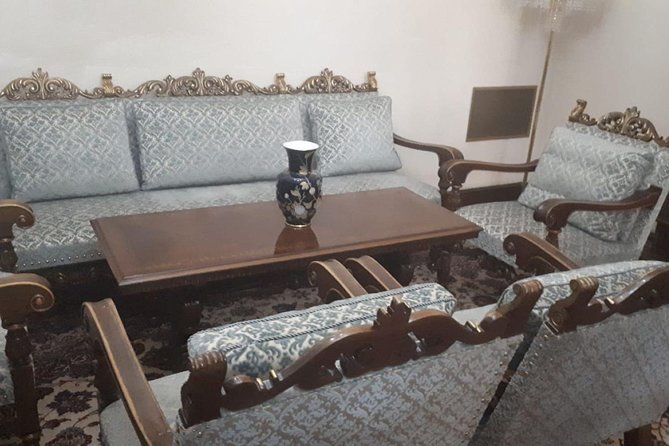
- See the preserved home of Romania’s last dictator: Walk through rooms on the first and second floors, with the decor and household setting left in its original style.
- Expect a personal history lesson: The guide explains how the Ceausescu family lived, adding human details to a difficult period in Romanian history.
- The visit lasts about 45 minutes: It is easy to fit into a Bucharest sightseeing day, but it is not a long museum tour.
- Fast-track entry saves uncertainty: Admission is arranged at Palatul Primăverii, so you can focus on the visit rather than sorting out entry on site.
- Photography is restricted: Current rules do not allow ordinary visitor photography, and professional image rights may cost extra.
- Plan around the 4:15 pm start: The tour begins at Bulevardul Primăverii 50 and ends at the same place.
Entering the Ceausescu family home
The experience begins at Palatul Primăverii, on Bulevardul Primăverii 50 in Bucharest. This is the former residence of Nicolae Ceausescu, Romania’s last communist dictator, and his family.
You are not simply looking at an old political building from the outside. The point of the visit is to see the domestic side of power: the rooms, furnishings, decoration, and private surroundings of a family that lived very differently from most Romanian citizens.
That contrast gives the tour its force. A government speech can tell you what a regime wanted people to believe. A private home can show you what its leaders valued, how they wanted to live, and how far removed they were from ordinary life.
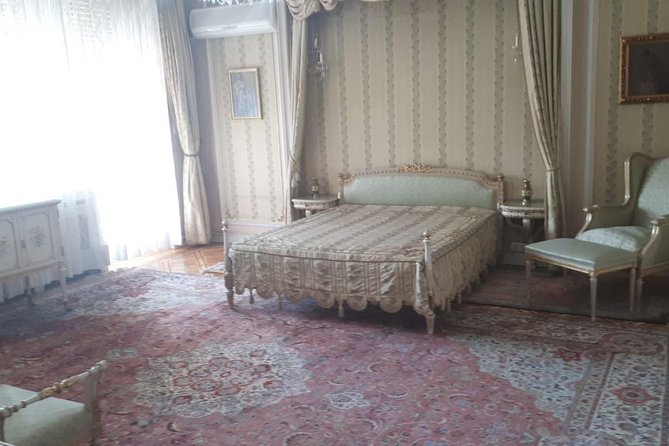
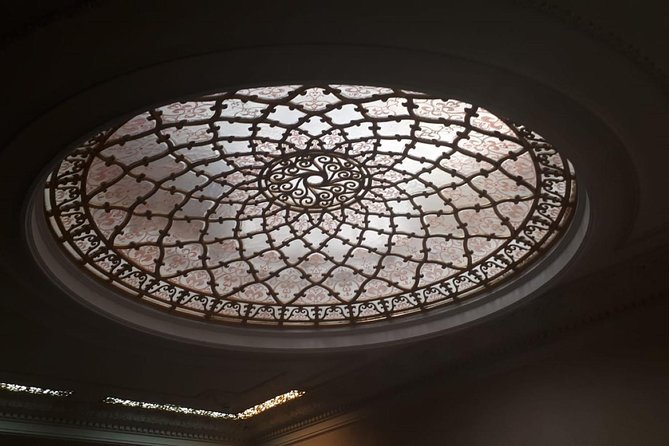
The building’s grand style is part of the story. The home reflects comfort, status, and carefully maintained privilege. The tour lets you connect those visual details with the wider reality of communist Romania, where many people faced shortages and strict limits.
I find this kind of historic site more useful than a simple display of political objects. You see the setting first, then the guide helps explain what it meant. That makes the history easier to grasp, even if you know little about Ceausescu before arriving.
More communism-era tours in Bucharest:
- The Real tour of Communism
★ 5.0 · 666 reviews - Life under Communism
★ 5.0 · 358 reviews - 3-Hour Guided Tour of Communist Bucharest
★ 4.9 · 303 reviews
What you see in 45 minutes
The visit covers the first and second floors of the villa. You stroll through the rooms while the guide explains the home and the family’s way of life.
The information provided does not give a room-by-room list, so you should not expect a fixed inventory of every space before arrival. What is clear is that the interior remains in its original state, with the domestic architecture and decoration preserved as part of the visit.
That preservation is important. A recreated room can make history feel tidy and distant. Original surroundings have a different effect. You are looking at the actual setting in which this family lived, rather than a modern exhibit designed to imitate it.
The villa also reveals an older taste in decoration. One review describes the architecture as grand and domestic, with a style that feels tied to a bygone period. You may find the furnishings more interesting for what they say about status and taste than for their artistic value.
At about 45 minutes, the visit moves at a brisk pace. I would treat it as a concentrated introduction rather than a full day spent studying every object. If you like to read every label or linger over rooms, the time may feel limited. If you want a clear, manageable visit, the length works well.
The tour ends back at the meeting point. That makes the visit simple to combine with other plans in Bucharest, especially if you are staying in the city and want a short afternoon history stop.
The guide adds the human side
The guide is central to the experience. The villa itself can show you luxury, but the guide supplies the connection between those rooms and the troubled story of Romania.
Expect a mix of explanation and personal stories. The visit is not presented as a dry list of dates. It can make you smile at the odd details of household life, then feel uncomfortable or sad when the broader effects of dictatorship become clear.
That change in mood is fitting. Ceausescu’s home is not only an attractive residence. It is also evidence of political privilege. The best part of the tour is the movement between those two ideas: the ordinary details of a family home and the extraordinary power held by the people who lived there.
The guide also helps you avoid a common mistake. It would be easy to visit the villa and focus only on expensive furnishings or grand rooms. The historical explanation reminds you to ask who paid for this lifestyle and who was excluded from it.
Names of individual guides are not supplied, so you cannot request a particular guide from the available information. Still, the experience depends less on a named personality than on the guide’s ability to explain the setting clearly and place it in context.
One published account describes the hour as both insightful and fascinating, with the guide making the visit enjoyable while also addressing the difficult parts of the past. That balance is exactly what you should hope for at a site connected to dictatorship.
Why the original rooms matter
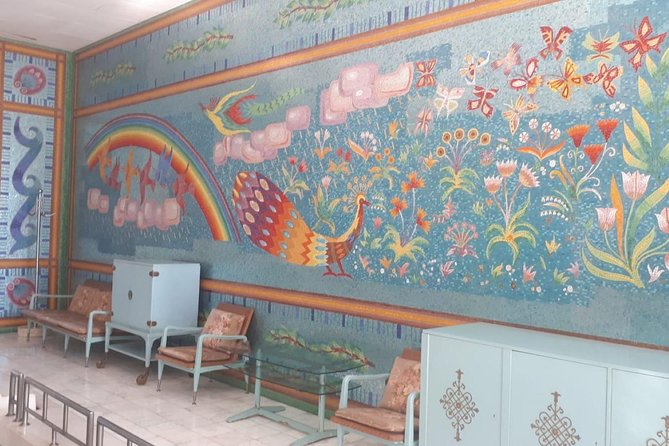
The villa’s most valuable feature is not simply that it was once occupied by a famous political figure. It is that the home has been kept in its original condition.
You can read about privilege in a history book, but walking through the actual rooms gives the idea a physical shape. The size of the home, its decorative choices, and its polished domestic setting all help you understand how the Ceausescu family separated itself from the wider population.
This is also why the visit can appeal to people who are not especially interested in architecture. The rooms are evidence. They show how public ideology and private comfort could exist side by side.
The home has a grand domestic style rather than the stark feel of a prison or political office. That can make the story more striking. You are seeing how a ruling family lived behind the public image of austerity and socialist equality.
I would pay attention to small household details as well as the overall design. A large room may catch your eye first, but the greater value lies in the collection of choices that create a picture of privilege. The guide’s comments can help you decide what deserves your attention.
Do keep your expectations realistic. This is a short guided visit, not a large museum with extensive written interpretation. Its strength is the setting and the spoken explanation. If you prefer to study displays independently, you may find the format less satisfying.
A few more Bucharest tours worth a look
- Bucharest: Dracula’s Castle, Peles Castle, & Brasov Old Town
★ 4.5 · 17,858 reviews - Bucharest: Dracula Castle, Peles Castle & Brasov Old Town
★ 4.6 · 10,891 reviews - Bucharest: Dracula’s Castle, Peleș Castle & Brașov Day Trip
★ 4.5 · 5,919 reviews - Bucharest: Palace of Parliament Tickets and Guide
★ 4.3 · 3,182 reviews
Photography rules and the cost of images
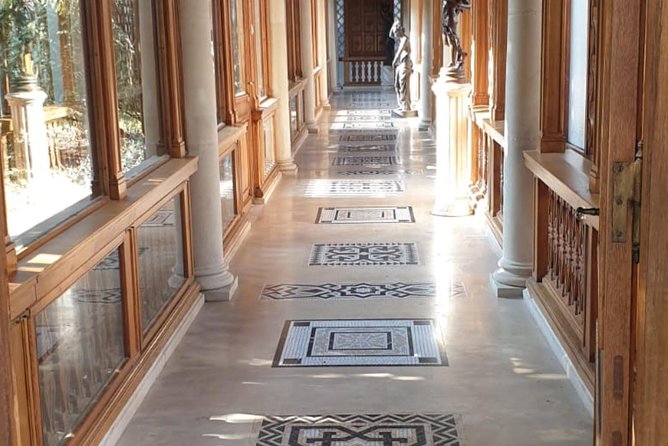
Photography is an important practical issue. Until recently, visitors could take pictures more freely, but the rules have changed. You should arrive expecting restrictions rather than planning to document every room.
The tour provider explains that professional photographs found online are connected to paid image rights. According to the information supplied, a substantial fee may allow the purchase of eight to ten professional pictures for business use.
That does not mean you should expect to receive a set of photographs with your admission. It means that online images may not reflect what an ordinary visitor is allowed to do inside.
I consider this a genuine drawback, especially for anyone who enjoys recording historic interiors. Before you book, decide if the experience itself matters more to you than taking pictures. At this site, the answer needs to be yes.
Rules can change, so check the current photography policy when booking or before arrival. The information about earlier green-pass requirements is also dated, beginning October 1, 2021. If health documentation is mentioned during your booking process, verify the current requirement rather than relying on an old rule.
Is $25.60 a fair price?
The listed price is $25.60 per person. That is not the cheapest short attraction in Bucharest, so value depends on what you want from the visit.
You are paying for access to a residence that is not an ordinary public house museum, along with a guide and fast-track admission. The price makes more sense if you value the preserved setting and want someone to explain the political meaning behind what you see.
For a 45-minute visit, the cost is on the higher side when measured only by time. A longer museum could offer more objects and more hours of access for similar money. But duration is not the only measure here. The villa’s appeal comes from its specific identity as the former home of a dictator, and that cannot be duplicated by a general history museum.
I would call it reasonable value for visitors interested in modern Romanian history, communism, political power, or historic homes. I would be less likely to recommend it to someone who simply wants a grand interior without much historical explanation.
Fast-track entry adds practical value. You have a set meeting place and a scheduled start, rather than arriving with no idea how long entry might take. Since the group can reach 40 people, the organized admission may also reduce confusion at the site.
The best value comes when you combine the villa with other Bucharest sights on the same day. Since the tour is short and ends where it begins, you do not lose a large block of sightseeing time.
Timing, meeting point, and group size
The scheduled start time is 4:15 pm. The meeting point and ticket redemption point are both at Bulevardul Primăverii 50, Bucharest, at Palatul Primăverii.
You should allow enough time to reach the address before the start. The activity returns to the meeting point, so you do not need to arrange a separate pickup or figure out where the tour finishes.
The site is near public transportation, which makes the visit easier to add to a day in Bucharest. The supplied information does not specify the exact transit route, so check your map and local transport before setting out.
The maximum group size is 40 people. That is a fairly large group for a home visit. The guide may need to keep everyone moving through the rooms, and you may not always be close enough to hear every word if you drift toward the back.
Arriving early is sensible, especially if you want a better position near the guide. It also gives you a little time to confirm the entrance and ticket details without rushing.
Most people can participate, according to the activity information. No special physical requirement is stated, but the tour does involve walking through rooms on two floors. If stairs or standing for part of the visit could be difficult for you, ask the provider before booking because the available information does not explain accessibility arrangements.
Who will enjoy this visit most?
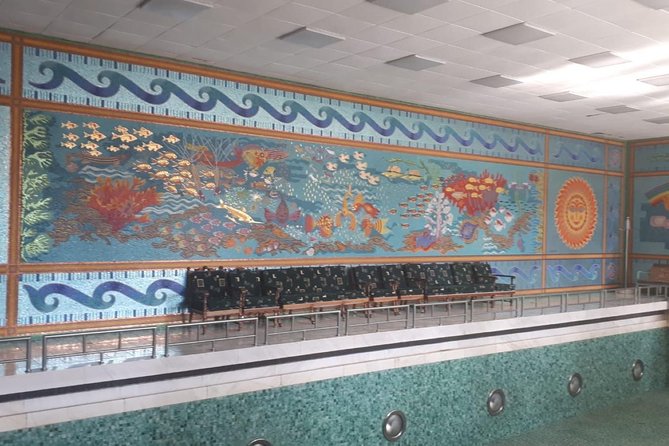
I would recommend Ceausescu Villa to you if you enjoy history that has a strong human setting. The home gives you something concrete to look at while the guide explains the wider story.
It suits:
- People interested in communist Europe and twentieth-century politics
- Visitors who want to understand Romania beyond its headline sights
- Anyone curious about how a ruling family lived in private
- Architecture lovers drawn to grand domestic interiors
- Visitors with only 45 minutes for a focused historic stop
It is also a good choice if you prefer guided interpretation to reading a large amount of text. The guide gives the rooms a clear purpose and helps explain why the villa matters.
You may want to skip it if you strongly dislike guided groups, need unrestricted photography, or want a long museum visit. The tour is compact, and the rules may limit the kind of visit you prefer.
This is not a cheerful attraction in the simple sense. It can make you smile at personal stories and unusual details, but it also asks you to think about inequality, fear, and political control. I see that mixture as a strength, provided you come prepared for a serious subject.
Booking, cancellation, and planning advice
The experience can be canceled for a full refund if you cancel at least 24 hours before the scheduled start time. Cancellations made within 24 hours are not refunded, and changes made inside that period are not accepted.
Confirmation is issued at the time of booking. The activity is generally suitable for most participants, but the maximum group size can reach 40 people, so do not assume an intimate private tour.
Because the experience is often booked well in advance, with an average booking lead time of 43 days, planning ahead is sensible if the 4:15 pm visit is important to your schedule. That figure does not guarantee that every date sells out, but it suggests that this is not always a last-minute stop.
Check the current entry and photography rules before you go. The green-pass note in the supplied information refers to a past requirement, so treat it as historical booking information and confirm anything current with the provider.
Should you book Ceausescu Villa?
I would book this tour if you want a concise, guided look at the private life of Romania’s former dictator. The original rooms, the grand domestic setting, and the guide’s stories give the visit more weight than a quick photo stop.
The price is fair for access to a distinctive historic home and a guide, though the 45-minute length makes it less attractive if you judge value by time alone. The biggest caution is photography: go for the history and the setting, not for a personal album.
Book it as a focused afternoon visit, arrive ready for a serious story, and leave room in your Bucharest plans for the tour to end back at the villa. For visitors interested in Romania’s communist past, this is one of the city’s more revealing stops.
FAQ
Where does the Ceausescu Villa tour start?
The tour starts at Palatul Primăverii, Bulevardul Primăverii 50, Bucharest, Romania. This is also the ticket redemption point.
What time does the tour begin?
The scheduled start time is 4:15 pm.
How long does the visit last?
The visit lasts approximately 45 minutes.
Where does the activity end?
The activity ends back at the meeting point at Palatul Primăverii.
What does the tour include?
You visit the former home of Nicolae Ceausescu and walk through rooms on the first and second floors. A guide explains the home, its decor, and the way the Ceausescu family lived.
How much does the experience cost?
The listed price is $25.60 per person.
Can I cancel for a full refund?
Yes. You can receive a full refund if you cancel at least 24 hours before the experience start time. Cancellations made less than 24 hours before the start are not refunded.
Recently added around Bucharest
- From Bucharest: Discovery at Europe’s Largest Salt Mine★ 5.0 · 3 reviews
- RiverCruise Exclusive – Private Transfer from or to Giurgiu Port/Bucharest Hotel★ 3.5 · 3 reviews
- Cluj Napoca: Climbing or Hiking Experience in Turda Canion★ 5.0 · 3 reviews
- Private-Red Patrol Bucharest Flea Market Tour with a Romanian car★ 5.0 · 3 reviews
- Probably the Best Restaurant and Wine Cellar near Bucharest★ 4.5 · 3 reviews
- Private 8 Day Romania UNESCO Tour★ 5.0 · 3 reviews
- Bucharest: City Highlights Guided Walking Tour★ 5.0 · 3 reviews
- Bucharest in a nutshell – half day private walking tour★ 5.0 · 3 reviews
Communism Tours, compared.



Bucharest Essential Tour: Old Town, Calea Victoriei & Communism
Read our review →
Communism in Bucharest – Landmarks, Museum & Communist Appetizers
Read our review →
Museum of Communism Ticket with Communist Coffee
Read our review →Browse the lists this tour appears in