
Reviewed · COMMUNISM TOURS
Bucharest: Private Last Days of Ceausescu Tour in a Dacia
The most unusual part of this Bucharest tour is the car: you follow Ceausescu’s frantic final route in a restored classic Dacia, the same sort of Romanian-built vehicle that carried the country through the communist years. The road leads from Revolution Square toward Targoviste, where the dictator was captured, detained, judged, and executed.
I like two things here. First, the tour links famous Bucharest places to a real chain of events rather than treating them as isolated sights. Second, guide Serban brings a personal, story-led approach, with room to tailor the history to your questions. The main drawback is the long road trip and the limited access at the execution building, which is closed inside for renovation.
In This Review
- Key points at a glance
- Why Ceausescu’s final day makes a strong Bucharest tour
- Revolution Square sets the clock at 12:07
- The restored Dacia is part of the lesson
- Following the helicopter escape out of Bucharest
- Steel Factory and militia station: the failed search for support
- Targoviste and the final detention building
- Return to Bucharest and Palace Primaverii
- What the guide adds to the six-hour format
- Is $223 per person good value?
- Comfort, age limits, and what to bring
- Who should book this experience?
- FAQ
- How long does the Last Days of Ceausescu tour last?
- Does the tour include hotel pickup and drop-off?
- What vehicle is used for the tour?
- Can I enter the building where Ceausescu was executed?
- Is Palace Primaverii admission included?
- Who is this tour not suitable for?
- Should you book the Dacia tour?
Key points at a glance
- A restored Dacia turns the history into a road trip: You spend the day in an important piece of Romania’s recent past, not just looking at one in a museum.
- Revolution Square begins the story: The tour starts where the final public crisis of Ceausescu’s rule unfolded on December 22, 1989.
- The route reaches Targoviste: You follow the escape from Bucharest, including the helicopter abandonment and later attempts to find support.
- The execution building is viewed from outside: You can see the place where the Ceausescus were held, tried, and executed, but renovation prevents an interior visit.
- Primaverii Palace gives the private contrast: The final stop reveals the secluded home used by Nicolae and Elena Ceausescu from 1965 to 1989.
- The $223 price covers a lot: Private transport, a professional guide-driver, hotel pickup, water, gifts, a tour newspaper, and Palace Primaverii admission are included.
Why Ceausescu’s final day makes a strong Bucharest tour
Many Bucharest history tours focus on grand communist buildings and broad political facts. This one follows a single day, December 22, 1989, when Nicolae Ceausescu’s grip on Romania collapsed with astonishing speed.
At 12:07 p.m., Ceausescu and his wife Elena left the roof of the Communist Party headquarters by helicopter. A crowd of about 100,000 people had gathered around the building, demanding his resignation. The tour traces what happened next: the escape from Bucharest, the search for allies, the failed effort to gather support, and the arrest near Targoviste.
I find that structure useful because it gives you a clear thread to hold onto. You are not simply hearing that communism ended in Romania. You are following the route of two people who still believed they could regain control after fleeing the capital.
The story also has a human edge. The tour focuses on the fear and confusion of those last hours, including the lesser-known attempts to organize help. That makes the experience more than a political lecture. It becomes a study of how quickly power can disappear once the people, army, and state machinery stop obeying.
More communism-era tours in Bucharest:
- The Real tour of Communism
★ 5.0 · 666 reviews - Life under Communism
★ 5.0 · 358 reviews - 3-Hour Guided Tour of Communist Bucharest
★ 4.9 · 303 reviews
Revolution Square sets the clock at 12:07
The tour begins with pickup in Bucharest and a guided visit around Revolution Square. Allow about 40 minutes here for photographs, explanation, and orientation.
This is the right place to start. The square is tied to the public collapse of Ceausescu’s rule, and the tour presents it as the place where Romanian communism both began its final breakdown and ended. You get the setting before heading out on the escape route, which helps the later stops make sense.
Expect a mix of sightseeing and political history. The guide explains the key moments around the Communist Party headquarters and the crowd that forced Ceausescu onto the roof. I would pay close attention here, since the rest of the day depends on understanding why the helicopter departure became necessary.
You will also have time for photographs. The square is not just a backdrop. It is the point where the tour’s route changes from a capital-city story to a flight across the countryside.
The restored Dacia is part of the lesson
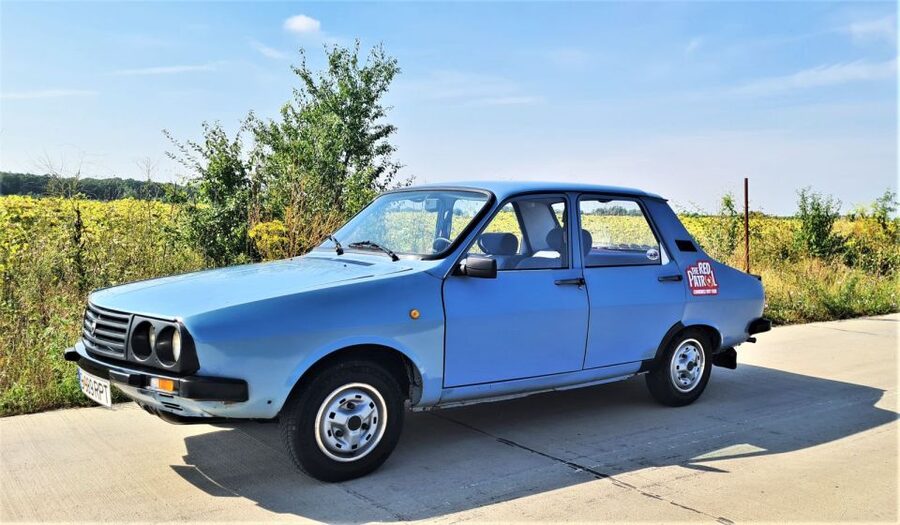
The car is not a decorative extra. It is one of the experience’s main ideas.
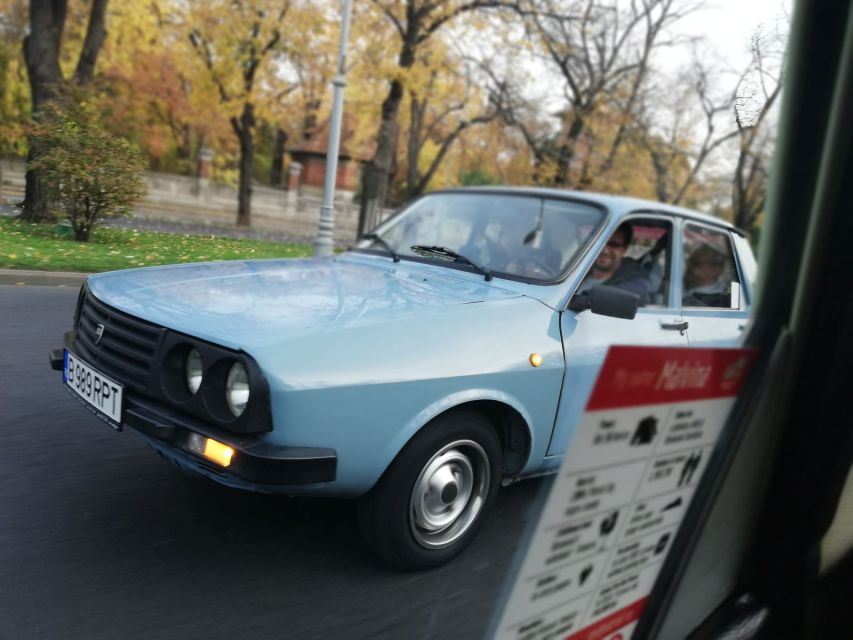
A fully restored classic Dacia carries you through the day. The Dacia helped define everyday mobility in communist Romania, so riding in one gives the trip a physical connection to the period. You are seeing the country’s recent past while traveling in a vehicle that belongs to it.
The car is described as comfortable enough for the long drive, and water is provided. Still, you should be realistic about the format. This is an old-style vehicle used for a route of roughly 180 kilometers in total, with the outward journey toward Targoviste and the return to Bucharest. The experience is memorable partly because it is unusual, but a modern minivan would likely offer more space and easier movement.
The private format helps. Up to three people can use one car. If the party is larger than two, the operator uses a convoy of two or three cars. That keeps the vintage-car character even for a bigger booking, though the group will not all be sitting in the same vehicle.
Following the helicopter escape out of Bucharest
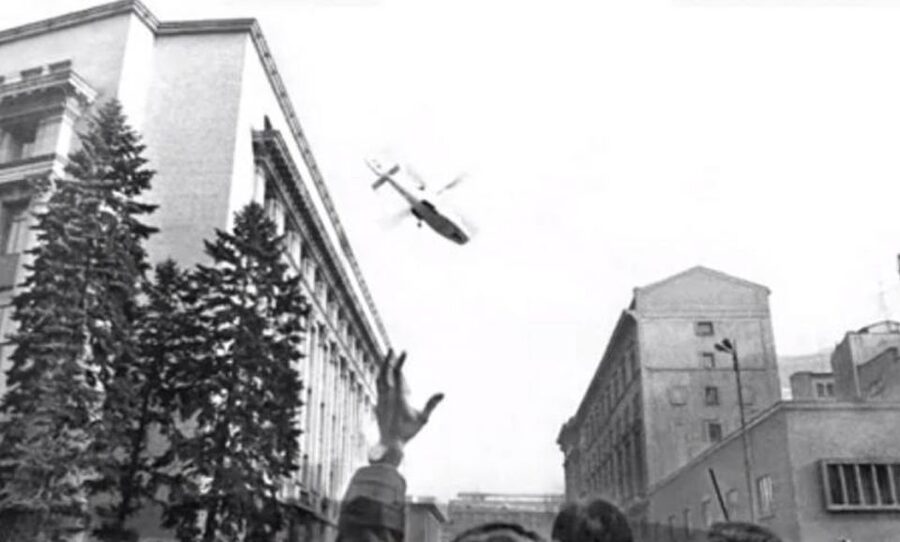
After Revolution Square, you leave the capital and follow the direction taken by Ceausescu after the helicopter escape. The tour includes a stop at the point where the helicopter was abandoned and Ceausescu continued by Dacia.
This detail gives the day its odd, almost cinematic turn. The dictator first leaves in a helicopter, then ends up relying on a car while trying to find a route back to power. The change from aircraft to road transport reflects how quickly his authority had fallen apart.
At the stop, you can get out for photographs and hear the account of what happened. The exact stop is kept secret in the published route details, so you should not expect every location to be announced in advance. That may add a little mystery, but it also means you cannot plan your own independent visits around the tour.
The guide’s value is especially important here. A place where a vehicle was abandoned can look ordinary without context. Serban’s strength, based on the way the tour is conducted, is connecting an unremarkable roadside point to the pressure and uncertainty of those final hours.
A few more Bucharest tours worth a look
- Bucharest: Dracula’s Castle, Peles Castle, & Brasov Old Town
★ 4.5 · 17,858 reviews - Bucharest: Dracula Castle, Peles Castle & Brasov Old Town
★ 4.6 · 10,891 reviews - Bucharest: Dracula’s Castle, Peleș Castle & Brașov Day Trip
★ 4.5 · 5,919 reviews - Bucharest: Palace of Parliament Tickets and Guide
★ 4.3 · 3,182 reviews
Steel Factory and militia station: the failed search for support
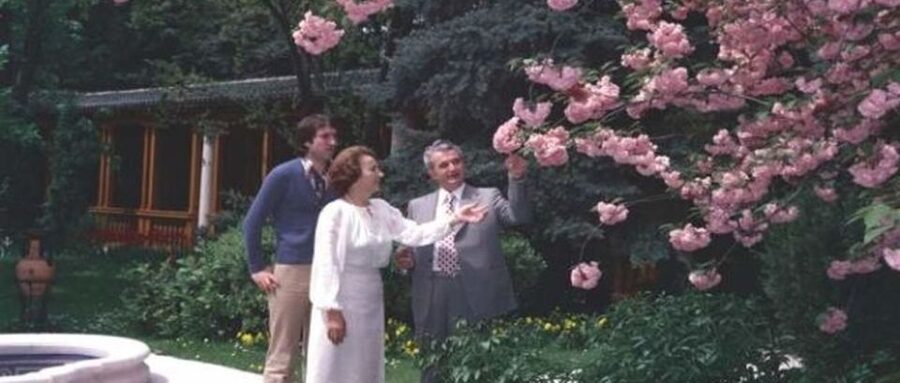
The road continues toward the places where Ceausescu tried to gather support from workers and state forces. One stop is connected with the Steel Factory, and another with the militia station where he attempted to organize help but was arrested.
These stops are valuable because they show that the collapse was not finished the instant he left Bucharest. Ceausescu still tried to act like the country’s leader. He headed toward working-class and military support, hoping that loyalty to the old system could be revived outside the capital.
Instead, his search ended in detention. The route makes that failure easier to understand than a simple timeline in a museum. You can see the geographical distance from Bucharest and appreciate the practical problem he faced: he needed people, vehicles, communications, and armed support, yet each attempt brought him closer to capture.
The stops are also less polished than a major museum visit. Do not expect grand displays at every location. Their importance comes from the guide’s explanation and from being physically connected to the route.
Targoviste and the final detention building
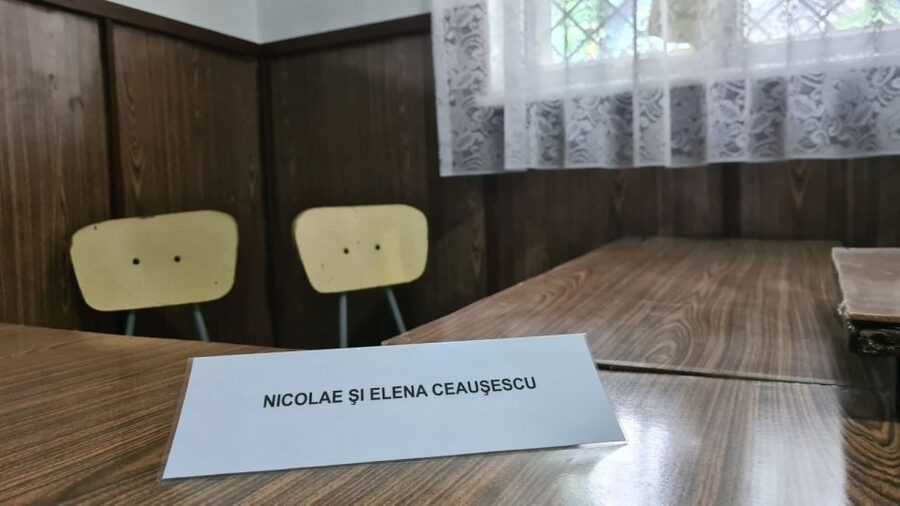
The most serious stop is the building in Targoviste where Nicolae and Elena Ceausescu were detained, judged, and executed on December 25, 1989. The visit lasts about 25 minutes and includes guided sightseeing.
The building’s interior is not accessible because of renovation. That is an important limitation. You will not walk through the rooms where the final proceedings took place, so this part is primarily an exterior visit and an explanation of the events.
Even so, the location matters. It marks the end of the route and of Ceausescu’s 24-year communist presidency. After the uncertainty of the escape and the failed effort to find support, the story reaches its final point here.
I would treat this stop as a place for careful listening rather than a photo opportunity. The execution is a difficult subject, and the tour’s value comes from setting it in the sequence of events that began that morning in Bucharest. The building’s restricted access makes the guide even more important.
Return to Bucharest and Palace Primaverii
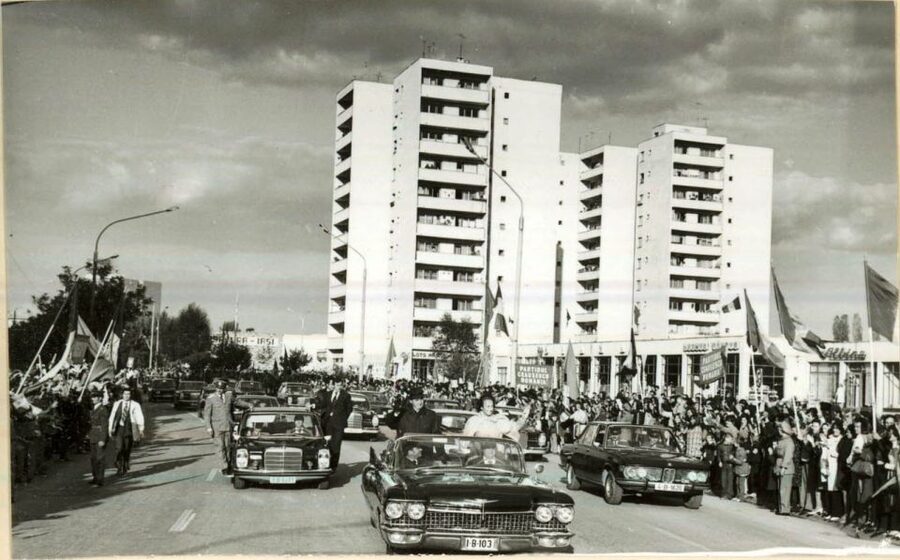
After Targoviste, you return to Bucharest for the visit to Palace Primaverii, also known as the House of Ceausescu. Entry is included, and the guided visit takes about an hour.
This is a strong final stop because it changes the scale of the story. The road trip has shown Ceausescu in flight, uncertain and trying to recover authority. Palace Primaverii shows the protected private world he and Elena occupied while ruling Romania from 1965 to 1989.
You can compare the public image of communist austerity with the private residence of the country’s ruling couple. The palace is not simply another grand building. It helps you examine the gap between official ideology and the life enjoyed by the leadership.
The visit includes time for photographs and a guided tour. Since tickets are included, you do not need to budget a separate admission fee. I would save questions about the couple’s domestic life for this portion, after you have followed the political events that led to their fall.
What the guide adds to the six-hour format
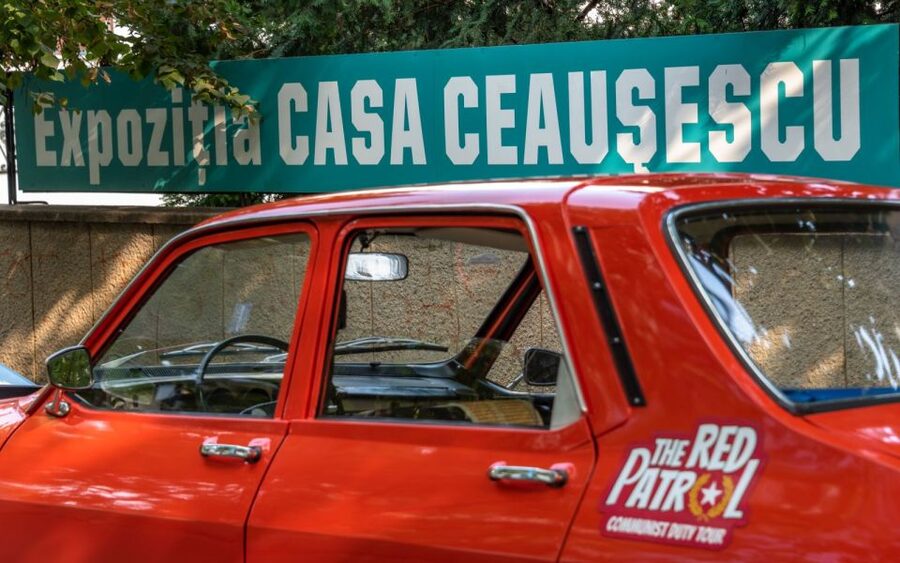
This is a guide-dependent experience. The route covers a lot of ground, and several stops would be hard to appreciate without a clear explanation of the people, dates, and decisions involved.
Serban is named as one of the guides, and the guiding style is personal and flexible. You can ask about the communist period, the events of December 1989, or the places along the route, and the information can be shaped around your interests. That is especially useful for visitors who already know the basic story and want more detail, as well as for those encountering it for the first time.
The tour includes a newspaper and a personalized gift. These are small additions, but they fit the subject. The newspaper can help you keep the sequence straight during a long day, while the gift gives you a physical reminder of the Dacia and the story.
Hotel pickup and drop-off from Bucharest simplify the day. You should be ready 10 minutes before pickup. Since this is a private group, you are not tied to a large coach schedule or a fixed set of strangers, although the route itself remains substantial.
Is $223 per person good value?
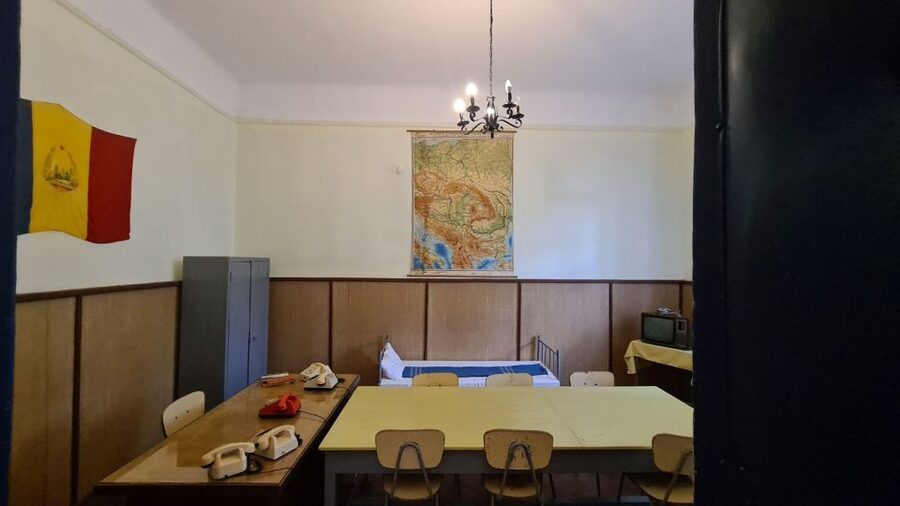
At $223 per person, this is not a low-cost sightseeing ride. The price makes the most sense for a small private group that wants a focused history experience rather than a general city tour.
You are paying for private transport over a long route, a classic Dacia, a professional guide-driver, pickup and return in Bucharest, water, the tour newspaper, a personalized gift, and admission to Palace Primaverii. For one or two people who would otherwise need to arrange transport to Targoviste and separate museum visits, the package has practical value.
The price is harder to justify if you only want a quick look at Bucharest’s communist landmarks. Much of the day is spent on the road, and the distant stops are not all major attractions in their own right. You are paying for the connected story, the transport, and the guide’s interpretation.
For me, the key question is not simply cost per hour. It is how much you want to understand the final day as a route. If the answer is a lot, the Dacia and private format make the premium easier to accept.
Comfort, age limits, and what to bring
The tour lasts about six hours, although the route description also refers to a 5.5-hour format. Plan your day around six hours so you are not rushed afterward.
The operator says the experience is not suitable for children under 10, pregnant women, people with back or heart problems, or people over 70. Those limits matter because the tour involves a long drive in a classic car and several stops. If you need generous legroom, modern suspension, or frequent movement, ask about the vehicle before booking.
Bring a passport or identity card. Pets, baby strollers, alcohol, and drugs are not allowed. The tour includes water, but you should still plan for a full half-day away from your hotel.
There is a toilet and lunch break during the day, as indicated by the tour arrangements. The timing can vary with the route, so do not treat the schedule as a promise of a particular restaurant or meal stop.
Who should book this experience?
I would choose this tour if you are interested in modern Romanian history, political power, or the final days of European communism. It suits visitors who prefer a strong narrative and real locations over a list of unrelated sights.
It is also a good fit if you like unusual transport. The Dacia turns the ride itself into part of the history lesson, and the private group makes it easier to ask questions or pause for photographs at the main stops.
You may want another Bucharest tour if your time is short, your priority is architecture, or you do not want to spend hours driving outside the city. The execution building cannot be visited inside, and some roadside locations may feel visually modest. Their meaning depends on the guide and on your interest in the story.
The experience is available in English. Free cancellation is offered up to 24 hours before departure, and you can reserve while paying later, which helps if your Bucharest plans may shift.
FAQ
How long does the Last Days of Ceausescu tour last?
The activity is scheduled for about six hours. The route description also refers to a 5.5-hour private tour, so you should allow a full six hours in your plans.
Does the tour include hotel pickup and drop-off?
Yes. Pickup and drop-off from Bucharest are included. You should be ready 10 minutes before your scheduled pickup time.
What vehicle is used for the tour?
Transportation is provided in a fully restored classic Dacia. The tour includes approximately 180 kilometers of driving, and groups larger than two may travel in a convoy of two or three Dacias.
Can I enter the building where Ceausescu was executed?
No. The building where Nicolae and Elena Ceausescu were detained, judged, and executed is not accessible inside because of renovation. The tour includes a guided visit and sightseeing at the location.
Is Palace Primaverii admission included?
Yes. The tour includes entrance to the Primaverii Palace Museum and a guided visit of the former private residence of Nicolae and Elena Ceausescu.
Who is this tour not suitable for?
The activity is not suitable for children under 10, pregnant women, people with back or heart problems, or people over 70. Pets, baby strollers, alcohol, and drugs are not allowed.
Should you book the Dacia tour?
Book it if you want to follow the fall of Ceausescu step by step, from Revolution Square to the final building in Targoviste, with the private residence at the end. The mix of a restored Dacia, a private English-speaking guide, and real locations gives the day a strong sense of place.
Skip it if you want a short city tour or need modern-car comfort. The road is long, the execution site has no interior access, and the experience depends heavily on your interest in Romania’s 1989 revolution.
For history-minded visitors, this is one of the more distinctive ways to understand Bucharest’s recent past. You do not just hear how Ceausescu lost power. You follow the route he took when power was already slipping away.
Recently added around Bucharest
- From Bucharest: Discovery at Europe’s Largest Salt Mine★ 5.0 · 3 reviews
- RiverCruise Exclusive – Private Transfer from or to Giurgiu Port/Bucharest Hotel★ 3.5 · 3 reviews
- Cluj Napoca: Climbing or Hiking Experience in Turda Canion★ 5.0 · 3 reviews
- Private-Red Patrol Bucharest Flea Market Tour with a Romanian car★ 5.0 · 3 reviews
- Probably the Best Restaurant and Wine Cellar near Bucharest★ 4.5 · 3 reviews
- Private 8 Day Romania UNESCO Tour★ 5.0 · 3 reviews
- Bucharest: City Highlights Guided Walking Tour★ 5.0 · 3 reviews
- Bucharest in a nutshell – half day private walking tour★ 5.0 · 3 reviews
Communism Tours, compared.

Bucharest Essential Tour: Old Town, Calea Victoriei & Communism
Read our review →
Communism in Bucharest – Landmarks, Museum & Communist Appetizers
Read our review →

Museum of Communism Ticket with Communist Coffee
Read our review →Browse the lists this tour appears in