
Reviewed · COMMUNISM TOURS
Bucharest: Dinner at the Museum of Communism & tour after closing
Bucharest’s Museum of Communism feels less like a formal display hall and more like stepping into someone’s old home. You can handle exhibits, try on clothes, drink from period cups, and sit in the living room before eating there. I like the personal setting, and I like that the guides, including Catalina, Katerina, Alexandra, and Ali, bring family stories into the discussion. The one thing to watch is the meal: most people describe it as generous and traditional, but one account found the main course less substantial than expected.
The evening begins at 6:30 pm, runs about two and a half hours, and is limited to 12 people. At $59.03 per person, I see it as a good-value choice if you want food and context together, not simply a museum visit. The 4.9 rating and 96 percent recommendation are strong signs, but you should still book well ahead, since this experience is often reserved about 37 days in advance.
In This Review
- Key points to know before booking
- Entering Bucharest’s Museum of Communism after closing
- A guided look at life under Romanian communism
- The living-room dinner and Romanian dishes
- Why the food works better with the museum
- What the $59.03 price includes
- Timing, transport, and group size
- Who will get the most from this evening
- Booking and cancellation details to keep in mind
- Is this Bucharest dinner tour worth booking?
- FAQ
- Where does the Bucharest Communist museum dinner begin?
- What time does the activity start?
- How long does the experience last?
- Is museum admission included?
- What food and drinks are included?
- Is the tour offered in English?
- How many people can join the tour?
Key points to know before booking
- A hands-on museum in a real living-room setting: You can touch displays, try on clothes, use old cups, and examine household objects.
- A small evening group: The maximum is 12 people, which leaves room for questions and table conversation.
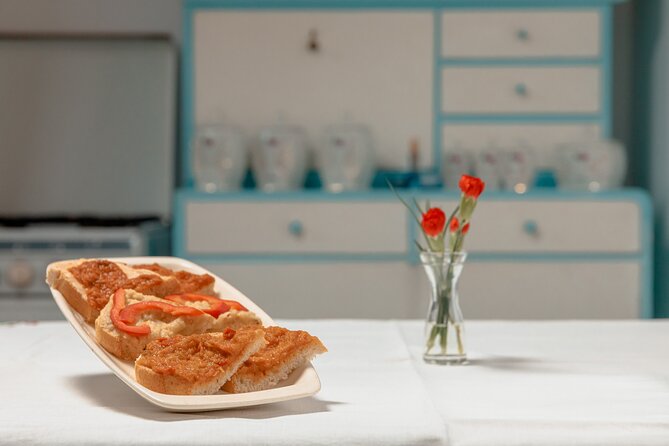
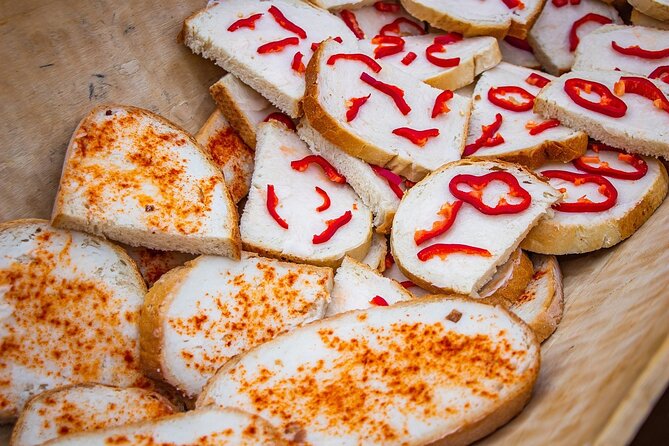
- Romanian food is part of the lesson: You receive homemade starters, a typical main course, unusual desserts, two alcoholic drinks, and one non-alcoholic drink.
- Personal stories add meaning: Guides such as Catalina, Katerina, Alexandra, and Ali explain how communism affected Romanian families.
- The tour stays at the museum: You meet at Strada Soarelui 1 and return there at the end.
- Best for curious eaters and history-minded visitors: The experience suits you if you enjoy discussion, local food, and a setting that feels informal rather than polished.
Entering Bucharest’s Museum of Communism after closing
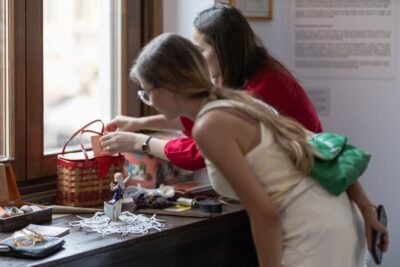
The museum is called Undeva in Comunism, or Somewhere in Communism. That name fits the experience. Instead of placing communist-era objects behind glass and asking you to keep your distance, the museum invites you to handle many of them.
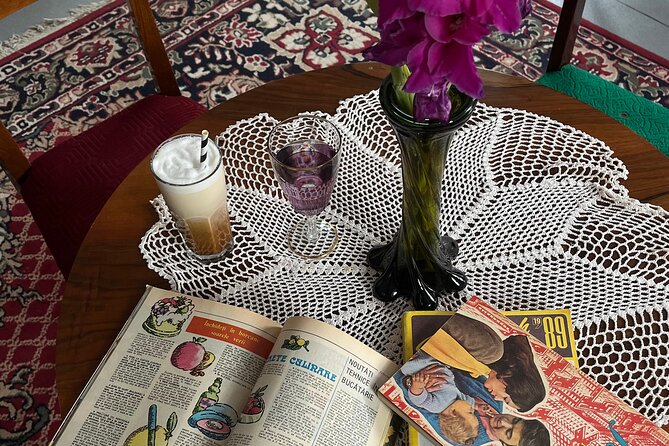
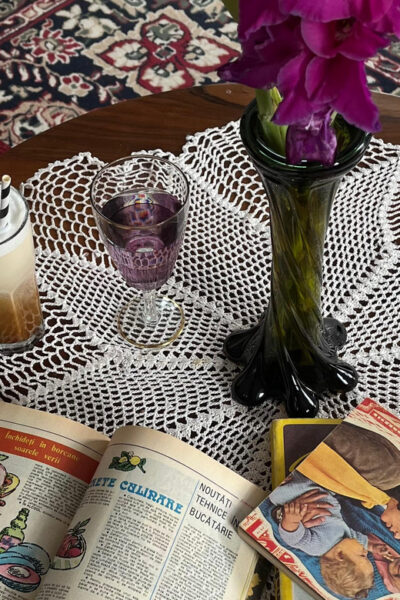
You can try on clothing, drink from old cups, and inspect the everyday items that shaped domestic life. The displays are arranged like a home, with the living room playing a central role. That matters because communism is often taught through leaders, dates, and political slogans. Here, you also consider what people wore, ate, read, and kept around the house.
I like this approach because it gives you something concrete to discuss. A household object can raise a sharper question than a long wall of text. What did families use every day? What was scarce? What was saved for special occasions? The museum’s interactive design helps turn an abstract political period into something you can picture.
The evening takes place after closing, so you get a more private setting than you would during a standard daytime museum visit. The group limit is 12, though some evenings may be much smaller. One booking had only six people, and another was private with just two participants. That smaller scale is useful here. You can ask questions without trying to speak over a large crowd.
More communism-era tours in Bucharest:
- The Real tour of Communism
★ 5.0 · 666 reviews - Life under Communism
★ 5.0 · 358 reviews - 3-Hour Guided Tour of Communist Bucharest
★ 4.9 · 303 reviews
A guided look at life under Romanian communism
The tour portion is described as roughly two hours within the wider two-and-a-half-hour experience, though the exact balance between touring, free exploration, and dinner can vary. One particularly useful format included about 30 minutes with the guide, 30 minutes to look around alone, and then dinner.
That rhythm works well. A guide-led introduction gives you a framework, while time alone lets you focus on objects that catch your eye. You are not forced to move at the same speed as everyone else. If one room interests you more than another, you have space to look again.
The strongest part of the evening is the way the guides connect objects with family experience. Catalina has been praised for explaining exhibits through both personal examples and wider context. Katerina has discussed the effect of communism on her parents and grandparents, then continued the conversation over dinner. Alexandra has used the museum setting to explain what life was like during an important period in Romanian and Eastern European history.
Those personal connections should not be mistaken for a staged performance. They give you a more grounded way to understand the period. You hear how political change reached ordinary households, not only government offices. The guide can also answer questions about Romanian customs, food, wine, Vlad the Impaler, and the Ottoman period, so the conversation may extend beyond communism when the group is interested.
Ali has also been praised for a clear presentation and strong command of the subject. The experience depends heavily on the guide, as any small-group cultural tour does. The named guides have each received strong marks for explaining the displays and keeping the pace comfortable.
The living-room dinner and Romanian dishes
After the museum tour, you sit down in the museum’s living room for a Romanian meal. This is not a quick restaurant stop added at the end. The food is served in the same domestic setting that frames the exhibits, so the meal becomes part of the cultural lesson.
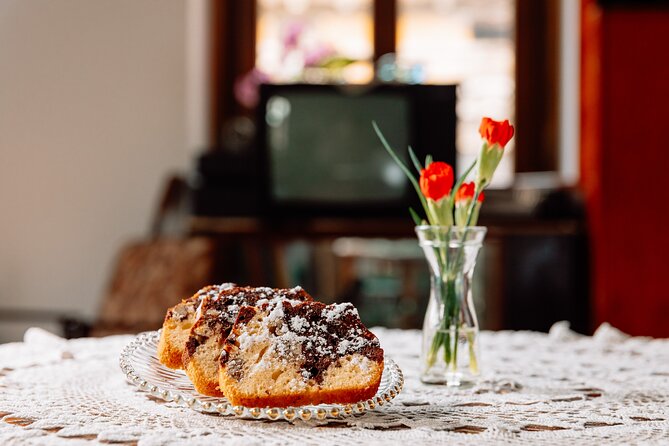
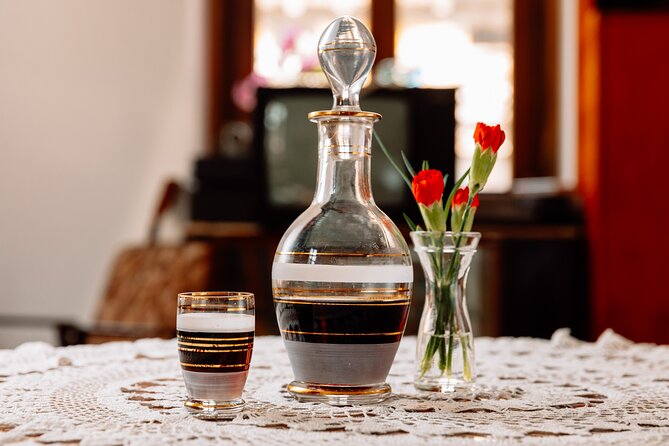
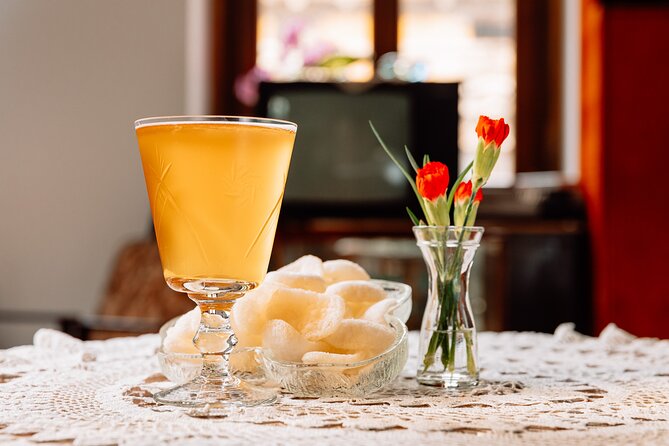
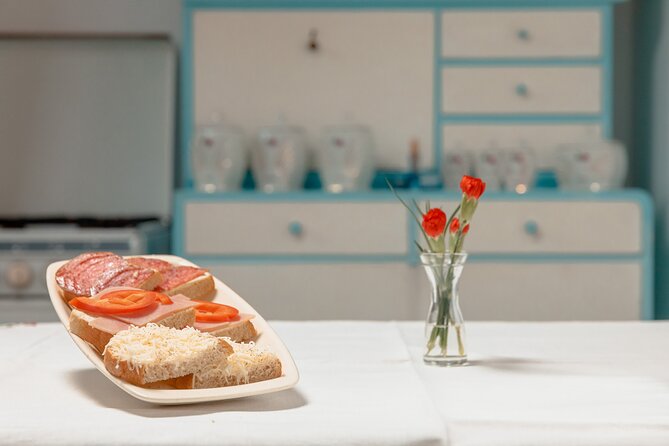
The menu includes Romanian starters, most of them homemade, a typical main course, and Romanian desserts that you may not find on ordinary restaurant menus. You also receive two alcoholic drinks and one non-alcoholic drink. The alcoholic offerings can include Romanian red wine and palinca, a traditional fruit brandy. Other drinks cost extra if you want them.
I like that the guide joins the meal and explains what you are eating. Food becomes more useful when you know when it is served, what it means, and how it fits into family customs. The conversation can include Romanian Christmas meals, traditional habits, local wine, and the difference between restaurant food and home-style cooking.
Most accounts describe the dinner as plentiful and satisfying. One evening included traditional starters, substantial mains, and homemade-style desserts. Another described the meal as a three-course presentation with palinca and red wine. This suggests that the food is meant to feel like a proper meal, not a tasting plate.
There is one important qualification. One person found the dinner disappointing because there was no substantial main course and felt that the meal did not match the promise of a dinner event. That is a fair concern to keep in mind. Menus can change, and a traditional spread may not resemble the large plated meal you expect from a restaurant.
If you want a formal dinner with a fixed menu and predictable portions, this may not be the best fit. If you enjoy homemade food, conversation, and dishes that may be new to you, the meal is likely to be the evening’s most memorable part.
Why the food works better with the museum
The food has more meaning because you eat it inside a museum arranged as a home. You are not simply hearing about Romanian life and then moving on to a separate restaurant. The setting links the objects, the stories, and the meal.
A dinner like this also gives you time to ask the questions that occur after the guided portion. You may notice a household item during the meal that you missed earlier. You may ask how a particular dish was prepared, when it was served, or how customs changed from one generation to another.
The small group helps here. With six people, or fewer, the dinner can feel like a conversation around a family table. The guide is part host, part storyteller, and part food interpreter. That informal mood is one of the experience’s strongest features.
The setting can also make difficult subjects easier to discuss. Romanian communism is not presented as a distant chapter with no connection to the present. The museum and dinner show how political systems affect kitchens, wardrobes, reading habits, family memories, and daily routines.
A few more Bucharest tours worth a look
- Bucharest: Dinner+Tour at Museum of Communism after closing
★ 4.9 · 46 reviews - Bucharest Evening Tour and Traditional Dinner
★ 4.5 · 19 reviews - Bucharest Evening Tour and Traditional Dinner – 3 hours
★ 5.0 · 9 reviews
What the $59.03 price includes
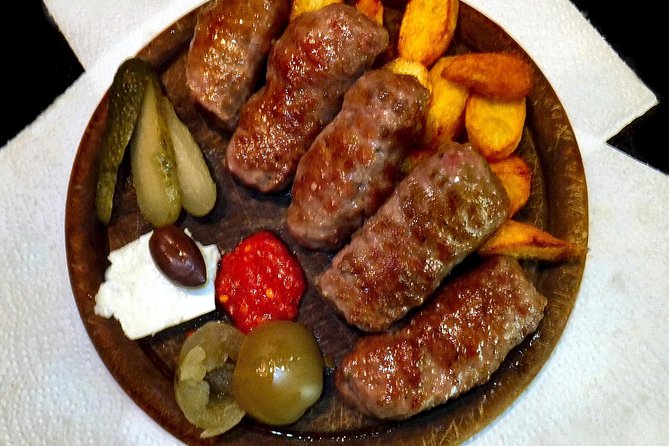
At $59.03 per person, you are paying for a two-and-a-half-hour evening with museum admission, a full guided visit, a meal, and three included drinks. The value is strongest if you would otherwise pay separately for a museum visit and a Romanian dinner.
You are also paying for access after closing and for a guide-led conversation that continues through the meal. That is different from buying entry to a museum and reading the displays on your own. The named guides have been praised for making the objects understandable and for answering a wide range of questions.
The price is less compelling if you mainly want to eat. You may find a cheaper restaurant meal in Bucharest, and the dinner may not always feel as substantial as a full restaurant service. This experience makes more sense when the meal is one part of a cultural evening.
The rating is 4.9 from 24 reviews, with 96 percent of people recommending it. Those figures are encouraging, though the sample is not huge. I would use them as a sign of consistent satisfaction, not as a promise that every menu or guide-led conversation will be identical.
Timing, transport, and group size
You meet at the Museum of Communism in Bucharest, at Strada Soarelui 1, Bucharest 030167, Romania. The activity starts at 6:30 pm and ends back at the same meeting point.
The location is near public transportation, which helps for an evening activity. You should allow enough time to arrive before 6:30 pm, since this is a small-group booking rather than a large bus tour that can easily absorb late arrivals.
The maximum group size is 12. Most people can participate, and confirmation is provided when you book. No special physical requirements are stated in the information provided, but the evening involves moving through a museum and then sitting for a meal.
The experience is offered in English. That makes it practical for English-speaking visitors who want a detailed explanation of the exhibits and a chance to ask questions during dinner.
Because the activity is often booked 37 days ahead, I would not leave it until the last night of your Bucharest stay. A small evening tour has fewer spaces than a standard museum visit, and the schedule gives you little room to move it if it fills.
Who will get the most from this evening
I would choose this experience for you if you like to understand a place through ordinary life. You do not need a specialist interest in communism. The household displays, family stories, and food provide an accessible entry point.
It is also a good match if you want a social evening. You sit with the guide and the other participants, so conversation is part of the experience. Solo visitors and couples may appreciate this more than a silent museum visit.
Families can also find value here, provided everyone is comfortable with historical discussion and a meal that may include unfamiliar dishes. The hands-on displays give younger participants something to do, while the guide can explain the larger setting.
I would hesitate if you need a guaranteed restaurant-style main course, want to choose every drink, or prefer a large tour with a fixed script. The experience is personal and discussion-based. That is its strength, but it also means your evening depends on the guide, the group, and the food served that night.
Booking and cancellation details to keep in mind
Free cancellation is available if you cancel at least 24 hours before the 6:30 pm start time. Changes or cancellations made less than 24 hours before the start are not accepted for a refund.
The activity requires good weather and a minimum number of participants. If poor weather causes cancellation, or if the minimum group is not reached, you are offered another date or experience, or a full refund.
Those rules are worth noting even though much of the evening takes place indoors. Keep your Bucharest schedule flexible enough to handle a change, especially if you are booking close to departure.
Is this Bucharest dinner tour worth booking?
I would book it if you want more than a meal and more than a museum ticket. The best parts work together: touchable household exhibits, clear explanations, personal family memories, and Romanian food served in a living-room setting.
The strongest reason to go is the conversation. Guides such as Catalina, Katerina, Alexandra, and Ali have made the evening informative without losing its friendly tone. You can ask about communism, food, family customs, wine, or other parts of Romanian history, then continue the discussion over dinner.
The main caution is the meal’s uncertainty. Most descriptions point to a generous traditional dinner, but one account found the main course lacking. If that possibility bothers you, treat the food as part of the cultural experience rather than the sole reason to book.
For a first visit to Bucharest, I consider this a smart choice for an evening when you want context, local dishes, and a small group. At $59.03, the combination is fairly priced, especially if you value a guide who can turn a collection of old objects into a picture of everyday Romanian life.
FAQ
Where does the Bucharest Communist museum dinner begin?
The experience begins at the Museum of Communism in Bucharest, at Strada Soarelui 1, București 030167, Romania.
What time does the activity start?
The start time is 6:30 pm.
How long does the experience last?
The activity lasts approximately two hours and 30 minutes.
Is museum admission included?
Yes. The price includes admission and a full tour of the Museum of Communism.
What food and drinks are included?
You receive Romanian starters, a typical Romanian main course, Romanian desserts, two alcoholic drinks, and one non-alcoholic drink. Other drinks are not included.
Is the tour offered in English?
Yes. The experience is offered in English.
How many people can join the tour?
The maximum group size is 12 people.
More Museums in Bucharest
- Bucharest: Museum of Senses Entry Ticket
★ 4.2 · 364 reviews - Communism in Bucharest – Landmarks, Museum & Communist Appetizers
★ 5.0 · 111 reviews - Bucharest: Entry ticket at the Museum of Communism
★ 4.6 · 57 reviews - Bucharest: Museum of Communism Ticket with Communist Coffee
★ 4.6 · 52 reviews
Recently added around Bucharest
- 6h Communism Tour in Bucharest with Ceausescu Mansion★ 4.5 · 6 reviews
- From Bucharest : Day Trip to Peles, Dracula’s Castle, Brasov★ 4.7 · 6 reviews
- Bears Sanctuary, Dracula Castle and Brasov City – Full Day Trip from Bucharest★ 5.0 · 6 reviews
- Dracula Private Tour★ 5.0 · 6 reviews
- Transfagarasan Road Private Day Trip from Bucharest / The Best Road in the World★ 5.0 · 6 reviews
- Bucharest : Wednesday, Dracula & Peles 3 Castles Tour 1 Day★ 4.7 · 6 reviews
- Hiking thought the best mountain villages in Romania-Private tour from Brasov★ 5.0 · 6 reviews
- Bucovina Painted Monasteries & Transylvania Tour: 4-Day Private★ 5.0 · 6 reviews
Communism Tours, compared.

Bucharest Essential Tour: Old Town, Calea Victoriei & Communism
Read our review →
Communism in Bucharest – Landmarks, Museum & Communist Appetizers
Read our review →
Museum of Communism Ticket with Communist Coffee
Read our review →Browse the lists this tour appears in