
Reviewed · COMMUNISM TOURS
Bucharest: Communist Tour including Ceausescu Residence
Bucharest’s communist past makes the most sense when you see its contrasts side by side: ordinary metro stations and worker housing followed by the enormous Palace of the Parliament and the Ceausescu family’s polished private residence. This tour connects those pieces in one long day, so you see both the public face of the regime and the way its leaders lived.
I like the way the route gets beyond the usual city center. I also like having a guide such as Claudia, Marcel, or George to explain how Ceausescu’s plans changed Bucharest instead of leaving you to study grand buildings without context.
The main drawback is the price, listed at $256 per person, and the tour’s seven-hour schedule can feel full. You also need to confirm the Parliament visit, since entry depends on access and official arrangements, while the Spring Palace is open only Wednesday through Sunday.
In This Review
- Key points at a glance
- Why this communist tour is worth your time
- Metro stations and the practical side of communism
- A working-class neighborhood and daily life
- Entering the Palace of the Parliament
- Spring Palace, the Ceausescu family home
- What the guide adds to the day
- Transport, timing, and comfort
- Who gets the best value
- Should you book it?
- FAQ
- How long does the Bucharest Communist Tour last?
- What places are included in the tour?
- Is hotel pickup included?
- What type of transport is provided?
- Is the tour private or shared?
- Is the Palace of the Parliament entrance fee included?
- When can I visit Spring Palace?
- What should I bring?
- Is the tour suitable for wheelchair users?
Key points at a glance
- See communist Bucharest from below: Visit metro stations built during Ceausescu’s period of rule.
- Compare worker and dictator housing: Visit a working-class neighborhood, then enter the family residence at Spring Palace.
- Tour the Palace of the Parliament: Learn how the giant building fitted into Ceausescu’s Project Bucharest.
- Travel by private car, minibus, or coach: Hotel pickup keeps a spread-out itinerary practical.
- Benefit from strong guide feedback: Claudia received praise for clear English and detailed explanations, while Marcel was singled out as an enjoyable guide.
- Allow time for delays: Shared departures can run up to 30 minutes late, and Parliament entry may involve waiting.
Why this communist tour is worth your time
Bucharest is not a city where the communist period sits neatly inside one museum. It is built into the streets, apartment blocks, boulevards, public buildings, and transport system. That makes a guided tour useful. You are not simply looking at concrete and marble. You are learning why those things were built, who they served, and what they say about daily life under Nicolae Ceausescu.
I like that this route does not begin with the grandest sight. It starts with metro stations and a neighborhood made for working people. That order matters. You first see the practical side of state planning, then the scale of the capital’s rebuilding project, and finally the private home of the ruling family.
The tour lasts seven hours and includes transport, entrance fees, and an English-speaking guide. Spanish, French, and German guides can be requested, though English is the listed language. Since the stops are spread around Bucharest, the included car, minibus, or coach saves you from piecing together several taxi rides.
At $256 per person, this is not a budget city tour. The value depends heavily on your group size and interest in modern Romanian history. For a private group that wants a focused day with transport and admission covered, the price can make sense. For a solo visitor or a couple mainly seeking famous sights, it is a serious expense.
More communism-era tours in Bucharest:
- The Real tour of Communism
★ 5.0 · 666 reviews - Life under Communism
★ 5.0 · 358 reviews - 3-Hour Guided Tour of Communist Bucharest
★ 4.9 · 303 reviews
Metro stations and the practical side of communism
The opening stops focus on a couple of metro stations built during the communist period. These are not grand palace interiors, but that is part of their appeal. They show the system’s practical ambitions: moving workers around a rapidly reorganized capital and linking distant residential areas with the city center.
Your guide gives these stations meaning. On your own, you might notice broad corridors, utilitarian finishes, or older design choices without knowing what they reflect. With an explanation of the era, the stations become evidence of how public money and labor were directed.
The metro portion also helps set the tone for the rest of the day. Ceausescu’s Bucharest was not only about propaganda buildings. It was also about infrastructure, housing, and control over how the city grew. The tour asks you to look at the everyday machinery of the capital before taking you to its most famous monument.
One practical point: the precise metro stops are not specified in advance. If you have a particular station in mind, ask when you book. The tour promises a couple of stations from the period, not a full underground survey.
A working-class neighborhood and daily life
Next, you visit a neighborhood built especially for the working class. This is one of the most valuable parts of the day because it shifts attention away from Ceausescu himself and toward ordinary residents.
The point is not that every apartment or street tells the whole story. It is that planned housing helps you picture daily life under the regime. The neighborhood lets you consider where people lived, how large-scale construction changed Bucharest, and how the state shaped residential districts around work and transport.
I find this contrast important. The Palace of the Parliament is so oversized that it can make the communist period look like one man’s architectural fantasy. The worker neighborhood shows the broader project: demolish, rebuild, relocate, and organize the city according to political and economic plans.
Do not expect a restored historic quarter or a polished attraction. This is a lived-in part of Bucharest, and its value comes from observation and explanation. You may find the stop less visually dramatic than Parliament, but it offers a better sense of how the period affected people outside the ruling circle.
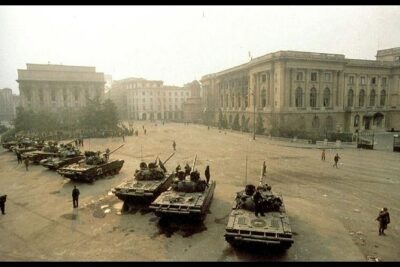
Some versions of the route have also included sights such as Revolution Square, North Railway Station, and a flower market associated with Roma communities. An outside view of a synagogue and a nature reserve seen from a high-rise have also been part of one reported itinerary. These additions appear to depend on the day, weather, and route, so treat them as possible extras rather than guaranteed stops.
Entering the Palace of the Parliament
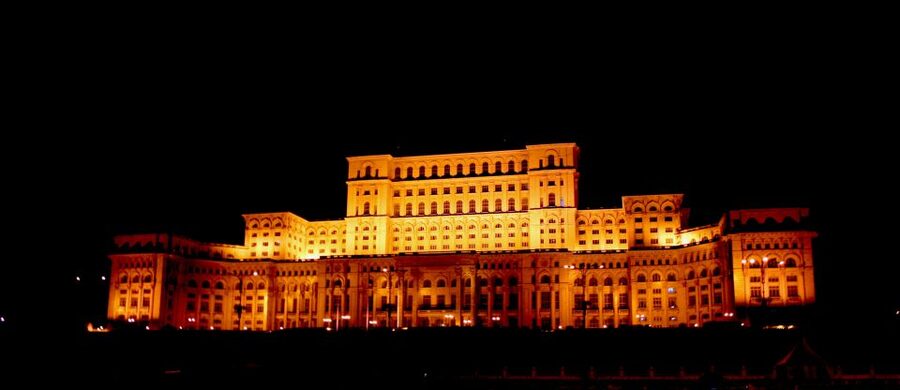
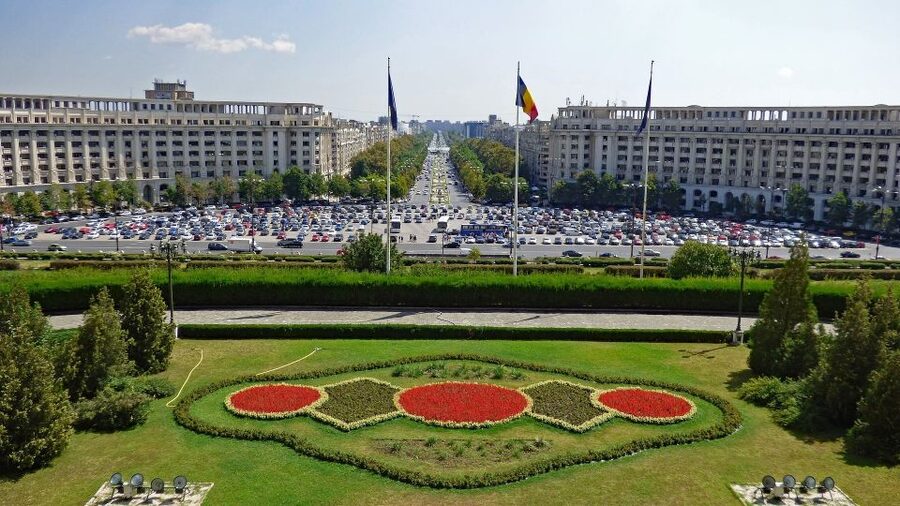
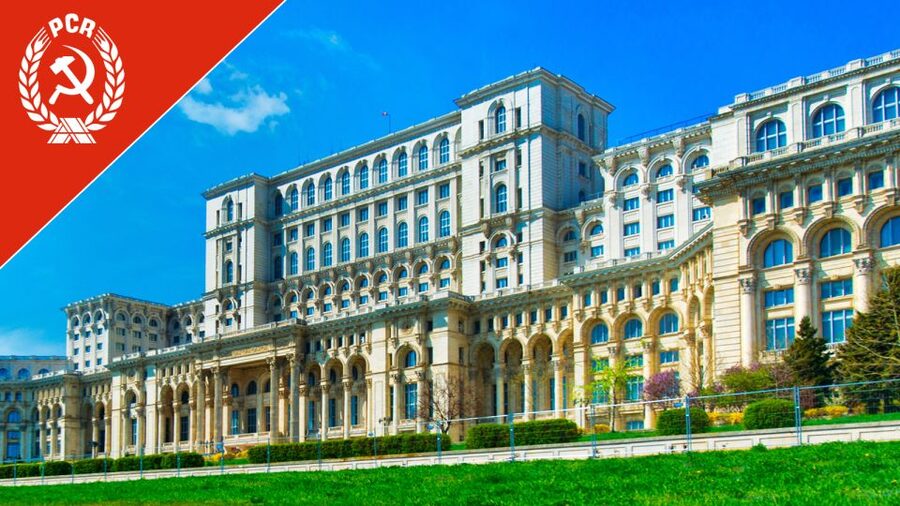
The Palace of the Parliament is the day’s giant set piece. Completed in 1997, it formed part of Ceausescu’s plan to rebuild Bucharest under Project Bucharest. The building’s size is the story, but the political cost behind that size is what makes the visit worthwhile.
Inside, the scale continues. You can expect a formal state building rather than a personal museum. The visit is shaped by official access and may include waiting, even when a time has been assigned. One reported departure faced a wait of more than an hour, so do not plan a tight dinner reservation immediately afterward.
The entrance fee is included, but the photography fee is not. Check the current arrangements before taking out your camera. Rules at major state buildings can be specific, and a small extra charge is easier to handle when you know about it.
Your guide’s role here is mainly to provide the political frame and help you understand what you are seeing. The Parliament itself also has destination guides. Juha, who joined a large group of 26 people, found both Parliament and Spring Palace well supported by their on-site guides, while Claudia received especially strong praise for clear English and explanations of Ceausescu’s rule.
The building can be impressive, but I would not treat it as the entire reason to book. If you only want grand interiors, a shorter Parliament visit may be enough. The real value comes from seeing it after the metro and worker housing, when its scale feels like the endpoint of a much larger plan.
A few more Bucharest tours worth a look
- Bucharest: Dracula’s Castle, Peles Castle, & Brasov Old Town
★ 4.5 · 17,858 reviews - Bucharest: Dracula Castle, Peles Castle & Brasov Old Town
★ 4.6 · 10,891 reviews - Bucharest: Dracula’s Castle, Peleș Castle & Brașov Day Trip
★ 4.5 · 5,919 reviews - Bucharest: Palace of Parliament Tickets and Guide
★ 4.3 · 3,182 reviews
Spring Palace, the Ceausescu family home
The final destination is Spring Palace, or Palatul Primaverii, the residential palace where Nicolae and Elena Ceausescu lived. This stop changes the tone again. After seeing public infrastructure and a monumental state building, you enter a private setting tied directly to the ruling couple.
The residence helps you think about privilege. The working-class district showed how many people lived within the state’s housing system. Spring Palace shows the other end of that system, with the family’s home preserved as a site of public interpretation.
The house is open Wednesday through Sunday from 10:00 AM to 6:00 PM. That restriction matters when choosing your date. If you want the full route, avoid assuming that any day of the week will work.
One issue deserves special attention. A booking in the past specifically expected access to a bunker at the mansion, but that part was not delivered, leading to a lower rating. If a bunker or any special section is important to you, get written confirmation before paying. Do not assume that a request mentioned during booking guarantees access on the day.
Spring Palace is also where the itinerary’s human contrast becomes clearest. The tour does not ask you to admire the residence uncritically. It gives you a place to consider how the family’s private life differed from the public hardships and restrictions associated with the regime.
What the guide adds to the day
The guide can make or break this experience. You spend much of the day moving between places whose meaning is not obvious from their appearance, so clear explanations matter more here than polished sightseeing commentary.
Claudia has been praised for strong knowledge of Bucharest and the Ceausescu period, along with very clear English. Marcel was described as a great guide who made the tour enjoyable, and George was noted for being friendly even when the tour did not deliver a requested bunker visit.
The guide may also adapt the pace. One private departure allowed plenty of time and even offered a one-on-one format. That flexibility is useful at a seven-hour length, especially if your group wants more discussion at one stop and less time at another.
The tour is described as a private group experience, but the practical details show that larger arrangements can occur. A group of 26 took the tour, and shared trips may face delays of up to 30 minutes. Ask how your departure is organized if personal attention is a major reason you are considering the higher price.
Transport, timing, and comfort
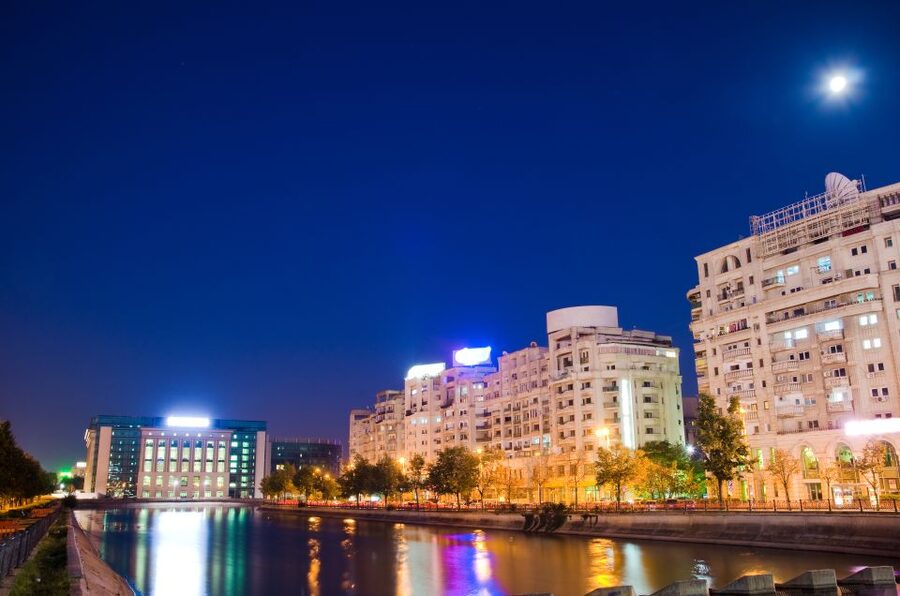
Hotel reception pickup gives the day a simple start. You do not need to find a meeting point across Bucharest, and the included modern car, minibus, or coach is useful because the itinerary crosses several parts of the city.
Wear comfortable shoes. You will be visiting large public buildings and moving through several stops, and the experience is not suited to wheelchair users or people with mobility impairments. Pets are not allowed.
Seven hours is enough time to cover the main route, but it is not leisurely in every sense. The city’s traffic, security procedures, and entry arrangements can affect the rhythm. Build in patience, especially around Parliament.
Lunch is not included, and personal expenses are extra. Since the tour occupies most of the day, carry what you need for food and water, but do not expect a planned meal stop to be part of the package.
Reservations must be made at least 48 hours ahead. The tour allows cancellation up to 24 hours before departure for a full refund, and you can reserve now and pay later. Those terms help if you are still arranging a Bucharest schedule, but they do not remove the need to confirm Spring Palace opening days and Parliament access.
Who gets the best value
I would recommend this tour to you if communist-era Bucharest is a main reason for visiting, especially if you want the social story as well as the famous buildings. It is a strong fit for history-minded families, private groups, and anyone who prefers a guide to explain the links between urban planning, public works, housing, and political power.
It also suits a larger group. The transport, included admission, and single itinerary are easier to manage when several people want to see the same places. Groups larger than 10 may receive special discounts, which can change the value calculation.
I would be more cautious if you are primarily interested in medieval or royal Bucharest. This is a focused modern-history day, not a general city tour. You may see extra sites such as Revolution Square or North Railway Station, but the core route is communist Bucharest.
I would also ask direct questions before booking if you need a specific guide language, want bunker access, or require a fully private experience with no shared-transport delay. The available guide language is English, with Spanish, French, and German guides available on request.
Should you book it?
Book this tour if you want Bucharest explained through its communist infrastructure, worker housing, Parliament, and the Ceausescu family home. The strongest part is the progression from ordinary life to state power and then private privilege.
At $256 per person, it needs to be more than a quick drive past monuments. Confirm your guide language, group setup, Spring Palace opening day, Parliament access, and any requested bunker visit before booking. If those details line up, the tour offers a clear, well-organized way to understand a difficult period that is still written into Bucharest’s streets.
FAQ
How long does the Bucharest Communist Tour last?
The tour lasts seven hours.
What places are included in the tour?
The route includes communist-era metro stations, a working-class neighborhood, the Palace of the Parliament, and the Ceausescu family residence, known as Spring Palace or Palatul Primaverii.
Is hotel pickup included?
Yes. The tour begins with pickup from your hotel reception.
What type of transport is provided?
Transport is provided by a modern, well-equipped car, minibus, or coach.
Is the tour private or shared?
The activity is described as a private group tour. Shared trips may have delays of up to 30 minutes, so confirm the setup for your booking.
Is the Palace of the Parliament entrance fee included?
Yes, the entrance fee is included, but the photography fee is excluded.
When can I visit Spring Palace?
Spring Palace can be visited Wednesday through Sunday between 10:00 AM and 6:00 PM.
What should I bring?
Bring a passport or ID card and comfortable shoes.
Is the tour suitable for wheelchair users?
No. The tour is not suitable for wheelchair users or people with mobility impairments.
Recently added around Bucharest
- 6h Communism Tour in Bucharest with Ceausescu Mansion★ 4.5 · 6 reviews
- From Bucharest : Day Trip to Peles, Dracula’s Castle, Brasov★ 4.7 · 6 reviews
- Bears Sanctuary, Dracula Castle and Brasov City – Full Day Trip from Bucharest★ 5.0 · 6 reviews
- Dracula Private Tour★ 5.0 · 6 reviews
- Transfagarasan Road Private Day Trip from Bucharest / The Best Road in the World★ 5.0 · 6 reviews
- Bucovina Painted Monasteries & Transylvania Tour: 4-Day Private★ 5.0 · 6 reviews
- Bucharest : Wednesday, Dracula & Peles 3 Castles Tour 1 Day★ 4.7 · 6 reviews
- Hiking thought the best mountain villages in Romania-Private tour from Brasov★ 5.0 · 6 reviews
Communism Tours, compared.
Bucharest Essential Tour: Old Town, Calea Victoriei & Communism
Read our review →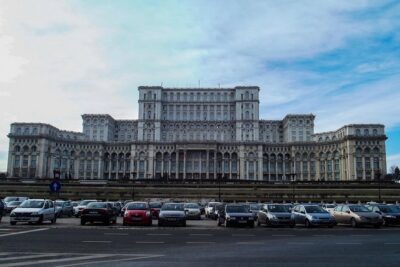
Communism in Bucharest – Landmarks, Museum & Communist Appetizers
Read our review →
Museum of Communism Ticket with Communist Coffee
Read our review →Browse the lists this tour appears in