
Reviewed · COMMUNISM TOURS
Bucharest: Communism, Revolution & City Highlights Tour
Bucharest’s story changes block by block. One moment you are outside the ornate Romanian Athenaeum, a reminder of the city’s old nickname, Little Paris. Soon after, you are facing the huge Palace of Parliament, the blunt symbol of Nicolae Ceaușescu’s rule. That sharp contrast is the heart of this tour.
I like the private format, which lets you stop, ask questions, and set the pace with your guide. I also like the free pickup from any Bucharest hotel, Airbnb, or rental, since you do not need to find an unfamiliar starting point. The main consideration is that this is a history-heavy walking tour, not an interior visit to the Palace of Parliament, and refreshments are not included.
In This Review
- Key points to know before booking
- Why Bucharest’s past makes this walk worthwhile
- Starting at the Romanian Athenaeum
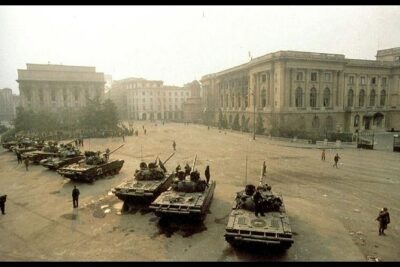
- Revolution Square and the end of Ceaușescu’s rule
- University Square and the violence of 1989
- Old Town, restored but reduced
- Constitution Square and the Palace of Parliament
- What the private format adds
- Walking distance, pace, and practical comfort
- Who should book this Bucharest tour?
- Should you book it?
- FAQ
- How long does the Bucharest Communism, Revolution and City Highlights Tour last?
- Is this a private tour?
- Does the tour include hotel pickup?
- How much walking is involved?
- Does the tour include entry to the Palace of Parliament?
- Where does the tour end?
Key points to know before booking
- Personal guide and private group: Only your party joins the tour, with an English-speaking licensed guide.
- Communist-era sites in context: The route links the Athenaeum, Revolution Square, University Square, Old Town, and Constitution Square into one clear story.
- Up to 3 kilometers on foot: The pace is slow, with time for photos, rest, and a possible coffee stop.
- Free accommodation pickup: Your guide meets you in a hotel lobby or at your Bucharest accommodation.
- Strong guide-led storytelling: Guides including Andra, Bogdan, Michael, Emma, Mircea, Tudor, and Mihai Vataselu have been praised for clear explanations and personal family stories.
- Ends in central Old Town: The finish is near Palatul CEC, close to restaurants, bars, museums, and shops.
Why Bucharest’s past makes this walk worthwhile
Bucharest can seem like a city of mixed signals. Its grand avenues and ornate buildings suggest a European capital with long ambitions. Then a broad road opens toward a giant government building, and the scale feels less like civic pride than political force.
This experience helps you read those signals. Instead of treating the communist period as a few dates in a guidebook, you connect it to demolished neighborhoods, shortages, propaganda, surveillance, forced moves, and the violence of December 1989.
The route begins with the period before communist power fully took hold. Your guide explains how Romania was pulled into the Soviet sphere after World War II, how political opposition was crushed, and how the secret police helped enforce the new order. The discussion includes mass deportations to Siberia and the destruction of free press, private property, and cultural independence.
That opening matters. It keeps the tour from reducing communism to Ceaușescu alone. You first see the larger political machinery, then follow Romania’s path from Soviet-backed rule to the highly personal dictatorship of the 1980s.
Because the tour is private, you can ask for more detail on the parts that interest you most. If you want to understand daily life, political repression, architecture, or the 1989 uprising, your guide can spend more time there than a fixed group tour usually allows.
More communism-era tours in Bucharest:
- The Real tour of Communism
★ 5.0 · 666 reviews - Life under Communism
★ 5.0 · 358 reviews - 3-Hour Guided Tour of Communist Bucharest
★ 4.9 · 303 reviews
Starting at the Romanian Athenaeum
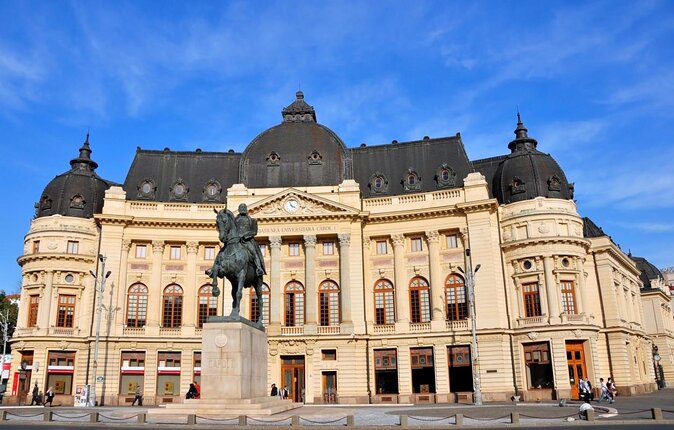
The Romanian Athenaeum is a fitting place to begin. Its rounded facade and classical character represent the Bucharest that once aimed to look westward, refined, cultured, and closely tied to European fashions.
You do not need an admission ticket for this stop. The value is the setting and the explanation. From here, the guide lays out how the postwar communist takeover changed the country and the city.
Expect this first section to be serious. You will hear about Stalin’s control of Eastern Europe, the KGB’s influence, political terror, deportations, censorship, and the loss of private ownership. The subject is difficult, but the guide-led approach gives the facts a human scale.
Several guides have used family memories to explain what official history often leaves out. Andra, for example, has shared personal experiences connected to life under communism and the regime’s collapse. Mihai Vataselu has also used old photographs and magazines to show how Bucharest looked before large sections were demolished.
Those details can make the opening more tangible. A photograph of a vanished street or an account of how families lived under the regime helps you understand that the changes were not only political. They altered homes, routines, work, food, travel, and family life.
Revolution Square and the end of Ceaușescu’s rule
Revolution Square is one of the tour’s most important stops. This is where Ceaușescu gave the speech that ended in public revolt, a moment captured in images of a dictator suddenly losing control in front of the nation.
Your guide places that event within the longer story of his rule. Ceaușescu began with a reputation as a promising young leader, but his government became increasingly rigid and suspicious. By the final years, Romania faced severe hardship while the regime pushed grand construction schemes and strict policies.
At the square, the past is not presented as a simple morality tale. Your guide can explain the official propaganda, the fear surrounding the state, and the pressure that built beneath the surface. You will also learn why December 1989 became so explosive.
This is a good place to slow down. The tour allows roughly 30 minutes here, enough to look around and ask questions rather than simply take a photograph and move on. If the events of 1989 are new to you, ask your guide to clarify the sequence of events.
One practical warning: demonstrations or public events can affect access and the planned route. During one period of large protests, the Palace of Parliament was closed, and Mihai Vataselu adjusted the tour to include other material. That flexibility is useful, but it also means the exact order or content can change when city events interfere.
University Square and the violence of 1989
At University Square, the story turns from dictatorship to open revolt. This was a key gathering place during the 1989 Revolution, when protesters challenged the regime and the response became violent.
Your guide explains the final phase of Ceaușescu’s government, including the paranoia and policies that pushed ordinary people into deeper hardship. You will hear about crowds risking their lives, gunfire, and the collapse of political authority.
This stop also raises a harder question: how much of the revolution came from spontaneous public action, and how much involved forces operating behind the scenes? The tour does not treat the revolution as a tidy event with every answer settled. That makes the discussion more useful, especially if you want to understand why the transition remains debated.
Michael has been especially praised for explaining complicated events in a clear, engaging way. A strong guide matters here because the politics can become confusing quickly. The private setting gives you room to stop and ask who did what, when the army changed sides, and why the outcome was so uncertain.
If you are visiting Bucharest with teenagers or anyone new to Eastern European history, this section may be the moment when the tour clicks. The square gives a physical place to the events, while the guide fills in the sequence.
A few more Bucharest tours worth a look
- Bucharest: Dracula’s Castle, Peles Castle, & Brasov Old Town
★ 4.5 · 17,858 reviews - Bucharest: Dracula Castle, Peles Castle & Brasov Old Town
★ 4.6 · 10,891 reviews - Bucharest: Dracula’s Castle, Peleș Castle & Brașov Day Trip
★ 4.5 · 5,919 reviews - Bucharest: Palace of Parliament Tickets and Guide
★ 4.3 · 3,182 reviews
Old Town, restored but reduced
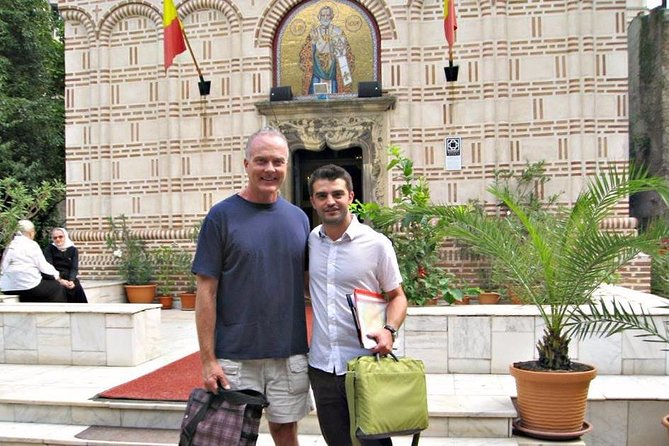
The walk through Old Town gives you a needed change of mood. Here you find elegant 19th-century buildings, Byzantine churches, cafes, and restored streets. It is the part of Bucharest many people picture first, but the guide shows what is missing as well as what remains.
The old center is only a fraction of its pre-communist size. Large areas were demolished during the reshaping of Bucharest, and buildings that survived later needed repair. Some restorations addressed visible damage from the 1989 fighting, including bullet holes and other scars.
This is where the tour connects architecture with social cost. A pretty facade is not just a photo background. It can mark a neighborhood that survived an era of sweeping demolition, or a building repaired after the revolution.
You have about an hour here, making it the longest stop. That gives you time to take photographs, rest, and possibly pause for coffee or another refreshment. Any food or drink costs extra, so carry water and plan accordingly.
The Old Town finish also gives you a practical advantage. You end near Palatul CEC on Calea Victoriei, across from the Old Town area. Restaurants, bars, museums, and shops are close by, so you can continue exploring without returning to your accommodation.
Constitution Square and the Palace of Parliament
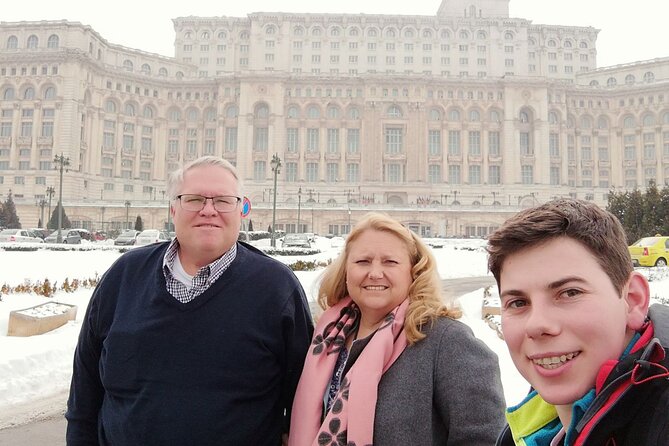
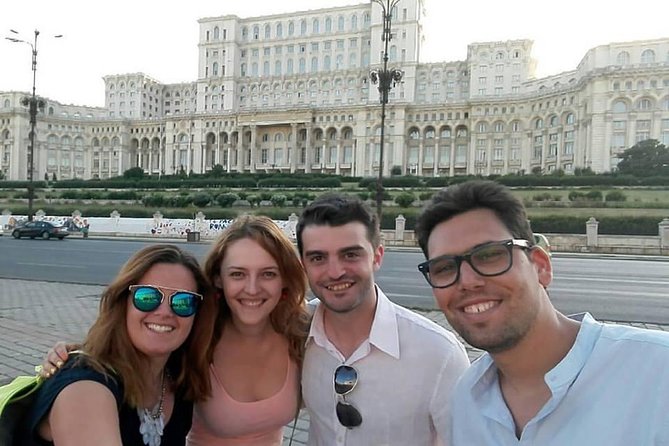
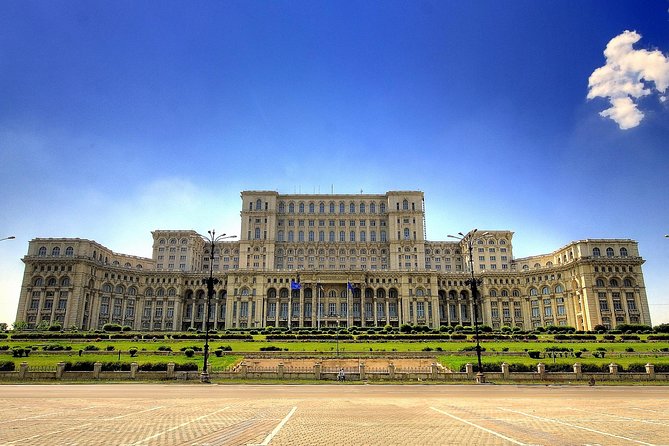
The final major stop is Constitution Square, where the former Communist Civic Center reaches its most forceful scale. The Palace of Parliament dominates the view. It is described as the world’s second-largest building after the Pentagon, and its size is difficult to grasp from a photograph.
Your guide focuses on the building’s dark background and the urban project around it. The exterior alone tells part of the story: huge, formal, and designed to project state power.
You will also hear about the structure beneath and around the palace, including seven underground floors, atomic bunkers, and a network of secret tunnels. The tour does not promise an interior visit, so you should book this experience for the historical explanation and exterior view, not as a substitute for a palace admission tour.
That distinction is important for planning. If you want to see the building’s interior, confirm separate entry arrangements rather than assuming this walking tour includes them. The tour concludes after the guide walks you back toward Old Town.
The final image is effective because you have already seen the human side of the era. After hearing about shortages, fear, demolished streets, and revolution, the palace no longer looks like merely a huge government building. It becomes the physical expression of a political system and its priorities.
What the private format adds
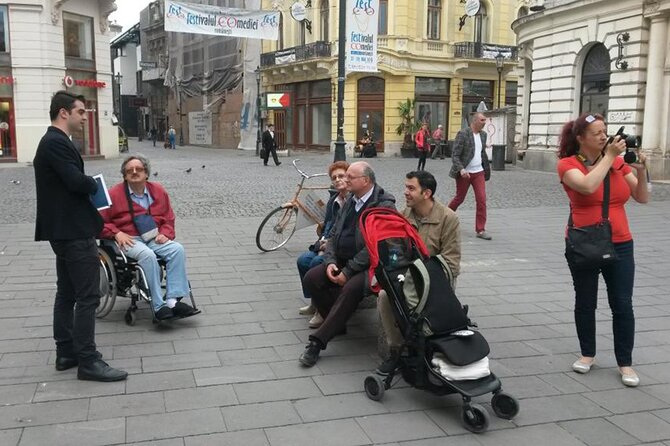
The advertised price is $93.46 per person, with group discounts available. For one person, or a small group splitting the cost, that is more than a basic shared walking tour. The value comes from the private guide, accommodation pickup, slow pace, and the chance to shape the conversation.
A private tour is most useful here because the topic invites questions. You may want to ask about family life, religion, censorship, food shortages, the secret police, the revolution, or the building program. With only your group present, you do not have to wait for a large group to move on before getting an answer.
The guides also bring different strengths. Andra and Mihai Vataselu have shared personal and family experiences. Bogdan has been praised for being helpful and punctual. Michael has a gift for explaining complex events in a way that remains easy to follow. Emma, Mircea, and Tudor have also led the walk with a focus on Romania’s communist past.
No guide can guarantee the same style every day, but the repeated praise for clear explanations, patience, personal stories, and good pacing is a strong sign for a history-focused experience.
The free pickup saves time and removes a small source of stress. Give the provider the address of your hotel, Airbnb, or rental. At a hotel, the guide meets you in the lobby near reception. The route then finishes in central Bucharest instead of taking you back to your accommodation.
That one-way arrangement works well if you want to continue sightseeing. It is less convenient if you hoped to end at your hotel, so plan your afternoon around the Old Town finish.
Walking distance, pace, and practical comfort
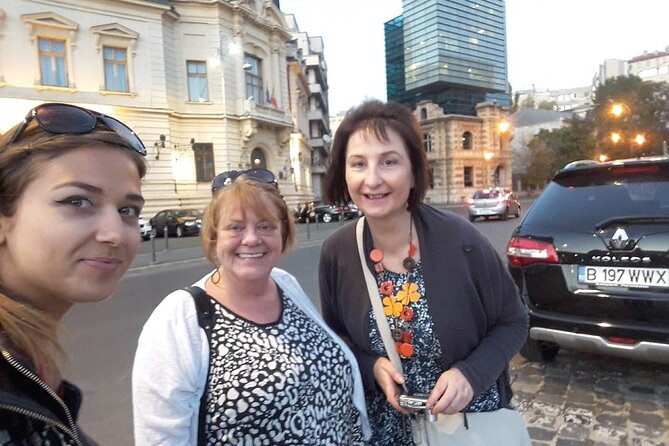
The total walking distance can reach 3 kilometers, or just under 2 miles. This is not a strenuous hike, but you will be outdoors for around four hours and moving between several central locations.
The pace is described as slow, with stops for photographs, rest, and refreshments. That makes it suitable for most people who can manage a moderate amount of walking. Comfortable shoes are still sensible, particularly if weather or street conditions are poor.
The route is offered in English and uses a mobile ticket. Confirmation arrives at booking, and the meeting area is close to public transportation if you need to reach the start without pickup.
The experience does not include refreshments. Since the Old Town section allows time for a coffee break, budget separately for anything you buy. Bring water, especially in warm weather, and allow some flexibility around public events or demonstrations.
Free cancellation is available if you cancel at least 24 hours before the start time. Changes or cancellations inside that window are not accepted for a refund.
Who should book this Bucharest tour?
I would choose this tour if you want a clear introduction to Romania’s communist period and the 1989 Revolution before exploring the city on your own. It suits first-time visitors who want more than a quick list of monuments, as well as repeat visitors who want the political story behind familiar streets.
It is also a good choice for couples, families, and small groups who value a private conversation. The guide can adjust the amount of detail, and the slow pace leaves room to pause rather than rush from one square to the next.
You may want a different experience if your main goal is palace interior access, food tasting, or a broad survey of Bucharest’s art and nightlife. This walk has a clear subject, and it stays with that subject for four hours.
The tone is serious, though Old Town and the coffee pause keep the day from feeling grim. Personal stories can make the material more immediate, so consider asking your guide how their family experienced the final years of communism.
Should you book it?
Book this tour if you want to understand why Bucharest looks so uneven, with Belle Époque buildings beside vast communist structures and public squares tied to revolt. The private format, free pickup, careful pacing, and strong record of guide-led storytelling make the $93.46 price easier to justify for a small group.
Skip it if you only want photographs or a tour that includes the Palace of Parliament interior. For everyone else, it offers a useful way to connect Bucharest’s architecture with the people and political choices that shaped it. End in Old Town, grab a coffee near Palatul CEC, and keep exploring with a much clearer sense of what you are seeing.
FAQ
How long does the Bucharest Communism, Revolution and City Highlights Tour last?
The tour lasts approximately four hours.
Is this a private tour?
Yes. Only your group participates, and a licensed English-speaking guide leads the activity.
Does the tour include hotel pickup?
Yes. Free pickup is offered anywhere in Bucharest, including hotels, Airbnbs, and rental accommodations. At a hotel, your guide meets you in the lobby near reception.
How much walking is involved?
The tour involves up to 3 kilometers of walking, or less than 2 miles. It is paced slowly and includes several stops for photos, rest, or refreshments.
Does the tour include entry to the Palace of Parliament?
The route takes you to Constitution Square to see the Palace of Parliament from the outside. Palace admission is not listed as included.
Where does the tour end?
The tour ends in central Old Town in front of the Palace of the Deposits and Consignments, also called Palatul CEC, at 13 Calea Victoriei. Restaurants, bars, museums, and shops are nearby.
Recently added around Bucharest
- From Bucharest : Day Trip to Peles, Dracula’s Castle, Brasov★ 4.7 · 6 reviews
- Bears Sanctuary, Dracula Castle and Brasov City – Full Day Trip from Bucharest★ 5.0 · 6 reviews
- 6h Communism Tour in Bucharest with Ceausescu Mansion★ 4.5 · 6 reviews
- Dracula Private Tour★ 5.0 · 6 reviews
- Transfagarasan Road Private Day Trip from Bucharest / The Best Road in the World★ 5.0 · 6 reviews
- Bucharest : Wednesday, Dracula & Peles 3 Castles Tour 1 Day★ 4.7 · 6 reviews
- Hiking thought the best mountain villages in Romania-Private tour from Brasov★ 5.0 · 6 reviews
- Bucovina Painted Monasteries & Transylvania Tour: 4-Day Private★ 5.0 · 6 reviews
Communism Tours, compared.
Bucharest Essential Tour: Old Town, Calea Victoriei & Communism
Read our review →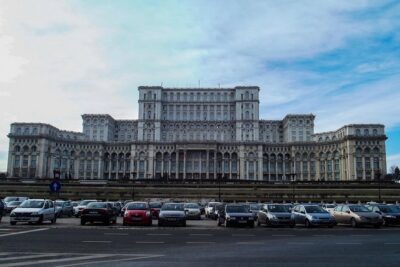
Communism in Bucharest – Landmarks, Museum & Communist Appetizers
Read our review →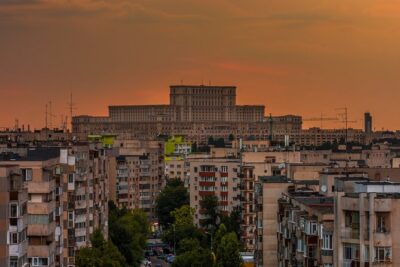
Museum of Communism Ticket with Communist Coffee
Read our review →Browse the lists this tour appears in