
Reviewed · COMMUNISM TOURS
8-Hour Private Tour to Bucharest Communism
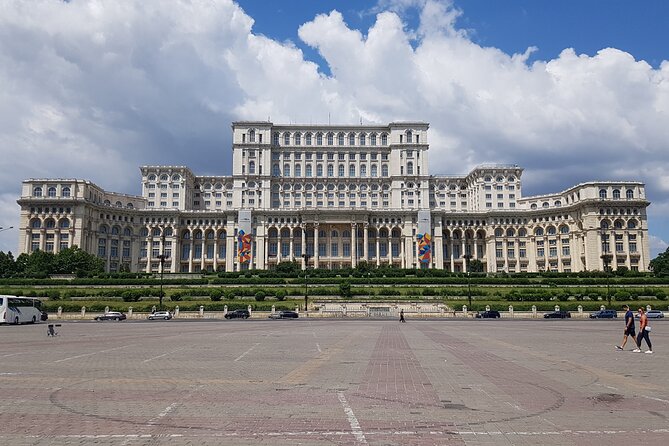
The Palace of Parliament is the jolt at the heart of this Bucharest tour. You enter one of the world’s largest administrative buildings and confront the scale of Nicolae Ceaușescu’s ambition, while Revolution Square helps you understand how that regime ended. I like the way the day links grand political symbols with ordinary Romanian life at the Village Museum. I also like having Nicolas or Razvan as a private guide and driver, since your group can adjust the pace and route.
The main drawback is the ambitious schedule. Eight hours is enough to see a great deal, but not enough to linger everywhere. Entrance fees are extra, listed at about 30 euros per person, and Snagov Monastery sits roughly 40 minutes outside Bucharest, so this works best for a first broad look rather than a slow, single-subject history day.
In This Review
- Key points to know before booking
- A full day built around Bucharest’s communist past
- Inside the Palace of Parliament
- Traditional Romania at the National Village Museum
- Calea Victoriei, Bucharest’s street of contradictions
- Revolution Square and the end of Ceaușescu’s rule
- The Ceaușescu Mansion and private life behind the regime
- Snagov Monastery, an island stop with a Dracula connection
- The Romanian Athenaeum and Bucharest’s cultural face
- What the private format adds
- Is $266.07 per person good value?
- Who will enjoy this Bucharest tour most?
- Should you book it?
- FAQ
- How long does the Bucharest communist tour last?
- Is hotel pickup available?
- Is the tour private?
- Is an English-speaking guide included?
- Are admission tickets included?
- Is food included?
- Can I cancel for a full refund?
Key points to know before booking
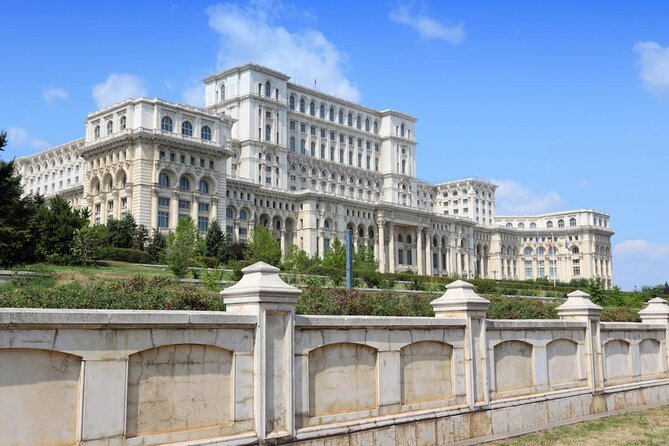
- The Palace of Parliament takes center stage: Plan about two hours for the enormous former People’s House, with admission paid separately.
- You get a private car and guide: Only your group participates, and the route can be changed during the day.
- Communism is explained through places, not just dates: Revolution Square, Calea Victoriei, Ceaușescu Mansion, and the Parliament building each show a different side of the era.
- The Village Museum adds a useful contrast: Traditional homes, mills, and wooden churches show Romanian life before the communist period.
- Snagov Monastery adds an unusual detour: The island setting and the reported tomb of Dracula bring a touch of legend to a serious history tour.
- The price makes more sense for a small group: At $266.07 per person, the value depends heavily on how many people share the private vehicle and guide.
A full day built around Bucharest’s communist past
This is not a standard city sightseeing loop. The route uses Bucharest’s monuments, streets, museums, and former private residence to explain how communism reshaped the capital, then places that story beside older Romanian traditions.
You begin with the most imposing stop, the Palace of Parliament. From there, the day moves through the Village Museum, Calea Victoriei, Revolution Square, Snagov Monastery, Ceaușescu Mansion, and the Romanian Athenaeum. Some stops are tightly focused on the dictatorship. Others help you see what was lost, preserved, or repurposed around it.
Because the tour is private, I find the format especially useful if your group has mixed interests. You can ask for more political background, spend more time on architecture, or keep moving when a stop has done its work. The guide is also your driver, with a private tourism car or minibus, so you avoid assembling the day yourself with separate taxis and tickets.
More communism-era tours in Bucharest:
- The Real tour of Communism
★ 5.0 · 666 reviews - Life under Communism
★ 5.0 · 358 reviews - 3-Hour Guided Tour of Communist Bucharest
★ 4.9 · 303 reviews
Inside the Palace of Parliament
Give the Palace of Parliament the largest block of time, about two hours. This is the building once called the People’s House, created during Ceaușescu’s rule and now the seat of Romania’s legislature.
The important point is not simply its size. The building makes political power physical. Vast rooms, costly materials, and a scale far beyond normal administrative needs show how a totalitarian leader could turn public resources into a monument to himself and his system.
Your guide can help connect the architecture to the human cost behind it. The construction of such a project required a huge redevelopment of central Bucharest, and the building remains a powerful way to discuss forced change, centralized authority, and the gap between official grandeur and daily life under communism.
Admission is not included. The tour information lists entrance fees at approximately 30 euros per person for the itinerary, so you should budget for this on top of the tour price. Since entry rules and available visiting areas can affect the experience, confirm the current arrangements when you book.
I would not choose this stop for anyone who only wants pretty architecture. The building is fascinating precisely because it is uncomfortable. You may feel overwhelmed by the interiors and the story behind them, but that reaction is part of the point.
Traditional Romania at the National Village Museum
The National Village Museum changes the mood. Here, you see rural houses from different parts of Romania, built with wood, adobe, stone, and other local materials. Mills and wooden churches add larger symbols of village life, while the arrangement shows how homes, work, and spiritual life fit together.
This stop matters because it prevents the tour from treating Romania as nothing more than a communist case study. The Village Museum gives you a look at older customs and practical building traditions. Its homes reflect modest living and close use of local resources, a sharp contrast to the artificial scale of the Palace of Parliament.
Allow enough attention for the details. A house can tell you about climate, materials, family life, and local craft without a long lecture. Your private guide can explain what you are seeing and place the buildings within Romanian tradition.
The itinerary does not state a separate visit length for the Village Museum, so the exact time will depend on the day’s traffic and your group. That flexibility is useful, but it also means you should tell the guide early if this is a priority for you.
Calea Victoriei, Bucharest’s street of contradictions
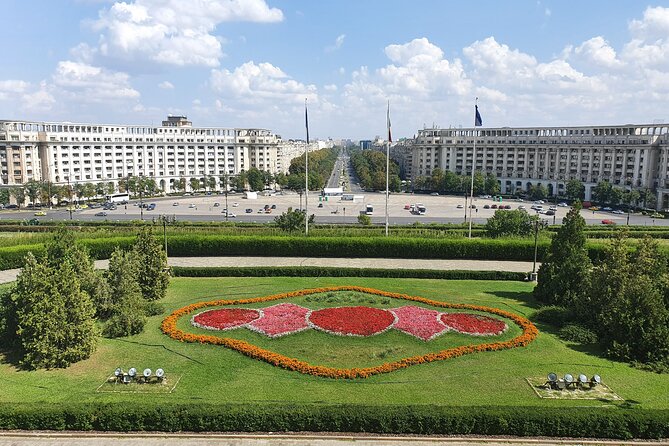
Calea Victoriei gives you a compact view of Bucharest’s changing identity. Along this avenue, the route points out the former Royal Palace on one side and the building that housed the Central Committee of the Romanian Communist Party on the other.
That contrast is the heart of the stop. Royal power, communist authority, religion, commerce, and culture sit close together. During the 45-minute visit, you may see old Orthodox churches, museums, theatres, restaurants, tea shops, retail stores, gift shops, casinos, and music shops. The National History Museum, CEC Palace, and Romanian Athenaeum are also among the notable sights along or near the route.
I like this section because it is less about entering one building and more about reading the city street. Bucharest does not present its history in a neat line. A royal building can face a communist headquarters, while churches and cultural institutions continue nearby.
The tour includes Calea Victoriei without a separate admission charge. That makes it a good walking and orientation segment, though 45 minutes is brief. You will see the main contrasts, but you may not have time to enter each museum or shop. Wear comfortable shoes and keep your expectations realistic: this is a guided overview, not a full museum visit.
A few more Bucharest tours worth a look
- Bucharest: Dracula’s Castle, Peles Castle, & Brasov Old Town
★ 4.5 · 17,858 reviews - Bucharest: Dracula Castle, Peles Castle & Brasov Old Town
★ 4.6 · 10,891 reviews - Bucharest: Dracula’s Castle, Peleș Castle & Brașov Day Trip
★ 4.5 · 5,919 reviews - Bucharest: Palace of Parliament Tickets and Guide
★ 4.3 · 3,182 reviews
Revolution Square and the end of Ceaușescu’s rule
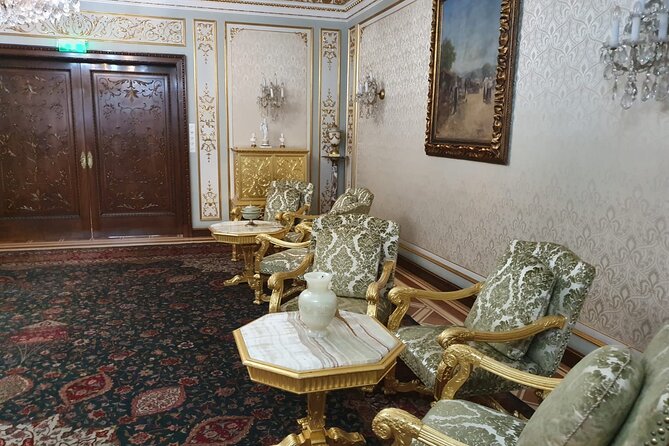
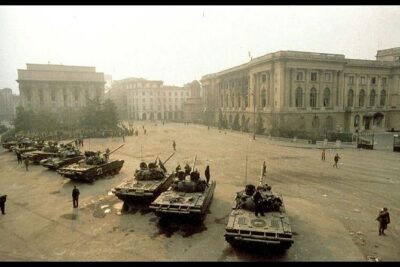
At Revolution Square, the story becomes immediate. This is where the December 1989 Revolution began, and where Ceaușescu’s power broke apart. The Senate Palace, formerly the Central Committee building, is central to the explanation.
You will hear how protesters forced a historic change and how Ceaușescu eventually fled by helicopter. The square helps you connect the abstract idea of regime change with a real urban setting. You are not just learning that communism ended in Romania. You are standing where the final crisis unfolded.
The planned visit lasts about 30 minutes and has no separate admission fee. That is enough for an explanation and a look around, but not a long, reflective visit. If this period interests you, ask your guide to clarify the sequence of events and the role of the buildings around the square.
I find this stop especially valuable after the Parliament. First you see the regime’s massive expression of control. Then you see the place where that control failed. The pairing gives the day a clear shape.
The Ceaușescu Mansion and private life behind the regime
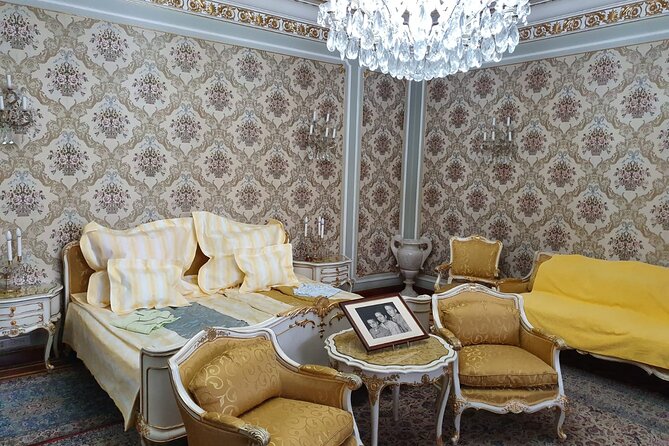
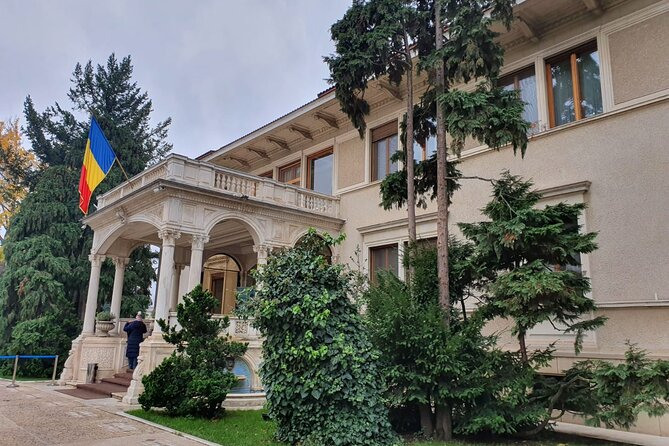
The Ceaușescu Mansion was the private home of Nicolae and Elena Ceaușescu and their children, Nicu, Zoia, and Valentin, from 1965 to 1989. The planned visit lasts about 90 minutes.
This is a different kind of political site. The Palace of Parliament shows public extravagance on a national scale. The mansion lets you consider how the ruling family lived away from official ceremonies and public speeches.
A private residence can make history feel more personal, but it can also tempt you to focus only on household objects and luxury. Your guide’s context matters here. Ask how the home fits into the wider system, and how the family’s private setting differed from ordinary Romanian life during the same years.
Admission is not included. Since the schedule already contains several paid locations, keep the extra entrance cost in mind when comparing the total price. The mansion is a strong choice for anyone interested in Ceaușescu as a person and ruler, while visitors focused only on city architecture may prefer more time on Calea Victoriei.
Snagov Monastery, an island stop with a Dracula connection
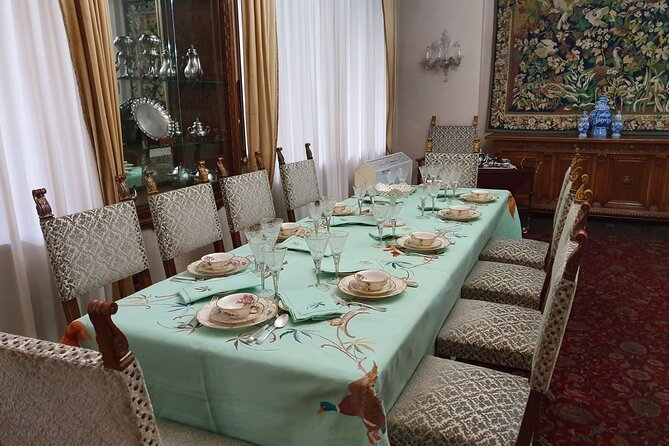
Snagov Monastery is the tour’s surprise. It lies on an island about 40 minutes outside Bucharest, and the site is associated with the tomb of Dracula.
The detour gives the day a change of setting and subject. After the crowded political story of central Bucharest, you travel out to a monastery surrounded by water. The Dracula connection adds legend and curiosity, though you should treat it as part of the site’s tradition rather than a replacement for the documented communist history elsewhere on the tour.
The planned visit is about one hour, and admission is extra. Since the monastery is outside the city, traffic can affect how much time remains for the central stops. The private format helps here because the guide can manage the schedule without coordinating a large group.
I would choose Snagov if you want your Bucharest day to include something unexpected. If your main goal is a strict study of Romanian communism, this is the easiest stop to question, since it takes time away from the city. If you enjoy religious sites, local legends, and a change of pace, it adds welcome variety.
The Romanian Athenaeum and Bucharest’s cultural face
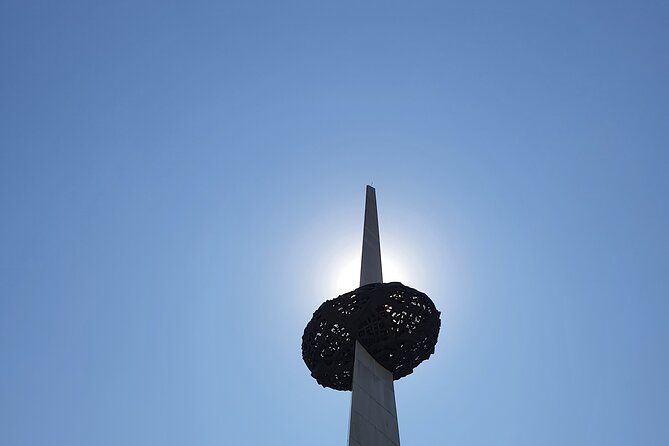
The Romanian Athenaeum is another important stop on the route, particularly for its place in Romanian culture and architecture. It is often treated as one of Bucharest’s key symbols and is included on the European Heritage list of historic landmarks.
The information provided does not give a separate duration or admission detail for the Athenaeum, so think of it as part of the city sightseeing portion rather than a guaranteed long interior visit. Your guide can point out its role along Calea Victoriei and explain why the building matters beyond its exterior.
This stop rounds out the political story. Bucharest is not only a city of dictators, revolutions, and state offices. It is also a place of music, public culture, architecture, and civic identity. The Athenaeum helps keep that balance.
What the private format adds
The biggest practical advantage is control. You travel in a private car or minibus with your own English-speaking licensed guide and driver. Nicolas is named as one guide associated with the experience, while Razvan is also connected with guiding the day.
You do not have to wait for strangers to finish at each site. If your family wants more time at the Village Museum, or your group has had enough of monumental architecture, you can ask for a change. The tour allows flexibility even after it begins, which is useful in a city where road conditions and museum timing can shift the day.
The vehicle costs include gasoline, parking, road tolls, and taxes. Food and drinks are not included, so plan to buy those separately. The schedule is full enough that a long restaurant stop may reduce time at one of the attractions.
The private setup is also helpful for questions. One of the strongest themes in the feedback connected with the experience is the guide’s personal manner. Nicolas was praised for a pleasant personality and thoughtful music selection, while another guide, Razvan, was thanked for his dedication and clear information. Those details suggest that the human side of the tour is an important part of its appeal.
Is $266.07 per person good value?
At $266.07 per person, this is not a low-cost city tour. Its value depends on your group size, since you are paying for a private vehicle, driver, guide, fuel, parking, tolls, and route flexibility rather than just a seat on a scheduled bus.
For a small group that wants all six major stops in one day, the price can be reasonable. Hiring separate transport to Snagov, arranging city transfers, and booking individual guides would take time and could create extra costs. The ability to make changes during the day also has real value.
You still need to add entrance fees, listed at about 30 euros per person, plus food and drinks. Ask exactly which admissions are covered by that estimate, especially for the Palace of Parliament, Snagov Monastery, and Ceaușescu Mansion.
If you are staying in Bucharest for several days, you could visit some central sights at your own pace and choose only the paid sites that interest you. In that case, this tour is less economical. If you have one full day and want a broad introduction without arranging the pieces yourself, the private format is easier to justify.
Who will enjoy this Bucharest tour most?
I would recommend it to first-time visitors who want context quickly. It suits families, friends, and couples who prefer a private guide to a fixed group schedule.
It is also a good fit if you have a strong interest in twentieth-century European history. The Parliament, Revolution Square, and Ceaușescu Mansion give you three distinct ways to examine communist power and its collapse.
You should think twice if you dislike long days in a vehicle or prefer slow museum visits. The route covers central Bucharest and a site outside the city, so the schedule can feel compressed. Anyone with limited mobility should note that the itinerary includes a museum village, historic sites, and a monastery, while the supplied information only confirms that most participants can take part and that service animals are allowed.
Free cancellation is available if you cancel at least 24 hours before the start time. Cancellations inside that window are not refunded, and late changes are not accepted.
Should you book it?
Book this tour if you want Bucharest’s communist story explained through buildings and places, not just a list of dates. The pairing of the Palace of Parliament with Revolution Square is the strongest part, while Calea Victoriei, the Village Museum, Snagov Monastery, the Athenaeum, and Ceaușescu Mansion keep the day varied.
Skip it if you want a slow, inexpensive city walk or if you plan to visit every attraction inside. At $266.07 per person before admissions and meals, it works best when several people share the private service and value a flexible route. For a full first day in Bucharest, with a guide such as Nicolas or Razvan to tie the pieces together, it offers a practical and thought-provoking introduction.
FAQ
How long does the Bucharest communist tour last?
The tour lasts approximately eight hours.
Is hotel pickup available?
Pickup is offered as part of the experience.
Is the tour private?
Yes. Only your group participates, and the transport is a private car or minibus.
Is an English-speaking guide included?
Yes. A licensed English-speaking guide and driver are included throughout the tour.
Are admission tickets included?
No. Entrance fees are extra and are listed at approximately 30 euros per person for the itinerary.
Is food included?
No. Food and drinks are not included in the tour price.
Can I cancel for a full refund?
Yes, if you cancel at least 24 hours before the experience start time. Cancellations made within 24 hours are not refunded, and changes during that period are not accepted.
Recently added around Bucharest
- From Bucharest: Discovery at Europe’s Largest Salt Mine★ 5.0 · 3 reviews
- RiverCruise Exclusive – Private Transfer from or to Giurgiu Port/Bucharest Hotel★ 3.5 · 3 reviews
- Cluj Napoca: Climbing or Hiking Experience in Turda Canion★ 5.0 · 3 reviews
- Private-Red Patrol Bucharest Flea Market Tour with a Romanian car★ 5.0 · 3 reviews
- Bucharest: City Highlights Guided Walking Tour★ 5.0 · 3 reviews
- Probably the Best Restaurant and Wine Cellar near Bucharest★ 4.5 · 3 reviews
- Private 8 Day Romania UNESCO Tour★ 5.0 · 3 reviews
- Bucharest in a nutshell – half day private walking tour★ 5.0 · 3 reviews
Communism Tours, compared.
Bucharest Essential Tour: Old Town, Calea Victoriei & Communism
Read our review →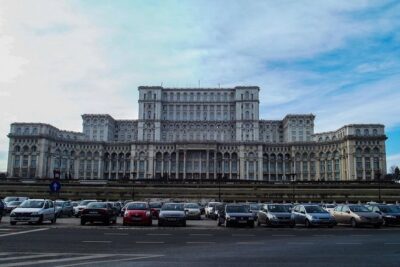
Communism in Bucharest – Landmarks, Museum & Communist Appetizers
Read our review →
Museum of Communism Ticket with Communist Coffee
Read our review →Browse the lists this tour appears in