
Reviewed · JEWISH HERITAGE TOURS
The Jewish heritage of Bucharest – half day walking tour
Bucharest’s Jewish quarter is not a preserved old district. It is a scattered story, told through surviving synagogues, narrow streets, communist apartment blocks, and memorials to a community changed forever by war and dictatorship. This walking tour brings those pieces together, from the former quarter to the Romanian Holocaust Memorial.
I like the strong historical range, which covers Jewish life before the war, the Holocaust, and the community’s difficult years under communism. I also like the chance to enter both the Great Synagogue and the recently restored Coral Temple, rather than simply passing their facades.
The main drawback is practical: the key religious sites are closed on weekends and may close for Jewish holidays, security reasons, or hot-weather schedule changes. You should confirm the openings before booking, especially if your Bucharest stay is short.
In This Review
- Key points at a glance
- Why Bucharest’s Jewish quarter is worth your morning
- Starting at Old Town and entering the former quarter
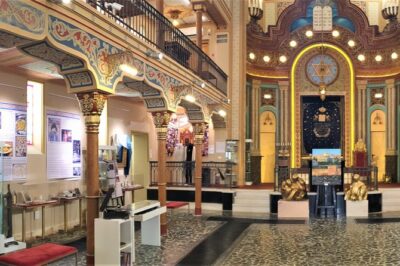
- The Jewish Museum in a former temple
- The Great Synagogue and Romania’s Holocaust story
- The State Jewish Theater and Laude-Reut
- A break at Avraham Kosher
- Coral Temple’s Neo-Mudejar architecture
- Ending at Bucharest’s Holocaust Memorial
- The communist years are not skipped
- Guide quality and group size
- Is $318 good value?
- Timing, weather, and what to bring
- Who should book this walk?
- Should you book The Jewish Heritage of Bucharest?
- FAQ
- Where does the tour start?
- Where does the tour finish?
- How long does the experience last?
- What languages are available?
- How many people can join the group?
- Are synagogue entrance fees included?
- Are snacks included?
- When are the synagogues generally open?
- Are the synagogues open on Jewish holidays?
- Can I cancel for a full refund?
Key points at a glance
- See two important synagogues: Visit the Great Synagogue and the 150-year-old Coral Temple when opening hours allow.
- Follow the Holocaust story: The route includes the Great Synagogue’s Holocaust history and ends at Bucharest’s Holocaust Memorial.
- Learn about communism: The guide explains what happened to Jewish life during Romania’s communist era.
- Meet a strong guide: Razvan Trancu has been praised for his command of Romanian and Jewish history, politics, geography, and current events.
- Enjoy a small walking group: The activity is advertised for a small group, limited to seven participants, with English or Italian guiding.
- Plan for extra costs: Bring cash for 30 lei entry at each synagogue, plus any food or drinks at Avraham Kosher.
Why Bucharest’s Jewish quarter is worth your morning
The most useful thing to understand before this tour is that Bucharest’s Jewish heritage does not appear in one tidy, preserved quarter. The old streets are now often flanked by communist apartment blocks, and only parts of the earlier urban fabric remain.
That contrast gives the walk its meaning. You are not just looking at old buildings. You are seeing how a once-important community was absorbed, damaged, and partly erased by war, political repression, emigration, and redevelopment.
The Jewish community made a major mark on local urban and popular culture. This tour uses buildings and streets to explain that influence, then connects them to the people who lived, worshipped, worked, and built institutions here.
For me, that is more useful than a simple synagogue tour. You get architecture, religious history, Romanian history, and the hard questions raised by the Holocaust and communism. The tone is serious, but the route also includes time for local snacks at Avraham Kosher, which gives the three-hour walk a welcome pause.
More Jewish heritage tours in Bucharest:
- Bucharest Jewish Heritage | Holocaust Memorial | Private Car Tour
★ 5.0 · 38 reviews - Half-Day Jewish Heritage Walking Tour in Bucharest
★ 5.0 · 20 reviews - 4h Jewish Legacy in Bucharest – Private Tour by Car and Walking
★ 4.5 · 17 reviews
Starting at Old Town and entering the former quarter
The meeting point is at the entrance of the Starbucks near Bucharest’s Old Town. From there, the guide gives you a short orientation to the city and its Jewish past before moving toward the former Jewish quarter.
The Old Town section lasts about 20 minutes. Do not expect a long general sightseeing tour of central Bucharest. Its purpose is to place the Jewish district in the wider city and help you understand how close these communities were to the political and commercial heart of the capital.
As you walk into the older Jewish area, pay attention to what is missing as well as what survives. Narrow streets remain, but their surroundings have changed. Communist-era apartment blocks create a sharp visual break with the smaller-scale buildings and religious structures that once shaped the neighborhood.
This is a good route for readers who want context rather than a checklist of famous buildings. You will spend time asking how a neighborhood changes when its population is reduced, its institutions are restricted, and its buildings are surrounded by a new city.
The Jewish Museum in a former temple
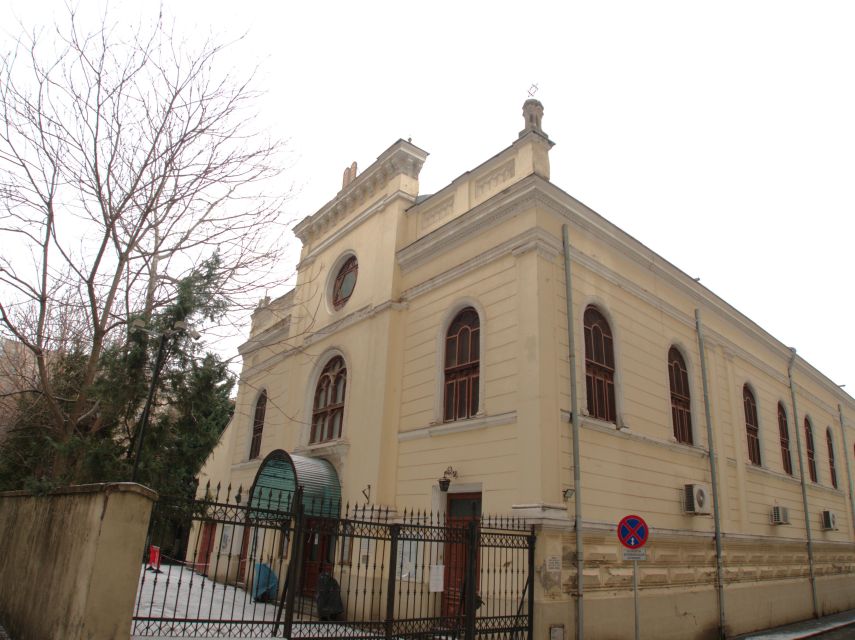
The Jewish Museum Bucharest is housed in an ex-temple, making the building itself part of the lesson. The visit lasts around 30 minutes and includes a guided explanation of the Jewish community’s life and traditions.
A museum in a former religious building can make the past feel more tangible. Objects and displays are not separated from the place where Jewish communal life once took place. The setting helps you connect everyday culture with worship, education, and community organization.
This stop is especially useful if you do not already know much about Romanian Jewish history. The tour does not jump straight to tragedy. It first gives you a sense of the community’s presence and achievements, which makes the later discussion of persecution and loss easier to understand.
The museum is closed on Fridays, and the main sites may also be closed on weekends or religious holidays. Check the schedule before you reserve a date. A three-hour tour depends on several openings, so a closed museum can change the shape of the experience.
The Great Synagogue and Romania’s Holocaust story
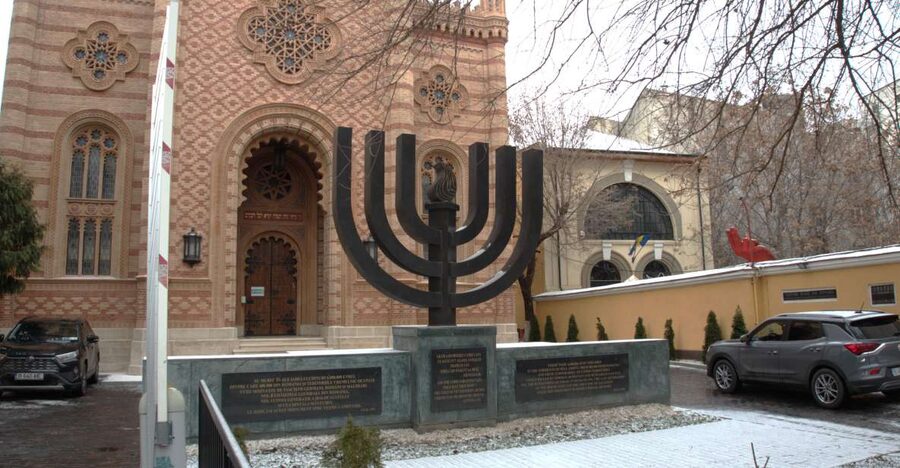
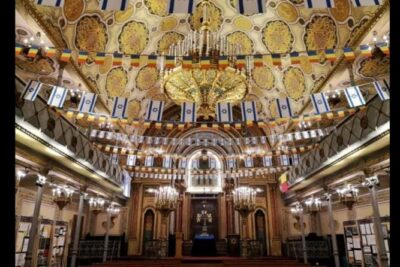
The Great Synagogue is one of the tour’s most important stops. You spend about 30 minutes there, learning about the building and the Holocaust history connected with Romania’s Jewish population.
This part of the tour moves from architecture into painful political history. The guide explains the persecution and destruction experienced by Romanian Jews during the Holocaust, while also placing those events in the national setting.
That context matters. A memorial visit can feel abstract if you do not understand the policies, attitudes, and historical conditions behind it. Here, the synagogue becomes a place where the story is tied to a real institution and a real community.
The synagogue charges an entrance fee of 30 lei per person, around 6 US dollars, when open. That fee is not included in the tour price. Bring cash, since the practical instruction for this activity is to carry cash for entry and personal expenses.
The Great Synagogue is closed during Rosh Hashana, Pesach, Shavuot, Yom Kippur, and Sukkot. It may also have altered visiting arrangements because of security concerns or local events. Confirm before setting your expectations around the interior visit.
A few more Bucharest tours worth a look
- Bucharest: 3-Hour Dark History Tour with a Local
★ 4.9 · 301 reviews - Bucharest: Small Group History, Art & Secrets Tour
★ 4.7 · 152 reviews - Guided Walking Tour of Historical Bucharest
★ 5.0 · 84 reviews - Private Bucharest: History & Food with Traditional Meal
★ 5.0 · 34 reviews
The State Jewish Theater and Laude-Reut
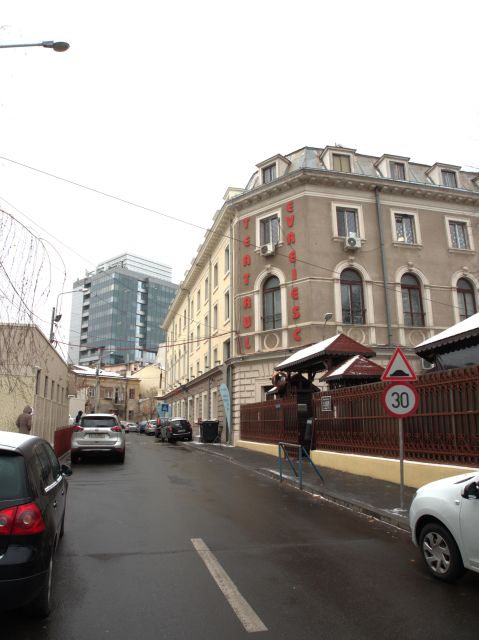
The Teatrul Evreiesc de Stat, or State Jewish Theater, receives about 30 minutes on the route. It is a distinctive institution because it keeps Jewish theatrical life visible in Bucharest, even though the surrounding quarter has changed dramatically.
You visit the theater as part of the walk, rather than treating it as a disconnected cultural stop. That helps show that Jewish heritage is not limited to synagogues and memorials. Theater, education, language, and public life are also part of the story.
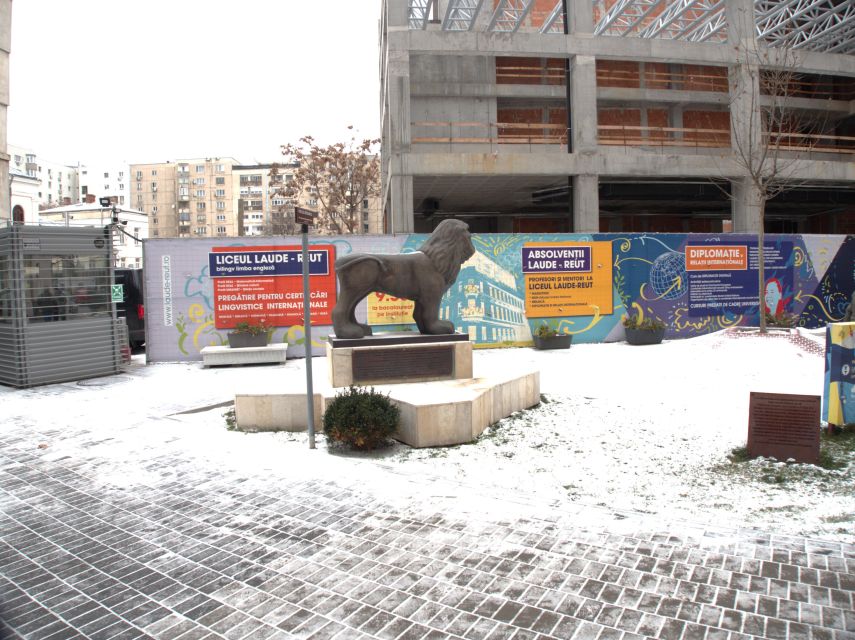
The tour then passes the Laude-Reut Educational Complex. This is a shorter stop, around 10 minutes, and you view it from outside. The guide uses it to connect the older history of the community with Jewish education in present-day Bucharest.
You also pass Jerusalem Lion Square, which takes about five minutes. These brief stops will not satisfy you if you expect a full interior visit at every address, but they help fill in the map of Jewish institutions across the district.
A break at Avraham Kosher
After the historic sites, the route pauses for about 30 minutes at Avraham Kosher. This is listed as break time for local snacks, but the food is not included in the price.
I like this pause because the subject matter is heavy. A short stop lets you rest your feet, ask follow-up questions, and think about what you have seen without rushing directly from Holocaust history to the final memorial.
You should budget separately for anything you eat or drink. The tour description specifically lists snacks and personal expenses as extra, so bring cash and do not assume the break is a prepaid meal.
The stop also gives the walk a more everyday feel. Jewish heritage is not only found in museums or monuments. Food remains one of the clearest ways for a community to express identity and continuity, though the activity information does not promise a specific menu or included tasting.
Coral Temple’s Neo-Mudejar architecture
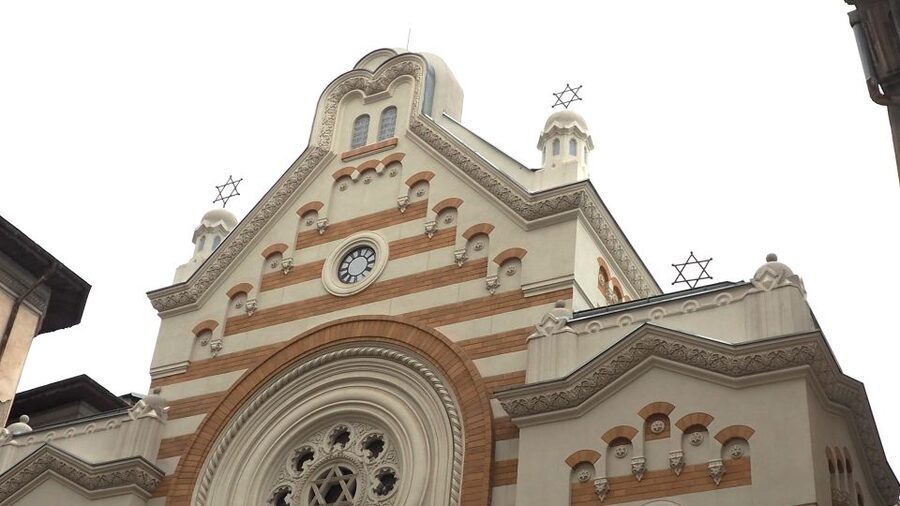
The Coral Temple is one of the visual highlights. The building is in the Neo-Mudejar style and has recently been restored. Its history reaches back more than 150 years.
You spend about 20 minutes visiting the temple when it is open. The architecture offers a change of mood after the more documentary focus of the museum and Great Synagogue. Look for the details that make the building unlike the communist apartment blocks around it.
The restoration is important for practical reasons as well as visual ones. A restored religious building gives the community’s history a physical presence in the modern city. It also lets you see how preservation can keep a difficult past from becoming only a paragraph in a textbook.
The Coral Temple charges 30 lei per person when open, separate from the tour price. It is closed during Rosh Hashana, Pesach, Shavuot, Yom Kippur, and Sukkot. Visiting hours are generally Monday through Thursday from 9 a.m. to 2 p.m., and Friday from 9 a.m. to noon.
Those hours are narrow. If your only available time is a Saturday or Sunday, this tour may not deliver the synagogue interiors that make it most worthwhile.
Ending at Bucharest’s Holocaust Memorial
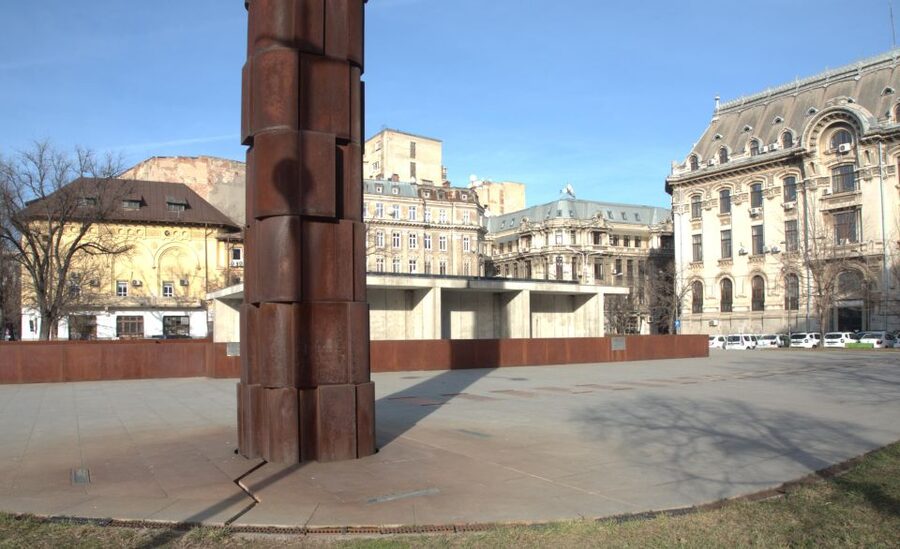
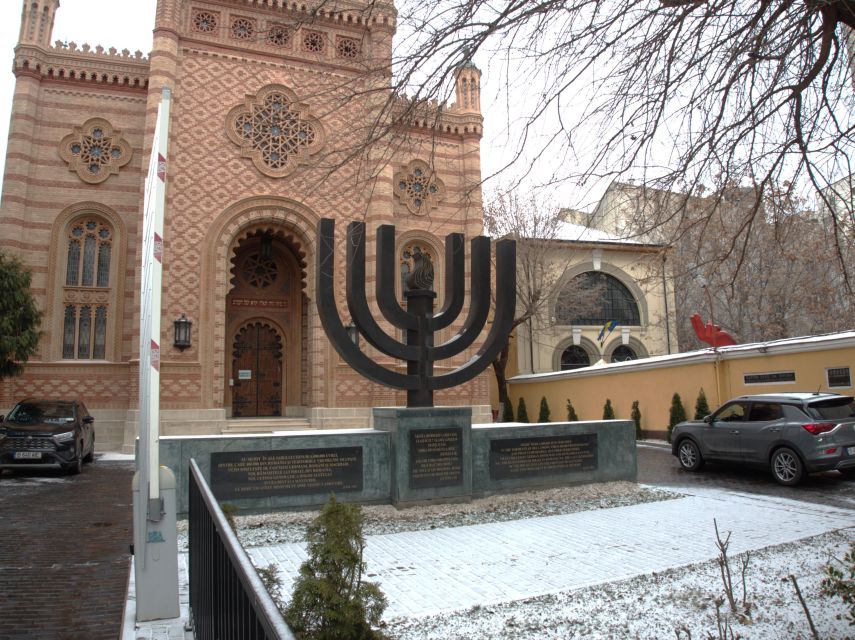
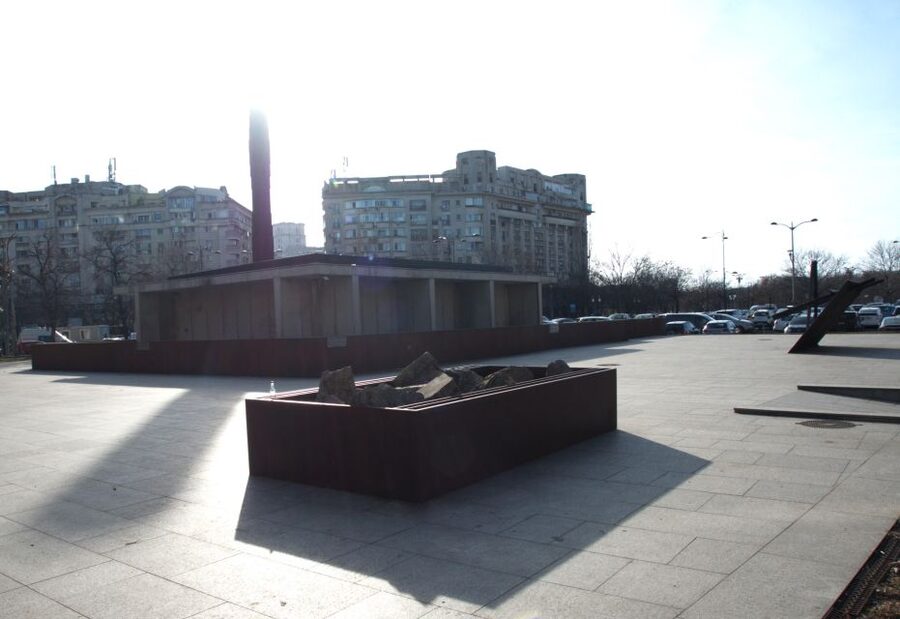
The walk ends at the Holocaust Memorial, after about 20 minutes at the site. Ending here gives the route a clear emotional and historical direction.
By this point, you have seen where Jewish people worshipped, learned about community life, passed cultural and educational institutions, and heard how the neighborhood changed. The memorial then brings the focus back to the people lost and the responsibility to remember them.
I prefer this order to starting with the memorial. You first gain a sense of the community as a living part of Bucharest. That makes the memorial more personal and less like an isolated monument.
The tour finishes at the memorial rather than returning to Old Town. Plan your next activity from there, and allow yourself a little extra time if you want to pause before rushing off to another appointment.
The communist years are not skipped
Many city history walks cover the Holocaust and then leap to the present. This one also addresses the Jewish community under Romania’s communist regime.
That section matters because the community’s story did not end in 1945. Communist rule reshaped religious practice, public institutions, property, education, and the ability of people to maintain communal life. The guide places those years between the Holocaust and today, giving you a better sense of why so much of the old quarter has disappeared or changed.
The tour also shows how the Jewish community’s influence remains in local urban and popular culture. You may find that the walk is less about counting surviving buildings and more about recognizing traces, names, institutions, and cultural habits that remain in the city.
Guide quality and group size
Razvan Trancu is the named guide for this experience. The strongest feature of the guiding is the range of subjects covered. He has been praised for explaining Romanian and Jewish history while also handling geography, politics, and current events.
That broad knowledge suits this route because the subject is not confined to one era. You need a guide who can explain architecture, religious institutions, the Holocaust, communism, and present-day Romania without turning the walk into a string of disconnected facts.
The guiding is available in English or Italian. English-language visitors can expect clear communication, and Razvan has used photographs on an iPad to help explain buildings and historical moments. That can be useful when streets have changed and the original appearance of the quarter is difficult to picture.
The activity is described as a small group limited to seven participants. The price is listed as $318 per group of up to 12, so there is a mismatch between the group limit and the pricing description. Ask the provider to confirm the actual maximum and final price before booking.
A small group is valuable here. You can ask about sensitive topics, adjust the pace to your interests, and hear more than you would on a large coach-style outing. The route is wheelchair accessible, though some historic interiors and street conditions can still affect how easy each stop feels.
Is $318 good value?
At $318 for a group, this is not a cheap Bucharest walking tour. The value depends heavily on how many people share the cost.
For a private group of six or more, the per-person cost becomes easier to justify, especially if you care about Jewish history and want a guide who can connect local sites to national events. For one or two people, it is a much larger outlay than a standard group walk.
The price includes the guided tour through the Jewish quarter, but not synagogue entry fees, snacks, or personal expenses. If both synagogues are open, add 60 lei per person for their entrances, around 12 US dollars total at the stated approximate rate.
You are paying primarily for interpretation and route planning. The surviving sites are spread through a changed neighborhood, and the value comes from understanding how they fit together. If you only want exterior photographs, the cost may feel high. If you want a focused explanation of Romanian Jewish life, the Holocaust, and communism, the price is more defensible.
Timing, weather, and what to bring
The walk lasts three hours, with several stops and a snack break. Wear comfortable shoes and bring cash for entry fees and food. The route is outdoors for much of the time, and hot weather has affected the schedule in the past, so check conditions before you go.
The best scheduling window is Monday through Thursday, during the posted synagogue hours. Friday can work in the morning, but the Jewish Museum is closed on Fridays and synagogue hours end at noon.
Avoid relying on this tour for a weekend visit. The main objectives are closed during weekends and may close for religious holidays. Safety decisions connected with events in Israel can also affect access, and the schedule may change with little notice.
Free cancellation is available up to 24 hours before the start time, and you can reserve now and pay later. Those terms help if your Bucharest plans are still shifting, but they do not remove the need to confirm that the sites will be open.
Who should book this walk?
I would recommend it to you if you want a serious, place-based introduction to Bucharest’s Jewish past. It suits first-time visitors who need historical context, people tracing family or cultural connections, and anyone interested in how war and communism reshaped a European capital.
It is also a good choice if you prefer conversation over a fixed speech. The guide can adapt to your interests, and the small group format should make it easier to ask about difficult or detailed subjects.
I would be more cautious if you have only a weekend in Bucharest, need guaranteed access to every interior, or want a light sightseeing stroll. The route is thoughtful and sometimes solemn. Its purpose is understanding, not entertainment alone.
Should you book The Jewish Heritage of Bucharest?
Book it if the Great Synagogue, Coral Temple, Holocaust Memorial, and the story of Jewish life under communism are central to your Bucharest plans. The route covers the main surviving institutions in a logical three-hour walk, and Razvan Trancu brings useful range and visual material to the explanations.
Before paying, confirm the group size, the $318 group price, and which sites will be open on your date. If you can schedule Monday through Thursday and are comfortable carrying cash for the two 30 lei entrance fees, this is one of the more focused ways to understand a part of Bucharest that is easy to miss on a general city tour.
FAQ
Where does the tour start?
The meeting point is at the entrance door of the Starbucks in Bucharest.
Where does the tour finish?
The tour finishes at Bucharest’s Holocaust Memorial.
How long does the experience last?
The walking tour lasts three hours.
What languages are available?
The live guide is available in English and Italian.
How many people can join the group?
The activity is described as a small group limited to seven participants. The listed price also refers to a group of up to 12, so confirm the exact group limit before booking.
Are synagogue entrance fees included?
No. When open, the Great Synagogue and Coral Temple each charge 30 lei per person, around 6 US dollars.
Are snacks included?
No. The route includes a break at Avraham Kosher, but snacks and personal expenses are not included.
When are the synagogues generally open?
Visiting hours are listed as Monday through Thursday from 9 a.m. to 2 p.m., and Friday from 9 a.m. to noon.
Are the synagogues open on Jewish holidays?
The Coral Temple and Great Synagogue are closed during Rosh Hashana, Pesach, Shavuot, Yom Kippur, and Sukkot.
Can I cancel for a full refund?
Yes. You can cancel up to 24 hours in advance for a full refund. You can also reserve now and pay later.
More Walking Tours in Bucharest
- Bucharest: City Highlights Guided Walking Tour
★ 4.9 · 1,482 reviews - Bucharest Highlights Walking Tour
★ 5.0 · 469 reviews - Free walking tour of Brasov in English
★ 4.9 · 302 reviews - Bucharest: Ghost Stories & Romanian Mythology Walking Tour
★ 4.9 · 287 reviews
Recently added around Bucharest
- 6h Communism Tour in Bucharest with Ceausescu Mansion★ 4.5 · 6 reviews
- From Bucharest : Day Trip to Peles, Dracula’s Castle, Brasov★ 4.7 · 6 reviews
- Bears Sanctuary, Dracula Castle and Brasov City – Full Day Trip from Bucharest★ 5.0 · 6 reviews
- Dracula Private Tour★ 5.0 · 6 reviews
- Transfagarasan Road Private Day Trip from Bucharest / The Best Road in the World★ 5.0 · 6 reviews
- Bucovina Painted Monasteries & Transylvania Tour: 4-Day Private★ 5.0 · 6 reviews
- Bucharest : Wednesday, Dracula & Peles 3 Castles Tour 1 Day★ 4.7 · 6 reviews
- Hiking thought the best mountain villages in Romania-Private tour from Brasov★ 5.0 · 6 reviews
Jewish Heritage Tours, compared.
Bucharest Jewish Heritage | Holocaust Memorial | Private Car Tour
Read our review →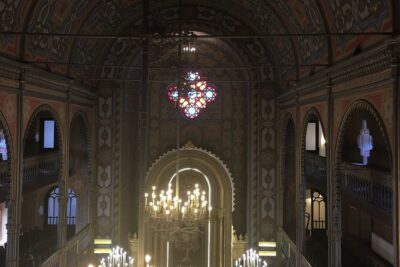
4h Jewish Legacy in Bucharest – Private Tour by Car and Walking
Read our review →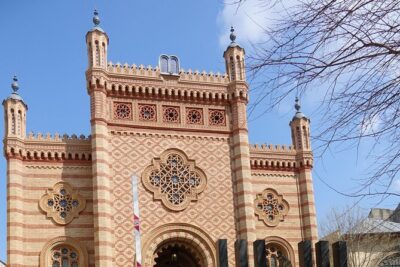
Browse the lists this tour appears in