
Reviewed · FOOD & DRINK
Private Bucharest: History & Food with Traditional Meal
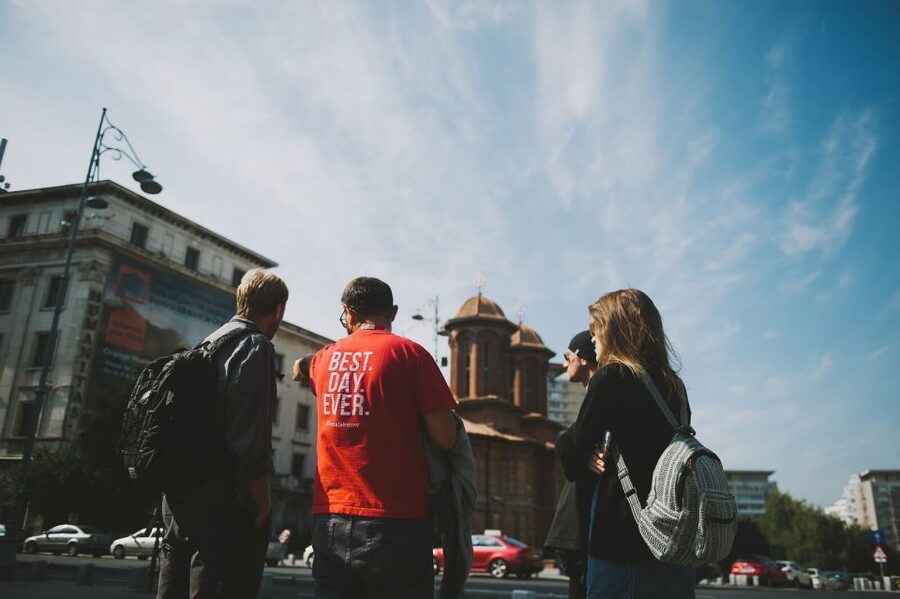
Bucharest makes the most sense when you taste it. This private four-hour tour links Revolution Square, Victory Street, and Old Town with the foods shaped by Ottoman, Balkan, Russian, German, and Austro-Hungarian influence. You finish at a historic inn for a three-course Romanian meal, beer, wine, or a soft drink.
I like the way the tour gives you a quick city primer without treating Bucharest as a row of monuments. I also like the private format, especially for families. Guides such as Elaina and Andra have been praised for answering questions, adjusting the pace for children, and explaining both architecture and food in clear terms.
The main consideration is that this is not a full food crawl. You get a covrig early on and a substantial meal at the end, but one guest expected more small tastings from the food description and found the meal was the main event.
In This Review
- Key points to know before you book
- Starting with a covrig at Revolution Square
- Walking Victory Street past royal and interwar Bucharest
- Old Town where East meets West
- The People’s Palace and the weight of Communist Bucharest
- Three courses at a traditional Bucharest hanu
- What the private format adds
- The guides are a major part of the experience
- Carbon-neutral travel with simple practical terms
- Who should book this Bucharest tour?
- FAQ
- How long does the Bucharest history and food tour last?
- Where does the tour meet?
- What language is the tour offered in?
- Is this a private tour?
- Is the Romanian meal included?
- Are extra drinks and food included?
- Can children join the tour?
- Can I cancel for a refund?
- Should you book it?
Key points to know before you book
- Revolution Square puts the 1989 revolution in context: You begin where Nicolae Ceausescu made the speech that helped spark his downfall.
- The food follows Romanian history: Covrig, mici, sarmale, ciorba, borscht, and schnitzel reflect different outside influences.
- The route covers several faces of Bucharest: Royal, French-inspired, medieval, Communist, and modern capitalist Bucharest all appear within four hours.
- The private setup suits families and curious first-time visitors: You can ask questions freely, slow down for photographs, and shape the conversation around your interests.
- The final meal is a three-course experience: It takes place in a traditional hanu, or inn, with a house beer, wine, or soft drink included.
- The tour is carbon neutral: It is run by an eco-certified, B Corp company that presents travel as a force for good.
Starting with a covrig at Revolution Square

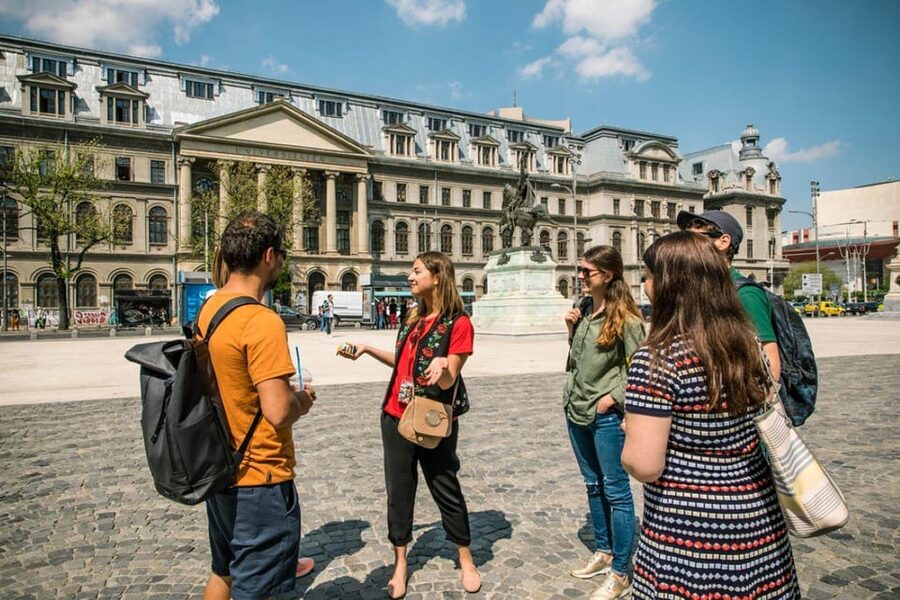
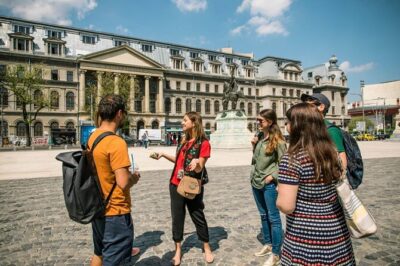
Meet your English-speaking guide at the Equestrian Statue of Carol I in Revolution Square. This is a useful starting point because Bucharest’s political story is concentrated around the square, once called Palace Square.
The former Royal Palace, now home to the National Museum of Art, faces the square. Nearby, the Romanian Athenaeum provides a grand concert-hall counterpoint, while the Athenee Palace recalls the years between the world wars, when diplomats, spies, journalists, and political operators gathered in Bucharest.
Your first bite is a covrig, a salty ring of baked dough. It is a daily snack for many Romanians and may have arrived with Habsburg or German merchants during the medieval period. It is a small food, but that is the point. You are not being handed a random sample. You are seeing how a familiar street snack can carry traces of older trade routes and foreign rule.
The square also gives your guide a chance to explain the 1989 revolution. From here, Ceausescu delivered a speech intended to rally support. The crowd turned against him, and the moment helped set the Romanian revolution in motion. You get a quick but useful way to understand why modern Bucharest can feel caught between royal ceremony, Communist power, and a new public life.
A few more Bucharest tours worth a look
- Taste Bucharest: A Food Lover’s Tour of Markets & Neighbourhoods
★ 5.0 · 689 reviews - Street Food’n’Culture Tour
★ 5.0 · 209 reviews - Wine Tasting in Bucharest
★ 5.0 · 183 reviews
Walking Victory Street past royal and interwar Bucharest
From Revolution Square, the route heads south along Victory Street, or Calea Victoriei. Its name refers to Romania’s victory in the 1871 War of Independence, though the full union of the country’s three principalities did not take place until 1918.
That distinction matters for food as much as politics. Moldova, Transylvania, and Muntenia developed their own customs and flavors. The tour describes these broad regional tendencies as sweet for Moldova, earthy for Transylvania, and spicy for Muntenia. You should treat this as a helpful introduction rather than a strict rulebook, since Romanian cooking varies from household to household.
Along the street, you see grand buildings tied to the interwar city. The Telephone Palace, the Military Circle, and the former National Theatre show the scale and confidence of Bucharest during that period. The Kretzulescu Church adds a different note, with its graceful form and long place in the city’s religious life.
I like this section because it prevents Bucharest from being reduced to its Communist past. The city’s identity also comes from royal ambition, commercial wealth, French cultural influence, Orthodox traditions, and the energy of the years between the world wars.
Your guide may spend more time on architecture if that interests you. Andra, for example, has been praised for pointing out architectural details and connecting them to the city’s changing governments. This is one reason the private format has value. You can ask why one building looks French, why another feels imperial, or how an old church survived beside newer construction.
Old Town where East meets West
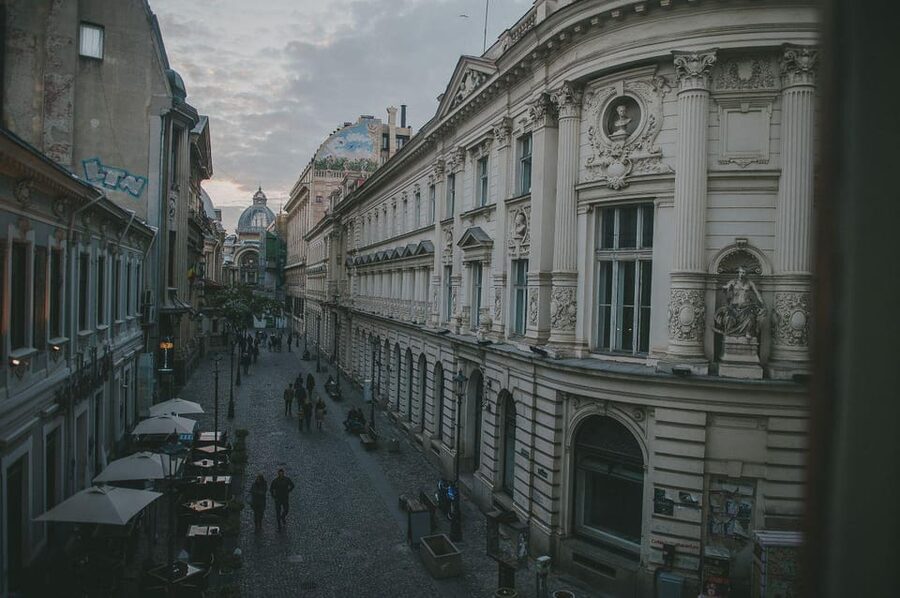
The route then turns into Bucharest’s Old Town, the medieval core and a historic meeting point between East and West. This is the section where the tour’s food theme becomes easiest to understand.
Ottoman pashas, Transylvanian princes, merchants, and local rulers all passed through this crossroads. Churches and mosques once stood near one another, and the city absorbed cooking methods and dishes from several directions.
Your guide connects the area with:
- Mici, skinless Balkan sausages usually associated with grilled meat and casual eating
- Sarmale, stuffed cabbage leaves linked to Ottoman cooking
- Borscht and ciorba, sour soups with Russian, regional, and broader Eastern European connections
- Schnitzel, a reminder of Austro-Hungarian influence
The value here is not simply learning a list of dishes. You begin to see Romanian food as a record of contact. The country was never sealed off from its neighbors, and its cooking reflects movement across borders, empires, and trading routes.
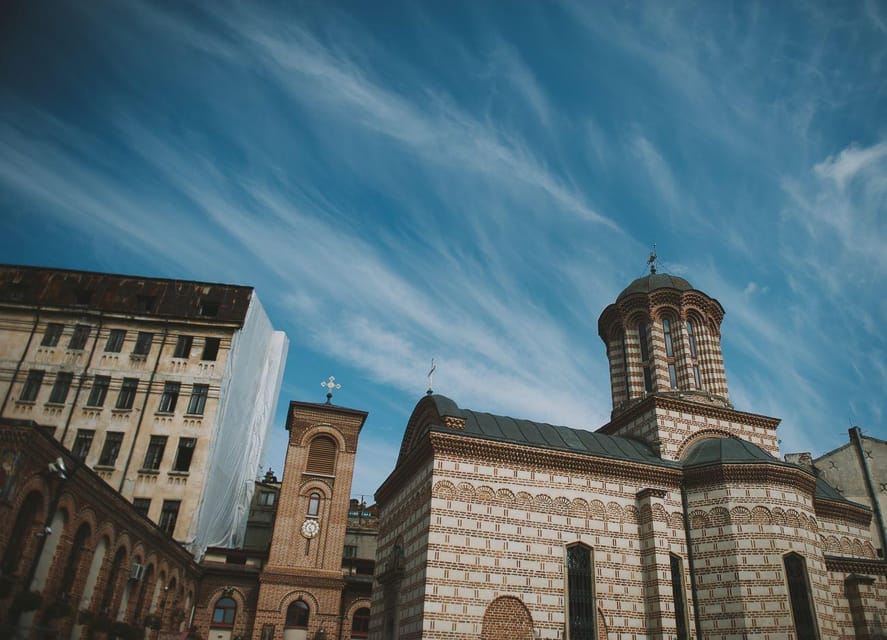
Old Town also offers a useful change in scale. Instead of broad avenues and state buildings, you move through lanes, passages, courtyards, and older commercial spaces. You may see princely courts, ornate interiors, quiet Orthodox religious spaces, and Hanul Lui Manuc, the famous wooden inn.
Hanul Lui Manuc is especially important to the story. A hanu was an inn where merchants could eat, sleep, trade, and meet. The building helps explain why food and travel are so closely linked in this part of Europe. Meals were not only private affairs. Inns were places where people, languages, money, and recipes crossed paths.
The Old Town portion is also where you should expect the most uneven footing and the most city noise. Casual clothing and comfortable walking shoes make sense. The supplied details do not give a precise walking distance, but the route is built around seeing central Bucharest on foot, so you should be ready to walk for much of the four hours.
The People’s Palace and the weight of Communist Bucharest
Before the final meal, you get a view of the People’s Palace, also known as the Palace of the Parliament. It was the center of Ceausescu’s effort to remake Bucharest on a vast scale.
The building is often described as the second-largest administrative building in the world, after the Pentagon. Its size is the story. It represents the money, labor, demolition, and political force used to reshape the capital during Communist rule.
You do not have a listed interior visit here, so do not book this tour expecting a detailed palace tour. Instead, the building works as a visual chapter in the city’s wider story. After royal and interwar grandeur, you see the monumental style of dictatorship. After the 1989 discussion at Revolution Square, you see the physical mark left by the regime that fell.
This is a strong choice for a first Bucharest tour because it gives you connections between places instead of presenting them as unrelated stops. The guide can explain how political power altered streets, neighborhoods, and the city’s sense of scale.
More food experiences in Bucharest:
- Discover Bucharest: Private Highlights and Traditional Food Tour
★ 5.0 · 86 reviews - Bucharest: Romanian Wine and Food Pairing Experience
★ 4.0 · 23 reviews - Cooking Class traditional food
★ 5.0 · 22 reviews - Bucharest: Street Food Tour with a Local Guide
★ 4.3 · 21 reviews
Three courses at a traditional Bucharest hanu
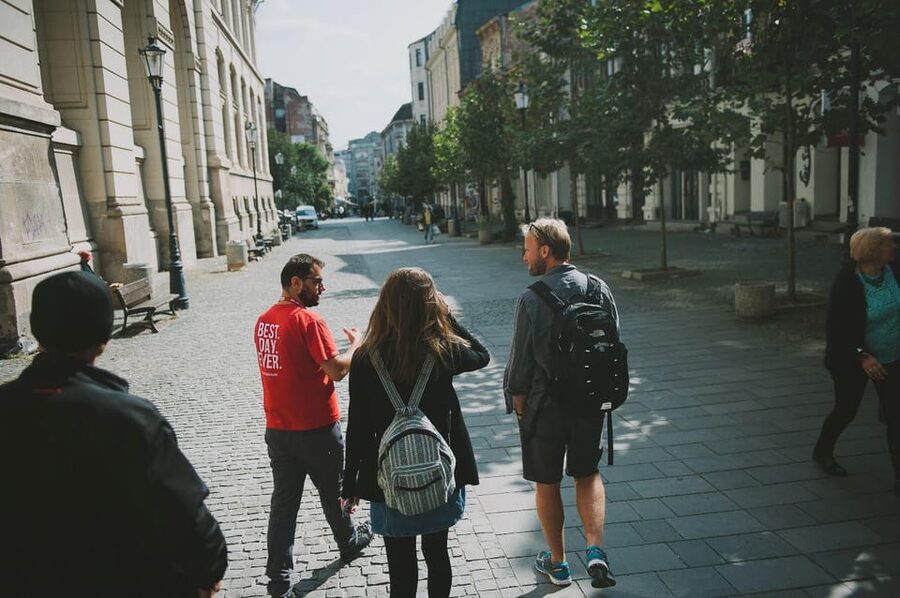
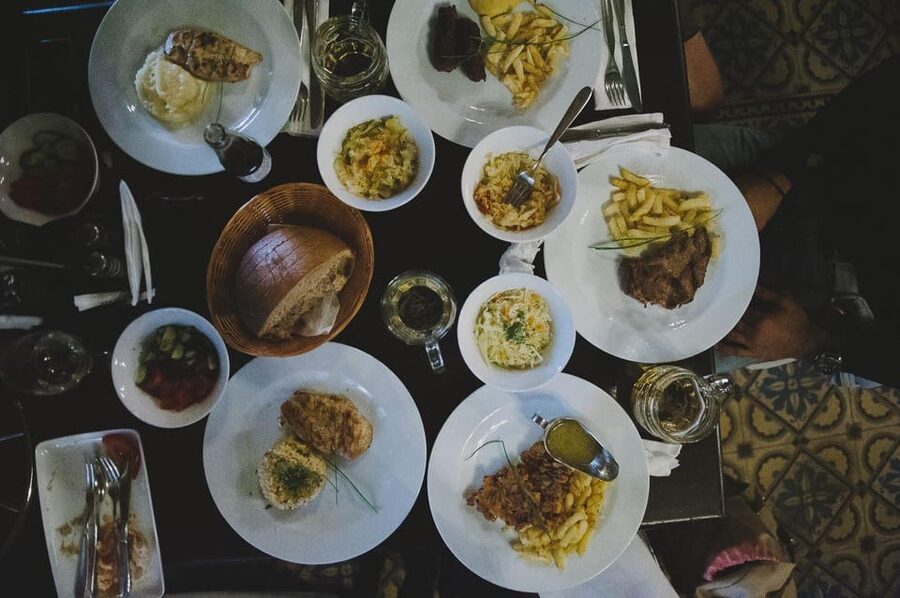
The tour ends at a traditional Romanian inn chosen for its setting and local character. Here you sit down to a three-course meal built around regional specialties. The meal is included, along with one house beer, Romanian wine, or soft drink.
This final stop gives you time to ask questions that are harder to cover while walking. You can discuss which dishes came from Ottoman cooking, which flavors are linked to Romania’s regions, and what Romanians eat in everyday life. Several guides have also been praised for offering practical food advice, and one past guide even helped a guest obtain recipes for favorite dishes.
The meal is described as plentiful, and it should be treated as the main food experience of the tour. You may receive several local delicacies across the courses, but the details of the exact menu are not specified. Menus can change, so do not book this expecting a fixed tasting lineup.
There is also a playful drink story. According to the tour, the ancient Dacian leader Burebista once banned wine production because so much wine was being consumed. The inventive Dacians then turned to beer. It is a light historical anecdote, but it gives your included drink a local connection. You can choose house beer, wine, or a soft drink, while any extra food or drinks cost more.
If you are hoping to sample many tiny portions from several restaurants, this may feel limited. If you prefer to finish a walking tour with a proper sit-down meal, the format works well. You get enough time to eat, talk, and digest the city’s story instead of rushing from one counter to the next.
What the private format adds
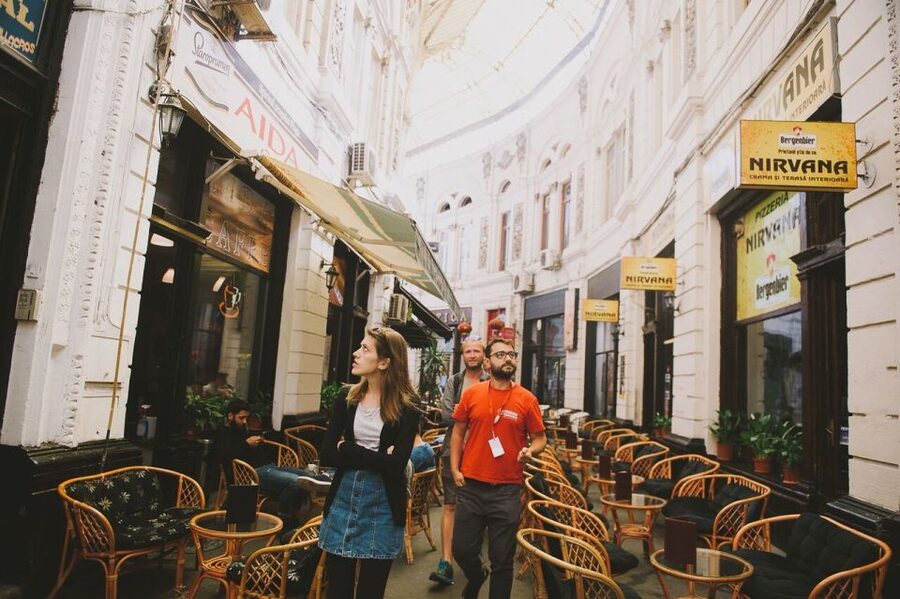
The price is $140 per person, which is not a budget city walk. The value depends on how much you want from a guide and how many people share the booking.
You are paying for a private group, a local English-speaking guide, a four-hour route, a three-course meal, and one included drink. You also avoid the fixed rhythm of a large group. That matters in Bucharest, where the best questions may be about small architectural details, family food traditions, or the difference between Romania’s regions.
Families are a particularly good match. A child under six can join free, as long as you tell the supplier when booking. One guide, Andra, was especially good at including an eight-year-old with information, pauses, and a manageable pace. Another guide, Elaina, was patient with a tired child dealing with jet lag.
You should still remember that private does not mean completely customized. The advertised route has a clear shape, beginning at Revolution Square and ending with the meal. Ask questions and enjoy the flexibility, but expect the main historical stops to remain part of the plan.
The tour also works well for a first full day in Bucharest. It gives you a basic map of the center, introduces the major periods of Romanian history, and points you toward foods to order later. If you already know the city well, the food connections and personal guide conversation may still offer something new, but the 101 introduction will naturally be most useful to a first-time visitor.
The guides are a major part of the experience
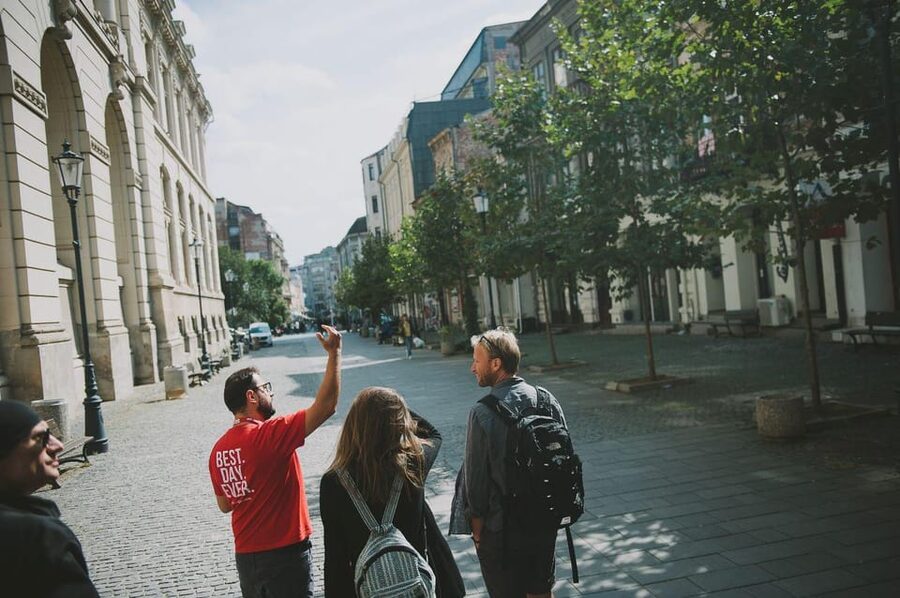
The strongest pattern in the available feedback is the quality of the guiding. Guides named in past departures include Andra, Andrei, Elaina, Ioanna, Mara, Monica, and Dana. Your guide will depend on the date, so you should not assume you will receive a particular person.
What you can reasonably expect is an English-speaking local guide who can connect history, buildings, food, and present-day Bucharest. The best guides on this route do not simply recite dates. They explain how the city changed under different rulers and governments, point out architectural details, answer food questions, and add practical suggestions for the rest of your stay.
That personal exchange is where this tour earns much of its price. You can ask about a dish before ordering it, pause for photographs, or spend more time on a period that interests you. The private setup also helps if your group includes children or if one member needs a slower pace.
Carbon-neutral travel with simple practical terms
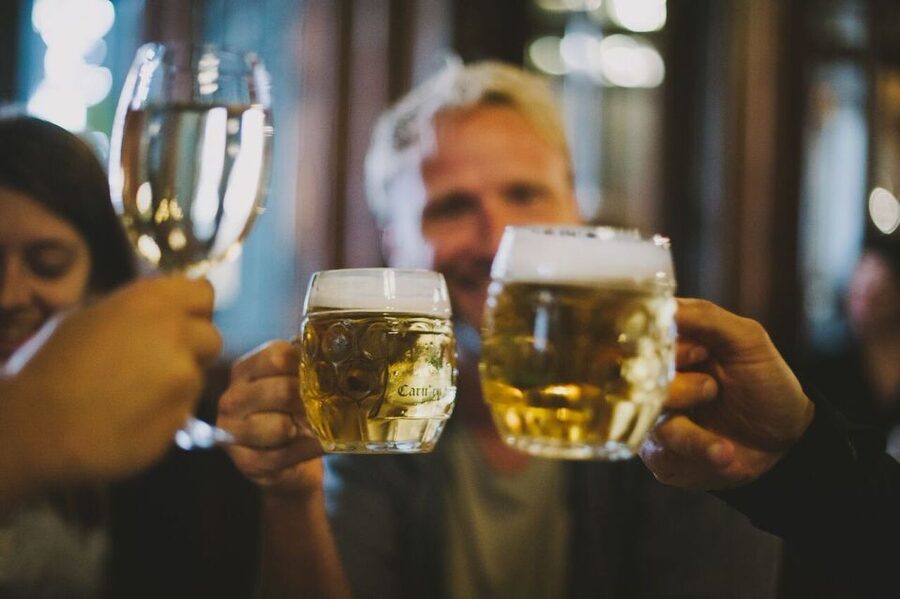
The operator is B Corp certified and describes the tour as carbon neutral. That does not change the route or meal, but it may matter if you want your city experiences to reflect a lower-impact travel policy.
The dress standard is casual. Wear comfortable clothing suited to four hours around the city, and choose shoes you can walk in. The tour is child-friendly, but the available information does not promise stroller access or a fully step-free route, so families with very young children should ask the supplier before booking.
English is the listed language. Cancellation is free up to 24 hours before the start for a full refund, and you can reserve now and pay later. Starting times depend on availability, so check the selected date rather than assuming a particular departure hour.
Who should book this Bucharest tour?
Book it if you want a first-day orientation with real historical context, a private guide, and a proper Romanian meal. It is especially well suited to couples, families, and small groups who prefer conversation to a fixed large-group script.
It is also a good fit if you are curious about why Romanian food tastes the way it does. The tour does not pretend that one dish represents the whole country. Instead, it shows how Balkan, Ottoman, Russian, German, and Austro-Hungarian connections appear at the table.
Think twice if your priority is a long restaurant crawl with many separate tastings. You get a covrig and a three-course meal, but the meal is the clear centerpiece. You may also want a different tour if you need a full interior visit to the People’s Palace, since this experience only includes a look at the famous building.
For $140 per person, I see the strongest value in the guide time and the private format, not in the quantity of food alone. If you want to arrive in Bucharest with a working sense of its streets, political past, architecture, and traditional dishes, this is a sensible way to begin.
FAQ
How long does the Bucharest history and food tour last?
The tour lasts four hours.
Where does the tour meet?
The meeting point is the Equestrian Statue of Carol I in Revolution Square, Sector 1, Bucharest 030167, Romania.
What language is the tour offered in?
The tour is offered in English with a live English-speaking guide.
Is this a private tour?
Yes. It is organized for a private group rather than a large shared group.
Is the Romanian meal included?
Yes. A three-course Romanian meal is included, along with one house beer, wine, or soft drink.
Are extra drinks and food included?
No. Additional food and drinks, souvenirs, and personal purchases are not included.
Can children join the tour?
Yes. The tour is child-friendly, and children under six may join free of charge. You need to tell the supplier when booking if you are bringing a child under six.
Can I cancel for a refund?
You can cancel up to 24 hours in advance for a full refund. The tour also offers a reserve-now, pay-later option.
Should you book it?
Book this tour if you want Bucharest explained through both its streets and its food. The route is broad, the private guide makes it flexible, and the final meal gives you time to connect the stories to actual Romanian dishes. Skip it only if you want a dedicated food crawl, a People’s Palace interior visit, or the lowest possible price.
More Historical Tours in Bucharest
- Bucharest: 3-Hour Dark History Tour with a Local
★ 4.9 · 301 reviews - Bucharest: Small Group History, Art & Secrets Tour
★ 4.7 · 152 reviews - Guided Walking Tour of Historical Bucharest
★ 5.0 · 84 reviews - Bucharest Jewish Heritage | Holocaust Memorial | Private Car Tour
★ 5.0 · 38 reviews
Recently added around Bucharest
- 6h Communism Tour in Bucharest with Ceausescu Mansion★ 4.5 · 6 reviews
- From Bucharest : Day Trip to Peles, Dracula’s Castle, Brasov★ 4.7 · 6 reviews
- Bears Sanctuary, Dracula Castle and Brasov City – Full Day Trip from Bucharest★ 5.0 · 6 reviews
- Transfagarasan Road Private Day Trip from Bucharest / The Best Road in the World★ 5.0 · 6 reviews
- Dracula Private Tour★ 5.0 · 6 reviews
- Bucharest : Wednesday, Dracula & Peles 3 Castles Tour 1 Day★ 4.7 · 6 reviews
- Hiking thought the best mountain villages in Romania-Private tour from Brasov★ 5.0 · 6 reviews
- Bucovina Painted Monasteries & Transylvania Tour: 4-Day Private★ 5.0 · 6 reviews
Food & Drink, compared.
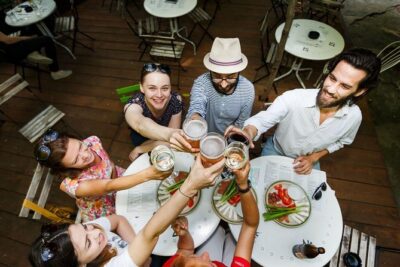
Taste Bucharest: A Food Lover’s Tour of Markets & Neighbourhoods
Read our review →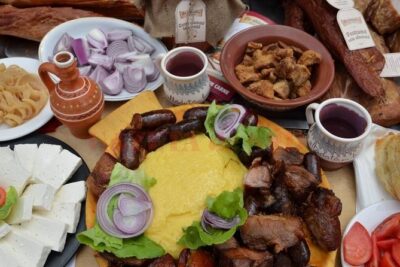
Discover Bucharest: Private Highlights and Traditional Food Tour
Read our review →
Traditions in Bucharest: Village Museum and Wine Tasting Tour
Read our review →Browse the lists this tour appears in