
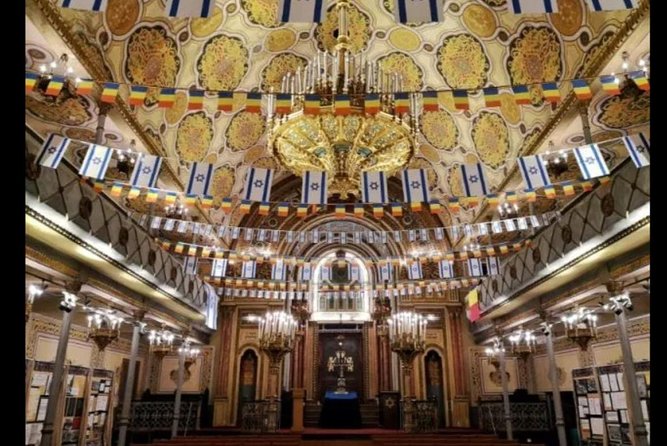
Reviewed · JEWISH HERITAGE TOURS
4h Jewish Legacy in Bucharest – Private Tour by Car and Walking
The most moving part of this four-hour tour is the way it connects living Jewish practice with Bucharest’s painful 20th-century past. You visit the active Choral Temple, the former Holy Union Temple, the Holocaust Memorial, and the Yiddish State Theatre, with a private guide filling in the links between them.
I like the hotel pickup and private car, which saves time in a spread-out city. I also like the chance to meet Jewish guides at the temple and museum, rather than relying only on a driver’s commentary. The main concern is access: religious holidays, current events, and theatre rehearsals can close some sites, and the listed admission fees are extra.
In This Review
- Key points at a glance
- Why Jewish Bucharest deserves a dedicated morning
- The Choral Temple, Bucharest’s working synagogue
- Inside the Holy Union Temple and Jewish history museum
- The Holocaust Memorial and Romania’s difficult record
- The Yiddish State Theatre and living Yiddish culture
- What the private car adds to the experience
- Price, entrance fees, and what you receive
- Closures, holidays, and how to protect your expectations
- Who will get the most from this four-hour tour
- Should you book Jewish Legacy in Bucharest?
- FAQ
- How long is the Jewish Legacy in Bucharest tour?
- What time does the tour start?
- Is hotel pickup available?
- Is transportation included?
- Is the tour private?
- Is the tour offered in English?
- Are entrance fees included?
- Can the Jewish State Theatre always be visited?
- Can I cancel for a full refund?
Key points at a glance
- The Choral Temple is still active, with daily services in a smaller hall.
- The Jewish history museum occupies the 1836 Holy Union Temple, an important surviving synagogue building.
- The Holocaust Memorial addresses Romania’s role directly, including the word zachor, meaning remember.
- The private vehicle keeps the four-hour route practical, with hotel pickup and drop-off offered.
- Radu and Sebastian are among the guides named in past tours, while Marcel has helped explain the Yiddish Theatre.
- The Jewish State Theatre visit depends on rehearsals, so the exact program can change.
Why Jewish Bucharest deserves a dedicated morning
Bucharest’s Jewish story is easy to miss if you simply walk the Old Town. The old Jewish quarter does not present itself as one tidy tourist district, and many synagogues are no longer in regular use. That is exactly why this tour can be useful: the guide gives you the historical map while the car carries you between surviving landmarks.
You begin at 10:00 am and spend about four hours moving between four main stops. The format is part sightseeing tour, part history lesson, and part conversation with people connected to the city’s Jewish institutions.
The tour is private, so only your group takes part. That matters here. At a Holocaust memorial or a synagogue, you may want to pause, ask a direct question, or spend less time on a place that interests you less. A fixed group tour rarely gives you that freedom.
The strongest guides appear to be the experience’s greatest asset. Radu, a retired chemical engineer born in Bucharest, has led several tours with detailed knowledge of Romania and Jewish life. Sebastian is also named as an English-speaking guide who made people feel comfortable. At the Yiddish Theatre, Marcel has provided a personal explanation of its role. You should not assume you will receive a particular guide, but these names show the level of local background available.
More Jewish heritage tours in Bucharest:
- Bucharest Jewish Heritage | Holocaust Memorial | Private Car Tour
★ 5.0 · 38 reviews - Half-Day Jewish Heritage Walking Tour in Bucharest
★ 5.0 · 20 reviews - The Jewish heritage of Bucharest – half day walking tour
★ 5.0 · 15 reviews
The Choral Temple, Bucharest’s working synagogue
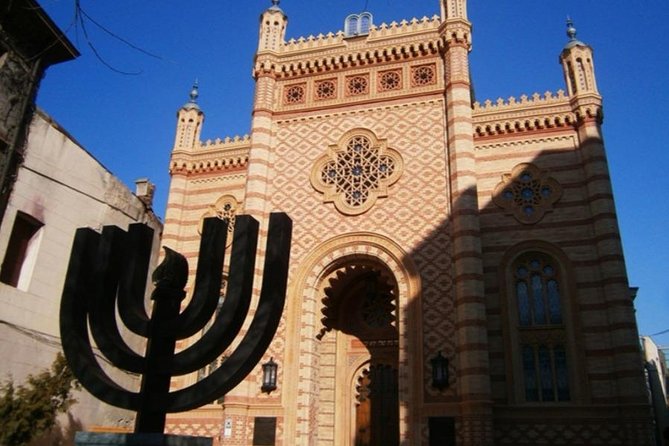
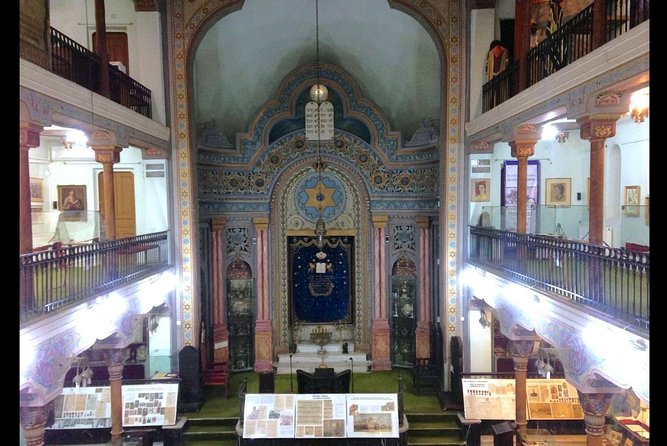
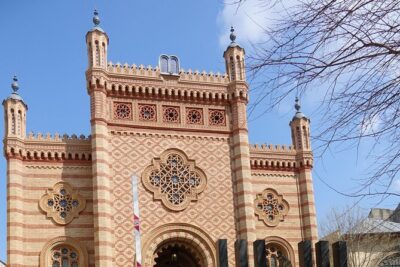
The Choral Temple is the natural starting point. Its design echoes Vienna’s Leopoldstadt-Tempelgasse Great Synagogue, giving the building a grand Central European appearance that may surprise you in Bucharest.
The building was badly damaged by the far-right Legionaries and Nazis. It was restored after the Second World War, in 1945, and remains one of the few active synagogues in Bucharest and Romania. Daily services continue in a smaller hall, so this is not merely a preserved monument.
That distinction matters. You are looking at a place of worship with a present-day religious life, not just an attractive old façade. The tour summary says you meet a Jewish guide at the temple, which adds a useful human layer to the visit. A guide connected to the community can explain how the building is used now and why access may vary.
Plan on about an hour here. The entrance fee is listed separately at 30 RON, about €6 per person. Bring modest expectations about a guaranteed visit inside. Religious activity, holidays, or security arrangements can affect what you see, and one past outing found only one of three synagogues open. The operator offered a partial refund in that case, but it is wiser to treat the schedule as flexible.
Inside the Holy Union Temple and Jewish history museum
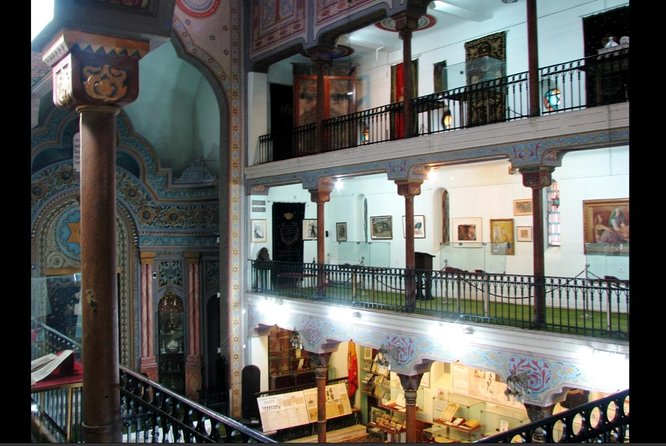
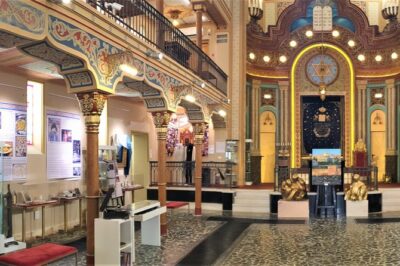
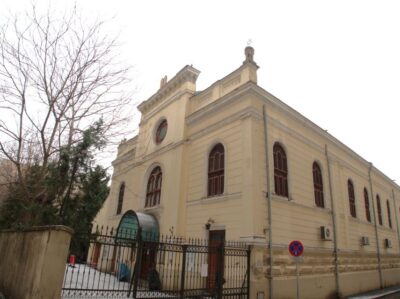
The second major stop is the Museum of History of the Jewish Community, housed in the former Holy Union Temple. Built in 1836, the synagogue became a museum in 1978.
The setting does much of the teaching. Instead of viewing objects in a modern gallery cut off from their original use, you encounter Jewish history inside a building made for the community itself. Exhibits cover the daily life of Bucharest’s former Jewish population, along with Jewish religious objects and ceremonial pieces.
A major part of the collection was assembled by Moses Rosen, Romania’s chief rabbi from 1964 to 1994 and the museum’s founder. That gives the museum a clear link to the postwar Jewish community, not only to the centuries before it.
You have about an hour here, and the listed admission fee is 30 RON, around €6 per person. The tour information says you meet a Jewish guide at the museum. I would pay close attention to that exchange. The displays may show what has survived, but a community guide can help explain customs, institutions, and the gap between Bucharest’s once-large Jewish population and its smaller community today.
The museum is likely the most useful stop for anyone who wants more than architecture. The Choral Temple gives you a functioning religious site. This museum gives you objects, context, and a clearer picture of how Jewish Bucharest operated before the war.
The Holocaust Memorial and Romania’s difficult record
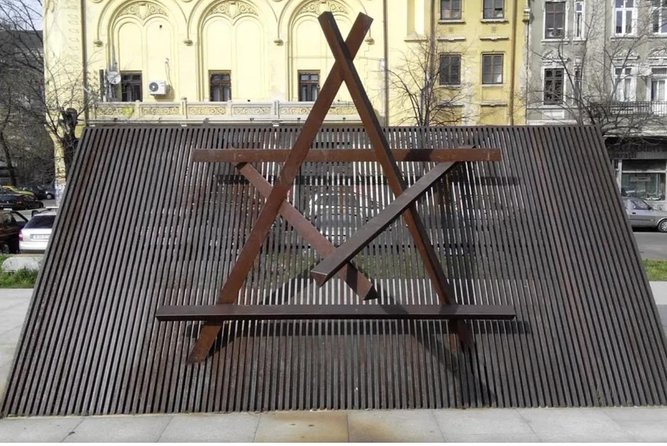
The Holocaust Memorial was unveiled in October 2009. Its importance is not only commemorative. It marks Romania’s formal recognition of its own role in the destruction of Jewish life during the Holocaust.
The Wiesel Report, commissioned by the Romanian government, concluded that no country outside Germany was responsible for the deaths of more Jews than Romania. That is a hard fact, and a good guide should not soften it into a vague story about wartime suffering. Past tours have been praised for discussing Romania’s role plainly, which is an important quality on a subject this serious.
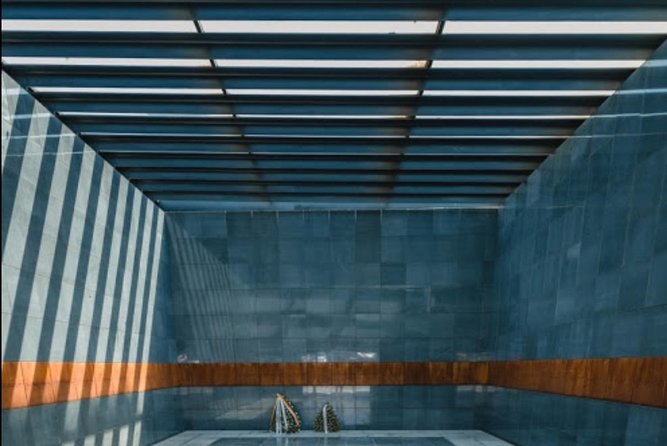
The memorial includes a column marked with a single Hebrew letter on each side. Read together, the letters form zachor, or remember. You will also see a hall of remembrance and plaques listing many Romanian Holocaust victims.
This stop is free, but it may be the emotional center of the morning. Give yourself time to read the names and inscriptions. The private format helps here, since you do not have to rush along behind a large group.
The memorial also changes how you see the earlier synagogues. Their restoration is not just a story of handsome buildings brought back to life. It is tied to a community that was attacked, reduced, and then partly rebuilt. The guide’s role is to make that connection clear without turning the visit into a string of dates.
More walking tours in Bucharest:
- Bucharest: City Highlights Guided Walking Tour
★ 4.9 · 1,482 reviews - Bucharest Highlights Walking Tour
★ 5.0 · 469 reviews - Free walking tour of Brasov in English
★ 4.9 · 302 reviews - Bucharest: Ghost Stories & Romanian Mythology Walking Tour
★ 4.9 · 287 reviews
The Yiddish State Theatre and living Yiddish culture
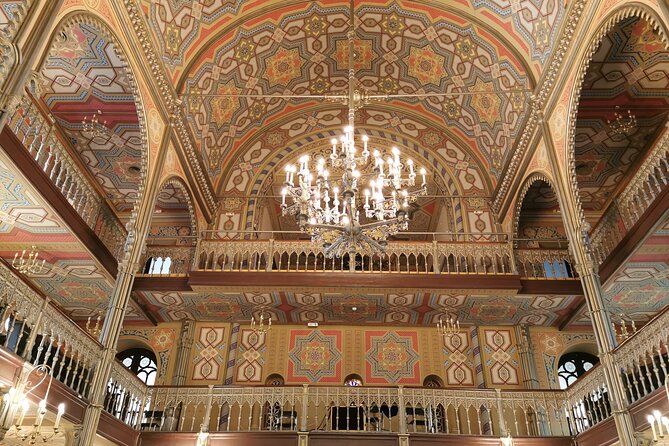
The final listed stop is the Teatrul Evreiesc de Stat, or Jewish State Theatre. It is presented as an edifice of Hebrew culture, though its strongest cultural connection is to Yiddish performance. One past visit included time with Marcel and an explanation of the theatre as the only theatre in the world presenting plays entirely in Yiddish.
That is a remarkable detail, but you should keep your expectations practical. This is not necessarily a performance ticket or a full backstage visit. The theatre can be visited only when there are no rehearsals, and the entrance fee is listed at 25 RON, about €5 per person.
Some people will find the theatre less compelling than the synagogues and memorial. I can understand that. If your main interest is religious architecture or Holocaust history, the theatre may feel like a shorter cultural stop. If you care about language, Jewish performance, and the survival of a public Jewish identity, it adds an important final note.
The visit also shows why this tour is more than a synagogue checklist. Jewish life in Bucharest included worship, education, commerce, museums, and theatre. Even when a building’s original function has changed, the cultural thread has not disappeared completely.
What the private car adds to the experience
The private, climate-controlled vehicle is not a glamorous extra. It is the practical backbone of the route.
Bucharest’s Jewish landmarks are spread across the city, and the tour combines driving with walking at the sites. With hotel pickup and drop-off, you avoid working out several public transport connections during a short morning. The tour is near public transportation, but the car is more convenient if you want the guide’s commentary between stops.
The drive also lets the guide point out the former Jewish part of town. One detailed outing included a drive through that area and lunch at an Israeli-style restaurant, though lunch is not listed as an included part of the tour. You should not count on a meal unless you arrange it separately, but you can ask the guide about nearby options.
The vehicle is especially useful in hot or cold weather. You are not spending the whole four hours walking between sites, and older visitors or anyone with limited stamina can save energy for the museum and memorial.
There is a tradeoff. A car can make the old Jewish quarter feel like something viewed through a window. If you want a long, slow neighborhood walk, this is not that sort of tour. It is a focused route that uses driving to fit several landmarks into four hours.
Price, entrance fees, and what you receive
The price is $130.97 per person. That is a serious amount for a four-hour Bucharest tour, especially before admission fees. The listed extra charges are 30 RON for the Choral Temple, 30 RON for the Jewish community museum, and 25 RON for the Jewish State Theatre, for a total of 85 RON per person if all three are open and visited.
In return, you receive an English-speaking professional guide and private transportation. Pickup and drop-off at your hotel add real value, especially when the tour is booked for a small group. Group discounts are offered, so the cost may make more sense when shared among several people.
I would judge the price mainly by the guide and access rather than by the number of stops. Four landmarks alone do not make this a bargain. A strong guide who can explain Bucharest’s Jewish institutions, the Holocaust, and the current community can make the morning worthwhile. A weaker day, with several closures and limited substitute sightseeing, can feel expensive.
The tour’s own history shows both possibilities. Radu has been praised for his command of Romanian and Jewish history, while Sebastian has been described as an engaging local guide. Another outing included useful time with museum and theatre staff. Those personal explanations are what justify the price.
The operator also says the tour is booked, on average, 32 days ahead. I would reserve early if the Jewish heritage of Bucharest is a central part of your visit. At the same time, do not book at 7:30 am for a 10:00 am departure and expect a reliable last-minute arrangement. One booking failed because no guide was available for such a short-notice request.
Closures, holidays, and how to protect your expectations
Access is the main uncertainty. The Jewish State Theatre may be closed because of rehearsals. The Mamular Synagogue is not open every day. Religious holidays can also close synagogues and museums, and current events have affected access to some sites.
This is not a reason to reject the tour. It is a reason to ask for confirmation before you go, especially if seeing the inside of the Choral Temple is essential. The operator has compensated for an outing affected by religious closures, but you should not depend on a refund or assume every substitution will match the original plan.
The tour can still have value when a synagogue is closed. A private guide may drive through the former Jewish quarter, explain the exterior architecture, or spend more time on the memorial and museum. One such day included only one open synagogue, yet the guide used the vehicle route and commentary to add context.
I would also leave room in your schedule after the tour. Four hours is approximate, and a discussion at the museum or theatre can take longer than planned. The 10:00 am start gives you a clear morning timetable, but the exact finish may depend on access and traffic.
Who will get the most from this four-hour tour
I would choose this experience if you want Jewish Bucharest explained by someone who knows the city personally. It suits first-time visitors who want the major Jewish landmarks without spending a full day arranging transport and opening hours.
It is also a good choice for families or small groups with mixed interests. The car adds general Bucharest commentary, while the synagogues, museum, memorial, and theatre give the morning a clear theme. You do not need to be Jewish to find the route worthwhile. It offers a way to understand what Bucharest was like before the Second World War and how much changed afterward.
You may want a different plan if you require guaranteed interior access at every stop. You may also find the price high if you are comfortable using public transportation and reading museum material on your own. For independent walkers, the private car is less important than the guide, so the value depends heavily on the quality of the person assigned.
Wear comfortable shoes for the walking portions, and bring patience. This is a serious subject, not a quick photo circuit. The best parts are likely to come from the guide’s explanations, the Jewish staff at the temple and museum, and the quiet time you give the memorial.
Should you book Jewish Legacy in Bucharest?
Book it if Jewish history is a priority and you value a private English-speaking guide more than the lowest possible price. The Choral Temple, Holy Union Temple museum, Holocaust Memorial, and Yiddish State Theatre create a thoughtful four-hour arc from religious life to memory and cultural survival.
Before paying, confirm which sites are expected to be open and ask whether the Jewish Theatre can be visited that day. If the operator can provide Radu, Sebastian, or another guide with strong local knowledge, the price is easier to defend. If several sites are closed, ask what replacement time or partial refund arrangements apply.
My call: this is a worthwhile specialist tour, but not a guaranteed synagogue-inside-every-time outing. Book it for the guide, the access, and the honest discussion of Romania’s past. Go in knowing that the schedule may bend.
FAQ
How long is the Jewish Legacy in Bucharest tour?
The tour lasts approximately four hours.
What time does the tour start?
The scheduled start time is 10:00 am.
Is hotel pickup available?
Yes. Pickup and drop-off at your hotel are offered.
Is transportation included?
Yes. Private transportation in a climate-controlled vehicle is included.
Is the tour private?
Yes. Only your group participates in the activity.
Is the tour offered in English?
Yes. A professional English-speaking guide is included.
Are entrance fees included?
No. The listed extra fees are 30 RON for the Choral Temple, 30 RON for the Museum of History of the Jewish Community, and 25 RON for the Jewish State Theatre. The Holocaust Memorial is free.
Can the Jewish State Theatre always be visited?
No. The theatre can be visited only when there are no rehearsals.
Can I cancel for a full refund?
Yes, if you cancel at least 24 hours before the local start time. Cancellations or changes made less than 24 hours before the start time are not refunded or accepted.
Recently added around Bucharest
- 6h Communism Tour in Bucharest with Ceausescu Mansion★ 4.5 · 6 reviews
- From Bucharest : Day Trip to Peles, Dracula’s Castle, Brasov★ 4.7 · 6 reviews
- Bears Sanctuary, Dracula Castle and Brasov City – Full Day Trip from Bucharest★ 5.0 · 6 reviews
- Dracula Private Tour★ 5.0 · 6 reviews
- Transfagarasan Road Private Day Trip from Bucharest / The Best Road in the World★ 5.0 · 6 reviews
- Bucharest : Wednesday, Dracula & Peles 3 Castles Tour 1 Day★ 4.7 · 6 reviews
- Hiking thought the best mountain villages in Romania-Private tour from Brasov★ 5.0 · 6 reviews
- Bucovina Painted Monasteries & Transylvania Tour: 4-Day Private★ 5.0 · 6 reviews
Jewish Heritage Tours, compared.
Bucharest Jewish Heritage | Holocaust Memorial | Private Car Tour
Read our review →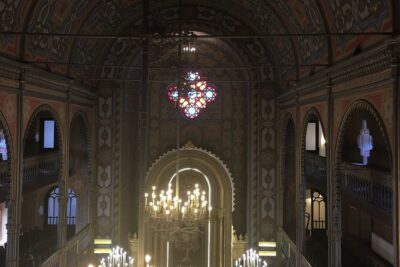
Browse the lists this tour appears in