
Reviewed · COMMUNISM TOURS
Bucharest Communism: From Lenin to Ceausescu
Bucharest’s communist past is written across its grand boulevards, oversized government buildings, churches, and quiet squares. This 2.5-hour walk follows that story from the Palace of Parliament to Revolution Square, linking huge political ideas with the daily realities of ration cards, secret police, forced demolition, and fear.
I like the way the tour connects architecture with ordinary life, rather than treating communism as a string of dates. I also like the final focus on the 1989 revolution, which gives the walk a clear dramatic shape. The main drawback is that entrance tickets are not included, so the experience is primarily an outdoor walking tour unless you decide to pay separately for admission where available.
In This Review
- Key points to know before you book
- Starting beside the Palace of Parliament
- The Palace of Parliament and the price of grandeur
- Antim Monastery and the older Bucharest beneath the new city
- Patriarchal Cathedral, fountains, and Piața Unirii
- Old Town and the question of what communism preserved
- University Square and the road toward revolution
- Food rationing and the mechanics of daily fear
- Ceaușescu’s rise and the shape of his dictatorship
- Revolution Square and the final 20 minutes
- Guides, language, and the human side of the walk
- Is $23 a fair price for 2.5 hours?
- Who should book this Bucharest communist history tour?
- My verdict: book it for context, not just monuments
- FAQ
- How long does the Bucharest Communism tour last?
- How much does the tour cost?
- Where does the tour begin?
- Where does the tour finish?
- Which languages are available?
- Is the Palace of Parliament entrance ticket included?
- Are food and drinks included?
- How early should I arrive?
- Can I cancel for a full refund?
- Can I reserve now and pay later?
Key points to know before you book
- The route runs from Unirii to Revolution Square: You begin near the Coffee Shop Constituției and finish at one of Bucharest’s most important political sites.
- The Palace of Parliament anchors the story: The building reflects Nicolae Ceaușescu’s megalomania and the destruction required to create his grand boulevard.
- You get daily-life details, not just political theory: Food limits included 500 grams of cheese, 10 eggs, and 1.5 kilograms of meat per month within a tightly controlled system.
- The tour explains the path to dictatorship: It covers Marxist ideas, the Bolshevik Revolution, Romania’s earlier social order, Ceaușescu’s poor background, and his rise to power.
- Guides bring personality to a grim subject: Alex and Horia are praised for clear explanations, humor, patience, and answers to difficult questions.
- Revolution Square provides the emotional finish: The tour ends with Ceaușescu’s last days, his trial, execution, and the forces that brought down his regime.
Starting beside the Palace of Parliament
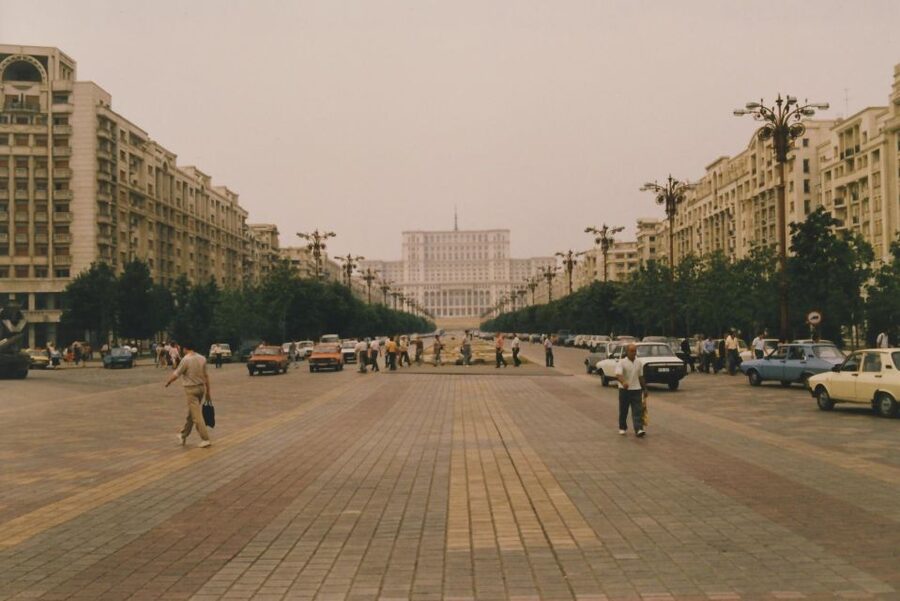
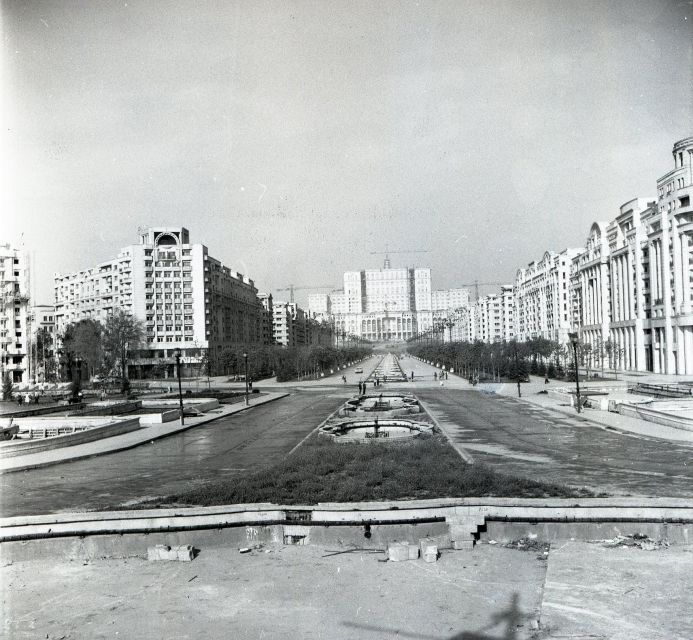
Meet at Bulevardul Unirii 5, next to the Coffee Shop Constituției. Arrive 10 minutes early. The opening location is useful because it places you beside the broad Socialist Victory Boulevard, one of the last and most ambitious communist building projects in Bucharest.
The boulevard was designed to lead the eye toward the Palace of Parliament. Its scale is the first lesson of the tour. This was not simply a road improvement or a new civic center. It was part of a plan to remake central Bucharest around the authority of one ruler.
The guide uses the setting to explain how the city was changed. Three neighborhoods and about 40,000 households were demolished for the project. That figure is easier to understand when you are standing in front of the result: a government complex and monumental avenue built at a vast human cost.
The opening can feel more political than scenic. You are not starting in a charming old street or at a museum full of objects. You are starting with concrete, open space, and power expressed through size. That makes the first part less intimate, but it also makes the subject impossible to miss.
More communism-era tours in Bucharest:
- The Real tour of Communism
★ 5.0 · 666 reviews - Life under Communism
★ 5.0 · 358 reviews - 3-Hour Guided Tour of Communist Bucharest
★ 4.9 · 303 reviews
The Palace of Parliament and the price of grandeur
The Palace of Parliament is the tour’s largest physical subject and one of Bucharest’s defining sights. It is the second-largest administrative building in the world, a fact that helps explain the scale of Ceaușescu’s ambition.
The scheduled stop includes about 20 minutes of guided sightseeing. An entrance ticket is not included, so confirm the arrangements if you want to go inside. The tour can still explain the building from outside, but an exterior look cannot show the huge interior rooms, materials, and government functions that make the palace such a striking place.
The important point is not just that the building is large. The palace was part of a political message. Ceaușescu wanted the state to appear permanent, powerful, and centered on him. The wide boulevard and cleared neighborhoods created a stage for that message.
I find this part most useful when the guide connects the building to the people who lost their homes. A monumental façade can seem abstract when viewed as a photo opportunity. The story of 40,000 households brings the project back to individual families and forced change.
The building also gives you a sense of contradiction. Communist Romania promoted equality in theory, yet the ruling elite received access and privileges that ordinary people did not. Ceaușescu’s public image emphasized sacrifice and national strength, while the palace consumed enormous resources during years of shortage.
Antim Monastery and the older Bucharest beneath the new city
The walk continues to Antim Monastery, with roughly 10 minutes for a visit and explanation. This stop matters because it shows that Bucharest did not begin with communism.
The monastery provides a religious and architectural counterpoint to the state buildings. Communist authorities promoted an official ideology hostile to independent religious power, even though Romania’s churches and religious institutions did not simply vanish. A stop here helps you see the tension between older traditions and the new political order.
You should expect this visit to be brief. Ten minutes is enough for context and a look around, but not for a long architectural study. Its value comes from the contrast: a historic religious site set within a city reshaped by modern political force.
The guide also uses the earlier city to explain how Romanian society was organized before communist rule. One review specifically praised the way the tour began with Hegel, Marx, and Engels, then moved through the feudal system in Eastern Europe and the Bolshevik Revolution. That approach is useful if you want the causes explained, not simply the results listed.
Patriarchal Cathedral, fountains, and Piața Unirii
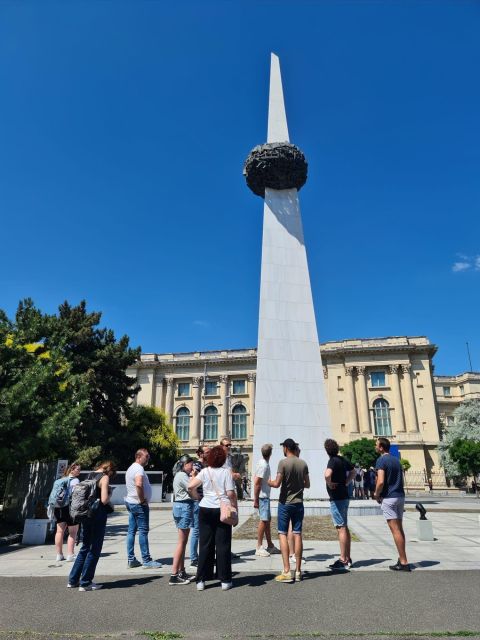
Next comes the Patriarchal Cathedral, with about 20 minutes for a visit, sightseeing, and walking. Like Antim Monastery, it gives the tour a way to discuss religion, authority, and the older identity of Bucharest.
The cathedral stop is paired with movement through the city rather than treated as a separate museum visit. You get a look at how religious landmarks survived beside broad communist-era planning and public spaces.
The route then passes the Bucharest Fountains and Piața Unirii. These are short stops, about five minutes each, so think of them as visual markers rather than full visits. The fountains help you read the modern boulevard as a designed political space, while Piața Unirii shows how transport, public movement, and monumental planning meet in central Bucharest.
This stretch can feel less focused if you prefer interiors and objects. I would treat it as a city-reading exercise. The guide is helping you notice the relationship between open space, state power, and the old neighborhoods that were erased or reorganized.
A few more Bucharest tours worth a look
- Bucharest: Dracula’s Castle, Peles Castle, & Brasov Old Town
★ 4.5 · 17,858 reviews - Bucharest: Dracula Castle, Peles Castle & Brasov Old Town
★ 4.6 · 10,891 reviews - Bucharest: Dracula’s Castle, Peleș Castle & Brașov Day Trip
★ 4.5 · 5,919 reviews - Bucharest: Palace of Parliament Tickets and Guide
★ 4.3 · 3,182 reviews
Old Town and the question of what communism preserved
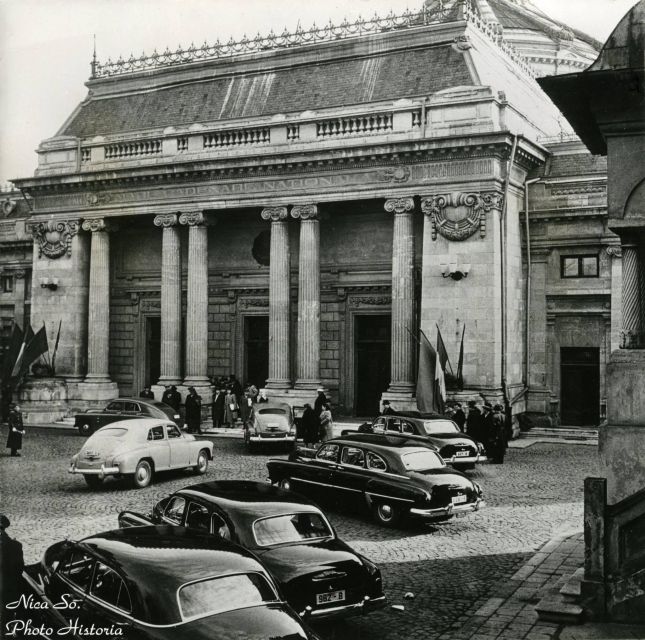
The tour spends about 15 minutes in Bucharest’s Old Town. This is a welcome change of scale after the palace and boulevard. Narrower streets and older buildings make the city feel less like a political diagram.
The stop also creates a useful question: what happened to historic Bucharest under communist rule? The answer was not simply total destruction. Some areas survived, while others were altered, neglected, or overshadowed by new construction.
This is one of the better places to ask your own questions. The guides, especially Alex and Horia in the available tour accounts, are praised for handling questions about both the communist period and Bucharest itself. If you want to understand how the city you see today relates to the city Ceaușescu tried to build, this is a good moment to ask.
University Square and the road toward revolution
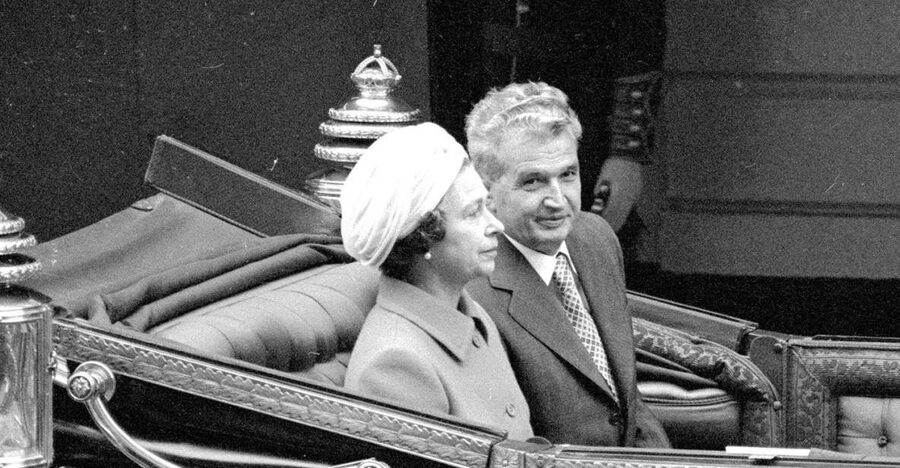
University Square receives about five minutes, but its role in the political story is larger than the stop length suggests. The square is tied to public life, protest, and the movement of people through the center of Bucharest.
From here, the tour moves toward the Royal Palace and Romanian Athenaeum. Each receives about 10 minutes. These buildings add national and cultural context to the walk, showing that Romania’s public identity was not created by the communist government alone.
The Royal Palace and Athenaeum also help frame the final stop. They represent institutions and traditions that existed before Ceaușescu’s dictatorship. Placing them on the same route as the palace and Revolution Square lets you compare different ideas of Romania: monarchy, culture, religion, socialist rule, and popular revolt.
The route includes plenty of walking between stops. At $23 per person, that is part of the value. You are not paying only for a talk in one building. You are paying for a guided connection between places that can look unrelated when visited on your own.
Food rationing and the mechanics of daily fear
The strongest part of a political tour is often the material detail. Here, the headline figures are stark: about 2,000 calories a day, 500 grams of cheese, 10 eggs, and 1.5 kilograms of meat per month.
Those numbers help you understand that dictatorship was not only about speeches, surveillance, and portraits of the leader. It reached into kitchens, shopping queues, family meals, and private conversations.
The guide also explains the role of the secret police. That subject can become vague when presented only as a symbol of oppression. It is more useful when tied to the practical habits people developed under surveillance: caution, silence, and uncertainty about whom to trust.
You also learn about the odd combination of education, punishment, and time suggested by the tour’s central themes: four classes, six years in prison, and 25 years of dictatorship. These figures point to the long arc of Ceaușescu’s life and rule, from a limited formal education and early imprisonment to a quarter-century at the top of Romania’s political system.
The guide’s use of humor is worth noting. Paula specifically praised the way humor kept the material engaging. That does not make the subject light. Used well, humor gives you a pause from the grim facts and helps the explanations remain clear over two and a half hours.
Ceaușescu’s rise and the shape of his dictatorship
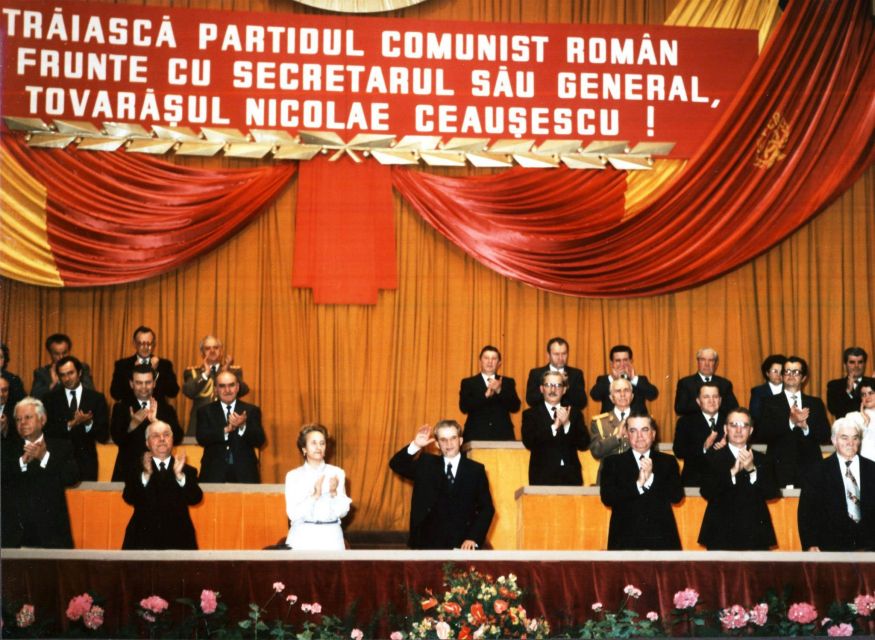
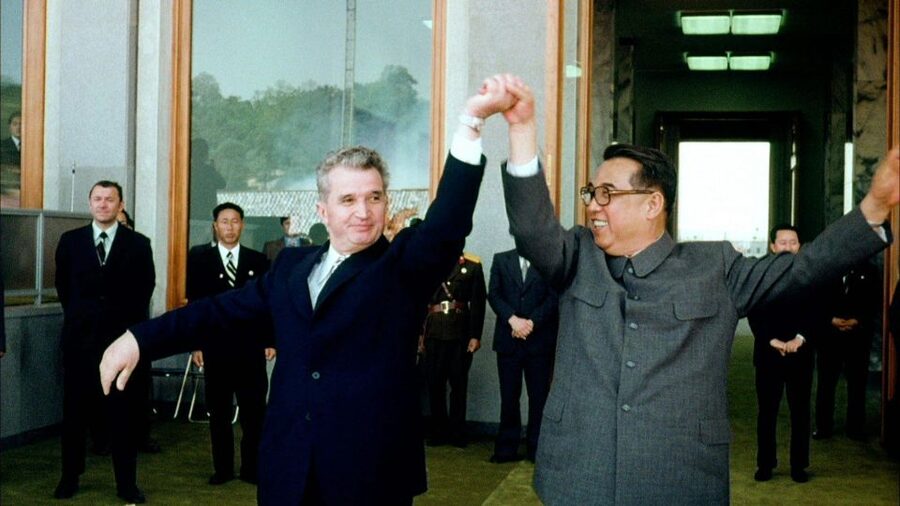
The tour presents Ceaușescu as a man from a poor background who rose through the communist system and eventually built a highly personal form of rule. His regime is described as one of the most oppressive in the Eastern Bloc, with comparisons to the dynastic rule of North Korea.
That comparison is meant to show how far Ceaușescu moved beyond ordinary party leadership. His image became central to public life, and the state was shaped around loyalty to him and his family.
The guide places this rise within wider European events. You learn about Marxist and Hegelian ideas, the Bolshevik Revolution, and the development of communist rule in Romania. This context matters because it prevents the dictatorship from appearing as an isolated accident caused by one unusual man.
At the same time, the tour does not lose sight of Ceaușescu’s personal decisions. The demolition program, the palace, food shortages, and intense control over society all show how ideology became policy.
I would recommend this section to anyone who wants more than a sightseeing walk. It asks you to think about how a political system can move from promises of equality to coercion, scarcity, and personal rule.
Revolution Square and the final 20 minutes
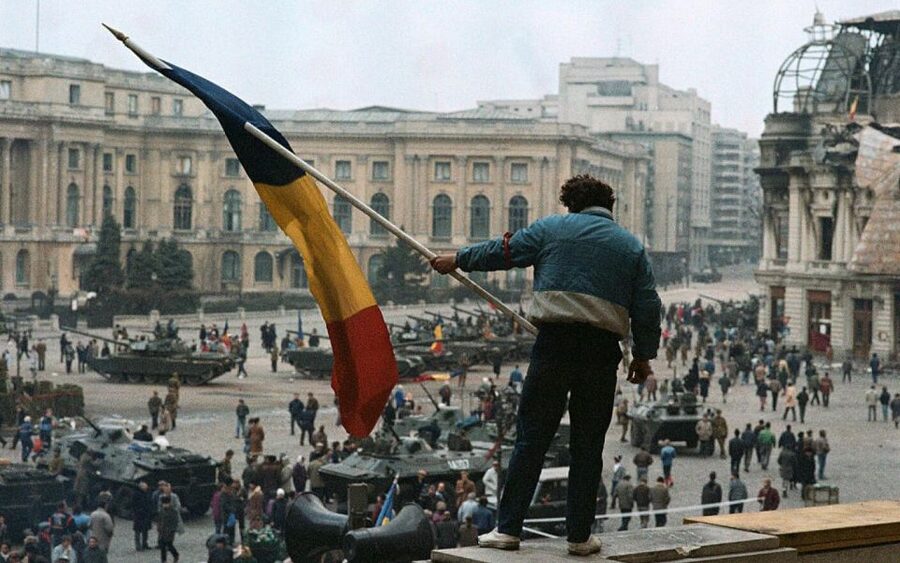
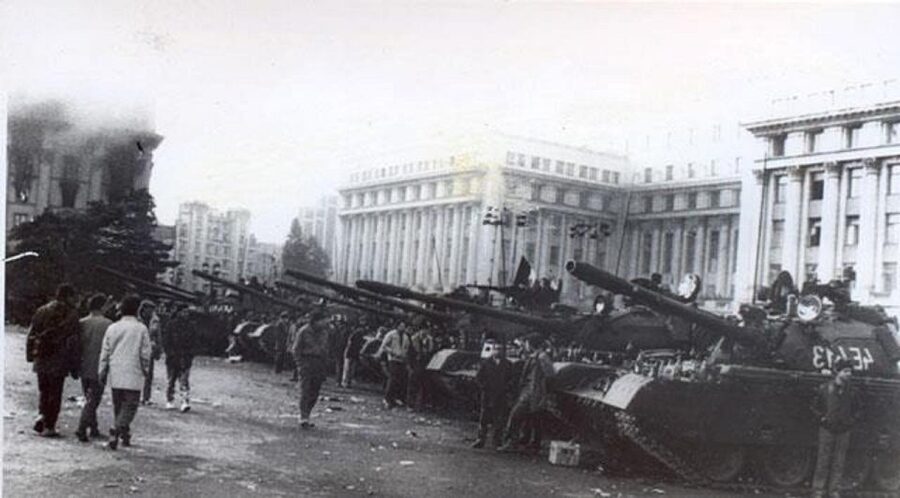
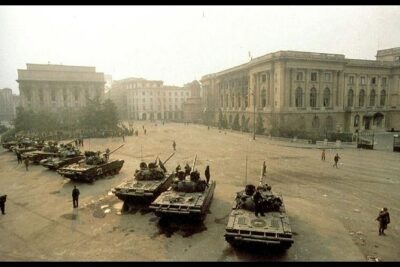
The tour finishes at Revolution Square, with about 20 minutes devoted to the events that ended Ceaușescu’s regime. This is the most dramatic part of the walk.
You hear how a group of agitators plotted the end of the dictatorship, then follow the last days of the government, the revolution, the trial, and the execution. The conclusion works because the earlier stops have already established what people were living under. By the time you reach Revolution Square, the political collapse has a human and physical setting.
One of the best features of the route is that it does not stop at the word revolution. It addresses the trial and execution as well, giving you the final chapter rather than leaving the story at the moment of protest.
Jessica described the revolution section as her favorite part, and I understand why. It brings together the boulevard, the palace, the shortages, surveillance, and Ceaușescu’s personal rule. The tour’s narrative has somewhere to go, and Revolution Square supplies the proper ending.
The square can be busy with traffic and city activity. Do not expect a silent memorial setting. Its power comes from knowing what happened there and from seeing the ordinary urban space where history turned.
Guides, language, and the human side of the walk
The experience is offered in English or Romanian. Guides named in the available feedback include Alex and Horia. You cannot assume which guide you will receive, but the qualities associated with both are useful clues: clear explanations, patience with questions, strong command of political history, and an easy sense of humor.
Alex is repeatedly described as friendly, passionate, and good at making the subject understandable. Horia is praised for giving detailed explanations and even recommending books. That last detail matters if the tour leaves you wanting to read further.
This is not a scripted sightseeing circuit that simply points at buildings. The best version of the walk depends on the guide’s ability to connect broad ideas with lived experience. Ask about food, school, work, religion, propaganda, the secret police, and the 1989 revolution. The tour is well suited to questions.
The route is also interactive in tone. That makes it a good choice if you learn better through conversation than through a museum label. If you want a quiet, self-directed visit, you may prefer to explore the same sights alone and read at your own pace.
Is $23 a fair price for 2.5 hours?
At $23 per person, I consider this good value for a focused Bucharest history walk. You receive a local guide for two and a half hours, a route covering major political and cultural sites, and a coherent explanation of Romania’s communist period.
The value is strongest if you are new to Bucharest. The tour helps you understand why the central streets look the way they do and gives meaning to buildings you might otherwise photograph without context.
The price does not include food, drinks, or entrance tickets. That keeps the base cost low, but budget extra if you want to enter paid sites. The listed stops are short, so I would not book this expecting long interior visits at every location.
The free cancellation period runs until 24 hours before the start, and you can reserve now and pay later. Those options are useful if your Bucharest schedule is still moving around.
Who should book this Bucharest communist history tour?
You should consider it if you enjoy political history, modern European history, architecture, or stories about how governments shape daily life. It is also a strong choice for anyone who has already seen Bucharest’s Old Town and wants a clearer explanation of the city beyond its cafés and historic façades.
The tour suits adults and older teenagers who can handle difficult subjects such as repression, shortages, forced demolition, imprisonment, and execution. It is not a light city stroll, even though the guides use humor to keep the pace human.
I would be more cautious if your main goal is to enter the Palace of Parliament or spend a long time inside religious and cultural buildings. The route includes those places, but most stops are brief and entrance fees are separate.
My verdict: book it for context, not just monuments
I recommend this tour if you want Bucharest to make more sense. The Palace of Parliament becomes more than a huge building, the boulevards become evidence of forced change, and Revolution Square becomes the final scene of a story that began decades earlier.
The strongest reasons to book are the clear political framework, the specific food-ration details, the discussion of 40,000 demolished households, and the careful treatment of Ceaușescu’s final days. Alex and Horia appear to bring warmth and humor to a difficult subject, though guide assignment is not guaranteed.
Book it early in your Bucharest visit if possible. The route will give you useful context for later walks through the city. Skip it only if you want a purely architectural tour or a long indoor visit at the Palace of Parliament.
FAQ
How long does the Bucharest Communism tour last?
The tour lasts 2.5 hours.
How much does the tour cost?
The listed price is $23 per person.
Where does the tour begin?
It begins at Bulevardul Unirii 5, next to the Coffee Shop Constituției.
Where does the tour finish?
The tour finishes at Revolution Square in Bucharest.
Which languages are available?
The live guide can conduct the tour in English or Romanian.
Is the Palace of Parliament entrance ticket included?
No. Entrance tickets are not included in the activity price.
Are food and drinks included?
No. Food and drinks are not included.
How early should I arrive?
You should arrive 10 minutes before the activity begins.
Can I cancel for a full refund?
Yes. You can cancel up to 24 hours in advance for a full refund.
Can I reserve now and pay later?
Yes. The activity allows you to reserve your place and pay later.
Recently added around Bucharest
- 6h Communism Tour in Bucharest with Ceausescu Mansion★ 4.5 · 6 reviews
- From Bucharest : Day Trip to Peles, Dracula’s Castle, Brasov★ 4.7 · 6 reviews
- Bears Sanctuary, Dracula Castle and Brasov City – Full Day Trip from Bucharest★ 5.0 · 6 reviews
- Dracula Private Tour★ 5.0 · 6 reviews
- Transfagarasan Road Private Day Trip from Bucharest / The Best Road in the World★ 5.0 · 6 reviews
- Bucharest : Wednesday, Dracula & Peles 3 Castles Tour 1 Day★ 4.7 · 6 reviews
- Hiking thought the best mountain villages in Romania-Private tour from Brasov★ 5.0 · 6 reviews
- Bucovina Painted Monasteries & Transylvania Tour: 4-Day Private★ 5.0 · 6 reviews
Communism Tours, compared.
Bucharest Essential Tour: Old Town, Calea Victoriei & Communism
Read our review →
Communism in Bucharest – Landmarks, Museum & Communist Appetizers
Read our review →
Museum of Communism Ticket with Communist Coffee
Read our review →Browse the lists this tour appears in