
Reviewed · FOOD & DRINK
Private Tour – Food, Culture, History & Traditions
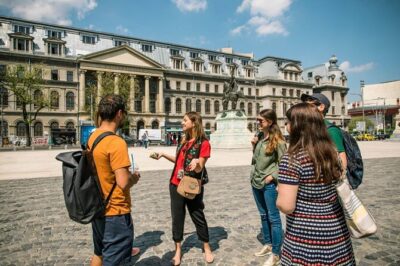
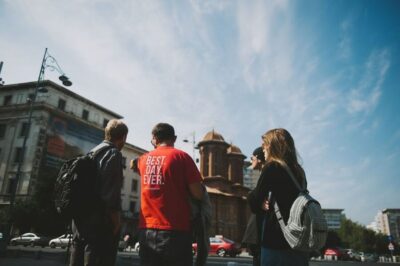
Bucharest reveals itself best on foot, where grand banks, royal halls, quiet villas, old monasteries, and strange back passages share the same few streets. This private tour links those pieces with Bianca, a former journalist who uses buildings and personal stories to explain Romania’s past. I like the thoughtful route, which moves from the trading streets of Old Town to the Armenian Quarter, and I like that the price includes a full two-course Romanian meal rather than just a quick snack.
The private format is another real plus. You can slow down for photos, shift the start time, and ask Bianca to linger where your interest leads. The main consideration is the pace: this is about 6 kilometers on foot over four to five hours, and Bianca can be soft-spoken in noisy streets, so pay close attention or use the provided audio device when your group has more than four people.
In This Review
- Key points to know before booking
- A smart first morning in Bucharest
- Old Town, where food and trade set the scene
- Stavropoleos, CEC, and Bucharest’s old center
- Calea Victoriei, Bucharest’s grand avenue
- Revolution Square and the end of royal Bucharest
- Villas along Dacia Boulevard
- School stories and the Armenian Quarter
- Icoanei Garden and Bucharest’s stranger stories
- Why the private format matters
- Price, pace, and what you receive
- Who should book this Bucharest walking tour?
- Should you book it?
- FAQ
- How long does the private Bucharest tour last?
- How far do you walk?
- What food is included?
- Are drinks included?
- Where does the tour start and end?
- Is this a private tour?
- What happens if the weather is poor?
Key points to know before booking
- A 6-kilometer walk with food built in: The route covers central Bucharest on foot, ending with a two-course meal of Romanian starters and a main dish.
- Bianca brings a journalist’s eye: She connects architecture, politics, culture, and everyday life instead of treating each building as a separate photo stop.
- Private means flexible: Your group alone takes part, with room to adjust the pace, starting time, and level of detail.
- The route covers several Bucharest eras: You move from medieval and merchant streets to royal architecture, communist history, and the Armenian neighborhood.
- Most stops are viewed from outside: The listed attractions have no admission fee, but this is mainly a walking and storytelling experience rather than a series of interior visits.
- Plan for comfortable shoes: The route is long for a half-day outing, and a minimum level of fitness is required.
A smart first morning in Bucharest
I would book this tour near the beginning of a Bucharest stay. It gives you a useful map of central Bucharest, explains the city’s mixed architectural character, and leaves you at University Square, known as Kilometer 0. From there, you can continue exploring on your own.
The start is at Bulevardul Ion C. Brătianu 36, near Old Town. The finish is at University Square on Bulevardul Regina Elisabeta. That point-to-point design is helpful. You are not returned to the starting place, but you do finish in a central area with good access to the rest of the city.
The route lasts about four to five hours. The sightseeing stops add up to much less than that, so the remaining time is used for walking between neighborhoods, conversation, food, photos, and explanations. This is not a hurried checklist. It works best if you want a city orientation with plenty of context.
A few more Bucharest tours worth a look
- Taste Bucharest: A Food Lover’s Tour of Markets & Neighbourhoods
★ 5.0 · 689 reviews - Street Food’n’Culture Tour
★ 5.0 · 209 reviews - Wine Tasting in Bucharest
★ 5.0 · 183 reviews
Old Town, where food and trade set the scene
The first stop, Old Town, lasts about 30 minutes. Instead of treating it as a collection of pretty façades, Bianca places it in the story of Bucharest’s trading life. This was an area where goods changed hands, and it is also linked with the invention of mici, the small grilled meat rolls that are one of Romania’s best-known foods.
That opening is well chosen. Food gives you an easy way into Romanian culture, while the old streets introduce the city’s commercial past. Ask Bianca to explain the local food traditions in more detail if that is what interests you.
The Old Town portion is not a museum visit. Admission is free, and the value comes from the explanation, street details, and the way the first stop frames the rest of the route. Streets may be lively and noisy, so stay close enough to hear clearly.
Stavropoleos, CEC, and Bucharest’s old center
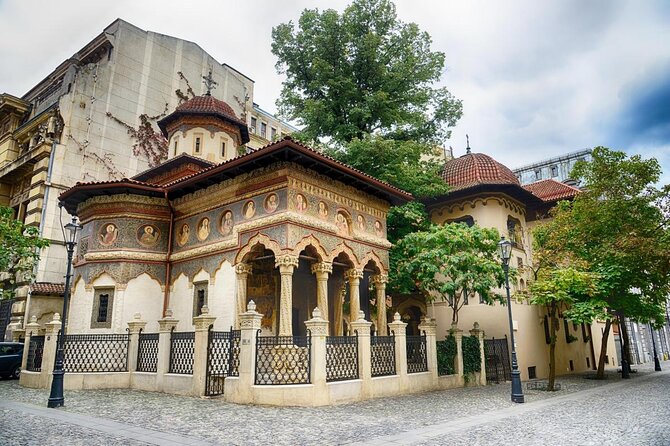
A short walk brings you to Stavropoleos Monastery, an 18th-century Romanian Renaissance building. The stop is listed at about three minutes, so expect a brief look and an explanation rather than a long visit.
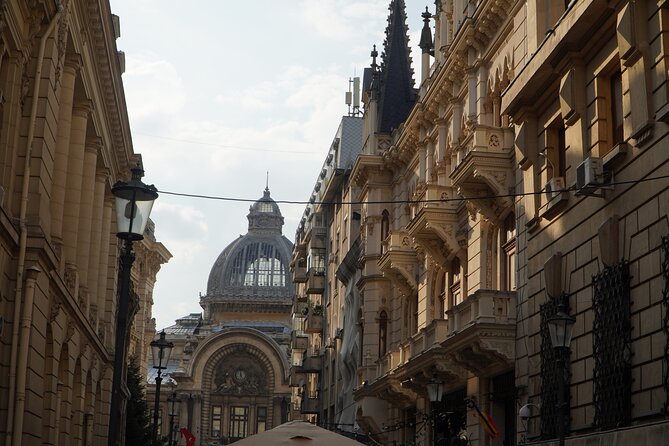
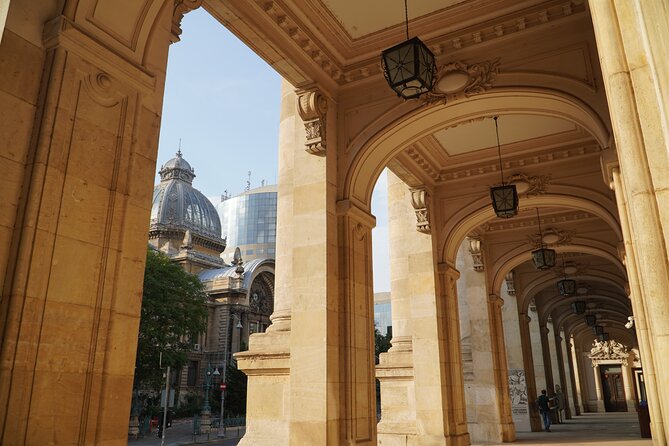
Nearby, Palatul CEC introduces another side of the city. This eclectic palace was built at the end of the 19th century for CEC Bank. Its ornate exterior makes a strong contrast with the monastery’s older religious style. In a few steps, you see how Bucharest absorbed different design ideas as it grew.
The Macca-Villacrosse Passage is given about five minutes. It is one of Bucharest’s most attractive covered passages, with a more intimate scale than the broad avenues nearby. This is a good place for photographs and for noticing how commercial spaces were once designed to encourage people to linger.
The next stop is the BNR Palace, associated with the National Bank of Romania and the former Marmorsch Blank Bank, now converted into a hotel. Taken together, these stops show Bucharest as a city of finance, trade, religion, and changing ownership. I like this compact sequence because it keeps the architecture tied to real use. These are not just handsome façades. They tell you who had money, where it moved, and how the city changed.
Calea Victoriei, Bucharest’s grand avenue
Calea Victoriei receives about 30 minutes, and it is one of the tour’s central stretches. The avenue has been the heart of Bucharest since the 19th century, so it offers a clear view of the city’s ambitions during its period of modernization.
Here, look for the contrasts. Historic buildings sit beside later additions, and elegant façades share space with signs of a changing urban center. Bianca’s architectural explanations are especially useful along this avenue because the city’s design influences are not always obvious at first glance.
The tour then turns toward Pasajul Victoriei and Pasajul Englez. These passages have a more colorful and discreet past. Pasajul Englez once served as a brothel with a convenient entrance from the main avenue, a place where the king and upper-class patrons could indulge away from public view.
That story adds a little humor and plenty of human detail. Grand avenues often hide less respectable histories, and Bucharest is no exception. The stop is short, about five minutes, but it keeps the tour from becoming too polished or formal.
More food experiences in Bucharest:
- Discover Bucharest: Private Highlights and Traditional Food Tour
★ 5.0 · 86 reviews - Private Bucharest: History & Food with Traditional Meal
★ 5.0 · 34 reviews - Bucharest: Romanian Wine and Food Pairing Experience
★ 4.0 · 23 reviews - Cooking Class traditional food
★ 5.0 · 22 reviews
Revolution Square and the end of royal Bucharest
Piata Revolutiei is one of the most important political stops. This is where Nicolae Ceausescu gave his final speech as the 1989 revolution began. The stop lasts about ten minutes, giving Bianca time to explain the setting and the events connected with it.
For me, this is the point where the tour’s architecture becomes political history. The buildings around you are not merely examples of style. They formed the stage for the end of Romania’s communist leadership. If you have only a short time in Bucharest, a clear explanation here can help you understand later visits to museums and former communist sites.
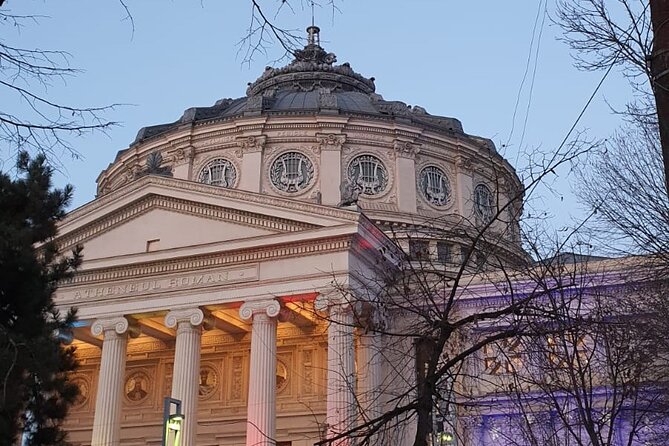
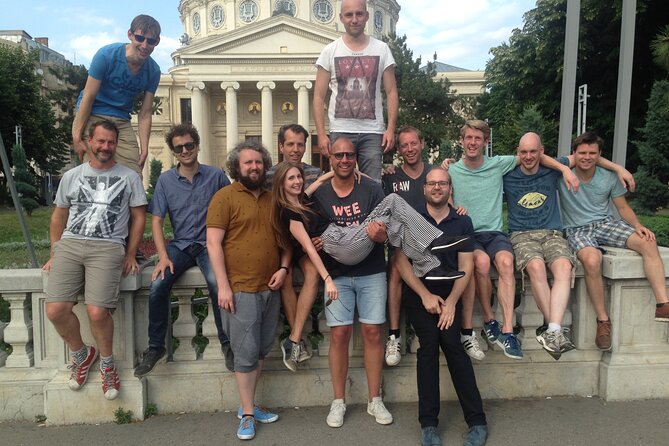
Nearby, the Romanian Athenaeum receives about five minutes. It is one of Bucharest’s most admired buildings, and its rounded form and decorative exterior make it an easy favorite for photos. The stop is brief, so do not expect a full concert-hall visit.
The Royal Palace is next, now home to the National Art Museum. Again, you see it from the outside as part of the walking route. The building gives you a direct link to Romania’s royal period, following the communist-era story at Revolution Square. That movement through monarchy, dictatorship, and modern Romania is one of the tour’s strongest features.
Villas along Dacia Boulevard

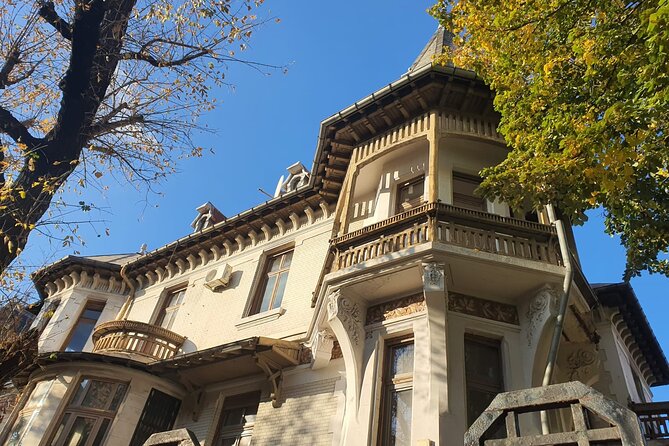
The walk continues along Bulevardul Dacia, where the focus shifts from public monuments to private homes. You will see large villas that illustrate the Neo-Romanian architectural style, a look that draws on local forms while also reflecting wider European design trends.
This section makes the tour feel less like a standard central-city circuit. Famous monuments are useful, but residential streets often explain a city just as well. The villas show how wealthy families expressed status, taste, and ideas about Romanian identity.
The stop lasts around 20 minutes. That is enough time to notice details without turning the walk into a technical architecture lecture. If you enjoy façades, balconies, rooflines, and small decorative touches, this will likely be one of the more satisfying parts of the route.
School stories and the Armenian Quarter
Colegiul National Scoala Centrala is a 19th-century boarding school for girls. The building is surrounded by eerie stories, giving the tour another change of tone. The stop lasts about five minutes, so the emphasis is on the school’s setting and the tales attached to it.
From there, the route reaches the Armenian Quarter, where you spend about 30 minutes. This is one of the most distinctive parts of the experience. The neighborhood contains older buildings, local history, and less obvious corners that are easy to miss if you stick only to Bucharest’s major avenues.
Bianca’s route gives you a chance to see a more residential side of the city. The Armenian Quarter is not presented as a grand monument zone. Its appeal lies in the accumulated details, the neighborhood’s identity, and the stories that do not fit neatly into a standard royal or communist timeline.
This is also where the private format matters. On past outings, Bianca has changed the pace when people wanted more time for photographs or showed interest in a particular architectural feature. Families can benefit too. She has adapted the walk for a four-year-old, though you should still consider the total distance before booking with a young child.
Icoanei Garden and Bucharest’s stranger stories

The final listed stop is Gradina Icoanei, where local beliefs once held that witches cast spells not far from the area. The stop lasts about ten minutes.
It is a fitting ending for a route that mixes formal history with rumor, food, religion, politics, and neighborhood lore. You are not getting a single tidy version of Bucharest. You are seeing how a city is built from official events and the stories people keep alive around them.
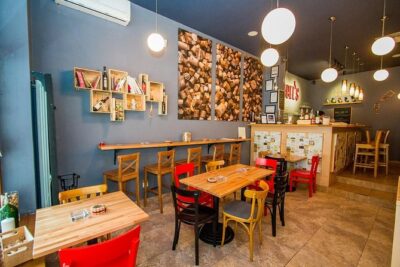
After this section, the experience includes a full meal of two courses. The first course is a platter with cheeses, charcuterie, and other Romanian starters, followed by a main dish. Alcohol, soft drinks, and other beverages are not included, so budget separately for what you want to drink.
Some past outings have also included pastries and coffee along the way, but the guaranteed food inclusion is the two-course lunch or dinner. The meal is a major part of the value, especially if you want an introduction to Romanian cooking rather than another generic stop at a cafe.
Why the private format matters
This is a private activity, so only your group takes part. That changes the feel of the walk. You can ask questions without worrying about holding up a large group, and Bianca can adjust the pace to your interests.
The tour has received a perfect rating from all 18 submitted evaluations, with 100 percent recommending it. The praise focuses most strongly on Bianca’s warmth, historical explanations, flexibility, and ability to connect buildings with larger events. One especially useful detail is her background as a former journalist. That helps explain why the tour links architecture with politics and personal experience rather than simply reciting dates.
There is one practical sound issue to keep in mind. Bianca can be quiet at times, especially beside traffic or city noise. If your group has more than four people, audio devices are provided so everyone can hear while keeping a comfortable distance. For a small private group, stay near her during busy stretches and do not hesitate to ask her to repeat a point.
Price, pace, and what you receive
At $114.14 per person, this is not the cheapest way to walk around Bucharest. It is also not simply a guided stroll. The price covers a private guide, a four to five-hour route, all fees and taxes, audio equipment when needed, and a substantial two-course meal.
The value improves if you are a couple or a small group that wants a flexible introduction to the city. You are paying for time, interpretation, and the chance to shape the experience. Group discounts may also apply, though the exact price depends on the size of your party.
The main cost is physical rather than financial. Six kilometers over several hours requires comfortable shoes and a reasonable level of fitness. Most people can participate, and service animals are allowed, but this is not a short, sit-down sightseeing trip.
The start time can be adjusted in some cases, which is useful if you are arriving from another activity or prefer a leisurely morning. Confirmation is provided when you book. The tour operates outdoors and requires good weather, so a poor forecast can lead to a different date or a full refund.
Who should book this Bucharest walking tour?
I would choose this experience if you want Bucharest explained as a living city rather than a row of landmarks. It suits first-time visitors, couples, families who can manage the distance, and anyone interested in architecture, food, political history, or local stories.
It is especially useful for a short Bucharest stay. The route gives you a broad central orientation in one half-day, then leaves you near University Square for further sightseeing. It also works well for people who dislike rigid group schedules.
I would think twice if you want extended interior visits at the Athenaeum, Royal Palace, or Stavropoleos Monastery. The stops are short, and the focus is on walking, interpretation, and the meal. You should also choose another activity if a 6-kilometer route sounds tiring.
Should you book it?
Book this tour if you want a personal introduction to Bucharest with food, architecture, and 20th-century history in the same walk. Bianca’s flexible approach is a strong reason to choose it, especially when you want to ask questions or adjust the pace.
Skip it if you prefer a bus tour, a museum-heavy schedule, or a short route with little walking. For most first visits, though, the combination of Old Town, Calea Victoriei, Revolution Square, the Armenian Quarter, and a Romanian meal makes this a useful and well-balanced start.
FAQ
How long does the private Bucharest tour last?
The experience lasts approximately four to five hours.
How far do you walk?
The route is approximately 6 kilometers, and a minimum level of physical fitness is required.
What food is included?
The included meal is lunch or dinner with two courses. It includes a platter of cheeses, charcuterie, and other Romanian starters, followed by a main course.
Are drinks included?
No. Alcoholic beverages and soda or pop are not included.
Where does the tour start and end?
The tour starts at Bulevardul Ion C. Bratianu 36 in Bucharest. It ends at University Square on Bulevardul Regina Elisabeta, also known as Kilometer 0 of Bucharest.
Is this a private tour?
Yes. Only your group participates in the activity.
What happens if the weather is poor?
The experience requires good weather. If it is canceled because of poor weather, you can choose a different date or receive a full refund.
More Historical Tours in Bucharest
- Bucharest: 3-Hour Dark History Tour with a Local
★ 4.9 · 301 reviews - Bucharest: Small Group History, Art & Secrets Tour
★ 4.7 · 152 reviews - Guided Walking Tour of Historical Bucharest
★ 5.0 · 84 reviews - Bucharest Jewish Heritage | Holocaust Memorial | Private Car Tour
★ 5.0 · 38 reviews
Recently added around Bucharest
- 6h Communism Tour in Bucharest with Ceausescu Mansion★ 4.5 · 6 reviews
- From Bucharest : Day Trip to Peles, Dracula’s Castle, Brasov★ 4.7 · 6 reviews
- Bears Sanctuary, Dracula Castle and Brasov City – Full Day Trip from Bucharest★ 5.0 · 6 reviews
- Transfagarasan Road Private Day Trip from Bucharest / The Best Road in the World★ 5.0 · 6 reviews
- Dracula Private Tour★ 5.0 · 6 reviews
- Bucharest : Wednesday, Dracula & Peles 3 Castles Tour 1 Day★ 4.7 · 6 reviews
- Hiking thought the best mountain villages in Romania-Private tour from Brasov★ 5.0 · 6 reviews
- Bucovina Painted Monasteries & Transylvania Tour: 4-Day Private★ 5.0 · 6 reviews
Food & Drink, compared.

Taste Bucharest: A Food Lover’s Tour of Markets & Neighbourhoods
Read our review →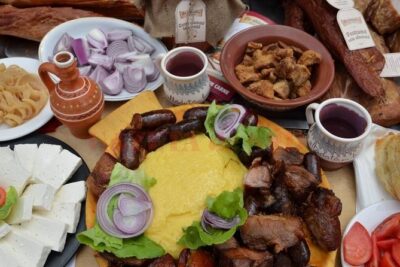
Discover Bucharest: Private Highlights and Traditional Food Tour
Read our review →
Private Bucharest: History & Food with Traditional Meal
Read our review →Browse the lists this tour appears in