
Reviewed · FOOD & DRINK
Taste Bucharest: A Food Lover’s Tour of Markets & Neighbourhoods
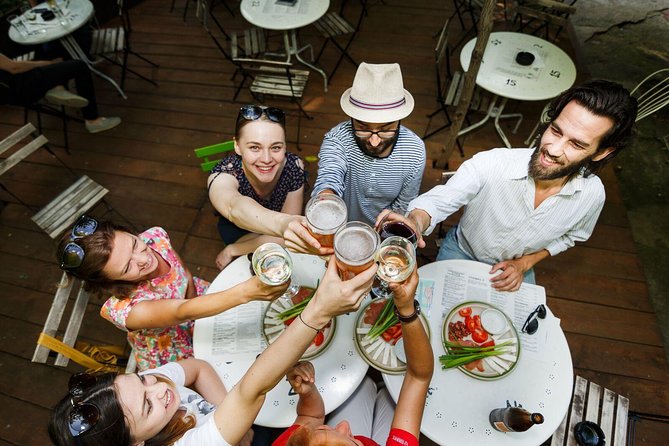
Bucharest’s best food experiences often happen away from polished restaurants. This five-hour tour takes you from the National Theatre through old streets and the Armenian Quarter, then by public transport to Obor Market for cheeses, cured meats, dips, produce, mici sausages, beer, tuica, and a sweet doughnut.
I like the mix of food and city history, especially the walk past buildings tied to the 1989 Revolution and the tram ride into a less polished part of Bucharest. I also like the small group size, capped at 12, and the way guides such as Angelica, Bogdan, Mihaela, Julian, and Andreea make the day feel personal.
The main consideration is that this is not a tour of hot Romanian comfort food. The tastings lean toward cold platters, spreads, cheeses, fresh produce, grilled mici, and drinks, so you may be disappointed if you expect cabbage rolls or soup. You will also walk about six kilometers, with a good amount of standing.
In This Review
- Key points to know before you book
- Why this Bucharest food tour feels different
- Starting at the National Theatre and Strada Batiștei
- Batiștei Church and Bucharest’s Armenian Quarter
- Riding toward Obor on public transport
- Eating your way through Obor Market
- What you will drink along the way
- How the guides shape the day
- Food expectations and dietary needs
- Is the price fair for five hours?
- Who should book this experience?
- Final call: book it for food, history, and local neighborhoods
- FAQ
- How long does the Bucharest food tour last?
- How much walking is involved?
- Is public transportation included?
- What foods are usually included?
- What drinks are included?
- Can dietary restrictions be accommodated?
Key points to know before you book
- Obor Market is the food anchor: You will see local produce, traditional goods, market stalls, and the famous grilled mici.
- The tour begins with history: The National Theatre, Strada Batiștei, Batiștei Church, and the Armenian Quarter give the food a useful cultural setting.
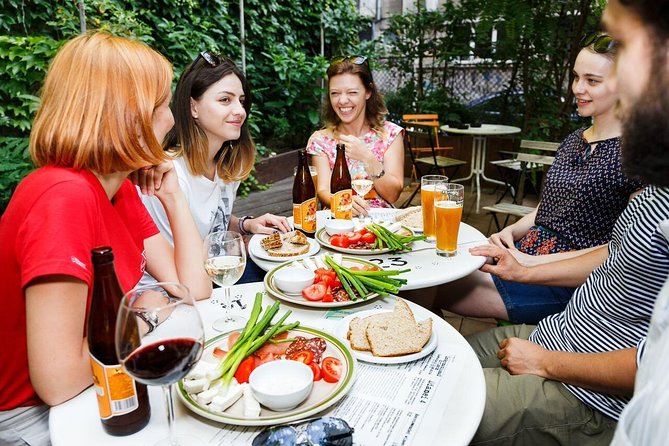
- Expect generous grazing rather than a sit-down meal: Platters may include zacusca, bean spread, fish roe, telemea, burduf cheese, sausages, bacon, cracklings, and vegetables.
- Drinks are part of the price: Tastings usually include tuica, up to three beers, or soft drinks and coffee or tea instead of alcohol.
- You ride public transport: A short tram trip helps connect central Bucharest with the Obor area.
- The route can change: Seasonal produce, market conditions, and what is fresh that day may alter the stops or dishes.
Why this Bucharest food tour feels different
Many city food tours keep you near the historic center. This one uses food as a reason to move through several parts of Bucharest, including neighborhoods you might not reach on your own.
That matters because Bucharest can be hard to read at street level. Grand buildings, neglected facades, Orthodox churches, Communist-era blocks, and ordinary market life often sit close together. A good local guide helps you connect those layers without turning the walk into a dry lecture.
The food also has a practical purpose. Romanian cuisine is easier to understand when you taste the ingredients one by one. Salty sheep cheese, smoky bacon, sour pickles, smoky eggplant dip, and grilled meat tell you more than a menu description ever could.
The experience costs $102.79 per person and lasts about five hours. Since food and listed drinks are included, the price is reasonable for an extended small-group tour, especially if you value local orientation and cultural background as much as eating. It is less compelling if your only goal is to sit down for a full Romanian meal.
A few more Bucharest tours worth a look
- Street Food’n’Culture Tour
★ 5.0 · 209 reviews - Wine Tasting in Bucharest
★ 5.0 · 183 reviews - Discover Bucharest: Private Highlights and Traditional Food Tour
★ 5.0 · 86 reviews
Starting at the National Theatre and Strada Batiștei
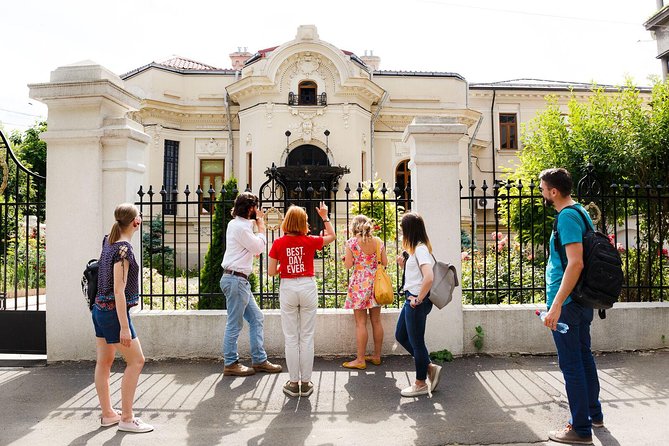
The meeting point is the Ion Luca Caragiale National Theatre on Bulevardul Nicolae Bălcescu 2. The tour opens with Bucharest’s modern political story, including the theatre’s connection to the Romanian Revolution and the street fighting that shaped the city in 1989.
This first stop takes about 15 minutes. It is not a museum visit, and there is no admission charge. Instead, you get a quick explanation of why the area matters before setting off on foot.
From there, you walk to Strada Batiștei, once home to the old American embassy. The guide points out 19th-century Neo-Romanian architecture and explains the street’s role in the city’s past.
I like this opening because it gives you a sense of Bucharest before the food begins. You are not simply being moved from snack to snack. You are learning how the city changed, and why its buildings often show several eras at once.
The pace here is fairly gentle, but the history can feel dense if you came expecting immediate tasting. One past participant found this section longer than expected. If food is your only interest, keep that tradeoff in mind.
Batiștei Church and Bucharest’s Armenian Quarter
The next short stop is Batiștei Church at Strada Batiștei 19. The guide explains its place in Romanian Orthodox culture and points out architectural features that are easy to miss when passing by alone.
The church visit is brief, around 15 minutes, but it adds another piece to the city’s religious and architectural story. You will not spend a long time inside, and admission is free.
The tour then reaches the Armenian Church and the surrounding Armenian Quarter. Allow about an hour here. This is one of the strongest cultural sections because the neighborhood shows Bucharest’s long connection with different communities and building styles.
You also see Bucharest’s oldest documented house during this portion of the walk. That detail gives the neighborhood a human scale. Instead of only hearing about major events, you get a look at the sort of older domestic architecture that can disappear behind newer construction and traffic.
Guides including Mihaela and Andreea have been praised for explaining the city’s architecture and offering useful local context. You may also get recommendations for the rest of your Romania trip, as one guide, Andreea, did for a visitor continuing to Brașov.
Wear shoes with good support. The tour covers about six kilometers on foot, and the walking is spread through several neighborhoods rather than confined to one compact block.
Riding toward Obor on public transport
The move to Obor is part of the experience, not just a way to save time. You take Bucharest public transportation, including a short tram ride along Calea Moșilor.
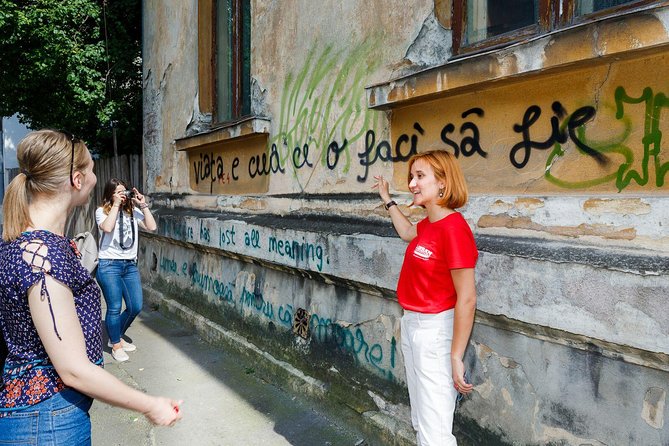
This section shifts the mood. The earlier streets focus on older architecture and national history. The tram route brings you into Communist-era Bucharest and toward a part of the city where everyday shopping matters more than grand landmarks.
The ride is scheduled for about 20 minutes, though the exact transport and timing can vary. The operator can change the route and places visited on the day, so you should treat the published sequence as a guide rather than a fixed timetable.
Public transport also means you should be ready to stand and keep your belongings secure in the ordinary way you would on any city tram. The trip is short, but it makes the tour feel more like a local outing than a private food transfer.
This is also a useful orientation tool. You get a look at how Bucharest’s central streets connect with its market districts, and you finish near Saint George Square, close to Unirea Square. The end point is not the same as the starting point, so plan your next activity from Piata Sf. Gheorghe rather than the National Theatre.
More food experiences in Bucharest:
- Private Bucharest: History & Food with Traditional Meal
★ 5.0 · 34 reviews - Bucharest: Romanian Wine and Food Pairing Experience
★ 4.0 · 23 reviews - Cooking Class traditional food
★ 5.0 · 22 reviews - Bucharest Historical Food Tour in Old Center
★ 5.0 · 21 reviews
Eating your way through Obor Market
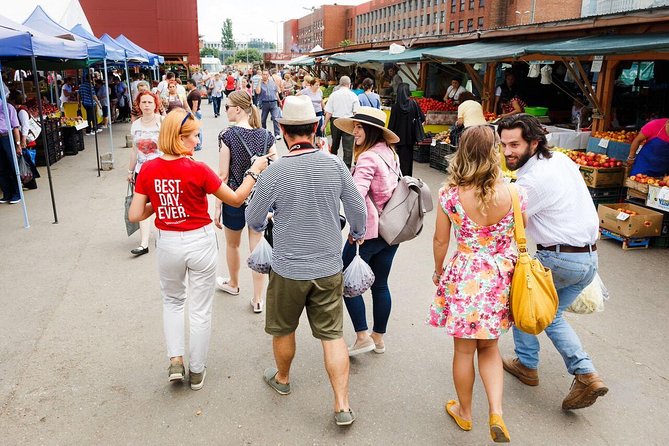
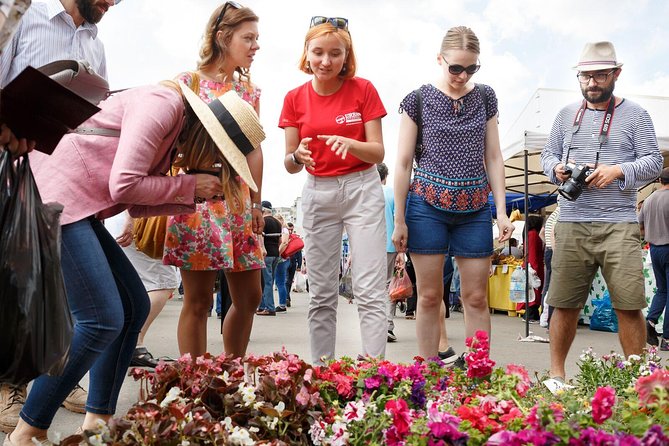
Obor Market gets about one hour and 40 minutes, making it the main food stop. It is a working market with produce, traditional goods, deli items, and street food. Expect color, strong smells, busy stalls, and plenty to look at before you sit down to eat.
The market section is not just a tasting counter. Your guide explains the different parts of the market and may shop for fresh vegetables to add to the meal. That small detail matters because it shows how local shopping works, rather than presenting Romanian food as a set of isolated dishes.
The exact menu changes with the season and daily supply. A typical spread can include:
- Aubergine dip and zacusca
- Whipped beans and fish roe
- Telemea and burduf cheeses
- Cow, sheep, and goat cheeses
- Sausages, smoked bacon, and cracklings
- Red onions, tomatoes, toast, and seasonal produce
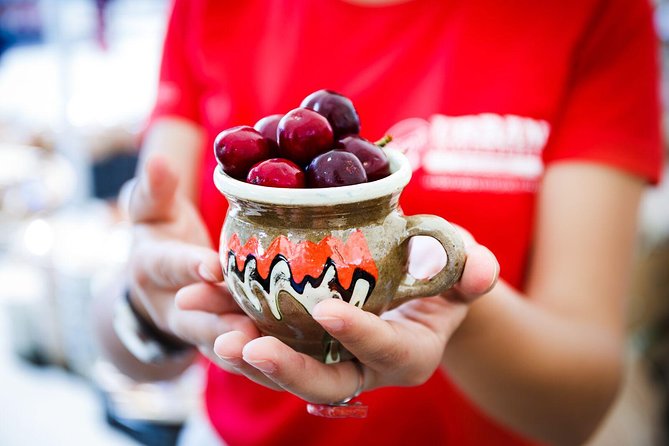
- Pickles, wild garlic, grapes, watermelon, or wild strawberries, depending on the time of year
- Mici, the country’s grilled skinless sausages, served with mustard
- A sweet Wallachian doughnut
The peasant platter is the heart of the tasting. It gives you a broad sample of Romanian flavors, from creamy and salty to smoky, sour, and fresh. It is filling, but it is not the same as ordering a hot stew or a plated regional specialty.
The mici are usually the warm highlight. These little grilled sausages are a beloved Romanian street food, and the tour takes you to a place associated with long lines for them. With a reserved table arranged for the group, you avoid spending your market time waiting.
The final doughnut provides a simple, pleasant finish. Several guides have made this stop part of the day’s rhythm, and it works well after the savory food. Do not arrive expecting a pastry-focused tour, but do save room for something sweet.
What you will drink along the way
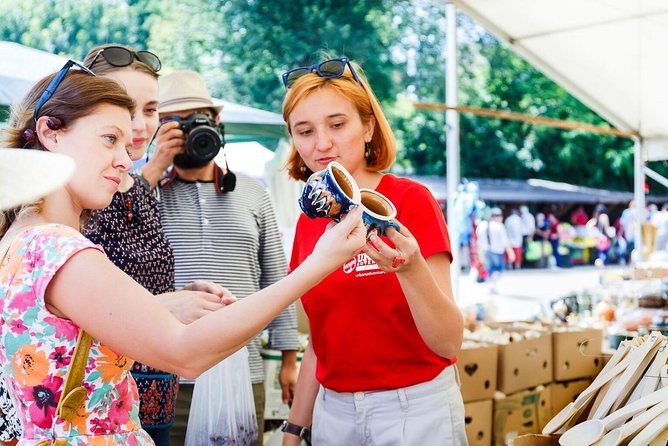
Drinks are included, which helps the $102.79 price feel more worthwhile. You can usually expect a shot of tuica, Romania’s fruit brandy, plus up to three beers.
The beer is generally Romanian craft beer or local beer, depending on availability. If you do not drink alcohol, the alternatives are soft drinks, coffee, or tea. Tell the guide your preference early so the group can plan around it.
Tuica can be strong, and it is served as a small tasting rather than a full drink. It is a useful introduction to Romanian drinking culture, but nobody should feel pressured to take it.
Because the food arrives in several stages, the included drinks help create a relaxed social pace. Still, the amount of alcohol can add up over five hours. If you choose beer and tuica, take the walking and tram ride into account.
How the guides shape the day
The guide may be the biggest variable in the experience, and the named guides connected with this tour have different strengths.
Angelica is known for explaining each dish while adding history between food stops. Bogdan combines clear English with stories about Romanian culture and the city. Mihaela brings a warm, personal approach and a strong feel for local neighborhoods.
Julian has a lively style, with jokes and plenty of conversation. Alex has been especially good at organizing the market portion, finding requested items, and arranging a smooth table stop for mici. Andreea is a useful choice for anyone who wants both city background and practical suggestions for a wider Romania trip.
You cannot choose a specific guide based on the supplied information, so book this for the format rather than one individual. The maximum group size is 12, and the experience may also run as a private tour. A smaller group makes it easier to ask about unfamiliar foods, stop for questions, and keep the meal social without losing the guide’s attention.
The strongest part of the guiding style is the combination of humor, local pride, and explanation. The best moments are not just facts about a church or market stall. They are the quick connections between what you see, what people eat, and how Bucharest developed.
Food expectations and dietary needs
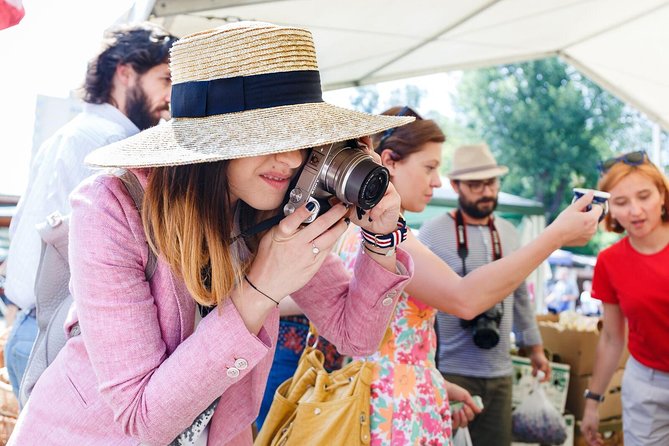
This tour suits an adventurous eater who wants many tastes rather than one large meal. You should be comfortable trying dairy, pork products, grilled meat, fish roe, vegetables, spreads, and strong spirits.
Vegetarians may find some suitable items among the cheeses, vegetables, bean spread, zacusca, and seasonal produce, but the menu is built around a traditional mixed platter. Vegan and gluten-free choices may be limited.
Notify the operator at least 24 hours ahead about allergies, vegetarian or vegan needs, gluten intolerance, or other restrictions. The team will try to help, but the available food depends on the day’s market supply.
If you are hoping for sarmale, soup, or other hot dishes, adjust your expectations. The listed tastings emphasize cold country foods, cheese, cured meat, produce, mici, and doughnut. One disappointed participant wanted more hot Romanian cooking, and that criticism is fair if you define a food tour as a sequence of cooked dishes.
Is the price fair for five hours?
At $102.79 per person, this is not a cheap snack walk. You are paying for roughly five hours, several food and drink tastings, a guide, neighborhood interpretation, and public transport between parts of Bucharest.
The value improves if you would otherwise spend time finding Obor Market, identifying the best stalls, and working out what the foods are. The guide also handles the social and practical side of the market visit, which can be useful on a first day in the city.
The value drops if you do not care about architecture or political history, or if you want a formal restaurant meal. You may eat generously, but the experience is built around sampling and movement.
Book it early if your schedule is fixed. It is booked on average 41 days ahead, which suggests that popular dates can fill well before arrival.
Who should book this experience?
I would choose this tour for a first visit to Bucharest, especially if you have only a short stay. It gives you a useful city introduction, a market visit, local transport, and enough food to help you recognize Romanian staples later.
It is also a good fit if you like small groups, informal conversation, and food served in several modest settings. You get more local context than you would from simply ordering mici at a restaurant.
You may want another type of food tour if your priority is regional cooking, restaurant dining, or a full range of hot dishes. The six kilometers of walking also make this a poor fit for anyone wanting a mostly seated afternoon.
Free cancellation is available up to 24 hours before the start time. Changes or cancellations made later are not refunded, and the cut-off follows Bucharest local time.
Final call: book it for food, history, and local neighborhoods
Book this tour if you want Bucharest explained through its streets, markets, and everyday foods. The strongest combination is the Armenian Quarter, the public transport ride, and the long Obor Market stop, with the tasting platter and mici giving you a broad introduction to Romanian eating.
Go in expecting generous samples, not a restaurant lunch. If you bring comfortable shoes, tell the guide about dietary needs in advance, and arrive ready for both history and food, this is a well-balanced way to get your bearings in Bucharest.
FAQ
How long does the Bucharest food tour last?
The experience lasts approximately five hours.
How much walking is involved?
You will walk about six kilometers. Comfortable walking shoes are recommended.
Is public transportation included?
Yes. The experience uses Bucharest’s public transportation network, including a short tram ride. The route can change on the day.
What foods are usually included?
Typical tastings include aubergine dip, zacusca, whipped beans, fish roe, Romanian cheeses, sausages, smoked bacon, cracklings, seasonal produce, mici with mustard, and a Wallachian doughnut. The exact foods depend on season and availability.
What drinks are included?
You can usually expect a shot of tuica and up to three beers. Soft drinks, coffee, or tea are available as non-alcoholic alternatives.
Can dietary restrictions be accommodated?
Notify the operator at least 24 hours in advance about allergies, vegetarian or vegan needs, gluten intolerance, or other dietary requirements. Options may be limited based on availability.
Recently added around Bucharest
- 6h Communism Tour in Bucharest with Ceausescu Mansion★ 4.5 · 6 reviews
- From Bucharest : Day Trip to Peles, Dracula’s Castle, Brasov★ 4.7 · 6 reviews
- Bears Sanctuary, Dracula Castle and Brasov City – Full Day Trip from Bucharest★ 5.0 · 6 reviews
- Dracula Private Tour★ 5.0 · 6 reviews
- Transfagarasan Road Private Day Trip from Bucharest / The Best Road in the World★ 5.0 · 6 reviews
- Bucharest : Wednesday, Dracula & Peles 3 Castles Tour 1 Day★ 4.7 · 6 reviews
- Hiking thought the best mountain villages in Romania-Private tour from Brasov★ 5.0 · 6 reviews
- Bucovina Painted Monasteries & Transylvania Tour: 4-Day Private★ 5.0 · 6 reviews
Food & Drink, compared.
Discover Bucharest: Private Highlights and Traditional Food Tour
Read our review →
Private Bucharest: History & Food with Traditional Meal
Read our review →
Traditions in Bucharest: Village Museum and Wine Tasting Tour
Read our review →Browse the lists this tour appears in