
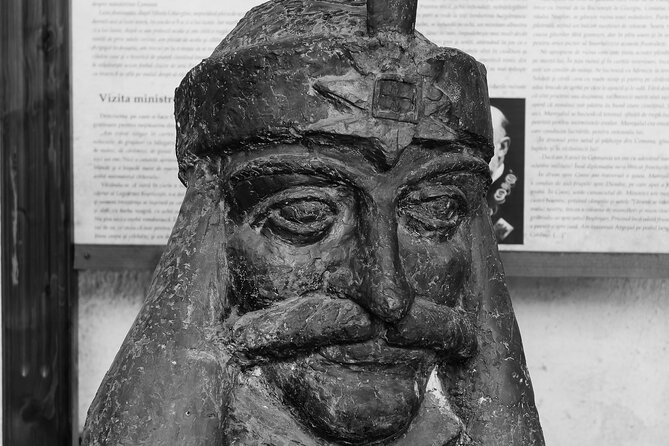
Reviewed · DRACULA & BRAN CASTLE TOURS
From Dracula to Ceaușescu-Romanian Terror Stories Tour with Dacia
Bucharest’s darkest stories come with an unusual soundtrack: the rattle of a restored Dacia from the 1980s. Over about six hours and 110 km, you move from Vlad the Impaler to Ceaușescu’s Romania, with grim tales of executions, political terror, crime, and strange urban legends along the way. The final stop, Comana Monastery, adds a serious historical note with Vlad’s burial place and an ossuary for World War I victims.
I like two things here. First, the old Romanian car gives the tour a local character that a standard minibus cannot match. Second, the route connects famous sights with less polished stories, including the 1989-era Parliament project, the Revolution, Old Town crime, and the rural setting tied to Vlad Dracula. The guide can also shape the day around your group, since this is a private activity. The main drawback is the subject matter: stories of murder, cannibalism, organ trafficking, and political repression are not light entertainment, and the six-hour drive leaves less time for leisurely sightseeing.
In This Review
- Key points at a glance
- Why the Dacia matters more than a standard tour vehicle
- Parliament Square and Ceaușescu’s building project
- Revolution Square and the stories behind modern Bucharest
- Old Town beyond the pleasant facades
- Comana Monastery and Vlad’s final chapter
- Comana’s natural setting and battle stories
- What the guide adds to the experience
- Price, private touring, and what you receive
- Who should book this dark-history day
- Should you book the Dacia terror stories tour?
- FAQ
- Where does the tour start?
- What time does the tour begin?
- How long does the experience last?
- Is this a private tour?
- What kind of vehicle is used?
- Is lunch included?
- What is included in the admission?
Key points at a glance
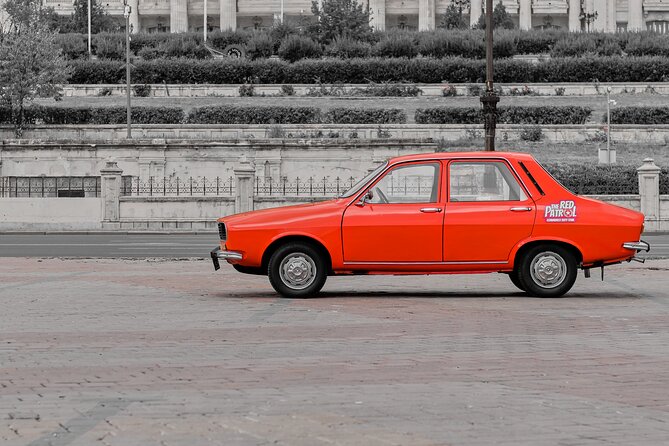
- A restored Dacia 1300 carries you through the day: The car is part of the experience, not just transportation, and gives the tour a strong Romanian flavor.
- The route covers about 500 years: You move from Vlad the Impaler and the founding of Bucharest to Ceaușescu’s dictatorship and the 1980s.
- The Parliament stop puts Ceaușescu’s ambition in context: You hear about the construction effort, the workers, and the deaths linked to the project.
- Old Town comes with genuinely grim urban stories: The focus is on crime and disturbing episodes rather than pretty architecture alone.
- Comana adds a quieter, more solemn finish: The monastery, Vlad’s burial site, and World War I ossuary shift the tone from sensational to reflective.
- Private touring makes the pace more personal: Hotel pickup is offered, and only your group takes part.
Why the Dacia matters more than a standard tour vehicle
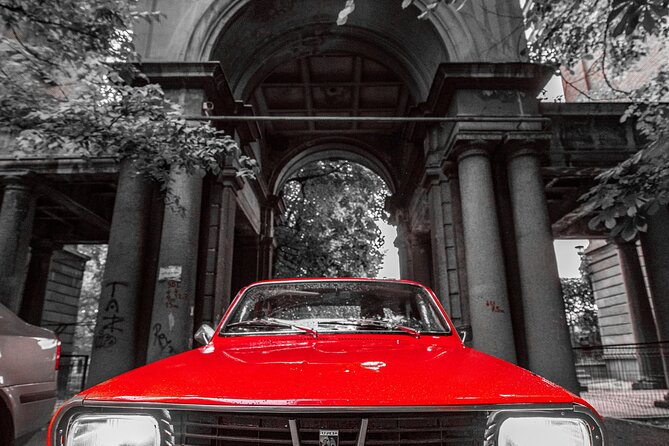
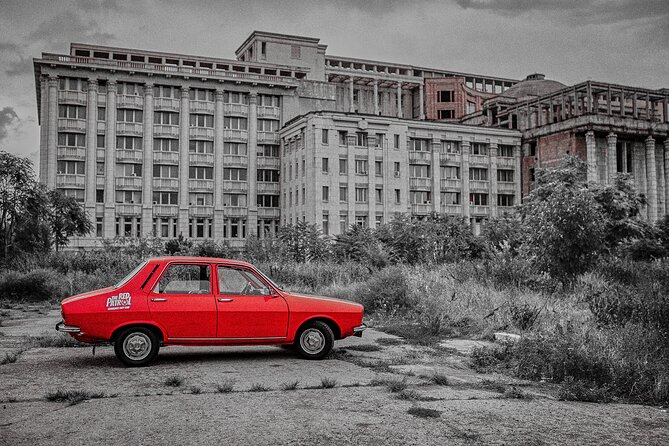
The restored Dacia is the tour’s calling card. Built in the 1980s, the Romanian car links the modern sightseeing day to the country’s recent past. You are not simply being taken between attractions. The vehicle itself helps explain everyday Romania during the socialist era, when the Dacia was a familiar sight on local roads.
That detail gives the experience a warmer, more personal feel than a large coach tour. You can ask questions, hear the car’s story, and enjoy the novelty of seeing Bucharest from an unmistakably Romanian machine. One past itinerary even included a ride to a local wedding, showing how the operator uses the car as part of the social character of the experience.
The car also sets expectations. This is a characterful historic vehicle, not a modern luxury van. If you need generous legroom, perfect quiet, or the smoothest ride, you should ask about the vehicle before booking. For many people, the quirks are the point. The title’s promise of a Dacia experience is real, and it is one of the strongest reasons to choose this tour over a conventional city excursion.
More Dracula and Bran Castle trips:
- Bucharest: Dracula’s Castle, Peles Castle, & Brasov Old Town
★ 4.5 · 17,858 reviews - Bucharest: Dracula Castle, Peles Castle & Brasov Old Town
★ 4.6 · 10,891 reviews - Bucharest: Dracula’s Castle, Peleș Castle & Brașov Day Trip
★ 4.5 · 5,919 reviews
Parliament Square and Ceaușescu’s building project
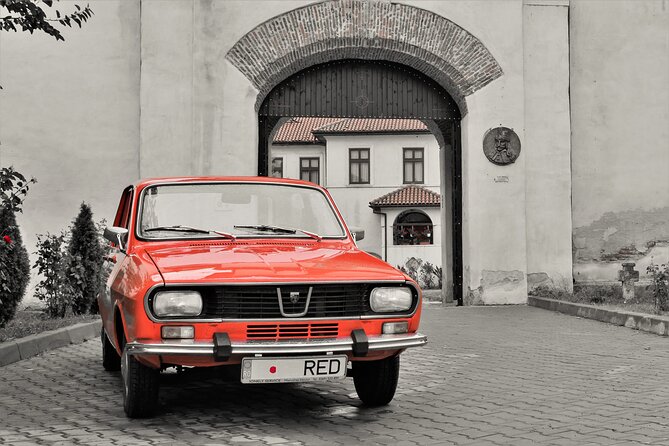
The day begins at Piața Constituției, in front of the enormous Palace of Parliament. The building was begun by Nicolae Ceaușescu in 1983, and the guide uses the site to explain the human cost behind its scale.
You hear about roughly 30,000 Romanians working in three shifts during the construction period, along with around 3,000 deaths connected to the building site. These figures turn the grand facade into something more troubling. The point is not simply that the building is huge. It is that the project demanded a vast amount of labor and sacrifice during a period when ordinary Romanians lived under severe political and economic pressure.
The stop lasts about 30 minutes and admission is free. You should not expect an interior tour of the Parliament as part of this experience. The value here is the outdoor setting and the guide’s account of the 1980s, including the darker stories attached to Ceaușescu’s rule.
This is a good first stop because it establishes the tour’s method. You see a major landmark, then hear the human story behind it. The tone is direct and unsettling, so you may want to save your appetite for lunch until later.
Revolution Square and the stories behind modern Bucharest
At the Revolution Square Fountain, the focus shifts across several periods of Romanian history. The stop lasts about 45 minutes and ties together Vlad Dracul, the bloody events associated with the 1989 revolution, crime in earlier Bucharest, and the story of a so-called vampire serial killer from the 1970s.
This is likely to be one of the most talk-heavy sections of the tour. Revolution Square is a natural place to discuss the end of Ceaușescu’s rule and the violence that marked the political transition. The guide also reaches further back, linking the capital to Vlad the Impaler, often called Dracula in popular culture and identified here as the founder of Bucharest.
That mix is part of the appeal, but it can also feel broad. You are moving from medieval violence to twentieth-century crime and political upheaval in one stop. If you want a tightly focused tour of the 1989 revolution, this is not that. The square is being used as a doorway into several stories, not as a complete political history lesson.
Admission is not included at this stop, although the supplied details do not specify a separate ticketed activity. You should confirm any access arrangements when booking. The listed start time is 9:00 a.m., with Revolution Square given as the meeting point, while hotel pickup is also offered from a Bucharest address.
Old Town beyond the pleasant facades
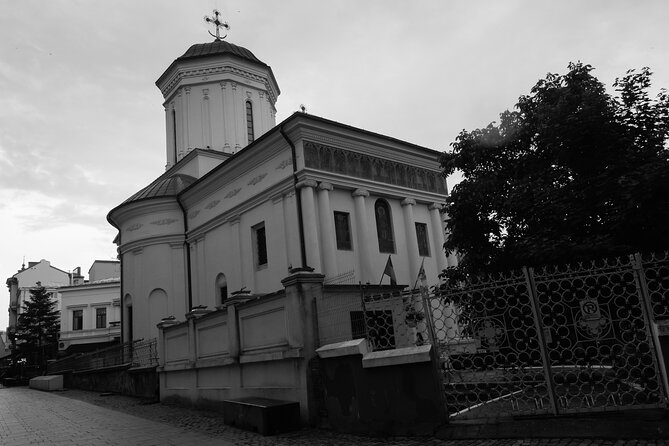
Bucharest’s Old Town is usually presented through cafes, restored buildings, and nightlife. Here, the polished version is pushed aside. The 45-minute stop centers on disturbing stories linked to the area and to Bucharest during the socialist era.
The subjects include claims of human meat being served in restaurant pies during the 1970s, an organ-trafficking network connected to an orphanage, and a major bank robbery from the socialist period. These are powerful stories, but they need careful listening. Some are sensational by nature, and the tour’s appeal comes from hearing the guide explain how they fit into the city’s darker folklore and documented crime stories.
I would treat this section as storytelling rather than a conventional monument visit. You are not coming here to study every street or admire the architecture in peace. The Old Town becomes a stage for tales of fear, greed, and survival.
That makes the stop a good match for people who enjoy unusual local history and true-crime themes. It is a poor fit if you dislike graphic subjects or want a relaxed walking tour. The itinerary gives this section 45 minutes, so expect a concentrated presentation rather than hours of wandering.
More communism-era tours in Bucharest:
- The Real tour of Communism
★ 5.0 · 666 reviews - Life under Communism
★ 5.0 · 358 reviews - 3-Hour Guided Tour of Communist Bucharest
★ 4.9 · 303 reviews - Bucharest Essential Tour: Old Town, Calea Victoriei & Communism
★ 5.0 · 142 reviews
Comana Monastery and Vlad’s final chapter
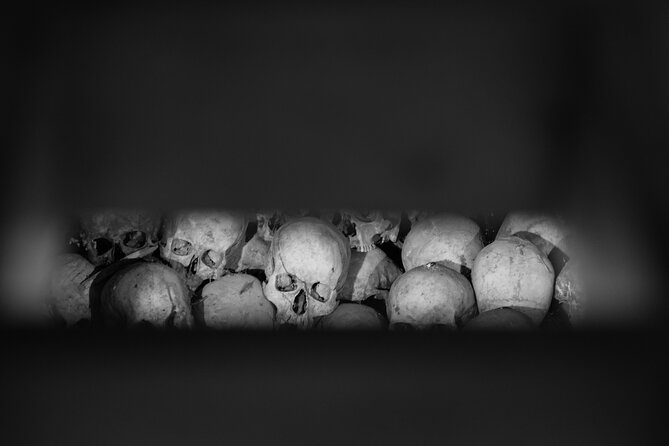
The journey out to Comana changes the mood. At the monastery, you visit the place associated with Vlad Dracula’s assassination and burial. You also see an ossuary containing victims of World War I.
This is the tour’s most distinctive historical stop. Dracula stories are common across Romania, but a visit connected to Vlad’s death gives the subject a physical setting. The monastery helps move the story away from movie imagery and toward the difficult question of how a medieval ruler became both a national figure and a global horror character.
The guide covers brutal punishments and warfare associated with Vlad’s era, including beheadings, arson, impaling, and poisoning. Those accounts are graphic, but they explain why Vlad became such a frightening figure during his own lifetime. The visit is not simply about proving a fictional vampire existed. It is about separating the real ruler from the later legend.
The World War I ossuary adds weight. After several hours of crime stories and grim anecdotes, a memorial space for war victims asks you to slow down. It is a useful counterpoint to the more sensational parts of the day. You will want to behave respectfully here, and the subject matter may be difficult for children.
Admission to the monastery, ossuary, and natural reservation is included. The monastery stop lasts about 45 minutes. A moderate level of physical fitness is requested, so expect some walking around the site rather than remaining in the car throughout.
Comana’s natural setting and battle stories
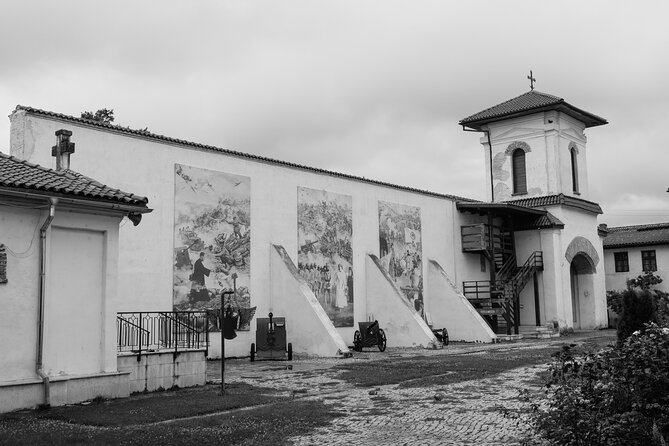
The final listed stop is Comana, near the monastery. It lasts about 20 minutes and introduces the nearby natural reservation, along with stories of battles and killings dating back to the fifteenth century.
This short visit gives you a glimpse of the setting around Vlad’s assassination site. It is not presented as a long nature excursion, so you should not book the tour expecting an extended walk or a full day in the reserve. Instead, the stop places the monastery in its wider setting and connects the area to centuries of conflict.
The change from central Bucharest to rural Comana is important. You see how quickly the city gives way to open surroundings, and the old stories feel different when told in the places linked to them. The countryside does not erase the grim subject matter, but it gives the day a more measured final act.
The listed stops add up to about three hours and five minutes. The rest of the six-hour schedule is taken by driving, pickup, and time between sites. That is worth noting before booking. This is a road-based experience, and the time in the Dacia is a major part of the day.
What the guide adds to the experience
The quality of the day depends heavily on the guide because so much of the tour is spoken storytelling. Crinu has led the experience, and Mr. Nenciu Costin Catalin has also been singled out for making the tour especially enjoyable and educational. Serban, connected with the Red Patrol project, is also involved in the operation.
The available information suggests a friendly, personal style rather than a scripted coach commentary. One detailed account described a prompt hotel pickup, stops at Parliament, Revolution Square, and Old Town, and a guide who made the day both entertaining and informative. That combination matters here. The subjects are so dark that a good guide needs to give them context, not simply pile on shocking details.
Because the tour is private, you can ask for clarification and control the conversation more easily than you could in a large group. This is especially useful when the stories move between documented events, local tales, and popular Dracula lore. I would ask the guide which parts are supported by historical records and which belong to Bucharest’s darker storytelling tradition.
A tour newspaper and personalized gift are included. They are small extras, but they fit the theme and give you something tangible to keep after a day built around spoken stories.
Price, private touring, and what you receive
The price is listed at $185.22 per person. That is a substantial amount for a six-hour experience, but the value depends on how much you care about the format.
You are paying for a private activity, hotel pickup and drop-off from a Bucharest address, a restored Dacia, a guide, bottled water, the tour newspaper, a personalized gift, and access to Comana Monastery, the ossuary, and the natural reservation. Lunch is not included, so you need to budget for that separately.
Compared with a standard sightseeing bus, the price makes more sense if you are traveling as a small group and want a private day with unusual transport. If you are alone or on a tight budget, it may feel expensive for the number of formal attractions visited. The experience is strongest for someone who values atmosphere, local stories, and a flexible private format more than a long list of museum admissions.
Group discounts are offered, so the cost may work better for friends or family traveling together. The tour finishes back at the meeting point, and the listed meeting point is Revolution Square. Since hotel pickup is also offered, confirm the exact pickup arrangement and return point before the morning of the tour.
Who should book this dark-history day
I would choose this tour if you have already seen Bucharest’s main landmarks and want a more unusual angle. It also suits you if old cars, Romanian history, Vlad the Impaler, and twentieth-century crime all sound more appealing than a standard city walk.
The private setup is useful for couples, families with older children, and small groups who want to ask questions without a crowd. It can also work well as a first or second day in Bucharest because the route gives you a broad sense of the capital, then takes you beyond the city.
Think twice if you are sensitive to graphic descriptions. The tour includes murder, execution, cannibalism, organ trafficking, political terror, and war deaths. It is also not ideal if you want extensive time inside the Palace of Parliament, since the program focuses on the exterior and its stories rather than a stated interior visit.
The moderate fitness requirement should be taken seriously. You will leave the car at several stops, and the monastery and ossuary call for walking. Lunch is on your own, so plan for a meal during the day even though no restaurant stop is specified.
Should you book the Dacia terror stories tour?
Book it if you want a private, story-driven day that combines Bucharest, Ceaușescu’s legacy, Vlad Dracula, Old Town crime, and a rural monastery visit. The Dacia gives the tour its strongest sense of place, while Comana provides a memorable final stop that goes beyond the usual vampire material.
Skip it if you prefer a gentle city introduction, dislike gruesome subjects, or want a detailed interior visit to the Palace of Parliament. At $185.22 per person, the tour earns its price through the private car, hotel service, guide-led storytelling, and unusual route rather than through a large number of included attractions.
For the right audience, this is a memorable way to see Bucharest’s less comfortable side. Go for the old car and the local setting, but book it because you want serious, sometimes shocking stories along with the scenery.
FAQ
Where does the tour start?
The listed meeting point is Revolution Square, Piața Revoluției, in Bucharest. Hotel pickup from a Bucharest address is also offered, so confirm the exact pickup details when booking.
What time does the tour begin?
The listed start time is 9:00 a.m.
How long does the experience last?
The tour lasts approximately six hours and covers about 110 km.
Is this a private tour?
Yes. Only your group participates in the activity.
What kind of vehicle is used?
You ride in a restored Romanian Dacia car from the 1980s.
Is lunch included?
No. Lunch is not included in the tour price.
What is included in the admission?
Access to Comana Monastery, the ossuary, and the natural reservation is included. Admission is listed as free at Parliament Square and Old Town, while the Revolution Square stop does not include an admission ticket.
Recently added around Bucharest
- From Bucharest: Discovery at Europe’s Largest Salt Mine★ 5.0 · 3 reviews
- RiverCruise Exclusive – Private Transfer from or to Giurgiu Port/Bucharest Hotel★ 3.5 · 3 reviews
- Cluj Napoca: Climbing or Hiking Experience in Turda Canion★ 5.0 · 3 reviews
- Private-Red Patrol Bucharest Flea Market Tour with a Romanian car★ 5.0 · 3 reviews
- Probably the Best Restaurant and Wine Cellar near Bucharest★ 4.5 · 3 reviews
- Private 8 Day Romania UNESCO Tour★ 5.0 · 3 reviews
- Bucharest: City Highlights Guided Walking Tour★ 5.0 · 3 reviews
- Bucharest in a nutshell – half day private walking tour★ 5.0 · 3 reviews
Dracula & Bran Castle Tours, compared.
Dracula’s Castle, Peles Castle, & Brasov Old Town
Read our review →
Dracula Castle, Peles Castle & Brasov Old Town
Read our review →
Dracula’s Castle, Peleș Castle & Brașov Day Trip
Read our review →
Day Trip to Dracula Castle, Peles Castle & Brașov
Read our review →
Bucharest to Dracula Castle, Peles Castle and Brasov Guided Tour
Read our review →
Dracula’s Castle, Peles Castle and Brasov Day Trip from Bucharest
Read our review →
Transylvania and Dracula Castle Full Day Tour from Bucharest
Read our review →
Browse the lists this tour appears in