
Reviewed · DRACULA & BRAN CASTLE TOURS
7-Day Dracula Tour in Romania from Bucharest including ‘The Ritual of Killing of a Living Dead’
The most unusual part of this seven-day tour is that it treats Dracula as both folklore and history. You visit places linked to Vlad Tepes, walk medieval towns, enter castles, descend into Turda Salt Mine, and finish with a theatrical Ritual of Killing of a Living Dead. I love the mix of fact and fiction, especially at Bran Castle and Snagov Monastery. I also like the overnight stays in Transylvania, which keep this from becoming a string of long day trips from Bucharest.
The main drawback is the pace. Seven days cover a lot of ground, with several hours on the road and some visits lasting only about an hour. The $1,685.87 price is substantial, though it includes hotels, transport, most listed admissions, six breakfasts, two dinners, and a guide. The ritual also requires at least four people, so it is not guaranteed for a very small group.
In This Review
- Key points to know before booking
- Why this route works for Dracula fans and history-minded visitors
- Day 1: Snagov Monastery and the road out of Bucharest
- Day 2: Poienari Fortress and medieval Sibiu
- Day 3: Corvin Castle, Turda Salt Mine, and the vampire dinner
- Day 4: Cluj-Napoca and the Borgo Pass connection
- Day 5: Three hours in UNESCO-listed Sighisoara
- Day 6: Bran Castle and the Saxon city of Brasov
- Day 7: Peles Palace, Targoviste, and the return to Bucharest
- What the $1,685.87 price covers
- Practical details that affect your decision
- Who should book this seven-day Dracula tour
- Should you book it?
- FAQ
- Where does the tour begin?
- What time does the tour start?
- How long does the tour last?
- Is hotel pickup included?
- Where does the tour end?
- Are meals included?
- Are the hotels included?
- Is the Ritual of Killing of a Living Dead guaranteed?
- Can I request vegetarian food?
Key points to know before booking
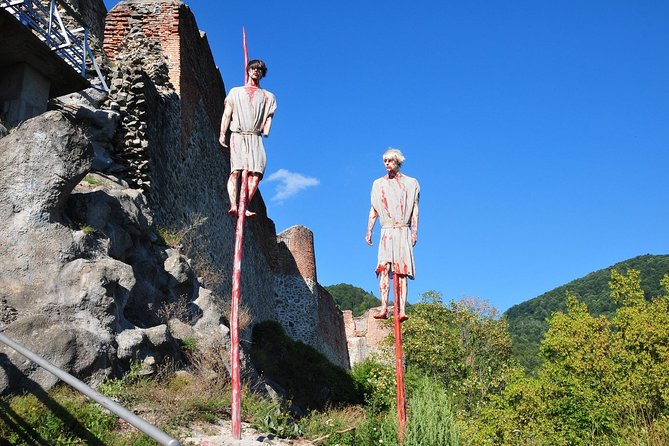
- The Dracula story is placed beside real Romanian history, from Vlad’s fortress at Poienari to his supposed burial place at Snagov.
- Turda’s special evening event adds theatrical folklore to a day that already includes the remarkable underground salt mine.
- Bran Castle is famous but not a literal Dracula home, and the guide’s explanation helps separate Stoker’s novel from Vlad’s life.
- You sleep three nights in four-star hotels and three nights in three-star hotels, all described as centrally located.
- The route includes major medieval centers, including Sibiu, Sighisoara, Brasov, Cluj-Napoca, and Targoviste.
- A full group can reach 50 people, so ask about the expected group size if personal attention matters to you.
Why this route works for Dracula fans and history-minded visitors
This is not simply a haunted-castle outing. The route connects several different versions of the Dracula story: Vlad Tepes, the real 15th-century ruler; Bram Stoker’s fictional Count; Saxon medieval towns; royal Romania; and local customs surrounding the dead.
That variety is the tour’s biggest strength. You get castles, churches, fortifications, salt mining, royal interiors, and old town streets. If you want only spooky attractions, parts of the trip may feel too historical. If you want the story explained rather than served as pure Halloween decoration, the balance is appealing.
The English-speaking guide is important here. A past guide named Robert was praised for giving substantial explanations and answering questions, while a driver named Andrei was noted for having a degree in history. Those names do not guarantee who will lead your departure, but they show the kind of guiding this experience aims for: clear background, not just transportation between photo stops.
More Dracula and Bran Castle trips:
- Bucharest: Dracula’s Castle, Peles Castle, & Brasov Old Town
★ 4.5 · 17,858 reviews - Bucharest: Dracula Castle, Peles Castle & Brasov Old Town
★ 4.6 · 10,891 reviews - Bucharest: Dracula’s Castle, Peleș Castle & Brașov Day Trip
★ 4.5 · 5,919 reviews
Day 1: Snagov Monastery and the road out of Bucharest
The tour begins at 10:00 am from Moxa Bucharest Boutique Hotel on Calea Victoriei. Pickup is offered there, and the final return is to the same meeting point, with hotel drop-off on the last day generally expected between 5:00 and 7:00 pm.
Your first major stop is Snagov Monastery, reached by a drive from Bucharest. According to local legend, Vlad was buried here after his assassination. The visit lasts about an hour and admission is included.
Snagov is a good opening stop because it sets up the central question of the tour: how much of Dracula belongs to documented history, and how much belongs to later storytelling? The monastery gives you a real religious and historic setting, while Vlad’s supposed grave brings in the legend.
You then settle into a centrally located four-star hotel. The first evening includes a welcome dinner, which gives the group a chance to meet before the longer road days begin. The overnight arrangement is useful because it removes the need to find your own hotel after arriving in a new town.
Day 2: Poienari Fortress and medieval Sibiu
Day two begins with Poienari Castle, or more precisely, the ruins of Vlad’s old fortress. This stop lasts about an hour and admission is included.
Poienari is different from Bran Castle. It is tied more directly to Vlad’s life, but the remains are ruins rather than a polished museum interior. That makes the stop less immediately grand, yet more useful if you want to understand the real ruler behind the vampire image.
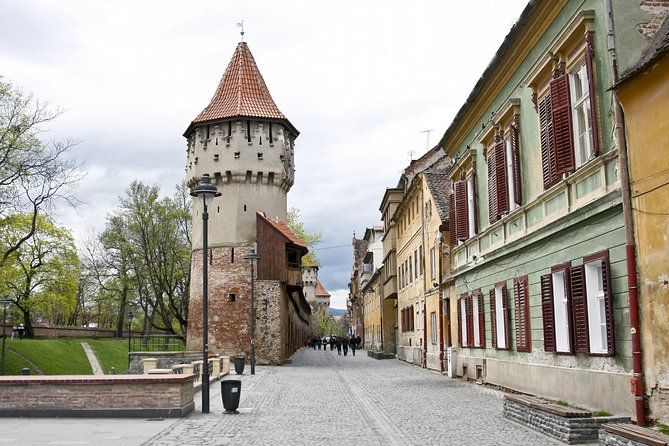
The itinerary then continues to Sibiu, where you tour the fortified old town. Sibiu offers a change of mood after the rough fortress remains. Its medieval streets and defensive character show the Saxon influence that shaped many Transylvanian towns.
This is one of the days when you should expect travel time to matter. The schedule gives you a focused visit at Poienari and an evening introduction to Sibiu, rather than a leisurely full day in either place. Comfortable shoes and a willingness to keep moving will help.
Day 3: Corvin Castle, Turda Salt Mine, and the vampire dinner
Day three brings one of the trip’s most striking buildings: Corvin Castle in Hunedoara, also called Corvinesti Castle. It is presented as Romania’s greatest Gothic-style castle, and you get about an hour to see it.
The castle is a strong match for the tour’s mood. Turrets, stone walls, and Gothic design create the kind of setting many people expect from a Dracula journey, even though the building is not simply a Dracula attraction. Your guide’s historical explanation matters here because the architecture can easily become a backdrop for invented vampire stories.
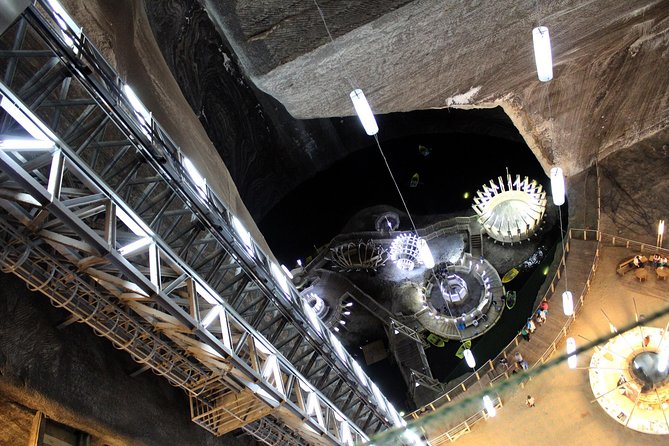
The route then continues to Turda, a small town with a medieval feel and one of Romania’s oldest salt mines. At Salina Turda, you descend underground into a large saline complex. The visit is listed at about an hour, so you should not expect an entire day below ground.
Turda is a welcome change from the castles. It shows how unusual Romania’s historic attractions can be, and it gives the trip a practical side: this is not just a chain of Dracula-themed sites. The underground setting also fits the tone without pretending that every old place has a vampire connection.
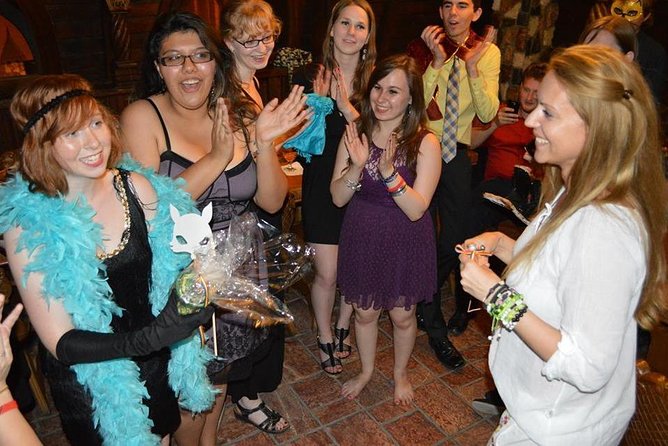
Dinner in Turda includes a vampire menu. The same evening features the special Ritual of Killing of a Living Dead, a staged folklore event built around the title’s macabre theme. This is likely to be one of the most memorable parts of the week, but keep your expectations in check. It is a special event, not a claim that anything supernatural is taking place.
The ritual requires a minimum of four participants. If your booking is part of a larger departure, that condition should be easy to meet. If you are traveling alone or as a couple, confirm that the event will run for your date before you rely on it as the main reason to book.
The night is spent at a three-star hotel in the Borgo Pass area, described as a hotel built in line with Bram Stoker’s imagination of Dracula’s Castle. That detail is designed for atmosphere and literary fans. It is not the same as visiting a real castle connected to Vlad.
A few more Bucharest tours worth a look
- 4×4 Driving Experience at Flying Altitudes – 7 Days
★ 5.0 · 13 reviews - 7-Day Private Tour of Transylvania from Bucharest
★ 5.0 · 13 reviews - 7-Day Romania Tour -Transylvania and Painted Churches
★ 5.0 · 7 reviews - Transylvanian week
★ 5.0 · 7 reviews
Day 4: Cluj-Napoca and the Borgo Pass connection
The fourth day takes you to Cluj-Napoca for a city tour. The visit includes medieval buildings such as Saint Andrews Cathedral and lasts about an hour.
Cluj-Napoca gives the route a city break from the more theatrical stops. The short visit means you will get an introduction rather than a full study of the city. Still, it helps show the modern urban side of Transylvania and prevents the trip from shrinking the region into castles and legends alone.
You then follow the route associated with Jonathan Harker, the character from Bram Stoker’s Dracula, toward Bistrita and the Borgo Pass. This is where the novel’s geography becomes part of the experience.
For readers who know the book, this stretch has special appeal. You are not only seeing places linked to Vlad; you are tracing a fictional journey that helped shape the modern Dracula image. If you have not read the novel, the guide’s explanations should help, though the experience will still depend on how much literary background is provided on your departure.
Day 5: Three hours in UNESCO-listed Sighisoara
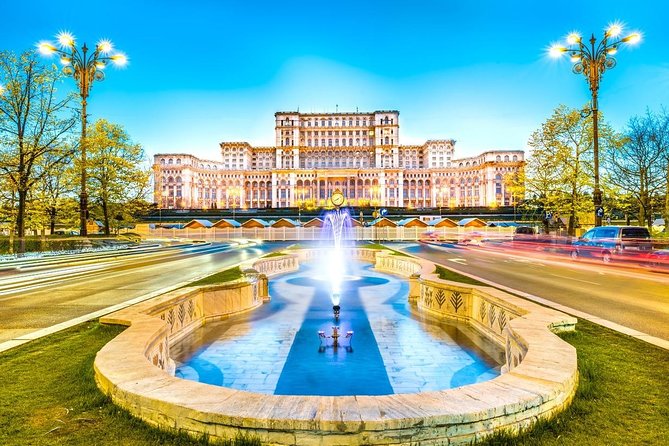
Sighisoara receives more time than most individual stops, with roughly three hours in the medieval citadel. That is welcome. You have enough time to walk without treating the town as a quick photo stop.
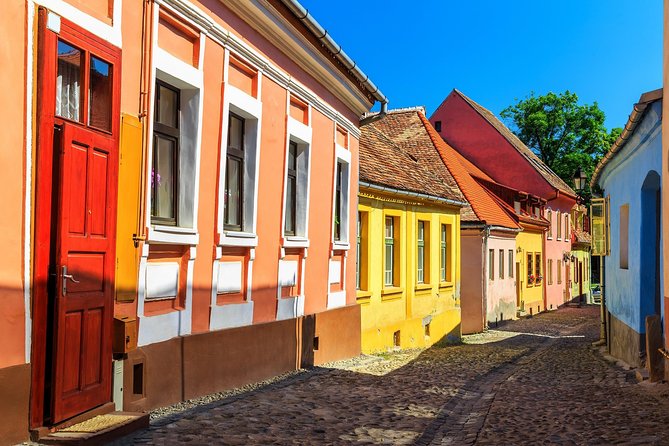
The historic center is a UNESCO World Heritage Site, and it is one of the clearest places on the route to see Transylvania’s medieval character. The old walls, towers, and compact streets make Sighisoara feel like a living town rather than a single isolated attraction.
The Clock Tower, also called Turnul cu Ceas, receives a separate visit of about an hour. It once served as the Gate Tower, a place for council meetings and storage of the town’s archives and treasury. That practical past gives the building more substance than its famous clock and attractive exterior.
Sighisoara is also associated with Vlad Tepes, though this tour’s supplied details focus on the citadel and Clock Tower rather than promising a specific Vlad site inside the town. I would treat the stop as a medieval city visit first and a Dracula connection second.
This is one of the best days for independent wandering within the scheduled route. You will have more time to look at details, take photographs, and absorb the town’s layout. Photo and video fees are not included where attractions charge them, so keep a little extra money handy.
Day 6: Bran Castle and the Saxon city of Brasov
Bran Castle is the tour’s headline attraction. You spend about two hours exploring the building, known worldwide as Dracula’s Castle.
The important distinction is that Bran’s fame comes from its appearance, location, and connection to Bram Stoker’s myth. The castle’s Dracula identity is much stronger in popular culture than its direct connection to Vlad Tepes. That is not a reason to skip it. It is a reason to listen closely when the guide explains where fact ends and fiction begins.
Two hours gives you time to see the castle at a useful pace, though crowd levels can affect how relaxed the visit feels. The building’s unique charm is the point: it looks like the kind of place that could carry a Gothic story, even when the historical connection is less direct than many visitors assume.
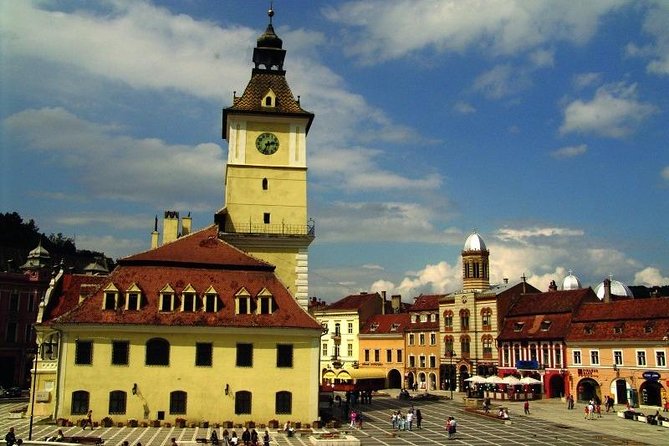
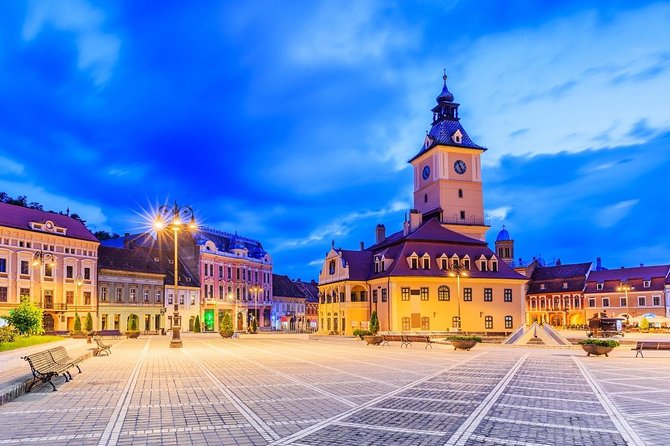
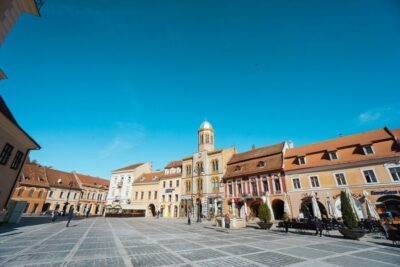
The day continues to Brasov, a medieval Saxon city with a fortified historic center. You have about two hours for the old town. The defenses were built and strengthened between the 15th and 17th centuries in response to repeated invasions from the east.
Brasov adds scale to the trip. Instead of viewing one castle at a time, you see a city shaped by trade, religion, defense, and repeated conflict. The Dracula theme becomes one thread in a larger story about Transylvania.
Day 7: Peles Palace, Targoviste, and the return to Bucharest
The final morning takes you to Sinaia and Peles Palace, one of Romania’s best-known royal residences. The visit lasts about an hour and admission is included.
Peles is a useful closing contrast to Bran and Corvin Castle. It shifts the focus from Gothic legend and medieval defense to royal Romania. You can expect a more polished palace experience, with the building itself serving as a reminder that the country’s past includes royal ambition as well as warfare and folklore.
The final historical stop is Targoviste, the former capital of Wallachia. You visit the ruins of Vlad Tepes’s old court, with about an hour allocated to the stop. Admission is listed as free in the itinerary.
Targoviste brings the Vlad story back to its political setting. After a week of legends, literature, and theatrical folklore, the ruins point toward the actual ruler and the territory he governed. The return to Bucharest comes late, generally after 7:00 pm according to the route description, although the included hotel drop-off is also given as roughly 5:00 to 7:00 pm. Plan your evening conservatively and avoid booking a tight onward connection.
What the $1,685.87 price covers
At $1,685.87 per person, this is not a budget bus tour. The value depends on how much of the organization you want handled for you.
The price includes three nights in four-star hotels and three nights in three-star hotels, with central locations specified. It also includes air-conditioned transport by coach, minibus, or car depending on group size. Six breakfasts and two dinners are included, along with the welcome dinner and the vampire menu in Turda.
Admissions listed as included cover Snagov Monastery, Targoviste Citadel, Peles Palace, Bran Castle, Turda Salt Mine, Poienari Citadel, and Corvin Castle. An English-speaking guide is included as well.
That bundle can represent fair value if you would otherwise arrange seven days of hotels, intercity transport, admissions, and a private or small-group guide. The cost is harder to justify if you prefer inexpensive guesthouses, public transport, or long free periods in each town.
A maximum of 50 people is permitted. The actual group may be smaller, but you should ask if you want a quieter trip or more direct time with the guide. The vehicle can vary with the number of people, so the departure is not tied to one fixed transport style.
Practical details that affect your decision
The tour starts at Moxa Bucharest Boutique Hotel at 10:00 am. You can present a paper or electronic voucher, and confirmation is provided when you book.
Most people can participate, service animals are allowed, and the meeting point is near public transport. Children must be accompanied by an adult. A vegetarian meal is available if you request it in advance.
The tour does not include airfare, airport fees, photo and video taxes, or accommodation on the last day. Other items not specifically listed are also outside the package. Since the last day returns to Bucharest in the late afternoon or evening, arrange your final night carefully if you are not staying at the meeting hotel.
The cancellation terms are strict: the booking is non-refundable and cannot be changed. If the operator cancels because the minimum number is not reached, you receive either another date or experience, or a full refund. That policy makes travel insurance worth considering, especially at this price.
Who should book this seven-day Dracula tour
I would recommend it most strongly to readers who enjoy a clear theme but also want castles, city walks, royal sites, and real historical context. Fans of Bram Stoker’s novel will appreciate the Borgo Pass connection and the Jonathan Harker route. People interested in Vlad Tepes will value Poienari, Snagov, and Targoviste.
It also suits you if you want Romania handled in one package. The route covers a lot of ground, and the included transport removes the stress of working out rural connections between Bucharest, Hunedoara, Turda, Bistrita, Sighisoara, Brasov, Sinaia, and Targoviste.
I would hesitate if you dislike fixed schedules, long road journeys, or theatrical folklore. The stops are often brief, and the tour does not give you a full free day in the major towns. At the same time, the itinerary is varied enough that you are not looking at seven days of one castle after another.
Should you book it?
Book this tour if you want the full Dracula picture, not just one famous castle. The combination of Poienari, Bran, Snagov, the Borgo Pass, Turda’s salt mine, Sighisoara, Brasov, Peles Palace, and Targoviste gives you a broad view of the places behind the legend.
Before paying, confirm the likely group size, the hotel names, and that the Ritual of Killing of a Living Dead will run for your departure. If those details suit you, the high price buys convenience, a strong route, included admissions, and a guide-led explanation of Romania’s most famous myth.
FAQ
Where does the tour begin?
It begins at Moxa Bucharest Boutique Hotel, at 129 Calea Victoriei, Corner 2-4 Mihail Moxa Street, Bucharest.
What time does the tour start?
The scheduled start time is 10:00 am.
How long does the tour last?
The experience lasts approximately seven days.
Is hotel pickup included?
Pickup is offered from the stated Bucharest meeting hotel, Moxa Bucharest Boutique Hotel.
Where does the tour end?
The activity returns to the meeting point in Bucharest. Hotel drop-off on the last day is included, generally around 5:00 to 7:00 pm.
Are meals included?
Six breakfasts and two dinners are included. The dinners are a welcome dinner and a dinner with a vampire menu in Turda.
Are the hotels included?
Yes. The package includes three nights in four-star hotels and three nights in three-star hotels, described as centrally located.
Is the Ritual of Killing of a Living Dead guaranteed?
The ritual takes place for groups of at least four travelers. If your group has fewer than four people, you should confirm whether the event will run.
Can I request vegetarian food?
Yes. A vegetarian option is available, but you should request it when booking.
Recently added around Bucharest
- From Bucharest: Discovery at Europe’s Largest Salt Mine★ 5.0 · 3 reviews
- RiverCruise Exclusive – Private Transfer from or to Giurgiu Port/Bucharest Hotel★ 3.5 · 3 reviews
- Cluj Napoca: Climbing or Hiking Experience in Turda Canion★ 5.0 · 3 reviews
- Private-Red Patrol Bucharest Flea Market Tour with a Romanian car★ 5.0 · 3 reviews
- Bucharest: City Highlights Guided Walking Tour★ 5.0 · 3 reviews
- Probably the Best Restaurant and Wine Cellar near Bucharest★ 4.5 · 3 reviews
- Private 8 Day Romania UNESCO Tour★ 5.0 · 3 reviews
- Bucharest in a nutshell – half day private walking tour★ 5.0 · 3 reviews
Dracula & Bran Castle Tours, compared.
Dracula’s Castle, Peles Castle, & Brasov Old Town
Read our review →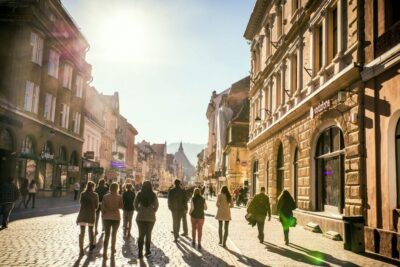
Dracula Castle, Peles Castle & Brasov Old Town
Read our review →
Dracula’s Castle, Peleș Castle & Brașov Day Trip
Read our review →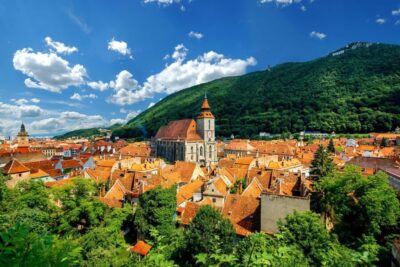
Day Trip to Dracula Castle, Peles Castle & Brașov
Read our review →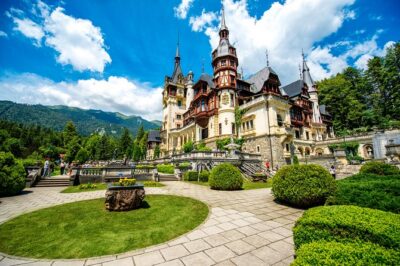
Bucharest to Dracula Castle, Peles Castle and Brasov Guided Tour
Read our review →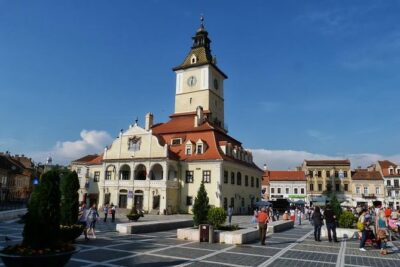
Dracula’s Castle, Peles Castle and Brasov Day Trip from Bucharest
Read our review →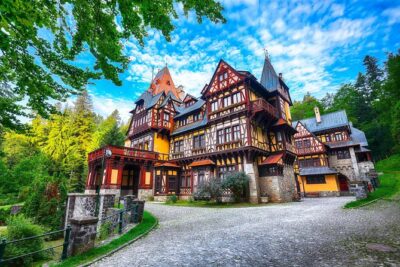
Transylvania and Dracula Castle Full Day Tour from Bucharest
Read our review →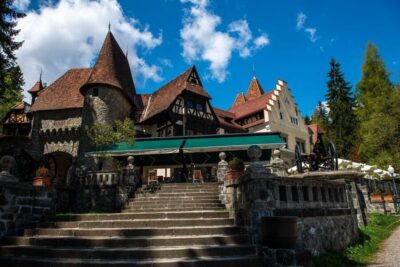
Browse the lists this tour appears in