
Reviewed · TRANSYLVANIA DAY TRIPS
7-Day Romania Tour -Transylvania and Painted Churches
Romania’s best sights are spread far apart, and this private seven-day route links them by road: royal castles, painted monasteries, medieval towns, mountain passes, and the birthplace of Vlad Tepes, the figure tied to the Dracula legend. You get a driver-guide, six nights of lodging, and a route that begins and ends in Bucharest.
I like the mix of famous stops and quieter religious sites, especially Peles Castle and the Bucovina monasteries. I also like the private format, since your group travels together rather than being folded into a large coach. The main drawback is simple: this is a lot of Romania in a short time, so expect long hours in the car and a schedule that may feel full.
In This Review
- Key things to know before booking
- A fast look at the route from Bucharest
- Day 1: Bucharest and the Palace of Parliament
- Day 2: Peles Castle and Bran Castle
- Day 3: Brasov and Agapia Monastery
- Day 4: Bucovina’s painted monasteries
- Day 5: Red Lake, Bicaz Gorge, and Sighisoara
- Day 6: Sighisoara, Biertan, and Sibiu
- Day 7: Sibiu and Curtea de Arges
- Transport, lodging, and the real pace
- Is $1,708.12 good value?
- Who should book this Romania tour?
- FAQ
- Where does the tour start and finish?
- How long is the tour?
- Is this a private tour?
- What type of transportation is provided?
- Are meals included?
- What accommodation is included?
- Are attraction admission fees included?
- Can service animals participate?
- What is the cancellation policy?
- Should you book it?
Key things to know before booking
- Peles Castle brings royal elegance, with ornate woodwork, paintings, and links to Romania’s Hohenzollern kings.
- Bucovina’s painted monasteries are the cultural heart of the route, including Voronet, Moldovita, and Sucevita.
- Sighisoara is both a living town and a medieval fortress, with the Clock Tower, Church on the Hill, and Vlad Tepes’s birthplace.
- The tour uses private transport, with fuel and parking included, making the long cross-country route easier to manage.
- Six nights of B&B-style accommodation are included, but meals and drinks are not.
- The biggest practical issue is driving time, especially on the long links between Transylvania, Bucovina, and southern Romania.
A fast look at the route from Bucharest
This tour is designed for someone who wants a broad first taste of Romania without arranging trains, car hire, hotels, and cross-country driving. You begin and end in Bucharest, but much of the trip takes place in the Carpathian regions and historic towns beyond the capital.
The route covers two UNESCO World Heritage locations directly, Sighisoara and Biertan, while also visiting the painted churches of Bucovina, a major reason to come this far east. The schedule also includes Bran Castle, known around the world as Dracula’s Castle, although its real connection to Vlad Tepes is far thinner than popular fiction suggests.
The price is $1,708.12 per person. That is not a shoestring trip, but it includes six nights of accommodation, private transport, a driver-guide, fuel, and parking. You still pay for food, drinks, and several admission tickets, so budget for those extras. The value is strongest if you want convenience and a private setting rather than the lowest possible daily cost.
More Transylvania day trips:
- Transylvania and Dracula Castle Full Day Tour from Bucharest
★ 4.5 · 1,589 reviews - Castles of Transylvania: Private Day Trip from Bucharest
★ 4.5 · 248 reviews - 2-Day Medieval Transylvania with Brasov,Sibiu and Sighisoara Tour from Bucharest
★ 4.5 · 145 reviews
Day 1: Bucharest and the Palace of Parliament
Your arrival at Bucharest Henri Coanda Airport includes a meet-and-greet with the guide-driver. Depending on your arrival time, the first afternoon can include a tour of Bucharest’s main sights, with the Palace of Parliament listed as the principal stop.
The Palace of Parliament is a grand and controversial symbol of Romania’s communist period. The visit can help you place the country’s modern political story before heading into castles, monasteries, and medieval towns. Admission is not included, and the exact sightseeing available on arrival depends on your flight time.
This first day is best treated as flexible. If you land late, you may have little more than a transfer and orientation. If you arrive early, you have a chance to begin seeing Bucharest before the road trip starts.
Day 2: Peles Castle and Bran Castle
The drive over the Southern Carpathians leads to Sinaia, a mountain settlement that grew around Sinaia Monastery, founded in 1695. The main prize here is Peles Castle, one of the best-preserved royal palaces in Eastern Europe.
Peles has a very different feel from a stark medieval fortress. Its 19th-century Neo-Renaissance design is full of decoration, with elaborate wood sculpture, paintings, and references to the works of German composer Richard Wagner. The palace served as a residence for Romania’s royal family, and the two-hour visit gives you enough time to appreciate both the architecture and the interiors.
Admission is not included, so check the cost before you arrive. Castle access may also affect your timing, especially on a route that continues to Bran the same day.
Bran Castle is the day’s more theatrical stop. Its hilltop position and pointed silhouette helped inspire the Dracula image, but the connection to Bram Stoker’s fictional character is largely a modern association. The castle is still worth seeing for its setting, medieval appearance, and role in Romania’s popular culture.
Plan on two hours here. The visit is more about atmosphere, legends, and the building itself than about finding a direct historical link to Dracula. If you prefer documented royal history, Peles will likely be the stronger stop. If you enjoy folklore, Bran supplies the fun.
Day 3: Brasov and Agapia Monastery
Brasov sits in central Romania, surrounded by the Southern Carpathians. Its old center is well preserved, with a setting that makes the city a useful base for exploring the region.
You have around two hours for the historic center. The route description also points to the cable car up Tampa Mountain, at 995 meters, for a view over the city. The cable car is not listed as included, so treat it as an optional extra rather than part of the guaranteed price.
Brasov deserves more time than a quick stop can provide, so you may want to discuss the exact walking plan with your guide. The advantage of a private trip is that the pace can sometimes be adjusted within the day, though the long onward drive limits how much time is available.
Agapia Monastery offers a change of mood. It is one of Romania’s largest nunneries, with more than 300 nuns working in different workshops. You may see painted icons and handmade carpets, which gives the visit a practical side beyond simply looking at a church.
This is a useful stop for understanding Romanian Orthodox life. It also helps explain why the painted monasteries later in Bucovina matter so much. Admission is listed as free, but donations or workshop purchases are not addressed, so bring some Romanian currency if you wish to support the site.
A few more Bucharest tours worth a look
- 4×4 Driving Experience at Flying Altitudes – 7 Days
★ 5.0 · 13 reviews - 7-Day Private Tour of Transylvania from Bucharest
★ 5.0 · 13 reviews - Amazing Romania – Seven day private tour from Bucharest
★ 5.0 · 7 reviews - Transylvanian week
★ 5.0 · 7 reviews
Day 4: Bucovina’s painted monasteries
Day four is the artistic high point of the tour. The painted monasteries of Bucovina are not just old churches with attractive decoration. Their exterior frescoes use large religious scenes to teach biblical stories to communities that could not rely on printed texts.
Voronet, built in 1488, is the first major stop. Its church combines Byzantine, Gothic, and local forms. The western wall carries a famous Last Judgment scene, with painted figures arranged across the outside of the building.
Give yourself time to look closely rather than simply taking a few photographs. The murals are exposed to weather, and the force of the visit comes from seeing the church, its colors, and its rural setting together. Admission is not included.
The road to Moldovita crosses the Bucovina Mountains and the Ciumarna Pass. The route description calls this one of the most scenic drives in Romania, and the pass provides broad mountain views. Road travel is a major part of this tour, but this is one of the stretches where the journey itself is part of the experience.
Moldovita Monastery was built in 1532 inside a fortified enclosure with towers, gates, and maintained grounds. Its church has exterior frescoes dating from 1537, with parts restored. One striking scene depicts the Siege of Constantinople in 626, with the attackers shown in Turkish clothing. The image connected an old religious story with a threat people understood at the time.
Sucevita Monastery completes the day. Its fortified walls and painted church add another variation to the group, while the Virtue Staircase presents the struggle between the ordered angels and the chaotic devils. The subject is easy to recognize even if you know little about Orthodox iconography.
Each monastery has a separate admission charge, so the costs add up. Still, this is the part of the journey that gives the route its own character. Castles and Dracula are the headline attractions, but Bucovina’s painted churches offer the most distinctive cultural experience.
The tour overview also refers to the mud volcanoes of Bucovina. They are not assigned a clear stop in the day-by-day schedule, so ask the provider before booking if seeing them is essential to you. One review specifically noted seeing the mud volcanoes and painted monasteries, but the published timing does not explain where the volcano visit fits.
Day 5: Red Lake, Bicaz Gorge, and Sighisoara
The route crosses the Eastern Carpathians through Bicaz Gorge before reaching Red Lake. The area is linked in the tour description to the dark, mysterious atmosphere associated with Bram Stoker’s Dracula.
Red Lake is listed as a one-hour stop with no admission charge. The setting also takes you into an area inhabited largely by the Hungarian Szekler community, a reminder that Transylvania is not culturally uniform. Romania’s regions include several languages, traditions, and historical identities, and this road section gives you a glimpse of that mix.
You reach Sighisoara in the evening and stay around its medieval citadel. Sighisoara is a UNESCO World Heritage site and one of Europe’s rare medieval fortresses that remains inhabited. That matters: this is not just an open-air museum with a few restored facades. People still live and work among the cobbled lanes and old houses.
An evening arrival can be pleasant because the citadel has time to settle into a quieter rhythm after the day’s driving. Your exact free time depends on road conditions and the length of the Red Lake stop, so do not count on a full independent afternoon.
Day 6: Sighisoara, Biertan, and Sibiu
The morning returns to Sighisoara’s old town for a closer walk. The planned sights include the Clock Tower, Church on the Hill, and the house where Vlad Tepes was born in 1431.
The Dracula connection here is more concrete than at Bran, since Vlad Tepes is a historical figure associated with the name Dracula. Still, the visit works best when you treat it as one piece of the town’s story rather than the whole reason to come. Sighisoara’s real appeal is the complete setting: cobbled streets, burgher houses, churches, and defensive architecture.
The Clock Tower and Church on the Hill require admission, which is not included. Wear comfortable shoes, since the old town’s historic surfaces and uphill sections can make a short walk feel more demanding than the timetable suggests.
Biertan is next. This UNESCO-listed fortified church began as one of the German settlements in Transylvania. Three lines of fortifications surround the church, which served for almost 300 years as the residence of the Transylvanian Archbishop.
The most memorable detail is the reconciliation room. Couples considering divorce were kept there together for a period, with the hope that the arrangement would repair the marriage. Your guide can explain the full local story on site. It is a small room with a practical, slightly unsettling lesson in old social customs.
The day ends in Sibiu, the main city of the Transylvanian Saxons. A walking tour introduces the former defense walls and the remaining guild towers, each linked to a particular trade group. Sibiu is larger and more open than Sighisoara, but it has the same German-influenced urban character.
The schedule gives Sibiu substantial time, potentially including an overnight stay. That is useful, since the city rewards walking rather than a hurried photo stop.
Day 7: Sibiu and Curtea de Arges
The final morning continues in Sibiu with the Brukenthal Museum, assembled by Baron Brukenthal, who governed Transylvania in the late 18th century. Museum admission is not included.
The route also includes Sibiu’s Evangelical Cathedral, completed in its current form in 1520. Inside, look for the Crucifixion fresco on the north wall of the choir, dated to 1445. Other listed sights include the Passage of Stairs, which links the Upper Town and Lower Town, the 1859 Liar’s Bridge, the defense towers, and the Byzantine-style Orthodox Cathedral modeled on Hagia Sophia in Constantinople.
This is a strong final morning because it shows the city’s layered identity. German Saxon, Romanian Orthodox, medieval, and later civic influences all appear within a compact walking area.
On the way back to Bucharest, you stop at Curtea de Arges Monastery. Curtea de Arges was the first capital of Wallachia, and the site includes the old Princely Court and the monastery where three of the four Romanian kings from the Hohenzollern dynasty are buried.
The stop lasts about an hour, with admission not included. It breaks up the drive south and gives the tour one last look at Romania’s royal and religious past before returning to Bucharest.
Transport, lodging, and the real pace
The tour uses an air-conditioned car, minivan, or minibus, with fuel and parking covered. Your group travels privately, which is a major comfort on a route with repeated mountain crossings and long intercity sections.
The driver-guide is expected to speak English. The guide is also responsible for the driving, so the quality of the trip depends heavily on how well that person balances road safety, explanations, and sightseeing time. One published comment specifically praised the guide’s English and subject knowledge, while also giving the most useful warning: the distances by car are long.
Six nights of B&B-style accommodation are included on a bed-and-breakfast basis. Food and drinks are not included, and the supplied information does not give the names or exact locations of the inns. If you need a specific room setup or have dietary concerns, ask before paying.
The title calls this a seven-day tour, while the overview describes it as a six-day tour. The detailed schedule runs from Day 1 through Day 7, and six nights of accommodation are included. I would confirm the exact departure and return times before booking, especially if you are arranging flights.
Is $1,708.12 good value?
The price makes the most sense when you put a value on time and simplicity. You are not only paying for sightseeing. You are also paying for a private vehicle, a driver-guide, fuel, parking, six nights of lodging, and a route that would be awkward to organize independently in one week.
The cost does not cover meals, drinks, or many attraction tickets. Peles, Bran, Voronet, Moldovita, Sucevita, Sighisoara’s paid sights, Biertan, Sibiu’s museum, and Curtea de Arges all need careful budgeting. The cable car at Tampa Mountain may also be extra.
I would compare the total cost with the price of renting a car, arranging one-way accommodation across several regions, and handling mountain roads yourself. If you are comfortable planning every detail and want long stays in fewer places, you may find a slower independent trip better value. If you want a private route with the major sights connected for you, the package is easier to justify.
Who should book this Romania tour?
I would recommend it to first-time visitors who want to see both Transylvania and Bucovina without navigating Romania’s long-distance transport system. It suits couples, families, and small private groups who prefer their own vehicle and guide.
It is also a good fit for people interested in religious art, medieval towns, royal buildings, and regional culture. The tour is less suitable if you dislike long drives, want late mornings, or prefer to spend several days in one town.
The 4.9 rating from seven reviews reflects a strong overall response, and the clearest praised feature is the English-speaking guide who explains the places well. Still, the warning about driving time should guide your decision more than the rating. Ask for the expected hours on the road each day, and confirm how the mud volcano visit fits into the route.
The cancellation terms allow a full refund when you cancel at least six full days before the start time. A 50 percent refund applies two to six days before departure, and cancellations less than two full days ahead are nonrefundable.
FAQ
Where does the tour start and finish?
The tour begins in Bucharest, with pickup and meet-and-greet service at Bucharest Henri Coanda Airport. The route returns to Bucharest on Day 7.
How long is the tour?
The detailed schedule covers seven days, from Day 1 through Day 7. Six nights of accommodation are included.
Is this a private tour?
Yes. Only your group participates in the activity.
What type of transportation is provided?
Transport is provided by an air-conditioned car, minivan, or minibus. Fuel and parking fees are included.
Are meals included?
No. Food and drinks are not included unless specifically stated.
What accommodation is included?
Six nights in B&B-style accommodation are included on a bed-and-breakfast basis.
Are attraction admission fees included?
No. Several stops list admission tickets as not included, including Peles Castle, Bran Castle, Voronet, Moldovita, Sucevita, Sighisoara’s paid sights, Biertan, the Brukenthal Museum, and Curtea de Arges Monastery.
Can service animals participate?
Yes. Service animals are allowed, and most people can participate.
What is the cancellation policy?
You receive a full refund if you cancel at least six full days before the start time. Cancellation two to six full days before the start time receives a 50 percent refund. Cancellation less than two full days before the start time is nonrefundable.
Should you book it?
Book this tour if you want Romania’s major castle, monastery, and medieval-town sights tied together with private transport and a guide. The strongest reasons are the painted monasteries, Sighisoara, Peles Castle, and the convenience of not driving the long mountain routes yourself.
Skip it if your ideal holiday means slow mornings and several nights in one place. Before booking, confirm the seven-day timing, the daily driving hours, the exact lodging, and the place of the mud volcanoes in the schedule. If those details suit you, this is a practical way to see a wide slice of Romania in one carefully packed week.
Recently added around Bucharest
- 6h Communism Tour in Bucharest with Ceausescu Mansion★ 4.5 · 6 reviews
- From Bucharest : Day Trip to Peles, Dracula’s Castle, Brasov★ 4.7 · 6 reviews
- Bears Sanctuary, Dracula Castle and Brasov City – Full Day Trip from Bucharest★ 5.0 · 6 reviews
- Dracula Private Tour★ 5.0 · 6 reviews
- Transfagarasan Road Private Day Trip from Bucharest / The Best Road in the World★ 5.0 · 6 reviews
- Bucharest : Wednesday, Dracula & Peles 3 Castles Tour 1 Day★ 4.7 · 6 reviews
- Hiking thought the best mountain villages in Romania-Private tour from Brasov★ 5.0 · 6 reviews
- Bucovina Painted Monasteries & Transylvania Tour: 4-Day Private★ 5.0 · 6 reviews
Transylvania Day Trips, compared.
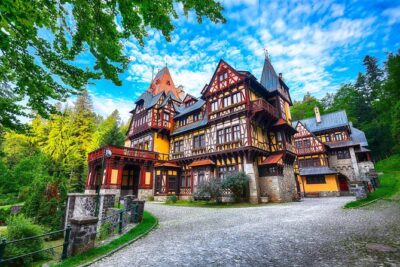
Transylvania and Dracula Castle Full Day Tour from Bucharest
Read our review →
Castles of Transylvania: Private Day Trip from Bucharest
Read our review →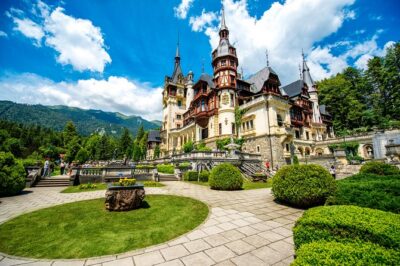
2-Day Medieval Transylvania with Brasov,Sibiu and Sighisoara Tour from Bucharest
Read our review →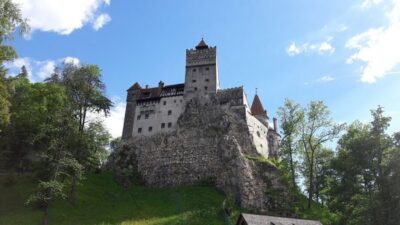
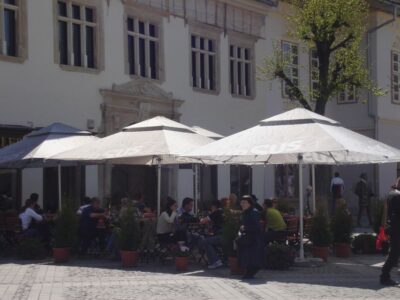
SB01 – City Tour Sibiu: Exploring the Heart of Transylvania
Read our review →
Day trips and excursions in nature, cities in Transylvania, Brasov!
Read our review →
2-Day Transylvania from Bucharest: Brasov, Bran, Sighisoara
Read our review →
Browse the lists this tour appears in