
Reviewed · TRANSYLVANIA DAY TRIPS
Transylvanian week
Transylvania gives you medieval citadels, Gothic churches, mountain roads, and Dracula lore in one well-planned loop. This tour takes you from Bucharest through Sibiu, Sighișoara, Brașov, and the Carpathians without making you arrange six hotels or figure out rural roads yourself. I especially like the mix of grand sights such as Corvin Castle and Peles Castle with quieter Saxon villages such as Malâncrav and Viscri. I also like the private format, which gives your group more room to ask questions and adjust the pace.
The main consideration is the price, $2,166.68 per person, and the packed schedule. You cover a lot of ground in six days, with several hours in the vehicle on some days. Also confirm the exact number of nights and the guide assigned to your departure, since the description calls it a six-day tour with six nights, and past trips have been led by Gelu Trandafir or his brother George.
In This Review
- Key points to know before booking
- Why this six-day route works
- Day 1: Cozia Monastery and Sibiu’s medieval squares
- Day 2: Corvin Castle and Alba Iulia’s layered past
- Day 3: Biertan, Malâncrav, and Sighișoara after the day crowds
- Day 4: Saxon villages, Viscri, and Brașov
- Day 5: Poiana Brașov, Bran Castle, and the Dracula question
- Day 6: Peles Castle and the return to Bucharest
- What the $2,166.68 price includes
- Guide style and the private-tour advantage
- Who should book this Transylvanian week
- FAQ
- How long is the Transylvanian week tour?
- Where does the tour begin?
- Is transportation private?
- Which castles are included?
- Are meals included?
- Are entrance fees included?
- Is the tour refundable if I cancel?
- Should you book it?
Key points to know before booking
- Corvin Castle and Alba Iulia bring medieval military history to life, far beyond the usual Dracula story.
- Saxon fortified churches in Biertan, Malâncrav, Viscri, and Prejmer show a quieter side of Transylvania.
- Private air-conditioned transportation removes the strain of rural navigation and hotel changes.
- Sibiu, Sighișoara, and Brașov each offer a different kind of old-world city experience.
- Bran Castle and Peles Castle make a useful pair: one tied to Dracula legends, the other to Romania’s royal age.
- Breakfast and six nights in three-star superior hotels or guesthouses are included, while most lunches and photo fees are extra.
Why this six-day route works
The best feature here is the route itself. You begin in Bucharest, follow the Olt River Valley north, cross into the old Saxon areas of Transylvania, then return through Brașov and the Prahova Valley.
That shape saves you from backtracking. It also lets the story build naturally. You start with Wallachian princes and medieval monasteries, move into Hungarian and Saxon history, hear the Vlad the Impaler legends in Sighișoara and Bran, and finish with the royal world of Peles Castle.
I would choose this tour if you want context as much as photographs. The licensed guide is not just there to drive. The route includes churches, fortresses, royal residences, and Roman remains, so good explanations matter.
The private arrangement is another real advantage. Only your group takes part, and transport is by air-conditioned vehicle. You do not have to wait for a large coach or spend time working out connections between places that public transport serves unevenly.
Still, this is not a slow village holiday. The schedule is full, and some visits are short. If you prefer to spend half a day in one café or museum, you may find the pace brisk.
More Transylvania day trips:
- Transylvania and Dracula Castle Full Day Tour from Bucharest
★ 4.5 · 1,589 reviews - Castles of Transylvania: Private Day Trip from Bucharest
★ 4.5 · 248 reviews - 2-Day Medieval Transylvania with Brasov,Sibiu and Sighisoara Tour from Bucharest
★ 4.5 · 145 reviews
Day 1: Cozia Monastery and Sibiu’s medieval squares
Pickup is offered from your Bucharest hotel or the airport. The first drive follows the scenic Olt River Valley to Cozia Monastery, founded in 1388 by Mircea the Elder.
This is a smart opening stop because Mircea was the grandfather of Vlad the Impaler. You get an early link to the people and power struggles that shape much of the tour. The visit is brief, about 30 minutes, and admission is free.
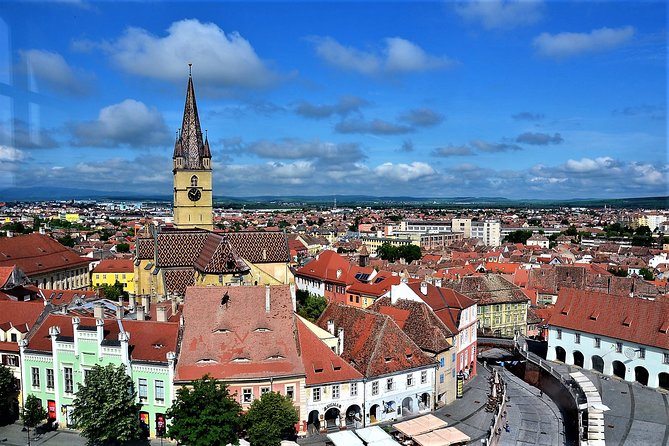
After lunch and a rest, you continue to Sibiu. The guided old-city walk lasts about two hours and covers the Grand Square, Small Square, and Albert Huet Square, the oldest of the three, dating from the 12th century.
Sibiu rewards an unhurried stroll. Its squares are easy to connect on foot, and the medieval stairs of the Council Tower offer a fine view after a climb. The tour also visits the Orthodox Cathedral and the Evangelical Church, giving you a useful comparison between Romanian Orthodox and Transylvanian Lutheran traditions.
The timing is sensible, but do not expect a long independent evening in Sibiu on this first day. You have traveled from Bucharest and still have a guided program after lunch. The payoff is that you settle into one of the region’s most appealing cities without having to handle parking or city navigation.
Day 2: Corvin Castle and Alba Iulia’s layered past
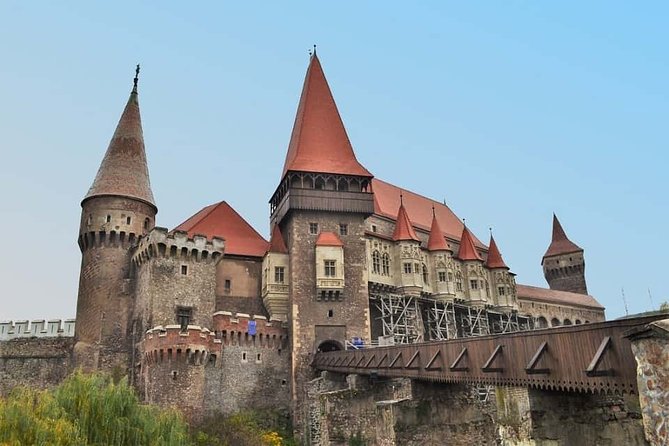
Day two shifts from city squares to powerful fortresses. Corvin Castle, also called Hunyadi Castle, is one of the tour’s major sights.
The castle is tied to John Hunyadi, a leading military commander and statesman of medieval Hungary. His father, Voicu, received the Hunedoara castle in 1409 from King Sigismund of Luxembourg. John later became regent of Hungary and defeated the Ottoman sultan Mehmed II at Belgrade.
That background gives the castle more substance than a quick photo stop. You are looking at a place linked to border wars, royal power, and the defense of central Europe. The visit lasts about an hour, with admission included.
Next comes Alba Iulia, where you spend about two hours at the Alba Carolina fortress. The city brings several periods together in one compact visit. John Hunyadi was buried in Saint Michael Cathedral, whose construction began in 1004. You also see the Orthodox Coronation Cathedral and remains of the Roman castrum associated with the 13th Gemina Legion.
I like this pairing because Corvin Castle supplies drama while Alba Iulia supplies historical layers. You are not simply moving from one pretty building to another. The day explains how Roman, medieval, Hungarian, Austrian, Orthodox, and modern Romanian stories overlap.
You return to Sibiu for a second night. That second stay is useful. It avoids another hotel change and gives you a familiar base before the road turns toward Sighișoara.
Day 3: Biertan, Malâncrav, and Sighișoara after the day crowds
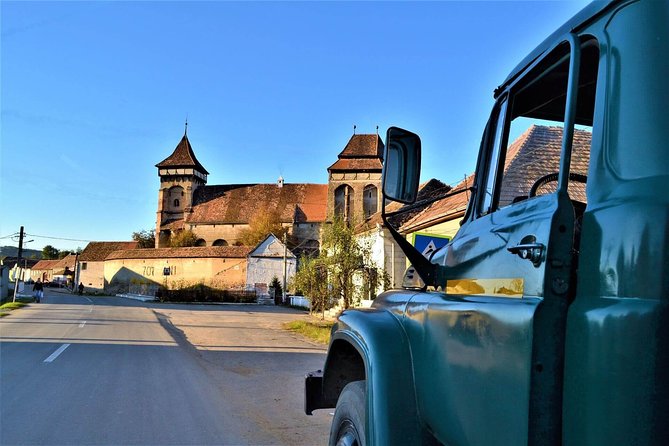
From Sibiu, the route crosses the Hartibaciu Valley toward Sighișoara. Old Saxon villages and wooded roads fill the journey, and the scenery becomes part of the experience rather than empty time between attractions.
Biertan Fortified Church is the first stop, with about an hour inside. Its walls and defensive design show how religious buildings also served local communities during periods of attack. Admission is included.
Malâncrav offers a more unusual church visit. The village church, built around 1305, contains a large Gothic fresco that was uncovered during restoration work in 1914. The paintings had survived beneath a layer of chalk applied after the Lutheran Reformation.
That detail makes Malâncrav especially worthwhile. You are seeing medieval art that might easily have been lost. The stop lasts about an hour, so listen closely to the guide and take your time with the details rather than treating it as a quick village photo opportunity.
The day ends in Sighișoara, a UNESCO-listed citadel and the birthplace of Vlad the Impaler. A two-hour visit is scheduled, including time in the Clock Tower area and the old fortress streets.
Arriving in the late afternoon is a good choice. You may have more atmosphere than during the busiest part of the day, and the citadel becomes easier to appreciate once you stop treating it as a Dracula backdrop. Vlad’s connection is real, but Sighișoara is also a Saxon trading town with its own architecture, walls, towers, and civic life.
The drawback is that two hours is not enough for every corner. If you want a long museum visit or a full meal inside the citadel, you will need to use free time carefully.
A few more Bucharest tours worth a look
- 4×4 Driving Experience at Flying Altitudes – 7 Days
★ 5.0 · 13 reviews - 7-Day Private Tour of Transylvania from Bucharest
★ 5.0 · 13 reviews - 7-Day Romania Tour -Transylvania and Painted Churches
★ 5.0 · 7 reviews - Amazing Romania – Seven day private tour from Bucharest
★ 5.0 · 7 reviews
Day 4: Saxon villages, Viscri, and Brașov
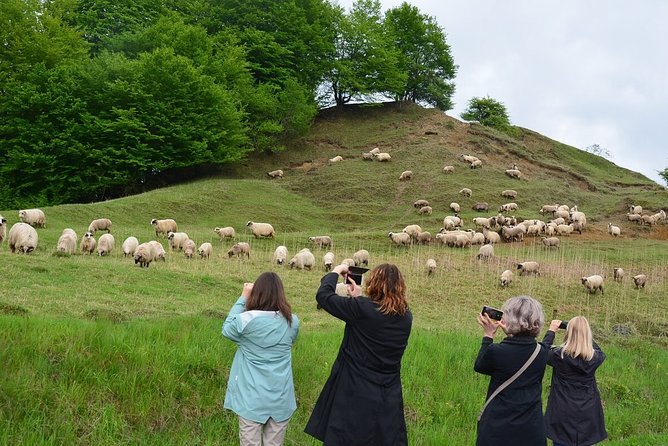
The route begins with a look at Saschiz fortified church, a UNESCO monument built at the end of the 15th century. Its tower recalls Sighișoara’s Clock Tower, making it a useful visual link between the villages and the larger citadel towns.
Viscri is the day’s most distinctive rural stop. The village became widely known after Prince Charles bought an old Saxon house there, a blue home built in 1753. He visited to ride horses and travel through the region.
The important point is not the royal connection alone. Viscri gives you a look at the Saxon village pattern that shaped this part of Transylvania: modest homes, agricultural life, and a fortified church built for protection as well as worship. Lunch is planned here, and the visit lasts about two hours.
You also see Rupea Fortress from a distance on the road to Brașov. It was built over earlier Roman and Dacian fortifications. Since this is an outside view rather than a full listed visit, treat it as a scenic roadside stop.
Prejmer comes next, with about an hour at its fortified church. The first foundations were linked to the Teutonic Knights, who were invited into southeastern Transylvania to defend the area from attacks arriving from the east. Saxon settlers later completed the work after the order fell out with the Hungarian king.
Prejmer is one of the seven Saxon fortified sites in Transylvania on the UNESCO World Heritage List. Its walls make the practical purpose of these churches clear. Faith, shelter, storage, and defense were all tied together.
By evening, you reach Brașov. The historic-center walk covers medieval fortifications, bastions, towers, and Rope Street, one of the narrowest streets in Europe. The Black Church is scheduled for the following afternoon, so this first walk can focus on the city’s layout and defensive past.
Day 5: Poiana Brașov, Bran Castle, and the Dracula question
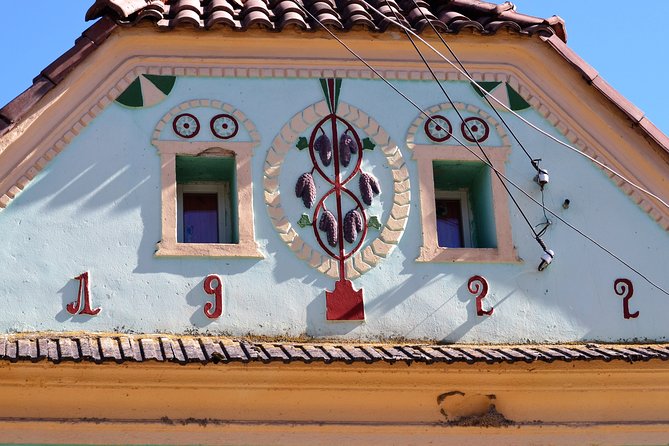
Day five heads uphill to Poiana Brașov, a mountain resort. If weather conditions cooperate, a cable-car ride reaches about 1,727 meters near Postăvaru Peak, with views over the Carpathians and the Transylvanian plateau.
The cable-car ride is weather dependent, and it is listed as an activity without an admission charge. This is one of the places where conditions can shape the day. On a clear morning, the views may be a highlight. In poor weather, you should be ready for the mountain section to feel less rewarding.
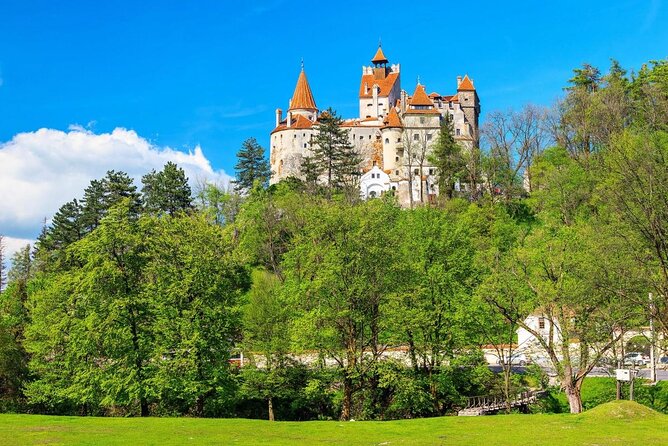
Bran Castle follows. Built in the 14th century, it guarded a commercial route between Wallachia and Transylvania. Its position on a rocky rise explains much of its visual power and its defensive value.
The castle became linked with Count Dracula, though the historical Vlad the Impaler connection is far less direct than popular culture suggests. A good guide can separate the real ruler, the fictional vampire, and the castle’s actual role as a border and trade-route stronghold. That clarification is one of the tour’s strongest themes.
On the return to Brașov, you see Râșnov Fortress from a distance. It dates to the 13th century and may have been built during the period when the Teutonic Knights controlled the area around Brașov. Since the description does not list an interior visit, do not plan on exploring the fortress itself.
Back in Brașov, you visit the Black Church for about an hour. This imposing Gothic church gives the day a needed counterweight to Bran’s legends. Its scale and religious setting bring you back to the real communities that built and used these towns.
Day 6: Peles Castle and the return to Bucharest
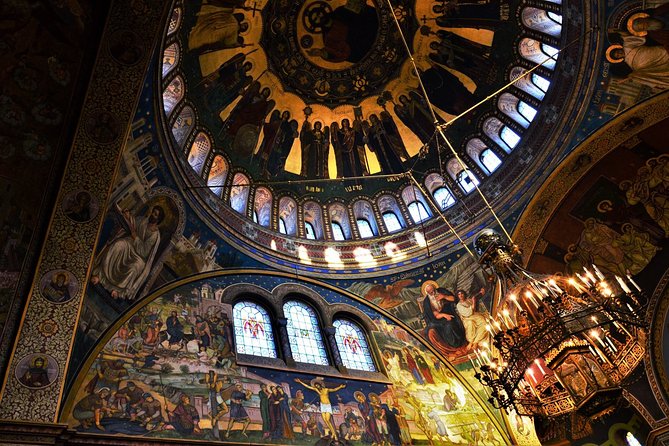
The final road leads south through the Prahova Valley to Sinaia, a mountain resort. Peles Castle is the day’s major visit, lasting about two hours with admission included.
Peles was built in the late 19th century for Carol I, Romania’s first king. The castle’s ornate style contrasts with Carol’s reputation for discipline and seriousness. He ruled for 48 years and devoted much of his reign to modernizing Romania.
This is an excellent final castle because it changes the story. Corvin shows medieval military power, Bran shows border defense and later legend, while Peles represents monarchy, state-building, and Romania’s modern royal period.
In the afternoon, you return to Bucharest and check in. The final guided city walk includes Stavropoleos Church, built in 1724, a small monastery in the center of the capital.
The day has a lot of driving, so I would not count on a relaxed Bucharest afternoon. Still, ending with Stavropoleos gives you a graceful close to the route and a taste of the capital’s older architecture before the tour finishes.
What the $2,166.68 price includes
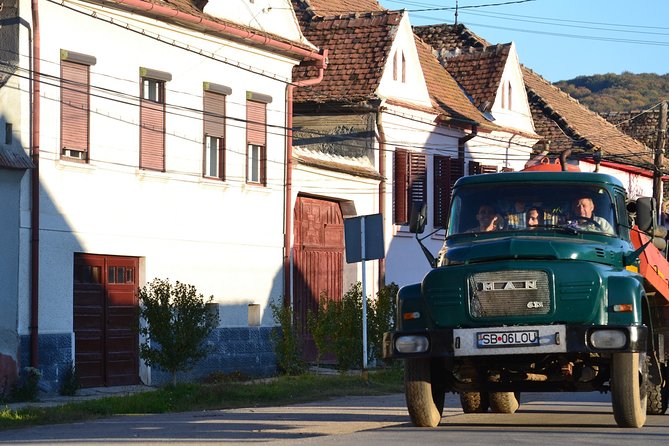
At $2,166.68 per person, this is not a budget trip. The value depends on how much you would otherwise spend on a private vehicle, a guide, six nights of lodging, and admissions across a wide rural route.
Included are:
- Six nights in a double room at three-star superior hotels or guesthouses
- Breakfast each morning
- A private, air-conditioned vehicle
- Private transportation
- Admission fees and taxes listed as included
- Lunch
Not included are other meals, photo fees, and flights. Since only lunch is specifically included, budget for dinners and any additional meals. Photo charges can also apply at some sights.
The private format is the main reason to consider the cost. You are paying for convenience and a tailored road route, not merely entry to castles. If you are comfortable arranging trains, rental cars, guesthouses, and local guides yourself, you could potentially spend less. You would also take on the driving, parking, timing, and route research.
For couples, families, or a small group that values simplicity, the price may be reasonable. Group discounts are offered, so ask how the rate changes as your party grows.
Guide style and the private-tour advantage
The company is associated with Gelu Trandafir and his brother George. Gelu is described as a licensed guide, and past trips have included careful planning, map use, and flexibility when a group wanted an extra stop or a practical detour.
That flexibility matters on a route like this. Rural churches may have changing access times, mountain views depend on weather, and the balance between history and folklore works best when you can ask questions. A private group also lets you spend more time on the parts that interest you most, within the day’s schedule.
Do confirm who will guide your particular departure. The experience description does not guarantee a named guide, even though Gelu and George are connected with the company.
The tour is suitable for most people, and service animals are allowed. You should still be comfortable with regular walking, stairs, castle floors, church visits, and long road segments. The Council Tower climb and the mountain cable-car visit may be less appealing if you want a completely low-effort program.
Who should book this Transylvanian week
I would recommend it to you if:
- You want Romania’s major Transylvanian sights in one organized route.
- You prefer private transport to driving or public buses.
- You care about churches, fortifications, and regional history, not just Dracula.
- You want breakfast and lodging arranged in advance.
- You are happy with a full schedule and several changes of base.
- You are traveling as a couple, family, or private group.
I would look elsewhere if you want a very slow trip, daily free time, luxury hotels, or a tour focused mainly on Bucharest. The three-star superior accommodation keeps the trip practical, but it is not presented as a luxury experience.
FAQ
How long is the Transylvanian week tour?
The route is described as a six-day tour, with six nights of accommodation included.
Where does the tour begin?
Pickup is offered from your hotel in Bucharest or from the airport.
Is transportation private?
Yes. Your group travels by private transportation in an air-conditioned vehicle, and only your group participates.
Which castles are included?
The route visits Corvin Castle, Bran Castle, and Peles Castle. Râșnov Fortress is viewed from a distance rather than listed as a full visit.
Are meals included?
Breakfast for six nights and lunch are included. Other meals are not included, so you should plan for dinners and additional food.
Are entrance fees included?
Admission is included for the listed visits to Corvin Castle, Alba Iulia, Biertan, Malâncrav, Sighișoara, Viscri, Prejmer, the Black Church, and Peles Castle. Cozia Monastery and the Poiana Brașov visit are listed without an admission charge.
Is the tour refundable if I cancel?
No. The experience is non-refundable and cannot be changed for any reason, so check your dates and group details carefully before booking.
Should you book it?
Book this tour if you want a well-connected introduction to Transylvania with a private vehicle, a licensed guide, and the major castles plus lesser-known fortified churches. Its best moments are not limited to Bran. Corvin Castle, Malâncrav, Prejmer, and the village roads give the trip its real range.
Before paying, confirm the guide, hotel standard, exact six-night arrangement, lunch details, photo fees, and group discount. If you accept the full days and the non-refundable terms, this is a practical way to see a large part of Romania without spending your holiday solving transport and lodging problems.
Recently added around Bucharest
- 6h Communism Tour in Bucharest with Ceausescu Mansion★ 4.5 · 6 reviews
- From Bucharest : Day Trip to Peles, Dracula’s Castle, Brasov★ 4.7 · 6 reviews
- Bears Sanctuary, Dracula Castle and Brasov City – Full Day Trip from Bucharest★ 5.0 · 6 reviews
- Dracula Private Tour★ 5.0 · 6 reviews
- Transfagarasan Road Private Day Trip from Bucharest / The Best Road in the World★ 5.0 · 6 reviews
- Bucharest : Wednesday, Dracula & Peles 3 Castles Tour 1 Day★ 4.7 · 6 reviews
- Hiking thought the best mountain villages in Romania-Private tour from Brasov★ 5.0 · 6 reviews
- Bucovina Painted Monasteries & Transylvania Tour: 4-Day Private★ 5.0 · 6 reviews
Transylvania Day Trips, compared.
Transylvania and Dracula Castle Full Day Tour from Bucharest
Read our review →
Castles of Transylvania: Private Day Trip from Bucharest
Read our review →
2-Day Medieval Transylvania with Brasov,Sibiu and Sighisoara Tour from Bucharest
Read our review →
SB01 – City Tour Sibiu: Exploring the Heart of Transylvania
Read our review →
Day trips and excursions in nature, cities in Transylvania, Brasov!
Read our review →
2-Day Transylvania from Bucharest: Brasov, Bran, Sighisoara
Read our review →
Browse the lists this tour appears in