
Reviewed · TRANSYLVANIA DAY TRIPS
The essence of Saxon Transylvania – 3-day tour of its citadels
Transylvania packs a remarkable amount into a small corner of Romania. In three days, you connect Sibiu, Sighisoara, and Brasov with Bran Castle, Peles Castle, Biertan’s fortified church, and old Saxon villages. The route also links the real Vlad the Impaler with the later Dracula legend, giving the castles and churches a useful human story.
I like two things right away: the private format lets you travel with only your own group, and guides Gelu and Vlad add the historical links that turn separate sights into one story. I also like the contrast between ornate Peles Castle, stern medieval churches, and ordinary village life along the Hartibaciu Valley.
The main consideration is pace. Three days is enough for a strong first look, but not enough for slow wandering in every town. Long stretches by car, meals and photo fees outside the included admissions, and a price of $914.51 per person mean this suits you best if convenience and a focused route matter more than independent travel.
In This Review
- Key points to know before booking
- Why this route works for a first taste of Transylvania
- Day one: Cozia Monastery and Sibiu
- Day two: Biertan and the medieval citadel of Sighisoara
- Saschiz and Rupea: important sights from the road
- Brasov: Black Church, bastions, and Rope Street
- Day three: Bran Castle and the Dracula question
- Peles Castle and Romania’s royal transformation
- Guides, transport, and the private format
- Price, inclusions, and who gets the best value
- Practical details and cancellation terms
- Should you book this three-day circuit?
- FAQ
- Where does the tour begin?
- How long does the tour last?
- Is this a private tour?
- Which cities are visited?
- Which castles are included?
- Is Cozia Monastery included?
- Is Biertan fortified church included?
- Are hotel nights included?
- Are meals included?
- Are photo fees included?
- When can I cancel for a full refund?
Key points to know before booking
- Three UNESCO-linked stops: Biertan fortified church, Sighisoara’s historic citadel, and Saschiz fortified church are all part of the cultural core of the route.
- A private car and guide: Your group travels in an air-conditioned vehicle, with private transportation and no other group members joining you.
- Two very different castles: Bran serves the Dracula story, while Peles reveals the polished royal world of modern Romania’s first king.
- A useful Vlad the Impaler thread: Cozia Monastery, Sighisoara, and Bran help separate the historical ruler from the fictional count.
- Two hotel nights with breakfast: Accommodation in a superior three-star hotel or guesthouse is included in a double room.
- A full touring schedule: Expect city walks, castle visits, church interiors, village views, and several hours on the road.
Why this route works for a first taste of Transylvania
The appeal here is not one single castle. It is the way the route moves through different chapters of Romanian history.
You begin in Wallachia at Cozia Monastery, cross the Olt River Valley into Transylvania, spend the first night near Sibiu, then follow old Saxon settlements toward Sighisoara and Brasov. The final day turns toward Bran and Sinaia before returning to Bucharest. That gives you medieval religion, fortified towns, royal architecture, and Dracula folklore in one compact circuit.
The route is especially useful if you do not want to arrange several hotels, drivers, tickets, and local explanations yourself. You receive private transport, two nights of accommodation, breakfast, and entry fees for several major sights. Meals are not included, and photo fees are separate, so you should plan for those extra costs.
At $914.51 per person, this is not a budget bus trip. Its value comes from the private format and the amount covered in three days. If your group wants door-to-door pickup from a Bucharest hotel or the airport, an air-conditioned vehicle, and a guide who can explain the connections between places, the price may make sense. If you prefer trains, public buses, and longer stays in each town, you can likely spend less by arranging the route yourself.
More Transylvania day trips:
- Transylvania and Dracula Castle Full Day Tour from Bucharest
★ 4.5 · 1,589 reviews - Castles of Transylvania: Private Day Trip from Bucharest
★ 4.5 · 248 reviews - 2-Day Medieval Transylvania with Brasov,Sibiu and Sighisoara Tour from Bucharest
★ 4.5 · 145 reviews
Day one: Cozia Monastery and Sibiu
Pickup begins at your Bucharest hotel or at the airport. The route follows the scenic Olt River Valley, giving you a change of scenery soon after leaving the capital.
Cozia Monastery is a smart first stop because it establishes the medieval setting before the larger Transylvanian towns appear. Founded in 1388 by Mircea the Elder, the monastery connects directly to the story of Vlad the Impaler, who was Mircea’s grandson. That family link gives the tour a clear opening: before you meet Dracula the legend, you meet the prince and dynasty behind the name.
You have about 30 minutes here. Admission is free. That short visit is enough for a look at the monastery, but it is not a long religious or architectural study. Think of Cozia as a historical introduction and a pleasant break on the drive rather than the day’s main attraction.
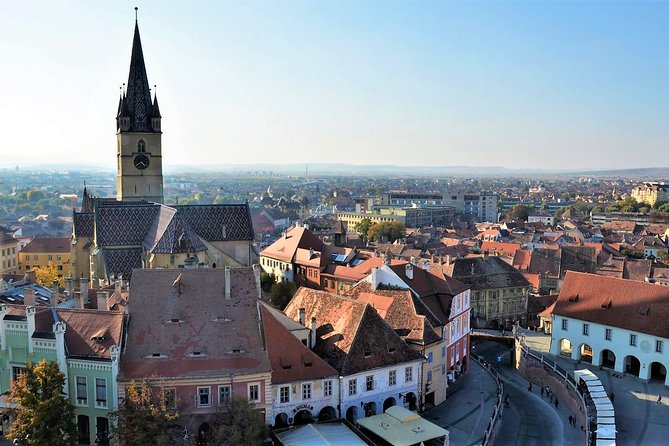
After a quick lunch and a short rest, you reach Sibiu. The old city is the first major town where the Saxon character of Transylvania becomes clear. The guided walk lasts about two hours and focuses on the central squares, the churches, and the view from the Council Tower.
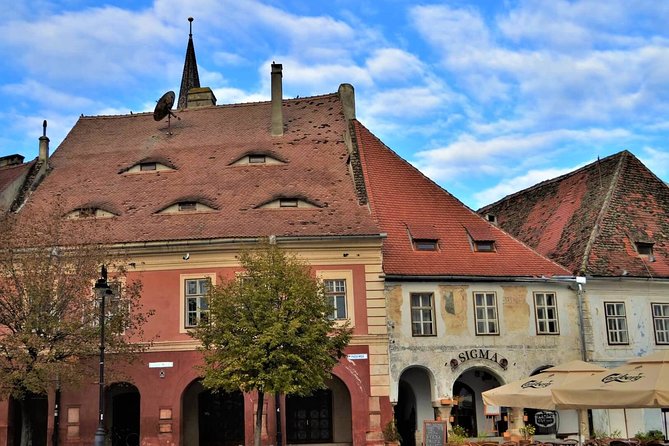
The climb up the medieval stairs of the tower rewards you with a broad view over Sibiu. The walk then continues through the Grand Square, Small Square, and Albert Huet Square. Albert Huet Square is described as the oldest of the three, dating from the 12th century, so it gives you a sense of how long this urban center has been active.
The Orthodox Cathedral adds a different religious note. Its interior and design invite comparison with Saint Sofia’s Basilica in Constantinople. You also visit the Evangelical Church, an impressive reminder of the German-speaking Saxon communities that shaped the town.
I like this part of the schedule because Sibiu is not treated as a quick photo stop. You get time to understand its layout and see how several religious traditions share one historic center. Still, two hours goes quickly. If you enjoy cafés, museums, or small side streets, you will have limited free time unless your guide adjusts the plan.
Day two: Biertan and the medieval citadel of Sighisoara
Day two leaves Sibiu through the Hartibaciu Valley. The road passes old Saxon villages and stretches of forest before reaching Biertan. This is one of the best sections for seeing the countryside rather than only famous monuments.
Biertan fortified church was built between 1486 and 1524 and served for centuries as the seat of a Lutheran bishopric. Its defenses were not decorative extras. They reflect the need to protect a religious center and local population during a period when communities in this part of Europe had to think about invasion, trade, and political rivalry.
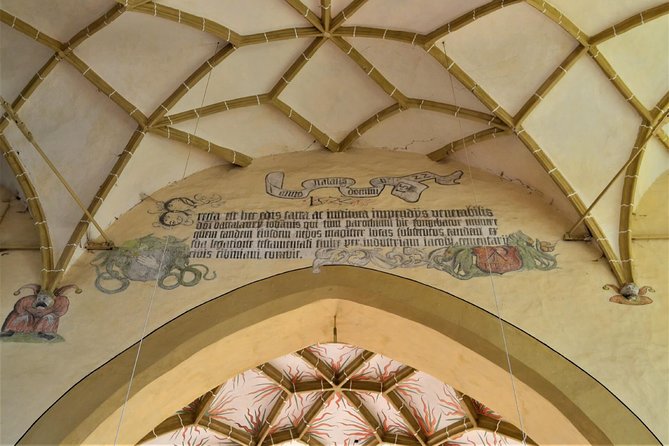
You have about an hour at the church. Look for the defense walls, the nave ceiling, and the collection of tombstones belonging to former bishops and local notables. The fortifications help you understand why churches across Saxon Transylvania often look more like small strongholds than peaceful village chapels.
Admission is included here. That matters because the tour makes several paid visits in a short period, reducing the number of tickets you need to arrange yourself.
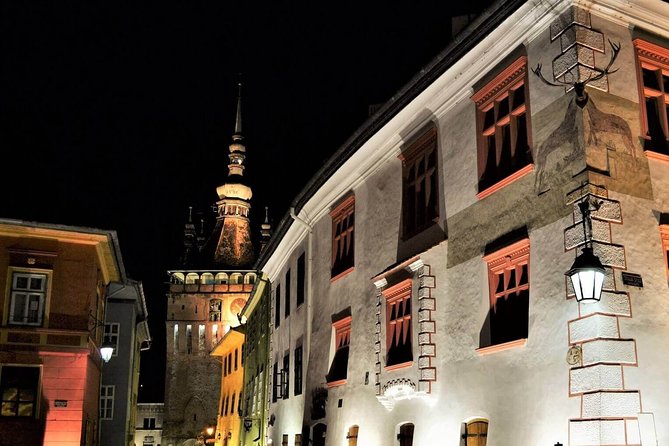
Sighisoara is close by and receives about two hours. The medieval citadel is a UNESCO site and one of the most memorable stops on the route. The Clock Tower is the obvious landmark, but the visit also includes the Church on the Hill, the covered stairs, the fortifications, and the defensive towers.
The stairs and uneven historic streets require a bit of effort, but they are part of what gives the citadel its character. You are not simply looking at a preserved façade. You are walking through a fortified hilltop settlement where towers and gates once had practical jobs.
Sighisoara is also tied to Vlad the Impaler. He was born here, offering a useful correction to the loose Dracula stories that surround the region. The historical Vlad was a 15th-century ruler remembered for brutal punishments and warfare. The fictional Count Dracula belongs to a later literary tradition. A good guide can help you keep those two figures separate while showing how the real prince helped fuel the legend.
Lunch takes place in Sighisoara before the group continues toward Brasov. The schedule gives you a strong overview, but the time limit is worth noting. Two hours can cover the main route through the citadel, yet it leaves little room for unplanned shopping or a long meal.
Saschiz and Rupea: important sights from the road
Between Sighisoara and Brasov, the tour includes views of Saschiz fortified church and Rupea fortress. These are not described as full stops, so you should treat them as sightseeing from the vehicle rather than visits with extended interior time.
Saschiz fortified church is a UNESCO World Heritage monument from the end of the 15th century. Its tower recalls Sighisoara’s Clock Tower, which makes the sighting especially useful after your visit to the citadel. You can compare the forms as you travel.
Rupea fortress is one of Romania’s oldest fortifications. It was built over earlier Roman and Dacian fortresses, placing several periods of history in the same spot. The tour lets you see it on the way to Brasov, but do not expect the same amount of time you receive at Biertan or Sighisoara.
These passing views are one reason to sit where you can see out of the vehicle and keep your camera ready. They also show the tradeoff of a three-day circuit: you cover more ground, but some places remain glimpses rather than complete visits.
A few more Bucharest tours worth a look
- 3-Day Medieval Transylvania Package Tour
★ 4.7 · 31 reviews - 3-Day Explore Transylvania from Bucharest
★ 5.0 · 17 reviews - 3-Day Tour of Transylvania’s Landmarks from Bucharest
★ 5.0 · 16 reviews - 3-Day Private Tour of Medieval Transylvania from Bucharest
★ 5.0 · 15 reviews
Brasov: Black Church, bastions, and Rope Street
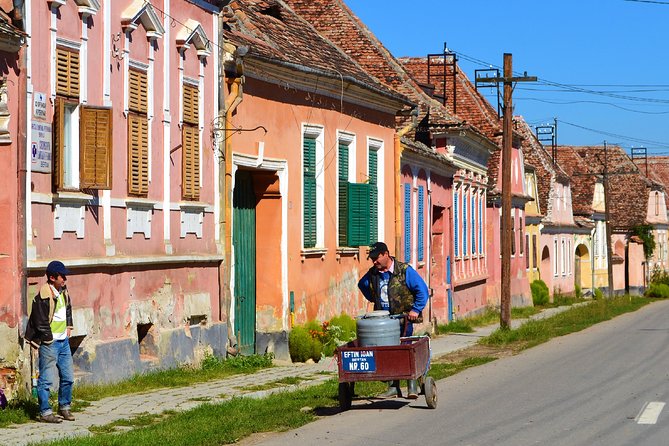
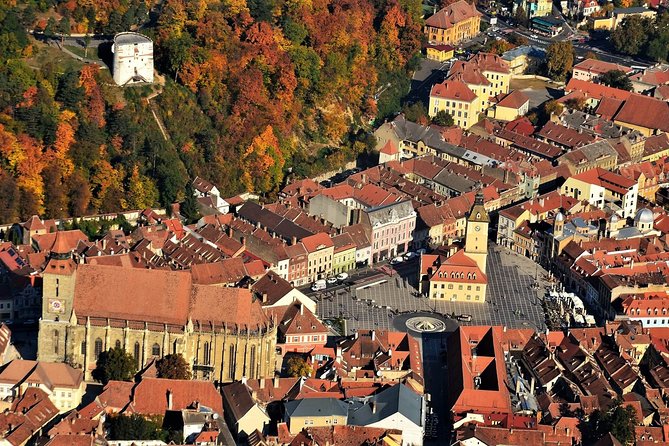
After checking in, you spend about two hours in Brasov’s historic center. The city grew around a fortress first established in 1211 by the Teutonic Knights, then developed further through German settlement after a dispute between the knights and the king.
Brasov’s story is different from that of a small fortified village. It became an important industrial center during the last century and drew people from across Romania. That gives the city a more active modern life alongside its medieval core.
The Black Church is the main architectural stop. This 14th-century Gothic monument anchors the old center and shows the strength of the city’s German influence. You also see the medieval fortifications, bastions, and towers.
Rope Street is a curious change of scale. It is famously narrow, and the walk offers a quick, slightly playful moment after the larger churches and defensive works. These details keep Brasov from feeling like a parade of grand monuments.
The two-hour visit is enough for the main sights with a guide. You should not expect a slow evening of independent exploration unless extra time is available after the formal walk. The included hotel night gives you a base in Brasov, but the exact property is described only as a superior three-star hotel or guesthouse.
Day three: Bran Castle and the Dracula question
On the way from Brasov to Bran, you see Rasnov fortress from a distance. The fortress dates to the 13th century and may have been built during the short period when the Teutonic Knights controlled the area around Brasov, from 1211 to 1225.
Again, this is a view rather than a full visit. That distinction matters if Rasnov is high on your list. You will see it, but the planned castle visit is Bran.
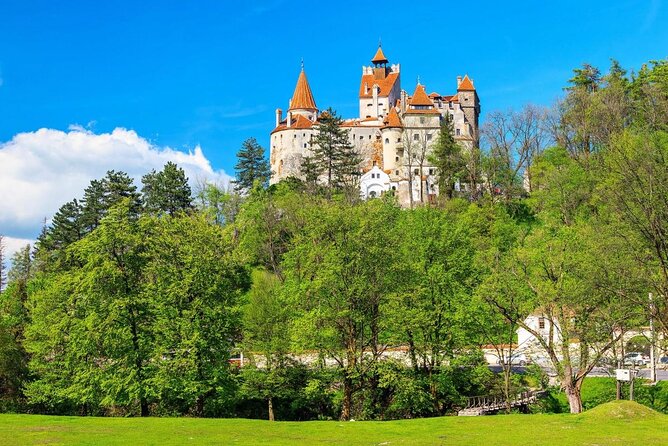
Bran Castle occupies a dramatic position on a rock above the route between Wallachia and Transylvania. It was built in the 14th century to guard this commercial passage. The setting explains much of its appeal before the Dracula branding enters the story.
You have about two hours inside Bran Castle, with admission included. The castle has long been linked to Count Dracula because of its strong position and appearance. The connection to Vlad the Impaler is much less direct than popular culture suggests. That tension is part of the fun, and the tour is designed to explain the real people and places behind the legend.
I like Bran best when you approach it as a medieval border fortress first and a Dracula attraction second. If you want a pure literary Dracula site, you may find the connection indirect. If you want to understand why this castle became the symbol of Transylvania, the visit makes sense.
Peles Castle and Romania’s royal transformation
The final major stop is Peles Castle in Sinaia. You arrive in the early afternoon, with about two hours for the visit.
Peles was built at the end of the 19th century by Carol I, Romania’s first king. He came from the German Hohenzollern-Sigmaringen family and ruled for 48 years. His style was sober and strongly tied to modernization, while the castle itself is ornate and theatrical. That contrast makes Peles more than another pretty building.
The castle reflects a Romania looking toward European royal models and new national ambitions. Its setting near Sinaia also gives the final day a clear change from medieval defense to royal display.
Admission is included, though photo fees are not. Check the current rules before taking pictures inside. Two hours gives you time for a proper visit, but the day remains tightly timed after Bran and the drive from Brasov.
Peles is an excellent counterpoint to Bran. Bran is compact, defensive, and bound to folklore. Peles is polished, royal, and tied to the modernization of the Romanian state. Seeing both in one day gives you a much broader idea of the country than visiting Dracula sites alone.
Guides, transport, and the private format
The tour is private, so only your group participates. That is a major advantage on a route with many stops. You can ask Gelu or Vlad to clarify the difference between Saxon, Romanian, Lutheran, and Orthodox traditions, or to explain how Wallachia and Transylvania fit into the wider story.
The available feedback gives special attention to Gelu’s English, historical explanations, and use of anecdotes. One family also praised the guides for making Romania feel approachable despite concerns about the language barrier. That is useful if you want context rather than a driver who only points out buildings.
You travel in an air-conditioned vehicle with private transportation. Pickup is offered from your Bucharest hotel or the airport. The route is designed around the car, so it is practical for the valleys, villages, fortresses, and castles that are not all linked by simple public transport.
The tradeoff is time in the vehicle. This is a road tour, not a stationary city break. You should be comfortable with repeated departures, short rests, and a schedule that keeps moving.
Two nights in a double room at a superior three-star hotel or guesthouse are included, along with breakfast. Solo occupancy details are not provided, so ask before booking if you are traveling alone or need a different room arrangement.
Price, inclusions, and who gets the best value
At $914.51 per person, the cost needs to be judged against what is bundled. You receive private transport, an air-conditioned vehicle, all listed taxes and fees, two nights of accommodation, breakfast, and admission to several major attractions.
Meals are not included. You should also budget for photo fees and any personal purchases. The tour description does not state the exact vehicle size, hotel names, or a detailed meal plan, so those are sensible points to confirm before paying.
I see the best value for couples, families, or small groups who want a private three-day route without handling Romanian transport and hotel planning. It is also a good fit if your time in Romania is short and you want the main Saxon towns and castles in one sweep.
Independent visitors may find the price harder to justify. If you already enjoy planning rail routes, booking separate rooms, and spending several days in one town, a self-guided trip could provide more time and flexibility. This tour charges for ease, local explanation, and efficient coverage.
Practical details and cancellation terms
Confirmation is provided at booking. The activity is available daily from 8:00 AM to 8:00 PM during the stated operating period, from July 1, 2020 through June 18, 2026.
Service animals are allowed, and the tour is near public transportation, though the main route itself uses private transport. Most people can participate. The schedule includes medieval stairs, historic streets, and castle visits, so you should be ready for walking and uneven surfaces.
The cancellation policy is strict near departure. Cancel at least six full days before the start time for a full refund. Cancellation two to six full days before the start time receives a 50 percent refund, while cancellation less than two full days before departure receives no refund. All cutoffs use local time.
Should you book this three-day circuit?
Book it if you want the essential Saxon Transylvanian sights with a private guide, hotel nights, breakfast, and transport arranged for you. The strongest reasons are the historical links, the mix of fortified churches and royal castles, and the chance to ask Gelu or Vlad questions as the route unfolds.
Think twice if your priority is unhurried travel. Sighisoara, Sibiu, Brasov, and the castles all deserve more time than this schedule can give them, while Saschiz and Rupea remain passing views. For a first visit from Bucharest, though, this is a focused and rewarding introduction, especially for anyone drawn to medieval towns, church fortifications, royal architecture, and the real story behind Dracula.
FAQ
Where does the tour begin?
Pickup is offered from your hotel in Bucharest or from the airport.
How long does the tour last?
The tour lasts approximately three days.
Is this a private tour?
Yes. Only your group participates.
Which cities are visited?
The route includes Sibiu, Sighisoara, and Brasov.
Which castles are included?
The tour includes Bran Castle and Peles Castle. Rasnov fortress is viewed from a distance.
Is Cozia Monastery included?
Yes. Cozia Monastery is the first stop, and admission is free.
Is Biertan fortified church included?
Yes. Biertan fortified church is visited for about one hour, and admission is included.
Are hotel nights included?
Yes. Two nights of accommodation in a double room are included, with breakfast at a superior three-star hotel or guesthouse.
Are meals included?
No. Meals are not included in the tour price.
Are photo fees included?
No. Photo fees are not included.
When can I cancel for a full refund?
You must cancel at least six full days before the experience start time for a full refund.
Recently added around Bucharest
- From Bucharest: Discovery at Europe’s Largest Salt Mine★ 5.0 · 3 reviews
- RiverCruise Exclusive – Private Transfer from or to Giurgiu Port/Bucharest Hotel★ 3.5 · 3 reviews
- Cluj Napoca: Climbing or Hiking Experience in Turda Canion★ 5.0 · 3 reviews
- Private-Red Patrol Bucharest Flea Market Tour with a Romanian car★ 5.0 · 3 reviews
- Bucharest: City Highlights Guided Walking Tour★ 5.0 · 3 reviews
- Probably the Best Restaurant and Wine Cellar near Bucharest★ 4.5 · 3 reviews
- Private 8 Day Romania UNESCO Tour★ 5.0 · 3 reviews
- Bucharest in a nutshell – half day private walking tour★ 5.0 · 3 reviews
Transylvania Day Trips, compared.
Transylvania and Dracula Castle Full Day Tour from Bucharest
Read our review →
Castles of Transylvania: Private Day Trip from Bucharest
Read our review →
2-Day Medieval Transylvania with Brasov,Sibiu and Sighisoara Tour from Bucharest
Read our review →
SB01 – City Tour Sibiu: Exploring the Heart of Transylvania
Read our review →
Day trips and excursions in nature, cities in Transylvania, Brasov!
Read our review →
2-Day Transylvania from Bucharest: Brasov, Bran, Sighisoara
Read our review →
Browse the lists this tour appears in