
Reviewed · TRANSYLVANIA DAY TRIPS
3-Day Tour of Transylvania’s Landmarks from Bucharest
Transylvania packs an astonishing amount into three days: royal castles, Saxon citadels, fortified churches, mountain roads, and villages that still reflect the region’s mixed Romanian and German past. The strongest part of this tour is its private format, with one guide and vehicle handling the long drives between Bucharest and the Carpathians.
I like the careful pacing at major stops, especially in Sighisoara and Brasov, and I like that the guide can adjust the day instead of forcing a large group through a rigid schedule. Past guides have included Ovidiu, Vio, Octavian, and Julian, with Ovidiu receiving especially warm praise for his patience, stories, and calm manner. The tradeoff is simple: three days means plenty of time in the car, and entrance fees are extra.
In This Review
- Key points to know before you book
- Why this three-day route works
- Day one: Peles Castle, Bran Castle, and Brasov
- Peles Castle and Sinaia
- Bran Castle and the Dracula question
- Brasov after the castles
- Day two: Sighisoara’s citadel and the Saxon towns
- Sighisoara and the Covered Staircase
- Biertan’s fortified church
- Sibiu’s German character
- Day three: mountain roads and Curtea de Arges
- Transfagarasan Highway or the Olt Valley
- Curtea de Arges Monastery
- What the guide and vehicle add
- Price, accommodation, and extra costs
- Who should book this tour?
- Should you book the three-day Transylvania tour?
- FAQ
- Where does the tour begin?
- How long does the experience last?
- Is this a private tour?
- Is hotel pickup offered?
- Are entrance fees included?
- Is accommodation included?
- What happens if the Transfagarasan Highway is closed?
- Is the Transfagarasan Highway available all year?
- How physically demanding is the tour?
- What is included in the tour price?
- Can I cancel for a full refund?
Key points to know before you book
- Peles Castle brings royal glamour: See King Carol I’s mountain residence, with Neo-Renaissance design outside and ornate Baroque details inside.
- Bran Castle is better for history than Dracula: Its connection to Vlad the Impaler is unproven, but the fortress and Queen Marie’s collection make it worth your time.
- Sighisoara is the walking highlight: Climb the 180-step Covered Staircase, explore the medieval citadel, and see Vlad Tepes’ supposed birthplace.
- Biertan adds a quieter Saxon setting: Its fortified Lutheran church gives the tour a stronger sense of rural Transylvania.
- The route changes with the season: From July through September, you may use the Transfagarasan Highway. Otherwise, the guide takes the scenic Olt Valley.
- The tour is private, not self-guided: Only your own group participates, and the same experienced guide is intended to accompany you for most or all of the journey.
Why this three-day route works
This is a broad introduction to central Romania, not a slow village holiday. You begin in Bucharest, head north into the Carpathians, cross through Transylvania, then return to the capital by a mountain route or historic valley.
That shape is useful if you have limited time. You see famous places that would be awkward to connect by train, and you avoid the burden of arranging hotels, parking, and rural transportation yourself. The vehicle is air-conditioned, privately operated, and described as a top-of-the-line Euro 6 model. Parking fees are included.
The route also gives you more than castle photographs. You get royal Romania at Peles, the Dracula story at Bran, German-Saxon architecture in Brasov, Sighisoara, Biertan, and Sibiu, and Orthodox religious art at Curtea de Arges. That mix is the tour’s real strength.
The pace is full but not necessarily frantic. Each listed stop allows roughly 45 minutes to two hours, and the guides can shape the day around your group. Still, roads through the mountains and between historic towns take time. You should be comfortable with extended stretches in a vehicle and several hours of sightseeing on foot.
More Transylvania day trips:
- Transylvania and Dracula Castle Full Day Tour from Bucharest
★ 4.5 · 1,589 reviews - Castles of Transylvania: Private Day Trip from Bucharest
★ 4.5 · 248 reviews - 2-Day Medieval Transylvania with Brasov,Sibiu and Sighisoara Tour from Bucharest
★ 4.5 · 145 reviews
Day one: Peles Castle, Bran Castle, and Brasov
Peles Castle and Sinaia
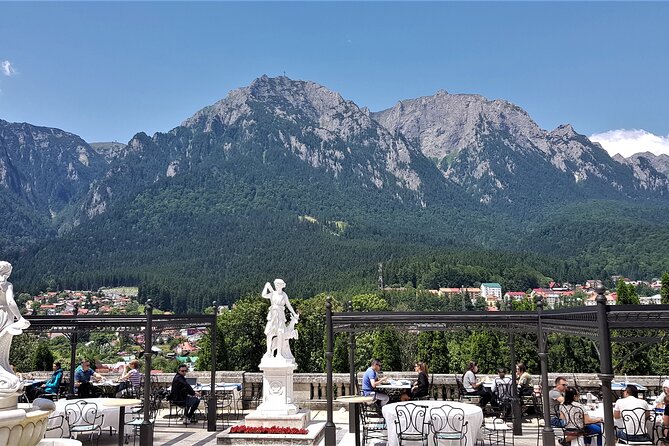
Your first major stop is Sinaia, a mountain resort in the historical region of Muntenia. The town takes its name from Sinaia Monastery and sits among the Carpathian mountains, often called the Transylvanian Alps.
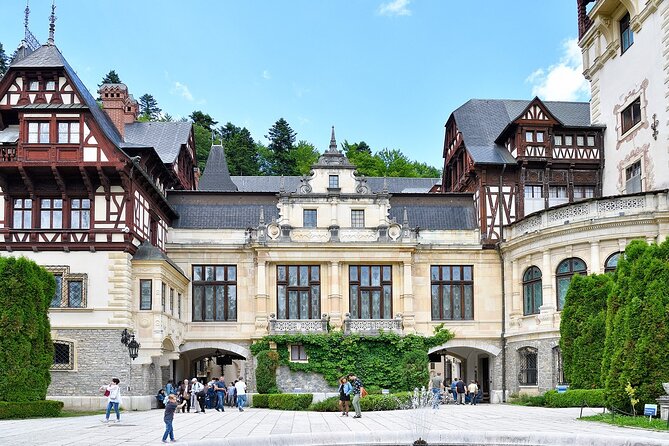
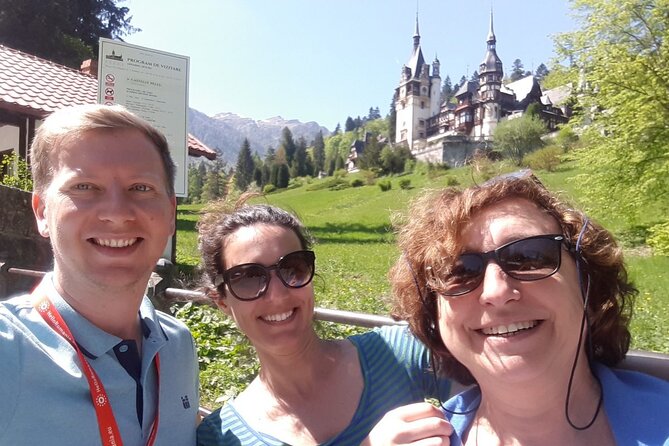
Peles Castle is the day’s polished opening act. Built from 1873 for King Carol I, it combines Neo-Renaissance and Gothic Revival forms with a heavily Baroque interior. Expect carved woodwork, elaborate furnishings, and the kind of royal decoration that makes a country’s modern monarchy feel surprisingly close at hand.
You have about an hour and a half here. That is enough time to appreciate the building without turning the visit into a museum marathon. The admission ticket is not included, so set aside extra money for entry.
I would pay close attention to the contrast between the castle’s mountain setting and its lavish interior. Peles is not a rough medieval fortress. It represents a later royal Romania trying to present itself as a modern European state.
Bran Castle and the Dracula question
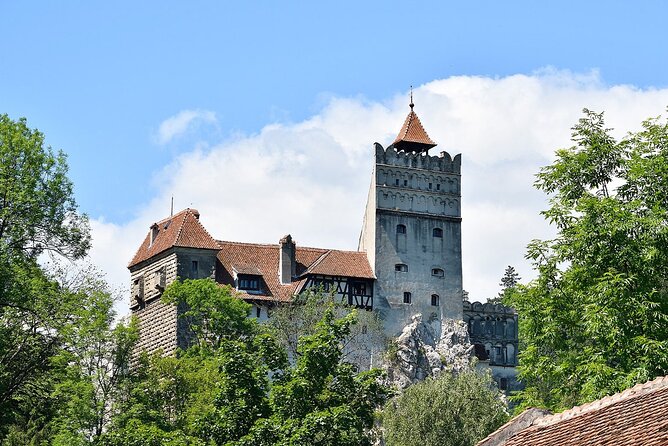
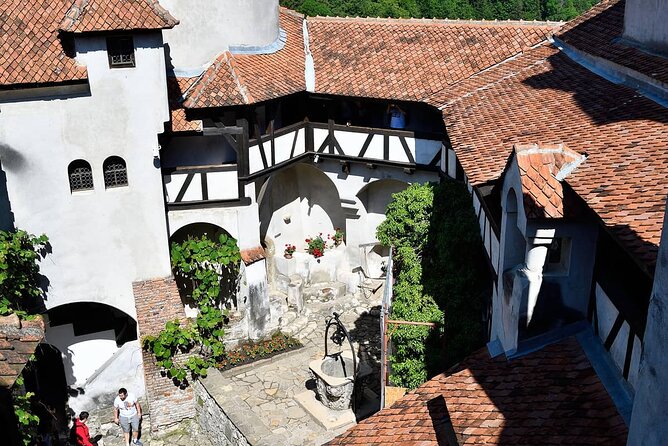
Bran Castle is the most famous stop, largely because tourism has tied it to Dracula. The connection is thin. There is no proof that Bram Stoker based his fictional castle on Bran, and the fortress has no confirmed link with Vlad the Impaler.
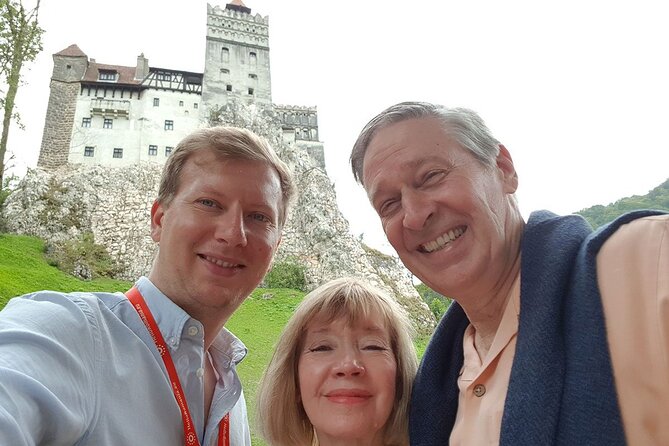
That does not make Bran a waste of time. The original site dates to the early 13th century, although Mongols destroyed the first wooden structure in 1242. Local Saxons later built the stone castle in 1377, under authority granted by the King of Hungary. The museum now includes furniture and art connected with Queen Marie of Romania.
You get around 90 minutes here, with admission extra. I would treat Bran as a historic castle with a powerful popular legend, not as a documented Dracula site. That approach makes the visit more satisfying and keeps the folklore in its proper place.
A few more Bucharest tours worth a look
- 3-Day Medieval Transylvania Package Tour
★ 4.7 · 31 reviews - 3-Day Explore Transylvania from Bucharest
★ 5.0 · 17 reviews - 3-Day Private Tour of Medieval Transylvania from Bucharest
★ 5.0 · 15 reviews - 3 Days Private Tour in Romania from Bucharest with Tour Guide
★ 5.0 · 12 reviews
Brasov after the castles
Brasov is one of Romania’s most appealing old cities, framed by the Carpathians and filled with Gothic, Baroque, and Renaissance buildings. The old citadel was settled by Saxons in the 13th century and became one of Transylvania’s seven walled towns.
The tour allows about an hour and a half. That is enough for a useful introduction to the center, though not enough for every church, tower, and side street. Brasov’s appeal comes from the way its architecture and mountain setting work together. You can feel the city’s role as both a trading center and a defensive stronghold.
The walking is manageable, but you should bring practical shoes. This is the first day of a trip with several historic centers, uneven surfaces, stairs, and changing elevations.
Day two: Sighisoara’s citadel and the Saxon towns
Sighisoara and the Covered Staircase
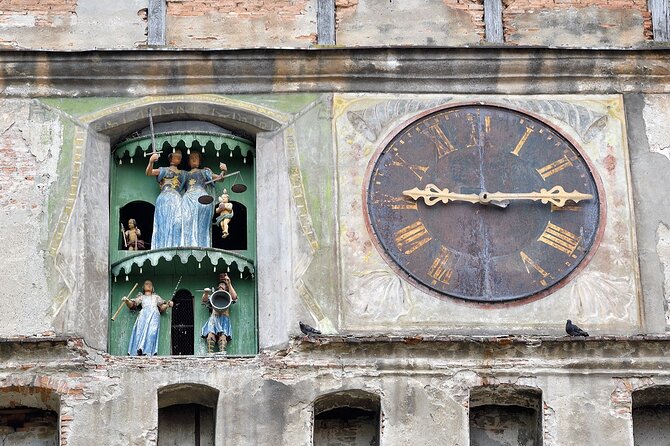
Sighisoara is the most concentrated medieval experience on the route. Its historic citadel sits above the lower town, protected by about 930 meters of walls, 14 defense towers, and five artillery bastions.
The pastel merchant houses and German-style architecture give the center a distinct character. The Clock Tower, roughly 700 years old, rises above the citadel and helps you get your bearings as you walk.
The scheduled visit lasts about two hours and includes the 180-step Covered Staircase, also called the Scholars’ Stairs. You climb it to reach the Gothic Church on the Hill and the Saxon Cemetery. This is the tour’s clearest physical challenge, so anyone with limited mobility should consider the steps carefully.
Sighisoara also brings the Vlad story back into view. You can see the house identified as the 1431 birthplace of Vlad Tepes, the Wallachian prince who later became linked with the Dracula legend. Here, as at Bran, the value is in separating documented medieval history from later fiction.
The town rewards an unhurried walk. Two hours is enough to see the main sights, but you may wish for more time if you enjoy craft shops, photography, or simply wandering among the colored houses.
Biertan’s fortified church
Biertan offers a change of scale. Instead of a famous castle or busy city center, you visit one of the important Saxon villages protected by a fortified church.
The church served as the seat of the Transylvanian Lutheran Evangelical bishop from 1572 to 1867. Saxons founded the town sometime between 1224 and 1283, and Biertan became an important commercial center before nearby Mediaș, Sighisoara, and Sibiu took on greater economic weight.
You have about an hour here, and admission is not included. The stop matters because it shows how local communities protected both worship and daily life. Thick defensive walls around a church may seem unusual at first, but in medieval Transylvania, fortified religious buildings were practical community shelters.
Biertan is also one of the stops where a private guide has real value. The site makes more sense when you understand the Saxon settlement system and the pressure that shaped these fortified villages.
Sibiu’s German character
Sibiu gives you the day’s largest urban stop. Its old town still looks strongly German, with portions of the medieval wall and three of the original 39 towers remaining.
The two-hour visit includes the Great Square, Brukenthal Palace, the Bridge of Lies, Haller House, and several churches. Brukenthal Palace is a late-Baroque building that houses one of Romania’s major museums. The Bridge of Lies is a small but atmospheric landmark, while Haller House shows the city’s preserved Renaissance architecture and its distinctive window designs.
Sibiu is a good place to think about Romania as a meeting point of cultures. Romanian, German, Hungarian, and other influences have shaped Transylvania over centuries. The old town’s architecture makes that story visible without requiring a long lecture.
Two hours gives you a strong orientation, but the city could easily fill a full day. If you care more about museums than covering ground, ask how much time can be devoted to Brukenthal Palace. If your priority is the overall route, stay with the walking introduction and save the museum for another visit.
Day three: mountain roads and Curtea de Arges
Transfagarasan Highway or the Olt Valley
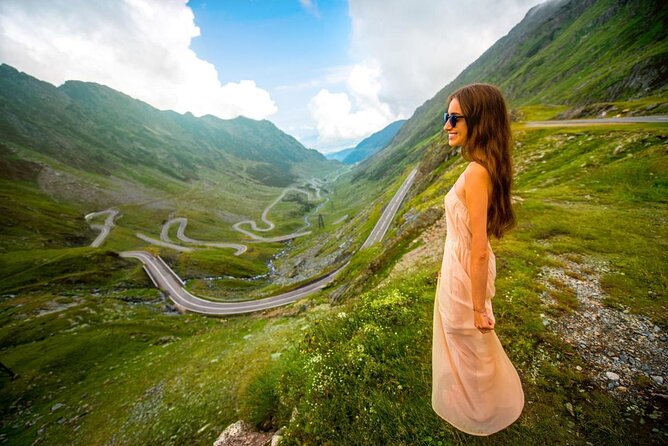
The final day depends on road access. From July through September, the route may use the Transfagarasan Highway, one of Romania’s best-known mountain roads. It crosses the southern Carpathians and links Transylvania with Wallachia, passing through the high mountain zone near Moldoveanu and Negoiu, Romania’s highest peaks.
The highway portion is listed at about two hours and has no admission fee. Its appeal is visual: winding road, high passes, and broad mountain views. Weather and seasonal access matter, so this part cannot be treated as guaranteed.
If the highway is closed, your guide uses the Olt Valley instead. The valley runs between the Căpățânii, Lotru, and Făgăraș mountains and follows an old route first used by Romans and later by medieval merchants traveling into Transylvania.
The alternate route is not a consolation prize. It gives you a different kind of history, centered on an old travel corridor rather than a dramatic engineered road. The guide’s flexibility matters here, since the route depends on conditions outside your control.
Curtea de Arges Monastery
Curtea de Arges Monastery provides a strong closing stop before the return to Bucharest. Romania has around 600 Orthodox Christian monasteries, but this one is distinctive for its blend of Georgian and Armenian architectural influences with Islamic geometric decoration.
Built between 1515 and 1517, the monastery is also linked with the story of Masterbuilder Manole and Prince Negru Voda, also known as Radu Negru. More than 100 versions of the construction legend are said to circulate, giving the site a literary and folkloric layer beyond its architecture.
You spend about 45 minutes here, and admission is extra. That is a short visit, but it works well at the end of a busy circuit. After castles, fortified towns, and mountain roads, the monastery introduces another major part of Romanian culture.
Your guide then returns you to Bucharest. Depending on road conditions and the day’s timing, this can be a long final stretch. Do not plan an important fixed appointment immediately after the tour.
What the guide and vehicle add
The same guide throughout the journey is one of the best reasons to choose this tour over a series of day trips. You do not need to repeat your interests or adjust to a new style every morning.
Ovidiu is especially associated with this route. His strengths include historical explanation, patience, organization, and a relaxed manner. He has also arranged high-quality accommodation and responded to short-notice bookings. Vio, Octavian, and Julian have also guided portions of related trips, with Julian noted for explaining history, geography, and present-day conditions clearly and for handling groups with children.
You should still confirm who will lead your particular departure. The experience promises a highly experienced guide, but the named person may vary.
The private vehicle is another practical benefit. Air conditioning matters during long summer drives, and private transportation lets the group pause or adjust the rhythm more easily than a large coach. Parking fees are included, which removes one small but annoying cost from a route filled with historic centers.
Price, accommodation, and extra costs
The listed price is $1,089.92 per person. That is a serious outlay for three days, but the value depends on how much planning you want removed from your trip.
The price covers an air-conditioned vehicle, private transportation, and parking fees. The tour information also says transportation and accommodations are handled, and the single-room supplement is 60 euros per person. Past arrangements have included comfortable bed-and-breakfast style lodging, though you should confirm the exact properties, room setup, and meal details before paying.
Entrance fees are not included. That applies to Peles Castle, Bran Castle, Biertan Fortified Church, and Curtea de Arges Monastery. Group discounts are offered, which can improve the price for families or larger private parties.
I see the tour as good value for couples, families, or small groups who would otherwise need to rent a car, choose rural hotels, navigate mountain roads, and build the route themselves. It is less compelling if you are happy using public transportation, staying in one city, or exploring at a slower pace.
Who should book this tour?
Choose it if you want a compact first look at Transylvania and prefer a private guide to independent logistics. It suits visitors who value context, comfortable transport, and a route that joins famous attractions with smaller Saxon sites.
It also suits first-time visitors who want help sorting out the Dracula material. The guide can place Bran Castle and Vlad Tepes in their proper historical setting instead of leaving you with a purely commercial legend.
Think twice if you dislike long drives or want substantial free time in each town. Sighisoara and Sibiu deserve longer visits than the schedule allows, and the final return to Bucharest may feel tiring.
The required fitness level is moderate. You should be ready for walking in old towns, climbing the 180-step Covered Staircase, and managing a full sightseeing day. The tour is private, so your group can ask about pacing, but the route itself remains ambitious.
The experience has a five-star rating from 16 reviews and a 100 percent recommendation rate. The strongest pattern is clear: careful organization, comfortable accommodation, flexible scheduling, and guides who explain Romania with warmth and patience. Those qualities matter more here than flashy extras.
Should you book the three-day Transylvania tour?
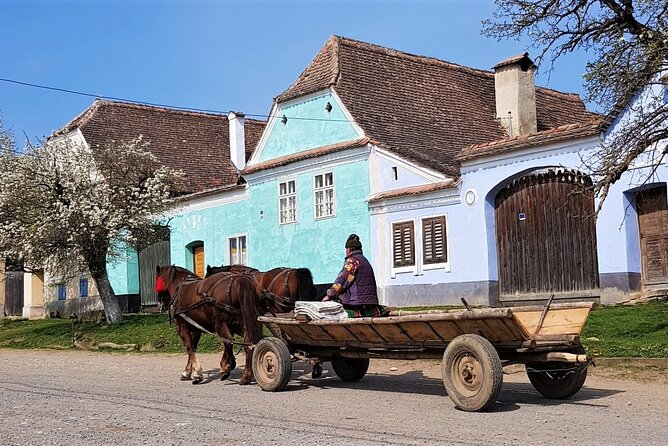
Book it if your goal is to see a wide slice of Romania in a short time without driving yourself. You will get royal architecture, medieval Saxon towns, fortified churches, Dracula folklore, Orthodox tradition, and mountain scenery in one connected trip.
I would particularly recommend it for a first Romanian visit from Bucharest. Just budget for admission fees, confirm the accommodation and guide details, and accept that the route trades lingering in one place for variety.
Cancellation is free up to 24 hours before the 10:00 am start time. Within 24 hours, changes are not accepted and the payment is not refunded. Poor weather or failure to reach the minimum number of participants can lead to a different date, another experience, or a full refund.
FAQ
Where does the tour begin?
The tour begins in Bucharest, with a listed start time of 10:00 am.
How long does the experience last?
The tour lasts approximately three days.
Is this a private tour?
Yes. Only your group participates in the activity.
Is hotel pickup offered?
Pickup is offered, but the provided information does not specify the exact pickup locations or coverage area.
Are entrance fees included?
No. Entrance fees are separate, including admission at several castles, churches, and monasteries.
Is accommodation included?
The tour information says transportation and accommodations are handled. A single-room supplement of 60 euros per person applies, so confirm the lodging details when booking.
What happens if the Transfagarasan Highway is closed?
If the highway is not open, the guide uses the scenic Olt Valley instead.
Is the Transfagarasan Highway available all year?
The route is used if the trip takes place from July through September and the highway is open. If it is closed, the Olt Valley is used.
How physically demanding is the tour?
A moderate level of physical fitness is recommended. The itinerary includes walking through historic towns and climbing the 180-step Covered Staircase in Sighisoara.
What is included in the tour price?
The price includes an air-conditioned vehicle, private transportation, and parking fees. Group discounts are offered.
Can I cancel for a full refund?
Yes, if you cancel at least 24 hours before the experience start time. Cancellations made less than 24 hours in advance are not refunded.
Recently added around Bucharest
- 6h Communism Tour in Bucharest with Ceausescu Mansion★ 4.5 · 6 reviews
- From Bucharest : Day Trip to Peles, Dracula’s Castle, Brasov★ 4.7 · 6 reviews
- Bears Sanctuary, Dracula Castle and Brasov City – Full Day Trip from Bucharest★ 5.0 · 6 reviews
- Dracula Private Tour★ 5.0 · 6 reviews
- Transfagarasan Road Private Day Trip from Bucharest / The Best Road in the World★ 5.0 · 6 reviews
- Bucharest : Wednesday, Dracula & Peles 3 Castles Tour 1 Day★ 4.7 · 6 reviews
- Hiking thought the best mountain villages in Romania-Private tour from Brasov★ 5.0 · 6 reviews
- Bucovina Painted Monasteries & Transylvania Tour: 4-Day Private★ 5.0 · 6 reviews
Transylvania Day Trips, compared.
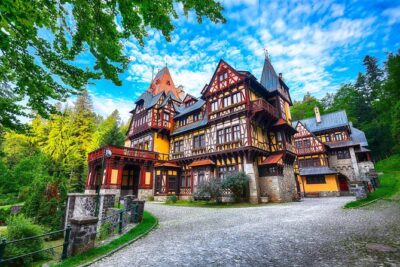
Transylvania and Dracula Castle Full Day Tour from Bucharest
Read our review →
Castles of Transylvania: Private Day Trip from Bucharest
Read our review →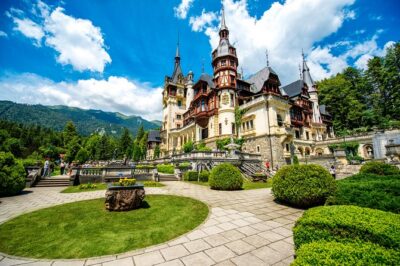
2-Day Medieval Transylvania with Brasov,Sibiu and Sighisoara Tour from Bucharest
Read our review →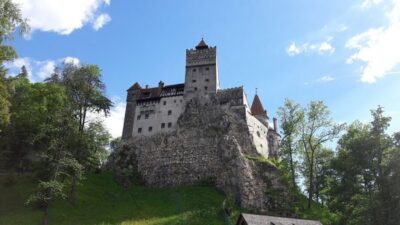
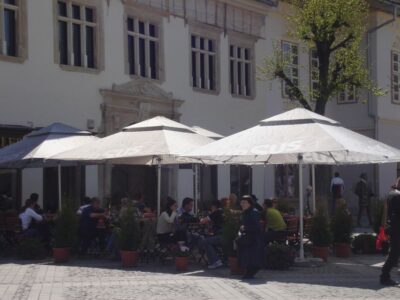
SB01 – City Tour Sibiu: Exploring the Heart of Transylvania
Read our review →
Day trips and excursions in nature, cities in Transylvania, Brasov!
Read our review →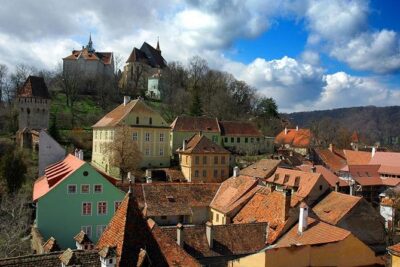
2-Day Transylvania from Bucharest: Brasov, Bran, Sighisoara
Read our review →
Browse the lists this tour appears in