
Reviewed · MONASTERY TOURS
Bucovina Painted Monasteries & Transylvania Tour: 4-Day Private
Romania’s painted monasteries are the heart of this four-day journey. Their centuries-old frescoes cover both indoor and outdoor walls with scenes from the Bible, while the mountain roads between Bucovina and Transylvania give you a strong sense of the country beyond Bucharest. Voronet’s famous blue and the quiet convents at Agapia and Văratec are the real prizes.
I like the private transport and one-on-one guiding, which make long driving days easier and allow the schedule to bend around your interests. I also like the mix of religious art, medieval towns, fortified villages, and royal architecture. The drawback is pace: this is a lot of Romania in four days, with several long road sections and extra entrance costs at some of the headline sights.
In This Review
- Key Points at a Glance
- Why the Bucovina Monasteries Matter
- Day One: Agapia and Văratec Among the Nuns
- Day Two: Sucevita, Moldovița, and Voronet
- Day Three: Sighisoara, Viscri, and Brasov
- Day Four: The Black Church and Peles Castle
- Transport, Hotels, and Meals
- Guide Style and Personal Attention
- Is the $1,356.43 Price Good Value?
- Who Should Book This Tour?
- Final Verdict
- FAQ
- Where does the tour start and end?
- What time does the tour start?
- Is this a private tour?
- Is an English-speaking guide provided?
- How many nights of accommodation are included?
- Are breakfasts included?
- Which monastery entrance fees are included?
- Which attractions have extra entrance fees?
- What is the cancellation policy?
Key Points at a Glance
- Five painted monasteries in two days: Agapia, Văratec, Sucevita, Moldovița, and Voronet offer different styles, colors, and settings.
- Private attention from an English-speaking guide: Toni and Marius are named guides associated with this experience.
- A useful east-to-west route: The tour links rural Bucovina with Sighisoara, Viscri, Brasov, and Sinaia.
- Comfortable private van travel: Past visitors describe the vehicle as spacious, new, and air-conditioned.
- Three hotel nights and breakfast included: You avoid changing hotels every night while keeping meals flexible.
- Plan for extra ticket money: Some entrance fees are included, while interior visits to Viscri, the Black Church, and Peles Castle are listed as extra.
Why the Bucovina Monasteries Matter
The painted monasteries are not simply pretty churches placed along a scenic road. They are outdoor picture books, built to communicate religious stories through color and form at a time when many people could not read. The walls show episodes from the Old and New Testament, saints, battles, and scenes tied to Orthodox belief.
I find the scale especially striking. At Sucevita, Moldovița, and Voronet, paintings cover broad exterior surfaces, yet the designs remain remarkably detailed. Each church has its own colors and artistic character, so the visits do not feel like repeated stops at the same monument.
The churches are active religious places, not museum displays. You should dress respectfully, with trousers or a long skirt suitable for entering monastery grounds. Head covering was not required in the information provided, but modest clothing is still the sensible choice.
Photography rules can vary. At one monastery, outdoor photography required a small receipt of 10 Romanian lei, while indoor photography was not allowed. Carry some local currency and ask before taking pictures.
More monastery tours around Bucharest:
- 3-Castle: Peles,Bran,Rasnov,Sinaia Monastery from Brasov w pickup
★ 5.0 · 274 reviews - Peles Castle, Bran Castle, Rasnov Fortress and Sinaia Monastery Tour from Brasov
★ 5.0 · 55 reviews - Princely Court of Târgoviște and Curtea de Argeș Monastery
★ 4.5 · 50 reviews
Day One: Agapia and Văratec Among the Nuns
The first day takes you from Bucharest toward Neamţ County, where Agapia and Văratec offer a quieter introduction to Moldavia’s monastic culture. Each stop receives about an hour, enough to see the church and absorb the setting, though not enough for a slow, detailed study of every building.
Agapia Monastery was built between 1641 and 1643 by Gavriil Coci, brother of Moldavian ruler Vasile Lupu. Its church was later painted by Nicolae Grigorescu between 1858 and 1861. Grigorescu is one of Romania’s best-known artists, and his work gives Agapia a different feel from the older exterior fresco cycles you see later in Bucovina.
Agapia is also a working nunnery with roughly 300 to 400 nuns. That fact changes the visit. You are not walking through an abandoned medieval site. You are entering a living Orthodox community, where worship and daily work continue around the historic church.
Văratec is even larger, with more than 400 nuns, making it the biggest nun monastery in Romania. I like the contrast between the two convents: both are substantial, but each has its own rhythm and setting. An hour at Văratec gives you a useful first look at monastic life before the tour turns toward the famous painted churches.
The limitation is the day’s road time. The itinerary gives you focused visits rather than long wandering periods, so your guide matters. Toni or Marius can supply the religious and artistic context while you move efficiently through the grounds.
Day Two: Sucevita, Moldovița, and Voronet
Day two is the artistic high point. You visit three major painted monasteries, with two hours assigned to each. That is a generous schedule by sightseeing standards, especially for a private tour, and it gives you time to compare the churches rather than simply photograph them and leave.
Sucevita combines Byzantine and Gothic elements with local Moldavian forms. Both the inside and outside walls carry mural paintings of great detail. I would use this stop to look closely at composition and color. From a distance, the walls appear decorative. Up close, you can see how much information the artists fitted into each scene.
Moldovița was built in 1532 by Petru Rareș, son of Stephen the Great. It was founded partly as a defensive religious center at a time when Ottoman pressure shaped politics and architecture in the region. Its walls help explain why these monasteries were more than places of prayer. They also expressed the strength and identity of Moldavia.
The two-hour visit is valuable because the paintings reward patience. You can first walk around the building for the broad visual effect, then return to details that caught your eye. Your guide can also explain the difference between the artists, periods, and restoration work.
Voronet is the star for many people. Stephen the Great built the monastery in 1488, reportedly completing it in three months and three weeks to mark his victory at the Battle of Vaslui. The church is often called the Sistine Chapel of the East, but its most memorable feature is simpler to name: Voronet blue.
That intense blue gives the outer frescoes a special force. It is not merely a background color. It helps make the painted scenes readable from a distance and gives the entire church a cool, unified appearance.
You can also see why preservation is an ongoing concern. These murals are more than 500 years old, and some sites show restoration in progress. The combination of old paintings and active conservation makes the visit feel immediate. You are seeing both the finished art and the work needed to keep it alive.
The day does ask a lot of you. Three major churches, two hours at each, and the driving between them can make for a full schedule. Still, the private format helps. If one painting captures your attention, you have a better chance of lingering than you would on a large group excursion.
Day Three: Sighisoara, Viscri, and Brasov
The route shifts west into Transylvania on day three. After the quiet religious sites of Bucovina, the medieval towns feel more urban and commercial, but they remain tied to the region’s Saxon past.
Sighisoara is the most complete medieval citadel on the route. Its walled old town is protected as a UNESCO World Heritage Site, and two hours gives you enough time to walk its historic core without treating it as a quick photo stop.
I would pay attention to the overall town plan, not just individual buildings. The walls, lanes, and preserved center help you picture Sighisoara as a fortified settlement and trading town. The experience is less about one grand interior and more about moving through a place that has kept its medieval shape.
Viscri offers a different kind of heritage. Its fortified church is also a UNESCO World Heritage Site and provides a glimpse of Transylvanian Saxon village life. The church’s defensive design reflects a period when religious buildings also offered protection to the local community.
Only one hour is assigned here, and the church admission is not included. That makes this a stop to plan for rather than an optional afterthought. Keep cash available for extra tickets, and remember that the schedule may not allow a long village walk.
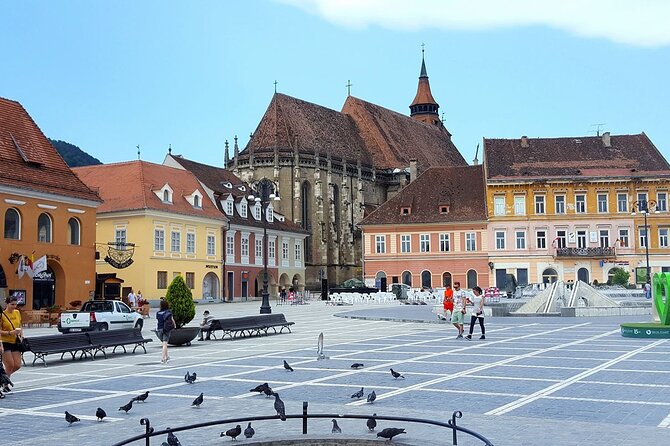
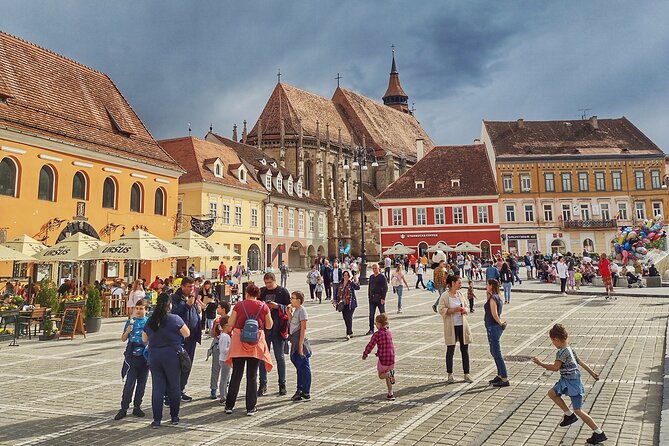
Brasov brings the day to a close with two hours in its historical center. The city was once the regional capital of the Transylvanian Saxons in the Burzenland area and grew as a major trade hub between East and West. It also has an unusual national connection: Romania’s national anthem was born here.
Brasov works well in this itinerary because it gives you time to enjoy a real city after several rural and religious sites. You can see how German, Romanian, and broader Central European influences meet in the old center. The private guide can also help you sort out the city’s layered past, which is useful when you have only a couple of hours.
More Transylvania day trips:
- Transylvania and Dracula Castle Full Day Tour from Bucharest
★ 4.5 · 1,589 reviews - Castles of Transylvania: Private Day Trip from Bucharest
★ 4.5 · 248 reviews - 2-Day Medieval Transylvania with Brasov,Sibiu and Sighisoara Tour from Bucharest
★ 4.5 · 145 reviews - Transylvania: Dracula’s Castle and Birthplace Tour
★ 4.8 · 123 reviews
Day Four: The Black Church and Peles Castle
The final day begins in Brasov with the Black Church, the country’s leading Gothic monument and the largest important Lutheran place of worship in the region. It was built by the city’s German community, so it connects directly with the Saxon story introduced at Sighisoara and Viscri.
One hour is assigned to the church, but admission is extra. If you care about architecture, organ music, or the history of Romania’s Protestant communities, you may want to confirm how much of the interior visit fits the day’s timing.
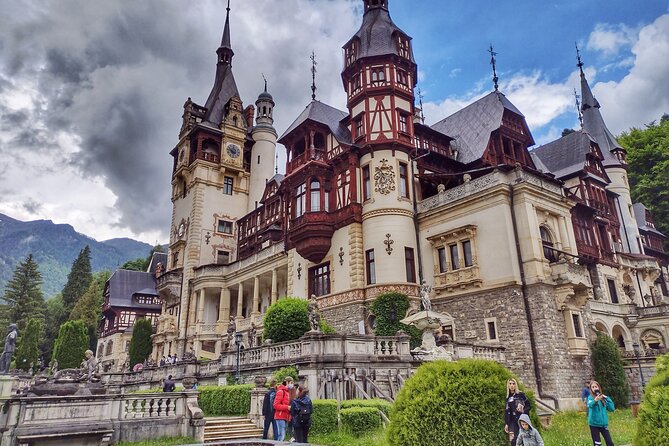
Peles Castle provides a sharp change of mood. Built between 1873 and 1914 for King Carol I, it served as the royal summer residence in the Carpathian Mountains near Sinaia. Its Neo-Renaissance design and mountain setting make it one of Romania’s most polished historic attractions.
The castle was built along an old route linking Transylvania and Wallachia, which gives it a useful place in the country’s political story. It is not medieval in the same way as Sighisoara or the monasteries. Instead, it reflects the ambitions of modern Romania’s monarchy.
Peles also has an extra entrance fee, and the listed one-hour visit is fairly short. If you want to see every room at a relaxed pace, ask your guide how the timing works before the day begins. The castle is a strong final stop, but the overall day may feel compressed if you hope for an extended interior tour.
Transport, Hotels, and Meals
Private transport is one of the best reasons to choose this trip. The roads cover a large part of Romania, and having a comfortable vehicle matters more here than it would on a compact city tour. The vehicle has been described as new, spacious, and air-conditioned, useful features during long summer drives.
You start and finish in Bucharest, with pickup available anywhere in the city at 9:00 am. Hotel pickup and drop-off remove the need to find a distant meeting point, and the private setup means only your group participates.
Three nights in three-star hotels are included, along with three breakfasts. The accommodation has been described as comfortable, and one account praised rooms that felt closer to five-star quality. I would still treat three-star lodging as the official standard and choose this tour mainly for its route and guide rather than expecting luxury hotels.
Lunches, dinners, drinks, and snacks are not included. That is both a cost and a benefit. You need to budget for meals, but you are not locked into a fixed restaurant plan. The guide can help you choose local places, and one account specifically praised the quality and low cost of Romanian food.
Guide Style and Personal Attention
This is a guide-led tour, not a self-guided transfer service. Toni Tatar is associated with the company, and Marius is another named guide who has led this route. Their role matters because the monasteries can look similar at first glance if you do not know what to compare.
The strongest part of the guiding is the connection between art, religion, and politics. You can learn why a church was built, how its frescoes differ from another site, and what restoration means for a building still used for worship.
There is also a practical side to private guiding. One guide helped a sick member of a group find an emergency room, navigate the medical system, and continue assisting the next day. You should never plan to become ill, of course, but that kind of attentive support is reassuring on a demanding trip far from Bucharest.
Is the $1,356.43 Price Good Value?
At $1,356.43 per person, this is not a budget trip. The price includes private transport, a private guide, three hotel nights, three breakfasts, hotel pickup and drop-off, and the route itself. For a private four-day journey across two historic regions, that package can make sense if you value convenience and personal attention.
The price becomes less attractive if you expect every attraction and meal to be covered. The information gives conflicting signals about entrance fees: the highlights say entrance fees are included, while the exclusions say interior tickets are extra, with an estimate of about 25 to 30 euros per person. The day-by-day details clarify the practical picture: Agapia, Văratec, Sucevita, Moldovița, Voronet, Sighisoara, and Brasov are marked included, while Viscri, the Black Church, and Peles Castle are marked not included.
Confirm the current ticket arrangement before paying. Also budget separately for meals, drinks, snacks, and any photography fee. With those costs understood, the tour’s value rests mainly in the private vehicle, the efficient route, and the guide’s ability to explain what you are seeing.
Who Should Book This Tour?
I would choose this experience if you have four days, want to cover a large part of Romania, and prefer a private guide to independent rail or bus travel. It suits people interested in Orthodox art, medieval towns, Saxon architecture, royal history, and rural scenery.
It is also a good choice if you want flexibility for a small private party. Families or friends can share the vehicle and ask for explanations suited to their interests. The stated fitness level is moderate, so expect regular walking at monastery grounds, old towns, churches, and castle sites.
I would hesitate if you want slow mornings, long meals, or several free afternoons. The schedule is efficient and full. The long drives are part of the experience, but they also mean you spend less time at each individual destination than on a dedicated Bucovina or Transylvania tour.
Final Verdict
Book this tour if you want Romania’s painted monasteries to be the center of a wider trip rather than a single-region visit. Agapia and Văratec show living monastic communities, Sucevita and Moldovița reveal the art’s range, and Voronet delivers the unforgettable blue. Sighisoara, Viscri, Brasov, the Black Church, and Peles Castle then give you a well-rounded view of Transylvania.
Skip it if your priority is luxury, relaxed pacing, or fully covered costs. For everyone else, the private format, comfortable transport, strong guide support, and unusual route make this a practical way to see parts of Romania that are difficult to connect on your own.
FAQ
Where does the tour start and end?
The tour starts in Bucharest and ends in Bucharest. Pickup and drop-off can be arranged anywhere in Bucharest.
What time does the tour start?
The stated start time is 9:00 am.
Is this a private tour?
Yes. Only your group participates in the activity.
Is an English-speaking guide provided?
Yes. The tour is offered in English, with guides including Toni Tatar and Marius associated with this experience.
How many nights of accommodation are included?
Three nights of accommodation in three-star hotels are included.
Are breakfasts included?
Yes. Three breakfasts are included. Other meals, drinks, and snacks are not included.
Which monastery entrance fees are included?
Agapia, Văratec, Sucevita, Moldovița, and Voronet are marked as including admission in the day-by-day schedule.
Which attractions have extra entrance fees?
Viscri Fortified Church, the Black Church, and Peles Castle are marked as not including admission. The listed estimate for entrance costs is about 25 to 30 euros per person, so confirm the current amount before departure.
What is the cancellation policy?
You can receive a full refund if you cancel at least six full days before the start time. Cancellation two to six full days before the tour receives a 50 percent refund, while cancellation less than two full days before the start time is nonrefundable. Poor weather may result in a different date or a full refund.
More 4-Day Experiences in Bucharest
- 4-Day Private Tour in Transylvania from Bucharest
★ 5.0 · 48 reviews - Transylvania Castles 4-day tour from Bucharest
★ 5.0 · 31 reviews - 4 Days Private Tour in Transylvania: Sibiu, Sighisoara and Brasov
★ 5.0 · 18 reviews - 4-Day Private Tour of Transylvania from Bucharest
★ 5.0 · 16 reviews
Recently added around Bucharest
- 6h Communism Tour in Bucharest with Ceausescu Mansion★ 4.5 · 6 reviews
- From Bucharest : Day Trip to Peles, Dracula’s Castle, Brasov★ 4.7 · 6 reviews
- Bears Sanctuary, Dracula Castle and Brasov City – Full Day Trip from Bucharest★ 5.0 · 6 reviews
- Dracula Private Tour★ 5.0 · 6 reviews
- Transfagarasan Road Private Day Trip from Bucharest / The Best Road in the World★ 5.0 · 6 reviews
- Hiking thought the best mountain villages in Romania-Private tour from Brasov★ 5.0 · 6 reviews
- Bucharest : Wednesday, Dracula & Peles 3 Castles Tour 1 Day★ 4.7 · 6 reviews
- 8h Bucharest Communism Tour – Best of Bucharest with Dracula’s Tomb★ 5.0 · 6 reviews
Monastery Tours, compared.
Peles Castle, Bran Castle, Rasnov Fortress and Sinaia Monastery Tour from Brasov
Read our review →
Princely Court of Târgoviște and Curtea de Argeș Monastery
Read our review →
Small Group Tour to Mogosoaia Palace & Snagov Monastery
Read our review →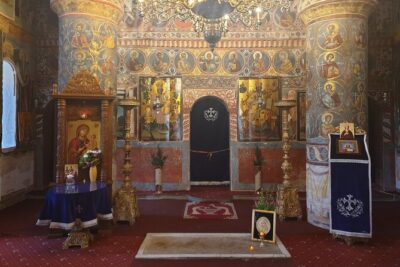
Sacred Monasteries Private Tour: Snagov, Țigănești & Căldărușani
Read our review →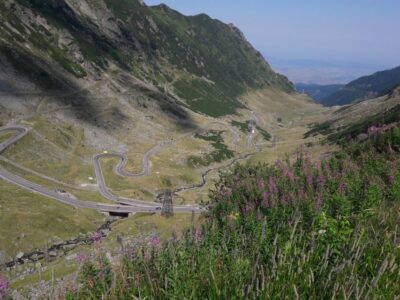
Transfagarasan Highway, Balea Lake & Carta Monastery
Read our review →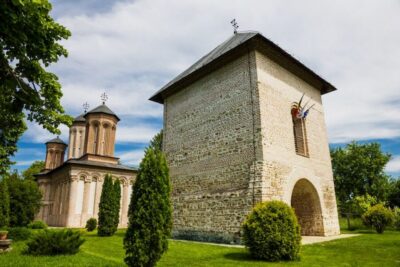
Private Half Day Trip to Snagov Monastery & Mogosoaia
Read our review →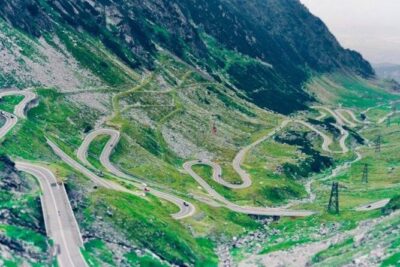
Hike to Poenari Fortress, Vidraru Dam, Argeș Monastery – Private
Read our review →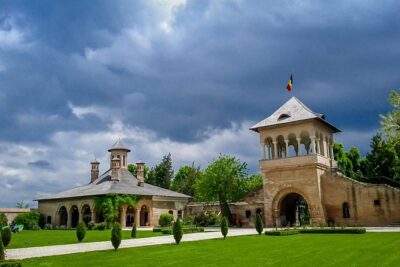
Small Group Tour to Mogosoaia Palace and Snagov Monastery
Read our review →Browse the lists this tour appears in