
Reviewed · CASTLE CIRCUITS
Transylvania Castles 4-day tour from Bucharest
Transylvania’s best-known castles are only part of the story. This four-day trip also takes you to hilltop citadels, Saxon villages, fortified churches, and handsome medieval towns, giving you a much fuller picture than a quick Bran Castle day trip. Peleș Castle, Corvin Castle, and Sighișoara provide the big moments.
I like the small maximum group of eight, which should make the long drives and castle visits more personal. I also like the overnight stops in Brașov, Sighișoara, and Sibiu, since you get time in three of Romania’s most attractive historic towns instead of returning to Bucharest every evening.
The main thing to consider is the pace. You cover a lot of ground in four days, and several stops are listed at about an hour. Also, the advertised guaranteed departure requires at least two confirmed people, so solo bookers should clarify this before arranging non-refundable hotels around the tour.
In This Review
- Key points to know before booking
- Why this four-day route works
- Day one: Peleș, Bran, and the first look at Brașov
- Day two: fortresses, Saxon villages, and Sighișoara
- Day three: fortified churches and Corvin Castle
- Day four: Sibiu, the Olt River, and Curtea de Argeș
- What the price includes, and what it does not
- The guide can shape the whole experience
- The important catch for solo bookers
- Who should book this Transylvania tour?
- Should you book it?
- FAQ
- Where does the tour begin and end?
- How many people can join the tour?
- Is accommodation included?
- Are meals included?
- Which entrance fees are included?
- What happens if I cancel?
Key points to know before booking
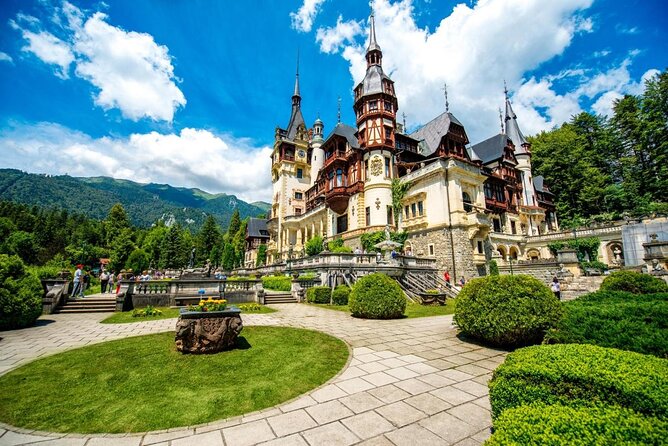
- Peleș Castle opens the trip in grand style, with ornate royal rooms and a mountain setting near Sinaia.
- Bran Castle is more legend than confirmed Dracula residence, but its location and Gothic appearance make it a memorable stop.
- Corvin Castle looks like a storybook fortress, with towers, stone details, and a strong connection to John Hunyadi.
- Sighișoara and Sibiu add real town life, with walkable squares, old houses, local shops, and time beyond castle walls.
- The tour includes three nights of central hotels, breakfasts, transport, and entry fees, which makes the high price easier to assess.
- A small group can become a private tour, but the minimum departure rule matters if you are booking alone.
Why this four-day route works
I like this tour because it treats Transylvania as more than a Dracula theme park. You see royal architecture, medieval defenses, Saxon settlements, Orthodox religious art, and Romanian royal history in one loop from Bucharest.
The route also gives you three different overnight bases. Brașov has a lively old center and a strong medieval character. Sighișoara is the most preserved medieval town on the route. Sibiu feels more Germanic, with broad squares and carefully restored historic buildings.
That variety matters. If you only visit Bran and Peleș, you get two famous buildings but miss the communities and defensive churches that explain how people lived in the region. Here, the castles are the headline acts, while the villages and towns supply the setting.
The tradeoff is road time. The tour crosses much of central Romania, so you will spend substantial parts of each day in the vehicle. The provided modern vehicle and small group help, but this is not a slow, stay-put holiday.
More multi-castle days out of Bucharest:
- From Brasov: Small-group tour Bran, Rasnov, and Peles Castles
★ 5.0 · 949 reviews - From Brasov: Tour of Castles and Surrounding Area
★ 5.0 · 363 reviews - Castles of Transylvania: Private Day Trip from Bucharest
★ 4.5 · 248 reviews
Day one: Peleș, Bran, and the first look at Brașov
Pickup begins at 9:00 a.m. from any hotel in Bucharest. The first drive takes you toward Sinaia and Peleș Castle, once the summer residence of Romania’s royal family.
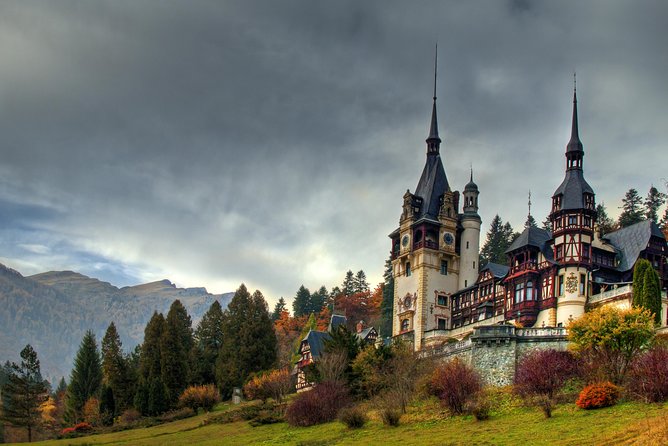
Peleș is the most polished and decorative castle on the itinerary. Its appeal comes from the mix of architecture and setting. It sits in a mountain area, and the exterior has the romantic look many people expect from a European royal retreat. Inside, the rooms and furnishings reflect its role as a royal home rather than a battlefield fortress.
The communist regime seized the property, adding an important modern chapter to the visit. Your guide can help connect the building’s royal past with Romania’s later political changes, which makes the stop more than a photo opportunity.
The listed visit lasts about an hour. That is enough for an introduction, but it is not a leisurely examination of every room or detail. If ornate interiors and royal history are your main interests, you may wish the schedule allowed more time here.
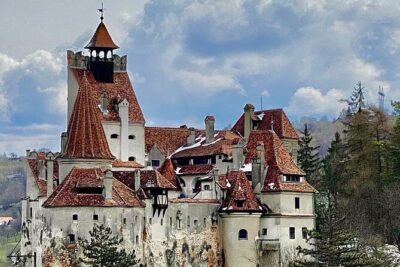
Next comes Bran Castle, the stop most strongly tied to Dracula. Bram Stoker’s novel made Bran famous around the world, although the connection between the fictional vampire and the actual building is far less direct than the marketing suggests.
That does not make Bran a poor stop. The castle has a solitary position, medieval-looking towers, and a Gothic mood that fits the legend. Its story also brings in Vlad the Impaler, the historical ruler later linked with Dracula in popular culture. The fortress itself was built by the Saxons of Brașov in the 13th century on the site of an older wooden fortification associated with the Teutonic Knights.
Go to Bran expecting atmosphere, legend, and a compact medieval castle. Do not expect a definitive Dracula museum or a complete account of Vlad’s life. The value is in seeing how fiction, local history, and tourism have become connected.
The day continues to Râșnov Citadel, a medieval defensive site on a hill above the old trade route across the Carpathians. The elevated position gives you wide views, and the site helps explain why fortified settlements were built in hard-to-reach places.
Râșnov is a useful contrast with the two castles. Peleș was a royal residence, Bran is a fortress wrapped in legend, and Râșnov was a community defense site. The visit is listed at about an hour, including the garden and panoramic view.
You then head to Brașov for the night. If timing allows, you take a walking tour through Council Square. This is an important part of the day, since Brașov is not merely a convenient hotel stop. Its old center gives you a chance to walk, eat, and see the architecture after the formal castle visits are over.
Because the itinerary says the evening walk depends on time, I would not assume a long independent exploration. Keep your expectations flexible.
Day two: fortresses, Saxon villages, and Sighișoara
The second day begins with Făgăraș Fortress, an imposing citadel surrounded by a moat and two rows of walls. Its defensive design is the main attraction. The fortifications made it difficult to attack, and the site is presented as one of the few structures in the area that was never conquered.
This is the kind of place that benefits from a guide. Without context, a moat and thick walls can blur together after several days of castles. With an explanation of siege defense and the feudal period, you can read the site as a military machine rather than just an old stone building.
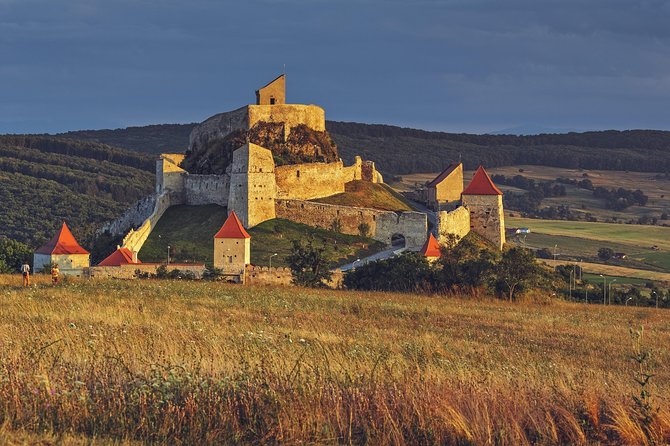
At Rupea Citadel, you get another hilltop fortress with wide views over the surrounding countryside. The site has documented medieval roots, although evidence of human settlement here reaches much farther back, to the Paleolithic and early Neolithic periods. The citadel was fully refurbished in 2013.
Rupea is especially good for visitors who like ruined or restored fortifications more than furnished palaces. Its high position gives the stop a strong visual quality, though the one-hour visit means you will not have unlimited time to explore every wall and corner.
The route then heads toward Sighișoara, with a stop in Criț, a Saxon village known for traditional houses and local food. This is one of the most useful parts of the tour because it shifts the focus from monuments to everyday regional character.
The included meal featuring traditional local products gives you a chance to try Romanian food in a village setting. Since other meals and drinks are not included, this is also a welcome built-in meal during a busy day. You should still budget for additional lunches, dinners, and beverages throughout the trip.
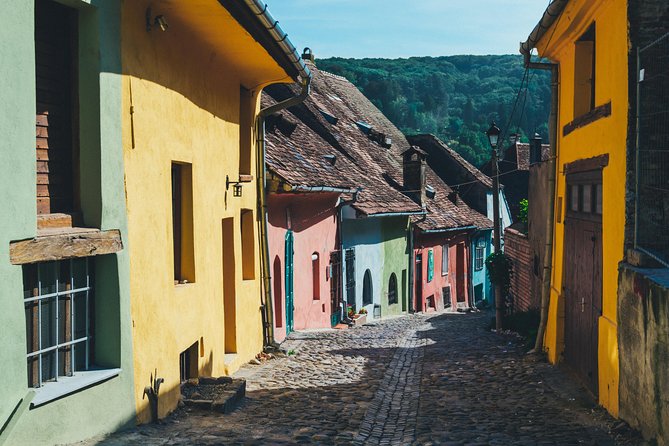
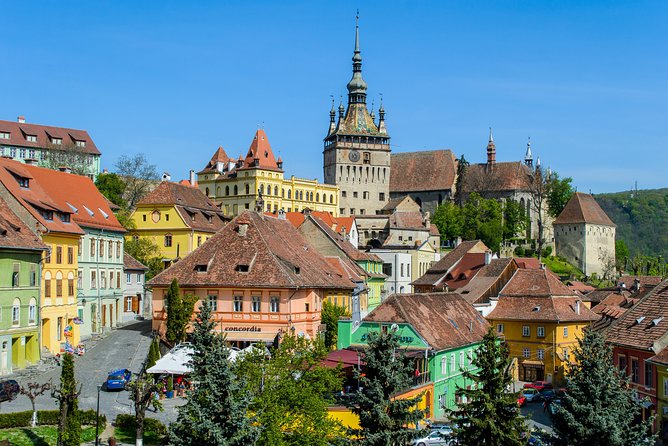
The afternoon belongs to Sighișoara Medieval Citadel, a UNESCO World Heritage site inhabited continuously since its establishment in the 13th century. Narrow cobbled lanes and colorful houses make it easy to understand why this is one of the strongest town visits on the route.
Sighișoara feels different from a castle complex. You walk through a living historic center, with shops, crafts, street performers, and homes integrated into the old setting. In Citadel Square, you can see the ocher-colored house associated with Vlad Țepeș, also known as Vlad the Impaler. He lived there with his father until 1435, according to the tour information. Today, the lower floor is a restaurant and the upper floor houses a weapons museum.
The distinction between history and legend is worth keeping in mind. Sighișoara is a genuine medieval town, while the Dracula connection adds a layer of modern fascination. I find the town more rewarding when you appreciate both without treating them as the same thing.
You spend the night in Sighișoara, which is a real advantage. An evening here gives you the chance to walk the old streets after the main daytime schedule, though the exact amount of free time depends on the day’s driving and stops.
Day three: fortified churches and Corvin Castle
The third day introduces a side of Transylvania that many castle tours skip: fortified churches. You first visit Richiș, a small village with a Gothic fortified church more than 500 years old.
These churches were designed for both worship and protection. Their walls, towers, and defensive features reflect a period when villages had to protect people and supplies during conflict. The setting in a small settlement also gives you a better sense of how these buildings fit into local life.
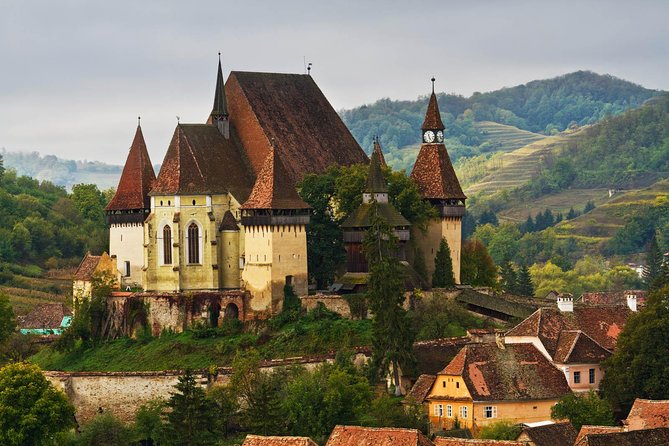
At Biertan, you see the largest fortified church in Romania. Three rows of walls, six towers, and three bastions surround the church, making the complex an impressive defensive system as well as a religious site. Biertan has been part of the UNESCO World Heritage program since 1993.
This stop is especially valuable if you want more than the standard Transylvania circuit. The churches show the influence of the region’s Saxon communities and explain why village defenses could be as important as castle walls.
The route continues to Alba Iulia, a city shaped by more than two thousand years of history. The site has served as a Roman fort, a medieval defense point, and later a large Vauban-style star fortress with bastions.
Alba Iulia helps put the rest of the tour into a wider timeline. Instead of seeing isolated medieval buildings, you see how military sites were rebuilt and adapted over centuries. The geometric star-shaped fortress also differs sharply from the irregular hilltop castles earlier in the trip.
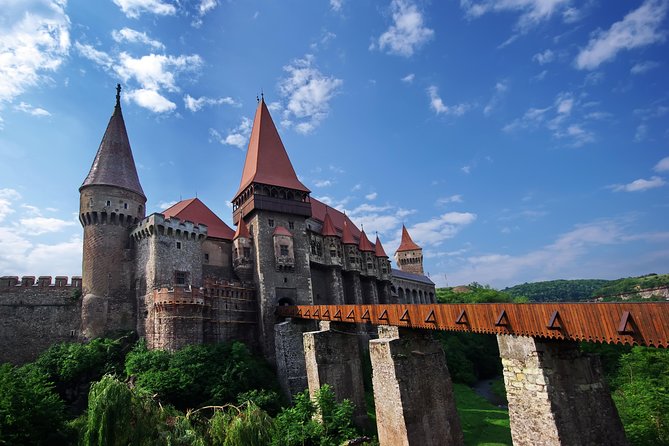
The major visual event of the day is Corvin Castle, also called Hunyad Castle. Its Gothic towers, carved stone dragons, and dramatic silhouette make it the most fantasy-like building on the route.
The castle is tied to John Hunyadi, a major figure associated with resistance to Ottoman expansion. That connection gives the building a strong historical anchor, while the towers and stonework give it the feel of a film set.
Corvin is one of the places where an hour may feel short. The exterior alone deserves time for photographs, and the interior adds rooms, stairs, and defensive details. If you prefer castle architecture over royal decoration, this may be your favorite stop.
After Corvin, you drive to Sibiu for the night and stay in a boutique hotel. The change of town gives you a comfortable break after a demanding day, but you should understand that day three combines several substantial stops with long drives.
More Transylvania day trips:
- Transylvania and Dracula Castle Full Day Tour from Bucharest
★ 4.5 · 1,589 reviews - 2-Day Medieval Transylvania with Brasov,Sibiu and Sighisoara Tour from Bucharest
★ 4.5 · 145 reviews - Transylvania: Dracula’s Castle and Birthplace Tour
★ 4.8 · 123 reviews - SB01 – City Tour Sibiu: Exploring the Heart of Transylvania
★ 4.8 · 99 reviews
Day four: Sibiu, the Olt River, and Curtea de Argeș
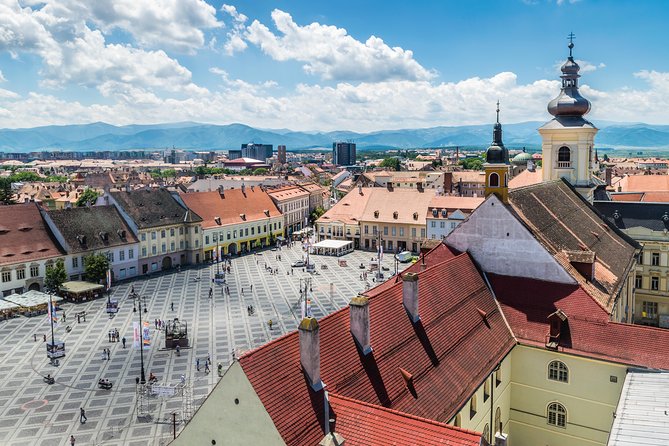
Your final morning begins with a walking tour of Sibiu, one of the most attractive cities on the route. Its historic center has the feel of a German medieval town, with a large central square framed by representative civic buildings.
You walk toward the defensive walls and cross the Bridge of Lies, one of Romania’s best-known bridges. The tour presents Sibiu through its urban details: squares, walls, old facades, and pedestrian streets rather than a single headline monument.
Sibiu is also a good place to have the kind of unscheduled wandering that a tightly planned castle tour rarely allows. The boutique hotel and central location should make it easier to enjoy the town, although the amount of free time depends on the morning tour and the drive ahead.
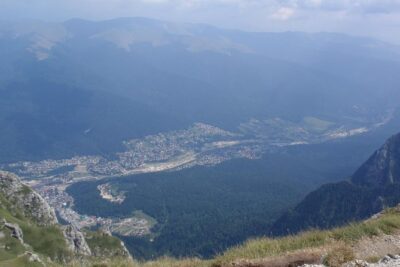
Leaving Sibiu, you cross the Carpathian Mountains and follow the Olt River. This is the scenic section of the return journey, with the road and river providing a change from fortresses and town centers.
One detailed account of the trip also describes travel along the Transfăgărășan Road and roadside bear sightings. Since mountain conditions and the exact route can vary, you should confirm the planned road with the operator if that drive is important to you. Bear sightings are possible in the broader area, but they should never be treated as a promised feature.
The final major stop is Curtea de Argeș Monastery, one of Romania’s most important Orthodox churches and the burial place of the country’s great kings. After so many medieval castles and fortified churches, this gives the tour a distinctly Romanian religious and royal ending.
You return to Bucharest at night and finish in the Old Town area. Hotel drop-off in Bucharest is included, but the late arrival means you should avoid booking a tight onward connection that same evening.
What the price includes, and what it does not
At $1,154.55 per person, the tour is not a budget bus trip. The price is based on two people sharing a double room, and a single-room supplement applies if you are traveling alone.
The value comes from the amount bundled into four days:
- Hotel pickup and drop-off in Bucharest
- Three nights in centrally located hotels
- Three breakfasts
- One traditional lunch
- Modern vehicle transport
- Professional English-speaking guide
- Entrance fees
That package removes many small costs and planning tasks. You do not need to arrange separate tickets for each castle, work out the route between remote fortresses, or find hotels in three different towns.
Still, the price makes the guide and transport central to the decision. If you are happy using trains, buses, and independent day trips, you could potentially spend less. This tour earns its cost through convenience, a compact route, historical explanation, and the ability to reach places that are not as simple to connect by public transport.
The strongest value appears when you share the room, enjoy history, and want a guide handling the driving. The value is weaker if you prefer long stays at each site, dislike structured schedules, or plan to spend most of your time independently in Bucharest.
The guide can shape the whole experience
The guide is not just a driver on this route. A good guide can explain the difference between a royal palace, a military citadel, a fortified church, and a town shaped by Saxon settlers.
Several guides associated with this experience are named George, Emil, Laurentiu, and Traian. Their reported strengths include safe driving, clear explanations, restaurant advice, photography help, and flexibility when time allows. Traian is also described as arranging a special anniversary dinner and cake, which suggests that the company can sometimes respond thoughtfully to personal occasions.
Do not assume you will receive a particular guide unless Rolandia confirms it. The useful point is that the service is designed around a professional English-speaking guide rather than an audio guide or a basic transfer.
The group cap of eight is another plus. A smaller vehicle makes it easier to ask questions and adjust minor details. In some cases, if no one else joins, the company may organize a private trip, but that is not something you should count on without written confirmation.
The important catch for solo bookers
The tour lists guaranteed departures with a minimum of two confirmed people. That wording matters.
If you are booking alone, ask Rolandia to confirm that the selected date has reached the required minimum before you reserve non-refundable accommodation before or after the tour. A previous cancellation left a solo customer needing to rearrange trains, hotels, and day trips, even though the tour payment was refunded.
The stated cancellation policy allows a full refund when you cancel at least 24 hours before the start time. Cancellations or changes made inside that window are not accepted for a refund. This policy applies to your cancellation, but it does not remove the need to clarify the operator’s departure conditions.
Also budget for meals beyond the one included lunch, drinks, tips, photography fees, souvenirs, and personal hotel expenses. Travel insurance is not included.
Who should book this Transylvania tour?
I would choose this trip if you want a guided first visit to Romania and your priority is seeing many major sites without handling the transport yourself. It suits people who enjoy castles, fortifications, medieval towns, Dracula lore, and scenic mountain drives.
It is also a strong choice for couples or friends who can share a room and want a compact four-day route from Bucharest. The overnight stops make it more rewarding than a sequence of day trips, especially in Sighișoara and Sibiu.
I would hesitate if you want a slow holiday. The schedule is full, the drives are long, and one-hour site visits may feel brief at Peleș, Rupea, Biertan, Alba Iulia, and Corvin. Independent visitors who want to linger over museum displays or explore one town in depth may prefer a looser plan.
Should you book it?
Book this tour if you want the broadest practical introduction to Transylvania in four days. The mix of castles, citadels, fortified churches, and historic towns is the real strength, and the small group plus included admissions removes much of the friction.
Before paying, confirm the departure minimum, single supplement, exact hotels, and whether the final mountain route includes the Transfăgărășan Road. If those details suit your plans, this is a well-packed way to see far more than Bran Castle and a Dracula souvenir shop.
FAQ
Where does the tour begin and end?
The tour begins with pickup from any hotel in Bucharest at 9:00 a.m. on day one. It returns to Bucharest at night on day four, with hotel drop-off included.
How many people can join the tour?
The group is capped at eight people. Departures require at least two confirmed people on the selected date.
Is accommodation included?
Yes. The price includes three nights in centrally located hotels, with stays in Brașov, Sighișoara, and Sibiu. The price is based on two people sharing a double room, and a single supplement applies for solo occupancy.
Are meals included?
Three breakfasts and one lunch featuring traditional local products are included. Other meals, alcoholic drinks, and most beverages are not included.
Which entrance fees are included?
Entrance fees for the listed castle, citadel, church, monastery, and other scheduled visits are included. Photography fees are not included.
What happens if I cancel?
You can receive a full refund if you cancel at least 24 hours before the local start time. Cancellations or changes made less than 24 hours before the start time are not accepted for a refund.
More 4-Day Experiences in Bucharest
- 4-Day Private Tour in Transylvania from Bucharest
★ 5.0 · 48 reviews - 4 Days Private Tour in Transylvania: Sibiu, Sighisoara and Brasov
★ 5.0 · 18 reviews - 4-Day Private Tour of Transylvania from Bucharest
★ 5.0 · 16 reviews - Private Tour: 4-day Transylvania Famous Landmarks
★ 5.0 · 11 reviews
Recently added around Bucharest
- 6h Communism Tour in Bucharest with Ceausescu Mansion★ 4.5 · 6 reviews
- From Bucharest : Day Trip to Peles, Dracula’s Castle, Brasov★ 4.7 · 6 reviews
- Bears Sanctuary, Dracula Castle and Brasov City – Full Day Trip from Bucharest★ 5.0 · 6 reviews
- Dracula Private Tour★ 5.0 · 6 reviews
- Transfagarasan Road Private Day Trip from Bucharest / The Best Road in the World★ 5.0 · 6 reviews
- Bucharest : Wednesday, Dracula & Peles 3 Castles Tour 1 Day★ 4.7 · 6 reviews
- Hiking thought the best mountain villages in Romania-Private tour from Brasov★ 5.0 · 6 reviews
- Bucovina Painted Monasteries & Transylvania Tour: 4-Day Private★ 5.0 · 6 reviews
Castle Circuits, compared.
Small-group tour Bran, Rasnov, and Peles Castles
Read our review →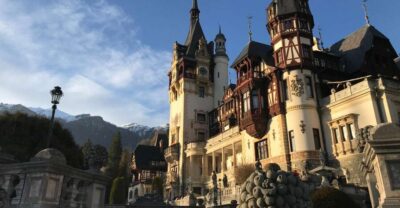

Castles of Transylvania: Private Day Trip from Bucharest
Read our review →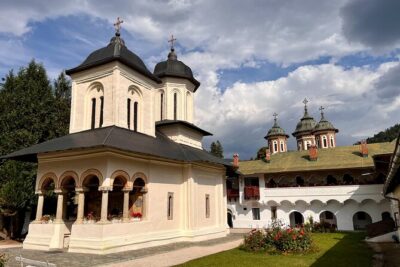
Dracula and Peles Castles Premium Tour with Hotel pick-up
Read our review →
Peles & Cantacuzino Castles: Gourmet Wine & Cultural Day trip
Read our review →
Private Tour: Transylvanian Castles and Brasov’s Medieval Old Town
Read our review →Browse the lists this tour appears in