
Reviewed · CITY TOURS
Bucharest: Private City Tour Guided Experience
Bucharest’s story comes into focus when you see its sharp contrasts: grand boulevards beside tiny Lipscani lanes, a colossal communist palace beside old wooden farmhouses. This private tour links those pieces by comfortable minivan, with time for the Parliament Palace and the open-air Village Museum.
I like the flexible private format, especially for couples or a small family that wants to ask questions and adjust the pace. I also like the mix of city architecture and rural life. The main catch is that entrance fees are extra, and Parliament Palace requires your passport or European ID card, so you need to plan for both before setting out.
In This Review
- Key points
- Why Bucharest Makes Sense as a Private Half-Day Tour
- Lipscani: From Little Paris to Old Bucharest
- Parliament Palace: Scale, Power, and Lavish Interiors
- The Village Museum and Romania’s Rural Past
- How the Three Stops Fit Together
- The Guide Makes the Difference
- Price, Timing, and What You Still Pay For
- Who Will Get the Most From This Tour
- Should You Book the Bucharest Private City Tour?
- FAQ
- How long does the Bucharest private city tour last?
- Is hotel pickup included?
- Is the tour private?
- Which languages are available?
- Is transportation provided?
- Does the tour enter Parliament Palace?
- Are entrance fees included?
- Is lunch included?
- Can I cancel the booking for a refund?
Key points
- Five hours by private minivan: Hotel pickup and drop-off keep this practical in a spread-out city.
- Lipscani’s old lanes: See Belle Époque buildings and the changing heart of Bucharest’s old center.
- Parliament Palace interior: Expect marble, chandeliers, mosaics, stained glass, gold leaf, and grand carpets.
- Village Museum by Lake Herastrau: Walk among about 50 historic buildings showing Romanian rural design.
- English or Spanish guidance: Cristian is one named guide, and Spanish-speaking guests have found him attentive and patient.
- Bring identification: A passport or European ID card is required to enter Parliament Palace.
Why Bucharest Makes Sense as a Private Half-Day Tour
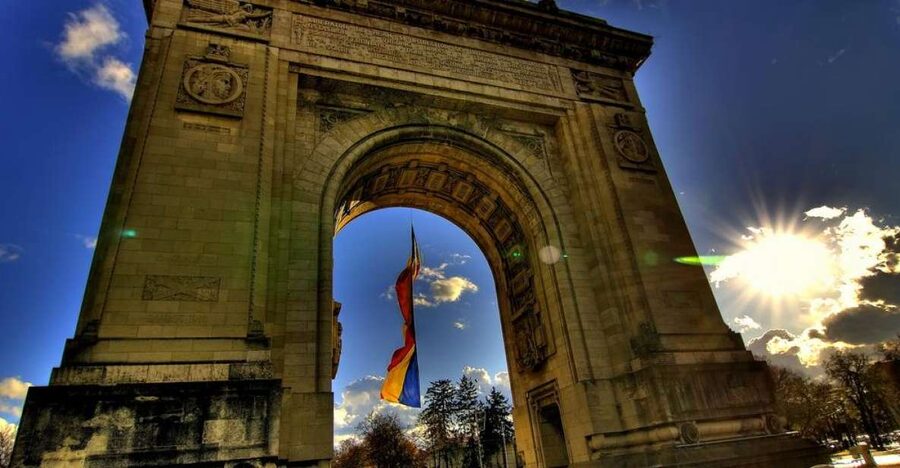
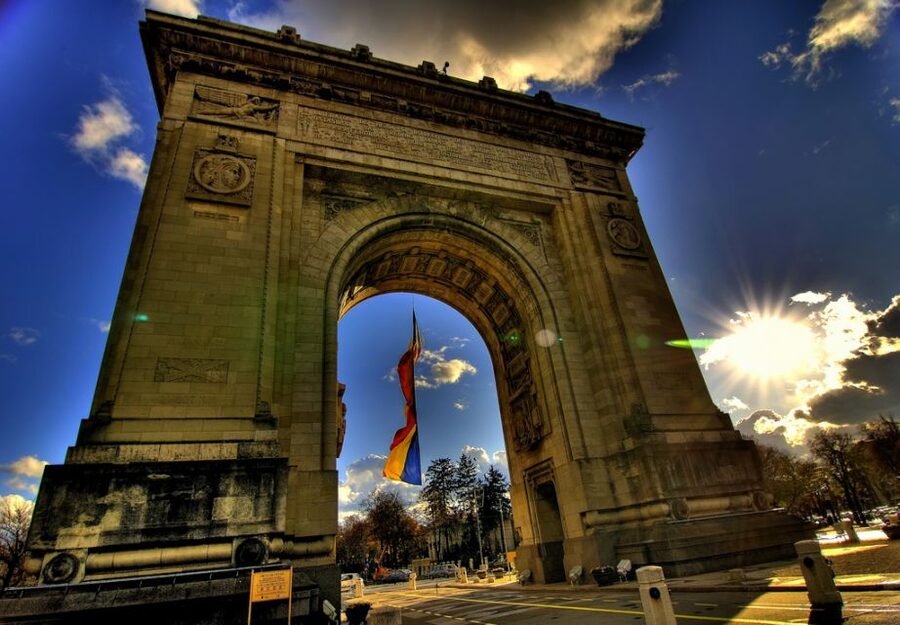
Bucharest is not a city you understand from one grand square. Its character comes from the collision of different eras. A wide avenue may lead toward a huge government building, then suddenly narrow into a lane lined with old façades, cafés, and traces of a much smaller city.
This five-hour route gives you a useful first look without asking you to solve the city’s transport system on your own. Your guide collects you from your Bucharest hotel, and an air-conditioned minivan handles the longer moves between central Bucharest, Parliament Palace, and Herastrau Park.
The private format matters here. You can ask why Bucharest was once called Little Paris, pause over an architectural detail, or request a little more explanation in Spanish. With a shared group, the schedule usually belongs to the whole vehicle. Here, the guide can respond more directly to your interests.
The tour is not a slow, specialist architecture walk. It is a broad introduction to the city, with several stops that show very different sides of Romania. That makes it useful early in a visit, particularly if you want context before exploring Bucharest on your own.
A few more Bucharest tours worth a look
- Bucharest: Dracula’s Castle, Peles Castle, & Brasov Old Town
★ 4.5 · 17,858 reviews - Bucharest: Dracula Castle, Peles Castle & Brasov Old Town
★ 4.6 · 10,891 reviews - Bucharest: Dracula’s Castle, Peleș Castle & Brașov Day Trip
★ 4.5 · 5,919 reviews
Lipscani: From Little Paris to Old Bucharest
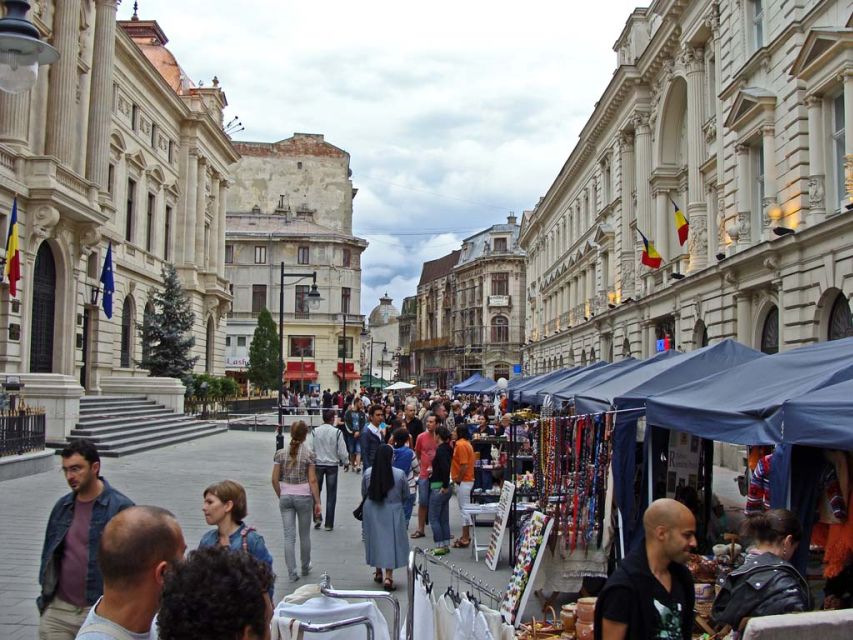
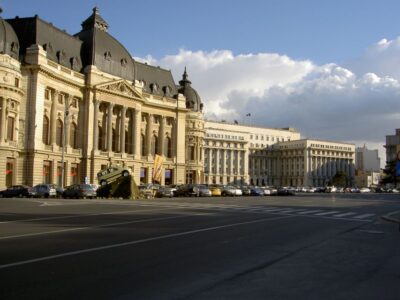
The tour’s old-center section focuses on Lipscani, the jumble of lanes between Calea Victoriei, Boulevard Bratianu, Boulevard Regina Elisabeta, and the Dambovita River. This is where Bucharest feels least orderly, and that is part of its appeal.
You will see the contrast between broad boulevards planned for grand movement and smaller streets shaped by older urban life. The area was once a glamorous residential district and remains one of the clearest places to look for Bucharest’s Belle Époque character.
The phrase Little Paris points to the city’s earlier French influence, especially in architecture, culture, and urban ambition. Your guide can help you read that influence in the buildings and street plan rather than leaving the nickname as a tourist slogan.
Lipscani is also a neighborhood in transition. It is being refashioned into a more upscale district, so the atmosphere can shift from handsome historic façades to modern businesses and busy pedestrian lanes. I like this section because it shows a real city rather than a polished museum display. You see old Bucharest, but you also see how the city is changing.
Do not expect every building to be restored or every lane to look postcard-perfect. The uneven condition is part of the visual lesson. Bucharest has beauty, neglect, renewal, and improvisation close together.
For a first visit, this is the section where you will want to listen closely. The streets are compact but the story is not. A guide can point out how the old center relates to the boulevards, the Dambovita River, and the city’s changing social life.
Parliament Palace: Scale, Power, and Lavish Interiors
The next major stop is Parliament Palace, built under communist leader Nicolae Ceausescu. It is described as the second-largest administrative building in the world after the Pentagon, and the scale is difficult to grasp until you are close to it.
From the outside, the building communicates power through size. Inside, the effect is different but just as forceful. The rooms use crystal chandeliers, mosaics, oak paneling, marble, gold leaf, stained-glass windows, and thick carpets. This is not restrained public architecture. It is an extravagant display of materials and authority.
That contrast makes the visit valuable. You are not simply looking at a large government building. You are seeing how architecture was used to project the strength of a political system, even while ordinary people faced severe hardship under Ceausescu’s rule.
The interior visit also gives the tour a strong visual center. Lipscani offers a close look at old streets and Belle Époque details. Parliament Palace shifts the scale to monumental rooms and formal surfaces. The two stops work well together because neither tells the whole story alone.
There are practical rules to note. Your passport or European ID card is required for the Parliament Palace tour. Bring the correct document, not just a hotel key or a photograph of your identification. Entrance fees are not included in the tour price, so budget separately for admission.
The building is a major reason to choose this experience, but it may not suit you if you prefer small museums or quiet historic interiors. Its appeal is its size, lavish decoration, and political weight. The visit is about power made visible.
The Village Museum and Romania’s Rural Past
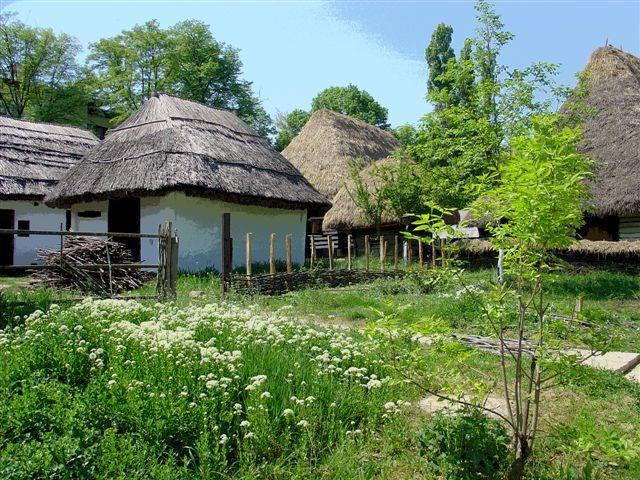
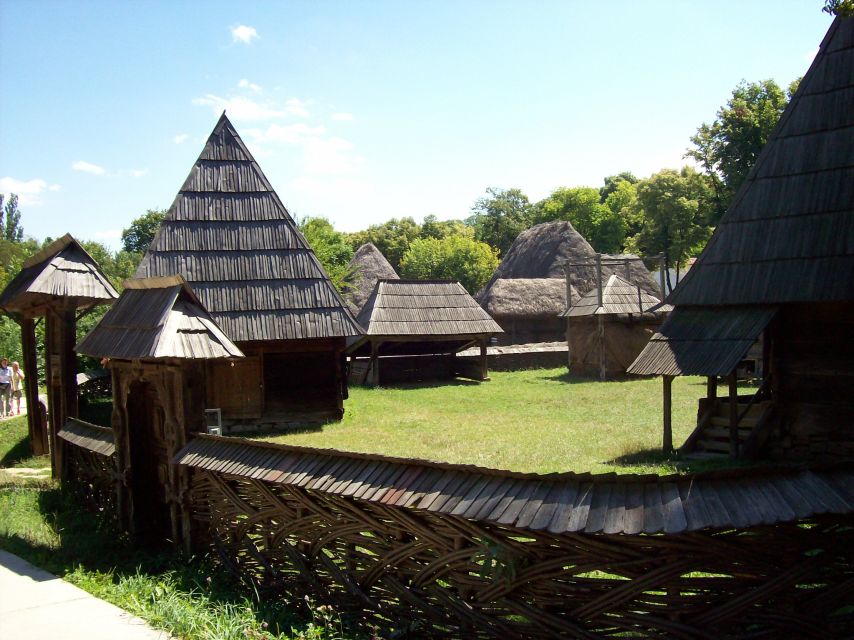
After the monumental city center, the Village Museum offers a sharp change of mood. It sits on the shore of Lake Herastrau in Herastrau Park, giving you an outdoor setting after the formal interiors of Parliament Palace.
The museum was founded by royal decree in 1936 and covers about 30 acres. Its collection includes roughly 50 buildings representing Romanian rural architecture across the centuries. Instead of viewing village life through objects in glass cases, you walk among full-size structures.
This is one of the tour’s most useful contrasts. Bucharest can seem defined by boulevards, apartment blocks, government buildings, and urban change. The Village Museum shows the houses, building styles, and rural traditions that shaped Romania beyond the capital.
You might find the open-air layout more approachable than a conventional museum, especially if you like architecture and photography. The buildings offer a sense of regional variety, though the experience is less about one perfectly reconstructed village than about a collection of rural forms from different periods.
The museum also keeps the tour from becoming too focused on communist-era Bucharest. Parliament Palace tells you about modern political power. The Village Museum points toward older ways of building and living. Together, they give you a wider frame for understanding Romania.
There is a simple tradeoff. Five hours is enough to visit the museum, but not enough to study every building in detail. If you are passionate about folk architecture, you may want a separate visit with more time. For a first introduction, the stop gives you a clear sense of the country’s rural design without requiring another full day.
A different side of the city, same short trip:
- Bucharest: Palace of Parliament Tickets and Guide
★ 4.3 · 3,182 reviews - Bucharest: Day Trip to Dracula Castle, Peles Castle & Brașov
★ 4.4 · 3,049 reviews - Bucharest to Dracula Castle, Peles Castle and Brasov Guided Tour
★ 4.5 · 2,933 reviews - Bucharest: Palace of Parliament Tickets and Guided Tour
★ 4.4 · 1,877 reviews
How the Three Stops Fit Together
The route works because each part answers a different question.
Lipscani shows you where Bucharest’s older urban identity can still be read. The Parliament Palace shows the ambitions and excesses of the communist period. The Village Museum brings in the rural traditions that sit outside the capital’s monumental image.
I prefer tours that make these connections instead of offering a string of unrelated photo stops. Here, the movement from old lanes to huge state architecture to rural buildings gives the day a simple structure.
The minivan is especially useful because the stops are not all in one compact area. Air conditioning matters during warm weather, and hotel pickup and drop-off remove the need to arrange separate taxis or public transport. The vehicle also gives you a place to regroup between visits.
Still, the minivan is transportation, not the main attraction. The most memorable parts happen when you get out and look closely. In Lipscani, that means the street pattern and façades. At Parliament Palace, it means the interior decoration and the building’s scale. At the Village Museum, it means the forms and materials of the rural buildings.
The Guide Makes the Difference
A private tour depends heavily on the person leading it. The supplied guide languages are English and Spanish, so check that your preferred language is available when booking.
Cristian is one named guide associated with this experience. He has been described as professional, considerate, and attentive, with guests particularly pleased by his historical and architectural explanations. Spanish-speaking visitors have also found that he makes a real effort to communicate clearly.
That point matters because Bucharest’s story has several layers. A guide who only lists dates and building names will leave you with photographs but little connection between them. A guide who explains why the city gained its Little Paris nickname, how the old center changed, and why Parliament Palace is so politically loaded can turn the same five hours into a much stronger introduction.
The private setting gives you a better chance to shape the conversation. Ask about the buildings you see in Lipscani. Ask how the Village Museum fits into Romanian identity. Ask about the relationship between the city’s grand avenues and its older street network.
The language choice is worth taking seriously. One Spanish-language experience was rated as generally correct even though the guide worked hard to understand the group. That suggests the Spanish option can be useful, but communication may vary by guide and group. If precise historical discussion matters to you, confirm the language arrangement before you pay.
Price, Timing, and What You Still Pay For
The listed price is $120 per group up to one, for five hours. Since the wording gives a group limit of up to one, check the final price for your actual party before booking. Private tours often offer better value for two or more people than paying separate rates for a series of taxis and admissions, but the value depends on your group size and the entrance fees added at checkout.
Transportation, an English or Spanish-speaking guide, photo and video fees, and hotel pickup and drop-off are included. Lunch is not included, and neither are entrance fees. That makes the tour easier to compare with other private city tours because you can see exactly what is covered.
A five-hour schedule is long enough for a serious overview, but it is not a full Bucharest study course. You will need to accept a fairly brisk rhythm if you want all three major areas. The benefit is range. In one half-day, you see central streets, a major political monument, and a large outdoor museum.
Start times depend on availability. Pickup is from hotels in Bucharest, so provide the correct hotel details when booking. The tour also offers free cancellation up to 24 hours before departure and a reserve-now, pay-later option, which is useful if your city schedule is still shifting.
Who Will Get the Most From This Tour
I would recommend this experience to a first-time visitor who wants Bucharest explained in one efficient outing. It is also a good fit if you have limited time, prefer private transportation, or want a guide rather than a self-guided walk through the city center.
Families may appreciate the minivan and the variety of stops. Architecture fans will find plenty to examine, from Belle Époque façades to communist monumental design and rural wooden buildings. Spanish-speaking visitors should consider it, especially if Cristian or another confirmed Spanish-speaking guide is available.
It may be less suitable if you want a slow walking tour focused only on Lipscani. You will spend part of the five hours in the vehicle, and the route covers a lot. It may also disappoint visitors who want to avoid formal monuments or who dislike paying separate admission charges.
Bring your passport or European ID card. Wear practical shoes for the outdoor Village Museum, though the supplied information does not specify a required dress code or accessibility arrangements. Since lunch is not included, plan to eat before or after the tour rather than expecting a meal stop as part of the experience.
Should You Book the Bucharest Private City Tour?
Book it if you want a well-rounded first look at Bucharest and value a private guide, hotel pickup, and air-conditioned transport. The strongest feature is the range: Lipscani gives you old-city texture, Parliament Palace gives you political and architectural drama, and the Village Museum adds a rural side of Romania that many city tours leave out.
Before booking, confirm the final group price, entrance fees, pickup time, and guide language. Bring the required identification for Parliament Palace. If you are comfortable with those details, this is a practical way to get your bearings and understand why Bucharest can feel French-influenced, communist, rural, grand, and slightly unruly all at once.
FAQ
How long does the Bucharest private city tour last?
The tour lasts five hours.
Is hotel pickup included?
Yes. Pickup and drop-off from hotels in Bucharest are included.
Is the tour private?
Yes. It is offered as a private group experience.
Which languages are available?
The live guide is available in English or Spanish.
Is transportation provided?
Yes. Transportation is provided in an air-conditioned minivan.
Does the tour enter Parliament Palace?
The itinerary includes a visit to the interior of Parliament Palace. You must bring a passport or European ID card for this part of the tour.
Are entrance fees included?
No. Entrance fees are not included in the tour price.
Is lunch included?
No. Lunch is not included.
Can I cancel the booking for a refund?
Yes. You can cancel up to 24 hours in advance for a full refund. A reserve-now, pay-later option is also available.
Recently added around Bucharest
- 6h Communism Tour in Bucharest with Ceausescu Mansion★ 4.5 · 6 reviews
- From Bucharest : Day Trip to Peles, Dracula’s Castle, Brasov★ 4.7 · 6 reviews
- Bears Sanctuary, Dracula Castle and Brasov City – Full Day Trip from Bucharest★ 5.0 · 6 reviews
- Dracula Private Tour★ 5.0 · 6 reviews
- Transfagarasan Road Private Day Trip from Bucharest / The Best Road in the World★ 5.0 · 6 reviews
- Bucharest : Wednesday, Dracula & Peles 3 Castles Tour 1 Day★ 4.7 · 6 reviews
- Hiking thought the best mountain villages in Romania-Private tour from Brasov★ 5.0 · 6 reviews
- Bucovina Painted Monasteries & Transylvania Tour: 4-Day Private★ 5.0 · 6 reviews
City Tours, compared.
Bucharest Panoramic Sightseeing – Private City Tour
Read our review →
SB01 – City Tour Sibiu: Exploring the Heart of Transylvania
Read our review →
City Tour Sighisoara Legends & Landmarks A Walk Through Time
Read our review →Browse the lists this tour appears in