
Reviewed · CITY TOURS
Bucharest Private City Tour 4h with Hotel Pickup & Drop-Off
Bucharest makes the most sense when you see its grand boulevards and communist monuments beside old churches, royal buildings, and lively lanes. This private tour brings that contrast into focus, from the Palace of Parliament to the modest wooden houses at the Village Museum.
I like the private car, which lets you cover a lot without wrestling with city transport. I also like the guide-led storytelling at Revolution Square, where Romania’s 1989 uprising moved from protest to the fall of Nicolae Ceausescu. The main drawback is pace: four hours is short for so many stops, and entrance fees are extra.
In This Review
- Key points at a glance
- A four-hour introduction to Bucharest’s sharp contrasts
- The Palace of Parliament and the cost of political power
- Piața Unirii and the city seen from the car
- Traditional Romania at the Dimitrie Gusti National Village Museum
- Revolution Square and the moment Ceausescu lost control
- Calea Victoriei, from royal splendor to city life
- The Romanian Athenaeum, CEC Palace, and central Bucharest
- The Senate Palace and the former Communist Party headquarters
- Old Town, churches, shops, and a more social Bucharest
- What the private vehicle adds to the experience
- Is $131 per person a fair price?
- Who should book this Bucharest tour?
- Should you book the Bucharest Private City Tour?
- FAQ
- How long does the Bucharest private city tour last?
- Is hotel pickup and drop-off included?
- Is the tour private?
- What language is the live tour guide?
- Are entrance fees included in the price?
- Can I cancel the tour for a full refund?
Key points at a glance
- Communist power in one enormous building: See the Palace of Parliament, a symbol of Ceausescu’s costly and excessive rule.
- Romania in a single open-air museum: The Dimitrie Gusti National Village Museum brings traditional houses, mills, and a wooden church together.
- A private route through central Bucharest: Hotel pickup, drop-off, air-conditioning, and Wi-Fi make this easy for a first visit.
- The revolution becomes real: Revolution Square and the former Communist Party headquarters connect landmarks to the events of December 1989.
- Strong attention to timing: Guide Alex is noted for covering a great deal in a short period while keeping explanations clear.
- Flexible guiding: Guides Vlad and Alex are described as helpful and willing to adapt the route to your interests.
A four-hour introduction to Bucharest’s sharp contrasts
This is not a slow walking tour of one neighborhood. It is a private overview of Bucharest, built around short visits and drives between major sights. You see government buildings, traditional rural architecture, royal-era streets, Orthodox churches, museums, and the Old Town in one compact outing.
That makes it a good choice if you have only half a day, are visiting Bucharest for the first time, or want context before exploring alone. Your guide can explain what you are seeing as the city passes outside the car, then give you time to stop, take photographs, and walk around at selected points.
The tour is offered in English with a live guide. Guide names connected with the experience include Vlad and Alex. Alex receives particular praise for time management, covering a lot of ground while keeping the information clear and interesting. Vlad is described as helpful and willing to adjust to personal wishes.
There is a practical limitation. The listed stop allocations add up to more than the advertised four hours, so you should treat them as rough portions of the route. Some stops are pass-by views, and traffic or time spent at one sight can shorten another. This is a highlights tour, not a detailed visit to every museum and monument.
A few more Bucharest tours worth a look
- Bucharest: Dracula’s Castle, Peles Castle, & Brasov Old Town
★ 4.5 · 17,858 reviews - Bucharest: Dracula Castle, Peles Castle & Brasov Old Town
★ 4.6 · 10,891 reviews - Bucharest: Dracula’s Castle, Peleș Castle & Brașov Day Trip
★ 4.5 · 5,919 reviews
The Palace of Parliament and the cost of political power
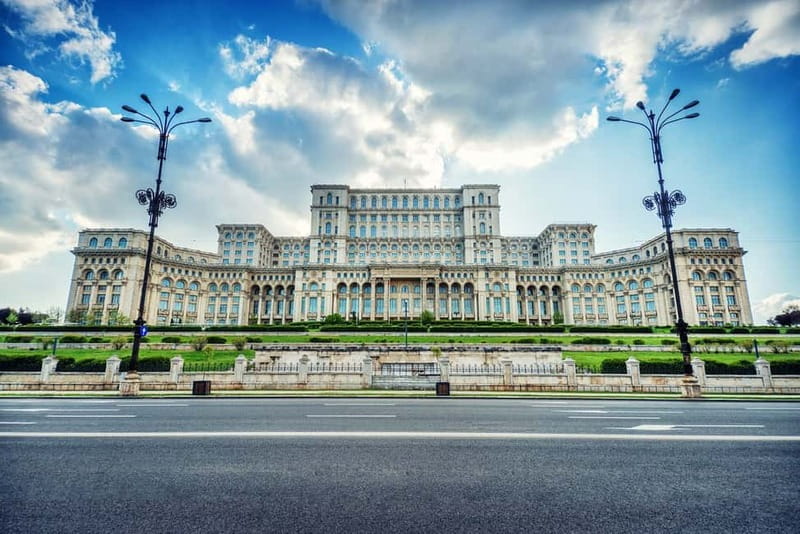
The first major sight is the Palace of Parliament, also called the People’s House. You get about 30 minutes for a photo stop and sightseeing, enough to take in the building’s huge scale and hear why it matters.
The structure is described as the world’s second-largest administrative building. Its size is not just an architectural curiosity. It shows how Ceausescu’s communist regime reshaped Bucharest around power, control, and personal grandeur.
Your guide uses the building to explain the damage a totalitarian system can cause. The contrast is stark: enormous quantities of material and labor went into a government building while ordinary people lived under severe restrictions. The place can feel almost absurd in its scale, and that discomfort is part of its value.
Do not expect a full interior visit to be guaranteed by the basic tour details. Entrance fees are not included, and this stop is specifically listed as sightseeing and a photo stop. If entering the building matters to you, check the current arrangements when booking and budget separately for admission.
Even from outside, the Palace of Parliament gives you a useful key to modern Bucharest. It helps explain why the city has such wide roads, monumental blocks, and sudden gaps where older neighborhoods once stood.
Piața Unirii and the city seen from the car
The route passes through Piața Unirii, or Union Square, for about 10 minutes. This is not presented as a long walking stop. Instead, it gives you a moving view of one of Bucharest’s major central areas while your guide places it in the wider city story.
This short section shows the advantage of private transport. You can connect distant parts of Bucharest without spending your limited time changing buses or working out routes. The tradeoff is that you will not study every square at street level.
For a first look, that is a fair compromise. The guide can point out what matters, and you can decide which neighborhoods deserve a longer return visit.
Traditional Romania at the Dimitrie Gusti National Village Museum
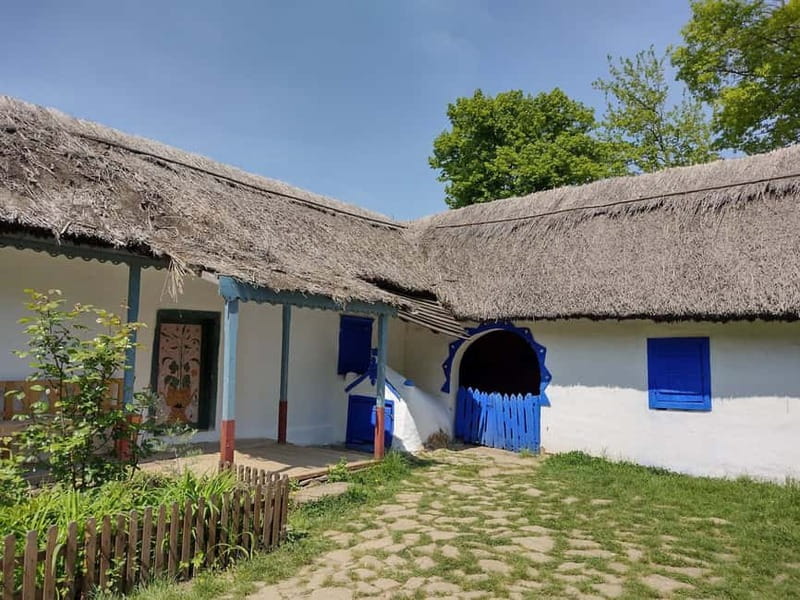
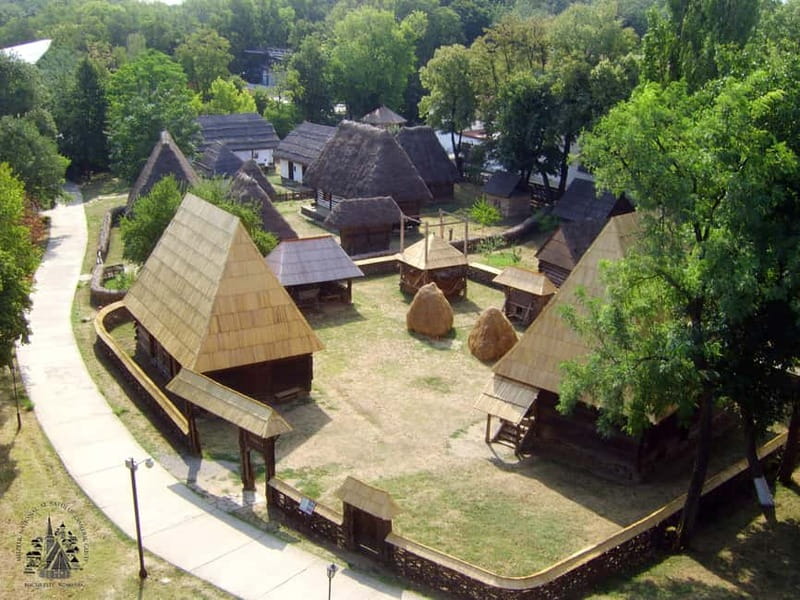
The National Village Museum is one of the most appealing stops for anyone who wants more than communist-era architecture. You have roughly an hour for sightseeing and photographs among traditional homes gathered from different parts of Romania.
The museum presents houses made from materials such as wood, adobe, and stone. You also see rural structures such as a mill and a wooden church. These are not simply old buildings placed in a park. Together, they show how Romanian communities shaped homes and working spaces around local materials, practical needs, and religious life.
I find this stop especially useful because it gives you a human scale after the Palace of Parliament. The People’s House represents centralized power and excess. The Village Museum points toward modest homes, local skills, and communities organized around their surroundings.
Your guide can explain the meaning of the buildings and national symbols rather than leaving you to read labels on your own. The visit also shows that Romanian identity is not limited to Bucharest. The houses represent traditions from across the country, giving you a quick introduction to regional building styles and rural life.
One hour is enough for an informative overview, but not for every building. If traditional architecture is your main interest, you may want more time than this tour allows. For most first-time visitors, though, it is a useful and memorable counterweight to the city’s monumental center.
A different side of the city, same short trip:
- Bucharest: Palace of Parliament Tickets and Guide
★ 4.3 · 3,182 reviews - Bucharest: Day Trip to Dracula Castle, Peles Castle & Brașov
★ 4.4 · 3,049 reviews - Bucharest to Dracula Castle, Peles Castle and Brasov Guided Tour
★ 4.5 · 2,933 reviews - Bucharest: Palace of Parliament Tickets and Guided Tour
★ 4.4 · 1,877 reviews
Revolution Square and the moment Ceausescu lost control
At Revolution Square, the tour turns from architecture to recent political history. You get a guided visit and photo stop of about 30 minutes.
This is where the events of December 1989 become easier to picture. The former Central Committee building is tied to the final days of Ceausescu’s rule. From here, he fled by helicopter as the regime began to collapse.
The power of this stop comes from the buildings around the square. On one side, you have the Royal Palace. Nearby are structures linked to the Communist Party and the revolution. The setting makes the city’s political changes visible in stone and concrete.
This is a place where a good guide matters. Dates and names alone can make the story feel flat. The value lies in connecting the square, the buildings, and the sudden shift from dictatorship to political upheaval. The guides associated with this tour are praised for giving clear historical explanations and responding to questions.
You should expect a focused stop rather than a long seminar. Thirty minutes gives you time to look, photograph, and understand the main events, but the subject is large enough to justify further reading if modern Romanian history interests you.
Calea Victoriei, from royal splendor to city life
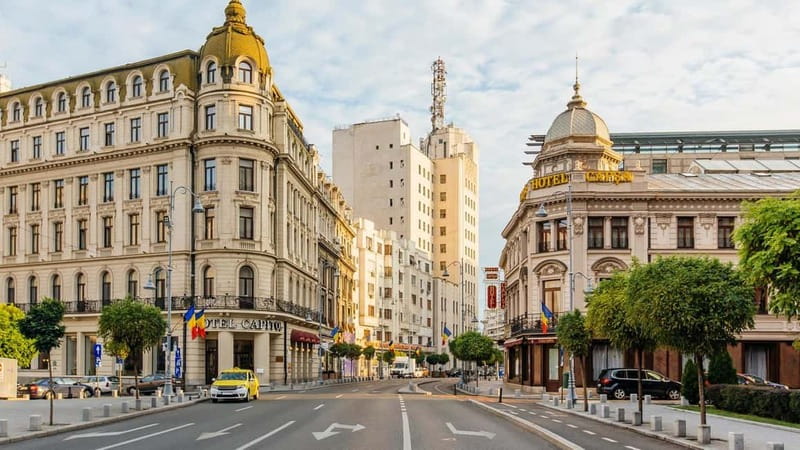
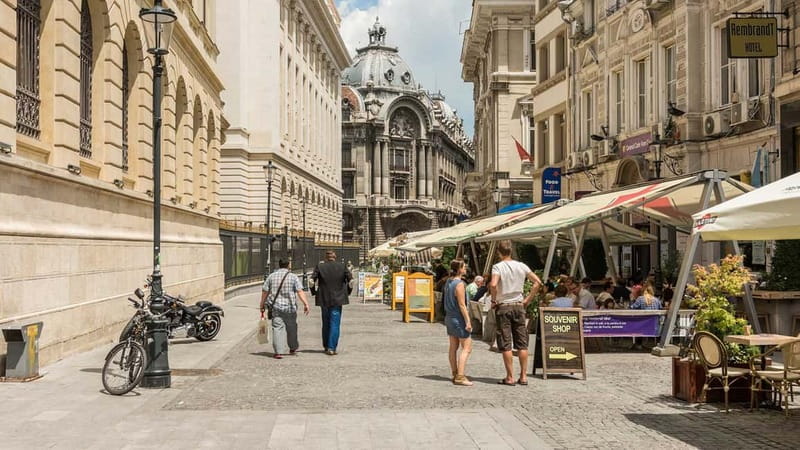
Calea Victoriei, or Victory Avenue, receives about 45 minutes of guided sightseeing and photographs. This is one of the best sections for seeing Bucharest’s changing character in a single corridor.
The route brings together royal architecture, old Orthodox churches, museums, theaters, shops, restaurants, casinos, tea shops, and music stores. The mix can feel irregular, but that is part of the appeal. Bucharest is not a polished single-style capital. Its streets show layers of monarchy, communism, commerce, religion, and present-day city life.
Your guide points out the contradiction between the Royal Palace and the former Communist Party headquarters. That contrast gives Calea Victoriei more meaning than a simple architectural stroll. You are seeing the places where different versions of Romania tried to define the country.
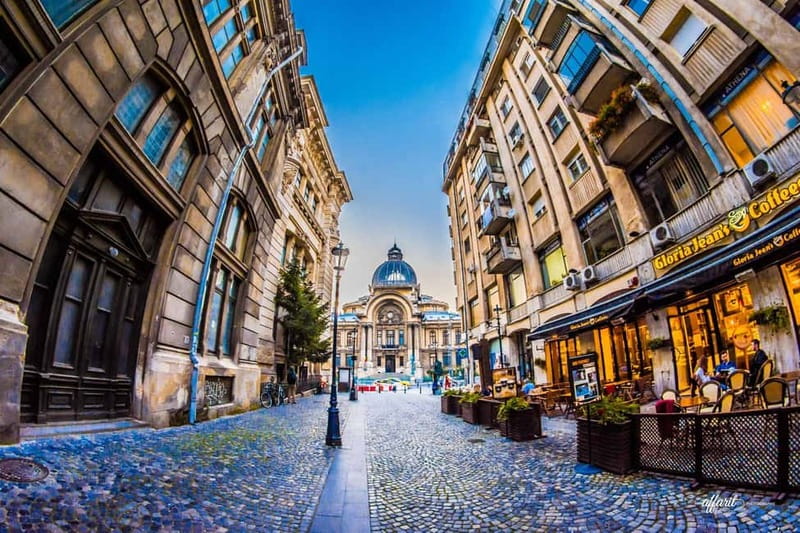
The route also includes views of the Romanian Athenaeum, the National History Museum, and the CEC Palace. Each building adds another piece to the city’s public face. You may not enter each one, but the outside views help you understand why this avenue is central to Bucharest’s identity.
This section will suit you if you enjoy seeing a city through its street life as well as its monuments. It is less suitable if you want long interior visits, since the schedule keeps moving.
The Romanian Athenaeum, CEC Palace, and central Bucharest
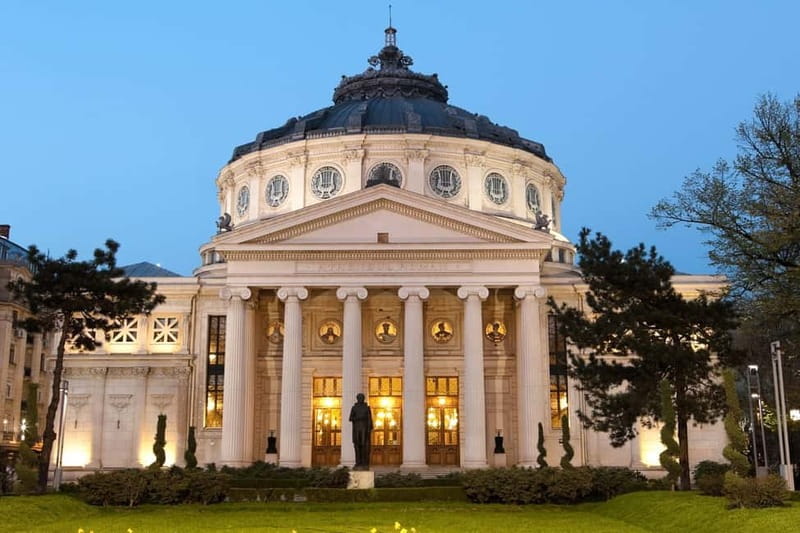
The tour includes additional sightseeing in Bucharest for about 45 minutes. This portion helps tie together the sights seen along Calea Victoriei and the central districts.
The Romanian Athenaeum is an important architectural landmark, while the CEC Palace offers another striking example of Bucharest’s historic public buildings. The National History Museum adds a direct link to the country’s past, though the tour details do not promise a full museum visit.
The benefit here is the guide’s ability to explain relationships between sights. You are not just ticking off separate facades. You are moving through a central area where royal, religious, cultural, and political buildings sit close together.
Because the route is private, you can ask your guide to spend more time on the type of architecture or history that interests you most, within the limits of the schedule. Vlad is specifically described as adapting to personal wishes, while Alex is noted for keeping the timing efficient.
The Senate Palace and the former Communist Party headquarters
The route reaches the Senate Palace, the building that once housed the Central Committee of the Romanian Communist Party. This is another key location connected with the December 1989 revolution.
Seeing the building after Revolution Square helps the story develop in stages. At the square, you learn about the public crisis and Ceausescu’s escape. Here, you face the institutional center of the regime itself.
The tour also connects this site with the controversies surrounding the former dictator’s fortune and Romania’s state security service. These subjects are complicated, and the visit is best understood as an introduction rather than a final explanation. You get the essential framework, then you can explore the details independently if you wish.
This is one reason a private guide can add value. You can ask for clarification when the political history becomes tangled, instead of moving through a fixed group lecture.
Old Town, churches, shops, and a more social Bucharest
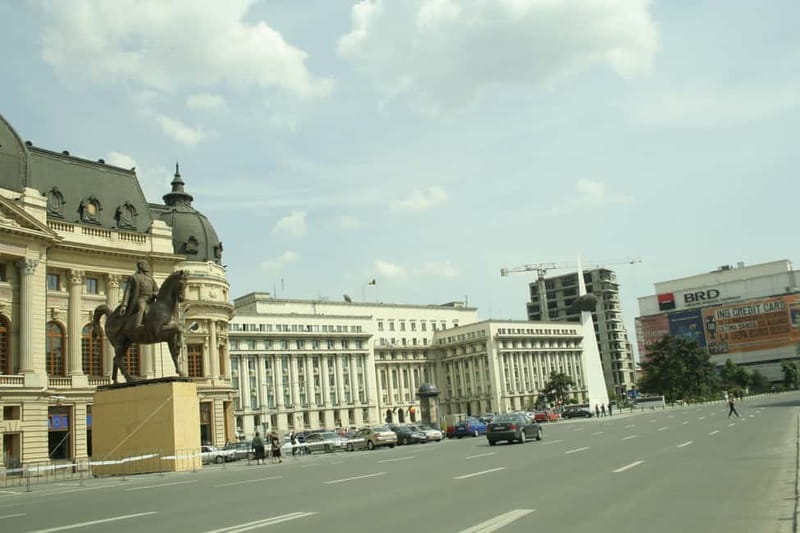
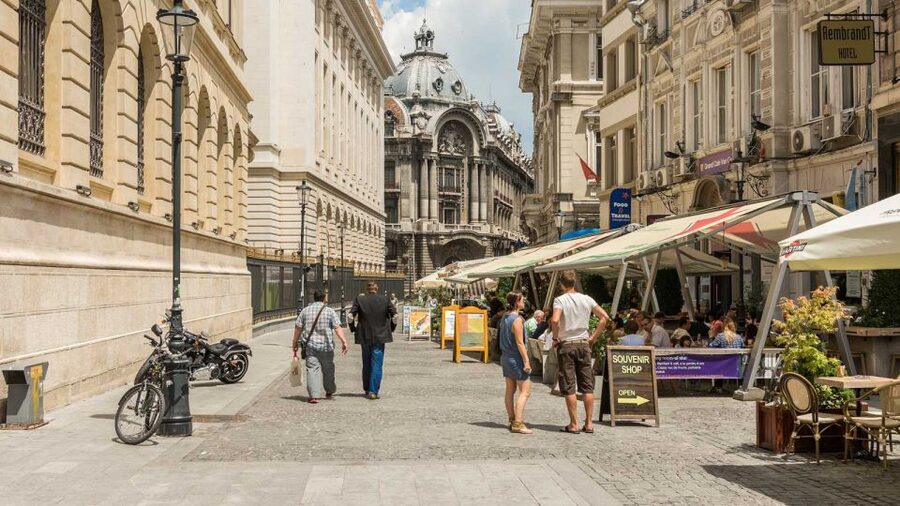
The final major area is Bucharest Old Town, with about an hour for guided sightseeing and photographs. After the formal buildings and political sites, the Old Town gives the tour a more relaxed ending.
You pass old Orthodox churches, restaurants, retail shops, gift stores, and other places that show Bucharest as a living city rather than a collection of monuments. The churches add an older spiritual layer, while the restaurants and shops show the area’s current social life.
The tour details describe the Old Town as bohemian, but you should still expect a short overview rather than a night out. Food and drinks are not included. If you want to stop for coffee, lunch, or a drink, you would need to fit it into the available time and pay separately.
An hour is helpful here because you can get out and walk rather than viewing everything through the vehicle. Still, the overall schedule is tight. If Old Town is your main reason for visiting Bucharest, book this tour for orientation and return later for a slower wander.
What the private vehicle adds to the experience
The tour includes pickup and drop-off at your address, private transportation, air-conditioning, and Wi-Fi. Those details matter in Bucharest because the route links several areas that are not best experienced as one continuous walk.
You can begin at your hotel and finish there without arranging a taxi between stops. The air-conditioned car is a comfort during warm weather, and Wi-Fi can be useful for checking maps or staying connected during the drive.
The private format also gives you more control than a large group tour. You can ask questions without speaking over a crowd, and the guide can respond to your interests. The published feedback gives special weight to helpfulness, flexibility, and time management, which are exactly the qualities that matter on a short private route.
The vehicle does not turn the tour into a leisurely day. You still move quickly, and some stops remain brief. Think of the car as a way to make a wide route practical, not as a substitute for extended time inside each sight.
Is $131 per person a fair price?
At $131 per person, this is not the cheapest way to see Bucharest. The value depends on how much you want a private guide and door-to-door transport.
You are paying for a four-hour private experience, an English-speaking licensed guide, a private air-conditioned vehicle, Wi-Fi, and pickup and drop-off. For a couple or small private group, that can be worthwhile, especially if you have limited time or do not want to plan several separate visits.
The price is less attractive if you mainly want to walk through Old Town or take exterior photographs. You also need to add entrance fees, and food and drinks are not included. Since the Palace of Parliament and museum visits may involve separate admission arrangements, check the cost before you commit.
I would see the tour as a time-saving orientation, not an all-inclusive sightseeing package. Its strongest value is the combination of transportation and interpretation. You cover the communist center, village traditions, royal-era architecture, the revolution sites, and Old Town without building the route yourself.
Flexible booking also helps. You can reserve now and pay later, and cancellation is free up to 24 hours in advance for a full refund. Check available starting times before booking, since the tour lasts four hours and the schedule varies.
Who should book this Bucharest tour?
I would recommend it to first-time visitors who want a broad introduction in half a day. It also suits you if you are staying in Bucharest briefly, arriving for a longer trip through Romania, or prefer not to navigate unfamiliar city transport.
History-minded visitors will get the most from the Palace of Parliament, Revolution Square, and the former Communist Party headquarters. Architecture fans will appreciate the contrast between the CEC Palace, Romanian Athenaeum, royal buildings, Orthodox churches, and rural houses at the Village Museum.
Families and mixed-interest groups may also find the private format useful. One person can ask about politics, another about architecture, and another about daily life without being locked into a large group’s pace.
I would hesitate to recommend it if you want long museum visits, a relaxed café stop, or a detailed walking tour of Old Town. The route covers a lot, but it does so by moving steadily from one district to the next.
Should you book the Bucharest Private City Tour?
Book it if you want the main story of Bucharest in four hours, with a guide who can connect grand buildings to the country’s communist past and 1989 revolution. The Village Museum is a particularly good addition, since it shows a quieter and more traditional side of Romania.
The clearest reasons to choose this tour are the private vehicle, hotel pickup, flexible guiding, and strong attention to timing. Alex’s reported time management and Vlad’s willingness to adapt are useful qualities when the schedule is this full.
Skip it if you prefer to explore slowly on foot or want admission to major sights included in the price. For a compact first look, though, $131 per person can be reasonable when private transport and a personal English-speaking guide save you both planning time and effort.
FAQ
How long does the Bucharest private city tour last?
The tour duration is four hours. Starting times vary, so check availability when booking.
Is hotel pickup and drop-off included?
Yes. Pickup and drop-off from your address or hotel in Bucharest are included.
Is the tour private?
Yes. This is a private group tour with private transportation.
What language is the live tour guide?
The live tour is conducted in English.
Are entrance fees included in the price?
No. Entrance fees listed for the itinerary are not included. Food and drinks are also not included.
Can I cancel the tour for a full refund?
Yes. You can cancel up to 24 hours in advance for a full refund. You can also reserve now and pay later.
Recently added around Bucharest
- From Bucharest: Discovery at Europe’s Largest Salt Mine★ 5.0 · 3 reviews
- RiverCruise Exclusive – Private Transfer from or to Giurgiu Port/Bucharest Hotel★ 3.5 · 3 reviews
- Cluj Napoca: Climbing or Hiking Experience in Turda Canion★ 5.0 · 3 reviews
- Private-Red Patrol Bucharest Flea Market Tour with a Romanian car★ 5.0 · 3 reviews
- Bucharest: City Highlights Guided Walking Tour★ 5.0 · 3 reviews
- Probably the Best Restaurant and Wine Cellar near Bucharest★ 4.5 · 3 reviews
- Private 8 Day Romania UNESCO Tour★ 5.0 · 3 reviews
- Bucharest in a nutshell – half day private walking tour★ 5.0 · 3 reviews
City Tours, compared.

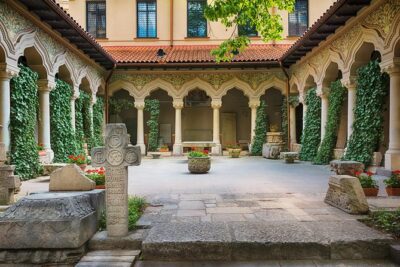
Bucharest Panoramic Sightseeing – Private City Tour
Read our review →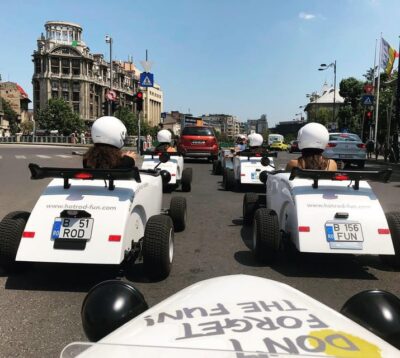
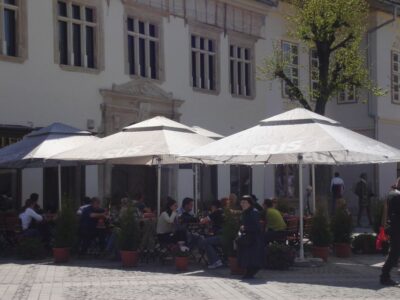
SB01 – City Tour Sibiu: Exploring the Heart of Transylvania
Read our review →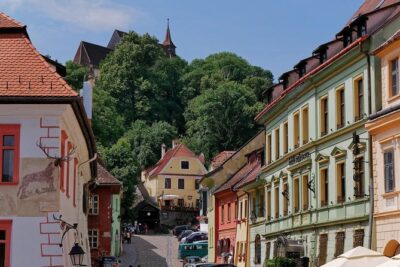
City Tour Sighisoara Legends & Landmarks A Walk Through Time
Read our review →Browse the lists this tour appears in