
Reviewed · TRANSYLVANIA DAY TRIPS
6 Days Transylvania and Bukovina Small Group Tour from Bucharest
Romania’s best sights come in very different forms here: Saxon citadels, painted Orthodox monasteries, royal castles, and Carpathian mountain roads. This six-day circuit links them without asking you to plan each hotel, transfer, or route yourself.
I like the small maximum of seven people and the guide-driver format, especially since George is praised for his enthusiasm and his pride in Romania. I also like the mix of major stops and local detail, from black pottery in Marginea to the houses with eyes in Sibiu. The main drawback is the pace: several stops are brief, and entrance fees are not included.
In This Review
- Key points to know
- A six-day route across Romania’s historic regions
- Day 1: Cozia Monastery and Sibiu’s three squares
- Day 2: Sighisoara, Targu Mures, and Bistrita
- Day 3: Bucovina’s painted monasteries
- Day 4: Bicaz Gorges, Red Lake, and the Carpathian road
- Day 5: Brasov and the Dracula question at Bran
- Day 6: Peles Castle and a Bucharest overview
- What the guide and small group add
- Hotels, meals, and extra costs
- Who should book this Romanian circuit?
- Should you book the six-day Transylvania and Bukovina tour?
- FAQ
- How long is the tour?
- Where does the tour start?
- What is the maximum group size?
- Who guides and drives the tour?
- What accommodation is included?
- Are meals included?
- Are entrance fees included?
- Is there a single-room supplement?
- What clothing is required at religious sites?
Key points to know
- Six days, not eight: The detailed schedule covers six days, although the tour description also refers to an eight-day tour. Confirm the exact duration before paying.
- A maximum of seven people: The small vehicle should make the long drives and town visits more personal than a large coach tour.
- George may be your guide-driver: His lively historical storytelling and practical help are a major part of the experience.
- Bucovina is the artistic high point: Moldovita, Sucevita, and Voronet bring you face to face with Romania’s famous exterior frescoes.
- Five breakfasts are included: Hotels, transport, and the licensed guide are covered, but admission tickets, most lunches, dinners, tips, and a single-room supplement are extra.
- Expect full touring days: The route covers large distances, with some short stops and late arrival in Sinaia.
A six-day route across Romania’s historic regions
This is not a relaxed stay in one town. It is a point-to-point tour that starts and ends in Bucharest and crosses Wallachia, Transylvania, and Bukovina.
That variety is the reason to book it. In one trip, you see a medieval monastery, a fortified citadel, Hungarian-influenced architecture, mountain gorges, Orthodox frescoes, Dracula’s Castle, and a royal residence. The tradeoff is time in the vehicle. You will cover a lot of Romania, but you will not have long free periods in every place.
Transport is by air-conditioned minivan or coach, with the professional licensed guide also serving as driver. The group is capped at seven people, which is a useful detail on a route with narrow old-town streets and mountain roads. It also means the social side of the trip may depend on having a compatible little group.
The published price is $1,163.56 per person. That is a substantial outlay, but it covers five nights in 3- and 4-star hotels, five breakfasts, transport, and a licensed guide. You still need to budget for entry tickets, meals not listed as included, tips, and possibly €120 for a single room. The value is strongest if you want one organized route through several regions and would otherwise need to arrange intercity transport and hotels yourself.
One practical warning comes first. The tour title and day-by-day plan describe six days, while the general description calls it an eight-day tour. The schedule supplied here clearly runs from Day 1 through Day 6, so confirm the final length and hotel plan with Trip2Ro before booking.
More Transylvania day trips:
- Transylvania and Dracula Castle Full Day Tour from Bucharest
★ 4.5 · 1,589 reviews - Castles of Transylvania: Private Day Trip from Bucharest
★ 4.5 · 248 reviews - 2-Day Medieval Transylvania with Brasov,Sibiu and Sighisoara Tour from Bucharest
★ 4.5 · 145 reviews
Day 1: Cozia Monastery and Sibiu’s three squares
The first day heads along the Olt Valley to Cozia Monastery, a 14th-century Wallachian foundation associated with Mircea the Old. You have about 30 minutes here, enough for a focused look rather than a slow visit.
The monastery is noted for Armenian decoration on its facade and frescoed interiors. Since there is no admission charge listed for this stop, it is an easy early introduction to Romania’s religious architecture. Still, 30 minutes is short, so you will want to move with purpose and listen closely to the guide’s explanation.
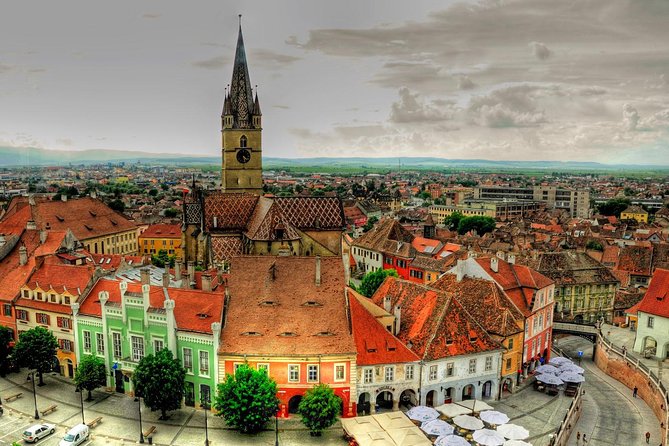
Sibiu gets three hours, making it one of the more satisfying town visits on the route. The old center is arranged around Big Square, Small Square, and Huet Square, with towers, 15th-century bastions, museums, and the city’s famous houses with eyes.
Sibiu’s appeal is not only its appearance. Romanian, Saxon, Catholic, Orthodox, and Protestant influences all appear in its monuments. The large Gothic evangelical church is a key stop, and the city’s past as European Capital of Culture in 2007 helps explain its strong arts profile.
Three hours gives you time to walk the central squares and see the main sights, though it may not leave much room for museums. I would use the visit for the old town first, then add a museum only if the schedule and your guide allow it.
Day 2: Sighisoara, Targu Mures, and Bistrita
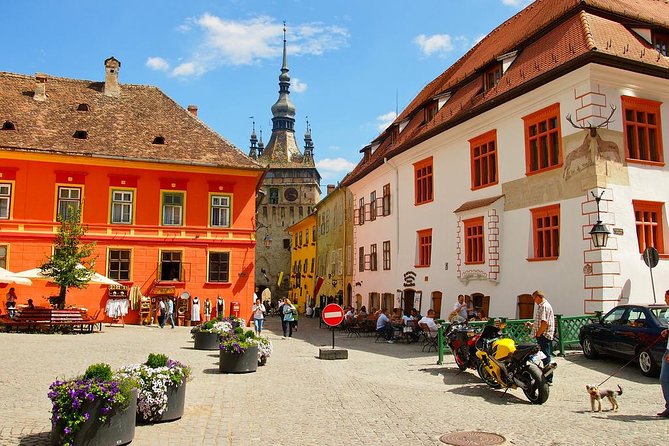
Sighisoara is one of the route’s essential stops. Its inhabited medieval citadel is protected as a UNESCO World Heritage site, and the Clock Tower provides the visual focus as you enter the historic center.
You have two hours here. That should cover the main citadel streets, but the schedule becomes tight if you want to climb to the Church on the Hill using the wooden Schoolchildren’s Ladder, inspect the Shoemakers’ Tower, and stop for lunch.
The Vlad the Impaler connection appears here in a very direct way: you can have lunch at the house where he was born, though the meal is not included. That is a fun option for anyone following the Dracula story, but do not expect Sighisoara to explain the full legend on its own. The tour’s larger Dracula connection comes later at Bran Castle.
Sighisoara also reflects the area’s Hungarian past. The statue of poet Petofi Sandor, the Catholic church associated with the Hungarian community, and the citadel’s mixed architectural character give the visit more depth than a simple Dracula stop.
Targu Mures receives only 30 minutes. The Palace of Culture is the main sight, and the city’s Hungarian architectural influence is central to its identity. Treat this as a photo and orientation stop, not a full city visit.
Bistrita gets one hour for a walking tour. Its Lutheran church, begun in the 14th century and later altered with Renaissance details, is the main monument. This stop adds another piece to the region’s Saxon and Lutheran story, but you should expect a brisk walk rather than extensive independent exploration.
Day 3: Bucovina’s painted monasteries
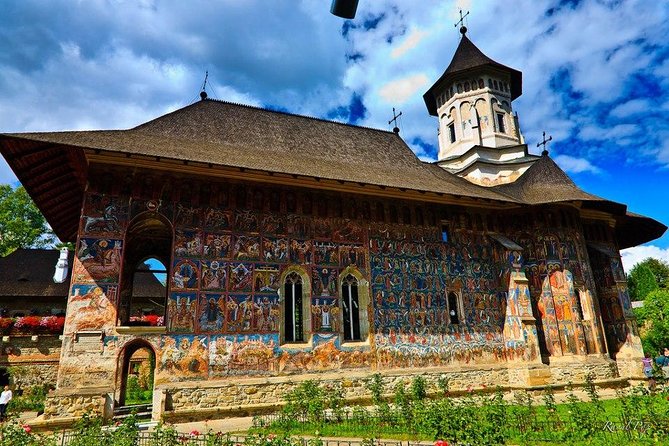
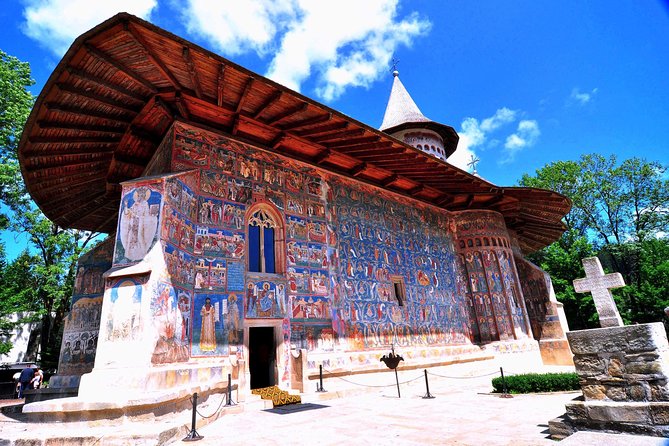
For many people, Day 3 is the artistic heart of the tour. Moldovita, Sucevita, and Voronet are famous for their painted walls, where religious scenes cover both exteriors and interiors.
Moldovita was founded by Petru Rares in the 16th century. You get about an hour, which is enough to examine the frescoes and hear why the monastery matters. Sucevita, founded by the Movila brothers in the 17th century, blends Gothic and Byzantine elements into the distinctive Moldovan style.
A particularly useful detail at Sucevita is the survival of the paintings on the northern facade. Protective walls remained in place there, helping preserve the frescoes. This is the kind of detail that makes a guided visit worthwhile. Without context, you might simply see colorful walls. With context, you can notice how exposure and protection affected what remains.
Voronet is often called the Sistine Chapel of the Carpathians, mainly because of its striking blue paint. The blue is the visual signature, but the larger pleasure comes from seeing these monasteries as working religious monuments rather than just decorated facades.
Admission fees for all three monasteries are extra. Keep some money available, and wear clothing that meets the dress rules. Shorts and sleeveless tops are not allowed in places of worship, and both knees and shoulders must be covered for men and women.
The day also includes Marginea, known for black ceramic. You can enter a workshop, watch the stages of making the pots, and buy black pottery or traditionally decorated eggs. The stop is only 15 minutes, so it is a quick look at local craft rather than a long shopping session. If you want to purchase something, decide quickly and keep your receipt and purchase secure during the remaining journey.
A few more Bucharest tours worth a look
- 6 Days Private Tour in Romania Spectacular Places from Bucharest
★ 5.0 · 9 reviews - Private 6-Day Dracula Tour in Transylvania from Bucharest
★ 5.0 · 4 reviews - Transylvania & Bucovina Private Tour – 6 days
★ 5.0 · 3 reviews
Day 4: Bicaz Gorges, Red Lake, and the Carpathian road
Day 4 shifts from churches to mountain scenery. There is a short stop in Piatra Neamt, a ski resort town with a 15th-century citadel linked to Stephen the Great and an 18th-century synagogue. At 15 minutes, this is mainly a passing introduction.
The drive through the Bicaz Gorges is more substantial. The road runs beside a stream, with steep cliffs close on either side. You get about an hour in the area, including time for the roadside market selling handicrafts and souvenirs.
This is one of the route’s most scenic sections, but the road itself is part of the experience. If you are uncomfortable with winding mountain roads, take that into account before booking. The reward is a dramatic change from the towns and monasteries of the previous days.
Red Lake formed after a landslide blocked a valley. The trunks of submerged trees still appear in the water, giving the lake its unusual look. The stop lasts about an hour and includes local legends connected with the lake’s name.
The road then continues toward Miercurea Ciuc through the Carpathians. The area is described as the Siberia of Romania because of its cold temperatures and setting. Arrival details matter here: this is another long touring day, so do not expect a great deal of unstructured evening time.
Day 5: Brasov and the Dracula question at Bran
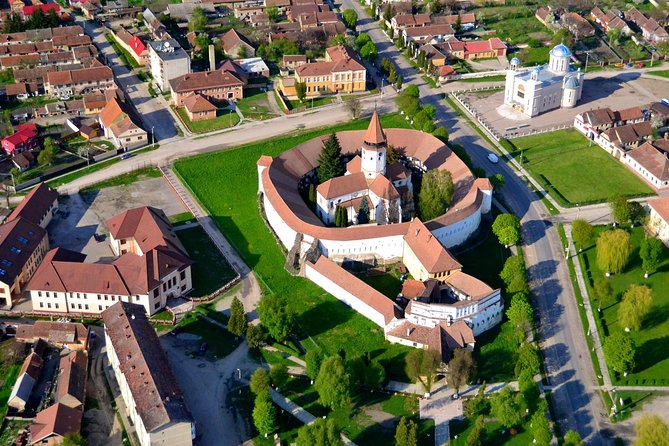
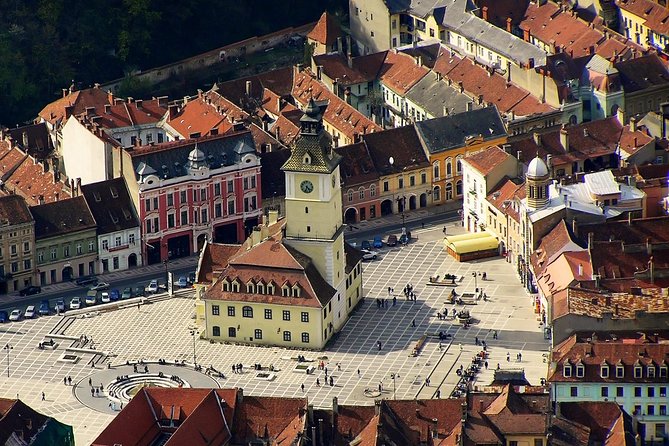
Brasov is one of the tour’s strongest city visits. You get two hours in the historic center, where German architectural influence appears alongside Gothic, Baroque, and Renaissance details.
The Black Church is the major landmark, and the First Romanian School in the Schei district adds a different perspective. This older part of town was inhabited by Romanians, while the fortified center reflects Brasov’s German-speaking history and medieval commercial role.
The old entrances, including Catherine’s Gate and Schei Gate, help you picture how controlled movement into the city once was. Two hours is enough for a guided overview and the main sights, but it is not enough for every church, museum, and side street. Stay close to the guide at the start, then use any free minutes for a short walk or coffee.
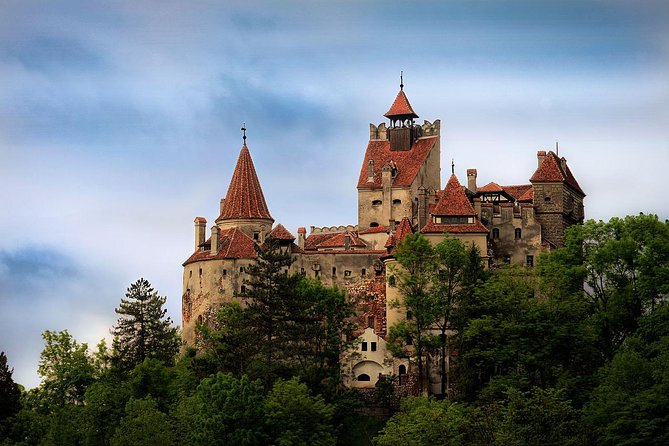
After Brasov comes Bran Castle, the stop most tied to the Dracula label. The castle was built as a defensive stronghold near the medieval border between Wallachia and Transylvania, and its real role is more grounded than the vampire story suggests.
That contrast is part of the fun. You can enjoy the folklore while also seeing Bran as a border fortress connected to regional defense and trade. The visit lasts about two hours, but admission is not included. If your main interest is architecture and history, listen for the fortress explanation rather than focusing only on Dracula.
You arrive in Sinaia late in the evening. That timing is worth noting. Day 5 is packed, and Sinaia functions mainly as the overnight base before the final castle and return to Bucharest.
Day 6: Peles Castle and a Bucharest overview
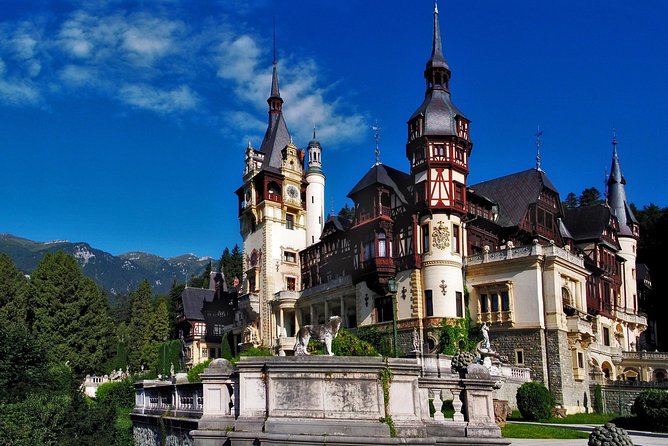
Peles Castle is a strong final stop. It was the summer residence of Romania’s first king, Carol I, who came from the German Hohenzollern family. A Czech architect designed the castle, built between the 19th and 20th centuries.
The interior is known for rooms that use different styles. The Florentine room brings a Renaissance and Italian note, while the wider building reflects the royal family’s European connections and the period’s taste for elaborate design.
You have two hours here, which should allow a proper guided visit, though entry is extra. Check the day’s practical arrangements with the guide, since castle access and internal routes can affect how much you see.
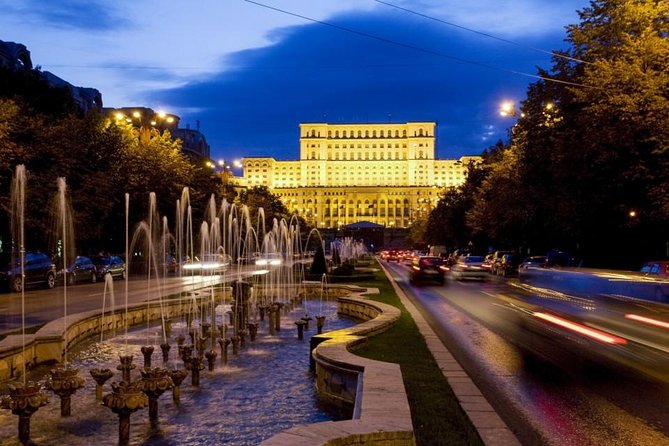
The tour then returns to Bucharest for a panoramic introduction. The route includes the Triumph Arch, the Romanian Athenaeum, Revolution Square, and the Palace of Parliament.
This is not a full Bucharest city tour. Think of it as a useful first look that shows you where the capital’s major landmarks are. If Bucharest is your departure point, you may want to add separate time before or after this experience for a slower visit.
What the guide and small group add
A guide matters on this route because the places are connected by politics, religion, ethnicity, folklore, and architecture. A short visit to a church or citadel can otherwise become a series of attractive photographs with little sense of how the pieces fit.
George is specifically identified as the guide-driver, and his role appears to be a major part of the trip. He is described as excited and proud to explain Romania, with strong preparation in the historical, political, social, artistic, and natural sides of the country. One useful practical detail is that he may help the group move through lines more efficiently when possible.
The group limit is seven. That does not guarantee a private-tour feel, but it is small enough for direct questions and easier movement than a large coach. The minimum is two participants, so the final group may be much smaller than seven.
The guide also drives, which creates a tradeoff. You gain one person who handles both navigation and interpretation, but you should not expect a separate driver and a guide working independently. On long driving days, the schedule depends on road conditions and the guide’s careful timing.
Hotels, meals, and extra costs
Accommodation is in 3- and 4-star hotels, with five breakfasts included. This keeps the basic structure simple, but the supplied information does not name the hotels or specify the locations of every overnight stay.
Lunches and dinners are not generally included. The possible lunch at Vlad the Impaler’s birthplace in Sighisoara is specifically extra, as are monastery, church, castle, and museum entrance fees.
A single-room supplement of €120 is payable locally by cash or card. If you are booking alone, ask for the current single-room terms before departure. The package price is based on the shared accommodation arrangement unless stated otherwise.
Also plan for tips for the driver-guide. This is not included, and the guide is central to the experience, especially on the history-heavy sections.
Who should book this Romanian circuit?
I would choose this tour if you want to see a large part of Romania in one organized trip and value explanation over long free time. It suits first-time visitors who want Transylvania’s major towns, the Bucovina monasteries, mountain scenery, and the two most famous castles without arranging several regional transfers.
It is also a good fit for solo visitors who prefer a small group. The minimum group size means the trip can run with only two people, while the maximum of seven keeps it from becoming a standard big-bus outing.
I would hesitate if you dislike early starts, long drives, short stops, or changing hotels. The route is ambitious. Targu Mures and Piatra Neamt are brief, and Sighisoara, Brasov, and Sibiu cannot be explored at the pace of a dedicated city break.
Pack modest clothing for monasteries and churches. Knees and shoulders must be covered, and entry can be refused if you arrive in shorts or a sleeveless top. Comfortable walking shoes are also sensible for old streets, citadel paths, and castle visits, though the supplied information does not state a specific footwear requirement.
The experience requires good weather and at least two participants. If poor weather or low enrollment causes cancellation, you are offered another date or experience, or a full refund. Your own cancellation is different: the payment is non-refundable and cannot be changed for any reason.
Should you book the six-day Transylvania and Bukovina tour?
Book it if your priority is range. Few six-day routes give you Sibiu, Sighisoara, Bistrita, three painted monasteries, Bicaz Gorges, Red Lake, Brasov, Bran Castle, Peles Castle, and a Bucharest overview in one sweep.
The strongest reasons are the small group, the guide-driver format, and the chance to see Bucovina’s frescoed monasteries without piecing together difficult transport. The price can make sense when you add hotels, vehicle hire, breakfasts, and a licensed guide.
Do not book it expecting a leisurely holiday. You will spend substantial time on the road, pay extra for many admissions and meals, and reach Sinaia late on Day 5. Confirm the six-day schedule versus the conflicting eight-day wording, then book if you want a well-packed introduction to Romania rather than a slow stay in one region.
FAQ
How long is the tour?
The detailed schedule covers six days, beginning with Day 1 and ending with the return toward Bucharest on Day 6. The general description also refers to an eight-day tour, so confirm the exact duration with Trip2Ro before booking.
Where does the tour start?
The tour starts in Bucharest, with a listed start time of 8:00 am. Pickup is offered.
What is the maximum group size?
The maximum is seven travelers. At least two participants are required for the tour to operate.
Who guides and drives the tour?
A professional licensed tour guide also serves as the driver. The guide identified in the supplied information is George.
What accommodation is included?
Accommodation is provided in 3- and 4-star hotels. The price includes the organized hotel arrangements for the tour.
Are meals included?
Five breakfasts are included. Entrance fees, tips, and meals beyond the included breakfasts are not included. Lunch at the house where Vlad the Impaler was born in Sighisoara is also extra.
Are entrance fees included?
No. Entrance fees for places such as Moldovita, Sucevita, Voronet, Brasov’s attractions, Bran Castle, and Peles Castle are not included.
Is there a single-room supplement?
Yes. A €120 supplement applies for a single room and is payable locally by cash or card.
What clothing is required at religious sites?
You must cover your knees and shoulders when entering places of worship and selected museums. Shorts and sleeveless tops are not allowed for either men or women, and entry may be refused if you do not follow the dress code.
Recently added around Bucharest
- From Bucharest : Day Trip to Peles, Dracula’s Castle, Brasov★ 4.7 · 6 reviews
- Bears Sanctuary, Dracula Castle and Brasov City – Full Day Trip from Bucharest★ 5.0 · 6 reviews
- 6h Communism Tour in Bucharest with Ceausescu Mansion★ 4.5 · 6 reviews
- Dracula Private Tour★ 5.0 · 6 reviews
- Transfagarasan Road Private Day Trip from Bucharest / The Best Road in the World★ 5.0 · 6 reviews
- Bucharest : Wednesday, Dracula & Peles 3 Castles Tour 1 Day★ 4.7 · 6 reviews
- Hiking thought the best mountain villages in Romania-Private tour from Brasov★ 5.0 · 6 reviews
- Bucovina Painted Monasteries & Transylvania Tour: 4-Day Private★ 5.0 · 6 reviews
Transylvania Day Trips, compared.
Transylvania and Dracula Castle Full Day Tour from Bucharest
Read our review →
Castles of Transylvania: Private Day Trip from Bucharest
Read our review →
2-Day Medieval Transylvania with Brasov,Sibiu and Sighisoara Tour from Bucharest
Read our review →
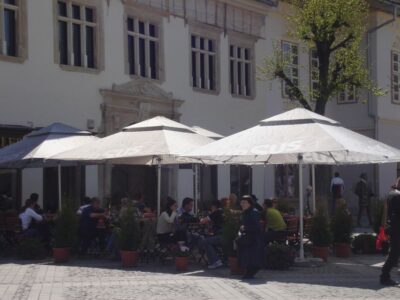
SB01 – City Tour Sibiu: Exploring the Heart of Transylvania
Read our review →
Day trips and excursions in nature, cities in Transylvania, Brasov!
Read our review →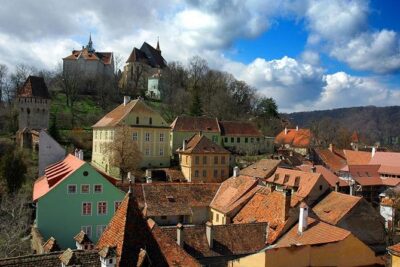
2-Day Transylvania from Bucharest: Brasov, Bran, Sighisoara
Read our review →
Browse the lists this tour appears in