Reviewed · TOURS
Unique Tour of Hidden Bucharest
Bucharest keeps some of its best stories behind plain doors and down quiet side streets. This small-group walk leads you from the National Theatre through Batiștei and nearby old quarters, where Armenian, Jewish, French, German, and Romanian influences meet in aging villas, churches, cafés, and patched-up façades. The focus is architecture and everyday history, not a checklist of grand sights.
I like two things here. First, local guides such as Ioana, Andreea, Roxana, Mircea, and Lala bring personal knowledge of the city, often adjusting the walk for photographs, questions, or a guest’s interests. Second, the maximum group size is 12, and the tour can sometimes feel almost private. The main drawback is the uneven route: one account found the walk slightly random, and the advertised three hours may run closer to two and a half.
In This Review
- Key points to know before you book
- Why Bucharest’s side streets tell the better story
- Starting beside the National Theatre
- Batiștei and the old mahallas
- Parcul Ion Voicu and Belle Époque Bucharest
- A pause for snacks, tea, coffee, or a garden
- What the guides add
- How demanding is the walk?
- Is $46.86 good value?
- The practical details that matter
- Who should choose this Bucharest walk?
- Should you book the Unique Tour of Hidden Bucharest?
- FAQ
- Where does the tour start?
- What time does the tour begin?
- Where does the tour finish?
- How long does the experience last?
- What language is offered?
- How many people can join the tour?
- Is hotel pickup included?
- Are snacks included?
- Are alcoholic drinks included?
- What level of fitness is needed?
- Is public transportation nearby?
- Can I cancel for a full refund?
Key points to know before you book
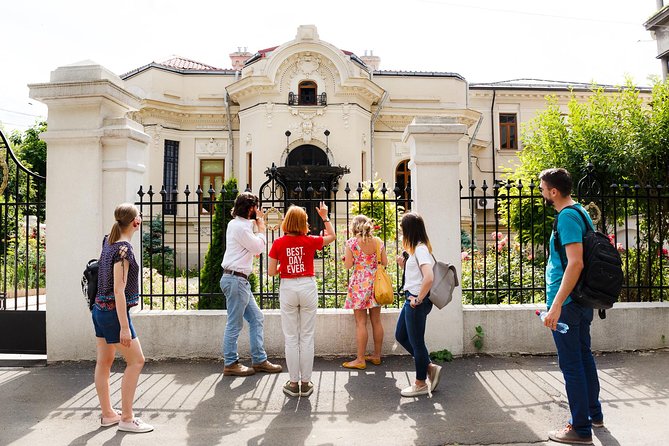
- Quiet side streets: See Batiștei, Armenian, Mantuleasa, Olari, Ioanid-Gradina, and Icoanei areas beyond the usual central sights.
- Architecture with a story: Learn how Ottoman influence, Belle Époque design, earthquakes, wars, and communist demolition changed Bucharest.
- Small groups: The tour accepts no more than 12 people, with occasional private-feeling departures when bookings are light.
- Local guides: Guides including Ioana, Andreea, Roxana, Mircea, Tudor, Elena, Irina, Alex, Anita, and Lala have led this experience.
- A walking introduction: Expect about 2 hours 30 minutes, sometimes described as a three-hour walk, with snacks included and drinks available to buy.
- Good first-day choice: The tour helps you understand the city’s odd mix of grand avenues, old mahallas, restored houses, and crumbling buildings.
Why Bucharest’s side streets tell the better story
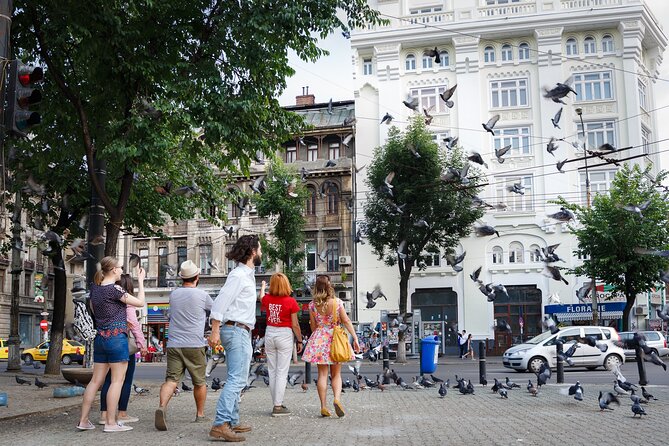
Bucharest can seem hard to read at first. Wide boulevards, Communist-era blocks, traffic, and scattered Belle Époque buildings do not always form an obvious picture. A local guide helps connect those pieces.
The useful idea here is the mahalla, a small urban quarter built around a religious building and often shaped by one ethnic, social, or religious community. As Bucharest expanded, these quarters blended into larger neighborhoods. Their streets then endured modernization, earthquakes, two world wars, Communist rule, and the demolition campaigns linked to Nicolae Ceaușescu.
That history gives the walk its character. You are not simply looking at a pretty old house. You are learning why one mansion was restored, why another is boarded up, why a church survived, or why a once-distinct quarter now feels like a patchwork of architectural styles.
The strongest part of this experience is its attention to details you could easily pass without seeing. Guides point out unusual façades, old homes, street patterns, churches, and places tucked among the louder avenues. The story is often about what is missing as much as what remains.
A few more Bucharest tours worth a look
- Bucharest: Dracula’s Castle, Peles Castle, & Brasov Old Town
★ 4.5 · 17,858 reviews - Bucharest: Dracula Castle, Peles Castle & Brasov Old Town
★ 4.6 · 10,891 reviews - Bucharest: Dracula’s Castle, Peleș Castle & Brașov Day Trip
★ 4.5 · 5,919 reviews
Starting beside the National Theatre
The meeting point is outside the Ion Luca Caragiale National Theatre on Bulevardul Nicolae Bălcescu 2. The start time is 10:00 a.m., and the location is near public transportation, making it a practical place to reach from central Bucharest.
The theatre provides a useful starting marker, but this is not primarily a theatre visit. The first section introduces the evolution of Bucharest and its complicated relationship with the Ottoman Empire. Bucharest was not an Ottoman town, yet it shared features with towns inside the Ottoman sphere of influence.
That distinction matters. It helps explain why the capital developed in a way that does not fit a simple Western European model. Your guide uses the city itself to show how outside influence, local traditions, migration, and later modernization all left their mark.
This opening also sets expectations. If you want a tour centered on palace interiors or major museums, choose another activity. If you want to understand why Bucharest looks so mixed and sometimes contradictory, this is a smart beginning.
Batiștei and the old mahallas
Strada Batiștei is the main historical doorway into the tour’s quieter quarters. Here, the guide explains how mahallas worked and how communities shaped the streets around them.
The neighborhoods linked with this walk include Batiștei, the Armenian Quarter, Mantuleasa, the old Jewish Quarter, Olari, Ioanid-Gradina, and Icoanei. The precise path can shift slightly according to the guide and the interests of the group, so do not expect every departure to follow an identical sequence.
That flexibility is useful if you care about photography, old houses, churches, food, or a particular period of history. Anita, for example, adjusted a walk toward good photo locations. Another guide spent extra time with a guest interested in abandoned buildings and helped arrange a visit to a renovated French Victorian house now used as a restaurant.
The tradeoff is structure. One participant found the route a little random, even though the operator explains that guides follow a planned route while adapting it as needed. I would see this as a walking conversation rather than a tightly scripted march. Bring curiosity, not a stopwatch.
The architecture is the real reward. You might see French, German, Armenian, Jewish, Romanian, and Communist influences close together. Some buildings may be restored, others mid-repair, and others left in poor condition. That contrast gives you a more honest view of Bucharest than a polished parade of monuments.
The guide also explains why some attractive houses remain empty or deteriorate. Ownership disputes and the upheaval of the Communist period have left parts of the city in an uncertain state. You get a clearer sense of how political change affects ordinary streets and private homes.
Parcul Ion Voicu and Belle Époque Bucharest
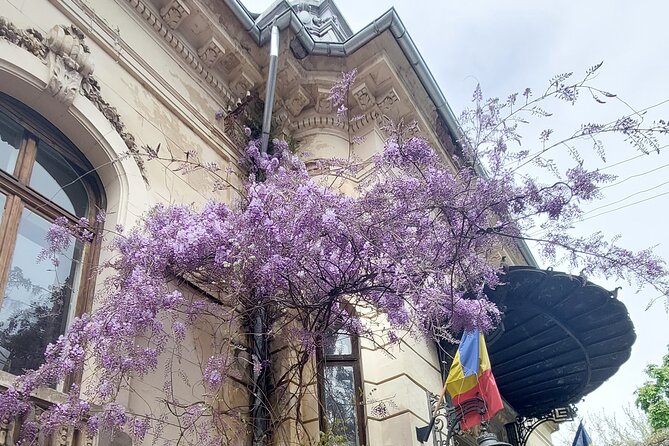
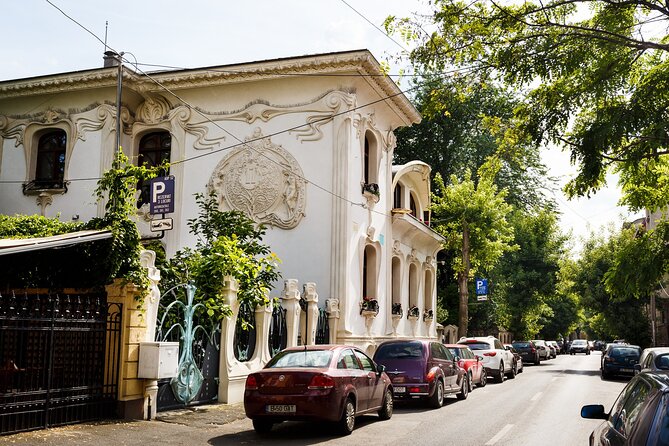
The stop at Parcul Ion Voicu shifts the mood. Here, the focus turns to a Belle Époque area filled with mansions dating from the end of the 19th century.
This is the part of the walk that may change how you picture Bucharest before the First World War. The city had elegant residences, ambitious architecture, and neighborhoods designed for a prosperous urban life. Yet the buildings today may show decades of neglect, repairs, additions, or changing use.
I like this section because it avoids a false choice between beautiful and ugly. Bucharest can be both. A grand villa may have fine proportions and worn plaster. A once-private residence may now hold a restaurant or café. A street can feel quiet and residential even though it sits close to the city center.
The guide’s role is especially important here. Without context, you may notice attractive façades but miss the reasons for their condition. With context, the walk becomes a lesson in ownership, demolition, reconstruction, and survival.
Expect time to stop and look. The listed stops allow about 40 minutes at Parcul Ion Voicu, though the overall experience is a moving walk with pauses rather than a series of formal admissions. Admission to the named stops is free.
A different side of the city, same short trip:
- Bucharest: Palace of Parliament Tickets and Guide
★ 4.3 · 3,182 reviews - Bucharest: Day Trip to Dracula Castle, Peles Castle & Brașov
★ 4.4 · 3,049 reviews - Bucharest to Dracula Castle, Peles Castle and Brasov Guided Tour
★ 4.5 · 2,933 reviews - Bucharest: Palace of Parliament Tickets and Guided Tour
★ 4.4 · 1,877 reviews
A pause for snacks, tea, coffee, or a garden
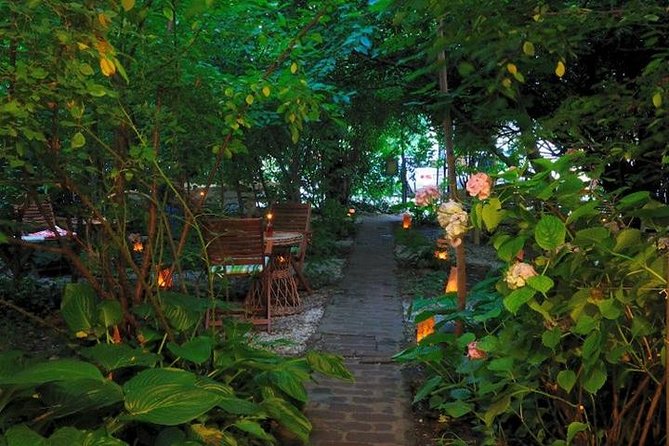
Snacks are included, and the tour description also points to refreshments in summer gardens and historic tea houses. Alcoholic drinks are not included, though they can be purchased. Other food and drinks are included only when specifically stated.
In practice, guides have taken people to cafés and restaurants such as Simbio, Share Café, Hanu Manuc, and other local places. Some departures end with a drink at a tucked-away café, while another guide brought a traditional Romanian cake for an Easter visit. These details can vary, so treat them as examples rather than guaranteed stops.
The refreshment break is valuable because it gives the walk a human rhythm. You have time to ask about restaurants, understand local customs, and gather suggestions for the rest of your stay. Guides have recommended places for lunch, helped with reservations, and suggested restaurants that could meet specific dietary needs.
Do not book this expecting a full meal. The included element is a snack, and food beyond that is generally at your own cost. Carry water, especially in warm weather. One group took the tour during extreme heat, and the guide made a point of keeping everyone hydrated and comfortable, but sensible clothing and water remain your responsibility.
What the guides add
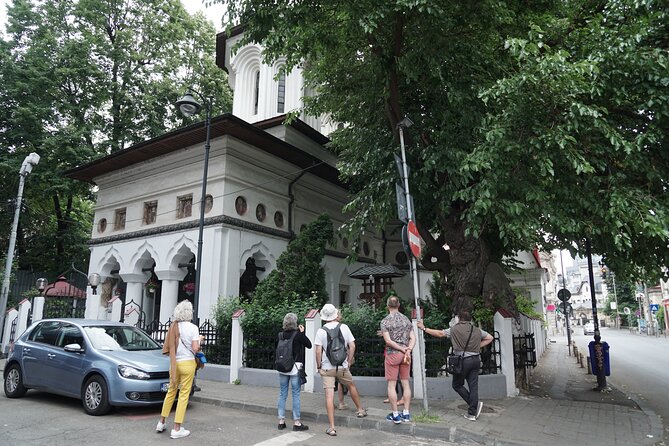
The operator uses several local guides, and the experience can differ by personality. Names associated with departures include Ioana, Andreea, Roxana, Mircea Constantin, Tudor, Elena, Irina, Alex, Anita, and Lala.
The most praised quality is not theatrical performance. It is the ability to explain Bucharest as a resident would. Lala, described as born and raised in the city, combined local affection with a clear account of the architecture. Mircea shared extra information after the walk and adjusted the outing when one person could not continue on foot.
Small groups make that personal approach more likely. The maximum is 12 people, and several departures became private or nearly private when only one booking was made. That can be a pleasant surprise, though one person booking alone still had to pay for two places under the booking arrangement.
A private-feeling tour is not guaranteed. If your group is full, you will have less control over the pace and fewer chances to direct the route. Still, 12 is a reasonable limit for a street-based history walk, and it is much easier to hear a guide in a small group than in a large crowd.
How demanding is the walk?
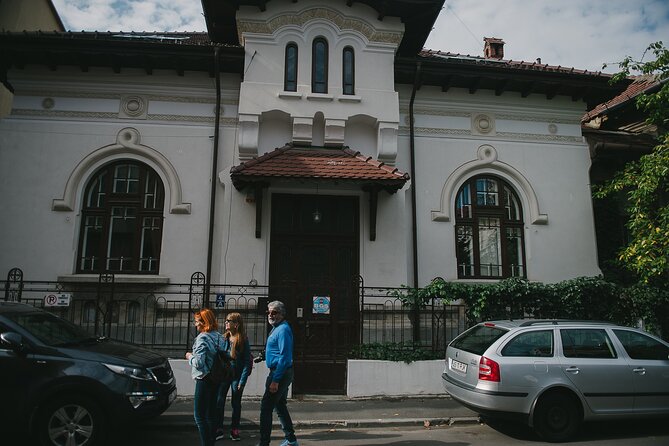
You need moderate physical fitness. The tour lasts around 2 hours 30 minutes, with some descriptions calling it a three-hour walk, and it involves moving between neighborhoods on foot.
Good shoes are essential. The route includes ordinary city streets and quiet residential areas, but the experience is not a seated sightseeing tour. You may also want time for photographs, since the old houses, unusual details, and changing condition of the buildings are central to the experience.
The guides appear willing to adjust. One guide arranged a car pickup when a participant could not walk the final hour, but you should not assume that this accommodation is always available. Ask the operator ahead of time if mobility is a concern.
The 10:00 a.m. departure is useful in summer, when the streets can become hot later in the day. It also leaves you with much of the afternoon for museums, markets, or a longer lunch.
Is $46.86 good value?
At $46.86 per person, this is not the cheapest way to spend a morning in Bucharest. You can walk through many streets for free. The value comes from interpretation, local access, and the time saved finding the areas on your own.
I think the price is fair if you are interested in architecture, urban history, or the city’s less polished side. The guide can help you notice buildings you would otherwise dismiss, explain the marks left by Communist planning, and suggest places to eat afterward. Those recommendations can make the tour useful beyond its official end.
Group discounts improve the calculation for families or friends. A maximum of 12 people keeps the experience relatively manageable, though the best value comes when you use the guide actively by asking questions and explaining what interests you.
I would not choose it solely for refreshments. Snacks are a pleasant extra, but the real product is the walking interpretation. If you prefer major landmarks, interiors, and a fixed route, the price may feel high. If you want a thoughtful introduction to Bucharest’s residential center, it is a sensible spend.
The practical details that matter
You receive confirmation when booking, and the tour is offered in English. Hotel pickup and drop-off are not included, so you need to reach the National Theatre yourself and make your own way from the end point at KFC on Bulevardul General Gheorghe Magheru 28-30.
The route finishes in a useful central area, and guides may sometimes end elsewhere if the walk or a meal recommendation leads in that direction. Since the stated end point is the KFC, plan around that location unless your guide tells you otherwise.
Free cancellation is available up to 24 hours before the local start time. Changes or cancellations inside that window are not accepted for a refund.
The tour is booked, on average, 37 days ahead. That does not mean you must book that early, but the small group limit makes advance planning sensible during busy periods.
Who should choose this Bucharest walk?
I would recommend it to you if this is your first or second day in Bucharest and you want the city to make more sense. It works especially well before exploring restaurants, churches, or residential quarters on your own.
It is also a good fit if you enjoy:
- Architecture in varying states of repair
- Local stories instead of standard dates and statistics
- The effects of war, earthquakes, modernization, and communism
- Photography and unusual street details
- Small groups and conversational guiding
- Restaurant and café suggestions from a local
You may want a different tour if you dislike walking, need a fully fixed timetable, or want a formal museum-style presentation. The route can feel loose because guides adapt it, and the city’s worn buildings are part of the subject. This is not a glossy version of Bucharest.
Should you book the Unique Tour of Hidden Bucharest?
Book it if you want to see the capital’s quieter neighborhoods and understand how its mixed architecture came to be. The best parts are the mahalla history, the Belle Époque mansions around Parcul Ion Voicu, and the chance to ask a local guide about buildings that rarely appear in standard sightseeing plans.
I would book early, wear sturdy shoes, and bring water. If possible, take it near the start of your stay so you can use the restaurant suggestions and return to the areas that catch your eye.
The tour is less suitable for anyone seeking grand interiors or a perfectly rehearsed route. For an authentic, sometimes rough-edged look at Bucharest, though, $46.86 buys more than a walk. It gives you a way to read the city.
FAQ
Where does the tour start?
The tour starts at the Ion Luca Caragiale National Theatre, at Bulevardul Nicolae Bălcescu 2 in Bucharest.
What time does the tour begin?
The stated start time is 10:00 a.m.
Where does the tour finish?
The stated end point is the KFC at Bulevardul General Gheorghe Magheru 28-30, Bucharest.
How long does the experience last?
The duration is approximately 2 hours 30 minutes. The tour is also described in places as a three-hour walk.
What language is offered?
The tour is offered in English.
How many people can join the tour?
The maximum group size is 12 people.
Is hotel pickup included?
No. Hotel pickup and drop-off are not included.
Are snacks included?
Yes. Snacks are included. Other food and drinks are included only when specified.
Are alcoholic drinks included?
No. Alcoholic drinks are available to purchase but are not included in the price.
What level of fitness is needed?
A moderate level of physical fitness is recommended because this is a walking tour lasting roughly two and a half to three hours.
Is public transportation nearby?
Yes. The meeting point is near public transportation.
Can I cancel for a full refund?
Yes, if you cancel at least 24 hours before the local start time. Cancellations made less than 24 hours before the start are not refundable.
Recently added around Bucharest
- 6h Communism Tour in Bucharest with Ceausescu Mansion★ 4.5 · 6 reviews
- From Bucharest : Day Trip to Peles, Dracula’s Castle, Brasov★ 4.7 · 6 reviews
- Bears Sanctuary, Dracula Castle and Brasov City – Full Day Trip from Bucharest★ 5.0 · 6 reviews
- Dracula Private Tour★ 5.0 · 6 reviews
- Transfagarasan Road Private Day Trip from Bucharest / The Best Road in the World★ 5.0 · 6 reviews
- Bucharest : Wednesday, Dracula & Peles 3 Castles Tour 1 Day★ 4.7 · 6 reviews
- Hiking thought the best mountain villages in Romania-Private tour from Brasov★ 5.0 · 6 reviews
- Bucovina Painted Monasteries & Transylvania Tour: 4-Day Private★ 5.0 · 6 reviews
Tours, compared.
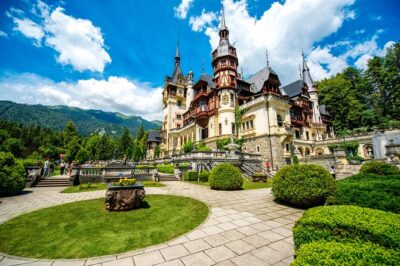
Bucharest to Dracula Castle, Peles Castle and Brasov Guided Tour
Read our review →
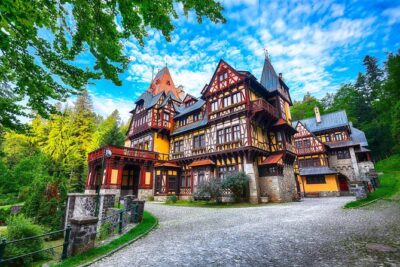
Transylvania and Dracula Castle Full Day Tour from Bucharest
Read our review →
Peles Castle, Bran Castle, & Brasov Old Town Tour
Read our review →
Small-group tour Bran, Rasnov, and Peles Castles
Read our review →