Reviewed · BUCHAREST TOURS
Slavery in Romania Myths and Truths About Gypsies
The most striking part of this Bucharest walk is its subject: Roma history beyond stereotypes. Over three hours, you connect Romanian landmarks with slavery, politics, education, World War II persecution, and Roma craftsmanship. Guide Mihai leads the English-language experience, which ends at a small shop selling handmade Roma work.
I like the way the route uses familiar city sights, including the Romanian Athenaeum and Cismigiu Park, to explain a story many visitors miss. I also like the final stop at Mesteshukar ButiQ, where the subject moves from history books to real objects made by Roma artisans. The main consideration is that this is a walking tour with little idle time, so comfortable shoes and moderate fitness matter.
In This Review
- Key points to know before booking
- Why this Bucharest walk is different
- The Romanian Athenaeum starts the story in grand style
- Iuliu Maniu and Palatul Stirbei add political context
- Cismigiu Park gives the tour room to breathe
- Gheorghe Lazăr National College shows why education matters
- The Holocaust Memorial confronts the Forgotten Holocaust
- Mihail Kogălniceanu links writing and public debate
- Mesteshukar ButiQ brings the story into the present
- The walking pace, group size, and practical details
- Who will get the most from this experience
- Is the $127.37 price reasonable?
- Should you book the Roma history walk?
- FAQ
- Where does the tour begin?
- What time does the tour start?
- Where does the tour end?
- How long does the experience last?
- What language is the tour offered in?
- Who is the guide?
- What is included in the price?
- Are coffee and tea included?
- How large is the group?
- Is the tour suitable for people with limited mobility?
- Can I cancel for a full refund?
Key points to know before booking
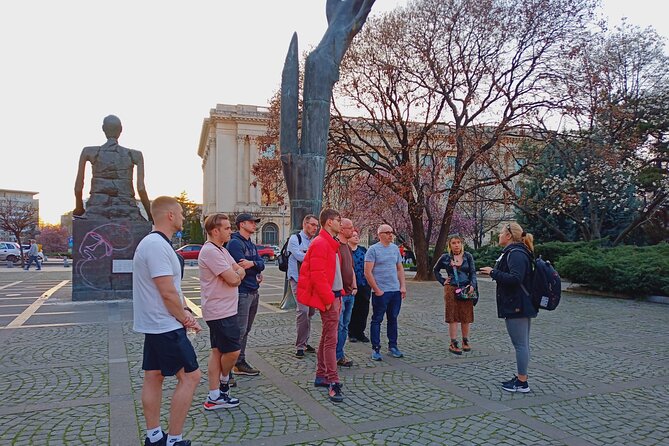
- Three hours of history through central Bucharest: The route links eight stops, with most of the time spent walking between them.
- A focused look at Roma life in Romania: The tour covers slavery, political figures, education, World War II, and the Roma experience today.
- Guide Mihai leads the English tour: His strong command of Roman history and Roma history is central to the experience.
- Cismigiu Park adds breathing room: You get a relaxed garden walk alongside stops at a school, monastery ruins, and viewpoints.
- The Holocaust Memorial is an important stop: You learn about the persecution of Roma during World War II and the Forgotten Holocaust.
- Mesteshukar ButiQ provides a practical finish: Handmade jewelry and other crafts offer a direct look at Roma artistic traditions.
Why this Bucharest walk is different
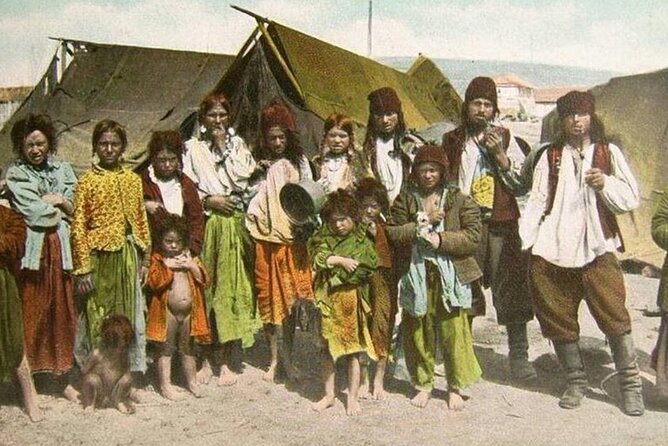
Bucharest has plenty of tours about palaces, communism, grand boulevards, and old churches. This one takes a different path. It asks you to look at the city through the story of the Roma, including the long period of Roma slavery in the Romanian principalities and the discrimination that followed.
That focus gives ordinary places more meaning. A statue is not just a statue. A school is not just a school. A park is not simply a pleasant place for a stroll. Your guide uses each setting to explain how Roma people fit into, and were often pushed aside by, the development of modern Romania.
The subject is serious, but the route is not confined to memorials. You pass elegant buildings, walk through a major city park, pause at political landmarks, and finish among handmade objects. I appreciate that balance. You get difficult history without spending three straight hours in a lecture room.
The group is limited to a maximum of 15 people. That is small enough to make questions practical, though the experience can still feel like a group walk rather than a private conversation. The listed price is $127.37 per person, which is a considerable amount for a three-hour walking tour. Its value depends on your interest in the topic. If you want a standard highlights walk, this is not the best use of your money. If you want a specialist subject, an English-speaking guide, and a route that connects history to present-day culture, the price is easier to justify.
A few more Bucharest tours worth a look
- Bucharest: Dracula’s Castle, Peles Castle, & Brasov Old Town
★ 4.5 · 17,858 reviews - Bucharest: Dracula Castle, Peles Castle & Brasov Old Town
★ 4.6 · 10,891 reviews - Bucharest: Dracula’s Castle, Peleș Castle & Brașov Day Trip
★ 4.5 · 5,919 reviews
The Romanian Athenaeum starts the story in grand style
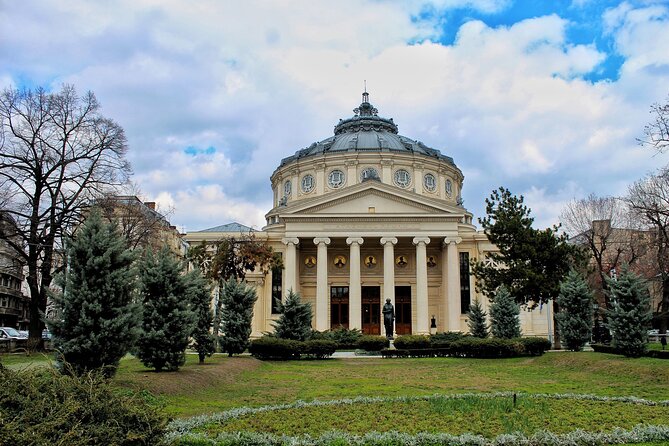
The tour begins at 10:00 a.m. near Teatrul Ion Creangă, Sala Mare, on Strada Piața Amzei. The first stop is the Romanian Athenaeum, one of Bucharest’s best-known buildings and home of the National Romanian Philharmonic.
You spend about 20 minutes here, with no admission charge included or required for this outside stop. The building provides a useful opening because it represents the polished, artistic image of Romania. From there, the guide can place the Roma story within the wider story of the country.
This is not a concert visit, and the information does not indicate an interior tour. Set your expectations accordingly. You are using the Athenaeum as a landmark and meeting point for history, not attending a performance or touring the full building.
Iuliu Maniu and Palatul Stirbei add political context
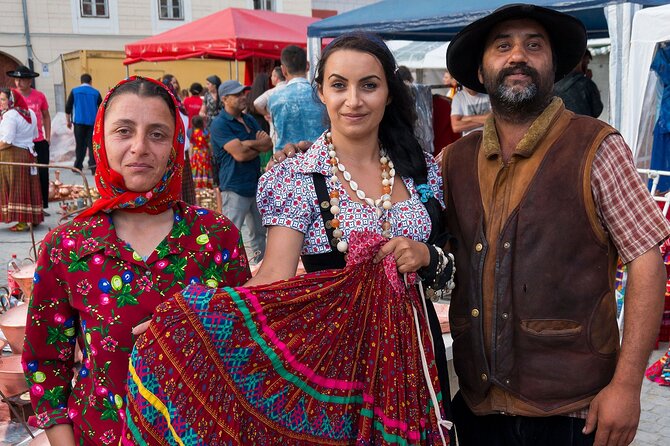
The next stop is the statue of Iuliu Maniu, also around 20 minutes. Maniu was an important Romanian political figure, and his connection to the tour helps explain the political setting in which Roma issues developed.
A statue can be easy to pass without a second glance. Here, it becomes a prompt to think about modern Romania, its leaders, and the place of minority communities in political life. I like this method because it keeps the history attached to the actual city around you.
The route then reaches Palatul Stirbei for another 20-minute stop. The palace takes you into the 19th century and the world of Barbu Stirbey, a ruler of Wallachia who is important to the tour’s story.
You should not expect a long palace visit based on the information provided. The value is in the setting and the explanation. This is a short historical pause, useful for understanding the people and institutions connected to Roma slavery and Romanian society during the period.
Cismigiu Park gives the tour room to breathe
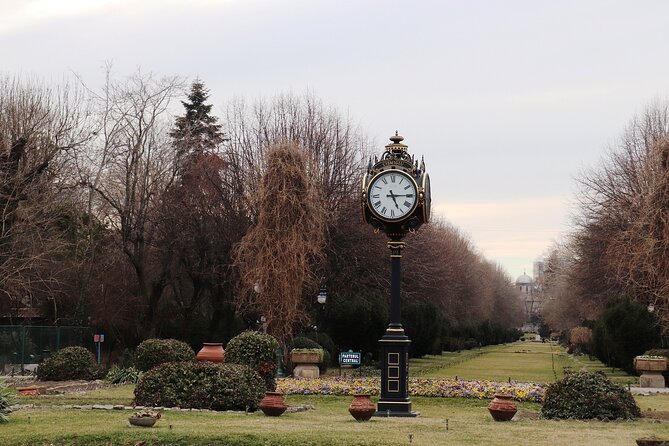
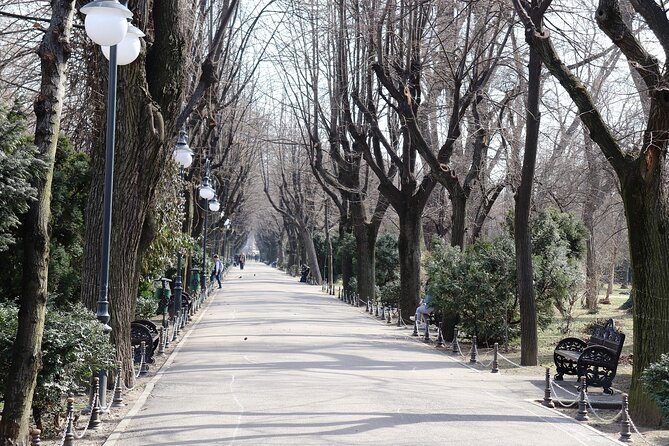
After the political and aristocratic settings, Cismigiu Park changes the pace. You spend about 30 minutes walking through one of Bucharest’s largest and most attractive gardens.
This is the longest scheduled stop, and it includes several points along the way. The route may include a well-known high school, ruins of an old monastery, a viewpoint over the park, and other surprises. Because the guide connects the park to the main theme, this is more than a break between serious subjects.
A park walk also makes the experience feel less formal. You can listen while moving rather than standing in front of another monument. Still, keep in mind that the remaining tour time is used for walking between stops. The 30-minute park segment is not a substitute for rest, and the full route requires a moderate level of physical fitness.
The park can be one of the most enjoyable sections for people who want a sense of Bucharest beyond grand buildings. It also helps divide the tour into manageable chapters: public culture, political power, historical memory, and everyday city space.
A different side of the city, same short trip:
- Bucharest: Palace of Parliament Tickets and Guide
★ 4.3 · 3,182 reviews - Bucharest: Day Trip to Dracula Castle, Peles Castle & Brașov
★ 4.4 · 3,049 reviews - Bucharest to Dracula Castle, Peles Castle and Brasov Guided Tour
★ 4.5 · 2,933 reviews - Bucharest: Palace of Parliament Tickets and Guided Tour
★ 4.4 · 1,877 reviews
Gheorghe Lazăr National College shows why education matters
At the entrance to Cismigiu Park, you stop for about 15 minutes at Gheorghe Lazăr National College. It is described as the best-known high school in the city, and the tour uses it to make a simple point: education can shape a person’s choices and a community’s future.
This stop may seem less dramatic than a palace or memorial, but it gives the tour a needed change of scale. Instead of focusing only on rulers and national events, you consider access to learning and the role of schools.
You will not be touring classrooms or attending an educational program. The building is a place for conversation and context. I find that useful because the subject becomes less abstract. The guide can connect broad ideas about opportunity with a real institution at the edge of the park.
The Holocaust Memorial confronts the Forgotten Holocaust
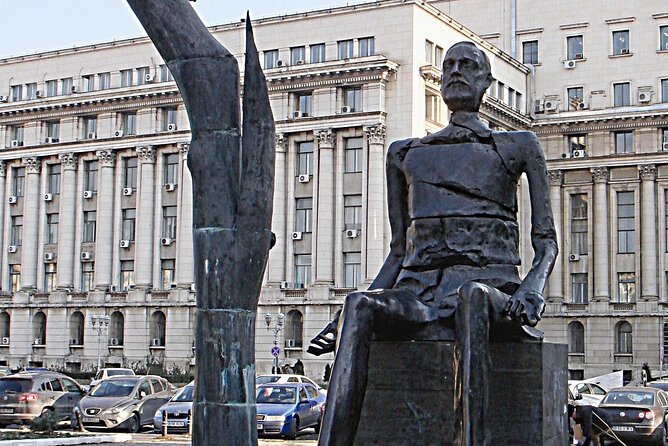
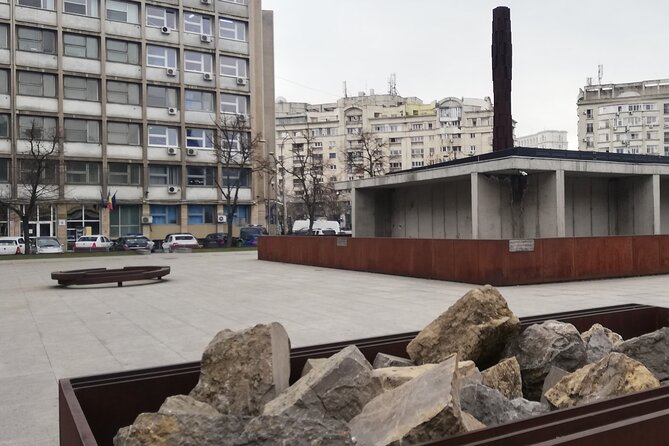
The Holocaust Memorial is one of the most serious stops, lasting about 15 minutes. Here, the guide discusses the persecution of Roma people during World War II and what is known as the Forgotten Holocaust.
Romania’s wartime history can be difficult to understand without attention to the people who were excluded from older public narratives. This memorial gives the tour a specific place to remember Roma victims and to discuss how their suffering has often received less attention.
The stop is brief, but the subject is not. You may want to allow yourself some quiet time after the explanation rather than rushing straight into conversation. The schedule moves on, so this is not an extended museum visit or a full memorial study. It is a focused outdoor stop within a larger route.
For me, this is the point where the tour’s title becomes most serious. The earlier stops explain systems, rulers, and public institutions. The memorial shows the human cost of persecution. If you are looking for a light sightseeing walk, be prepared for this change in tone.
Mihail Kogălniceanu links writing and public debate
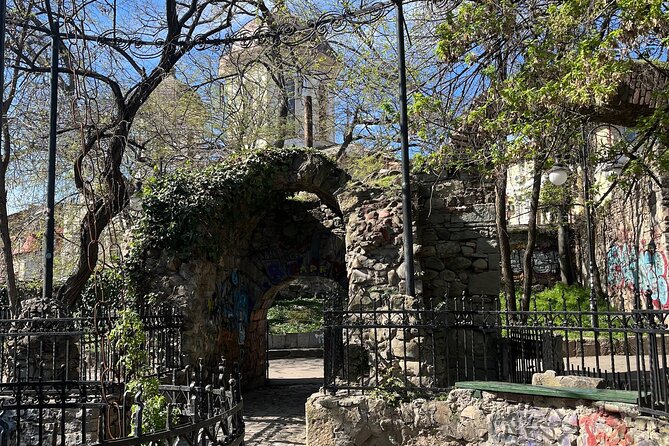
The route continues to Piața Mihail Kogălniceanu for roughly 10 minutes. Kogălniceanu was a major Romanian politician and writer, and he is presented in connection with one of the earliest written discussions of Romanian Gypsies.
This is a short stop, but it reinforces an important theme: history is shaped not only by laws and events, but also by the words used to describe people. Political writing can reveal attitudes toward minority groups, while also influencing how later generations understand them.
The square is another example of the tour’s approach. Instead of isolating Roma history in one museum or neighborhood, it places the subject throughout central Bucharest. You keep seeing how national history and Roma history overlap.
Mesteshukar ButiQ brings the story into the present
The final stop is Mesteshukar ButiQ, located on Bulevardul Mihail Kogălniceanu. You spend about 20 minutes in this small shop, which sells authentic handmade pieces created by Roma craftspeople.
This is a particularly good ending because it moves away from a story told only through hardship. The shop highlights skill, design, and tradition. Handmade jewelry is a noted highlight, and the store provides a chance to see Roma craftsmanship as living work rather than a subject belonging only to the past.
Admission is listed as free, but purchases are not included. You should treat shopping as optional. The store is valuable even if you do not buy anything, since the objects give you a physical link to the cultural traditions discussed during the walk.
I also like the location as an ending point. You finish with a view of Roma talent and work, rather than leaving the tour at a memorial. That does not erase the difficult material earlier in the morning. It gives the story a more complete shape.
The walking pace, group size, and practical details
The tour lasts about three hours, beginning at 10:00 a.m. and ending at Mesteshukar ButiQ. It is offered in English and includes a professional English-speaking guide and a cake snack.
Coffee and tea are not included. The group makes a short stop along the way, but you pay for those drinks yourself. If you want coffee before starting, plan to handle that near the meeting point, since the tour begins promptly in the morning.
The route uses public streets, park paths, and outdoor landmarks. There is no indication that admission tickets to interiors are part of the experience. Most of the value comes from the guide’s explanations, the sequence of places, and the connection between them.
A mobile ticket makes arrival simple. The meeting point is Teatrul Ion Creangă, Sala Mare, at Strada Piața Amzei 13. The route ends at Mesteshukar ButiQ rather than returning you to the starting point, so plan your onward journey from the shop. Both the start and end points are near public transportation.
Service animals are allowed. The activity calls for moderate physical fitness, which is worth taking seriously. You walk between stops, and the schedule does not provide long breaks. Wear comfortable shoes and bring water, even though a snack is supplied.
Who will get the most from this experience
I would recommend this tour to you if you want a more focused understanding of Romanian society and are willing to spend three hours on one subject. It suits history-minded visitors, people interested in minority cultures, and anyone who has already seen Bucharest’s main sights and wants a different angle.
It also works well for visitors who prefer places with a clear connection to the present. The final craft shop helps balance the historical material, and the city route keeps you engaged with Bucharest rather than placing you in a classroom.
You may want to choose another activity if you have limited mobility, dislike walking, or want to see the interiors of major monuments. You should also know that the tour deals with slavery, prejudice, wartime persecution, and the Holocaust. That material deserves attention and may feel emotionally heavy.
The maximum group size of 15 is a useful middle ground. It is more personal than a large city tour, though it is not the same as having a private guide. The strongest experience will likely come when you ask questions and stay engaged with the connections between the stops.
Is the $127.37 price reasonable?
At $127.37 per person, this is not a cheap way to spend a morning in Bucharest. You are not paying for entrance tickets, a meal, or transportation. Most stops are free, and the included food is only a cake snack.
The price is paying mainly for a specialist guided experience. Guide Mihai’s role is especially important because the tour covers a subject that many general city guides may not explain in much detail. You receive a planned route, historical interpretation, a small group capped at 15, and a visit to a Roma craft shop.
I would book it at this price if the Roma story is one of your main reasons for visiting Bucharest. I would skip it if you are comparing it with a general highlights tour and mainly want more sights for your money. The value is in depth and perspective, not in the number of attractions visited.
The activity also offers free cancellation up to 24 hours before the start time. Canceling less than 24 hours before the 10:00 a.m. start does not qualify for a refund, and late changes are not accepted.
Should you book the Roma history walk?
Book this tour if you want to understand Bucharest through Roma history, political memory, and living craft traditions. The route is carefully varied, with grand architecture, a park, a school, a memorial, a public square, and a shop.
The best reasons to choose it are the clear focus, guide Mihai’s role, the small maximum group, and the finish at Mesteshukar ButiQ. The main reasons to hesitate are the high price for a walking tour, the amount of walking, and the serious subject matter.
For the right person, this is a thoughtful way to spend a morning in Bucharest. It asks you to look past the usual city highlights and consider whose stories have been remembered, whose have been overlooked, and how culture continues through the work of Roma artisans today.
FAQ
Where does the tour begin?
The tour begins at Teatrul Ion Creangă, Sala Mare, at Strada Piața Amzei 13 in Bucharest.
What time does the tour start?
The tour starts at 10:00 a.m.
Where does the tour end?
The tour ends at Mesteshukar ButiQ, Bulevardul Mihail Kogălniceanu 12, Bucharest.
How long does the experience last?
The tour lasts approximately three hours.
What language is the tour offered in?
The tour is offered in English with a professional English-speaking guide.
Who is the guide?
The guide identified for the experience is Mihai.
What is included in the price?
The price includes the professional English-speaking guide and a cake snack.
Are coffee and tea included?
No. The tour makes a short stop for coffee or tea, but you pay for those drinks separately.
How large is the group?
The tour has a maximum of 15 participants.
Is the tour suitable for people with limited mobility?
The experience requires a moderate level of physical fitness because walking between the stops takes up the remaining tour time. Service animals are allowed.
Can I cancel for a full refund?
Yes. You can cancel at least 24 hours before the local start time for a full refund. Cancellations or changes made less than 24 hours before the start time are not accepted for a refund.
Recently added around Bucharest
- 6h Communism Tour in Bucharest with Ceausescu Mansion★ 4.5 · 6 reviews
- From Bucharest : Day Trip to Peles, Dracula’s Castle, Brasov★ 4.7 · 6 reviews
- Bears Sanctuary, Dracula Castle and Brasov City – Full Day Trip from Bucharest★ 5.0 · 6 reviews
- Dracula Private Tour★ 5.0 · 6 reviews
- Transfagarasan Road Private Day Trip from Bucharest / The Best Road in the World★ 5.0 · 6 reviews
- Bucharest : Wednesday, Dracula & Peles 3 Castles Tour 1 Day★ 4.7 · 6 reviews
- Hiking thought the best mountain villages in Romania-Private tour from Brasov★ 5.0 · 6 reviews
- Bucovina Painted Monasteries & Transylvania Tour: 4-Day Private★ 5.0 · 6 reviews
Bucharest Tours, compared.
Dracula’s Castle, Peles Castle, & Brasov Old Town
Read our review →
Dracula Castle, Peles Castle & Brasov Old Town
Read our review →
Dracula’s Castle, Peleș Castle & Brașov Day Trip
Read our review →
Day Trip to Dracula Castle, Peles Castle & Brașov
Read our review →
Bucharest to Dracula Castle, Peles Castle and Brasov Guided Tour
Read our review →