
Reviewed · PARLIAMENT PALACE TOURS
Skip the Line Ticket of the Palace of Parliament in Bucharest
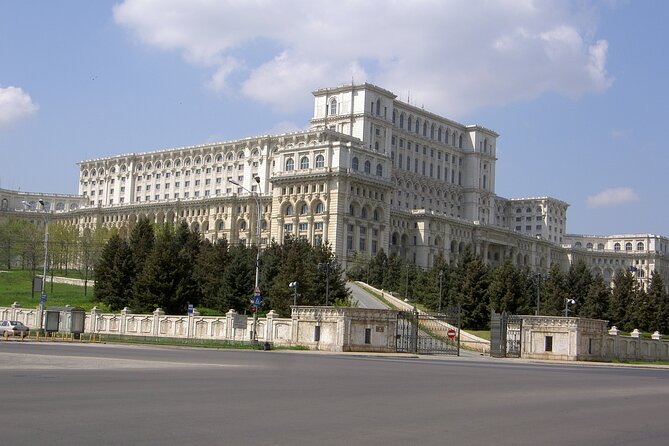
The striking thing here is the building’s sheer scale and contradiction. Begun in 1984 under Nicolae Ceaușescu, the Palace of Parliament was designed to house Communist ministries, party offices, and apartments for senior officials. It was called the House of the People, though ordinary people paid a heavy price for it. I like the chance to see this difficult chapter of Romania inside such a grand setting, and I like that the tour points out local marble, crystal, carpets, curtains, and stucco made by Romanian craftsmen. The main drawback is limited access: you see only selected halls and rooms, not the nuclear bunker, technical areas, or most of the building.
At $28.91, this is fair if you value a guided visit and want help getting through a complicated entrance system. The English tour lasts about an hour, and guides such as Francisc have been praised for clear explanations, humor, and candor. Arrive early with the right identification, because a missed entrance or late arrival can mean missing the group and losing the ticket.
In This Review
- Key points to know before you go
- Why this giant palace matters
- Finding the right entrance in Bucharest
- Security is part of the visit
- What you see inside the Palace of Parliament
- The guide makes the difference
- Is one hour enough?
- Is $28.91 good value?
- Who should book this experience?
- My booking advice
- FAQ
- How long does the Palace of Parliament tour last?
- What language is the tour offered in?
- How much does the tour cost?
- Do I need a passport or identity card?
- Where is the weekday meeting point?
- Where is the weekend entrance?
- Can I bring large luggage or bottles of liquid?
- Can I cancel for a full refund?
Key points to know before you go
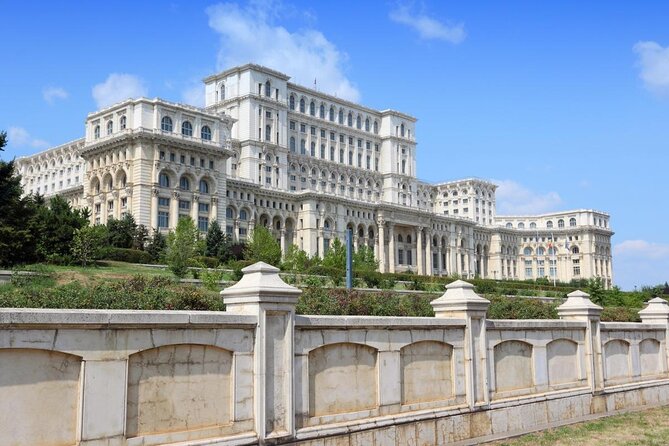
- The building tells a political story: Its grand rooms reflect the ambition and excess of Romania’s Communist leadership.
- You see selected public spaces: Expect halls, conference rooms, staircases, galleries, and parliamentary areas, not the entire complex.
- The correct entrance changes by day: Weekdays use A3S2 from Izvor Street, while weekends generally use A1 on Calea 13 Septembrie.
- Airport-style security takes time: Large luggage, dangerous objects, and bottles containing liquids are not permitted.
- Your passport or EU identity card is essential: Copies and driving licences are not accepted.
- An English guide adds real value: The strongest part of the experience is often the explanation of why the palace was built and what it meant for Bucharest.
Why this giant palace matters
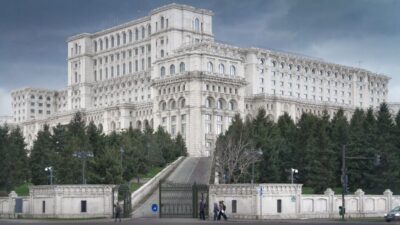
The Palace of Parliament is not simply a large government building. It is the physical expression of Ceaușescu’s megalomania and of a state that could move whole neighborhoods to make room for one project.
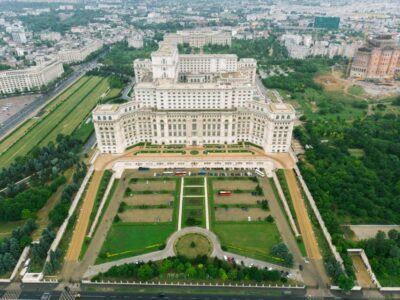
Construction began in 1984, during the final and harshest years of Communist rule. The building was placed on what was considered the safest site in Bucharest, a city at serious risk from earthquakes. Its design includes twelve stories above ground and four underground levels, including a nuclear bunker.
That combination makes the visit unusual. You are looking at lavish rooms built with local materials and labor, but the building also represents forced change, enormous expense, and a political system that put spectacle before ordinary needs. A good guide does not reduce the story to a list of measurements. The most worthwhile explanations connect the polished marble and giant staircases with the human cost of creating them.
The tour is especially useful if you have already walked around central Bucharest and want to understand why this structure dominates the city. You do not need to admire the building to find it important. In fact, the tension between its beauty and its purpose is the reason to go.
More Palace of the Parliament visits:
- Bucharest: Palace of Parliament Tickets and Guide
★ 4.3 · 3,182 reviews - Bucharest: Palace of Parliament Tickets and Guided Tour
★ 4.4 · 1,877 reviews - Bucharest: Parliament Palace Skip-the-line Ticket
★ 4.2 · 1,518 reviews
Finding the right entrance in Bucharest
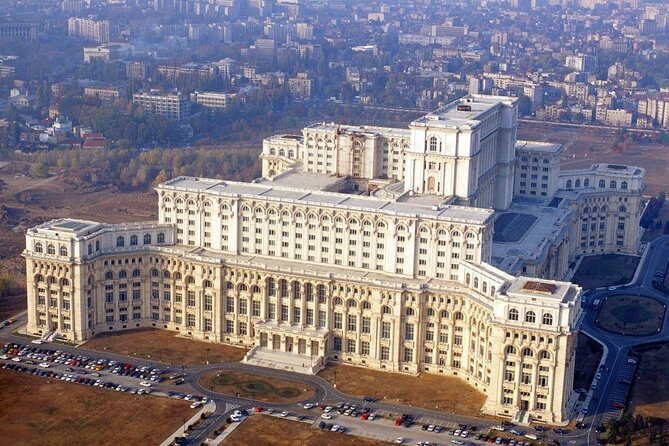
This is the part that requires the most care. The palace has several entrances, and the meeting place is not simply one obvious front door. The operator does not provide general hotel pickup. You must reach the assigned entrance yourself and find the representative.
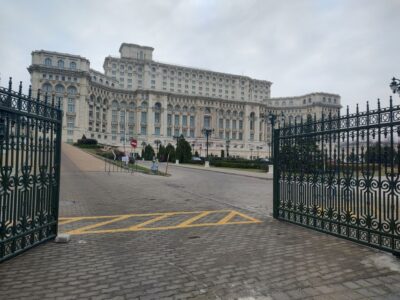
On weekdays, meet the representative wearing a CT&T badge inside the building at the coffee shop area. You first pass security through the A3S2 entrance to Constantin Brancusi Hall. This entrance is accessed from 2 to 4 Izvor Street, beside Izvor Park.
On Saturdays and Sundays, access is generally from Calea 13 Septembrie, through the A1 entrance at the Romanian Senate. The weekend arrangement can differ from the weekday route, so read your confirmation and reminder message closely. One missed visit resulted from arriving at the wrong entrance, and another late arrival required buying a separate ticket at the ticket desk.
I would arrive at least 30 minutes early, even though the tour itself lasts about an hour. That gives you time to walk from public transport, identify the entrance, find the host, and deal with security without panic. Some visitors have found the location difficult even with a taxi, so do not rely on a driver knowing the correct gate. Use the address, entrance name, and map supplied with your booking.
The host’s role is mainly to gather the group, check everyone in, and guide you through the entry process. The official palace guide then handles the building visit. Hosts have usually been appreciated for organization and clear communication, though one meeting was made harder by a missing badge and a handwritten sign. The practical lesson is simple: look actively for the CT&T representative and do not wait until the last minute.
Security is part of the visit
Entry works much like an airport security checkpoint. Your bag is checked, and prohibited items can stop you before the tour begins. Big luggage, dangerous objects, and bottles containing liquids are not allowed.
Bring your original passport or EU identity card. A photocopy will not do, and neither will a driving licence. This rule is especially important for EU citizens who normally use a national identity card for travel. Keep the document easy to reach, not buried under everything else in your bag.
Security lines can add a noticeable wait. The tour operator has little control over the pace, and the group cannot begin until everyone has cleared the checkpoint. This is another reason to arrive early and travel light.
The building’s security rules also help explain why the visit can feel more controlled than a typical city attraction. Access is limited to approved areas, and the route may change if official events are taking place. If you expect to wander freely through a government complex, adjust your expectations before booking.
What you see inside the Palace of Parliament
Once inside, the route takes you through the palace’s most important accessible rooms and corridors. You can expect large conference halls, broad staircases, long hallways, impressive galleries, and lavishly decorated interiors.
The materials deserve attention. Marble floors and columns, crystal fixtures, carpets, curtains, and stucco work were made from local materials by Romanian craftsmen. The decoration is not delicate or restrained. It is intended to overwhelm you with size, shine, and repetition.
You also pass parliamentary rooms, including areas connected with the Senate. A few visitors have particularly valued the active chamber spaces, marble floors, and columns. These rooms can help you picture the building as a working institution rather than an abandoned monument.
The route has changed over time and can be affected by events in the palace. At times, the accessible section has included only two halls and three conference rooms on level zero. On another visit, the route included a wider selection of rooms. You should think of the experience as a carefully limited glimpse, not a full architectural survey.
The balcony overlooking the main square is currently unavailable. That matters because the balcony would provide one of the best views of the immense boulevard and square outside. If photographs from earlier tours show it, do not assume you will have the same access now.
The underground levels, nuclear bunker, technical rooms, and private areas are not part of this experience. That is the most important limitation to understand. A one-star experience is likely if you book expecting hidden corridors and bunker access. If you book to see the public interiors and hear the building’s story, the hour can be satisfying.
A few more Bucharest tours worth a look
- Peles Castle Skip-The-Line Guided Tour
★ 5.0 · 13 reviews
The guide makes the difference
The palace itself is powerful, but the guide determines how much you take away. An English-speaking official guide leads the visit, while the CT&T representative helps with the meeting and entry.
Francisc is one guide specifically praised for being polite, professional, funny, and well informed. Another guide was appreciated for explaining the construction process and sharing anecdotes about the design and realization of the building. Those details are valuable because the rooms alone can become a blur of marble and empty space.
I look for a guide who explains both the building’s workmanship and its political meaning. The best approach is honest rather than celebratory. One especially strong tour addressed the reasons behind construction and its impact on the local community with candor and sensitivity.
You may also find that the guide keeps the group moving briskly. The official route is time-limited, and security or parliamentary business can restrict where you stop. Ask questions when the guide pauses, but do not expect a long private conversation in every room.
This is not the right activity for a toddler who needs constant movement or entertainment. The tour involves waiting, security, large formal spaces, and spoken explanation. Older children and teenagers interested in politics, architecture, or twentieth-century Europe are more likely to appreciate it.
Is one hour enough?
One hour is enough to understand the palace’s scale and purpose, but not enough to explore a building of this size in detail. You will see a series of selected rooms rather than every major wing.
That short duration helps if you are fitting the palace into a busy Bucharest day. It pairs well with a walk around Izvor Park or the central districts. You can see the interiors without giving up half a day.
The tradeoff is depth. Large rooms take time to cross, security can consume part of the schedule, and the route may include only a handful of spaces. If you want a complete architectural study, this will feel brief. If you want a strong first look, the format works.
The main square view would make the visit stronger, but the balcony is not currently available. Even without it, the interior route gives you a sense of how the building was designed to project authority through space, height, and costly materials.
Is $28.91 good value?
At $28.91 per person, the price is reasonable when you place a value on the guide, reserved admission, and help with a difficult entry process. You are not paying for unrestricted access. You are paying for a scheduled visit through the public areas that are open to tour groups.
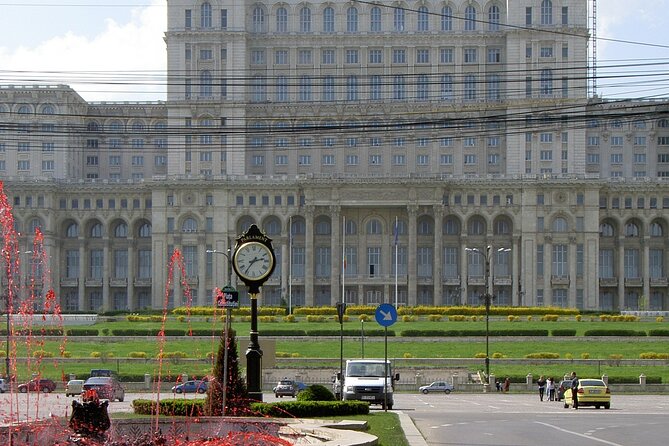
The price feels less attractive if you mainly want to see the outside. The palace is impressive from the surrounding streets, and you can appreciate its huge scale without buying admission. The ticket earns its cost when you want the marble halls, parliamentary rooms, interior decoration, and historical explanation.
The guide adds the most value. Without context, some rooms can look like oversized halls with little furniture. With a thoughtful explanation, you can read the empty spaces as evidence of the building’s unfinished, ceremonial, and political character.
Free cancellation is available if you cancel at least 24 hours before the scheduled start time. Changes or cancellations inside that 24-hour window are not accepted for a refund. If the operator cancels, that is a separate situation, and political or security conditions can occasionally affect access.
Who should book this experience?
I would choose this tour if you are visiting Bucharest for the first time and want to see the city’s most politically charged building from inside. It suits anyone interested in Communist-era Europe, architecture, government, or the way public monuments shape a capital.
It is also a good fit if you prefer a guide to explain what you are seeing. The strongest guides make the building more than a photo stop by discussing its construction, its local materials, its working parliamentary spaces, and its effect on the city.
I would hesitate if you dislike formal guided routes, security checks, or limited access. You should also skip it if your main goal is the nuclear bunker, private rooms, technical spaces, or the balcony view. Those areas are not included at present.
Plan carefully if you have mobility concerns. A moderate level of physical fitness is requested, and the route includes large halls, staircases, and extended walking inside the building. Specific accessibility arrangements are not provided in the tour details, so contact the operator before booking if you need assistance.
My booking advice
Book this Palace of Parliament visit if you can accept its limits and care about the story behind the marble. Read the meeting instructions twice, check the weekday or weekend entrance, bring your original passport or EU identity card, and arrive early with a small bag and no liquids.
The best reason to go is not simply that the palace is enormous. It is that the building forces you to consider the gap between grand public design and private human cost. For roughly $29, an hour inside with an English guide offers a useful, memorable introduction to that contradiction.
FAQ
How long does the Palace of Parliament tour last?
The tour lasts approximately one hour.
What language is the tour offered in?
The experience is offered in English.
How much does the tour cost?
The listed price is $28.91 per person.
Do I need a passport or identity card?
Yes. You must bring a passport or EU identity card for entry. Copies and driving licences are not accepted.
Where is the weekday meeting point?
On weekdays, meet the CT&T representative wearing a badge inside the building at the coffee shop area after passing security through the A3S2 entrance to Constantin Brancusi Hall. Access is from 2 to 4 Izvor Street beside Izvor Park.
Where is the weekend entrance?
On Saturdays and Sundays, access is generally from Calea 13 Septembrie through the A1 entrance at the Romanian Senate, unless different instructions are communicated in advance.
Can I bring large luggage or bottles of liquid?
No. Large luggage, dangerous objects, and bottles containing liquids are prohibited during the security check.
Can I cancel for a full refund?
Yes, if you cancel at least 24 hours before the experience start time. Cancellations or changes made less than 24 hours in advance are not refunded or accepted.
Recently added around Bucharest
- 6h Communism Tour in Bucharest with Ceausescu Mansion★ 4.5 · 6 reviews
- From Bucharest : Day Trip to Peles, Dracula’s Castle, Brasov★ 4.7 · 6 reviews
- Bears Sanctuary, Dracula Castle and Brasov City – Full Day Trip from Bucharest★ 5.0 · 6 reviews
- Dracula Private Tour★ 5.0 · 6 reviews
- Transfagarasan Road Private Day Trip from Bucharest / The Best Road in the World★ 5.0 · 6 reviews
- Bucovina Painted Monasteries & Transylvania Tour: 4-Day Private★ 5.0 · 6 reviews
- Bucharest : Wednesday, Dracula & Peles 3 Castles Tour 1 Day★ 4.7 · 6 reviews
- Hiking thought the best mountain villages in Romania-Private tour from Brasov★ 5.0 · 6 reviews
Parliament Palace Tours, compared.
Palace of Parliament in Bucharest – fast-track tickets and guide
Read our review →
Parliament Senate Entry Tickets and Guided Tour
Read our review →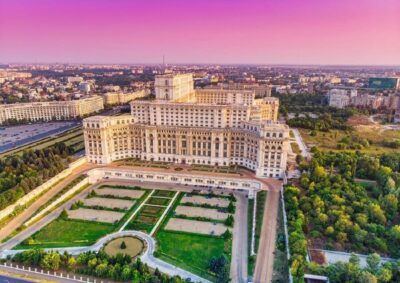
Palace of the Parliament, Village Museum & Ceaușescu Mansion
Read our review →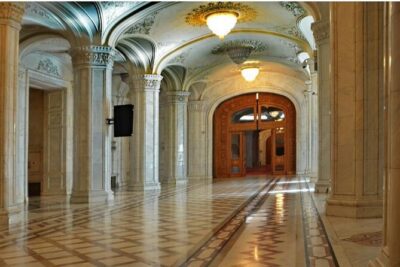
Bucharest Private Tour, Parliament Palace, Ceausescu House Visit
Read our review →
Private Bucharest city tour visit the Palace of the Parliament & Village Museum
Read our review →Browse the lists this tour appears in