Reviewed · PRIVATE
Private: RedPatrol Bucharest Contrasts Tour in a Vintage Car
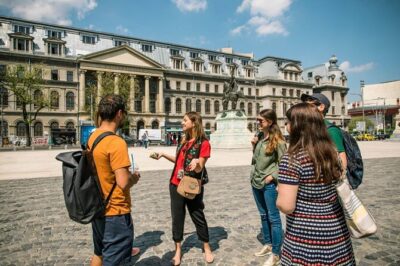
Bucharest makes more sense when you see its sharp changes side by side. Red Patrol’s Bucharest Contrasts Tour carries you from royal villas and belle epoque gardens to communist apartment blocks, abandoned factories, a peasant market, and the vast rebuilt zone around the Palace of Parliament, all in a restored Dacia from the 1970s or 1980s.
I like two things right away. First, the private format lets your guide shape the stories around your questions instead of rushing a large group. Second, the old Dacia is more than transport. It turns the city’s recent past into something you can feel, hear, and notice as you move through its neighborhoods.
The main drawback is the car itself. These restored classics have no air-conditioning, power steering, ABS, GPS, or automatic gearbox. That is part of the period experience, but it can be less comfortable on a hot day or for anyone expecting a modern vehicle.
In This Review
- Key points at a glance
- Why the vintage Dacia changes the tour
- From Uranus demolition to Academia Română
- The first Royal Palace and bourgeois Bucharest
- Cotroceni and the belle epoque capital
- Drumul Taberei, working-class life, and the mall on a former canteen
- Ferentari and the post-socialist break
- The abandoned Rocar factory area
- Broscuțe Park and the Stalinist years
- The Palace of Parliament and the city that disappeared
- What the $126.43 price includes
- Who should book this Bucharest tour
- Practical details before you reserve
- Should you book Red Patrol’s Contrasts Tour?
- FAQ
- How long does the Bucharest Contrasts Tour last?
- Is hotel pickup included?
- Is this a private tour?
- What type of car is used?
- Will I drive the Dacia?
- Does the Dacia have air-conditioning?
- Are children and pets allowed?
- Can I cancel for a full refund?
Key points at a glance
- A restored Dacia 1300 or 1310: Ride in a Romanian classic linked to everyday life during the communist era.
- A private Bucharest route: Your group receives its own guide and driver, with pickup and drop-off at any address in Bucharest.
- Royal Bucharest to Ferentari: See Cotroceni, Drumul Taberei, Rahova, and Ferentari in one connected story.
- History in the streets: Learn how royal development, forced demolition, factory closures, and post-socialist hardship changed the city.
- The Palace of Parliament in context: Understand the neighborhood that was erased to make room for Ceausescu’s monumental project.
- A half-day with a clear purpose: Three to four hours gives you a useful overview of Bucharest beyond its central sights.
Why the vintage Dacia changes the tour
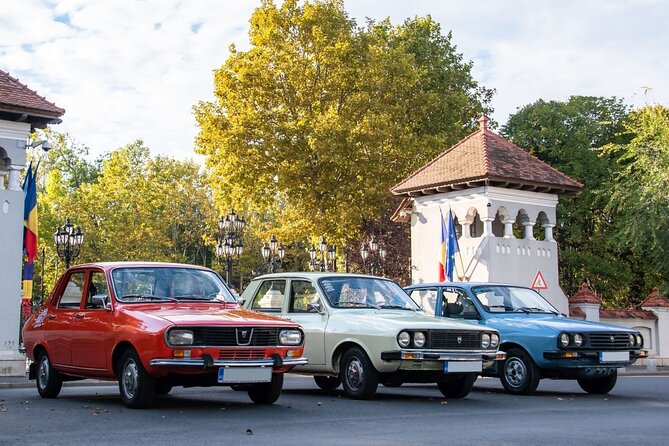
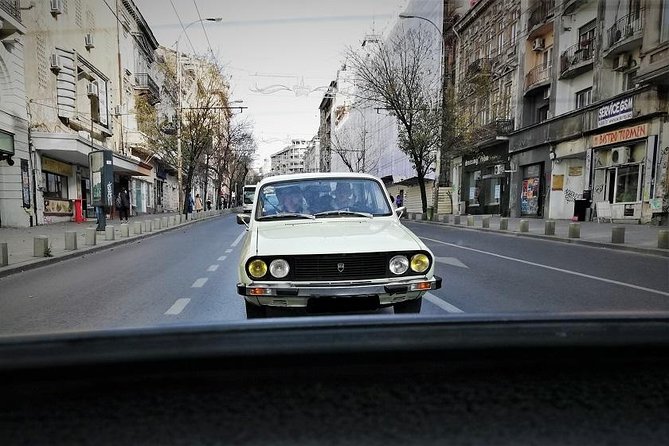
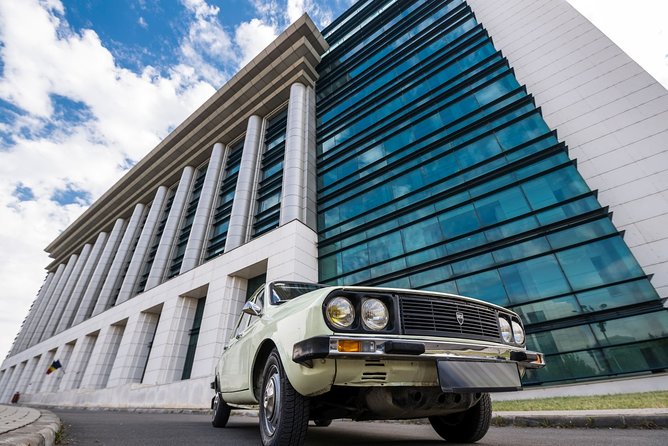
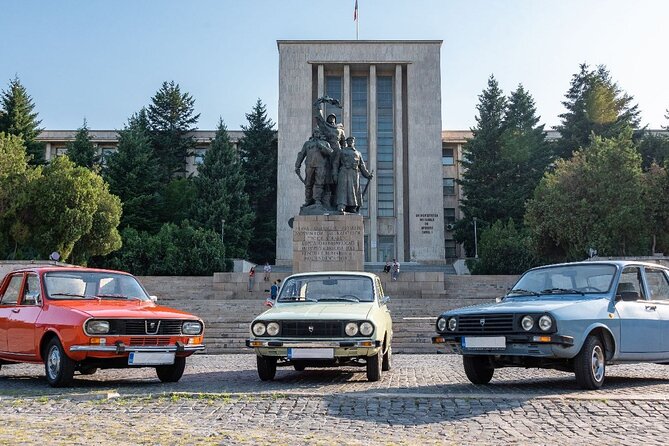
The Dacia 1300 and 1310 were familiar Romanian cars in the 1970s and 1980s. Red Patrol uses fully restored examples that meet current traffic safety regulations, but they retain the basic feel of their era.
You will not drive the car. A professional local guide handles the driving and the commentary, so you can watch the streets without worrying about traffic or directions. Guides named in past experiences include Mihai and Ivan Crinu, and the company’s small team is presented as both driver and storyteller.
Expect a compact, old-fashioned interior rather than modern touring comfort. There is no air-conditioning, ABS, GPS navigation, power steering, or automatic transmission. The cars are heated during winter, and water is provided.
I see the Dacia as a strong match for anyone who likes old cars, social history, or unusual city tours. If you mainly want a quiet, cool ride between famous monuments, a newer vehicle may suit you better. The car is central to the experience, not a minor decoration.
The private setup matters here. Bucharest’s contrasts are easier to discuss when you can ask why one district looks so different from the next, or pause over a detail that catches your eye. You also avoid being tied to other people’s pace.
A few more Bucharest tours worth a look
- Bucharest: Dracula’s Castle, Peles Castle, & Brasov Old Town
★ 4.5 · 17,858 reviews - Bucharest: Dracula Castle, Peles Castle & Brasov Old Town
★ 4.6 · 10,891 reviews - Bucharest: Dracula’s Castle, Peleș Castle & Brașov Day Trip
★ 4.5 · 5,919 reviews
From Uranus demolition to Academia Română
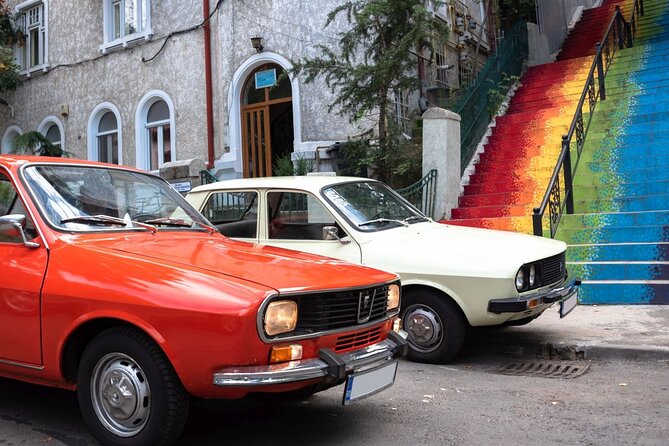
The first stop is around Academia Română in Uranus, an area tied to the huge demolition scheme Ceausescu began in the 1980s. The project wiped out large parts of established neighborhoods to create a monumental government center.
The work stopped when the Romanian Revolution ended the communist regime in 1989. That unfinished edge is the point of the visit. You see where a sweeping plan for the capital ran into political collapse, leaving a city shaped by both what was destroyed and what was never completed.
The stop lasts about 20 minutes, and no admission ticket is included. Treat it as an outdoor history lesson rather than a formal museum visit. The value comes from seeing the setting while your guide explains the scale of the change.
One especially useful contrast links the communist-era Academia Română building with nearby Bragadiru Palace. The two represent very different systems and ambitions: one associated with Elena Ceausescu, the other with capitalist industrialist Dumitru Bragadiru and later cultural use.
That comparison gives the tour its strongest method. Instead of placing Romanian history into neat periods, it shows how different eras remain beside one another in concrete, streets, and buildings.
The first Royal Palace and bourgeois Bucharest
At Fântână, your guide introduces the bourgeois quarter that grew in the 19th century from the first Royal Palace of Romania. This is a short stop of about 15 minutes, with free admission.
The area helps explain Bucharest before communist planning reshaped the city. Royal power encouraged a different type of development, with private homes and streets linked to the modern monarchy. The stop is brief, so expect a presentation rather than an extended architectural walk.
This part of the route works best as a reset. After the destruction associated with Uranus, you see the older city that came before it. You also begin to understand that Bucharest is not simply old center versus communist outskirts. Its districts reflect several political and economic chapters layered together.
Cotroceni and the belle epoque capital
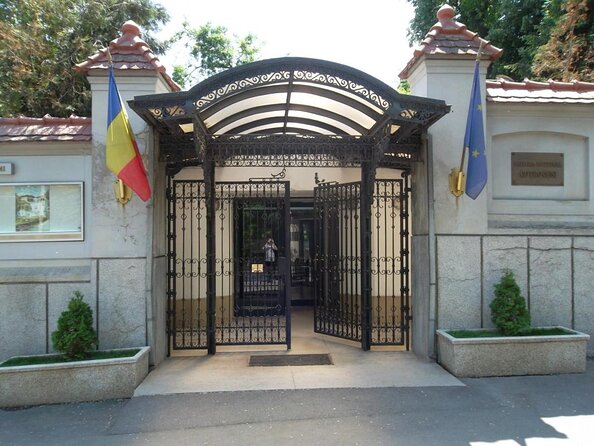
The gardens of Cotroceni Palace provide roughly 30 minutes for a presentation about the first Royal Palace and belle epoque Bucharest. Admission is not included, so this is not described as an interior palace visit.
Cotroceni represents the city’s royal and affluent side. The setting lets your guide discuss the modern monarchy and the period when Bucharest looked toward European court culture. Villas, palace grounds, and historic atmosphere give a clear contrast with the blocks of flats later on the route.
You should listen for the social point, not just the architectural one. The tour uses Cotroceni to show who had influence and comfort before the communist period, then compares that world with districts created for industrial workers.
The timing is enough for an introduction and photographs, but not for a full palace tour. If Cotroceni Palace interiors are a priority, plan a separate visit and confirm the current access arrangements independently.
A different side of the city, same short trip:
- Bucharest: Palace of Parliament Tickets and Guide
★ 4.3 · 3,182 reviews - Bucharest: Day Trip to Dracula Castle, Peles Castle & Brașov
★ 4.4 · 3,049 reviews - Bucharest to Dracula Castle, Peles Castle and Brasov Guided Tour
★ 4.5 · 2,933 reviews - Bucharest: Palace of Parliament Tickets and Guided Tour
★ 4.4 · 1,877 reviews
Drumul Taberei, working-class life, and the mall on a former canteen
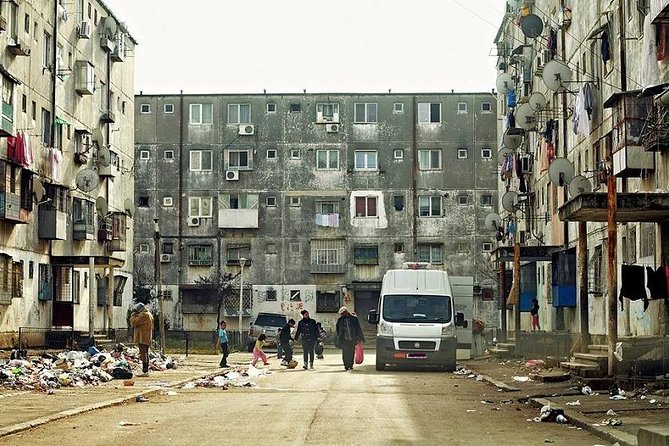
Parcul Drumul Taberei is the route’s look at a working-class communist district. The area is known for large apartment blocks built for ordinary workers and their families.
Your guide explains how daily life worked in this type of neighborhood, then points to a modern shopping mall built on the ruins of a communist canteen. That single change says a lot. The city did not simply replace communism with a clean new plan. It often placed new commercial uses on the remains of the old system.
There is time for photographs and stories, around 20 minutes. The stop should appeal to you if you want to see how most city residents lived, rather than focusing only on palaces and official monuments.
The apartment blocks may look plain, but they are important evidence. They show the scale of state housing, the effort to place workers near industrial employment, and the uniform visual language of communist planning. Your guide can add the human details that concrete alone cannot provide.
The route also brings up local churches and the peasant market as parts of everyday culture. These details keep the district from being reduced to a row of gray buildings. You see work, shopping, faith, housing, and later commercial development in the same area.
Ferentari and the post-socialist break
The journey then moves through the former industrial area of Ferentari, including a stop in the Piața Rahova area. This is among the most difficult and revealing parts of the tour.
Ferentari was developed as an industrial and workers’ district during the communist period. After the socialist factories collapsed, the area suffered major economic change. Former working-class housing became associated with poverty, social problems, and ghetto-style blocks.
The tour does not present Ferentari as a polished attraction. That is precisely why it can be valuable, provided you approach it with respect. You are looking at real housing and a real market area, not a staged display of hardship.
At Piața Rahova, the visit includes a peasant market and about 30 minutes of exploration and explanation. The market gives you a more ordinary point of contact with the district. It also helps balance the grim industrial story with signs of local commerce and daily routine.
Photography requires judgment here. Ask your guide before photographing people, market sellers, homes, or private activity. The neighborhood’s difficulties are not props, and a responsible approach will make the experience more meaningful.
This stop is also where the word contrasts becomes most concrete. Within a few hours, you have moved from royal gardens to mass housing and then to a district dealing with the long aftereffects of factory closures. The tour links those places instead of treating them as unrelated sights.
The abandoned Rocar factory area
The former Rocar factory is a 20-minute exploration of an abandoned industrial zone left behind after the collapse of socialist factories. Admission is included.
Rocar matters because it represents work itself. Communist Bucharest was not only defined by apartment blocks and political monuments. It also depended on factories that employed large numbers of people and gave entire districts their purpose.
When those factories disappeared, the effects reached far beyond the factory gates. Jobs vanished, nearby neighborhoods lost their economic center, and buildings were left to decay. Your guide presents the rise and fall of the area, giving the ruins a human and economic context.
This is a useful stop for understanding why some parts of Bucharest feel unfinished or worn. Post-socialist change brought new investment and consumer spaces, but it did not repair every industrial district at the same speed.
The word exploration should be read sensibly. The tour offers a brief look and stories, not an unrestricted visit through unsafe abandoned buildings. Stay with the guide and follow instructions around derelict structures.
Broscuțe Park and the Stalinist years
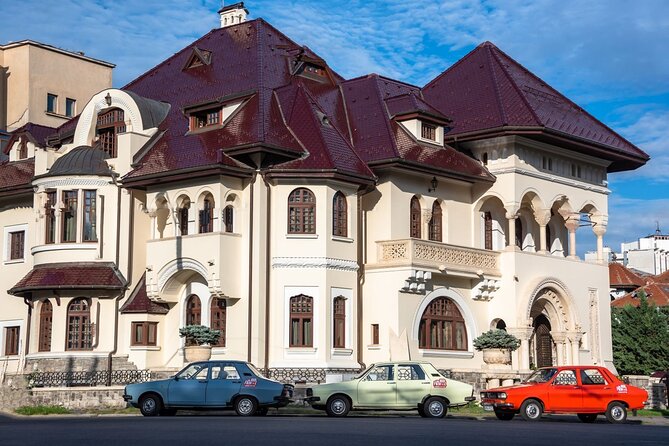
Broscuțe Park is connected with the Colonel’s Quarter, described as the first neighborhood built during the Soviet occupation era. The stop lasts about 20 minutes, with admission included.
Here the focus shifts to the Stalinist period and the first years after the Second World War. Your guide explains how life in Bucharest changed when Soviet influence shaped political power, housing, and urban development.
The district offers another layer in the city’s 20th-century story. The route has already covered royal Bucharest, Ceausescu’s demolition, working-class housing, and post-socialist decline. Broscuțe Park helps fill in the earlier communist chapter between monarchy and the later dictatorship.
Do not expect a major monument at every stop. Much of the tour’s strength lies in ordinary districts where the guide can connect buildings and street plans to political decisions. If you prefer only grand sights, this may feel understated. If you want to understand how a city operates, it is one of the more useful sections.
The Palace of Parliament and the city that disappeared
The final major stop is the Palace of Parliament, with about 20 minutes for the story of the building and the surrounding zone.
The palace is often presented simply as a huge government building. This tour adds the crucial urban context: a roughly 20-square-kilometer neighborhood was rebuilt after widespread demolition. Homes, streets, churches, and established communities were swept aside for Ceausescu’s monumental vision.
That context changes what you see. The building is not just an example of excessive architecture. It is also the center of a forced transformation that reshaped Bucharest and displaced parts of its population.
Admission is not included, so the listed stop should be understood as an exterior presentation and area history rather than a guaranteed interior visit. If you want to tour the building inside, arrange that separately and check entry requirements.
The 20-minute stop is short, but it works after the rest of the route. You have already seen the older city, state housing, former industry, and neighborhoods affected by political upheaval. By the time you reach the palace, its size has a more troubling meaning.
What the $126.43 price includes
At $126.43 per person, the price is easier to justify for a private group than for a solo participant. You are paying for a three to four-hour circuit, a restored classic car, hotel pickup and drop-off anywhere in Bucharest, a local guide who also drives, water, and a small tour gift.
The value lies in the combination. A standard sightseeing bus might cover more central landmarks, but it would not offer the same private setting or access to this sequence of neighborhoods. A normal taxi could take you through the districts, but it would not provide the historical framework.
For two or more people, the private format can make the cost feel more reasonable, especially if you would otherwise book several separate rides or a private guide. Group discounts are offered, so check the current total for your party before deciding.
Food and drinks beyond the water in the car are not included. Personal shopping is also your responsibility. The tour is built around seeing and discussing the city, not around a meal or shopping stop.
Who should book this Bucharest tour
I would choose this experience if you want Bucharest’s political and social story, not just its postcard sights. It suits people who enjoy old vehicles, urban change, architecture, and candid discussion of difficult subjects.
It is also a strong first activity in the city. The route gives you a mental map of royal quarters, communist housing, former industry, and post-socialist districts. Later, when you walk through central Bucharest, you will have more context for the city’s mixed appearance.
The tour is less suitable if you want a conventional highlights circuit, long time at each attraction, or a palace interior visit. It is also not available to children under 10 or pets. Most people can participate, but the classic car’s old-style design may not suit every comfort preference.
Guides are part of the value. Mihai is described as professional, friendly, and well informed, while Ivan Crinu is associated with clear explanations of Bucharest’s social divisions and the contrast between Academia Română and Bragadiru Palace. Since guide assignments can change, do not book solely around a particular person, but expect the guide’s storytelling to shape the day.
Practical details before you reserve
Pickup and drop-off are included from all addresses in Bucharest. Confirmation arrives when you book, and the activity is private, meaning only your group participates.
The cars are heated in winter. In warm weather, remember that the lack of air-conditioning is a real consideration. Wear practical clothes and shoes, especially if you want to look around market areas and former industrial zones.
The tour is offered in English. The itinerary includes several short stops, with drive time linking them into one story. You should expect a moving city tour with brief explorations, not a long walking excursion at every location.
Free cancellation is available if you cancel at least 24 hours before the local start time. Changes or cancellations made inside that window are not accepted for a refund.
Should you book Red Patrol’s Contrasts Tour?
Book it if you want to understand how Bucharest became the city you see today. The Dacia, private guide, and hotel pickup are useful features, but the real value is the route: royal privilege, communist housing, forced demolition, factory collapse, and post-socialist hardship appear in one connected afternoon.
Skip it if your priority is air-conditioned comfort, famous central landmarks, or interior access to the Palace of Parliament and Cotroceni Palace. For everyone else, this is a thoughtful and unusual way to get beyond Bucharest’s center. The car adds charm, but the honest look at the city’s divisions is what makes the tour worth your time.
FAQ
How long does the Bucharest Contrasts Tour last?
The tour lasts approximately three to four hours.
Is hotel pickup included?
Yes. Pickup and drop-off are included from all addresses in Bucharest.
Is this a private tour?
Yes. Only your group participates in the activity.
What type of car is used?
Red Patrol uses restored Dacia 1300 or 1310 cars dating from the 1970s and 1980s.
Will I drive the Dacia?
No. You will not drive the car. A professional local guide serves as both driver and guide.
Does the Dacia have air-conditioning?
No. The cars do not include air-conditioning, ABS, GPS navigation, power steering, or automatic transmission. They are heated during winter.
Are children and pets allowed?
Pets and children under 10 years old are not allowed. Most other participants can take part.
Can I cancel for a full refund?
Yes, if you cancel at least 24 hours before the experience’s start time. Cancellations or changes made less than 24 hours before the start time are not refunded or accepted.
Recently added around Bucharest
- 6h Communism Tour in Bucharest with Ceausescu Mansion★ 4.5 · 6 reviews
- From Bucharest : Day Trip to Peles, Dracula’s Castle, Brasov★ 4.7 · 6 reviews
- Bears Sanctuary, Dracula Castle and Brasov City – Full Day Trip from Bucharest★ 5.0 · 6 reviews
- Dracula Private Tour★ 5.0 · 6 reviews
- Transfagarasan Road Private Day Trip from Bucharest / The Best Road in the World★ 5.0 · 6 reviews
- Bucharest : Wednesday, Dracula & Peles 3 Castles Tour 1 Day★ 4.7 · 6 reviews
- Hiking thought the best mountain villages in Romania-Private tour from Brasov★ 5.0 · 6 reviews
- Bucovina Painted Monasteries & Transylvania Tour: 4-Day Private★ 5.0 · 6 reviews
Private, compared.

Castles of Transylvania: Private Day Trip from Bucharest
Read our review →
Dracula’s Castle, Peles Castle and Brasov – Private Day Trip from Bucharest
Read our review →
Bucharest Panoramic Sightseeing – Private City Tour
Read our review →
THERME “Take It Easy” Pack: Full Spa Access + Private Transfers
Read our review →
Piatra Craiului National Park Private Hiking Tour from Brasov
Read our review →
4h Bucharest Private Tour (2h by Car and 2h Walking in Old Town)
Read our review →