Reviewed · BUCHAREST TOURS
Eastern Orthodox Church Art in Bucharest
Bucharest’s Old Town is more than cafés, bars, and polished façades. Step inside its working Orthodox churches and you find painted walls, incense, carved wood, and traces of Wallachian medieval life. This 2.5-hour walking tour links six churches, including Saint Anton, the Lady’s Church, and Stavropoleos Monastery, with the city’s Orthodox art as the main subject.
I like the tour’s small group size, capped at 10 people, and its focus on churches that are easy to miss, even when you are already walking through central Bucharest. I also like the guide-led interpretation, especially with Helen, who explains both Byzantine art and Romanian religious history in clear detail. The main consideration is that these are active churches, not museums, so access and the order of stops may shift around services, christenings, or other worship.
In This Review
- Six churches, one compact walk through Bucharest
- Why Bucharest’s church art deserves a closer look
- Starting beside the Old Princely Court at Saint Anton
- Saint George and the fresco at Bucharest’s Kilometer Zero
- Saint Elijah, one of Bucharest’s two Orthodox basilicas
- The Lady’s Church and Bucharest’s oldest surviving frescoes
- Stavropoleos Monastery, the most ornate change of mood
- The final church and the route’s one detail to verify
- Helen’s guiding style and the importance of the right explanation
- What the $57 price buys you
- Dress, behavior, and practical preparation
- Who will get the most from this church walk?
- Should you book Eastern Orthodox Church Art in Bucharest?
- FAQ
- How long does the Eastern Orthodox Church Art tour last?
- How much does the tour cost?
- Where is the meeting point?
- Which languages are available?
- How large is the group?
- What should I wear?
- Are food and drinks included?
Six churches, one compact walk through Bucharest
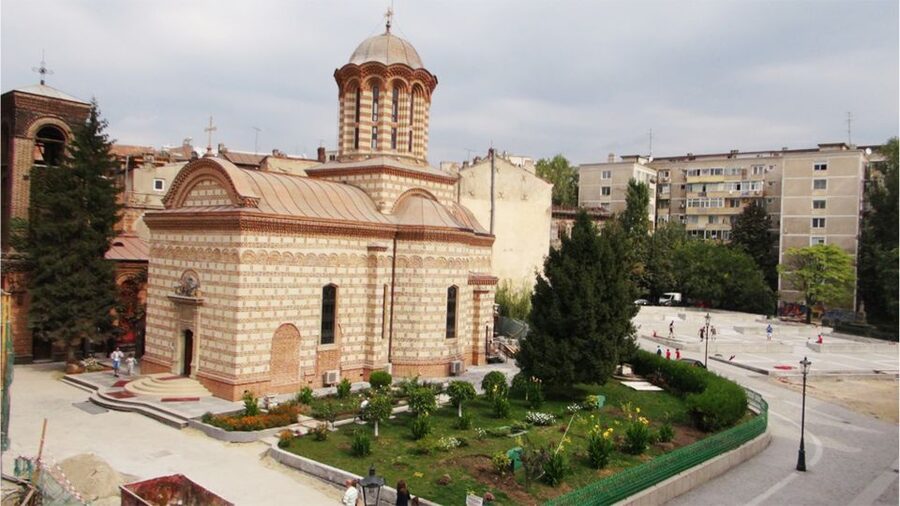
- Saint Anton near the Old Princely Court: Begin beside one of the city’s key medieval sites and enter a working church with strong links to Bucharest’s old religious quarter.
- Saint George at Kilometer Zero: See a fresco by one of Romania’s leading church painters and connect the church to the symbolic center of the city.
- Saint Elijah Basilica: Visit one of only two Orthodox basilicas in Bucharest, tucked away enough that even locals may pass it by.
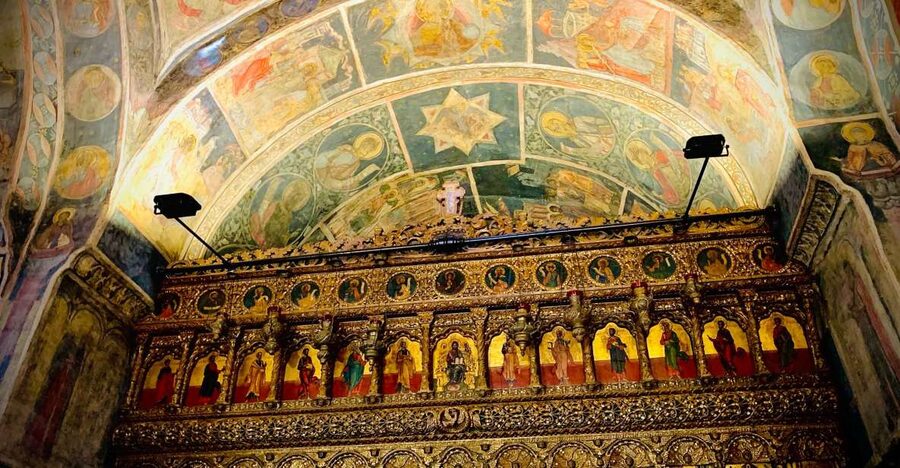
- The Lady’s Church: Look for some of Bucharest’s oldest preserved original frescoes.
- Stavropoleos Monastery: Compare its ornate, eclectic style with the older churches on the route.
- A final nineteenth-century church stop: The tour details name Saint Cyprian in the included sights and Saint Demetrios in the route description, so confirm the exact final church when booking.
Why Bucharest’s church art deserves a closer look
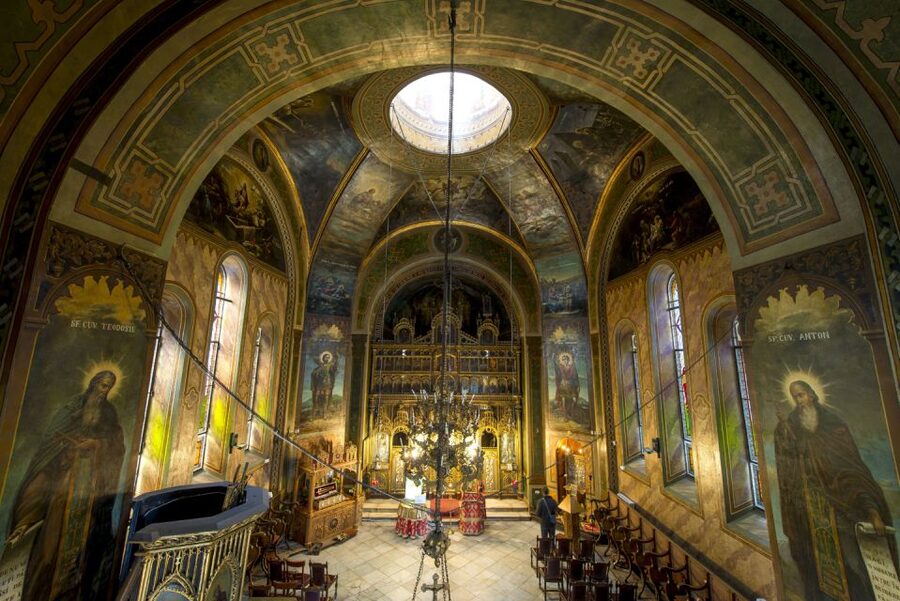
Bucharest can feel visually uneven. Ottoman, French, communist, modern, and commercial influences all appear within a few blocks. The Orthodox churches give you another way to read the city, one based on worship, patronage, painting, and survival rather than grand civic architecture.
The point is not simply to enter six pretty buildings. Your guide helps explain how Orthodox churches use images, space, and ritual. A painted figure is not just decoration. The placement of saints, scenes from the life of Christ, and ornamental details all have a role in worship and teaching.
That makes this a useful tour for anyone who has looked inside an Orthodox church and wondered what they were seeing. You do not need a background in theology or art. You do need some patience, since the pleasure comes from noticing details rather than racing from one landmark to the next.
The route also places the churches in a Wallachian setting. Bucharest’s old center grew around courts, markets, monasteries, and small parish churches. The result is a walk through several layers of the city, from medieval foundations to nineteenth-century design, with modern streets often pressing right up against the sanctuaries.
A few more Bucharest tours worth a look
- Bucharest: Dracula’s Castle, Peles Castle, & Brasov Old Town
★ 4.5 · 17,858 reviews - Bucharest: Dracula Castle, Peles Castle & Brasov Old Town
★ 4.6 · 10,891 reviews - Bucharest: Dracula’s Castle, Peleș Castle & Brașov Day Trip
★ 4.5 · 5,919 reviews
Starting beside the Old Princely Court at Saint Anton
The meeting point is in front of the Anton icon shop, near the Old Princely Court. This is a sensible place to begin. You are close to the old heart of Bucharest, and the setting gives the guide an immediate chance to explain how religious buildings fit into the city’s early development.
Saint Anton is the first church on the route. The stop helps set the tone for the tour: this is not a church-museum circuit, and the buildings are not presented as empty historic shells. Worship continues here, so you may encounter a quiet service, people lighting candles, or a family attending to its own business.
I would arrive a few minutes early and keep your phone away once you enter. The guide may explain the painting and architecture, but the building still belongs first to its congregation. That small change in attitude makes the visit feel more respectful and more rewarding.
The opening stop also works well for orientation. You are not being dropped into an isolated monument with no context. Instead, you start near the old court and then move along central streets toward the next church.
Saint George and the fresco at Bucharest’s Kilometer Zero
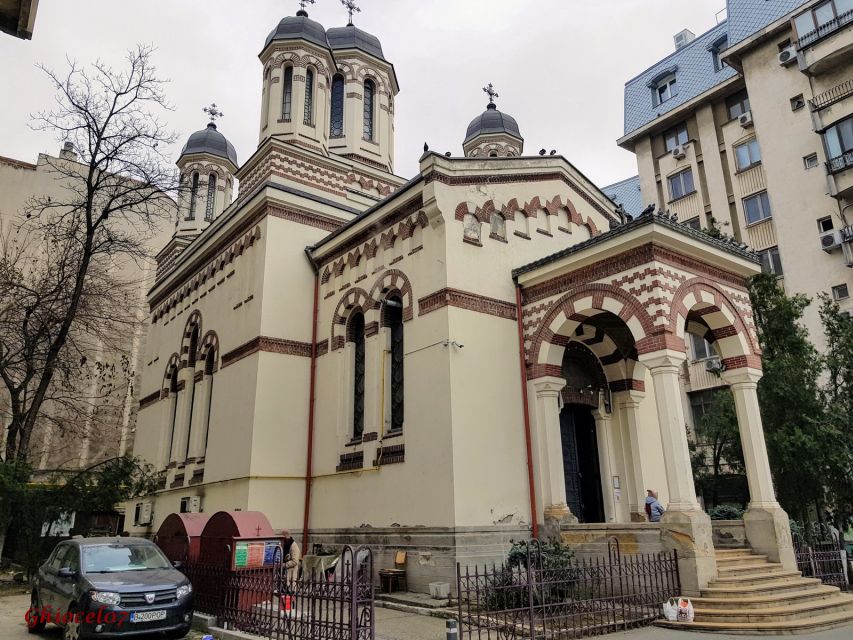
The walk continues along Lipscani Street to Saint George, often identified as the Kilometer Zero church. Its location gives the stop a useful city connection. You are looking at religious art while standing in one of Bucharest’s best-known central areas, where everyday movement continues outside.
The main artistic point here is a fresco made by one of Romania’s greatest church painters. The supplied tour information does not name the painter, so ask your guide for that detail on the day. That is one reason a guide matters: a fresco that might look like an old wall painting becomes a work with an artist, a style, and a place in Romanian Orthodox art.
Saint George is also a good reminder that Bucharest’s sacred spaces are not separated from city life. You may walk past shops and restaurants, then enter a church where the pace and visual language change at once. The contrast is part of the experience.
If you are mainly interested in famous architecture, this church may feel less dramatic than Stavropoleos. If you want to understand how religious art remains part of ordinary urban life, it is an important stop.
Saint Elijah, one of Bucharest’s two Orthodox basilicas
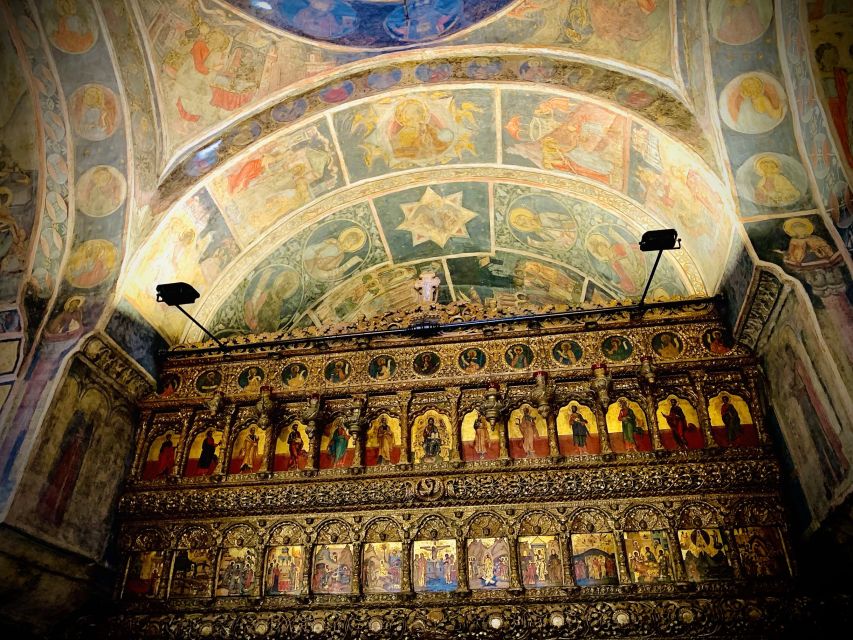
Saint Elijah, also called Saint Elias in the tour description, is one of only two Orthodox basilicas in Bucharest. That fact gives the stop unusual weight, especially for visitors who have already seen smaller parish churches and want a different scale.
The church is described as difficult to find, even for locals. That matters because the tour removes some of the guesswork. You do not need to build your own map of side streets or spend your limited city time hunting for a locked or easily missed entrance.
The word basilica may suggest a standard Western church shape, but the value here is the chance to compare its proportions and interior feeling with the other Orthodox buildings on the walk. Pay attention to how the space guides your eye toward the sacred area, how the paintings occupy the walls, and how the scale changes your sense of the service.
This is also where the tour’s compact group helps. A maximum of 10 people is small enough for questions without turning the church into a private lecture room. The guide can point out details while keeping the group quiet and out of the way.
A different side of the city, same short trip:
- Bucharest: Palace of Parliament Tickets and Guide
★ 4.3 · 3,182 reviews - Bucharest: Day Trip to Dracula Castle, Peles Castle & Brașov
★ 4.4 · 3,049 reviews - Bucharest to Dracula Castle, Peles Castle and Brasov Guided Tour
★ 4.5 · 2,933 reviews - Bucharest: Palace of Parliament Tickets and Guided Tour
★ 4.4 · 1,877 reviews
The Lady’s Church and Bucharest’s oldest surviving frescoes
The Lady’s Church is one of the most historically important stops because it contains some of the oldest preserved original frescoes in Bucharest. The word preserved is worth noting. You are not merely seeing a modern repainting in an old building. You are looking at surviving original work, though the supplied information does not give dates or explain the exact condition of each section.
This stop suits visitors who prefer evidence of age over polished presentation. The paintings may not have the clean, bright appearance of recently restored interiors. That is part of their value. Age, repair, and survival can tell you something about the city that a fresh decorative scheme cannot.
I would listen closely to the guide here, since frescoes are easy to glance at and move past. Ask which sections are original, how the figures are arranged, and what changes have taken place over time. A short explanation can turn a dim wall into the visual record of a changing church.
The Lady’s Church also shows why comfortable shoes matter. The tour covers several churches on foot, and central Bucharest’s streets can be tiring when you are trying to stay alert, look up, and keep pace with a group.
Stavropoleos Monastery, the most ornate change of mood
Stavropoleos Monastery is likely to be the most immediately decorative stop. Its style is eclectic, and it offers a clear contrast with the older frescoes and more restrained churches earlier in the walk.
This is a good point in the route for comparison. You have already seen Byzantine and Orthodox art in several settings. Now you can ask how later design borrows from, reshapes, or places new emphasis on earlier traditions. Rather than treating every church as the same, the tour lets you see changes in taste across different periods.
Stavropoleos is also the stop most likely to appeal to visitors who want a memorable visual setting for photographs. Still, photography should never outrank worship. The churches are active, and the rules about behavior are not casual suggestions.
The monastery may receive more attention from independent sightseers than the harder-to-find churches. That makes the earlier stops especially valuable. You get both a well-known central attraction and quieter places that you might not reach alone.
The final church and the route’s one detail to verify
The route description names Saint Demetrios as the final stop, describing it as a nineteenth-century neo-Baroque church. The included sights separately list Saint Cyprian. Because these names do not match, I would confirm the final stop with Bucharest Break before you set out.
That is not a reason to reject the tour. It is simply the kind of practical detail worth checking when a route includes several similarly named churches. Saint Demetrios, if that is the final church used on the day, would give the walk a later architectural note after the medieval and Byzantine-focused stops. Saint Cyprian may represent a different final emphasis.
Either way, the final stop appears designed to broaden the story beyond medieval Wallachia. You are not getting six versions of the same church. The route moves through different periods and styles, ending with a church that helps show how Orthodox architecture continued to develop in Bucharest.
Helen’s guiding style and the importance of the right explanation
The guide languages are English, Spanish, and Romanian. Helen is specifically named in the experience information and is described as guiding several departures. Her approach appears to combine Orthodox church practice, Romanian history, and Byzantine art rather than treating the churches as isolated art objects.
That combination is important. A guide who only lists dates and styles would miss the fact that these buildings are still used for prayer. A guide who only explains religious practice might leave art lovers wanting more. This tour aims to connect both sides.
The strongest feedback centers on clear explanations, a personable manner, flexibility, and the ability to adjust the outing to the group. One particularly useful example involved visitors using crutches and a walking stick. The guide adapted the excursion and helped one participant return to the hotel afterward. You should not assume every mobility need can be handled in the same way, but it is reasonable to discuss your needs before booking.
There is also a serious caution. One participant reported feeling condescended to after identifying as Catholic. That is not a minor concern for a tour about religion. The experience is intended to explain Orthodox art and worship, not test your beliefs. If you are Catholic or follow another tradition, you may want to state clearly that you are joining as an interested visitor and expect respectful, neutral explanation.
What the $57 price buys you
At $57 per person, this is not the cheapest way to walk around Bucharest’s Old Town. You can see some central churches on your own without paying a guide. The value comes from the route, the art interpretation, and the access to places that are hard to locate without local help.
The group limit of 10 improves that value. You are paying for a focused explanation rather than being one face in a large crowd. You can ask about a fresco, a saint, or a design detail, and the guide has a realistic chance to answer.
The tour lasts 2.5 hours, which is long enough for six stops but not so long that it takes over your full day. No food or drinks are included. That is fine for this kind of outing, and the guide can stop at a café, bar, or restaurant if the group wants one.
I would rate the price as fair for visitors who care about art, religious history, or lesser-known central Bucharest. It is less attractive if you only want a quick list of landmarks or prefer to explore independently with no fixed pace.
Dress, behavior, and practical preparation
Treat this as a visit to working churches. Short skirts, sleeveless shirts, tight clothing, ripped clothing, and strong fragrances are not allowed. Modest dress is not just a formal rule: it helps you enter without creating an awkward moment for worshippers or your own group.
Wear comfortable shoes. The tour is a walking experience, and the churches are spread through the central area rather than gathered in one museum complex. Bring a respectful, quiet attitude and be ready for the order or timing to change if a religious ceremony is under way.
You may encounter a christening or another family event. On one departure, a group was invited to share sweets and drinks with a family after a christening. That is a lovely possibility, but it should be understood as an unplanned act of hospitality, not a promised part of the tour.
The tour welcomes English, Spanish, and Romanian speakers. Free cancellation is available up to 24 hours before the start time, and you can reserve while paying later. Those policies help if your Bucharest schedule is still moving, but the real planning issue is dress and walking comfort.
Who will get the most from this church walk?
I would choose this tour if you want more than exterior photographs and a quick Old Town stroll. It fits art lovers, visitors curious about Orthodox Christianity, and anyone who wants to see a less commercial side of Bucharest.
It is also a strong choice for a first visit if you want local orientation without spending a whole day on a large city tour. The route stays focused, and the churches give you a clear theme to follow.
You may want to skip it if active places of worship make you uncomfortable, if you need a fully predictable museum-style schedule, or if you are not prepared to dress modestly. The tour involves walking and quiet observation, not food tasting or entertainment.
Should you book Eastern Orthodox Church Art in Bucharest?
Book it if you want a small-group introduction to Romanian Orthodox art with real variety: medieval connections at Saint Anton, a major fresco at Saint George, a rare basilica, old surviving frescoes, Stavropoleos’s ornate design, and a later nineteenth-century church.
The strongest reason to go is the guide’s interpretation. Helen’s ability to explain art, Romanian religious history, and Orthodox practice gives the route substance. The weaker point is the possible mismatch over the final church, plus the need for respectful dress and behavior.
Before booking, confirm whether the final stop is Saint Demetrios or Saint Cyprian, and tell the provider about any mobility needs or religious concerns. If those details suit you, $57 is a reasonable price for a focused 2.5-hour walk through churches you might otherwise miss.
FAQ
How long does the Eastern Orthodox Church Art tour last?
The tour lasts 2.5 hours.
How much does the tour cost?
The listed price is $57 per person.
Where is the meeting point?
Meet in front of the Anton icon shop, near Saint Anton Church and the Old Princely Court.
Which languages are available?
The tour is offered in English, Spanish, and Romanian.
How large is the group?
It is a small-group tour limited to 10 participants.
What should I wear?
Wear modest clothing. Short skirts, sleeveless shirts, tight clothing, ripped clothing, and strong fragrances are not allowed. Comfortable shoes are also recommended.
Are food and drinks included?
No food or drinks are served as part of the tour. The group can stop at a café, bar, or restaurant if desired.
Recently added around Bucharest
- 6h Communism Tour in Bucharest with Ceausescu Mansion★ 4.5 · 6 reviews
- From Bucharest : Day Trip to Peles, Dracula’s Castle, Brasov★ 4.7 · 6 reviews
- Bears Sanctuary, Dracula Castle and Brasov City – Full Day Trip from Bucharest★ 5.0 · 6 reviews
- Dracula Private Tour★ 5.0 · 6 reviews
- Transfagarasan Road Private Day Trip from Bucharest / The Best Road in the World★ 5.0 · 6 reviews
- Bucharest : Wednesday, Dracula & Peles 3 Castles Tour 1 Day★ 4.7 · 6 reviews
- Hiking thought the best mountain villages in Romania-Private tour from Brasov★ 5.0 · 6 reviews
- Bucovina Painted Monasteries & Transylvania Tour: 4-Day Private★ 5.0 · 6 reviews
Bucharest Tours, compared.
Dracula’s Castle, Peles Castle, & Brasov Old Town
Read our review →
Dracula Castle, Peles Castle & Brasov Old Town
Read our review →
Dracula’s Castle, Peleș Castle & Brașov Day Trip
Read our review →
Day Trip to Dracula Castle, Peles Castle & Brașov
Read our review →
Bucharest to Dracula Castle, Peles Castle and Brasov Guided Tour
Read our review →