Reviewed · TOURS
Darkside Tour of Bucharest – small group
Bucharest’s darkest stories are not locked away in a museum. They sit beneath old tombstones, echo through protest squares, and linger along grand streets that once knew scandal, fear, and rebellion. This tour connects those places, from Bellu Cemetery’s crypts and monuments to the gunfire of the 1989 Revolution.
I like the cemetery stop because it offers more than a list of famous graves. I also like the way the tour links old crime, folklore, political repression, and modern protest instead of treating them as separate subjects. The main drawback is its serious tone, and the walking, subway ride, and cemetery paths call for moderate fitness.
The small group, capped at 12 people, gives the guide room to answer questions. Guides such as Vlad, Alex, Andra, Elena, Bogdan, and Irina have led departures, with storytelling and humor often shaping the experience. Still, the guide you receive may vary.
In This Review
- Key points to know before you go
- Why Bucharest’s darker past works best on foot
- Bellu Cemetery: one hour among monuments and mysteries
- University’s Square and the story of protest
- Calea Victoriei and Bucharest before communism
- Revolution Square and the final days of dictatorship
- How the small group and transport shape the experience
- Is $48.39 a fair price?
- Who will get the most from this Bucharest tour?
- What to know before booking
- Should you book the Darkside Tour of Bucharest?
- FAQ
- How long does the Darkside Tour of Bucharest last?
- What time does the tour start?
- Where does the tour begin?
- Where does the tour finish?
- What places are visited?
- Is subway transportation included?
- Is a snack included?
- Is hotel pickup included?
- How large is the group?
- Is the tour suitable for children?
Key points to know before you go
- Bellu Cemetery takes about an hour: This is the heart of the tour, with tombstones, crypts, unusual monuments, love stories, and unresolved mysteries.
- The tour reaches four important Bucharest locations: You visit Bellu Cemetery, University’s Square, Calea Victoriei, and Revolution Square.
- The stories cover several eras: Expect tales from the Dark Ages, early twentieth-century Bucharest, communist Romania, the 1989 Revolution, and the protests of the 1990s and later years.
- Subway transport is included: You begin near the National Theatre and travel underground to the cemetery before returning to central Bucharest on foot.
- It suits history-minded adults: The experience is not recommended for children aged 15 and under, and you should be ready to walk for about three hours.
- The price is $48.39 per person: For a three-hour small-group tour with a guide, subway transport, and a street snack, the value is strongest if you want context rather than sightseeing alone.
Why Bucharest’s darker past works best on foot
This is not a ghost tour built around cheap scares. Its darker material comes from real people and real events: criminals, lovers, victims of dictatorship, protesters, political prisoners, and ordinary residents caught in moments of violence.
That matters in Bucharest. The city’s past is layered in plain sight, but the clues are easy to miss if you only walk between major sights. A memorial plaque, a cemetery monument, or a broad square can look ordinary until someone explains what happened there.
I like this approach because it gives you a better sense of how Bucharest changed over time. The tour moves from cemetery stories and old scandals to the political violence of the twentieth century. By the end, Revolution Square is not simply another central plaza. It becomes a place connected to fear, courage, and the collapse of Nicolae Ceaușescu’s regime.
The tone also seems to depend on the guide. Vlad is praised for strong anecdotes and ease in English. Alex is described as open, thoughtful, and humorous while discussing difficult subjects. Andra and Elena are noted for lively storytelling, while Bogdan is praised for explaining less familiar parts of Romanian history. These comments point to a tour where the guide’s personality plays a large role.
A few more Bucharest tours worth a look
- Bucharest: Dracula’s Castle, Peles Castle, & Brasov Old Town
★ 4.5 · 17,858 reviews - Bucharest: Dracula Castle, Peles Castle & Brasov Old Town
★ 4.6 · 10,891 reviews - Bucharest: Dracula’s Castle, Peleș Castle & Brașov Day Trip
★ 4.5 · 5,919 reviews
Bellu Cemetery: one hour among monuments and mysteries
The tour begins with a subway ride from the city center to Bellu Cemetery, also known as Cimitirul Șerban Vodă-Bellu. Subway transport is included, which makes the transfer simple and adds a small piece of everyday Bucharest to the experience.
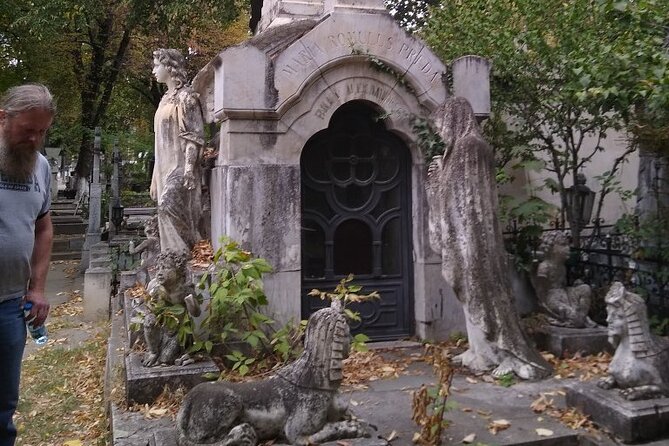
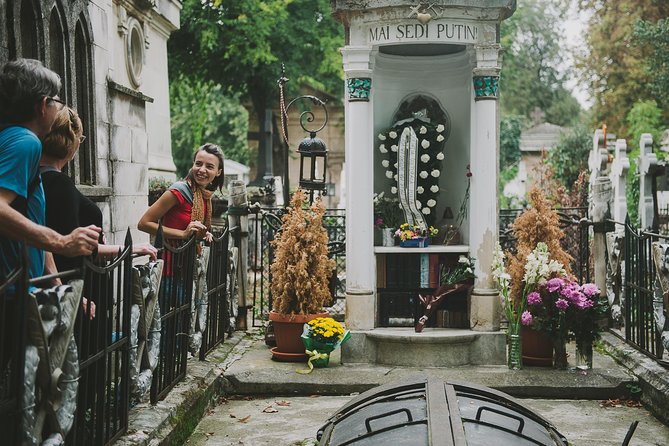
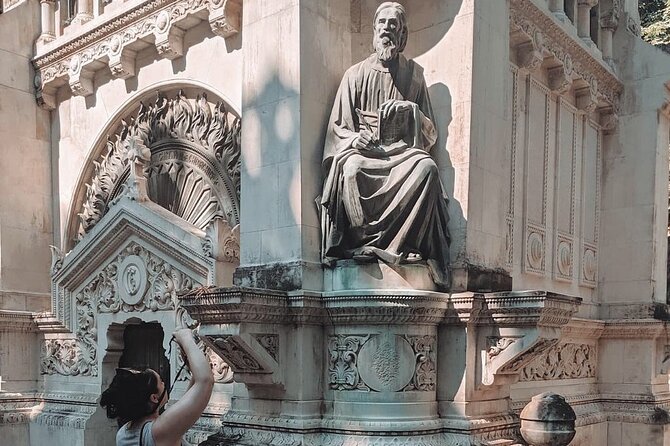
Bellu is presented as the city’s first modern cemetery. You spend about an hour walking among graves, crypts, tombstones, and memorial architecture. This is not a quick stop for a few photographs. The cemetery is the part of the tour where you have time to slow down and listen.
The stories here include love, death, unusual personalities, and mysteries that have not been fully resolved. That mix gives the cemetery a human scale. You are not only hearing about national events. You are hearing about individual lives and the strange, sad, or dramatic ways they ended.
The cemetery’s visual appeal is another reason to book the tour. Several people who have taken this experience describe Bellu as beautiful and say they could have spent much longer there. That is useful advice if you are unsure about the theme: even if the darker stories are not your main interest, the cemetery itself may be worth the visit.
The stop can also be quirky. Guides have shared tales involving unusual memorials and local characters, and one guide is remembered for stopping to feed cats along the way. A street snack is included in the tour, and one departure included a pretzel. The exact snack may vary, so do not treat it as a full meal.
You should expect uneven paths and plenty of standing. Wear shoes that are comfortable for walking, especially if you want to enjoy the cemetery without worrying about your feet.
University’s Square and the story of protest
After Bellu Cemetery, the tour returns toward the center and continues at University’s Square. This stop lasts about 20 minutes, but its subject reaches into Romania’s recent past.
The square is tied to the 1989 Revolution, when people challenged the communist regime, and to later demonstrations during the difficult years that followed. You hear about those who died in the Revolution, people who wanted Romania to move toward an occidental future, and confrontations with miners in the 1990s.
The stop also connects the square with more recent anticorruption protests. That link is important because it shows that public resistance did not end when Ceaușescu fell. The same central spaces continued to serve as places where Romanians argued over the direction of their country.
I find this part valuable because it adds political context to a city walk. You are not simply told that Romania had a revolution. You learn how public squares became stages for fear, hope, anger, and competing ideas about the future.
The short time here means the explanation will be selective rather than exhaustive. If you want a full political study of the Revolution, you would need a separate museum visit or a longer specialist tour. For a three-hour experience, though, this stop gives you a useful framework for understanding the final section at Revolution Square.
Calea Victoriei and Bucharest before communism
Calea Victoriei changes the mood. This grand central avenue becomes the setting for stories about Bucharest in the early twentieth century, before the communist regime took power.
The subject here is scandalous social history. In 1927, around 12,000 prostitutes and escorts were working in Romania. The tour introduces figures such as Zaraza, a beautiful Roma dancer remembered in stories of Bucharest’s nightlife.
This section helps correct a common mistake: treating the city’s past as only a story of dictatorship and revolution. Bucharest also had glamour, vice, music, social ambition, and sharp divisions between public respectability and private behavior.
The 40-minute walk along Calea Victoriei gives the guide space to connect personalities and places. You will likely find this part more colorful and anecdotal than the sections on political repression. It also provides a break in emotional intensity before the return to the communist period.
Still, you should know that the theme is not designed as a standard architecture walk. You may see important central streets, but the focus is on the people and scandals attached to them. If you want detailed information about buildings, art, or royal interiors, another Bucharest tour would serve you better.
A different side of the city, same short trip:
- Bucharest: Palace of Parliament Tickets and Guide
★ 4.3 · 3,182 reviews - Bucharest: Day Trip to Dracula Castle, Peles Castle & Brașov
★ 4.4 · 3,049 reviews - Bucharest to Dracula Castle, Peles Castle and Brasov Guided Tour
★ 4.5 · 2,933 reviews - Bucharest: Palace of Parliament Tickets and Guided Tour
★ 4.4 · 1,877 reviews
Revolution Square and the final days of dictatorship
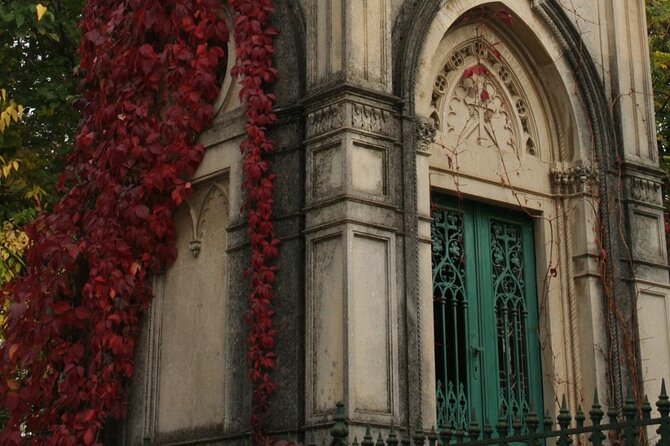
The tour ends at Piața Revoluției, or Revolution Square, in front of the Ministry of Internal Affairs. This is the most emotionally charged stop.
Here the guide explains the Romanian gulag, the harshness of Ceaușescu’s dictatorship, and the difficult daily life of the 1980s. The discussion then reaches December 22, 1989, when shootings took place and innocent people died while facing the Securitate, Romania’s secret police.
The square marks the symbolic end of communist rule. You learn how the regime fell and why this place carries such weight for Romanians. The tour’s earlier stops make this finale more effective: you have already heard about older violence, social upheaval, and the long pattern of people resisting authority.
I appreciate that the final stop is not treated as a neat victory story. The material includes victims, fear, confusion, and the cost paid by people who stood in the streets. Several guides are praised for answering questions about how this recent past still affects Romanian culture and public life.
This is also the point where the tour may feel most personal. Guides who grew up with family memories of communist Romania can bring a human perspective to the facts. The precise examples and tone will depend on who leads your group, but the subject itself calls for care and attention.
How the small group and transport shape the experience
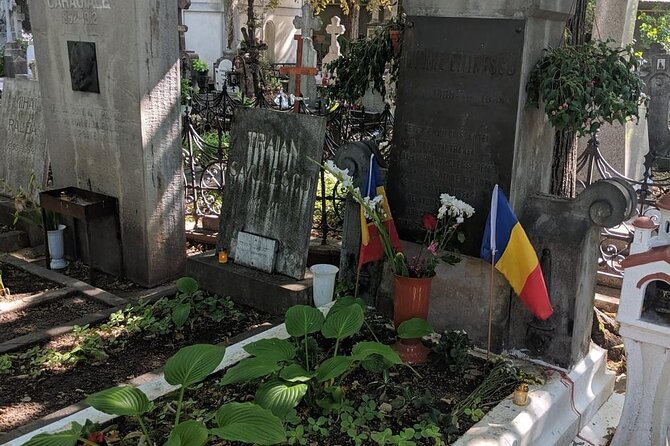
The maximum group size is 12 people. That is small enough for a conversational walk rather than a guide speaking to a crowd. You can ask about local customs, superstitions, politics, or details you notice at the cemetery.
The tour is offered in English. The guides named in the tour’s feedback include Vlad, Alex, Andra, Elena, Bogdan, Irina, Helena, and Alania. Since several guides lead the experience, you should expect a different style from one departure to another. The common thread is local storytelling, not a fixed performance delivered word for word.
The meeting point is by the Ion Luca Caragiale National Theatre at Bulevardul Nicolae Bălcescu 2. The start time is 3:00 pm, and the tour ends at Revolution Square. You do not return to the starting point, so plan your evening from the final location.
The included subway transport is practical rather than decorative. It saves you from arranging your own transfer to Bellu Cemetery and lets the tour cover more ground within three hours. The rest of the experience is on foot, with stops for stories rather than a vehicle-based city tour.
Bring water and dress for the weather. One guide made a point of keeping the group supplied with water during a 38 C heat index, but that should be viewed as good guiding rather than something to rely on every time. The tour requires good weather and may be moved or refunded if conditions force cancellation.
Is $48.39 a fair price?
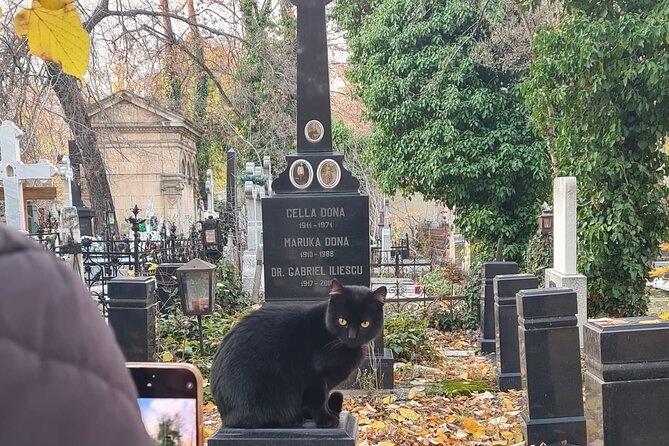
At $48.39 per person, this is not the cheapest way to walk around Bucharest. You are paying for a guide-led route, a small group, subway transport, a street snack, and access to stories that are difficult to assemble on your own.
The value is strongest if you care about explanation. Bellu Cemetery is free to enter, as are the public squares and Calea Victoriei, but the admission cost is not the main point. Without a guide, you could walk through these places and miss the personal stories, political links, and local context.
The group limit also matters. In a 12-person group, you have a better chance to hear clearly and ask questions than you would on a large city tour. The price is harder to justify if you want only a quick orientation to Bucharest’s major sights, since the tour deliberately skips the usual postcard checklist.
I would compare it with the cost of spending an afternoon on separate transport and researching Bellu Cemetery, the Revolution, and communist Romania yourself. If you already plan to visit these subjects independently, the tour may duplicate some of your plans. If not, it packs several difficult subjects into a well-defined afternoon.
Who will get the most from this Bucharest tour?
I would recommend it to adults and older teenagers interested in political change, crime stories, folklore, cemeteries, and modern European history. It is particularly useful early in your Bucharest stay because it gives later sightseeing more meaning.
You will probably enjoy it if you like asking questions and listening to a guide explain why a place matters. The tour is also a good match for people who prefer local anecdotes to a standard list of dates and monuments.
It is less suitable if you want a relaxed sightseeing walk with little emotional weight. The subjects include dictatorship, victims, political imprisonment, shootings, prostitution, and death. The humor described by several people is meant to make the material approachable, not to turn it into light entertainment.
The tour is not recommended for children aged 15 and under. You also need moderate physical fitness because of the walking, cemetery paths, subway use, and time spent standing.
What to know before booking
Book at least a little ahead if your schedule is fixed. The experience is booked on average 32 days in advance, which suggests that popular dates can fill before a last-minute visit.
Confirmation is provided when you book. Service animals are allowed, and the meeting point is near public transportation. Hotel pickup and drop-off are not included, so you need to reach the National Theatre yourself and arrange your onward plans from Revolution Square.
Free cancellation is available if you cancel at least 24 hours before the 3:00 pm start time. Cancellations or changes inside that window are not refunded or accepted. Since the tour requires good weather, a weather cancellation brings the choice of another date or a full refund.
Should you book the Darkside Tour of Bucharest?
I would book it if you want Bucharest to feel like a real city rather than a collection of attractive streets. The strongest reasons are the long Bellu Cemetery visit, the small group, and the clear connection between the 1989 Revolution and later public protests.
I would skip it if your main goal is architecture, royal history, or a broad first look at every major sight. This is a focused tour with a serious theme, not a general city introduction.
For most adult visitors with an afternoon free, the $48.39 price is fair. You get a thoughtful route, local stories, included subway transport, and a guide who can answer questions as the city’s more troubling chapters come into view. Bring good shoes, keep an open mind, and expect to leave with a more human understanding of Bucharest.
FAQ
How long does the Darkside Tour of Bucharest last?
The tour lasts approximately three hours.
What time does the tour start?
It starts at 3:00 pm.
Where does the tour begin?
The meeting point is at the Ion Luca Caragiale National Theatre, Bulevardul Nicolae Bălcescu 2, Bucharest.
Where does the tour finish?
The tour ends at Revolution Square, in front of the Ministry of Internal Affairs.
What places are visited?
The route includes Bellu Cemetery, University’s Square, Calea Victoriei, and Revolution Square.
Is subway transportation included?
Yes. Subway transportation is included in the tour.
Is a snack included?
Yes. A street snack is included. Food and drinks beyond what is specified are not included.
Is hotel pickup included?
No. Hotel pickup and drop-off are not included.
How large is the group?
The group has a maximum of 12 travelers.
Is the tour suitable for children?
The tour is not recommended for children aged 15 and under. Participants should also have a moderate level of physical fitness.
Recently added around Bucharest
- 6h Communism Tour in Bucharest with Ceausescu Mansion★ 4.5 · 6 reviews
- From Bucharest : Day Trip to Peles, Dracula’s Castle, Brasov★ 4.7 · 6 reviews
- Bears Sanctuary, Dracula Castle and Brasov City – Full Day Trip from Bucharest★ 5.0 · 6 reviews
- Dracula Private Tour★ 5.0 · 6 reviews
- Transfagarasan Road Private Day Trip from Bucharest / The Best Road in the World★ 5.0 · 6 reviews
- Bucharest : Wednesday, Dracula & Peles 3 Castles Tour 1 Day★ 4.7 · 6 reviews
- Hiking thought the best mountain villages in Romania-Private tour from Brasov★ 5.0 · 6 reviews
- Bucovina Painted Monasteries & Transylvania Tour: 4-Day Private★ 5.0 · 6 reviews
Tours, compared.
Bucharest to Dracula Castle, Peles Castle and Brasov Guided Tour
Read our review →
Transylvania and Dracula Castle Full Day Tour from Bucharest
Read our review →
Peles Castle, Bran Castle, & Brasov Old Town Tour
Read our review →
Small-group tour Bran, Rasnov, and Peles Castles
Read our review →