Reviewed · TOURS
Bucharest Old Centre Tour
Bucharest’s Old Centre packs more than 500 years of stories into a small area, from Vlad the Impaler’s former court to quiet church courtyards and old inns. This one-hour private walk gives you a useful first look at the city instead of leaving you to guess what those weathered walls once meant.
I like the clear focus on local history and the choice of morning or afternoon departure. I also like the option of hotel pickup and drop-off from selected central hotels, a real help if you are still finding your way around Bucharest.
The main drawback is the short running time. One hour is enough for orientation and key sights, but not enough for long visits inside every site or a slow exploration of the Old Centre. Wear sturdy shoes, since the old flagstones can be rough.
In This Review
- Key points to know
- Why Bucharest’s Old Centre Works Best With a Guide
- The Princely Old Court and Vlad the Impaler
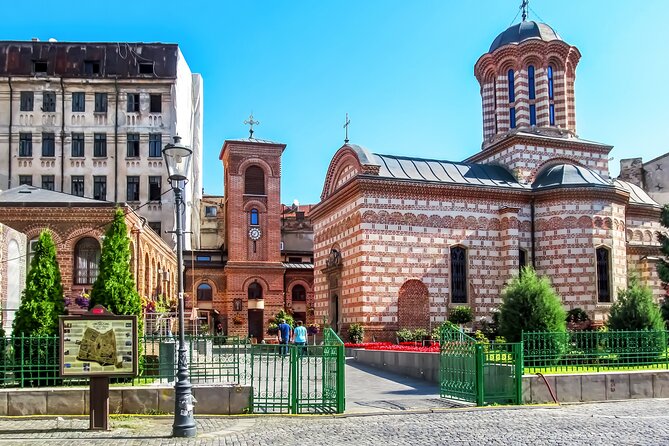
- St Anthony Church and the Wallachian Rulers
- Bucharest’s Old Inns: Gabroveni, Linden Tree, and Șerban Vodă
- Lipscani Street, the Old Centre’s Main Thread
- The National History Museum and Former Post Office
- Romania’s National Bank and the Șerban Vodă Ruins
- Stavropoleos Monastery, Built in 1724
- What the One-Hour Format Really Gives You
- Price, Private Format, and Who Gets the Best Value
- Booking and Weather Details
- Should You Book the Bucharest Old Centre Tour?
- FAQ
- How much does the Bucharest Old Centre Tour cost?
- How long does the tour last?
- Is hotel pickup available?
- Where does the tour start and finish?
- What sights are included on the walk?
- Is this a private tour?
- Can I cancel if my plans change or the weather is bad?
Key points to know
- Vlad the Impaler’s former residence: See the ruins of the Old Princely Palace, one of Bucharest’s oldest buildings.
- A compact historic walk: Cover Lipscani Street, old inns, St Anthony Church, the National History Museum, the National Bank, and Stavropoleos Monastery.
- A private experience: Only your group takes part, which allows you to ask questions and set the pace within the one-hour format.
- A local guide’s perspective: Alina has led this walk with personal ties to the area, bringing its different eras to life with humor and local detail.
- Easy scheduling: Pick a morning or afternoon departure, with pickup available from selected central hotels.
- Good low-cost orientation: At $16.77 per person, the tour can be a sensible introduction before you explore the Old Centre on your own.
Why Bucharest’s Old Centre Works Best With a Guide
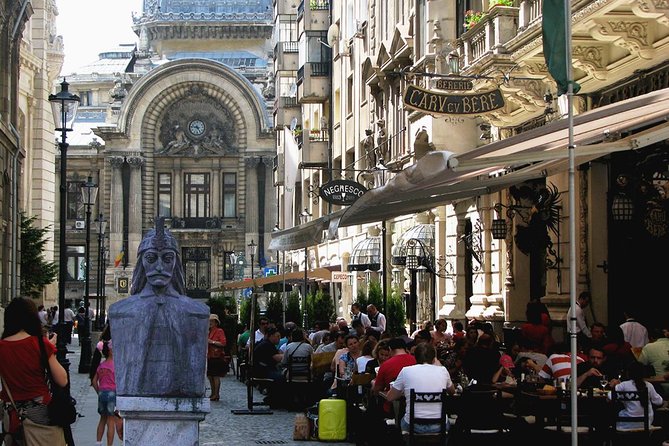
Bucharest’s Old Centre is easy to walk through and surprisingly hard to read. A grand bank, a plain wall, a small church, or a pile of stones may mark an important chapter in the city’s past, but there is often little on-site explanation.
That is where this tour earns its modest price. Your guide links the buildings together, explaining how the area developed around trade, rulers, religious life, inns, and government. You are not simply ticking off sights. You are learning why this tight cluster became the heart of old Bucharest.
The walk is also a useful first-day activity. The starting point is the National Museum of Romanian History on Calea Victoriei, a central and easy-to-identify location. From there, the route takes you into the Old Centre, ending back at the meeting point rather than leaving you to find your way across town.
Because the tour is private, you have more room to ask about a particular period or building. That matters in Bucharest, where the city’s past includes Wallachian rulers, commercial inns, religious foundations, and later national institutions, all within a short walk.
A few more Bucharest tours worth a look
- Bucharest: Dracula’s Castle, Peles Castle, & Brasov Old Town
★ 4.5 · 17,858 reviews - Bucharest: Dracula Castle, Peles Castle & Brasov Old Town
★ 4.6 · 10,891 reviews - Bucharest: Dracula’s Castle, Peleș Castle & Brașov Day Trip
★ 4.5 · 5,919 reviews
The Princely Old Court and Vlad the Impaler
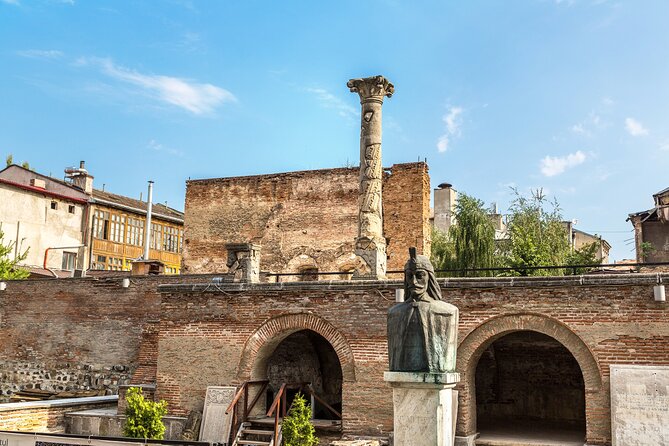
The ruins of the Old Princely Palace are the natural anchor of the tour. This was one of the earliest major buildings in Bucharest and a former residence of Vlad the Impaler, the Wallachian ruler whose name later became linked with the Dracula legend.
The value here is not just the connection to Vlad. The ruins help you picture Bucharest as a seat of power rather than only a modern capital. Your guide explains what this court meant to the rulers of Wallachia and how the area around it became central to the city.
Do not expect a fully intact palace. You are seeing remains, not a grand reconstructed residence. That can be a drawback if you prefer complete buildings, but it also makes the guide’s explanation more important. Without context, the site can look modest. With context, it becomes one of the most useful stops on the walk.
The Princely Old Court also helps set the tone for the rest of the route. Bucharest’s story is not told through one perfect monument. It appears in fragments, ruins, churches, inns, and streets that have changed purpose over time.
St Anthony Church and the Wallachian Rulers
St Anthony Orthodox Church sits in the heart of the Old Centre and is closely connected with the rulers of Wallachia. Its position makes it an especially useful stop: you are looking at a functioning religious landmark in the same historic area once shaped by the princely court.
Your guide explains the church’s place in the life of the ruling family and the wider city. This adds a human and religious side to the political story introduced at the Old Court.
The stop is likely brief, given the one-hour format. You should think of it as a focused explanation from outside or during a short visit, not a long church tour. Dress and behave respectfully if you enter, since this is an Orthodox place of worship rather than a museum display.
I like this part of the route because it shows how close power and religion were in old Bucharest. The church is not treated as an isolated sight. It fits into the larger story of rulers, merchants, worship, and daily life.
Bucharest’s Old Inns: Gabroveni, Linden Tree, and Șerban Vodă
Some of the most interesting stops are the old inns. The route introduces the Gabroveni Inn, the Linden Tree Inn, Bucharest’s oldest and most famous inn, and the ruins of the former Șerban Vodă Inn.
These names can blur together on a short walk, so listen for the practical role each place played. Inns were not only places to sleep. They served merchants, offered space for trade, and helped connect Bucharest with the wider region.
The old inn stories make the Old Centre feel less like a collection of monuments and more like a working district. Goods arrived, people met, deals were made, and travelers passed through. That commercial life shaped the streets you see today.
The former Șerban Vodă Inn is especially useful as a reminder that much of Bucharest’s past survives only in traces. You will see ruins near the National Bank, not a complete complex. The contrast between the remains and the imposing modern institution nearby gives the stop its interest.
The itinerary also includes an ancient inn in the oldest part of Bucharest. Since the tour lasts about an hour, the guide will need to keep these explanations moving. If you have a strong interest in historic architecture or old trade routes, make a note of the inn names and return later for a slower look.
A different side of the city, same short trip:
- Bucharest: Palace of Parliament Tickets and Guide
★ 4.3 · 3,182 reviews - Bucharest: Day Trip to Dracula Castle, Peles Castle & Brașov
★ 4.4 · 3,049 reviews - Bucharest to Dracula Castle, Peles Castle and Brasov Guided Tour
★ 4.5 · 2,933 reviews - Bucharest: Palace of Parliament Tickets and Guided Tour
★ 4.4 · 1,877 reviews
Lipscani Street, the Old Centre’s Main Thread

Strada Lipscani is the heart of the Old Centre and one of the easiest places to understand the area’s present-day character. The street connects the old commercial story with Bucharest as you see it now.
The tour gives you a sense of Lipscani’s position within the district rather than treating it as a stand-alone photo stop. Your guide can point out how the street relates to the nearby court, inns, churches, museum, and bank.
Expect foot traffic and a lively urban setting. The Old Centre is not a quiet open-air museum. Streets are shared by pedestrians and active businesses, and the route may feel more crowded than the church or ruin stops.
That is part of its appeal, but it also affects the pace. You may need to stay close to your guide, especially around busy corners. The private format helps, since your group does not need to keep up with a large crowd.
I like Lipscani as the middle of the walk because it gives you a break from dates and rulers. You can see how the historic district functions as part of modern Bucharest while still retaining its old street pattern and important buildings.
The National History Museum and Former Post Office
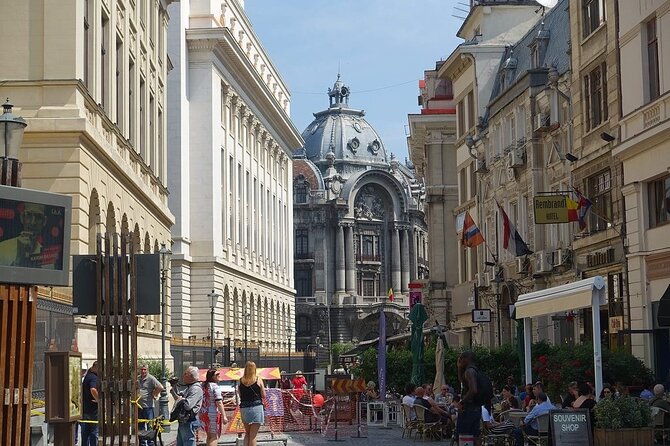
The National Museum of Romanian History occupies the former Post Office building on Calea Victoriei. The tour explains the building’s past and its role as one of Bucharest’s major historic institutions.
This is an exterior history stop, not a separate museum visit. Admission to the museum is not listed among the inclusions, so you should not expect time for a full indoor visit during the walk.
Even so, the building provides useful context. The route moves from medieval and princely Bucharest toward the institutions of the modern Romanian state. That change in scale is important: you begin with ruins and churches, then encounter a large civic building tied to communication and national history.
If you want to visit the museum itself, plan a separate block of time. The walking tour is designed to orient you, not replace a museum visit.
Romania’s National Bank and the Șerban Vodă Ruins
The National Bank of Romania gives the tour another shift in tone. Its grand exterior represents the financial and institutional side of the capital, while nearby ruins of the former Șerban Vodă Inn point back to an older commercial district.
This pairing is one of the more effective parts of the route. You see how Bucharest changed from a city of princely courts and merchant inns into a national capital with major financial institutions.
The guide’s explanation is particularly valuable here because the visual clues are not self-explanatory. A bank may look like a grand official building, while the inn ruins may look like scattered masonry. The story connects them.
Do not expect access to every building. The experience is a walking tour of the district, with attention to history and landmarks. The value comes from seeing the sites in relation to one another.
Stavropoleos Monastery, Built in 1724
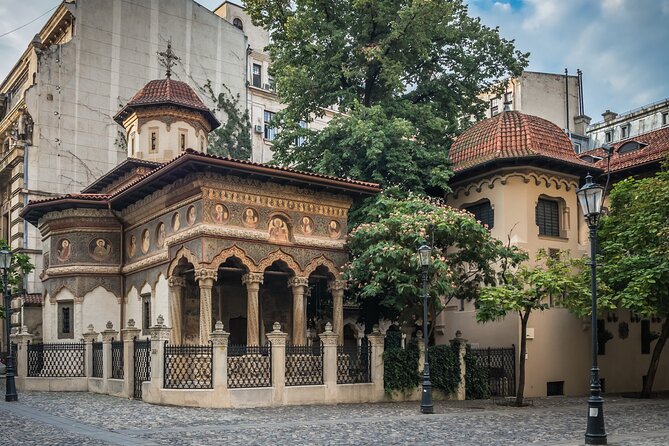
Stavropoleos Monastery is the final major landmark listed on the route. Built in 1724, it brings the walk back to religious architecture and the artistic side of Bucharest’s past.
The monastery has a fascinating history, and its age gives it a different feel from the grand civic buildings on Calea Victoriei. It is a reminder that the Old Centre’s identity rests not only on rulers and commerce, but also on religious foundations and places of worship.
The visit is likely a short introduction rather than an extended architectural study. You should allow extra time on another visit if you want to sit quietly, examine details, or explore beyond the guide’s explanation.
Stavropoleos also makes a fitting close to the historic portion of the route. After seeing the court, church, inns, street, museum, bank, and ruins, you have a more complete picture of the district’s many layers.
What the One-Hour Format Really Gives You
One hour is both the strength and limit of this experience. It keeps the tour affordable and easy to fit into a busy city break, but it requires a brisk pace.
You will get a guided introduction to the Old Centre and its main stories. You will not get lengthy stops at every building, a full museum visit, a meal, or a relaxed architectural sketching session.
I would use this tour as an orientation walk near the start of your Bucharest stay. Afterward, you can return to the places that caught your interest, especially the Old Court, Stavropoleos Monastery, the old inns, or the National History Museum.
The morning and afternoon departure choices make the short format practical. You can fit the walk around a museum visit, a meal, or other sightseeing. The selected hotel pickup and drop-off option can also save time if your accommodation is centrally located.
Food and drinks are not included. That is hardly a problem for an hour-long walk, since the Old Centre offers plenty of places to stop before or after, but you should plan your own refreshments.
Price, Private Format, and Who Gets the Best Value
At $16.77 per person, this is priced as an affordable introduction rather than a full-day history tour. The value is strongest if you want a local explanation of the Old Centre before exploring on your own.
The private format improves the value. You are not sharing the hour with a large group, and you can ask questions about the buildings or periods that interest you. The trade-off is that a private one-hour tour cannot cover every detail in depth.
A guide named Alina has been praised for her local background, humor, and ability to explain different eras of Bucharest. She grew up in the area and has shown visitors places they might otherwise miss. Guide assignments can vary, so you should not assume she will lead every departure, but her approach gives you a useful idea of the personal detail this experience can offer.
Most people can take part, though children must be accompanied by an adult. Wear sturdy shoes. The flagstones are an important practical detail, and thin soles or unstable footwear could make the walk less comfortable.
The tour is best suited to:
- First-time visitors who want a quick introduction to central Bucharest
- History-minded visitors who prefer stories connected to real places
- Couples, families, or small groups who value a private guide
- People with only one free hour
- Visitors staying at selected central hotels who want pickup
- Anyone who plans to explore the Old Centre independently afterward
It is less suited to you if you want a long museum visit, a food experience, or a slow architectural tour. It also may feel too brief if you already know the Old Centre well.
Booking and Weather Details
The tour is often booked about 30 days ahead, so reserve early if you need a specific morning or afternoon time. Confirmation is normally provided at booking, though bookings made within one day of departure are confirmed as soon as possible and depend on availability.
You can cancel for a full refund up to 24 hours before the start time. Changes or cancellations made less than 24 hours before departure are not accepted for a refund, and cut-off times follow local time.
The experience requires good weather. If poor weather causes a cancellation, you will be offered another date or a full refund.
Pickup and drop-off are offered only from selected hotels. The stated meeting point is the National Museum of Romanian History, at Calea Victoriei 12, and the activity ends back there.
Should You Book the Bucharest Old Centre Tour?
I would book this tour if you want a short, private orientation with real historical context. The combination of the Old Princely Court, Vlad the Impaler’s connection, St Anthony Church, the old inns, Lipscani Street, the National Bank, and Stavropoleos Monastery gives you a strong introduction for $16.77.
The main question is not price. It is pace. You need to be happy with a brisk one-hour walk and understand that the landmarks receive explanations rather than long visits.
Book it near the beginning of your Bucharest stay, wear sturdy shoes, and use the guide’s suggestions to decide where you want to return. If Alina leads your walk, expect a personal connection to the area and lively explanations of its different eras. If you want a practical first look at the Old Centre without committing half a day, this is a sensible choice.
FAQ
How much does the Bucharest Old Centre Tour cost?
The tour costs $16.77 per person.
How long does the tour last?
The walking tour lasts approximately one hour.
Is hotel pickup available?
Yes. Pickup and drop-off are offered from selected central hotels only.
Where does the tour start and finish?
The tour starts at the National Museum of Romanian History, Calea Victoriei 12, Bucharest. It ends back at the meeting point.
What sights are included on the walk?
The route includes the Old Princely Court, the former Princely Palace ruins, St Anthony Orthodox Church, historic inns including Gabroveni Inn and the Linden Tree Inn, Lipscani Street, the National Bank of Romania, the former Șerban Vodă Inn ruins, the National History Museum building, and Stavropoleos Monastery.
Is this a private tour?
Yes. Only your group participates in the activity.
Can I cancel if my plans change or the weather is bad?
You can cancel up to 24 hours before the start time for a full refund. If poor weather causes the tour to be canceled, you will be offered a different date or a full refund.
Recently added around Bucharest
- RiverCruise Exclusive – Private Transfer from or to Giurgiu Port/Bucharest Hotel★ 3.5 · 3 reviews
- From Bucharest: Discovery at Europe’s Largest Salt Mine★ 5.0 · 3 reviews
- Cluj Napoca: Climbing or Hiking Experience in Turda Canion★ 5.0 · 3 reviews
- Private-Red Patrol Bucharest Flea Market Tour with a Romanian car★ 5.0 · 3 reviews
- Bucharest: City Highlights Guided Walking Tour★ 5.0 · 3 reviews
- Probably the Best Restaurant and Wine Cellar near Bucharest★ 4.5 · 3 reviews
- Private 8 Day Romania UNESCO Tour★ 5.0 · 3 reviews
- Bucharest in a nutshell – half day private walking tour★ 5.0 · 3 reviews
Tours, compared.
Bucharest to Dracula Castle, Peles Castle and Brasov Guided Tour
Read our review →
Transylvania and Dracula Castle Full Day Tour from Bucharest
Read our review →
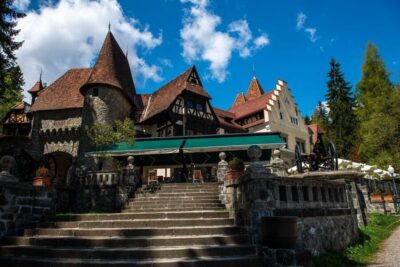
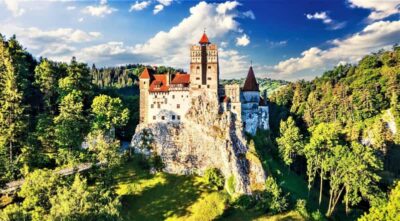
Peles Castle, Bran Castle, & Brasov Old Town Tour
Read our review →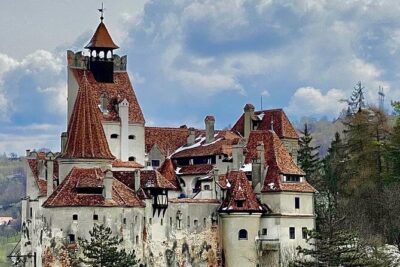
Small-group tour Bran, Rasnov, and Peles Castles
Read our review →