Reviewed · TOURS
Bucharest Discovery morning tour
Bucharest’s story comes at you in sharp contrasts: ornate churches beside Soviet-style apartments, French-inspired boulevards beside communist monuments, and royal memory beside the scars of dictatorship. This 2.5-hour walking tour gives you a clear first look at the capital without burying you in dates.
I like the route’s two-part character: Victory Street and the Old Town bring out Bucharest’s elegant, older face, while Revolution Square and Constitution Square explain the political forces that reshaped it. I also like the small maximum of 12 people and the guide’s reported perfect English. The main consideration is simple: this is a brisk city orientation, not a museum tour, so you will see major buildings from outside rather than spend time inside them.
In This Review
- Key points at a glance
- Why this route works for a first morning in Bucharest
- Revolution Square and the weight of 1989
- The Palace of Telephones, an unexpected city landmark
- Victory Street and the Little Paris years
- Old Town, where the route slows down
- Constitution Square and the communist mark
- Architecture is the real connecting thread
- What the $46.86 price gets you
- Timing, pace, and practical preparation
- Who will get the most from this Bucharest walk
- Should you book it?
- FAQ
- How long is the Bucharest Discovery morning tour?
- What time does the tour start?
- Where does the tour begin?
- Where does the tour finish?
- Is the tour conducted in English?
- What is included in the price?
- Is free cancellation available?
Key points at a glance
- Revolution Square puts Romania’s modern past under your feet, with stories of kings and dictators tied to the very place where Romanians changed their country’s course.
- The Palace of Telephones adds an unusual architectural stop, giving you a closer look at one of Bucharest’s most recognizable buildings.
- Victory Street explains the Little Paris nickname, with churches, theaters, and grand old facades recalling the city’s La Belle Époque.
- Old Town supplies the best wandering time, as its twisting streets connect Ottoman-era stories with French architectural influence.
- Constitution Square frames the communist legacy, including the enormous Palace of Parliament, described as the largest building in Europe.
- The small group and English-language guide matter, especially when you are learning the city’s political and architectural vocabulary for the first time.
Why this route works for a first morning in Bucharest
Bucharest can be hard to read at street level. One block may suggest a royal capital, the next a communist-planned city, and another a worn but lively commercial center. A route like this helps you connect those pieces instead of treating them as unrelated sights.
The walk begins at the equestrian statue of Carol I in Sector 1 at 11:00 am. That is a useful starting point because the tour moves through several layers of the capital’s story before finishing in Old Town. You get an overview first, then a practical sense of where you may want to return later.
The advertised duration is approximately 2 hours and 30 minutes, while the route is also described as a three-hour walking tour. I would allow close to three hours in your schedule. The difference may reflect normal changes in speaking time, group pace, or stops, and you do not want to book a tight lunch or train connection immediately afterward.
Your guide leads in English, and the group is limited to 12 people. That is small enough for a more personal walk than a large coach-style outing, while still keeping the price at a moderate $46.86 per person. A street snack is included. Food and drinks beyond that are not, so plan to buy anything else you need during or after the walk.
A few more Bucharest tours worth a look
- Walking Tour of Alternative Bucharest-Morning Street art tour
★ 5.0 · 44 reviews
Revolution Square and the weight of 1989
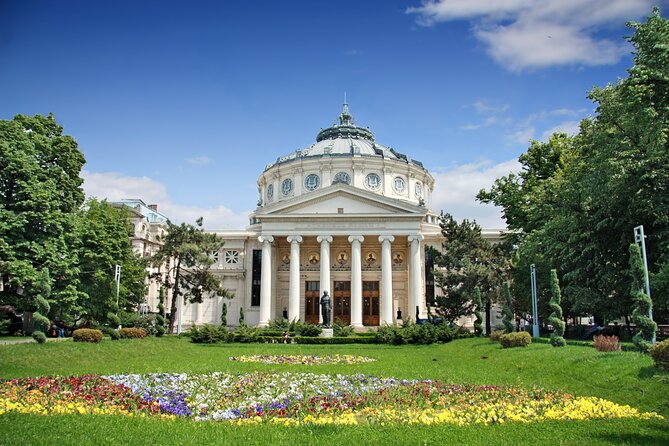
The first stop is Revolution Square, or Piața Revoluției, for about 20 minutes. This is not just a convenient open space. It is where the tour begins to explain Romania through power, protest, monarchy, dictatorship, and public change.
You will hear stories connected with kings and dictators, with the focus on the moments when Romanians took their future into their own hands. The value here is not a long list of monuments. It is the physical setting. The square lets you connect national events to a real patch of pavement rather than learning them as distant political facts.
This stop should suit you if you want historical context before admiring buildings. It may feel brief if you are hoping for a detailed account of every structure around the square, but the short visit keeps the overall walk moving. You will have more time later for streets and facades.
Wear comfortable shoes from the start. Even though no single stop is especially long, the tour keeps you on foot across central Bucharest, and there is no hotel pickup or drop-off to shorten the route.
The Palace of Telephones, an unexpected city landmark
The next stop lasts about 15 minutes at the Palace of Telephones. Its appeal is that it is not the obvious postcard choice. The guide uses the building to answer practical historical questions: who built it, why it was needed, and how it became an icon of Bucharest.
That kind of stop improves a walking tour. Famous churches and palaces are easy to notice, but a telecommunications building can reveal how the city modernized and how its architecture reflected changing ambitions. The Palace of Telephones also gives the route some variety before it reaches the grander sweep of Victory Street.
The stop is outside, with free admission. Do not expect an interior visit or a long architectural lecture. Instead, listen for the building’s place in the city’s story and use it as a reminder that Bucharest’s identity is not limited to medieval churches and royal monuments.
Victory Street and the Little Paris years
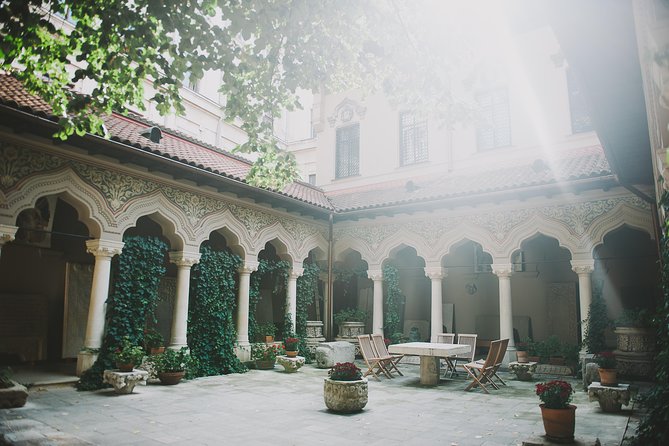
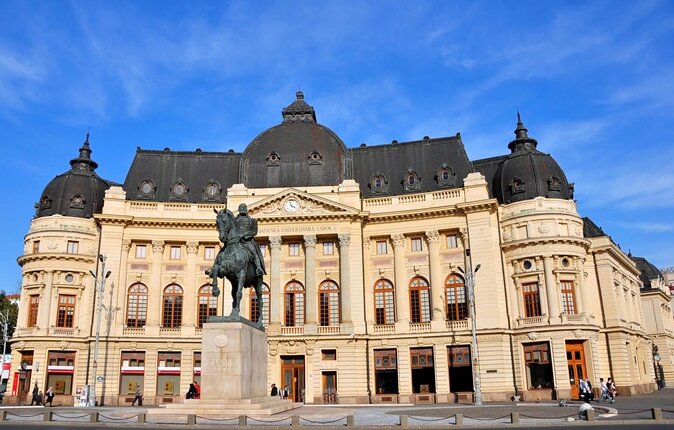
Calea Victoriei, or Victory Street, receives about 30 minutes. This is where Bucharest’s old nickname, Little Paris, begins to make sense. The street carries the mood of La Belle Époque through its grand architecture and long connection with the city’s cultural and political life.
The route includes the beautiful Kretulescu Church and other landmarks along Victory Street. Kretulescu is especially useful as a visual pause. Its ornate church design offers a strong contrast with the more formal civic buildings and later apartment blocks you see elsewhere in Bucharest.
I like this part of the walk because it teaches you to compare styles instead of viewing each building alone. Bucharest’s appeal comes from the collision of influences. French-inspired architecture, old churches, theaters, and Soviet-era construction all share the same city center.
The phrase Little Paris can sound like a tidy slogan, but the street is more interesting when you treat it as one chapter rather than the whole story. Victory Street shows the city’s European ambitions, while later stops explain what war, authoritarian rule, and rebuilding did to that image.
Thirty minutes is enough to get a strong visual introduction. It is not enough for a detailed survey of every facade, so take mental notes of buildings that catch your eye. If you want photographs, this is one of the sections where a few extra seconds at each stop would be useful. The group pace may not allow a long photo session.
A different side of the city, same short trip:
- Bucharest: Dracula’s Castle, Peles Castle, & Brasov Old Town
★ 4.5 · 17,858 reviews - Bucharest: Dracula Castle, Peles Castle & Brasov Old Town
★ 4.6 · 10,891 reviews - Bucharest: Dracula’s Castle, Peleș Castle & Brașov Day Trip
★ 4.5 · 5,919 reviews - Bucharest: Palace of Parliament Tickets and Guide
★ 4.3 · 3,182 reviews
Old Town, where the route slows down
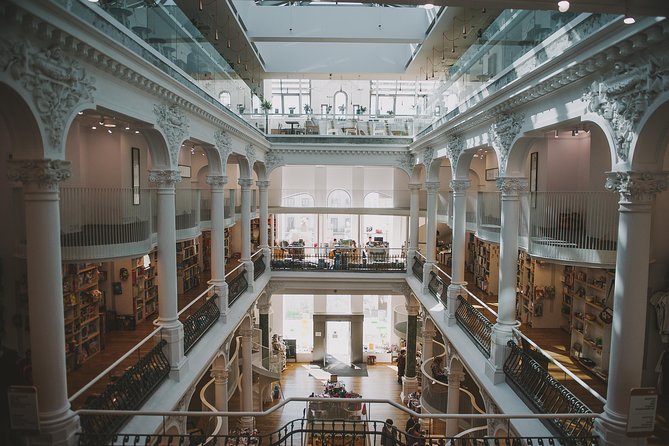
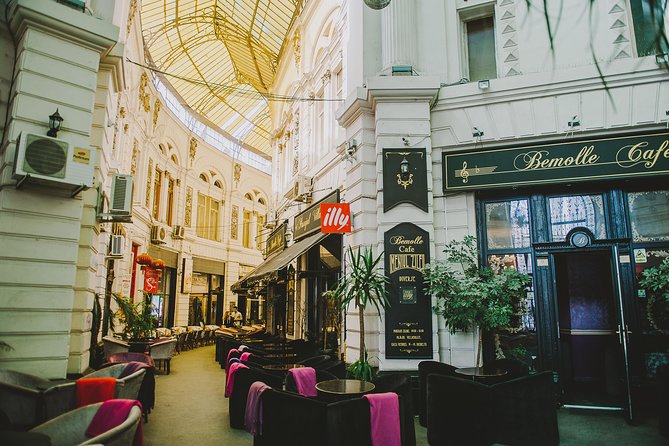
The tour then spends about 45 minutes in Old Town, its longest stop. That makes sense. This is the part of Bucharest where you can best enjoy the act of walking, with meandering streets, old facades, churches, and layers of commercial and political history packed close together.
The guide connects Ottoman invasions and pashas with French architectural influence and the later development of the city. You will also hear stories of Transylvanian princes, which broadens the tour beyond Bucharest’s immediate streets and places the capital in the wider history of Romania.
Old Town is a good place to listen for connections. Bucharest was not shaped by one culture or one era. The route presents the center as a place altered by outside powers, local rulers, royal ambition, and modern political upheaval. That helps you understand why the city can feel visually uneven but historically full.
The longer stop also gives you a chance to get your bearings. Since the tour ends here, you can continue exploring after the guide leaves, choose a meal, or return to a street that interested you. The end point is listed as Old Town rather than the original meeting point, which saves you from retracing the full route.
Old Town is not presented as a private attraction with an entrance ticket. The tour uses the streets as its setting, and all listed stops have free admission. That keeps the focus on interpretation and orientation rather than access to interiors.
Constitution Square and the communist mark
The final major stop is Constitution Square, or Piața Constituției, for about 30 minutes. Here the mood changes again. You face the Palace of Parliament, described as the largest building in Europe, and hear how the communist dictator’s most ambitious project changed Bucharest and Romania.
This is the route’s strongest lesson in scale. Victory Street shows a capital built through elegance and European influence. Constitution Square shows what happens when a ruler reshapes a city around power, control, and monumental ambition.
The visit is valuable even if you have little interest in architecture. The Palace of Parliament is not simply a large building to photograph. It represents the human and urban cost of a vast communist project, and the guide’s explanation gives the structure a political meaning that a quick glance cannot provide.
The square is also an effective counterpoint to Revolution Square. Early in the walk, you hear about people taking control of their fate. Here, you see the physical mark left by the regime they challenged. Together, the two stops give the tour a clear beginning and end to its political thread.
The available information does not include an interior visit to the Palace of Parliament. Treat this as an exterior viewing and historical explanation. If you want to tour the building inside, you will need to arrange that separately rather than assume it forms part of this walk.
Architecture is the real connecting thread
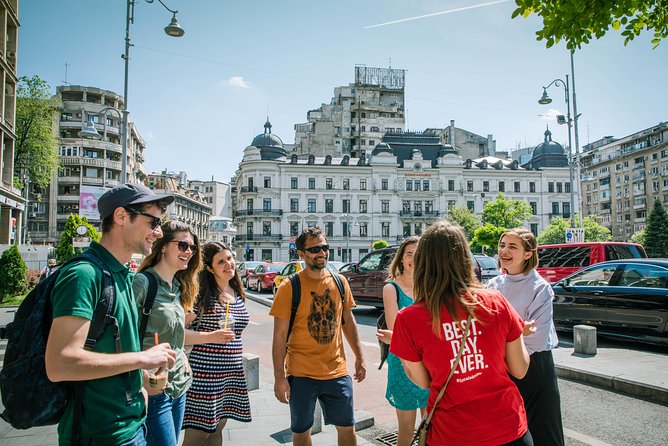
The tour’s main subject is not one monument. It is Bucharest’s changing architectural language. You move from ornate Old World churches to grand streets, from the Palace of Telephones to Soviet-style apartments, and finally to the monumental scale of communist planning.
That range makes the route useful for people who are still learning how to look at Bucharest. Instead of asking if one building is beautiful, you start asking what period it represents and what purpose it served. A church, theater, telephone exchange, apartment block, and government monument each tell a different story about the city that built them.
I also appreciate that the route does not present Bucharest as only picturesque. The communist legacy is central, not an uncomfortable footnote. You will see beauty, but you will also see planning decisions that changed neighborhoods and left a permanent mark on the capital.
The balance matters. A tour that focused only on Old Town might leave you with a charming but incomplete impression. A tour focused only on communist architecture could miss the city’s royal and Belle Époque character. This walk gives each period a place.
What the $46.86 price gets you

At $46.86 per person, the price is reasonable if you want a guided orientation rather than a self-guided stroll. You are paying for a local guide, a compact route through several important areas, historical explanation in English, and a small group capped at 12 people. The included street snack is a modest extra, not the main reason to book.
The value depends on how you use the information. If you only want to photograph buildings and move on, you may find the cost harder to justify because the sights are viewed from public streets and there are no listed entrance tickets. If you want the city’s royal, Ottoman, French, and communist chapters explained as one connected story, the price makes more sense.
A private tour would normally offer more control over stops and pace, but this small-group format gives you some of that intimacy without the full cost of going alone. The group size also helps with hearing the guide, asking questions, and staying together on city streets.
Group discounts are available, which may improve the value for families or friends booking together. Since food and drinks are not included beyond the street snack, keep a little extra time and money for refreshments after reaching Old Town.
Timing, pace, and practical preparation
The 11:00 am start is convenient if you want a relaxed morning. It gives you time to reach central Bucharest without an early alarm, though you should still arrive at the equestrian statue of Carol I with enough time to find the meeting point.
The tour finishes in Old Town, not back at the start. That is a useful arrangement for a morning activity because you can continue straight into lunch, more sightseeing, or independent wandering. It also means you should not leave belongings or plans that require returning to the starting point immediately.
Comfortable walking shoes are recommended. The route lasts around 2.5 to 3 hours and includes several substantial street sections. Most people can participate, and service animals are allowed. Public transportation is nearby, but hotel pickup and drop-off are not included.
The mobile ticket is practical for an urban walking tour. Keep your phone charged and make sure you can access the booking confirmation before arriving. The exact guide’s name is not supplied in the tour details, but the guide conducts the walk in English. One published comment specifically praised the guide’s perfect English, which matters when the subject includes political terms, architectural periods, and place names.
Free cancellation is available if you cancel at least 24 hours before the local start time. Changes or cancellations inside that window are not accepted for a refund, so check your plans before the final day.
Who will get the most from this Bucharest walk
I would recommend this tour to a first-time visitor who wants a fast but meaningful introduction to central Bucharest. It suits you especially well if you like history explained through streets and buildings rather than through a long indoor presentation.
It is also a good fit if you have only one morning or want to decide which parts of the city deserve a second visit. The route covers enough ground to show you the capital’s range, then leaves you in Old Town, where you can continue under your own steam.
Families and small groups may appreciate the maximum of 12 people and the group discount. The street snack adds a little interest for younger participants, though the walk still depends on everyone being comfortable on foot for several hours.
You may want something else if your main goal is entering museums, touring the Palace of Parliament inside, or spending a long time at one landmark. This experience is about connections, context, and orientation. It offers breadth instead of extended visits.
Should you book it?
Book it if you want Bucharest explained through its contrasts: royal squares, Victory Street’s Little Paris style, Old Town’s winding center, and the communist scale of Constitution Square. The combination gives you a useful mental map and a stronger sense of why the city looks the way it does.
Skip it if you prefer to explore entirely alone or need a very slow pace for photography. For most first-time visitors, though, the small group, English guide, practical route, and strong focus on Bucharest’s political and architectural past make $46.86 a fair price for a morning orientation.
FAQ
How long is the Bucharest Discovery morning tour?
The experience lasts approximately 2 hours and 30 minutes. It is also described as a three-hour walking tour, so allow close to three hours when planning your day.
What time does the tour start?
The tour starts at 11:00 am.
Where does the tour begin?
The meeting point is the equestrian statue of Carol I in Sector 1, Bucharest, Romania.
Where does the tour finish?
The tour ends in Old Town, Bucharest.
Is the tour conducted in English?
Yes. The experience is offered in English, and an available comment specifically praised the guide’s perfect English.
What is included in the price?
The price includes a local guide and a street snack. Additional food and drinks are not included unless specifically stated.
Is free cancellation available?
Yes. You can cancel for a full refund up to 24 hours before the local start time. Cancellations or changes made less than 24 hours before the start are not accepted for a refund.
Recently added around Bucharest
- 6h Communism Tour in Bucharest with Ceausescu Mansion★ 4.5 · 6 reviews
- From Bucharest : Day Trip to Peles, Dracula’s Castle, Brasov★ 4.7 · 6 reviews
- Bears Sanctuary, Dracula Castle and Brasov City – Full Day Trip from Bucharest★ 5.0 · 6 reviews
- Dracula Private Tour★ 5.0 · 6 reviews
- Transfagarasan Road Private Day Trip from Bucharest / The Best Road in the World★ 5.0 · 6 reviews
- Bucovina Painted Monasteries & Transylvania Tour: 4-Day Private★ 5.0 · 6 reviews
- Bucharest : Wednesday, Dracula & Peles 3 Castles Tour 1 Day★ 4.7 · 6 reviews
- Hiking thought the best mountain villages in Romania-Private tour from Brasov★ 5.0 · 6 reviews
Tours, compared.
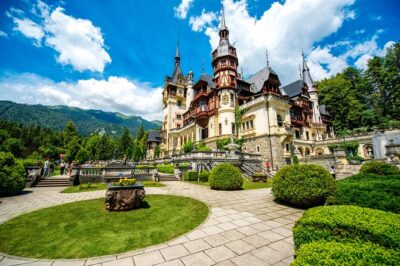
Bucharest to Dracula Castle, Peles Castle and Brasov Guided Tour
Read our review →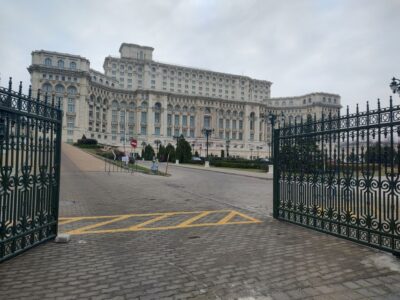
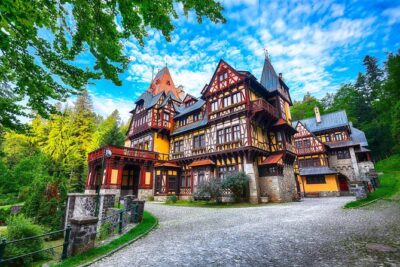
Transylvania and Dracula Castle Full Day Tour from Bucharest
Read our review →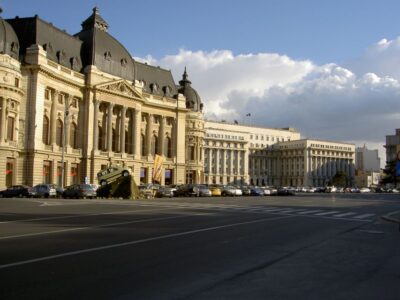
Peles Castle, Bran Castle, & Brasov Old Town Tour
Read our review →
Small-group tour Bran, Rasnov, and Peles Castles
Read our review →