Reviewed · PRIVATE
8 Days Private Romania Tour from Bucharest
Romania reveals itself slowly, and this eight-day private tour takes the long way around. You move from Wallachian monasteries and Dracula country to Maramures villages, Bukovina’s painted churches, the Bicaz Gorges, and Transylvania’s medieval towns. There is plenty of scenery, but also plenty of time in the car.
I like the private format, since Nicolas, the English-speaking guide-driver, can adjust the daily plan for your family or friends. I also like the mix of major sights and unusual stops, from the Merry Cemetery to the Popa Museum and a museum devoted to decorated eggs.
The catch is simple: you will drive a lot. Several days pack in multiple stops, and some mountain roads are slow or seasonal. The price also excludes your hotels, meals, drinks, and entrance fees, so your final cost will be higher than the advertised $2,825.81 per person.
In This Review
- Key points to know before booking
- Why this tour works for seeing Romania
- Day 1: Curtea de Arges, Poienari, Sibiu, and the Transfagarasan
- Day 2: Turda’s salt mine and the wooden church of Surdesti
- Day 3: The Merry Cemetery and Romania’s communist past
- Day 4: Maramures woodwork, Tihuța Pass, and painted village houses
- Day 5: Bucovina’s painted monasteries
- Day 6: Bicaz Gorges, Red Lake, and folk art
- Day 7: Sighișoara, Viscri, and Brașov
- Day 8: Bran, Peleș, and Sinaia
- What the $2,825.81 price really covers
- Who should take this Romanian road trip
- Should you book the eight-day Romania tour?
- FAQ
- Is this a private tour?
- Who is the guide?
- Are hotels included?
- Are entrance fees included?
- Is food included?
- Can I cancel for a full refund?
Key points to know before booking
- Eight days, one private vehicle: Only your own group travels together, with a car or minibus, fuel, parking, tolls, and wireless internet included.
- Nicolas guides the journey: He is described as punctual, friendly, well prepared, and fond of adding jokes to the long drives.
- Romania beyond Bucharest: The route reaches Maramures, Bucovina, Moldavia, and Transylvania rather than staying around the capital.
- Mountain roads shape the trip: The Transfagarasan Highway and Bicaz Gorges are major highlights, but driving times can be long.
- Culture comes in many forms: You will see monasteries, folk art, communist-era history, royal architecture, fortified churches, and local food.
- Plan for extra costs: Accommodation, food, drinks, and all listed admission fees are your responsibility.
Why this tour works for seeing Romania

Romania is not a country you understand well from one city. Bucharest gives you a useful start, but the strongest experiences lie along the mountain roads and in the smaller towns. This tour connects those places in one ambitious loop.
The route is especially good if you want variety. One day brings a royal monastery, a cliff-top fortress, a grand Transylvanian square, and a dramatic highway. Another moves from an underground salt mine to a university city and a wooden church. Later, you shift from a cemetery decorated with comic poems to a museum about communist imprisonment.
That range is the tour’s real strength. You are not simply checking off castles. You are seeing how religion, rural craft, royal ambition, foreign rule, political oppression, and village life have shaped Romania.
The guide-driver matters here. Nicolas is with you throughout, and the private setup allows changes after the tour begins. That flexibility is valuable on a route where weather, road conditions, opening hours, and your own energy can affect the day.
A few more Bucharest tours worth a look
- Bucharest: Dracula’s Castle, Peles Castle, & Brasov Old Town
★ 4.5 · 17,858 reviews - Bucharest: Dracula Castle, Peles Castle & Brasov Old Town
★ 4.6 · 10,891 reviews - Bucharest: Dracula’s Castle, Peleș Castle & Brașov Day Trip
★ 4.5 · 5,919 reviews
Day 1: Curtea de Arges, Poienari, Sibiu, and the Transfagarasan
The opening day moves from southern Romania toward Transylvania, with four very different stops.
At Curtea de Arges Monastery, you get an early look at Wallachian power and Orthodox tradition. The nearby princely court ruins and the 13th-century Royal Church add context, while the monastery is known for royal tombs and its tragic foundation story. The planned visit is only 30 minutes, so expect a focused stop rather than a slow architectural study.
Poienari Fortress requires more time, about two hours, and gives the day its first Dracula connection. The ruins sit high above the Arges River on a cliff near the Carpathians. The fortress was repaired under Vlad the Impaler, who used it as a stronghold, and the site is linked to his escape from Ottoman forces through a secret mountain passage.
This is not a polished castle with furnished rooms. It is a ruin reached for the setting, the story, and the view. Ask Nicolas about the access conditions before you set out, since the tour information emphasizes the cliff-top location but does not specify the exact walking requirements.
Sibiu’s Big Square provides a welcome change of pace. The Evangelical Cathedral, old center, and surrounding buildings show why this 900-year-old city became a European Capital of Culture. You have about an hour here, enough for a first walk and a look at the square, though not enough for an unhurried city visit.
The day ends on the Transfagarasan Highway, Romania’s best-known mountain road. It climbs to 2,042 meters at the tunnel near Balea Lake and stretches for more than 150 kilometers. The most important practical point is the season: the high section is fully open only from June to October.
Do not treat this as a minor road transfer. The Transfagarasan is one of the tour’s main attractions, but its value depends heavily on weather and access. If you book outside the usual summer-to-early-autumn window, ask how the route will be handled.
Day 2: Turda’s salt mine and the wooden church of Surdesti
Salina Turda is one of Romania’s most unusual sights. You descend into former salt mines with Roman-era roots and see the Iosif, Terezia, and Rudolf chambers, along with old mining machinery. The salt walls, timber details, underground spaces, and carved altar make this more than a standard museum visit.
The tour allows about two hours, which should give you time to take in the main areas without rushing. The saline air is often presented as helpful for respiratory problems such as allergies or asthma, but you should treat that as a feature of the environment, not as medical treatment.
Next comes Cluj-Napoca’s Alexandru Borza Botanical Garden, with about 90 minutes allotted. The stop also serves as an introduction to the city’s old center, where Baroque, Renaissance, and Gothic buildings reflect its long Central European past. The supplied plan does not promise a full walking tour of Cluj, so confirm how much of the city you will see on the day.
Surdesti Wooden Church is a short but memorable stop. Built in 1721, the church is celebrated for its huge wooden tower, listed here at 54 meters, with the full structure described as reaching 72 meters. The figures may refer to different parts of the building, but the point is clear: this is an astonishing piece of timber construction for its age.
The 45-minute visit is enough to appreciate the workmanship. It is not enough for a broad exploration of the surrounding area, so think of Surdesti as a concentrated cultural stop between longer drives.
Day 3: The Merry Cemetery and Romania’s communist past
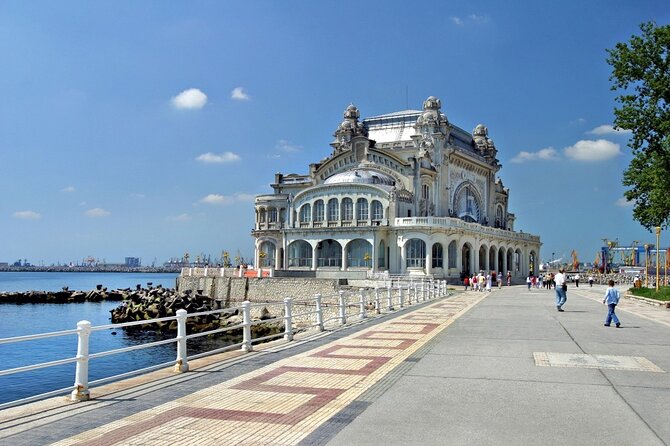
Săpânța’s Merry Cemetery is one of the most distinctive stops on the entire route. Its painted crosses show scenes from the lives of the dead and carry humorous poems about their habits, work, and fate.
The humor is not a cheap gimmick. It reflects a local way of facing death with candor and wit. Give yourself time to look closely at the carved scenes and translated explanations, since the meaning is in the details.
The Memorial of the Victims of Communism and of the Resistance in Sighet offers a sharp contrast. You spend about two hours learning how Romania’s communist regime used repression, imprisonment, and fear. This is a serious visit, and it prevents the trip from becoming a parade of pretty churches and scenic roads.
I consider this pairing especially useful. The cemetery shows a folk tradition that feels personal and playful. The memorial explains a more recent national trauma. Together, they give you a clearer sense of how Romanian communities have dealt with suffering in different eras.
Săpânța-Peri Monastery rounds out the day. The wooden church sits near the village in a dendrology park and is associated with a medieval monastic tradition dating to 1391. The planned visit is 45 minutes, so you can appreciate the setting and structure without turning the stop into another long church tour.
A different side of the city, same short trip:
- Bucharest: Palace of Parliament Tickets and Guide
★ 4.3 · 3,182 reviews - Bucharest: Day Trip to Dracula Castle, Peles Castle & Brașov
★ 4.4 · 3,049 reviews - Bucharest to Dracula Castle, Peles Castle and Brasov Guided Tour
★ 4.5 · 2,933 reviews - Bucharest: Palace of Parliament Tickets and Guided Tour
★ 4.4 · 1,877 reviews
Day 4: Maramures woodwork, Tihuța Pass, and painted village houses
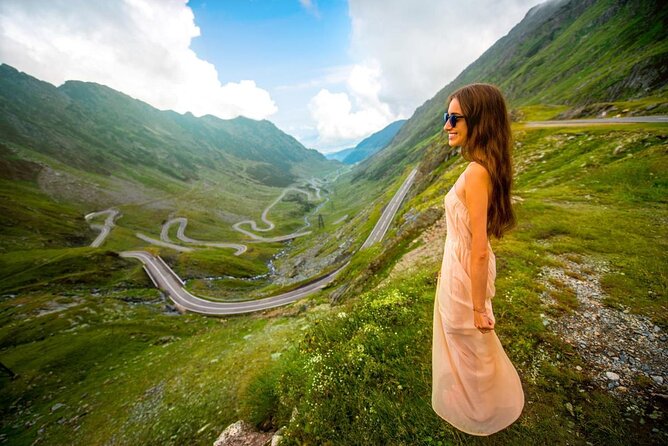
Barsana Monastery is one of the visual highlights of Maramures. Its wooden church reaches about 57 meters, and the complex is known for carefully built timber architecture and a peaceful setting.
The stop lasts 45 minutes. That gives you time to walk through the grounds and take in the tall church, but you may wish you had longer if you enjoy photography or religious architecture.
The route then crosses Tihuța Pass, also called Borgo Pass, at about 1,201 meters. The road links Moldavia and Transylvania across the Bârgău Mountains. It was first built in the early 19th century under the Austro-Hungarian military administration and later paved.
This is a scenic driving section, not a quick transfer. Traffic can be heavy, and trucks may slow the journey. The road conditions are described as good, but mountain travel remains dependent on traffic and weather.
Ciocănești is a pleasant payoff after the pass. The northern Romanian village is known for houses painted with colorful traditional patterns, making ordinary domestic buildings part of the attraction. You have an hour to look around.
This kind of stop is exactly why a private vehicle helps. Small villages can be awkward to reach by public transport, and a guide-driver can explain what you are seeing without requiring you to organize a separate excursion.
Day 5: Bucovina’s painted monasteries

Day five is devoted to Bucovina’s famous painted monasteries. These fortified churches are not only places of worship. Their exterior frescoes turn walls into vast religious picture books, created for communities in which many people could not read.
Voroneț is the star for many visitors. Founded by Stephen the Great in 1488 after a military victory, it is known for the intense blue used in its frescoes. The color has become so closely associated with the monastery that it is commonly called Voroneț blue.
The 45-minute visit is short, but it lets you see the main exterior paintings and the overall form of the church. If you want detailed time with individual biblical scenes, you may need to use your free time carefully.
Humor Monastery provides a second example of Bucovina’s fortified religious architecture. Its earlier church was destroyed, and the surviving complex shows how communities protected spiritual and artistic treasures during unsettled periods. Again, expect about 45 minutes.
Sucevița Monastery is another major highlight and a UNESCO-listed cultural site. Its walls are covered with biblical scenes, and the fortified design gives the church a more defensive character than an ordinary parish building. It is a place where you can study both painting and architecture.
Moldovița Monastery completes the main church sequence. Built in 1532, it combines Byzantine, Gothic, and Moldavian elements. The murals inside and outside are the main reason to visit, but the setting also helps you understand how these churches functioned as spiritual centers in remote areas.
Lucia Condrea’s International Egg Museum adds a surprising final note. The collection includes more than 5,500 decorated eggs arranged across two floors and 56 display cases. It is a focused folk-art museum, not a quick souvenir shop, and the 90-minute visit gives the work proper attention.
This day may feel church-heavy. If religious art is not your main interest, the repeated 45-minute stops could blur together. If you like painting, craft, and local tradition, however, the sequence provides one of the clearest cultural sections of the tour.
Day 6: Bicaz Gorges, Red Lake, and folk art
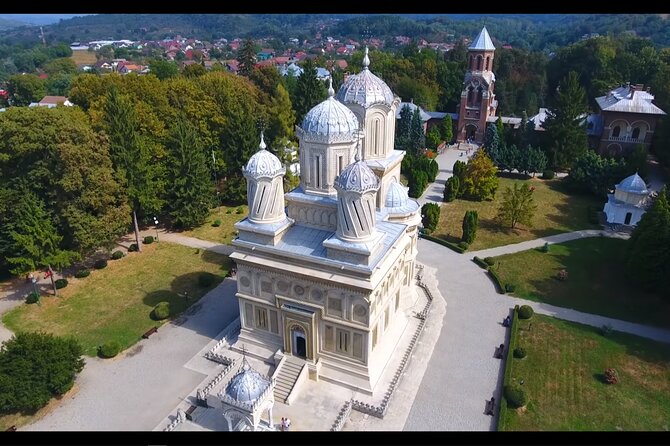
The Bicaz Gorges bring the route back into open country. The road follows about eight kilometers of ravines, with rock walls close on one side and steep drops on the other. It is one of Romania’s most dramatic drives and also a known climbing area.
The gorge connects Moldavia and Transylvania, so it has practical importance as well as scenic value. Keep your camera ready, but remember that the experience happens from the road, with possible traffic and limited time to stop.
Nearby Red Lake, or Lacu Roșu, sits at about 980 meters. It formed after a landslide in the 19th century, though the exact year is debated between 1837 and 1838. The lake’s name comes from the reddish appearance associated with submerged tree trunks and the surrounding geology.
The planned 45-minute stop is enough for a look and photographs. It is not a full mountain outing, and the tour does not list boating or hiking as included activities.
The Popa Museum in Târpești gives the day a human and political focus. Sculptor Nicolae Popa founded the museum in his own home in the 1970s. His life included wartime injury, imprisonment under the communist regime, and years of work devoted to Romanian folk values.
You spend about an hour with his sculptures and folklore collection. This is a smaller, personal museum rather than a grand national institution, which is exactly its appeal. It adds a local voice after the broad scenery of the gorge and lake.
Day 7: Sighișoara, Viscri, and Brașov
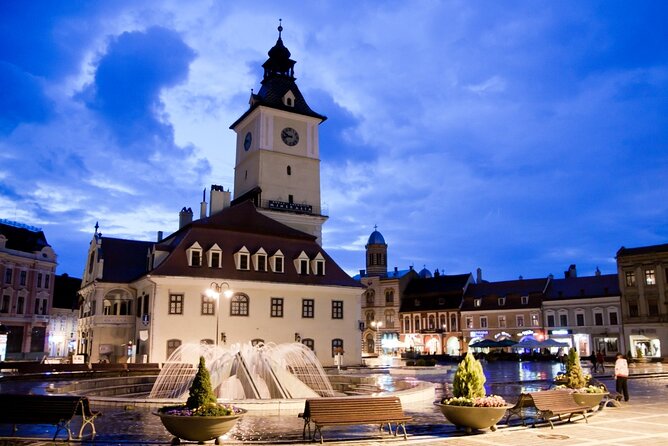
Sighișoara’s Clock Tower introduces one of Romania’s best-preserved medieval centers. The citadel dates to 1280 and has remained inhabited for more than 700 years. The planned two-hour visit includes the Clock Tower and Arms Museum, with time to walk the old streets.
Sighișoara is also linked to Vlad the Impaler, who was born here. That connection gives the Dracula theme another historical anchor, but the town is worth seeing even if you have little interest in vampire stories. The real attraction is the living medieval fortress, not the fictional character.
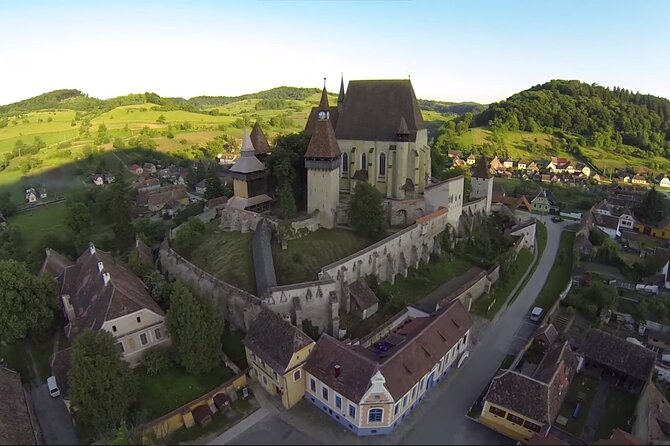
Viscri offers a smaller-scale experience. Its fortified church and village date back to the 12th century, and restoration work helped bring new attention to the community. The village became widely known after visits by Prince Charles and through the work of the Mihai Eminescu Trust.
You have two hours here, which is generous compared with several earlier stops. Use it to slow down. Viscri is valuable because it shows rural Transylvania as a place where old buildings, local traditions, and modern preservation efforts meet.
Brașov’s Council Square closes the day in a more urban setting. The square has hosted markets since the 14th century and is surrounded by 18th- and 19th-century buildings. With two hours, you can take a proper walk rather than just photograph the central plaza.
The three stops work well together: fortified medieval town, restored village, and historic city square. By this point, you will have seen several versions of Transylvania, not just the castle-and-vampire postcard.
Day 8: Bran, Peleș, and Sinaia
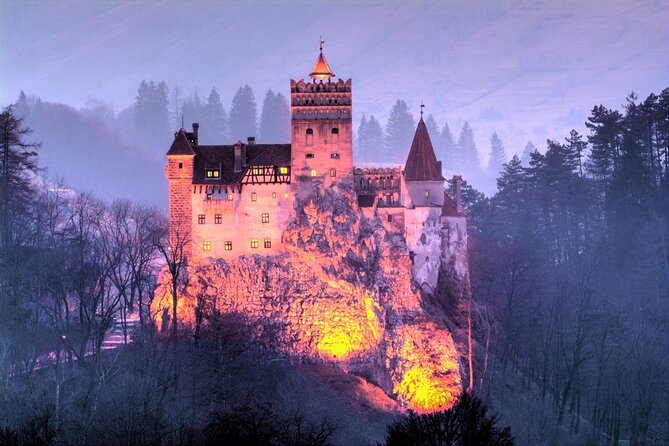
Bran Castle is the tour’s biggest Dracula draw. Its appearance helped link it to Bram Stoker’s fictional castle, although the connection is based mainly on resemblance and later popular imagination.
The castle visit lasts about two hours. Expect history and legend side by side, with a strong focus on the Dracula story. Outside, you can try traditional foods including handmade cheeses, plum and pear brandy, ham, and sausages. These tastings are described as available, but they are not listed among the included costs.
Peleș Castle offers a different kind of grandeur. It was the Romanian royal family’s summer residence and is known for richly decorated interiors and a refined mountain setting. The tour allows two hours, which should give you a reasonable look at the palace without making the visit feel rushed.
I like having both Bran and Peleș on the same day. Bran is compact, dramatic, and tied to folklore. Peleș is royal, ornate, and rooted in Romania’s modern monarchy. One sells a legend, while the other explains how the country’s rulers wanted to present themselves.
The final stop is Sinaia Monastery, founded in 1695 by Prince Mihail Cantacuzino and named after Saint Catherine’s Monastery on Mount Sinai. It remains an Orthodox monastic site, with 13 monks listed as living there in 2005.
The 30-minute visit is brief, but it makes a fitting close to a journey centered on churches, castles, and Romanian identity. From here, the tour returns toward Bucharest, though the supplied details do not specify the exact drop-off time.
What the $2,825.81 price really covers
At $2,825.81 per person, this is not a budget tour. Its value depends on how much you would otherwise spend arranging a private car, driver, hotels, route planning, fuel, parking, tolls, and long-distance connections across Romania.
The price includes the private vehicle, an English-speaking guide-driver, gasoline, parking, road tolls, wireless internet, and the guide’s accommodation, meals, and entrance fees. It also includes hotel recommendations matched to your budget.
It does not include your accommodation, meals, drinks, or attraction tickets. Since the route contains many paid sights, you should budget for those separately. The final cost will also depend on the hotels and restaurants you choose.
For a couple or family that values privacy and convenience, the price can make sense. You are not sharing a bus, and you are not solving the logistics of reaching remote monasteries and mountain passes. For a solo visitor, the per-person price is harder to justify unless personal guiding and private transport are the main priorities.
Group discounts are offered, and the vehicle can be a tourism car or minibus. Ask for the exact vehicle type and group pricing before paying, since those details affect comfort and value.
Who should take this Romanian road trip
I would recommend it most strongly to people who want a broad first look at Romania and do not mind long road days. It suits families and small groups who prefer their own schedule, as well as people who want an English-speaking guide available from start to finish.
You should enjoy it if you like:
- Medieval towns and fortified churches
- Orthodox monasteries and painted frescoes
- Folk art and unusual local museums
- Scenic mountain roads
- Dracula stories balanced with real Romanian history
- Small villages that are difficult to reach independently
You may want a slower plan if you prefer long hikes, extended time in each city, or relaxed mornings. Several days contain three to five stops, and the tour often gives less than an hour at individual churches.
Physical demands are not fully detailed. Poienari is on a high cliff, and mountain sites may involve uneven ground or stairs, so ask Nicolas about access before departure if mobility is a concern. Service animals are allowed, and the activity states that most people can participate.
Pickup is offered, confirmation is provided at booking, and the tour is private. Free cancellation is available up to 24 hours before the start time. After that point, payment is not refunded and late changes are not accepted.
Should you book the eight-day Romania tour?
Book it if you want maximum geographic range with minimum planning. In eight days, you see major castles and cities, but also places many visitors would miss on a simpler Bucharest and Transylvania trip. The Merry Cemetery, Surdesti church, Ciocănești, Lucia Condrea’s egg museum, and the Popa Museum give the journey its character.
The strongest praise attached to the experience centers on Nicolas: punctual, friendly, prepared, and entertaining during the long drives. That is important here. A tour with this much road time succeeds or fails partly on the guide’s attitude and ability to make the miles feel useful.
Do not book it expecting a restful holiday or an all-inclusive package. You will need to pay for hotels, food, drinks, and entrances, and you should accept that weather or traffic may affect the mountain sections.
For an active private introduction to Romania, I would book it. For a slow cultural retreat, I would shorten the route and spend more nights in fewer places.
FAQ
Is this a private tour?
Yes. Only your own group participates, and transportation is provided by private car or minibus.
Who is the guide?
The guide-driver is Nicolas, an English-speaking licensed professional who remains available throughout the tour.
Are hotels included?
No. Accommodation is not included, but hotel recommendations can be provided according to your budget.
Are entrance fees included?
No. Entrance fees for the attractions listed in the tour are paid separately.
Is food included?
No. Meals and beverages for your group are not included. The guide’s accommodation, meals, and entrance fees are covered.
Can I cancel for a full refund?
Yes, if you cancel at least 24 hours before the experience start time. Cancellations or changes made less than 24 hours in advance are not accepted for a refund.
Recently added around Bucharest
- From Bucharest: Discovery at Europe’s Largest Salt Mine★ 5.0 · 3 reviews
- RiverCruise Exclusive – Private Transfer from or to Giurgiu Port/Bucharest Hotel★ 3.5 · 3 reviews
- Cluj Napoca: Climbing or Hiking Experience in Turda Canion★ 5.0 · 3 reviews
- Private-Red Patrol Bucharest Flea Market Tour with a Romanian car★ 5.0 · 3 reviews
- Probably the Best Restaurant and Wine Cellar near Bucharest★ 4.5 · 3 reviews
- Private 8 Day Romania UNESCO Tour★ 5.0 · 3 reviews
- Bucharest: City Highlights Guided Walking Tour★ 5.0 · 3 reviews
- Bucharest in a nutshell – half day private walking tour★ 5.0 · 3 reviews
Private, compared.

Castles of Transylvania: Private Day Trip from Bucharest
Read our review →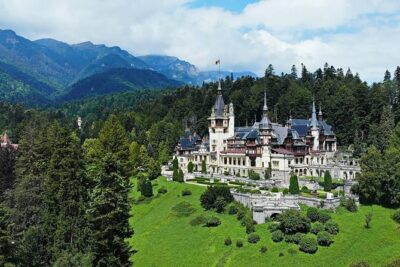
Dracula’s Castle, Peles Castle and Brasov – Private Day Trip from Bucharest
Read our review →
Bucharest Panoramic Sightseeing – Private City Tour
Read our review →
THERME “Take It Easy” Pack: Full Spa Access + Private Transfers
Read our review →
Piatra Craiului National Park Private Hiking Tour from Brasov
Read our review →
4h Bucharest Private Tour (2h by Car and 2h Walking in Old Town)
Read our review →