Reviewed · TOURS
Bucharest Sightseeing Tour
Bucharest’s story comes into sharp focus at Revolution Square, where the grand buildings and 1989 uprising meet in one open city space. From there, you walk through former merchant quarters, pass royal and religious landmarks, and see how communist power reshaped the capital. I like the mix of walking and driving, and I like having a private or small-group guide to explain what you are seeing rather than simply pointing at facades.
The four-hour format is useful for a first look, especially if you want hotel pickup and an air-conditioned minivan between the farther-apart sights. The main drawback is price: $324 per group of up to four can be good value for a full group, but costly if only one or two people book. Site entry fees also come separately, and the Palace of Parliament can close without warning.
In This Review
- Key points to know before booking
- Why this four-hour tour works for a first look at Bucharest
- Revolution Square and the memory of 1989
- Walking along Victoriei Avenue
- Lipscani, the Princely Court, and merchant Bucharest
- The Palace of Justice and the weight of the state
- Unirii Square and the Palace of Parliament choice
- The Metropolitan Church and Romanian Orthodox art
- The Arch of Triumph and Village Museum option
- What the guide adds, and where the tour may fall short
- Transport, group size, and the real value of $324
- Who should book this Bucharest tour
- Should you book it?
- FAQ
- How long does the Bucharest sightseeing tour last?
- Where does pickup take place?
- How many people can join the tour?
- Which languages are available?
- Are entrance fees included?
- Can the Palace of Parliament be closed?
Key points to know before booking
- Revolution Square gives the tour its strongest historical moment, with the 1989 uprising at the center of the story.
- Victoriei Avenue links royal buildings, libraries, churches, and civic landmarks in a walk through central Bucharest.
- Lipscani and the Princely Court show the old commercial city, not just the monumental capital built later.
- The Palace of Parliament or Spring Palace may be added, but admission is extra and the Parliament can close for official events.
- The tour blends a guided walk with minivan transport, a practical choice in a spread-out city.
- Guide languages include English, French, German, Italian, and Spanish, with past bookings naming Elisabeth and Claudio.
Why this four-hour tour works for a first look at Bucharest
Bucharest can feel confusing at first. Its grand avenues, Orthodox churches, communist blocks, royal buildings, and old lanes do not always seem to belong to the same city. That is exactly why a guided overview helps. You get a clear route through several central districts, along with the political story that ties them together.
I like that this is not only a drive-by sightseeing loop. You stop to walk at important places, including Revolution Square and the old center, while the vehicle handles longer stretches. A past German-language booking specifically noted two walking stops and plenty of information given along the driving route. That balance matters in Bucharest, where some sights are close enough to explore on foot, while others are separated by wide roads and heavy traffic.
The tour is described as private, with a small-group limit of eight people, and the listed rate covers a group of up to four. Confirm the exact group arrangement when booking, since those two descriptions point to a small experience rather than a large coach outing. You are picked up at the entrance of your hotel, address, or other location in Bucharest and returned there at the end.
Guide languages are English, French, German, Italian, and Spanish. The operation has used guides named Elisabeth and Claudio, with one booking praising Elisabeth’s explanations and Claudio’s calm driving. Your assigned guide may differ, but those details suggest that both commentary and the ride itself can shape the experience.
A few more Bucharest tours worth a look
- Bucharest: Dracula’s Castle, Peles Castle, & Brasov Old Town
★ 4.5 · 17,858 reviews - Bucharest: Dracula Castle, Peles Castle & Brasov Old Town
★ 4.6 · 10,891 reviews - Bucharest: Dracula’s Castle, Peleș Castle & Brașov Day Trip
★ 4.5 · 5,919 reviews
Revolution Square and the memory of 1989
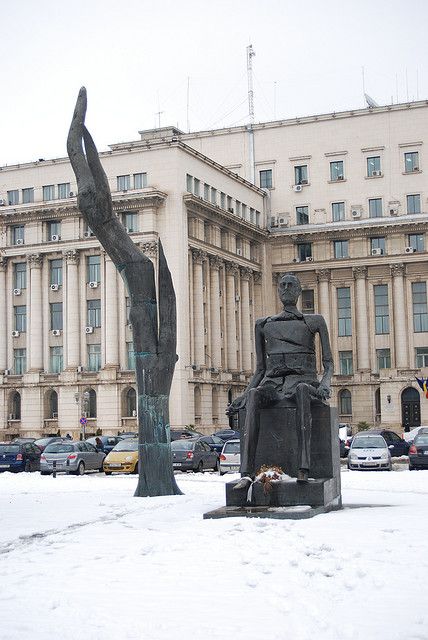
The tour begins in Revolution Square, the right place to start if you want to understand modern Romania. In December 1989, protests here helped bring Nicolae Ceausescu’s communist government to an end. The square is not an isolated museum display. It is a working central area surrounded by public buildings, traffic, and everyday city life, which makes the events feel closer to the present.
Your guide points out the royal buildings, libraries, and statues around the square. The setting gives you a useful visual lesson in Bucharest’s layers: monarchy, state power, culture, and revolution all occupy the same few blocks. You can ask questions here about what happened in 1989 and how the square is used today.
I would pay close attention to the guide’s explanation rather than rushing through photographs. The historical value comes from understanding where people gathered, what the buildings represented, and why this location became the focus of national change. The square itself may not take long to cross, but it gives the rest of the tour a political frame.
Walking along Victoriei Avenue
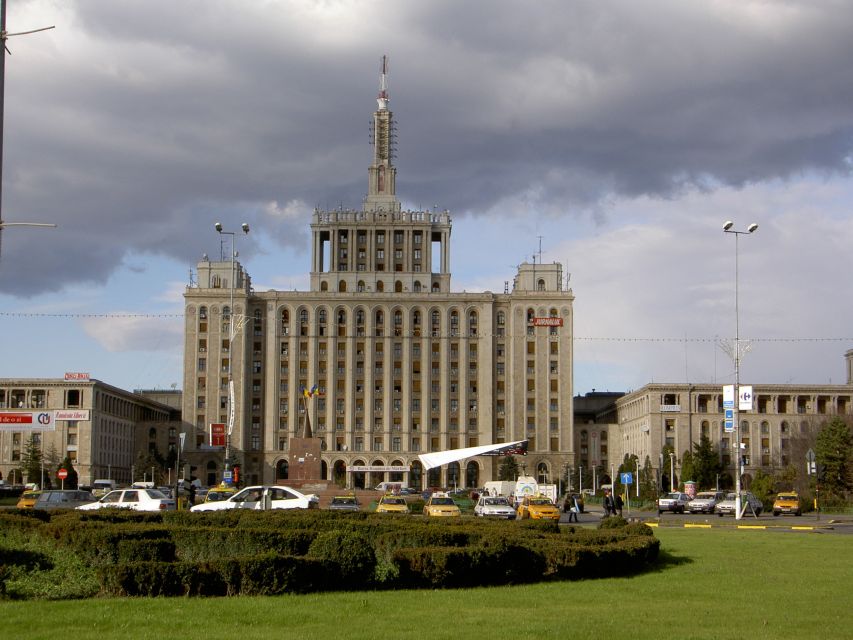
From Revolution Square, the route follows Victoriei Avenue toward the older commercial center. This is one of Bucharest’s important central roads, lined with major buildings and reminders of the city’s changing rulers. The walk lets you see the city at street level, where architecture is easier to appreciate than from behind a vehicle window.
Expect a blend of grand facades, public institutions, and ordinary urban movement. The route is less about entering every building and more about learning why each one matters. If you enjoy architecture, this part may be one of the most satisfying sections because the guide can connect the buildings to the political and social life of the capital.
The pace is described as a pleasant stroll, but this remains a sightseeing tour rather than a dedicated architecture walk. You should expect commentary on several landmarks, not a long interior visit at each one. Comfortable shoes are sensible, since the route includes walking in central districts and later continues on foot near other sights.
Lipscani, the Princely Court, and merchant Bucharest
The old Lipscani district gives you a different side of Bucharest. Its lanes recall the city’s merchant life, when trade shaped this part of the capital. Compared with Revolution Square and Victoriei Avenue, the atmosphere here is more intimate. You see the remains of an older commercial center rather than a formal government district.
The route includes the Princely Court and its church. These sites help explain Bucharest before the modern boulevards and monumental state buildings took over the city center. The court connects the old quarter to the rulers who governed the area, while the church offers a more personal look at Romania’s Orthodox tradition.
I like this contrast. A tour that focused only on Ceausescu-era buildings would give you an incomplete picture. Lipscani shows how trade, religion, and princely authority shaped the city long before the 20th century.
Do not expect the entire old district to be preserved as a perfectly unified historic quarter. The appeal is in the fragments: old buildings, surviving religious sites, irregular streets, and the sense of a commercial center that changed over time. Your guide’s explanations are particularly useful here because the remains do not always explain themselves.
A different side of the city, same short trip:
- Bucharest: Palace of Parliament Tickets and Guide
★ 4.3 · 3,182 reviews - Bucharest: Day Trip to Dracula Castle, Peles Castle & Brașov
★ 4.4 · 3,049 reviews - Bucharest to Dracula Castle, Peles Castle and Brasov Guided Tour
★ 4.5 · 2,933 reviews - Bucharest: Palace of Parliament Tickets and Guided Tour
★ 4.4 · 1,877 reviews
The Palace of Justice and the weight of the state
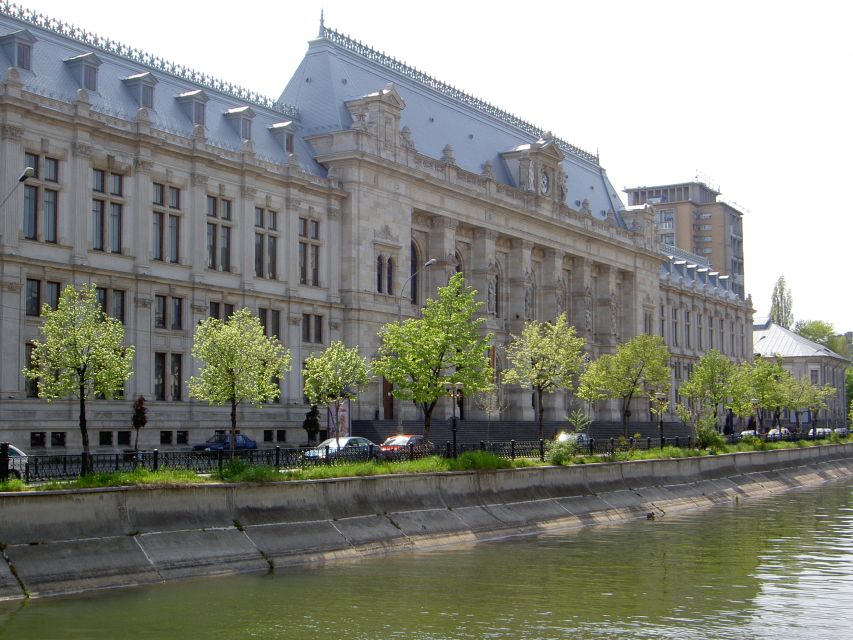
The Palace of Justice appears along the route with its imposing columns. It is a clear example of civic architecture designed to project authority. The building helps illustrate a theme that runs through Bucharest: public institutions were built to make the power of the state visible.
This is a good place to ask your guide how the city’s architecture changed under different political systems. The royal period, communist rule, and post-1989 Romania all left different marks on the center. A past German-language booking found the guide’s explanations of historical events along the driving route especially useful, though that same experience would have preferred more discussion of present-day society and economics.
That is a fair point to keep in mind. The tour promises historical sights and their importance, so you will hear plenty about events and buildings. If you want detailed discussion of current politics, wages, business, or daily life, ask direct questions rather than assuming those subjects will receive equal time.
Unirii Square and the Palace of Parliament choice
The route eventually reaches Unirii Square, a huge transport hub and one of Bucharest’s most imposing urban spaces. It feels different from the narrow lanes of Lipscani. Here, the scale is broad, the traffic is significant, and the surrounding development reflects the city’s later expansion.
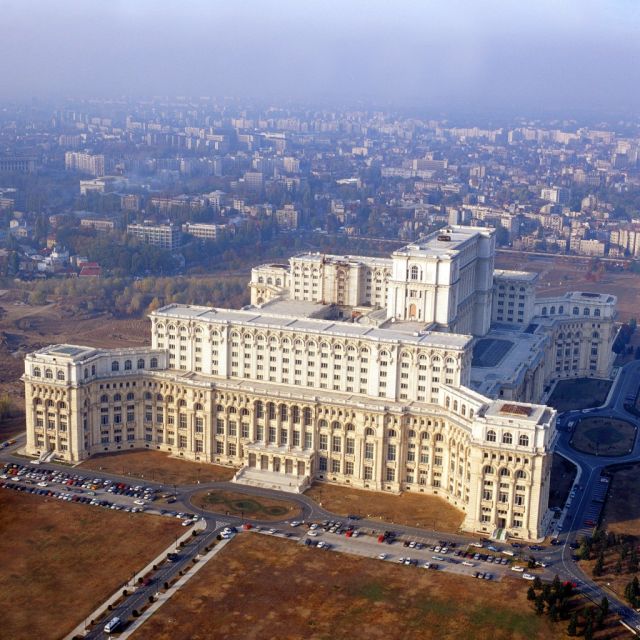
The Palace of Parliament is the major optional stop from this part of the route. Its size is difficult to grasp from photographs, and seeing it in person helps explain the ambition of Ceausescu’s building program. If you choose to visit, admission is not included in the tour price, and you should expect the visit to depend on tickets and official access.
There is an important warning here. The Palace of Parliament may close without notice during international conferences or government meetings. This is not a minor possibility, so do not book this tour solely because you need guaranteed entry to the building.
If Parliament is unavailable, the alternative may be Spring Palace, Ceausescu’s former residence. That substitution gives you a more domestic view of the former leader and his household, while Parliament shows the public face of the regime. Neither replacement is guaranteed if sites close for unforeseen reasons, but the guide will try to offer another relevant stop.
The Metropolitan Church and Romanian Orthodox art
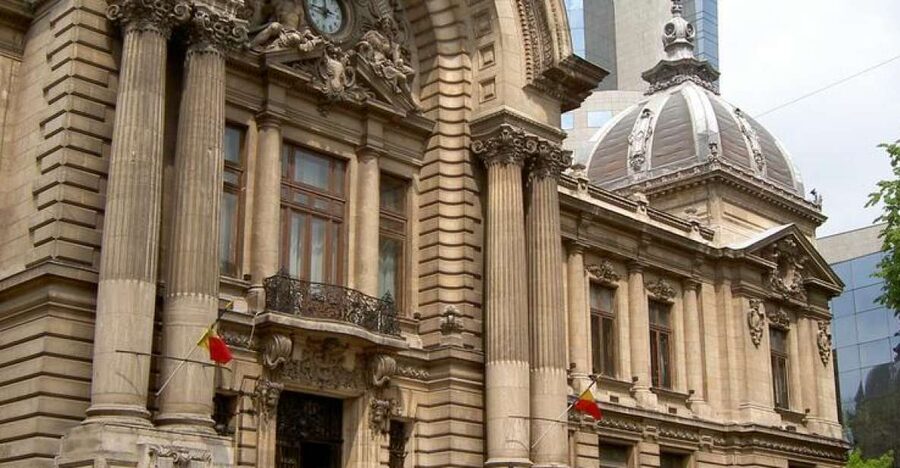
From Unirii Square, the tour continues toward the Metropolitan Church. This stop brings the focus back to religion and visual art. Inside Orthodox churches, icons and decorative details carry religious meaning, and a guide can help you understand what you are looking at instead of treating the church as a quick photo stop.
Church access can change without notice, particularly in the low season. Services, local events, or other restrictions may affect entry. Dress and behavior should be respectful, even though the tour information does not set out a formal dress code.
I find this stop useful because it balances the political monuments. Bucharest is not only a capital of government buildings and boulevards. Its churches preserve another thread of Romanian identity, one expressed through worship, iconography, and long-standing local traditions.
The Arch of Triumph and Village Museum option
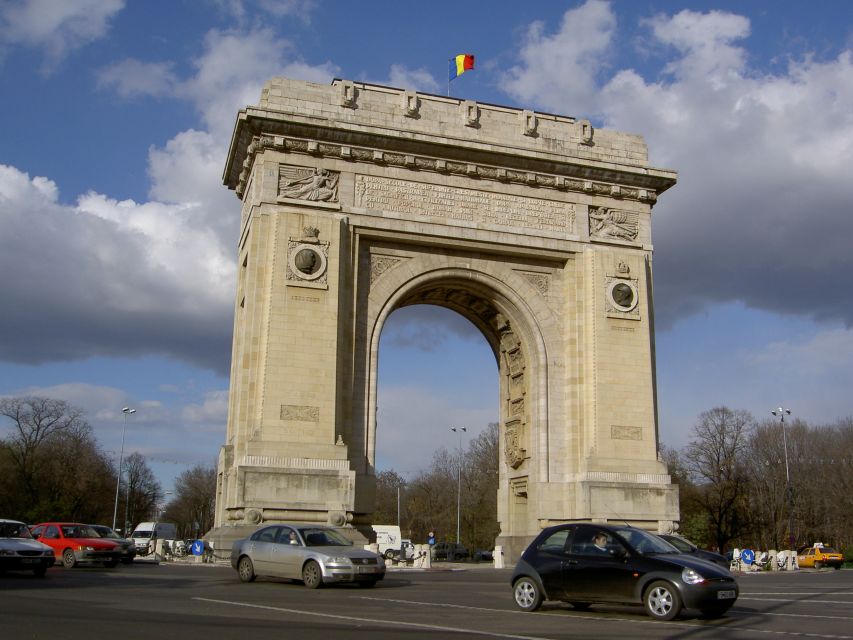
The route then walks back toward the University area and includes an option to stop at Bucharest’s Arch of Triumph. The arch gives the city another monumental marker, this time tied to national pride and public ceremony. The tour description does not specify an interior visit, so treat it primarily as a sightseeing and photo stop unless your guide confirms otherwise.
There is also an option to stop at the Village Museum. This can be a good choice if you want to see a different side of Romania beyond the capital’s formal center. The information provided does not guarantee entry, timing, or a full museum visit, so ask how much time is available and whether an admission fee applies.
The Arch of Triumph and Village Museum are also the least certain parts of the advertised route. The tour’s main sequence is central Bucharest, while optional stops can depend on timing, access, and what you choose to include. I would view them as possible additions, not the reason to book.
What the guide adds, and where the tour may fall short
A good guide is the key to this experience. Bucharest’s architecture often needs context, and the drive between stops creates time for questions. Guides are available in five languages, and the operation has included Elisabeth among its guides. If you need a particular language, select it carefully when booking.
The tour seems strongest when you want historical explanation. You hear about the 1989 revolution, royal buildings, the old merchant district, communist power, religious art, and the city’s major public spaces. One German-language booking also praised the guide’s command of German and the information provided while driving.
I would not expect a detailed tour of present-day Bucharest unless you ask for it. A past booking wanted more about the population, current politics, the economy, and income levels, along with restaurant suggestions. That is useful guidance: prepare a short list of questions about modern life, and ask your guide for local food ideas if that matters to you.
The tour is also not designed as a long food walk or nightlife experience. Food is not included, and food is not allowed inside the vehicle. You will need to plan meals separately.
Transport, group size, and the real value of $324
The listed price is $324 per group of up to four. At the full four-person capacity, that works out to $81 each before entrance fees. For a couple, the effective cost is $162 per person, and for a solo booking it is expensive.
The value depends on what you want from the four hours. You receive hotel pickup, a modern air-conditioned car or minivan, a guide, and a route through several parts of central Bucharest. You are also paying for a small setting rather than a large coach, which should make questions and changes easier.
The vehicle matters in summer, when Bucharest can be hot, and it helps connect places that are not all comfortable to reach in one continuous walk. The tour is not simply a private car ride, though. You still get out and walk at key points, so the experience has more texture than a window-only city circuit.
Admission charges are extra. That includes any paid visit to the Palace of Parliament, Spring Palace, Village Museum, or other sites where an entrance ticket is required. I would ask the operator which optional stops are open and what tickets cost before the day begins.
You can cancel up to 24 hours before the start for a full refund, and you can reserve now and pay later. Those terms are helpful if your Bucharest schedule is still changing. Bring your passport, as required for the activity, and keep food out of the vehicle.
Who should book this Bucharest tour
I would recommend this experience to a first-time visitor who wants a structured introduction without joining a large bus group. It suits couples, families, and small parties who value pickup, air conditioning, and a guide who can explain the city’s difficult political past.
It is also a good fit if you have only half a day. Four hours gives you a useful orientation, but it does not pretend to cover every museum or neighborhood. You can use the tour to decide where to return on your own later.
History-minded visitors will get the most from it, especially those interested in the 1989 revolution, royal Bucharest, communist architecture, and Orthodox churches. If your priority is modern food culture, nightlife, shopping, or detailed social history, this may feel too focused on landmarks and past events.
I would also avoid making the Palace of Parliament the sole purpose of your booking. Official closures can happen without notice, and entrance is not included. Choose the tour for the broader route, then treat Parliament or Spring Palace as an important possibility.
Should you book it?
Book this tour if you want Bucharest’s central sights explained in a sensible order, with a mix of walking and comfortable transport. The strongest moments are Revolution Square, Lipscani, the Princely Court, and the contrast between old merchant streets and the vast state architecture around Unirii Square.
The price makes the most sense for four people sharing the vehicle. For one or two people, compare the cost with other private tours, but remember that this option includes hotel pickup, multilingual guiding, and a compact four-hour route.
Ask your guide about modern Bucharest, restaurants, and daily life, since the standard emphasis leans toward history. If you can accept separate entry fees and the chance that a site will close, this is a practical first chapter in the city.
FAQ
How long does the Bucharest sightseeing tour last?
The tour lasts four hours, including the guided sightseeing route and return to Bucharest.
Where does pickup take place?
Pickup is included from the entrance of your hotel, address, or other specified location in Bucharest.
How many people can join the tour?
The listed price covers a group of up to four people, while the activity is described as a small group limited to eight participants.
Which languages are available?
Live guiding is available in English, French, German, Italian, and Spanish.
Are entrance fees included?
No. Entrance fees to the sites are not included in the tour price.
Can the Palace of Parliament be closed?
Yes. The Palace of Parliament may close without prior notice because of international conferences or meetings. If it cannot be visited, the tour may offer Spring Palace, Ceausescu’s former residence, or another relevant site when possible.
Recently added around Bucharest
- 6h Communism Tour in Bucharest with Ceausescu Mansion★ 4.5 · 6 reviews
- From Bucharest : Day Trip to Peles, Dracula’s Castle, Brasov★ 4.7 · 6 reviews
- Bears Sanctuary, Dracula Castle and Brasov City – Full Day Trip from Bucharest★ 5.0 · 6 reviews
- Transfagarasan Road Private Day Trip from Bucharest / The Best Road in the World★ 5.0 · 6 reviews
- Dracula Private Tour★ 5.0 · 6 reviews
- Bucharest : Wednesday, Dracula & Peles 3 Castles Tour 1 Day★ 4.7 · 6 reviews
- Hiking thought the best mountain villages in Romania-Private tour from Brasov★ 5.0 · 6 reviews
- Bucovina Painted Monasteries & Transylvania Tour: 4-Day Private★ 5.0 · 6 reviews
Tours, compared.
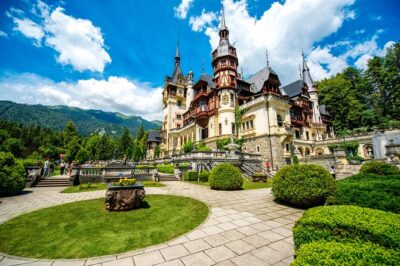
Bucharest to Dracula Castle, Peles Castle and Brasov Guided Tour
Read our review →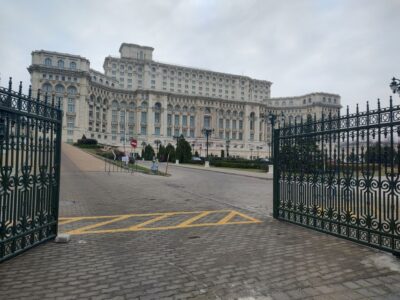
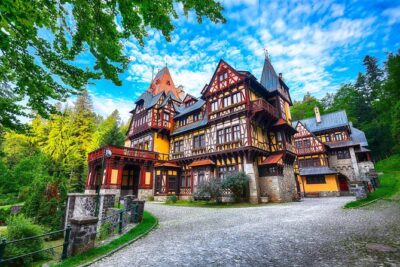
Transylvania and Dracula Castle Full Day Tour from Bucharest
Read our review →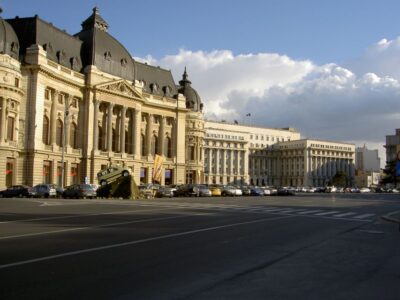
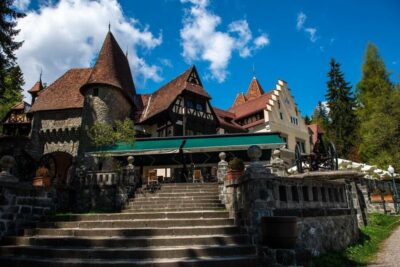
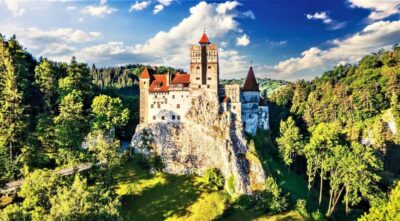
Peles Castle, Bran Castle, & Brasov Old Town Tour
Read our review →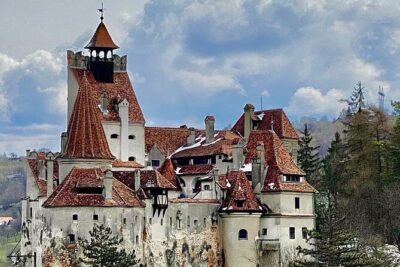
Small-group tour Bran, Rasnov, and Peles Castles
Read our review →