
Reviewed · WALKING TOURS
Bucharest: Hidden Gems 2.5-Hour Walking Tour
Bucharest reveals its best stories in the streets between the headline sights. This tour leads you through Batistei, the Armenian quarter, Casa Melik, and Mantuleasa Street, where old churches and houses tell a more personal story than the city’s grand avenues. I like the visit to Bucharest’s oldest home, with its high cellar, glass veranda, art collection, and legends of underground Masonic tunnels. I also like the simple covrig stop, since a warm salty snack gives you a taste of everyday Romania.
The main consideration is pace. You’ll walk for about three hours, mostly through city neighborhoods rather than grand museum halls, and the route includes outdoor time in the sun. The tour is best for you if you want local history, unusual architecture, and a small group of no more than 12 people, rather than a checklist of Bucharest’s biggest sights.
In This Review
- Key points to know before you book
- Why this walk shows you a less polished Bucharest
- Batistei and the church at the heart of the mahala
- The Armenian quarter and a remarkable church copy
- Casa Melik, Bucharest’s oldest home
- A covrig break with a bit of food history
- Mantuleasa Street and the Bucharest of Mircea Eliade
- Ioanid block and Icoanei mahalla
- Guides, group size, and the feel of the walk
- Is $45 a fair price?
- Who should book this Bucharest walk?
- Should you book it?
- FAQ
- Where does the Bucharest walking tour begin?
- Where does the tour end?
- How long does the tour last?
- What language is the tour conducted in?
- What is included in the price?
- Are other food and drinks included?
- How large is the tour group?
- Can children join the tour?
- What should I bring?
Key points to know before you book
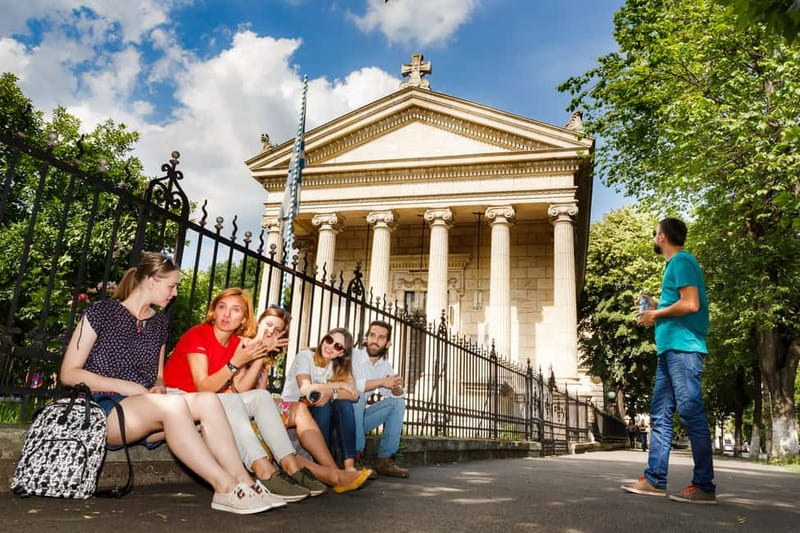
- Batistei’s 18th-century church introduces the old mahalas, neighborhood communities built around religious centers.
- The Armenian church is an early-20th-century copy of a cathedral in Ecmiazin, Armenia.
- Casa Melik is Bucharest’s oldest home, with a traditional Wallachian design and an art collection.
- Mantuleasa Street connects elegant architecture with the life of writer and philosopher Mircea Eliade.
- A covrig is included, giving you a quick sample of one of Romania’s classic street snacks.
- Small groups and local guides make room for questions, practical city tips, and personal stories.
Why this walk shows you a less polished Bucharest
Bucharest is often introduced through its grand Communist buildings, wide boulevards, and monumental government sites. Those places matter, but they do not explain how the city felt before large sections were cleared and rebuilt. This walk takes you into older districts where churches, houses, and narrow streets preserve traces of earlier Bucharest.
The key idea is the mahala. A mahala usually grew around a religious building and gathered people linked by ethnicity, work, social class, or faith. As Bucharest expanded, these districts changed under modernization, earthquakes, wars, and Nicolae Ceausescu’s demolition schemes.
That background gives the walk a clear purpose. You are not simply looking at attractive old buildings. You are learning why they were built, who lived around them, and what forces nearly erased them. I find that approach more useful than a tour that treats every old facade as a postcard.
The meeting point is on the stairs of the National Theater, in front of the main entrance. The activity returns there at the end, so you do not have to arrange transport across town after the walk. Check the available starting time when booking, since the listed duration is about three hours even though the experience title describes it as a 2.5-hour walk.
More walking tours in Bucharest:
- Bucharest: City Highlights Guided Walking Tour
★ 4.9 · 1,482 reviews - Bucharest Highlights Walking Tour
★ 5.0 · 469 reviews - Free walking tour of Brasov in English
★ 4.9 · 302 reviews
Batistei and the church at the heart of the mahala
The first neighborhood is Batistei, one of Bucharest’s best-known old mahalas. It remains an active part of the city, but its past is the real focus here. You’ll hear how ordinary life changed as the district faced modernization, natural disasters, war, and Communist building projects.
The 18th-century stone church is the main early stop. Romania’s Ministry of Culture and Religious Affairs lists it as a historic monument, and its age helps you picture a Bucharest that existed long before the modern capital took shape.
I like this part because the guide can connect architecture with daily life. Instead of only hearing dates and construction styles, you learn what it meant to live in a neighborhood organized around a church and a close local community. Guides such as Elena, Andrei, and Livia have each brought a friendly, story-led approach to the route, according to the information available for this experience.
The church stop may appeal most to you if you enjoy places with layers of use. It is not presented as a grand national monument. Its value comes from its place in the neighborhood and from the way it survived the city’s repeated changes.
The Armenian quarter and a remarkable church copy
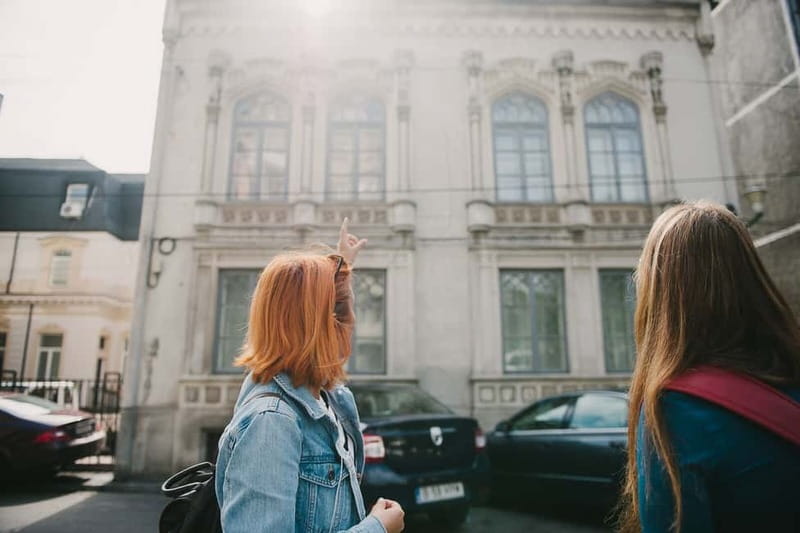
The walk then continues to Bucharest’s Armenian neighborhood. The Armenian population here was once much larger than it is today, and the district still preserves one of the city’s best-known Orthodox churches.
The church was built in the early 20th century and copies the cathedral at Ecmiazin in Armenia. That detail gives the building a strong sense of connection to a distant homeland. You are seeing both a Bucharest place of worship and a carefully made architectural link to Armenian identity.
This is one of the tour’s most useful stops because it broadens the usual story of Romania. Bucharest is not only Romanian Orthodox, royal, Communist, or modern. Its streets also reflect communities that helped shape the city’s trade, culture, and built environment.
The tour information does not promise a long interior visit at every church, so you should think of this as a neighborhood and architecture stop rather than a formal church service or museum visit. Your guide’s explanation is likely to be the main value here.
Casa Melik, Bucharest’s oldest home
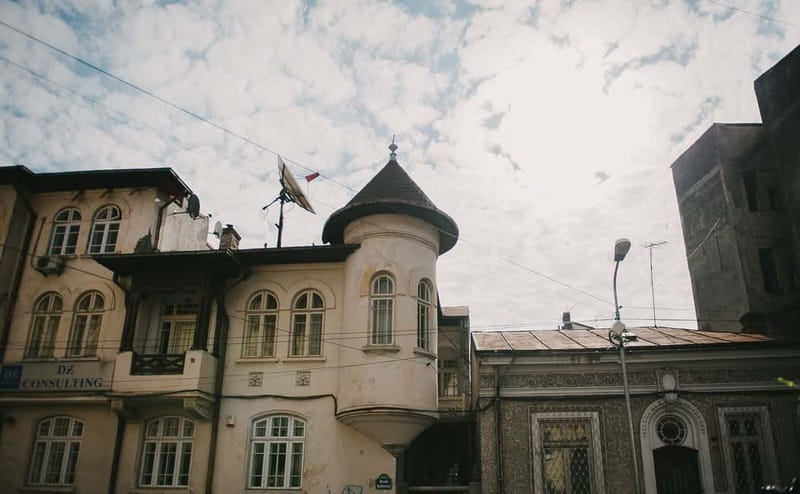
Casa Melik is the route’s most unusual building. It is described as the oldest house in Bucharest and offers a fine example of a traditional Wallachian peasant home. Its high cellar and glass-covered veranda make it easy to see how older Romanian domestic design differed from the grand Neo-Classical buildings found elsewhere in the city.
The house also hides a few good stories. Inside is a notable art collection, and local legend says underground tunnels once linked the building with nearby Masonic lodges. The tunnel tale is best treated as legend, but it adds exactly the sort of mystery that makes an old house memorable.
I especially like that this stop moves beyond church facades and street views. You get a sense of how a home worked, not just how it looked from outside. One of the strongest details connected with the experience is the chance to see inside the renovated house.
Casa Melik is also a reminder that Bucharest’s past was not built only by rulers and architects. A traditional home can tell you about family life, practical construction, and local habits in a way a grand palace cannot.
A few more Bucharest tours worth a look
- Bucharest: Dracula’s Castle, Peles Castle, & Brasov Old Town
★ 4.5 · 17,858 reviews - Bucharest: Dracula Castle, Peles Castle & Brasov Old Town
★ 4.6 · 10,891 reviews - Bucharest: Dracula’s Castle, Peleș Castle & Brașov Day Trip
★ 4.5 · 5,919 reviews - Bucharest: Palace of Parliament Tickets and Guide
★ 4.3 · 3,182 reviews
A covrig break with a bit of food history
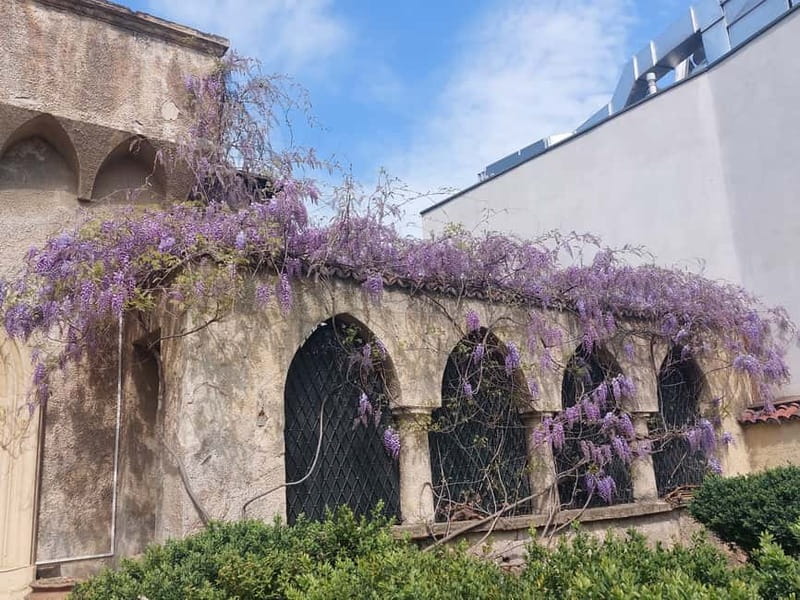
The included snack is a covrig, a salty Romanian pastry shaped much like a pretzel. It is a small part of the tour, but it makes the route feel connected to present-day Bucharest rather than sealed in the past.
The story behind the snack is more interesting than its size suggests. One explanation says Greek merchants introduced covrig in the 19th century to encourage people to drink more of their wine. Its close resemblance to German pretzels raises another possibility: Romanians may have been eating something similar even earlier.
You should not expect a full meal. Additional food and drinks are not included, so plan to eat before or after the walk if you need more than a quick snack. Still, I like the way the covrig gives you a direct taste of local street food and a welcome pause during a morning on foot.
One useful practical detail comes from Andrei’s tour: the welcome may include freshly baked bagels and bottled water. That should not be treated as a guaranteed inclusion for every departure, since the formal inclusion is the covrig, but it shows the personal touches a local guide may add.
Mantuleasa Street and the Bucharest of Mircea Eliade
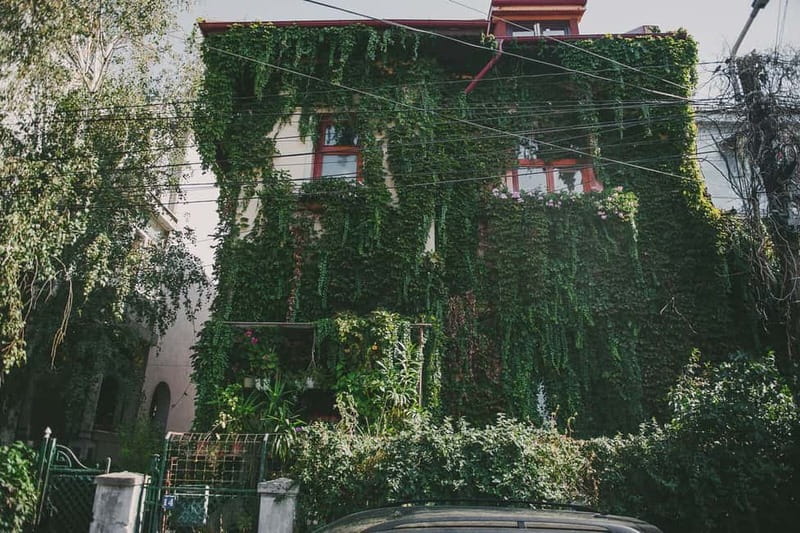
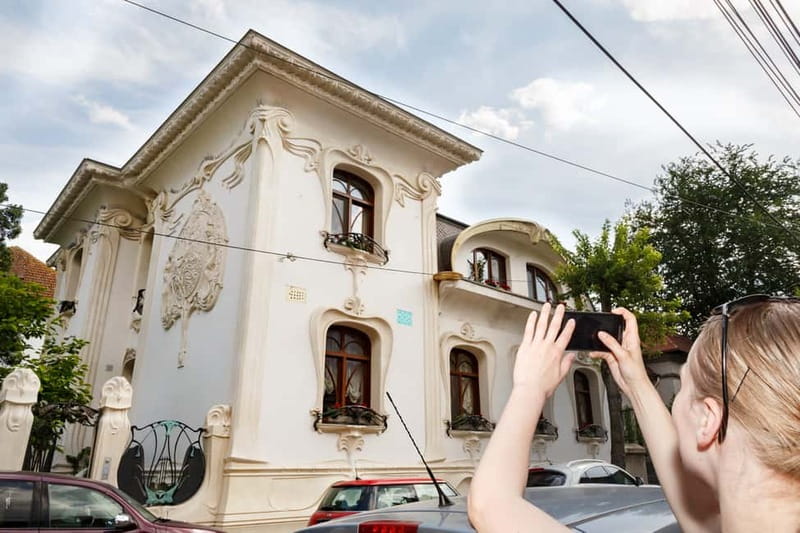
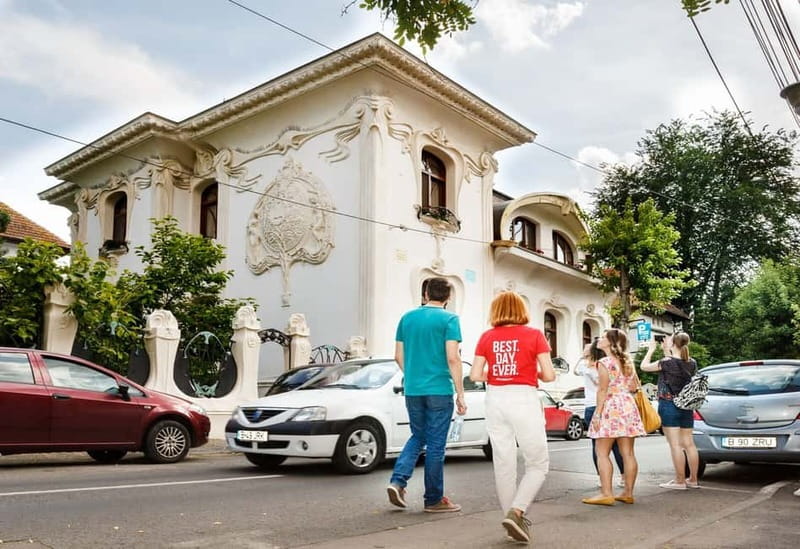
Mantuleasa Street is one of the prettiest parts of the route. It began as a mahala for wealthy merchants, and its buildings bring together Neo-Classical, Romanian, and modernist influences.
The mix matters. Bucharest is often called the Paris of the East because of its older European-style architecture, but that nickname can flatten the city into a single image. On Mantuleasa Street, you can see several periods and design ideas sharing the same area.
This was also a favorite part of Bucharest for Mircea Eliade, Romania’s best-known writer and philosopher. The tour uses the street to explain more about his life and work. Eliade later taught at the University of Chicago and remained there until his death in 1986.
I like this stop if you enjoy literary connections that are tied to real streets. You are not just receiving a brief biography. You are learning why a particular part of the city mattered to a major Romanian intellectual.
The route does not require you to know Eliade’s work in advance. The guide provides the context, and you can ask for more if his writing interests you. Livia, one of the named guides, was especially appreciated for speaking excellent English and following up after the tour with links to videos and images she had discussed. That kind of follow-up can be useful if the literary side of the walk catches your attention.
Ioanid block and Icoanei mahalla
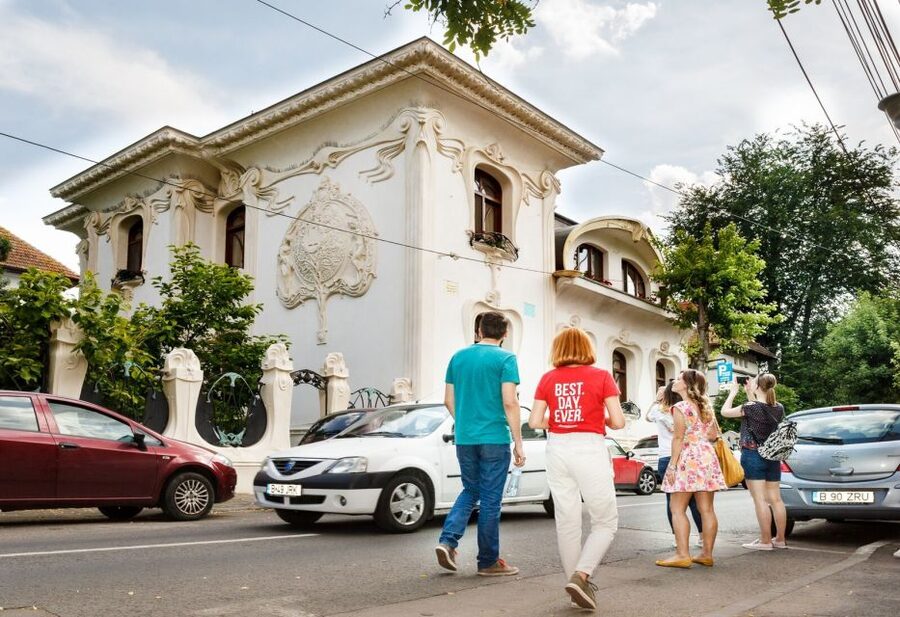
The final section brings you to the Ioanid block and Icoanei mahalla. The tour describes the Ioanid block as breathtakingly beautiful, and this is where the route gathers many of its architectural themes: old neighborhood planning, elegant homes, and the combination of Romanian, Neo-Classical, and modernist styles.
The ending is not designed as a major monument reveal. Instead, it leaves you with a better sense of how different Bucharest districts fit together. After three hours, you have seen religious buildings, a traditional house, a literary neighborhood, and streets shaped by merchants and minority communities.
Your guide can also suggest where to go next and where to eat or have a drink. That advice is valuable because the tour ends back at the National Theater rather than at a restaurant or attraction. If you are staying in Bucharest for more than a day, ask for specific suggestions before saying goodbye.
Guides, group size, and the feel of the walk
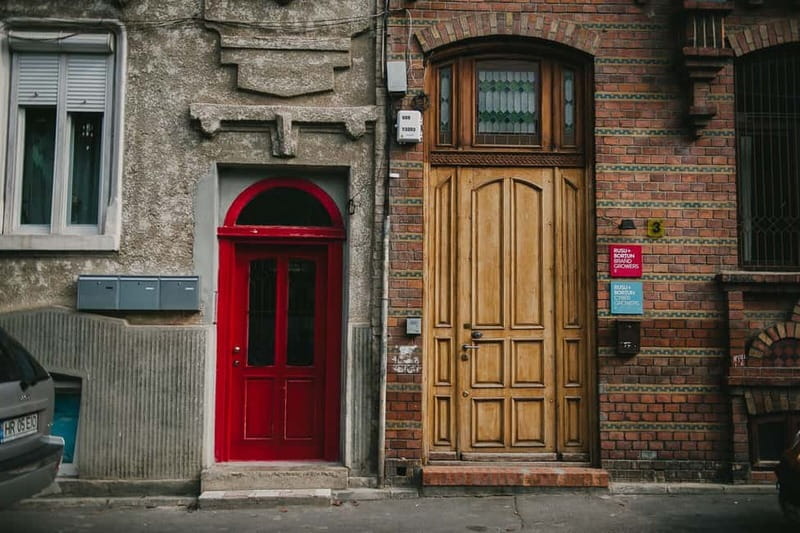
The tour is conducted in English by a live local guide. The group limit is 12 people, which is small enough for questions without making the walk feel like a private tour.
The strongest guide feedback centers on clear explanations, good humor, friendly attention, and genuine affection for Bucharest. Elena is described as informative and fun, while Andrei is noted for being attentive from the welcome through the final directions. Livia is praised for her friendly manner, strong English, and helpful follow-up message.
That does not mean every departure will feel identical. A walking tour depends on the guide assigned that day, the group, and the weather. Still, the named examples suggest that this experience puts real weight on personal guiding rather than simply leading you from one map pin to the next.
Wear comfortable shoes. Bring sunscreen and something to cover your head, especially in summer, since the sun can be intense. The walk is child-friendly: children aged 6 through 11 pay the listed child rate, and children under 6 can join free if you mention them when booking.
Is $45 a fair price?
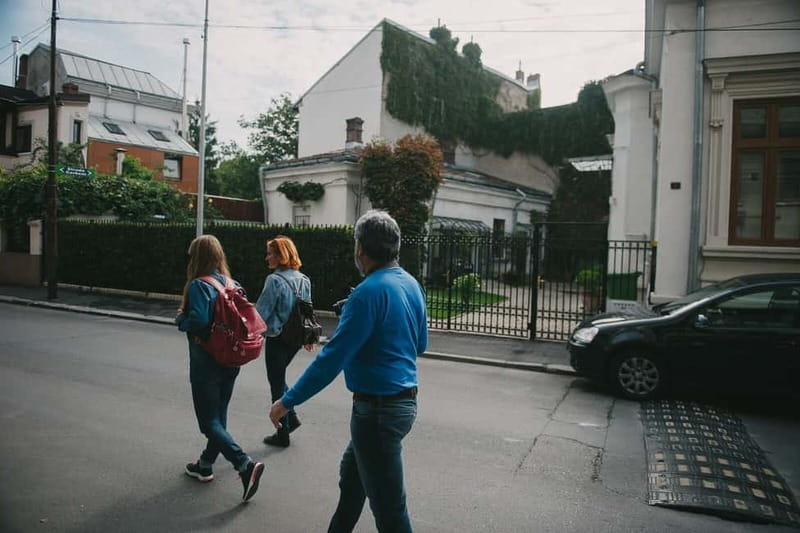
At $45 per person, this is not the cheapest way to spend a morning in Bucharest. You could walk through several neighborhoods on your own for less, and the covrig alone is only a small part of the cost.
The value comes from access to a connected story. A guide explains why the mahala developed, points out the significance of the churches, interprets Casa Melik, adds literary context on Mantuleasa Street, and finishes with practical advice for the rest of your stay.
The small group also matters. With no more than 12 people, you have a better chance to hear the guide and ask about places that interest you. That is particularly useful in residential areas, where the meaning of a building is not always obvious from its exterior.
I would consider the price reasonable if you are new to Bucharest and want an orientation that goes beyond the standard center. It is less compelling if you only want major landmarks, a long museum visit, or a food tour with several tastings. The formal cancellation policy allows a full refund when you cancel at least 24 hours ahead, and you can reserve now and pay later, which helps if your schedule is still changing.
Who should book this Bucharest walk?
I would choose this tour early in a Bucharest stay. It gives you neighborhood context and leaves you at the National Theater, with time to ask for ideas for the rest of the day.
It suits you best if you:
- Prefer local stories to famous sights alone
- Like architecture from several periods
- Want to understand Bucharest’s ethnic and religious communities
- Enjoy literary history connected to real places
- Are comfortable walking outdoors for around three hours
- Value a small group and a live English-speaking guide
Families can join, but young children need to manage a fairly long city walk. The covrig may keep them interested for a while, but the main attraction is history and architecture rather than a series of child-focused activities.
Should you book it?
Book this tour if you want Bucharest explained through old neighborhoods, churches, homes, food, and writers. Casa Melik and the Armenian church give the route unusual stops, while Mantuleasa Street adds a strong literary thread.
Skip it if you prefer a fast trip through the city’s major monuments or need frequent indoor breaks. For most first-time visitors who want a thoughtful start to Bucharest, the $45 cost buys useful orientation, a small group, and stories you are unlikely to get from walking the same streets alone.
FAQ
Where does the Bucharest walking tour begin?
The tour begins on the stairs of the National Theater, in front of the main entrance.
Where does the tour end?
The activity ends back at the National Theater meeting point.
How long does the tour last?
The listed duration is three hours. The experience title describes it as a 2.5-hour walking tour, so check the available start time and current details when booking.
What language is the tour conducted in?
The live tour guide speaks English.
What is included in the price?
The price includes a local English-speaking guide and a covrig street snack.
Are other food and drinks included?
No. Additional food and drinks are not included, although individual guides may offer small personal touches. The confirmed food inclusion is the covrig.
How large is the tour group?
The group can include a maximum of 12 people.
Can children join the tour?
Yes. Children aged 6 through 11 can join at the listed child rate. Children under 6 can join free, but you must mention them when booking.
What should I bring?
Bring comfortable shoes, sunscreen, and something to cover your head. The sun can be intense in summer.
Recently added around Bucharest
- 6h Communism Tour in Bucharest with Ceausescu Mansion★ 4.5 · 6 reviews
- From Bucharest : Day Trip to Peles, Dracula’s Castle, Brasov★ 4.7 · 6 reviews
- Bears Sanctuary, Dracula Castle and Brasov City – Full Day Trip from Bucharest★ 5.0 · 6 reviews
- Dracula Private Tour★ 5.0 · 6 reviews
- Transfagarasan Road Private Day Trip from Bucharest / The Best Road in the World★ 5.0 · 6 reviews
- Bucharest : Wednesday, Dracula & Peles 3 Castles Tour 1 Day★ 4.7 · 6 reviews
- Hiking thought the best mountain villages in Romania-Private tour from Brasov★ 5.0 · 6 reviews
- Bucovina Painted Monasteries & Transylvania Tour: 4-Day Private★ 5.0 · 6 reviews
Walking Tours, compared.
Ghost Stories & Romanian Mythology Walking Tour
Read our review →

4h Bucharest Private Tour (2h by Car and 2h Walking in Old Town)
Read our review →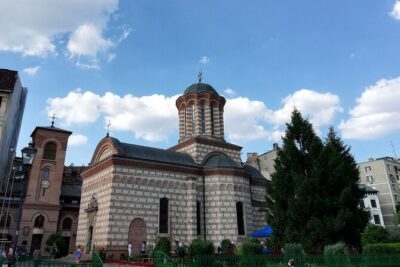
Browse the lists this tour appears in