
Reviewed · CYCLING TOURS
Bicycle Sightseeing in Bucharest
Bucharest makes more sense from a bicycle seat. In three to four hours, you move from the royal-era Triumph Arch to leafy Herăstrău Park, then into the city’s difficult communist past at Revolution Square and the Palace of Parliament. Guides such as Ionut and Alex add local stories, including personal memories of growing up in Bucharest.
I like the included bicycle, which removes one practical hurdle, and I like the small-group limit of 10. The guide also provides coffee or tea and takes photos along the route. The main caution is the city’s uneven, cobbled streets. Cycling is fun here, but you should expect rough patches and ride with care.
In This Review
- Key points at a glance
- Why a bicycle works so well in Bucharest
- The Triumph Arch connects monarchy and war
- Herăstrău Park gives the ride room to breathe
- A communist-era building adds visual context
- Revolution Square confronts the end of communism
- The Romanian Athenaeum is the route’s architectural pause
- The Palace of Parliament shows communist ambition at full scale
- Local guides make the history personal
- What the $42.17 price really includes
- Streets, weather, and comfort deserve attention
- Who will enjoy this Bucharest ride most
- Should you book Bicycle Sightseeing in Bucharest?
- FAQ
- How much does Bicycle Sightseeing in Bucharest cost?
- How long does the bicycle tour last?
- Where does the tour begin?
- Where does the tour finish?
- Is bicycle use included?
- Is coffee or tea provided?
- Is the Romanian Athenaeum included?
- How large is the group?
- What happens if the weather is poor?
Key points at a glance
- A useful half-day introduction: Cover several major sights without spending an entire day on a bus or indoors.
- A strong history route: Link Romania’s monarchy, World War I, communism, and the 1989 Revolution in one ride.
- Herăstrău Park adds breathing room: The city’s largest park gives you a calmer stretch away from heavy traffic.
- Personal guiding matters: Ionut and Alex explain Bucharest through local experience as well as dates and buildings.
- Good value at $42.17: The price includes the bicycle, guide, drinks, and route photos.
- Expect imperfect pavement: Uneven and cobbled streets are the one serious comfort and safety concern.
Why a bicycle works so well in Bucharest
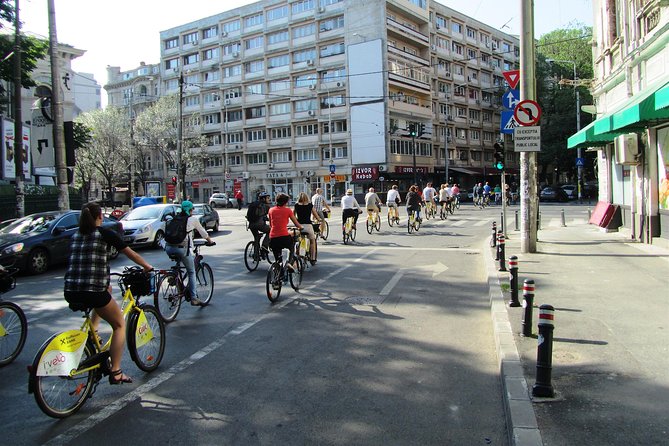
Bucharest is spread out enough that walking between all these sights would take time, yet a car or coach can leave you watching the city through glass. A bicycle gives you a better middle ground. You cover distance, stop often, and get a feel for how parks, grand avenues, memorials, and communist-era buildings fit together.
The route also has a useful rhythm. You begin with monuments and national history, shift into open parkland, then return to the political center of the city. The result is not just a checklist of landmarks. It is a quick lesson in how Bucharest changed from monarchy to dictatorship and then toward modern Romania.
This is an active tour, but it is not presented as a race. The listed stops are brief, often five to 20 minutes, with time for a story, a photograph, and questions. That format suits you if you want orientation and context rather than long museum visits.
The group can include no more than 10 people. That is small enough for direct conversation with the guide, and the experience can be especially personal when numbers are low. On one occasion, Ionut adjusted the starting point for a two-person group and met them in their neighborhood. That kind of flexibility may be possible, but it should not be treated as guaranteed for every booking.
A few more Bucharest tours worth a look
- Bucharest: Half Day Bike Tour
★ 4.9 · 379 reviews - Bucharest Half a Day Bike Tour
★ 5.0 · 325 reviews - Bucharest: 2-Hour City Highlights Bike Tour
★ 4.8 · 269 reviews
The Triumph Arch connects monarchy and war
The first stop is the Arcul de Triumf, or Triumph Arch, at Piața Arcul de Triumf. The guide gives a short account of the Romanian monarchy and Romania’s role in the First World War. It is a compact opening, but a useful one, because the arch is not simply a decorative photo stop.
At about five minutes, this is more of an orientation point than a formal visit. Admission is free, and you should expect to stand outside while the guide explains what the monument represents. It is a good place to begin because it introduces the national story before the ride moves into the park.
The short stop also shows the tour’s general approach. You receive context without being held in one place for too long. If you want a detailed architectural study of the arch, you would need more time on your own.
Herăstrău Park gives the ride room to breathe
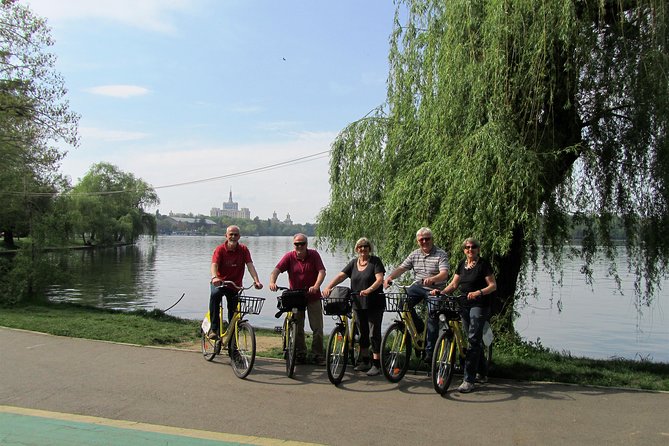
Herăstrău Park, officially known today as King Michael I Park, is the largest park in Bucharest and one of the most suitable sections of the route for cycling. The ride here gives you a break from dense streets and a chance to enjoy the city at a slower pace.
The scheduled stop is around 20 minutes, although the exact cycling time and pauses may vary. This is one of the most appealing parts of the experience for anyone who wants more than a parade of buildings. You see Bucharest as a place where people spend time outdoors, not only as a collection of political monuments.
The park also helps balance the heavier material later in the tour. After hearing about monarchy and war, you have a greener, more relaxed setting before returning to the city center. I would especially value this stretch on a warm day, when the movement of the bicycle and open space make the tour feel less tiring.
Keep in mind that a park ride does not remove every cycling concern. The whole experience still depends on city conditions, and the ride includes streets with uneven surfaces. Comfortable clothing and sensible shoes will make the half-day much easier.
A communist-era building adds visual context
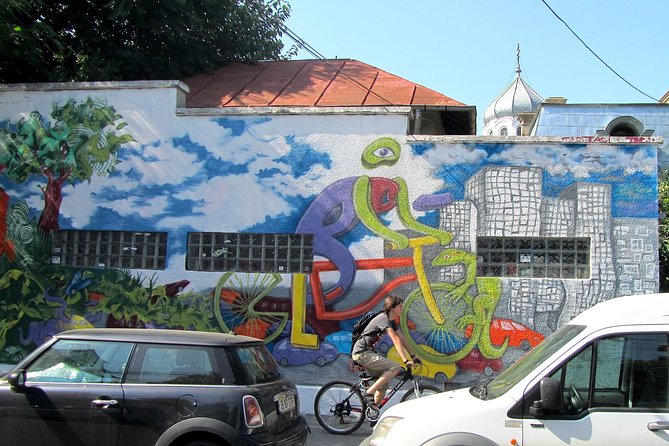
The route includes a stop at a communist architecture building, but the supplied details do not identify the building by name. That means you should see this as a short architectural and historical pause rather than a fully specified attraction with a formal admission visit.
This stop matters because communist Bucharest is best understood through scale, materials, and placement as well as through political dates. The guide can help explain how the architecture reflects the period. You may find this part particularly useful if you want to understand why some parts of the city feel grand, severe, or out of proportion.
Since no visiting time or admission details are given for this stop, do not plan on an extended interior visit. The value comes from seeing the building in the city around it and hearing the guide connect it to the wider story.
A different side of the city, same short trip:
- Bucharest: Dracula’s Castle, Peles Castle, & Brasov Old Town
★ 4.5 · 17,858 reviews - Bucharest: Dracula Castle, Peles Castle & Brasov Old Town
★ 4.6 · 10,891 reviews - Bucharest: Dracula’s Castle, Peleș Castle & Brașov Day Trip
★ 4.5 · 5,919 reviews - Bucharest: Palace of Parliament Tickets and Guide
★ 4.3 · 3,182 reviews
Revolution Square confronts the end of communism
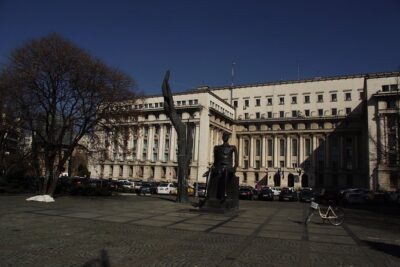
Piața Revoluției, or Revolution Square, is the emotional center of the historical route. Here the guide discusses the end of Romania’s communist regime and the memorial connected with those events. The planned stop lasts about 10 minutes, with no admission charge.
This is where the tour’s history becomes more immediate. The square helps you place the fall of communism in a real urban setting instead of treating it as a distant chapter in a textbook. A photograph here is part of the experience, but the explanation is more important than the picture.
The guide’s personal background can add weight to this stop. Ionut has shared experiences of growing up in Bucharest during complicated times, and Alex is described as deeply committed to explaining Romania’s past. Those personal details can make the political story easier to grasp, especially if you ask questions.
Ten minutes is enough for a focused explanation, but not enough for a long discussion of every event surrounding 1989. If modern Romanian history is your main interest, treat the stop as a starting point and ask the guide for suggestions on what else to see.
The Romanian Athenaeum is the route’s architectural pause
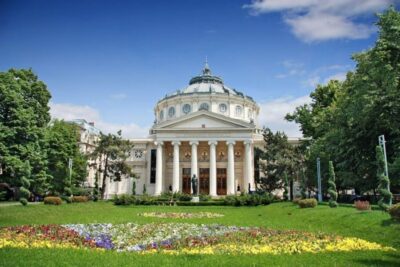
The Ateneul Român, or Romanian Athenaeum, is described as an architectural symbol of Bucharest and a living story of the city. The exterior is part of the regular route, while entering is optional and costs 10 Lei.
This is a good example of how the tour lets you control your spending. The base price covers the outdoor stop, so you can decide on the day if the interior visit is worth the small extra fee. The listed stop is only around five minutes, which suggests that the focus is on a quick explanation and photo opportunity rather than a long guided interior tour.
I like this arrangement because not everyone wants the same balance of cycling and sightseeing. If you have already visited the Athenaeum, you can keep moving. If this is your first visit and the doors are open, the modest fee may be worthwhile for a closer look.
The guide’s architectural explanation should help you see the building as more than a pretty facade. Still, you should confirm the conditions for entering during your visit, since the extra fee and short scheduled stop do not guarantee a full interior experience.
The Palace of Parliament shows communist ambition at full scale
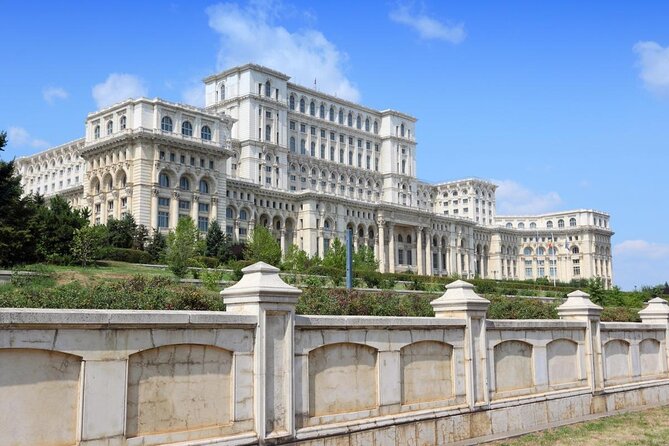
The final major sight is the Palace of Parliament, built by communist dictator Nicolae Ceaușescu. It is described as the heaviest building in the world and the second-largest administrative building after the Pentagon.
The stop lasts about five minutes and is free from the outside. That timing is important. You will get a concise account of the building and its place in Ceaușescu’s project for Bucharest, followed by a chance to take in its enormous scale. This is not a full interior tour of the palace.
The building is difficult to understand from photographs alone. Seeing it at street level gives you a better sense of its size and the way it dominates the surrounding area. The short visit also keeps the bicycle tour moving, rather than turning it into a separate palace excursion.
If you want to tour the interior, plan that as another activity. The bicycle experience provides the outside view and historical setting, not a palace admission ticket or extended indoor visit.
Local guides make the history personal
The strongest part of this experience is the guide. Ionut has been praised for combining local knowledge with personal memories, while Alex is described as passionate about Romania and generous with suggestions for other places to visit. The experience provider, Bike in time, describes the guides as having more than 10 years of professional experience.
That combination is useful in Bucharest. The city’s history includes monarchy, war, authoritarian government, revolution, and rapid change. A guide who can explain both the public story and the everyday effect of those periods gives you more than dates and names.
Language is straightforward: the tour is offered in English. One guide also speaks excellent French, so French-speaking visitors may find it possible to communicate comfortably, though English is the stated tour language.
The group format supports questions. Several parts of the route are short, and the quality of the experience will depend on how clearly the guide uses those minutes. If you are curious about daily life under communism or how Bucharest changed after 1989, ask directly. The guide’s personal perspective is one of the reasons to choose this tour rather than simply following a map.
What the $42.17 price really includes
At $42.17 per person, the cost is reasonable for a three-to-four-hour guided activity in a capital city, especially because the bicycle is included. You also receive coffee or tea, route photos, and professional guiding, so you are not paying only for a rental bike.
The value is strongest if you want several sights connected by explanation. Renting a bicycle alone might cost less, but it would not give you the route, historical background, local stories, or photographs. On the other hand, this price does not include lunch, dinner, or other additional fees. The 10 Lei Athenaeum entry is separate.
Group discounts are available, which may improve the value for families or friends booking together. The maximum group size of 10 is another positive. You are paying for a guided small-group experience rather than a large procession that can be hard to hear or follow.
I would not choose this tour purely to save money. I would choose it because it combines transportation, sightseeing, and interpretation in one half-day. That is particularly useful early in a Bucharest visit, when you want to understand the city’s layout and decide where to return later.
Streets, weather, and comfort deserve attention
The main weakness is the pavement. One person suffered an injury after encountering Bucharest’s cobbled and uneven streets, and the guide acknowledged the city’s infrastructure problem. That warning should be taken seriously.
You do not need to be an expert cyclist, since most people can participate, but you should feel comfortable controlling a bicycle on imperfect surfaces. Ride at a steady pace, pay attention to the road, and do not assume every section will feel as smooth as the park.
The tour requires good weather. If poor weather causes cancellation, you are offered another date or a full refund. That is sensible for an outdoor activity, but it means you should keep some flexibility in your Bucharest schedule.
The route begins and ends at Piața Presei Libere, București. The meeting point is near public transportation, which helps, though the supplied details do not specify the exact transit line or the best route from your hotel. Confirmation is normally sent when you book. If you book within two days of the experience, confirmation can take up to 48 hours and remains subject to availability.
Most people can participate, but the bicycle element means this is not the right pick if uneven streets or sustained riding are a serious concern. Children and adults should be comfortable on a bike before booking.
Who will enjoy this Bucharest ride most
I would recommend it to you if you want a first look at Bucharest that mixes parks, architecture, and modern history. It suits curious visitors who prefer active sightseeing and want a guide to explain the city as they move through it.
It is also a good match for anyone interested in Romania’s 20th-century story. Revolution Square and the Palace of Parliament receive only short stops, but the guide links them to the wider route. The personal accounts shared by Ionut and the historical focus described by Alex can make the subject feel more immediate.
Couples and small groups may benefit from the flexible tone. When only two people were booked, the guide changed the starting point to meet them closer to their neighborhood. That does not promise a custom departure for every booking, but it shows the provider can be accommodating when circumstances allow.
You may want something else if your priority is a long interior visit at the Athenaeum, an inside tour of the Palace of Parliament, or a smooth recreational ride with no rough pavement. Those are not what this experience is built to provide.
Should you book Bicycle Sightseeing in Bucharest?
Book it if you want an active, fairly priced introduction to Bucharest and you are comfortable riding over uneven city streets. The combination of a provided bike, a maximum of 10 people, local guides, coffee or tea, photos, and a route covering both Herăstrău Park and major political landmarks gives you a lot in three to four hours.
I would place it near the start of a Bucharest stay. You will get the city’s basic shape, hear the stories behind several important places, and collect ideas for later visits. Just allow time for the bicycle conditions, remember that interior entries cost extra, and keep a weather backup in mind.
FAQ
How much does Bicycle Sightseeing in Bucharest cost?
The tour costs $42.17 per person. Group discounts are available.
How long does the bicycle tour last?
The experience lasts approximately three to four hours.
Where does the tour begin?
It begins at Piața Presei Libere in Bucharest, Romania.
Where does the tour finish?
The activity ends back at the meeting point.
Is bicycle use included?
Yes. Use of a bicycle is included in the tour price.
Is coffee or tea provided?
Yes. The guide provides coffee and/or tea during the route.
Is the Romanian Athenaeum included?
The outdoor stop is included. Entering the Ateneul Român is optional and costs 10 Lei.
How large is the group?
The tour has a maximum of 10 participants.
What happens if the weather is poor?
The experience requires good weather. If it is canceled because of poor weather, you can choose another date or receive a full refund. Free cancellation is available up to 24 hours before the start time.
Recently added around Bucharest
- 6h Communism Tour in Bucharest with Ceausescu Mansion★ 4.5 · 6 reviews
- From Bucharest : Day Trip to Peles, Dracula’s Castle, Brasov★ 4.7 · 6 reviews
- Bears Sanctuary, Dracula Castle and Brasov City – Full Day Trip from Bucharest★ 5.0 · 6 reviews
- Dracula Private Tour★ 5.0 · 6 reviews
- Transfagarasan Road Private Day Trip from Bucharest / The Best Road in the World★ 5.0 · 6 reviews
- Bucharest : Wednesday, Dracula & Peles 3 Castles Tour 1 Day★ 4.7 · 6 reviews
- Hiking thought the best mountain villages in Romania-Private tour from Brasov★ 5.0 · 6 reviews
- Bucovina Painted Monasteries & Transylvania Tour: 4-Day Private★ 5.0 · 6 reviews
Cycling Tours, compared.
Transfagarasan Highway and Balea Lake E-Bike Tour
Read our review →
Browse the lists this tour appears in